
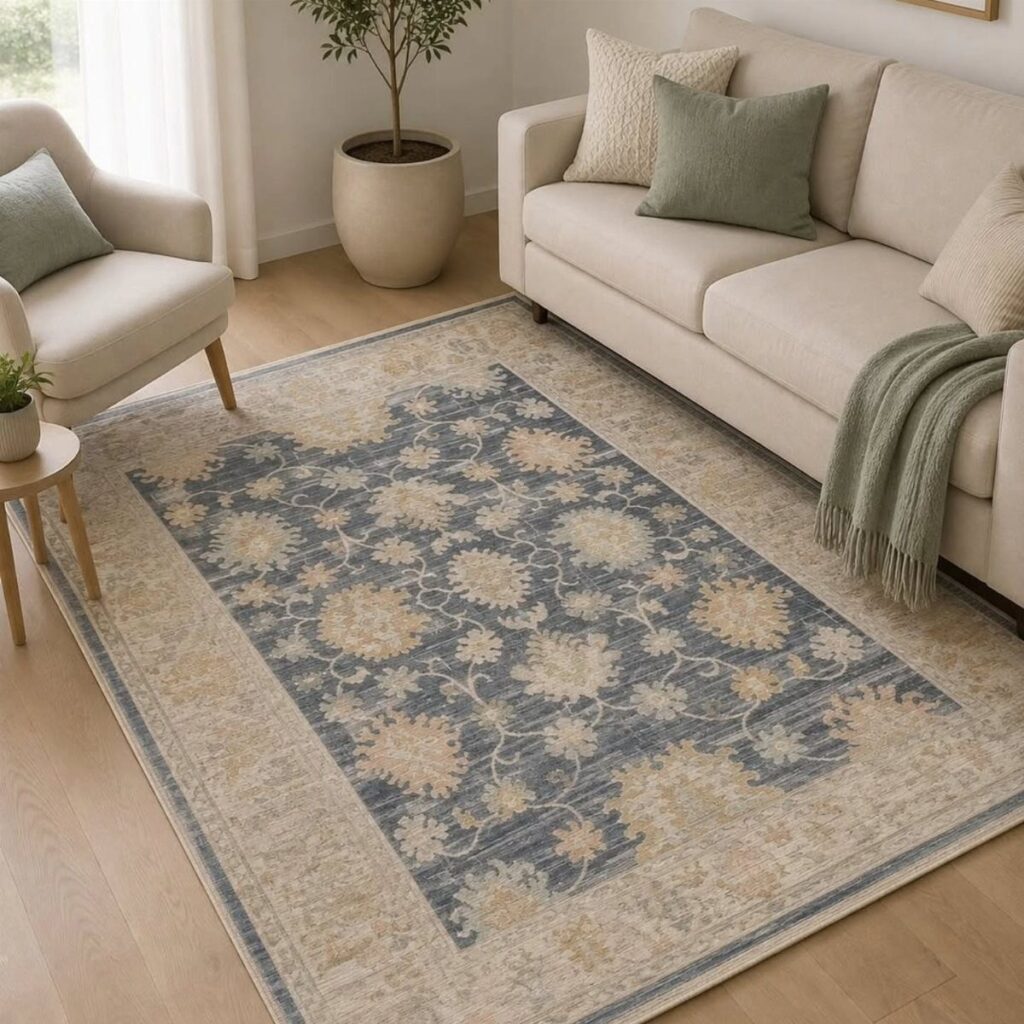
A coastal living room rug sets the tone for the rest of the space, whether you want texture from jute, bold pattern from wavy ocean prints or colorful fish motifs, or the clean contrast of light blue and ivory.
The right rug depends on how much pattern your furniture already carries: if your sofa or walls are busy, a neutral woven rug, low-pile solid, or tonal stripe anchors the room without competing.
If your upholstery is plain, a tonal blue stripe or green palm leaf rug brings the coastal palette to the floor and does the decorating on its own.
1. Light Blue and Ivory Rug
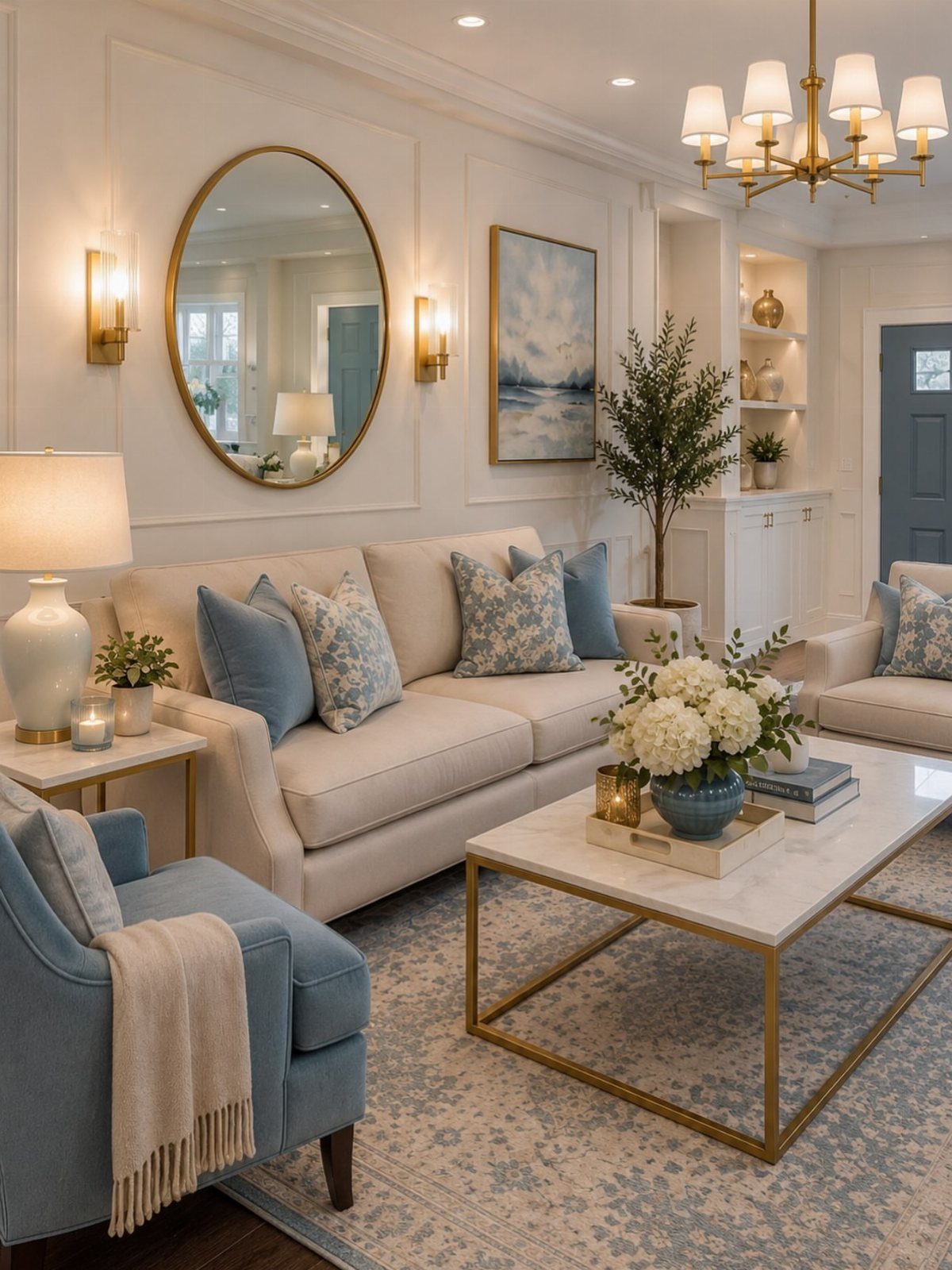
A light blue and ivory rug grounds a coastal living room without pulling too much attention. The soft contrast between the 2 colors lets other furniture stand out while keeping the room tied to a water-inspired palette.
This works well in bright rooms where you want pattern without busy color.
The ivory keeps the floor from reading too dark, and the light blue picks up throw pillows or upholstery in a way that feels planned rather than matched.
If your sofa is neutral, this is an easy base that adds coastal character without locking you into one accent color.
2. Low-Pile Coastal Living Room Rug
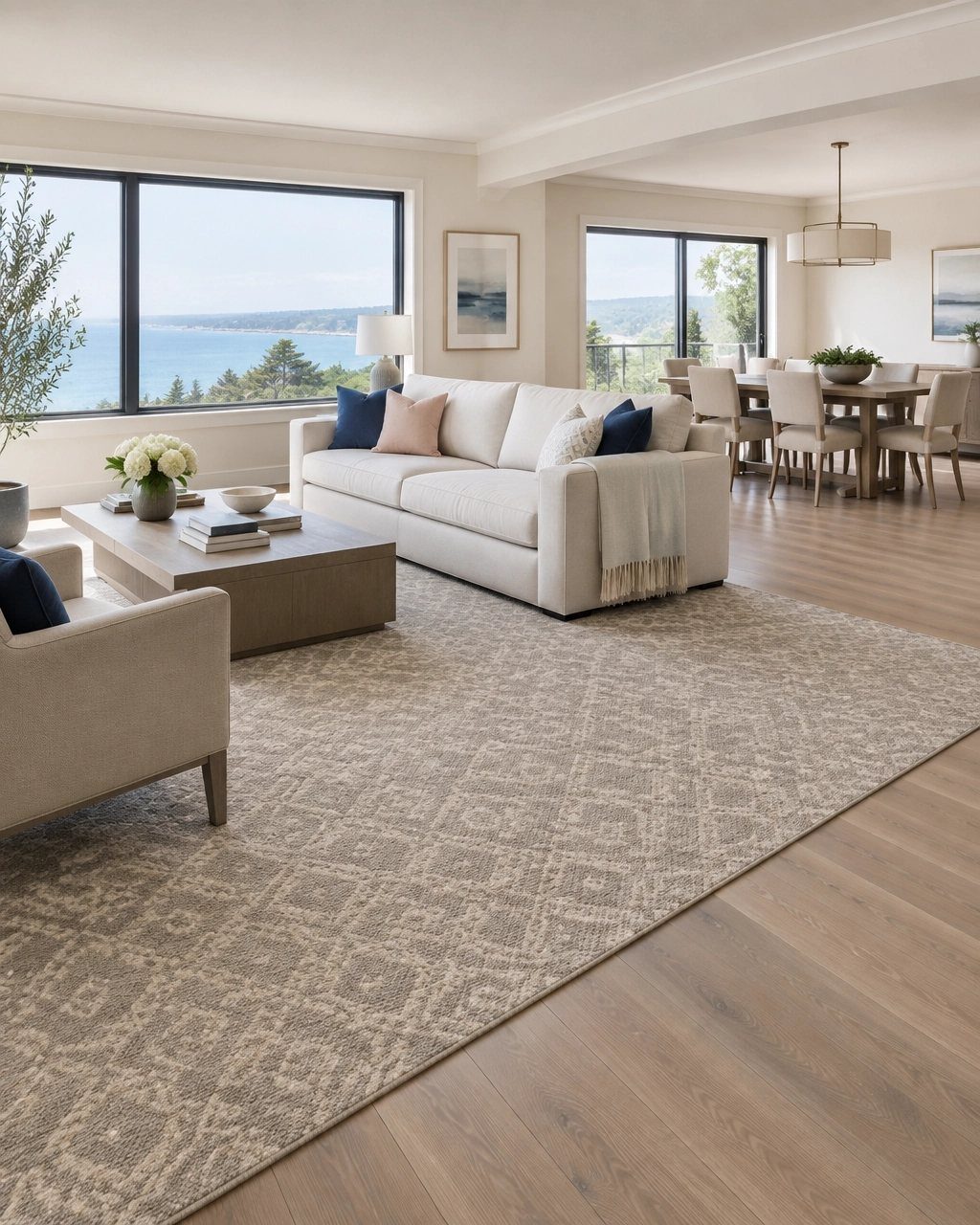
Low-pile rugs handle coastal living room traffic better than thick shag. They sit flat under furniture legs, vacuum quickly, and don’t trap sand if you live near the water.
A flat weave sits low enough that it doesn’t block the view from a sofa or low chair. The rug defines the seating area without adding visual weight, which matters when your windows do most of the decorating.
Look for polypropylene or cotton blends if the rug will sit in direct sun. Both hold up to fading better than wool at a lower price point.
3. Jute Living Room Rug
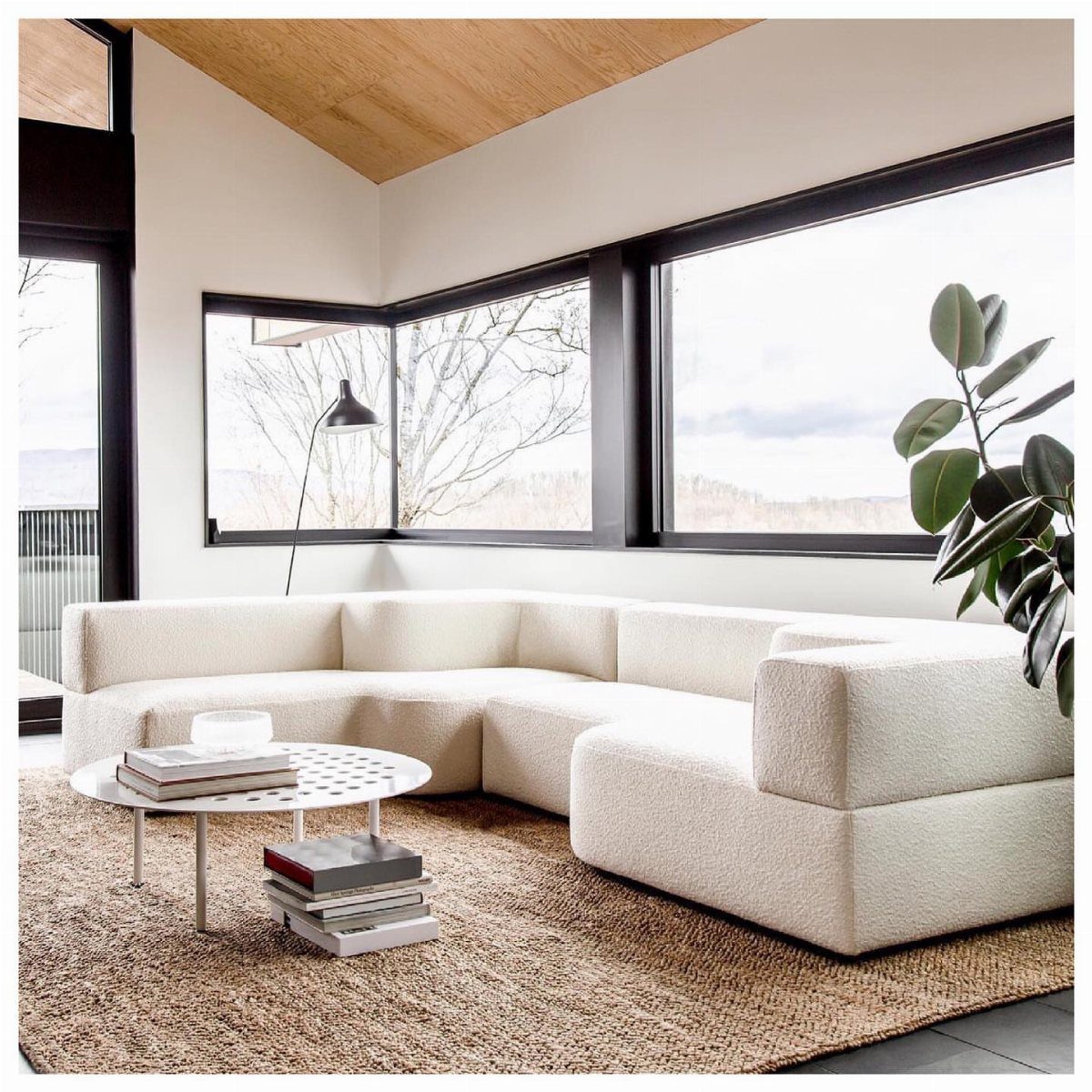
Jute brings texture without color, which works when your coastal palette is already doing enough. The natural fiber reads warm against white furniture and cool floors, and the rough weave adds grip underfoot.
Jute rugs shed for the first few weeks.
Vacuum often during that period and the loose fibers settle down. They also stain easily, so keep them out of high-spill zones or treat them with a fiber protector before use.
Sizing up one step larger than you think you need makes jute look like a grounding layer instead of a mat that wandered in from the entry.
4. Tonal Blue Striped Living Room Rug
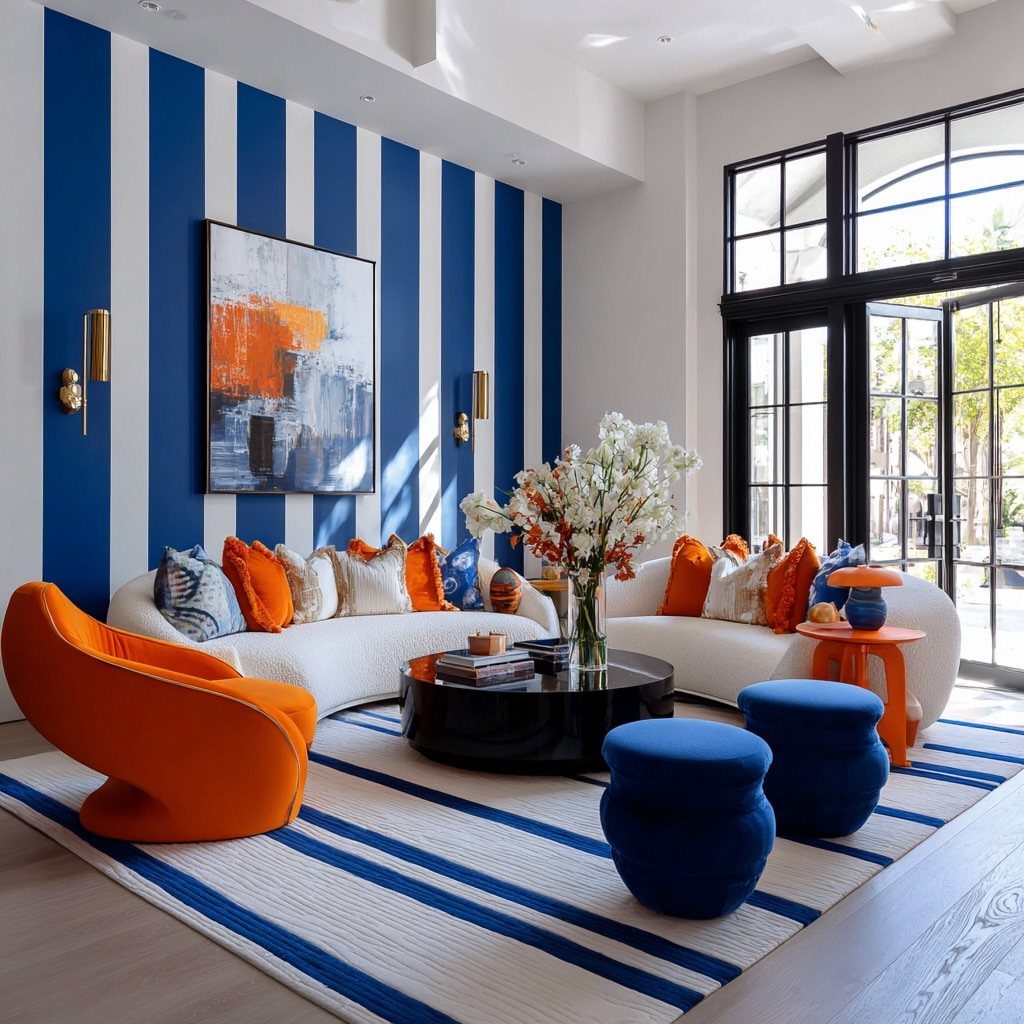
Tonal blue stripes give you the coastal palette without a literal beach print. The variation in shade adds movement to the floor, and stripes help a narrow room feel wider if you run them perpendicular to the longest wall.
This works best when the rug is the boldest pattern in the room. If your walls or sofa already lean loud, the stripes compete instead of anchor.
A striped rug also hides wear better than a solid. Dirt and fading blend into the pattern rather than showing as one dull patch.
5. Green Palm Leaf Rug
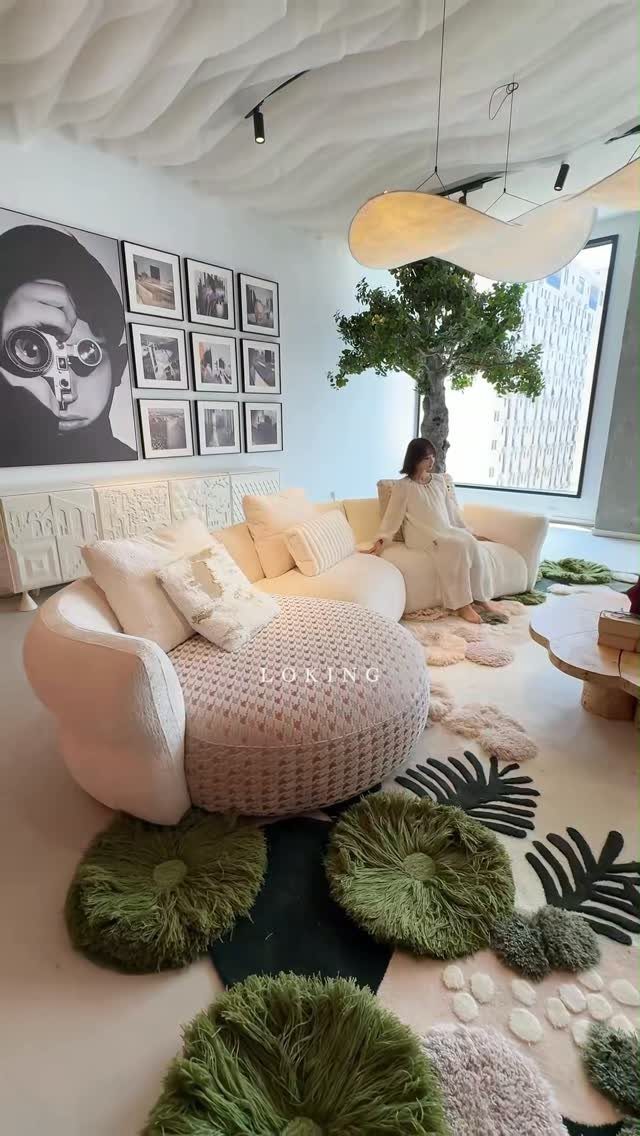
An abstract palm leaf rug brings coastal style without looking like a resort lobby. The green reads fresher than the usual blues, and the loose, painterly shapes stay relaxed without the stiffness of literal botanical prints.
This works in a room where the furniture is simple. The rug carries the theme on its own without needing shells or driftwood to back it up.
A light neutral sofa lets the green stay the focal point. If your upholstery is already patterned, the palm print adds too many competing layers.
6. Colorful Fish Motif Rug
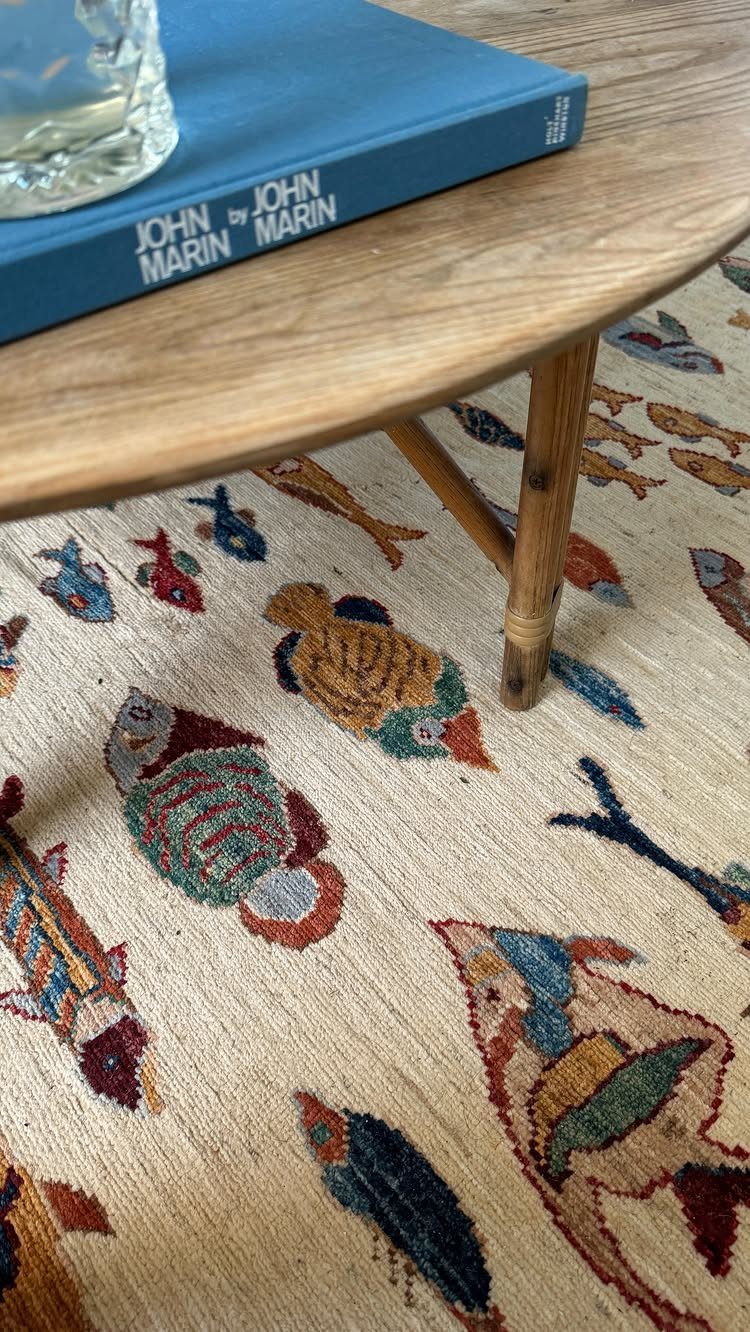
A fish motif rug works in a coastal living room that leans playful rather than refined. The illustrated pattern adds personality without reading too juvenile, especially on a cream or neutral base that keeps the colors from overwhelming the room.
This is a better fit for a casual space where kids or pets are in and out. The busy pattern hides stains and wear better than a solid or a subtle texture.
Pair it with simple furniture. The rug does the decorating, so a plain sofa and wood coffee table keep the room from tipping into theme park territory.
7. Neutral Textured Woven Rug
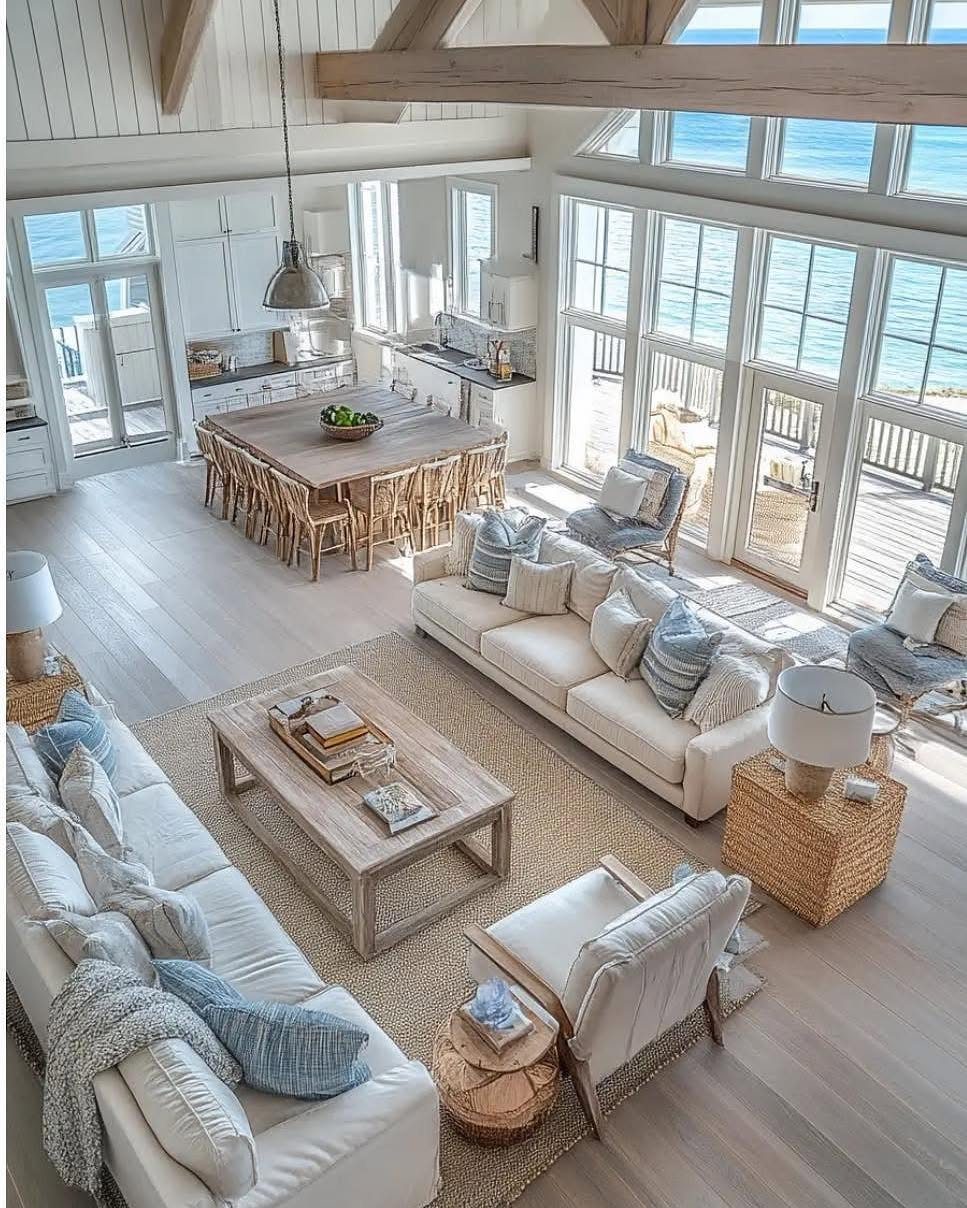
A neutral woven rug adds texture without introducing new color, which keeps a coastal room calm when the view or the furniture already provides enough interest.
The raised weave gives the floor dimension that a flat rug can’t, and the light tan works with white upholstery without creating stark contrast.
This suits rooms where the palette is already settled. The rug holds the seating area together without forcing other pieces to coordinate.
Size it large enough that the front legs of your sofa and chairs rest on the rug. A small rug floating in the middle looks tacked on.
8. Wavy Ocean Pattern Rug
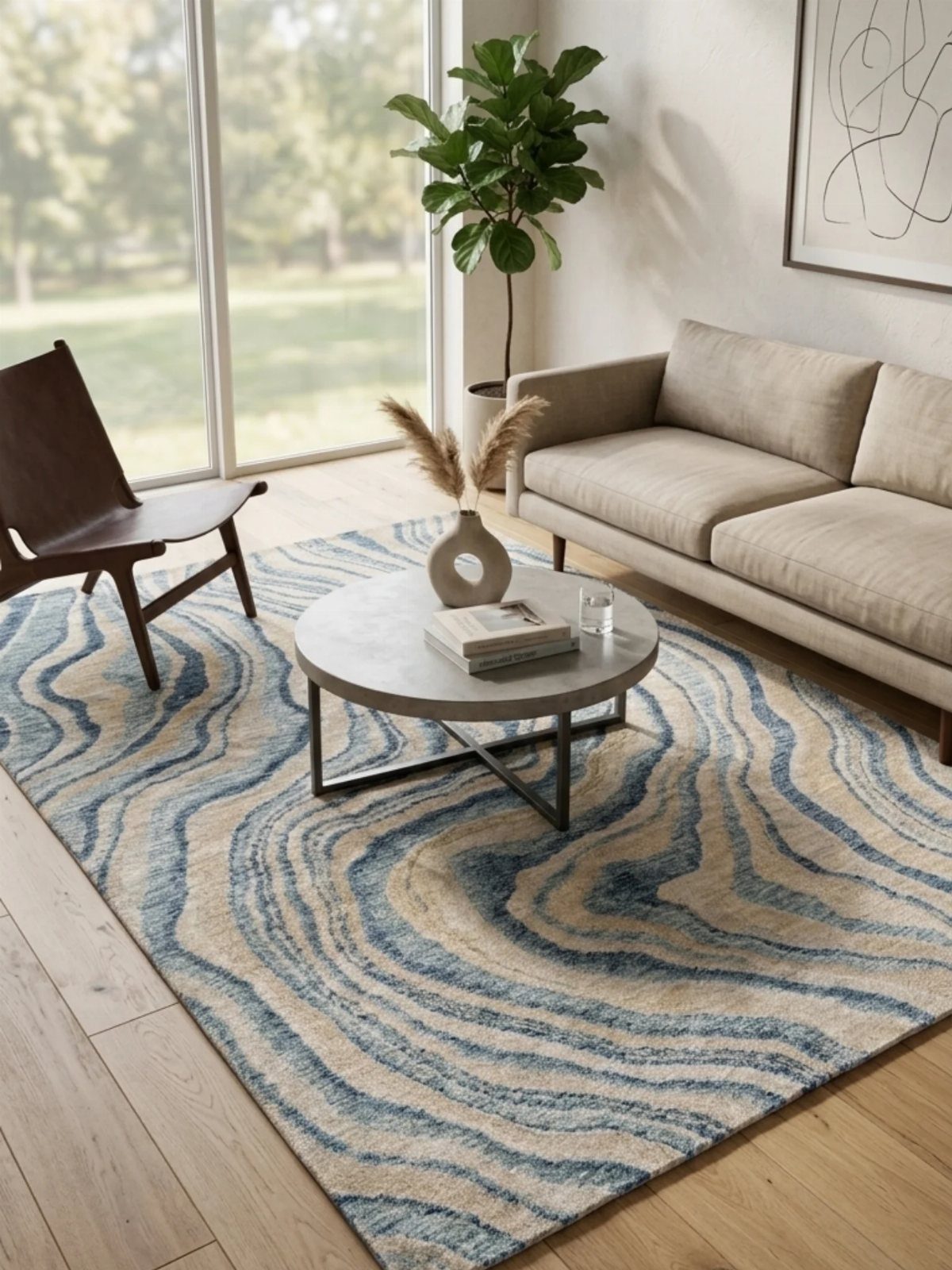
Wavy ocean patterns bring the coastal theme to the floor without relying on literal shells or anchors. The swirling blue and beige mimic water movement in an abstract way that feels modern rather than decorative.
This works best in a room with simple furniture. The rug carries the theme, so a plain sofa and minimal accessories prevent visual clutter.
The large-scale pattern also makes a small living room feel bigger. The curves pull the eye across the floor instead of chopping it into sections.
Frequently Asked Questions
What colors are best for rugs for coastal interior design?
Stick with light blue, soft aqua, sandy ivory, sea-glass green, or tonal white-on-white. They hold onto the cool, airy feel, where saturated warm tones like deep red, burgundy, and dark gold pull against the palette.
What size rug works best in a coastal living room?
An 8×10 fits a standard seating group, but size up in an open floor plan so the rug grounds the space instead of sitting like a small island.
A 9×12 or 10×14 works better when the living area connects to dining or kitchen spaces.






