
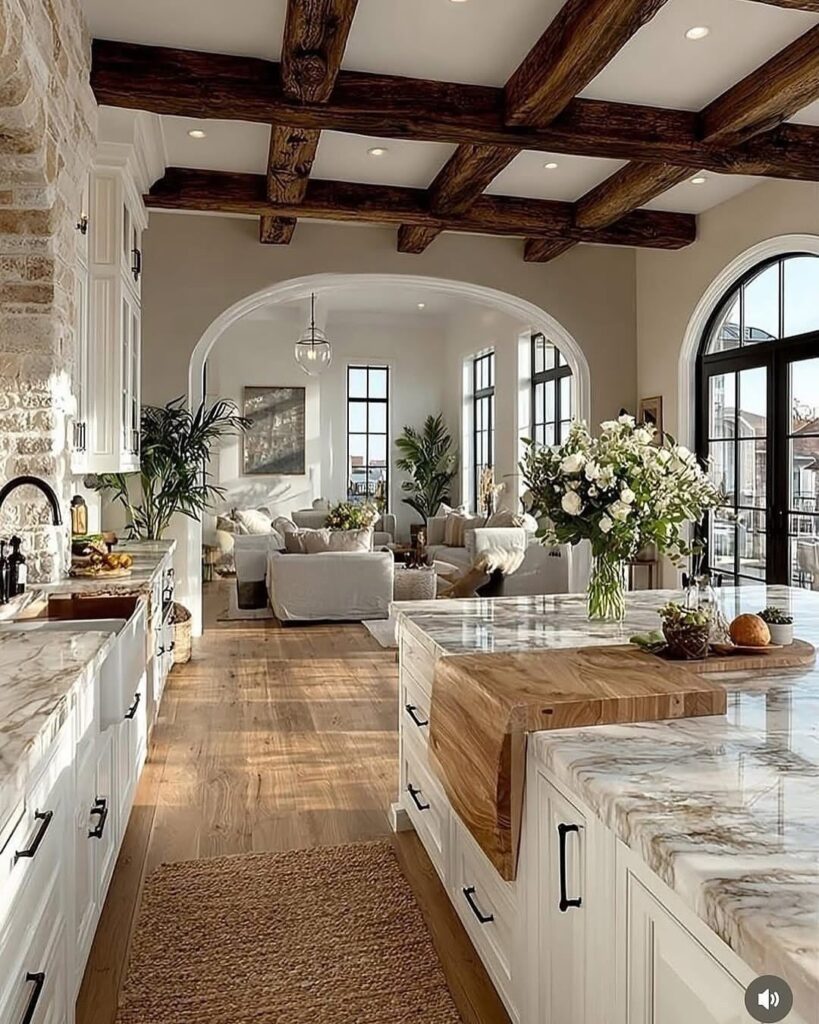
A farmhouse living room can range from exposed beams and built-in shelving that need a carpenter to shiplap accent walls, a vintage sideboard, or a throw styled across the back of the sofa.
The room’s existing architecture decides where you start: a stone fireplace or exposed beams give you a natural anchor, while a flat-walled rental relies on furniture, texture, and smaller additions to carry the style.
1. Exposed Beams
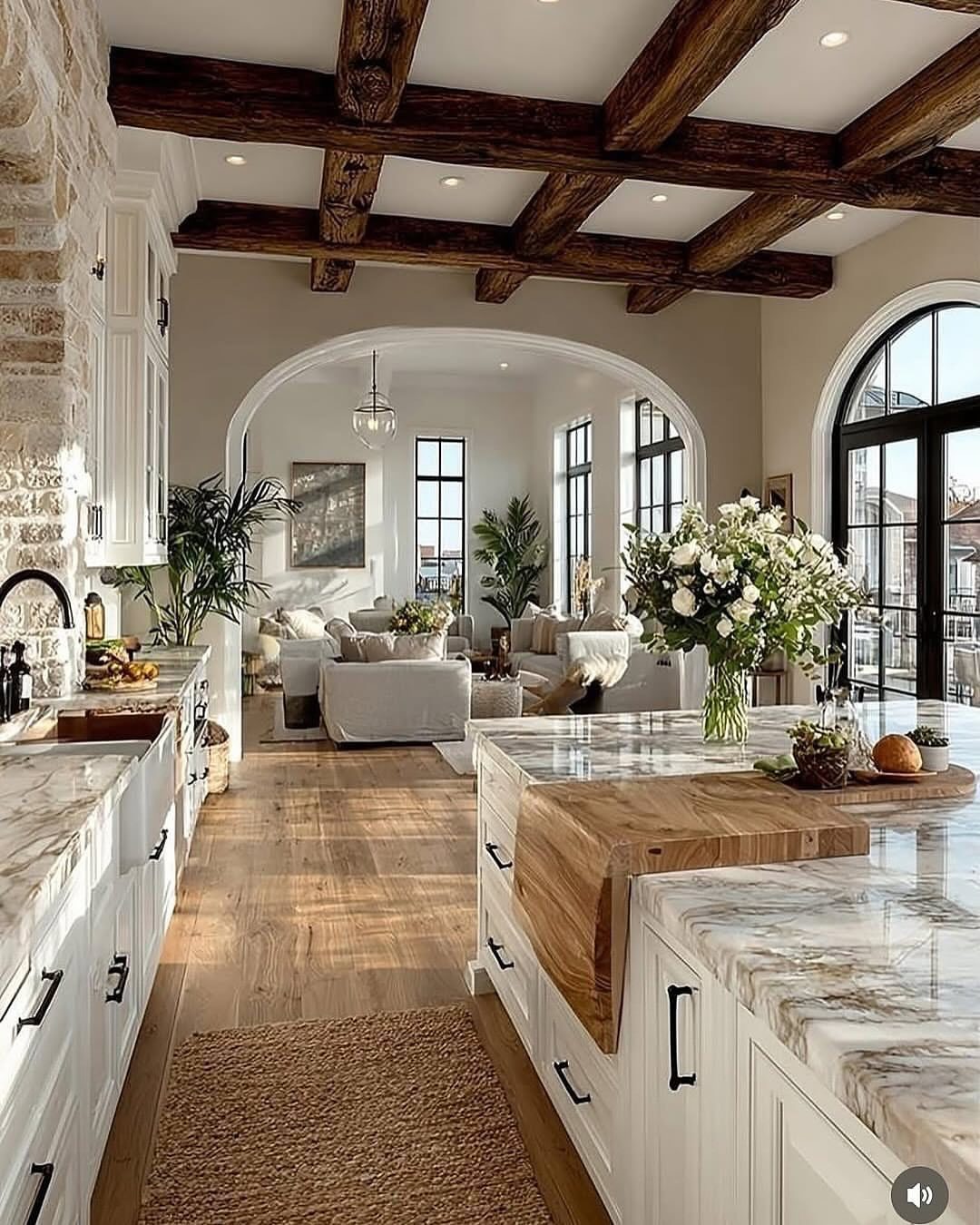
Dark wood beams running across a white or light ceiling pull the eye up and give a farmhouse living room its signature contrast.
The color difference matters more than the wood species: a deep stain on pine reads the same way as reclaimed oak once it’s overhead.
Real structural beams cost thousands and need an engineer. Faux beams made from hollow polyurethane or three-sided wood boxes install in a weekend with construction adhesive and lag bolts into ceiling joists.
Space them evenly across the ceiling so the rhythm reads clearly without crowding. Closer feels busy, wider loses the rhythm.
2. Wall Color
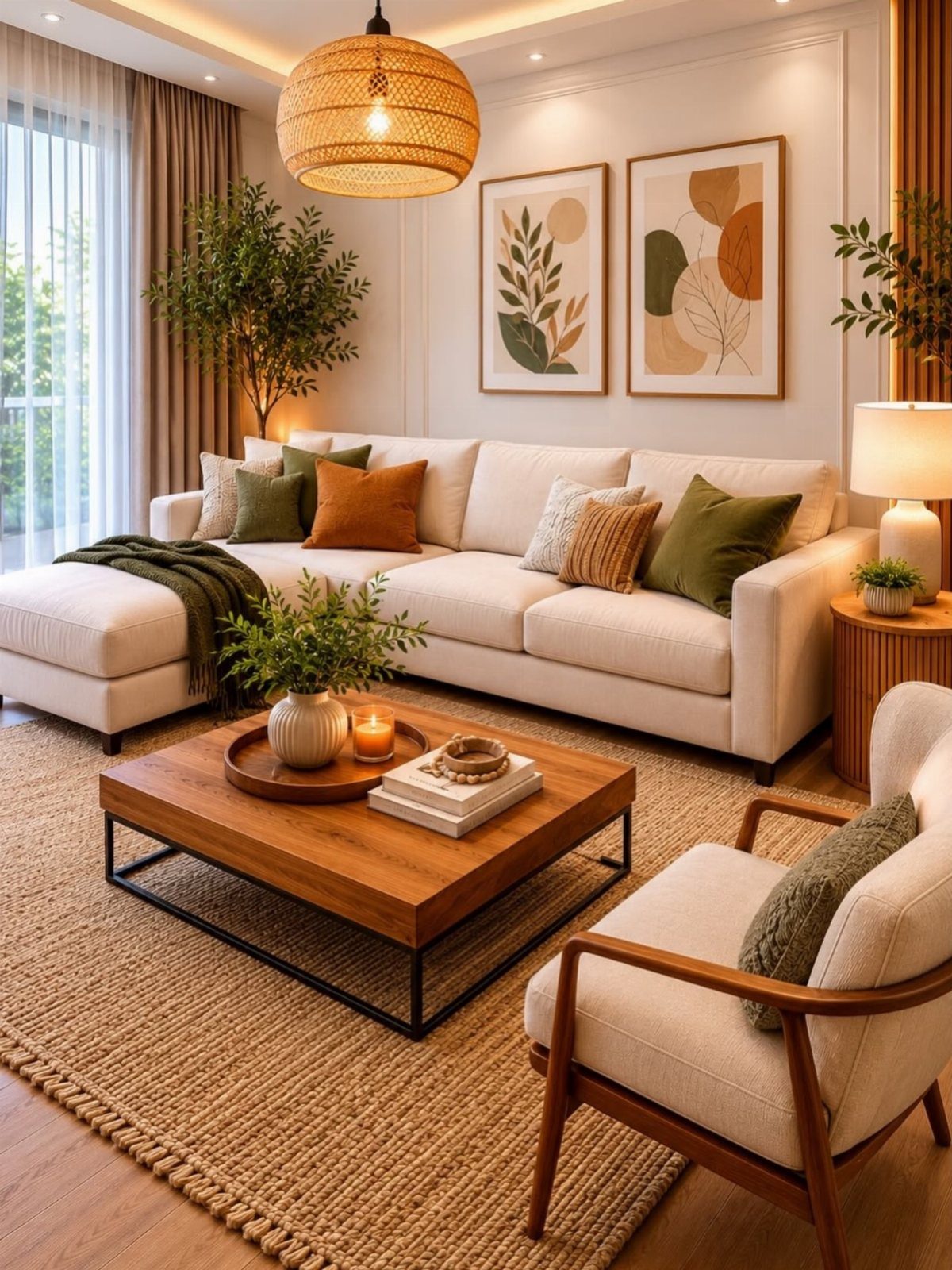
Soft neutrals set the backdrop for farmhouse style without competing with the furniture or the textures you layer in. Cream, warm white, and greige all work because they reflect light without going stark.
I lean toward colors with a slight warm undertone.
A true cool white can feel clinical in a living room, and farmhouse decor thrives on warmth. Test a sample on the wall and check it in morning and evening light before you commit to the whole room.
Flat or matte finishes suit walls. Eggshell wipes clean if you have kids or pets.
3. Oversized Rug
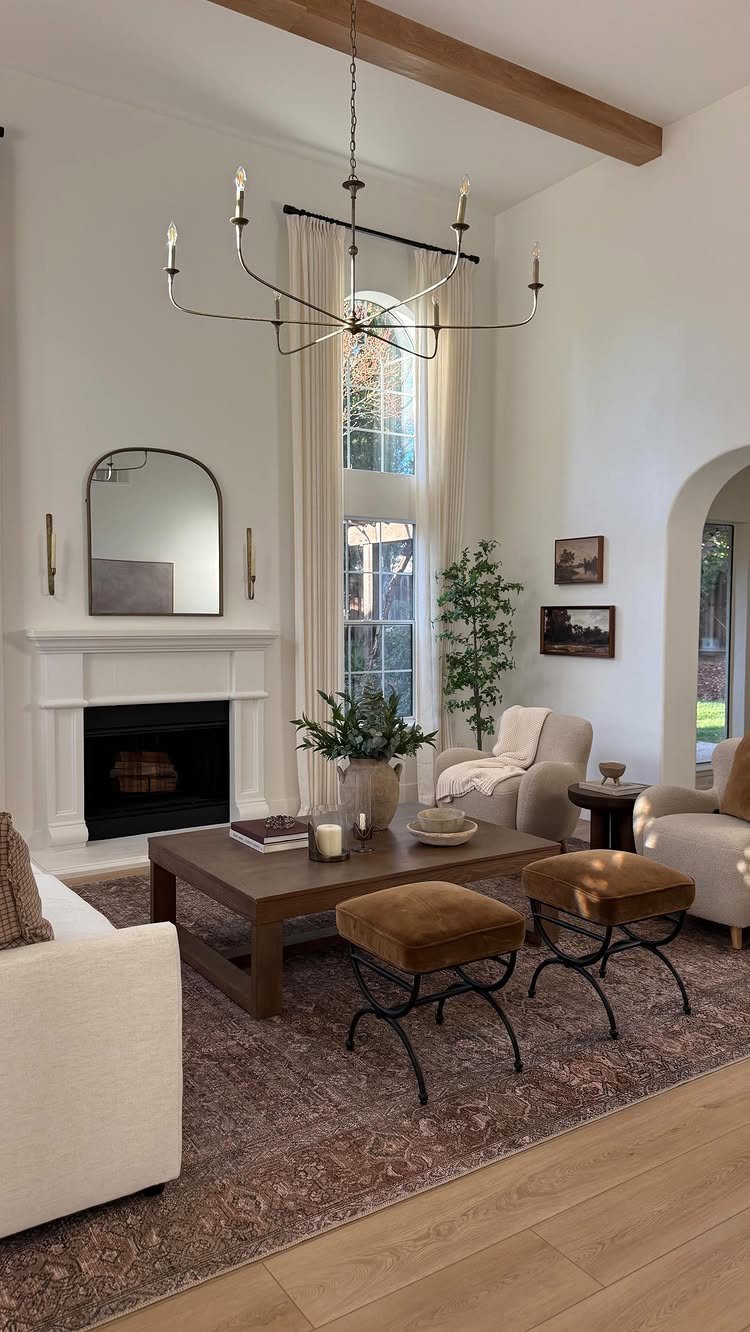
A rug that extends well beyond the coffee table and under the front legs of your seating pulls the furniture into one cohesive zone instead of letting pieces float.
Pick a rug that lets all the front legs of your seating sit on it, with the back legs either on or off depending on the room’s shape.
Jute, sisal, and flatweave wool all suit farmhouse interiors.
Patterned rugs in muted tones add visual interest without overwhelming the space. Solid colors work when you want the furniture or the textures to carry the room.
Leave a border of floor visible between the rug edge and the walls so the room doesn’t feel wall-to-wall.
4. Shiplap Cladding
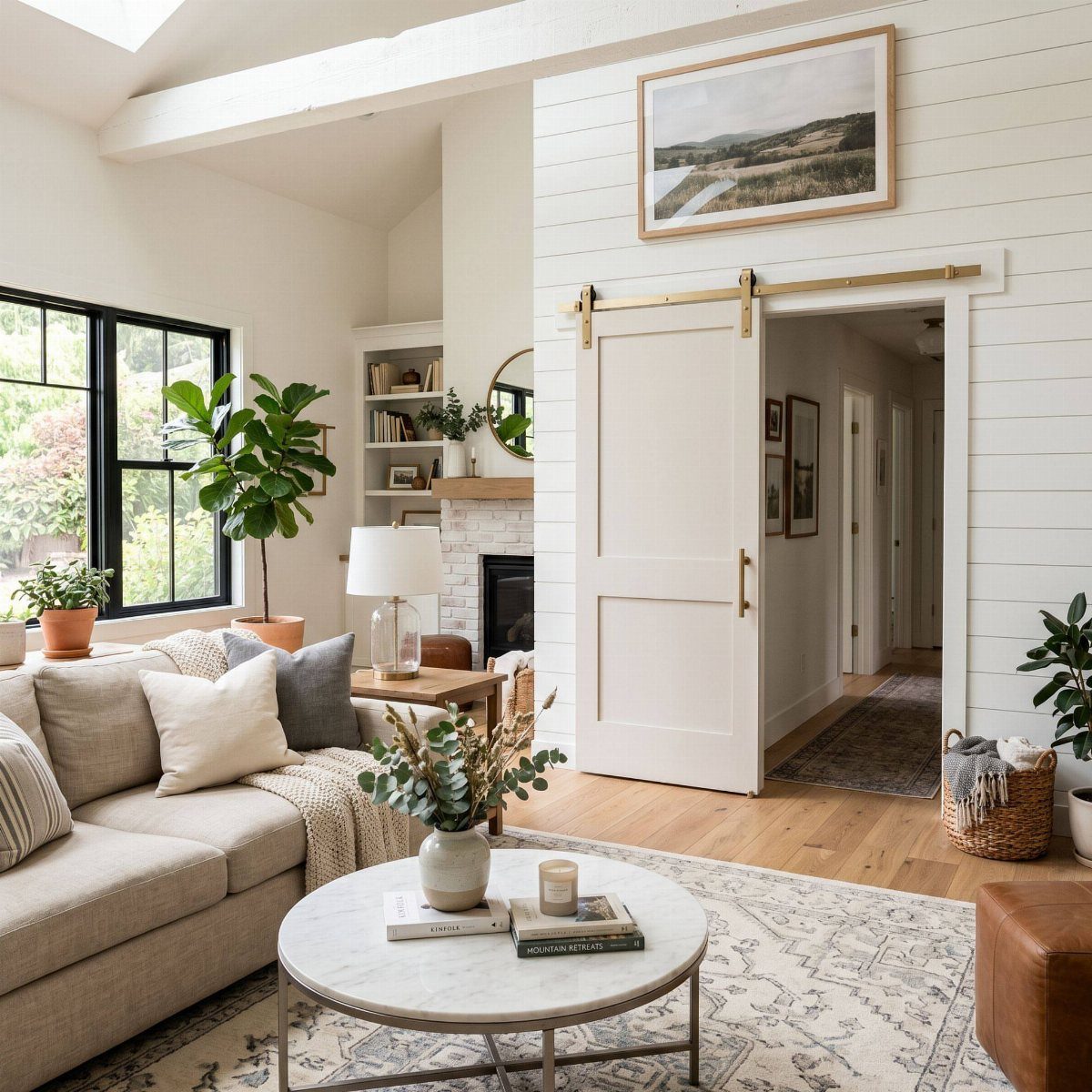
Horizontal planks with narrow gaps between them give farmhouse interiors their clean-lined texture. Shiplap works on a full wall or as a wainscot running halfway up, and it hides uneven drywall better than paint alone.
Primed pine boards are the budget pick at most home centers. You nail them directly to studs or over drywall, starting at the floor and working up.
A nickel or a thin spacer keeps the gap consistent. Caulk the seams if you want a smooth modern look, or leave them open for more texture.
Paint it white or the same color as the ceiling to keep the room bright.
5. Slipcovered Sofas
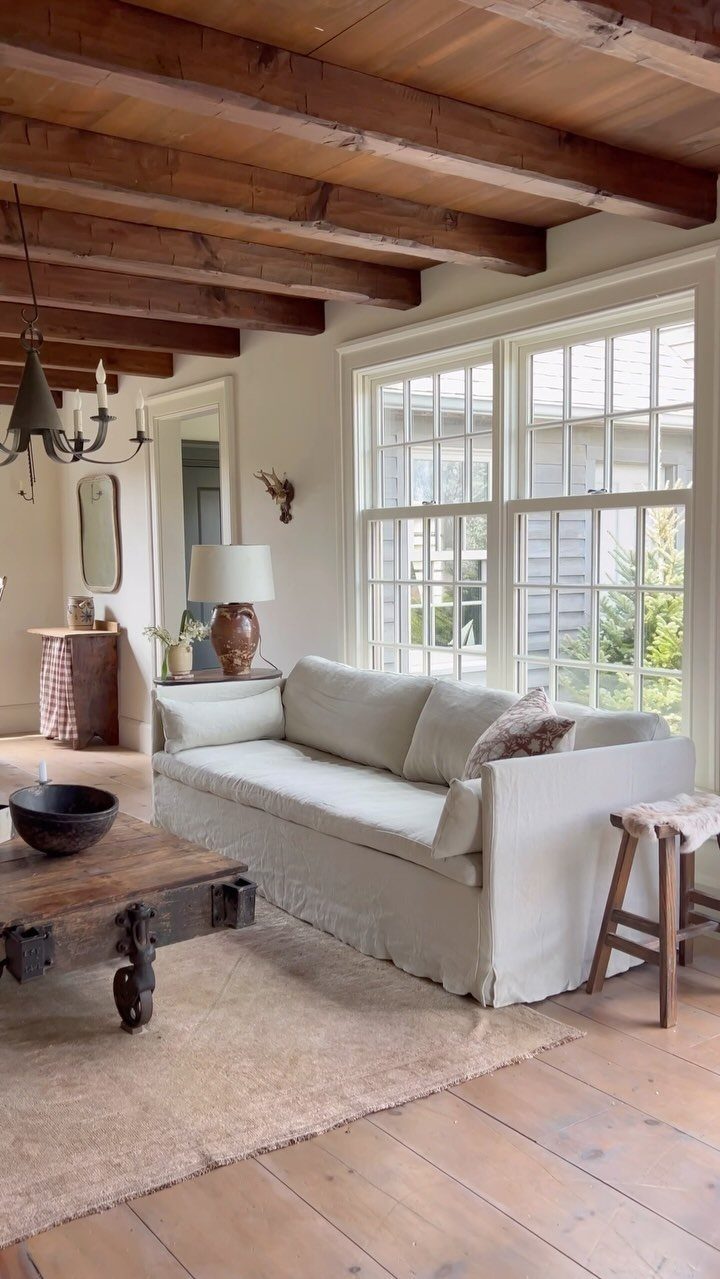
A slipcover in natural linen or cotton duck softens a living room and hides wear better than upholstery that shows every mark.
The loose fit and visible seams suit farmhouse style, and you can pull the cover off to wash it when needed.
White and cream are the most common choices because they brighten the room and pair with any accent color.
Oatmeal and light gray work if you want a slightly warmer or cooler base. Shrinkage happens with cotton, so buy a cover that fits snug before the first wash or plan to steam it back into shape.
Tuck the fabric tight around the cushions so it doesn’t look sloppy.
6. Coffee Table
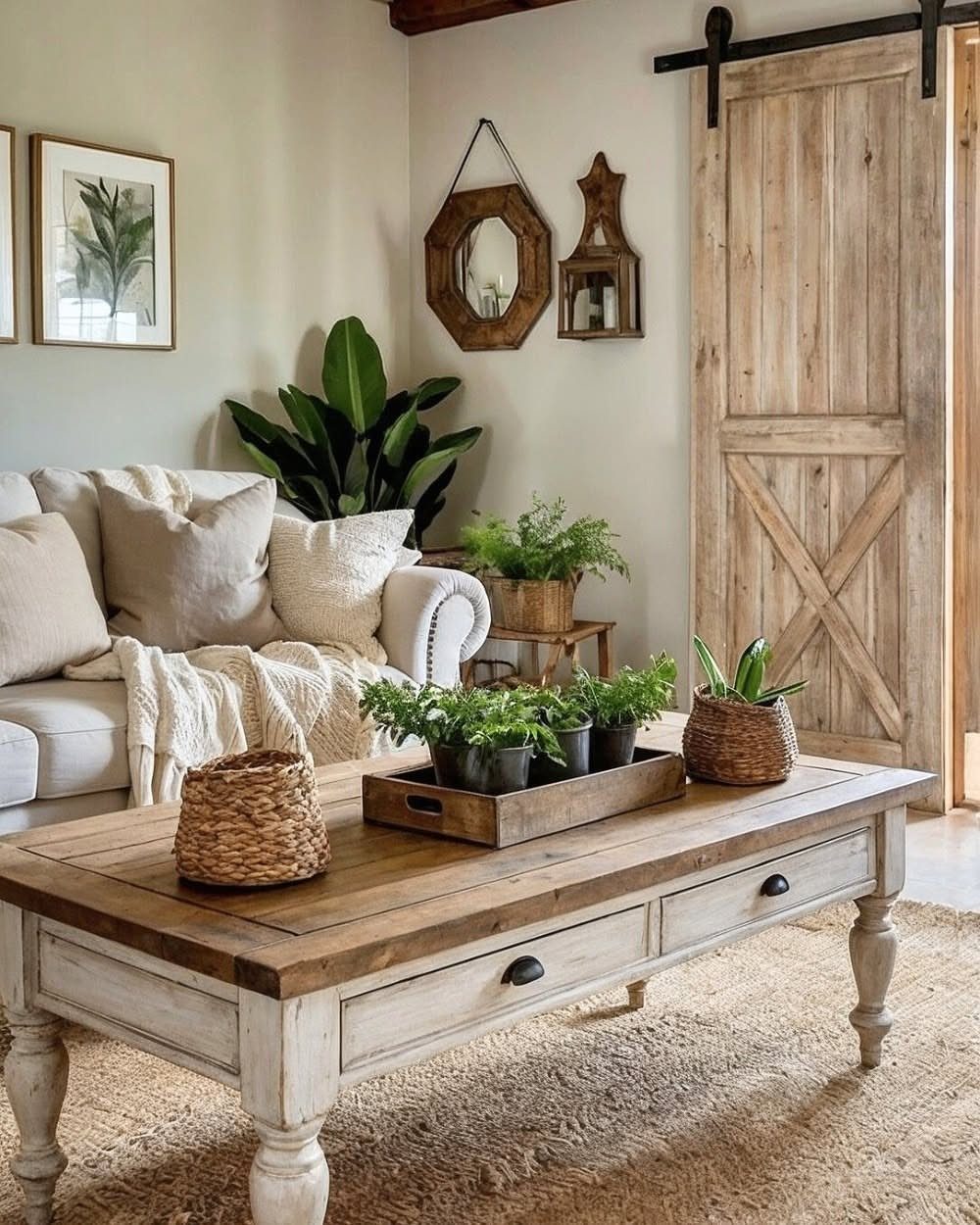
A solid wood coffee table with a chunky top and a painted or distressed base anchors a farmhouse living room and gives you a surface that can take daily use.
The two-tone finish, wood on top and white or gray below, ties the table to the rest of the room without matching everything exactly.
Reclaimed wood or new pine with a weathered stain both work. The table should sit close enough to reach your coffee mug without leaning but far enough that you don’t bump knees when you sit down.
Height matters: aim for the same level as your sofa seat or an inch or two lower.
Style it with a tray, a small plant, and a stack of books.
7. Farmhouse Wall Decor
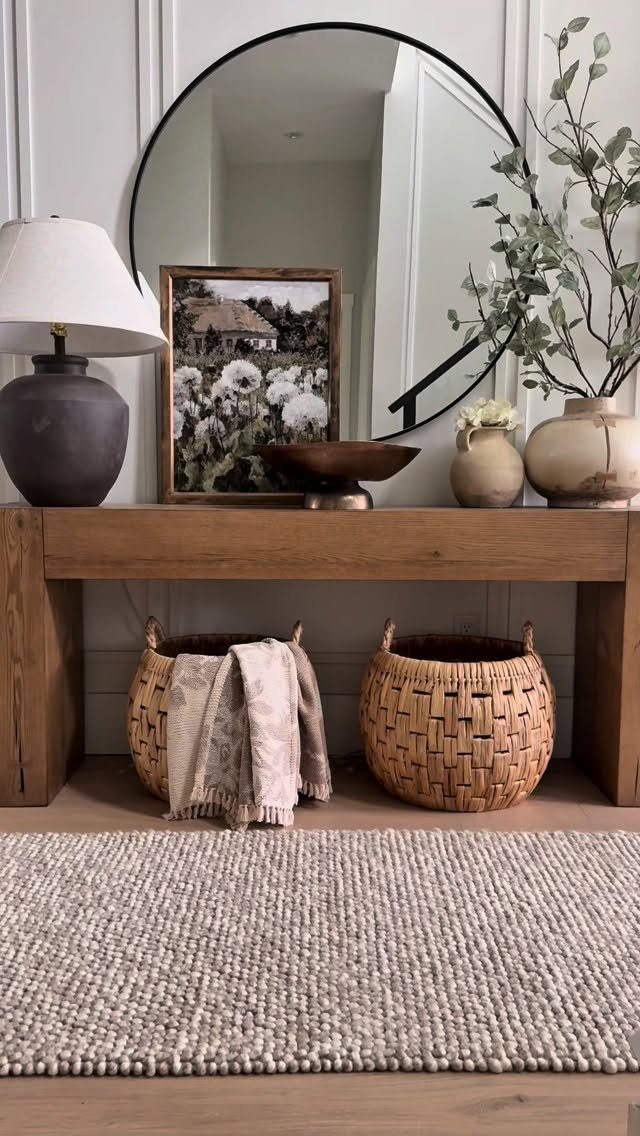
A round mirror, a piece of art, and a few natural objects on open shelves or a console give a farmhouse wall its character without filling every inch.
The mix matters more than matching: wood, metal, and woven textures in muted tones read as collected rather than bought as a set.
A heavy frame can rest against the baseboard rather than going up with hardware, and you can shift it whenever the grouping changes.
Group smaller items in odd numbers and leave space between them so each piece registers on its own.
Keep the palette neutral so the wall supports the room instead of competing with it.
8. Vintage Items
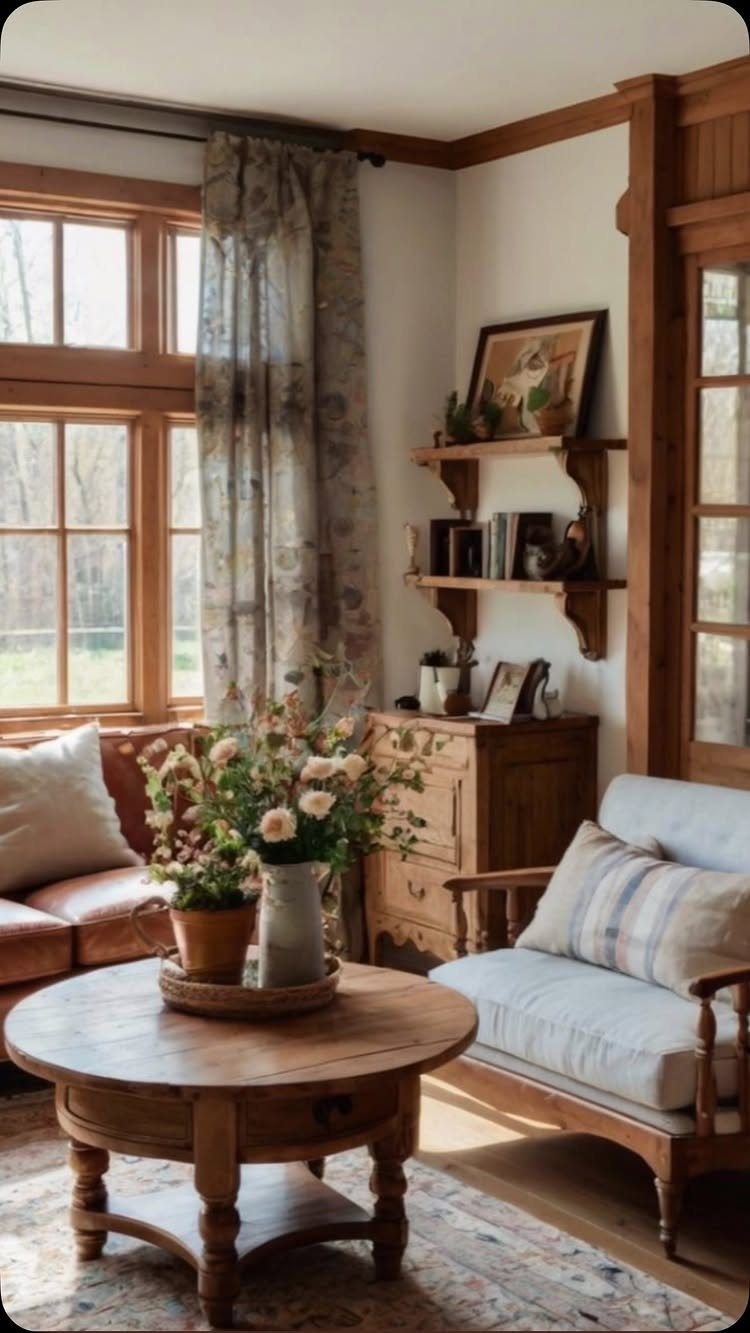
A wooden chest, a worn stool, or a set of old books brings age and texture into a farmhouse living room in a way new furniture cannot.
The patina and the weight of real vintage pieces ground the space and make it feel less staged.
Flea markets, estate sales, and online marketplaces turn up pieces at prices that vary widely depending on condition and demand.
Look for solid construction and finish that can be cleaned or lightly restored without losing the wear that makes it interesting.
Mix vintage with new so the room feels lived in, not frozen in time.
9. Built-in Shelving
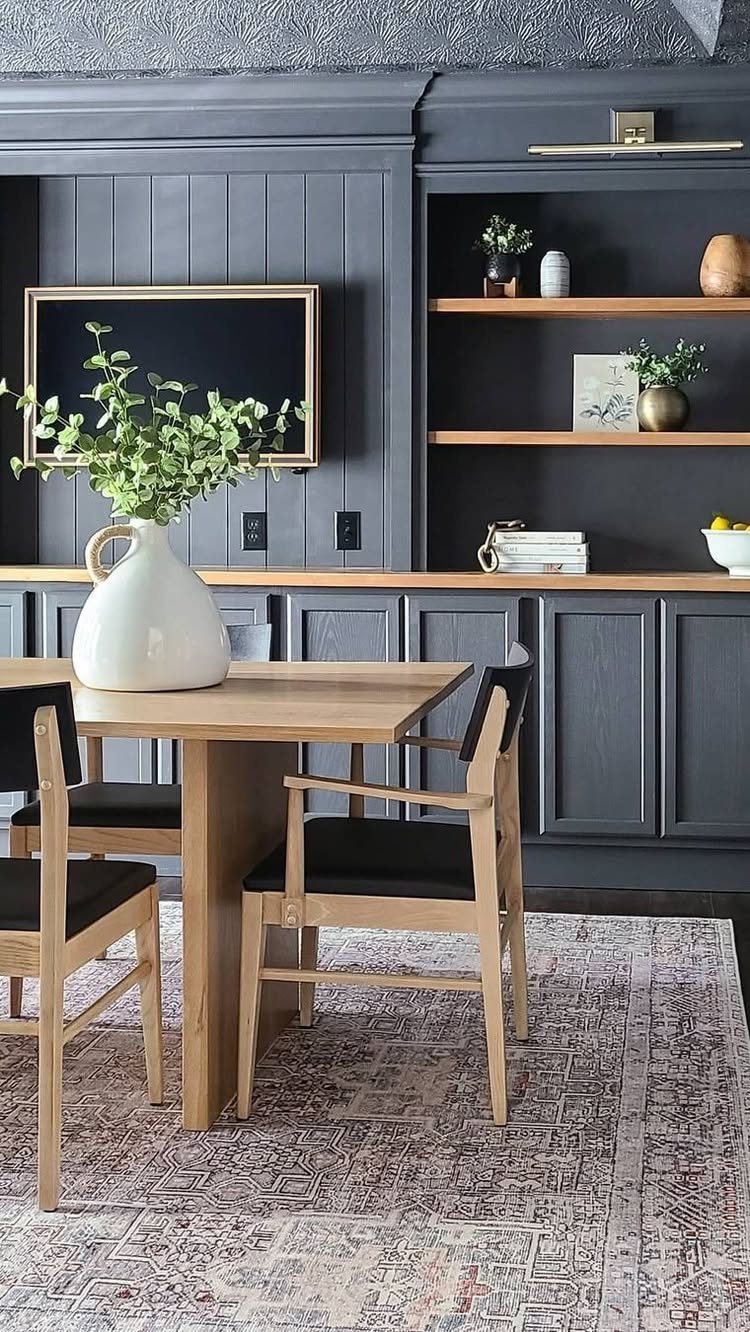
Floor-to-ceiling shelves built into the wall give you storage and display space without taking up floor area. Open shelves suit books, baskets, and everyday items you want within reach, while lower cabinets hide less attractive storage.
Custom built-ins cost thousands and require a carpenter. Stock cabinetry installed between wall studs and trimmed out with molding gives a similar look for less if the dimensions work with standard sizes.
Paint the interior back panel a dark color to add depth, or leave it white to keep the room bright.
10. Reading Nooks
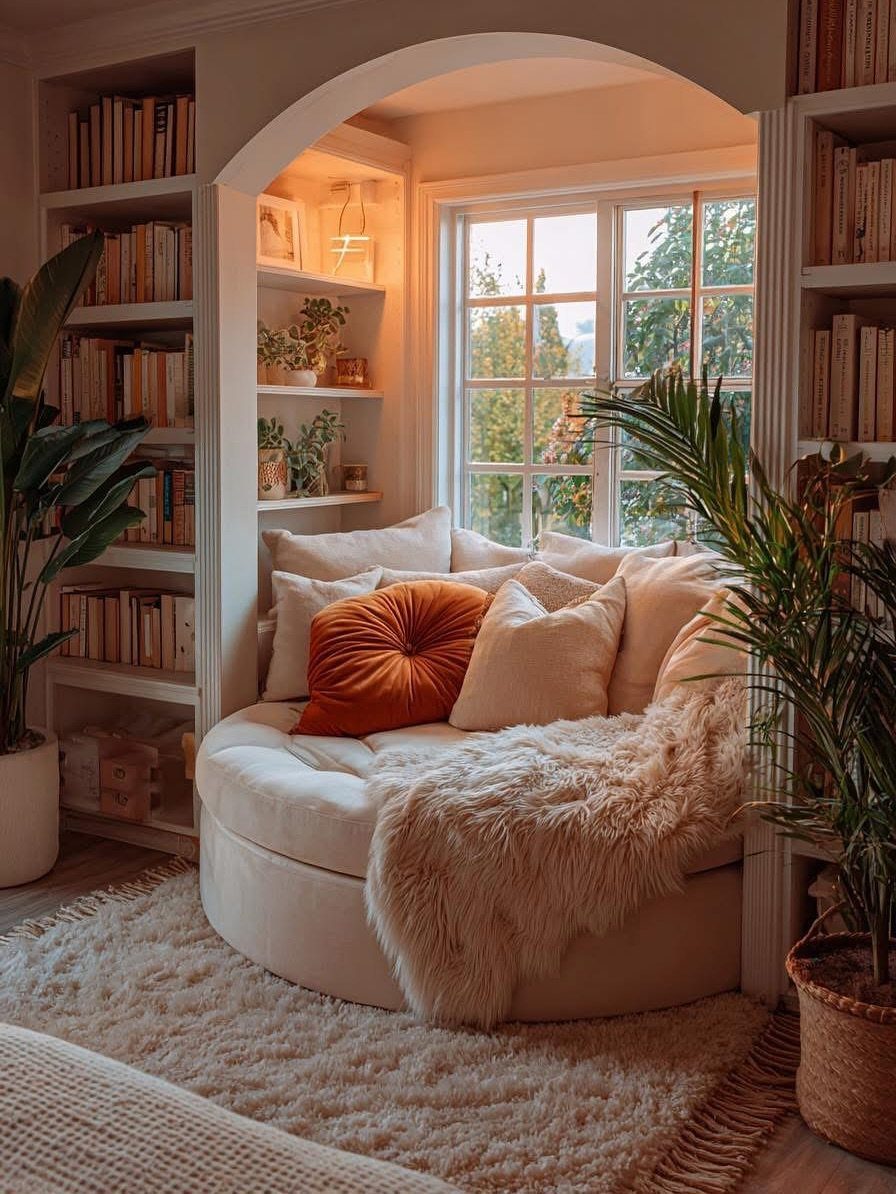
Tuck a cushioned seat into a window alcove or corner and you have a dedicated spot to read without committing floor space to another full chair. Built-in benches with storage underneath work in spaces too narrow for freestanding furniture.
Line the seat with a foam cushion cut to size and cover it in canvas or linen that can be removed and washed. Add pillows for back support and a throw for warmth.
I put mine next to a window so afternoon light is free, then run a small lamp after dark.
11. Layering Textures
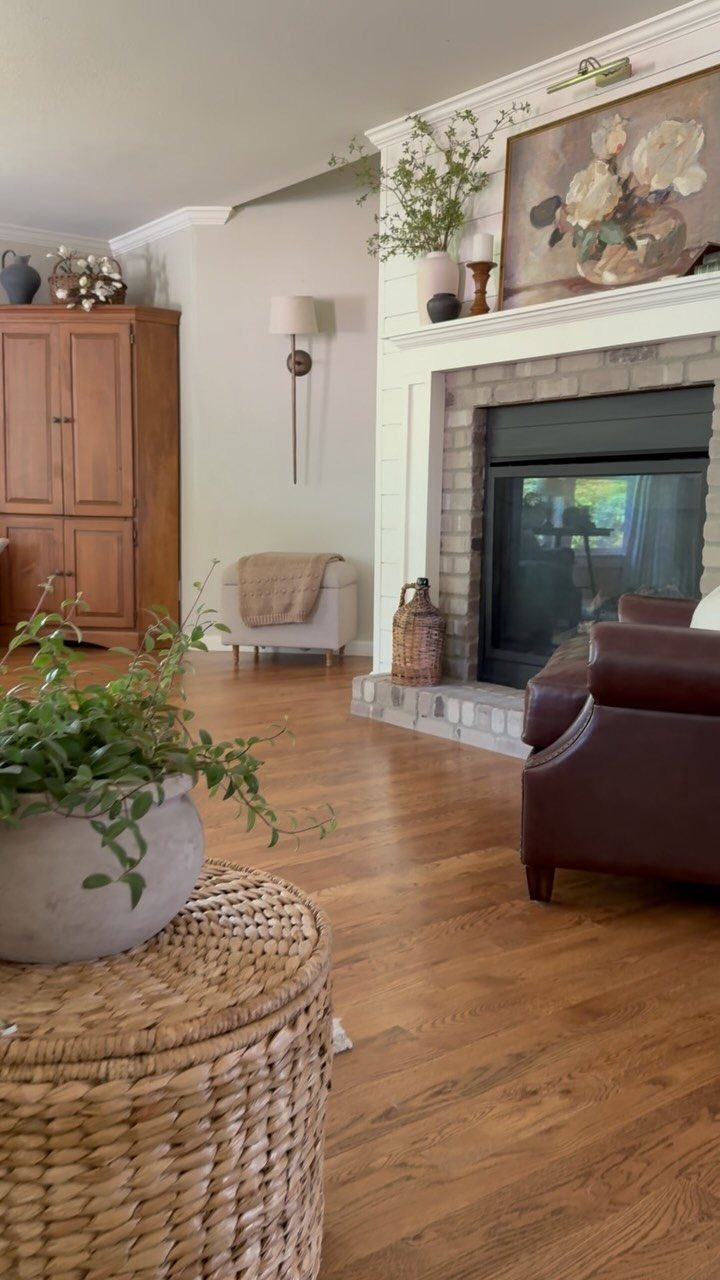
Combine smooth leather, rough woven baskets, soft linen, and natural brick or wood in one room and the space feels richer than it would with any single material. Farmhouse style depends on that contrast more than on any one piece.
Start with larger textured items like a jute rug or a brick fireplace, then layer in softer elements through pillows, throws, and upholstery.
Too much of one texture flattens the room, so alternate between rough and smooth as you add pieces.
Stick to a narrow color range so the textures stay visible instead of competing with pattern or color.
12. Farmhouse Lighting
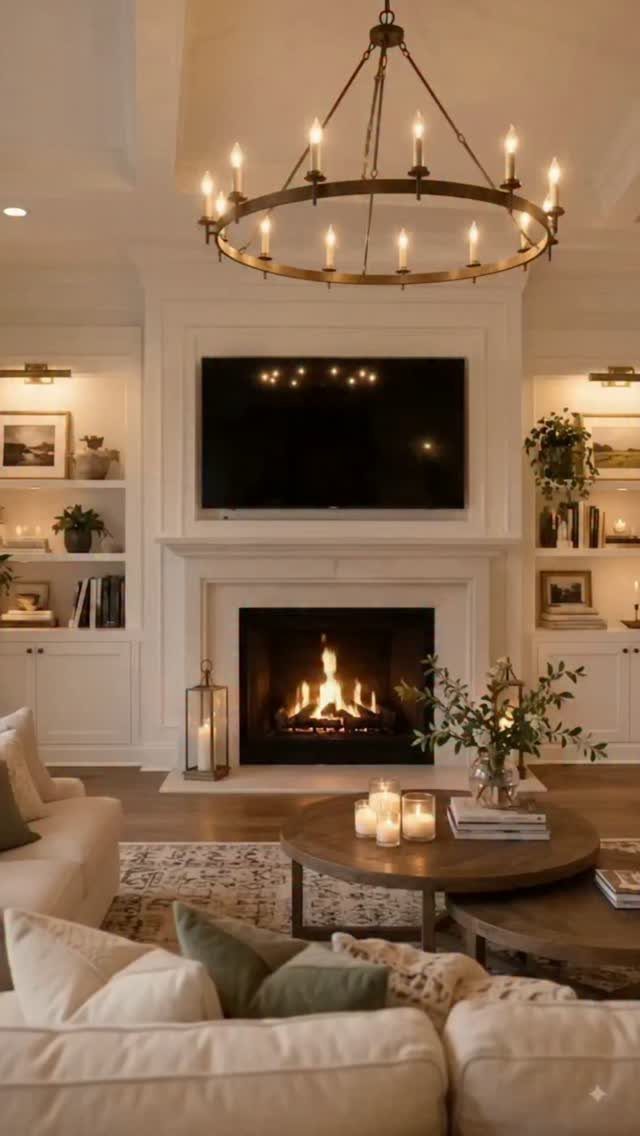
A candle-style chandelier with multiple arms or a round fixture in black metal or aged wood gives a farmhouse living room its overhead warmth without harsh downlight.
The fixture should sit low enough to feel present but high enough that no one walks into it.
Hang it centered over the seating area or the coffee table, not over the traffic path. Dimmable bulbs let you adjust the light level for different times of day.
Pair it with table lamps or sconces so the room has layered light instead of relying on one overhead source.
13. Personalized Decor
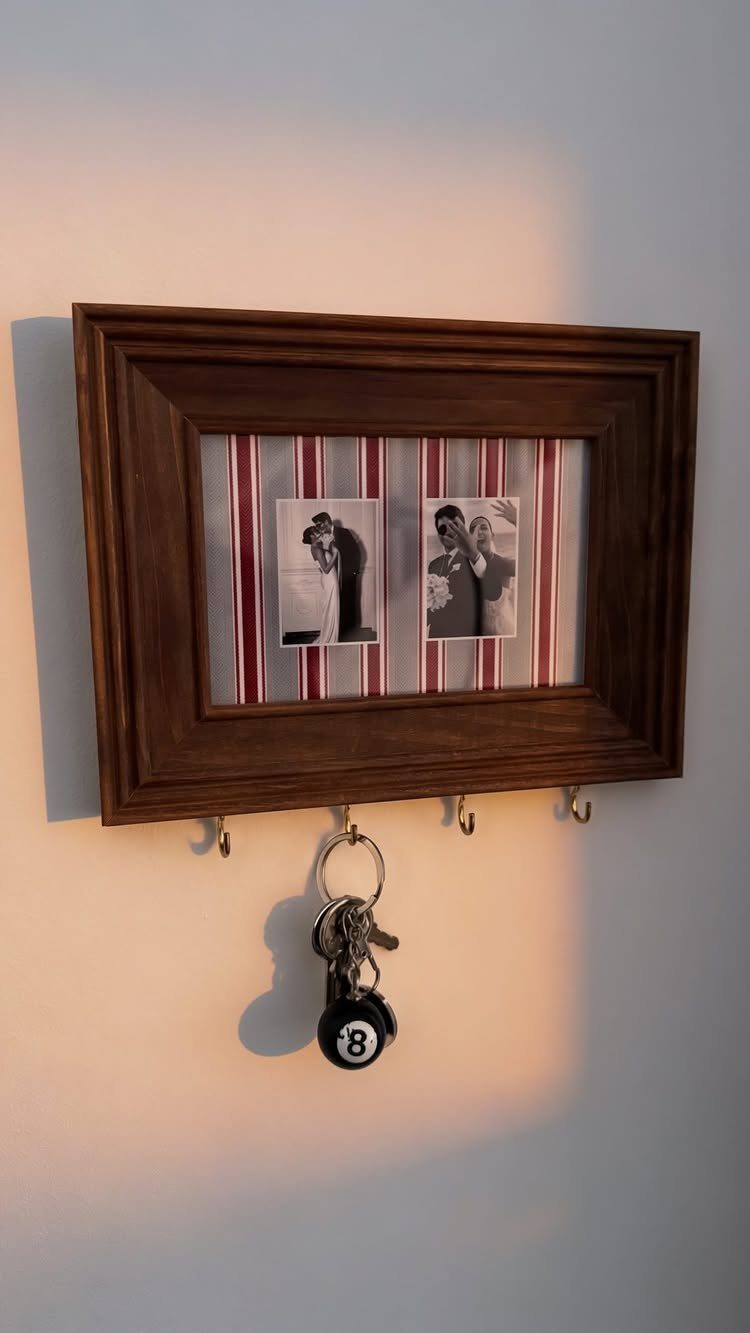
A photo frame that doubles as a key holder puts something you look at every day to work. Mount it near the door so keys go straight onto their hooks instead of disappearing into a bag or onto a counter.
Photos you care about make the whole room feel like yours instead of something staged from a catalog. Pick images that suit the room’s color palette so the piece reads as decor, not just function.
This one was made in the UK and ships as a finished piece.
14. Farmhouse-style TV Stands
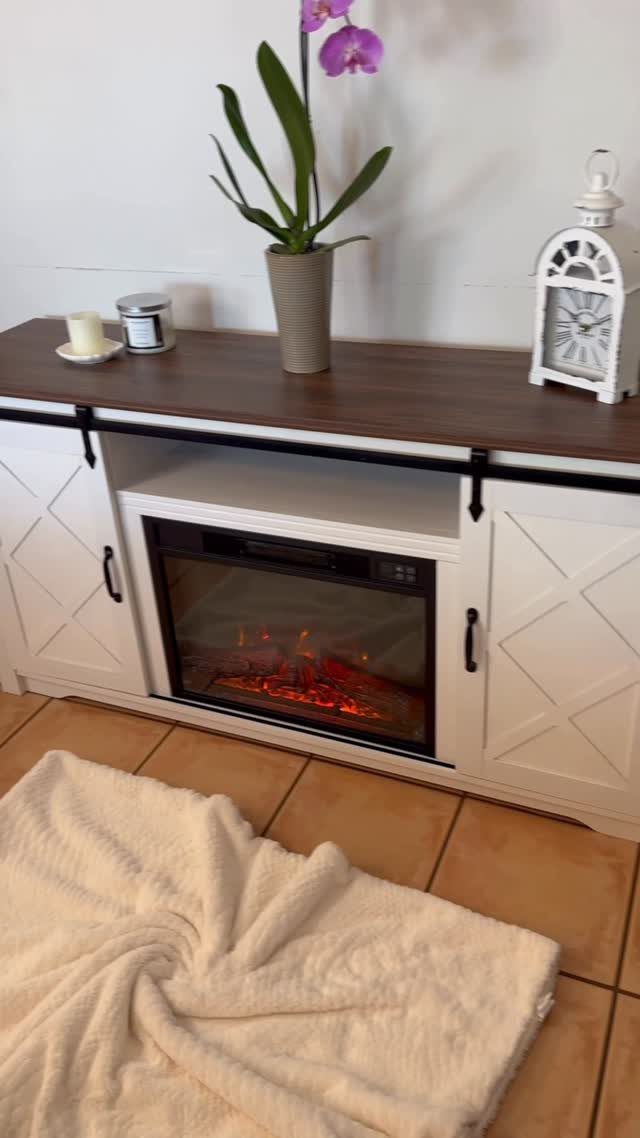
A TV stand with sliding barn doors hides storage or an electric fireplace below and keeps the living room from looking like a media center.
The white base and wood top give you the two-tone finish that suits farmhouse interiors, and the doors add texture without taking up swing clearance the way hinged cabinets would.
Some models include an electric fireplace insert below the TV, which adds warmth and a focal point in rooms without a real fireplace.
The insert plugs into a standard outlet and runs independently of the heat if you only want the flame effect.
Look for one with enough interior depth to hold a cable box and gaming consoles without crowding.
15. Soft Throws on Sofas
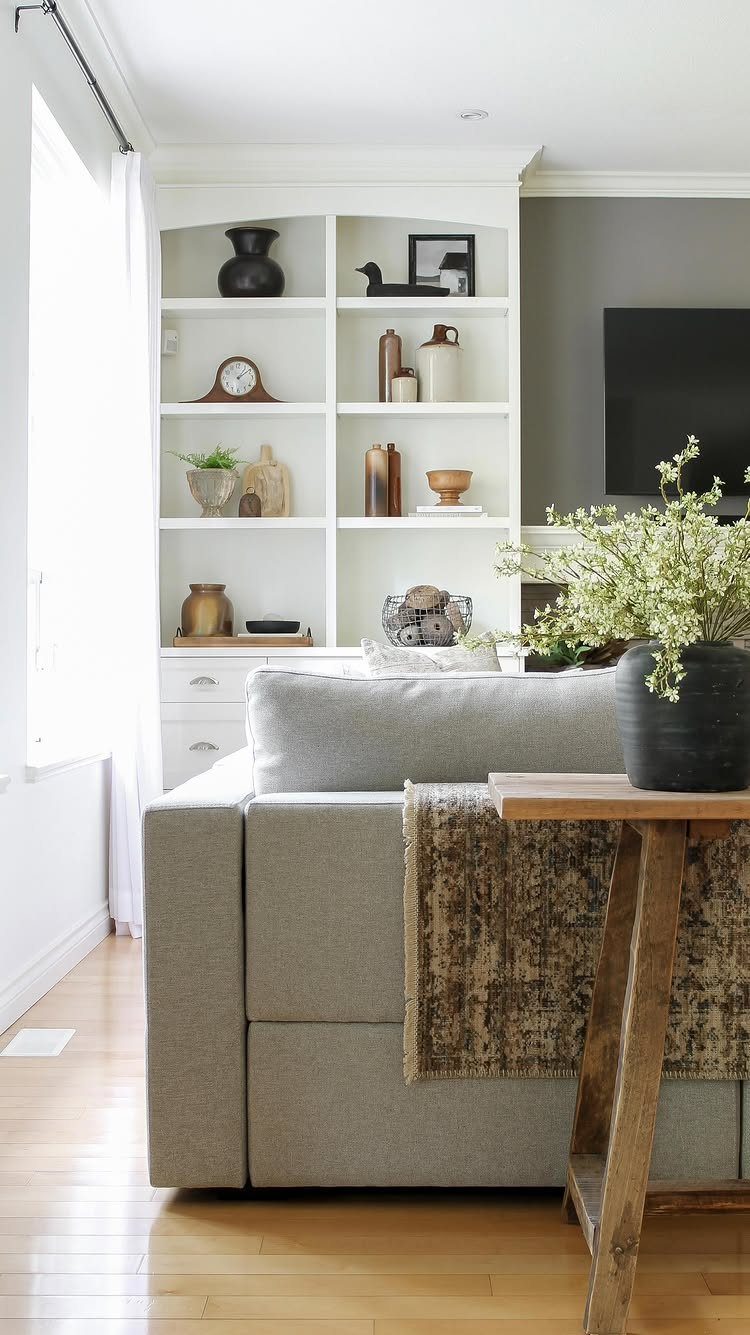
Drape a textured throw over one arm or across the back of the sofa and the room feels warmer without adding another piece of furniture.
The throw also hides wear on upholstery and gives you something to pull over your lap without hunting through a closet.
Pick a color that contrasts slightly with the sofa so the throw registers as a separate layer. Chunky knits, waffle weaves, and linen all suit farmhouse style and hold their shape better than thin fleece.
Fold it loosely so it looks casual, not styled.
16. Farmhouse Sideboard Console
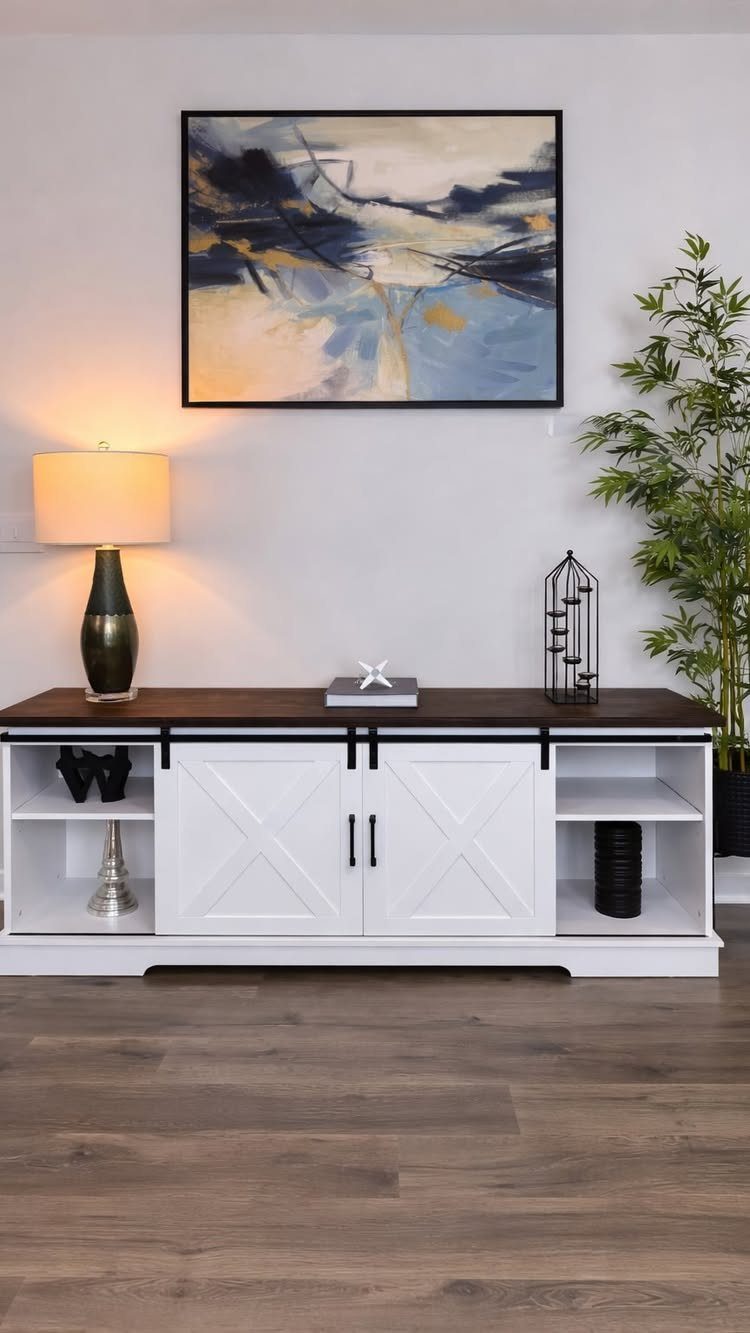
A sideboard with barn-style doors and a contrasting top gives you closed storage in a living room without the visual weight of a solid wood piece.
The white base keeps it light, and the dark wood top ties it to other furniture in the room.
Use the surface for a table lamp, a small plant, and a tray to hold everyday items that would otherwise clutter the coffee table.
Hang a large piece of art above it to pull the eye up and balance the horizontal line of the console.
The X-brace detail on the doors adds farmhouse character without hardware that catches on clothing.
17. Wood Tray Styling on an Ottoman
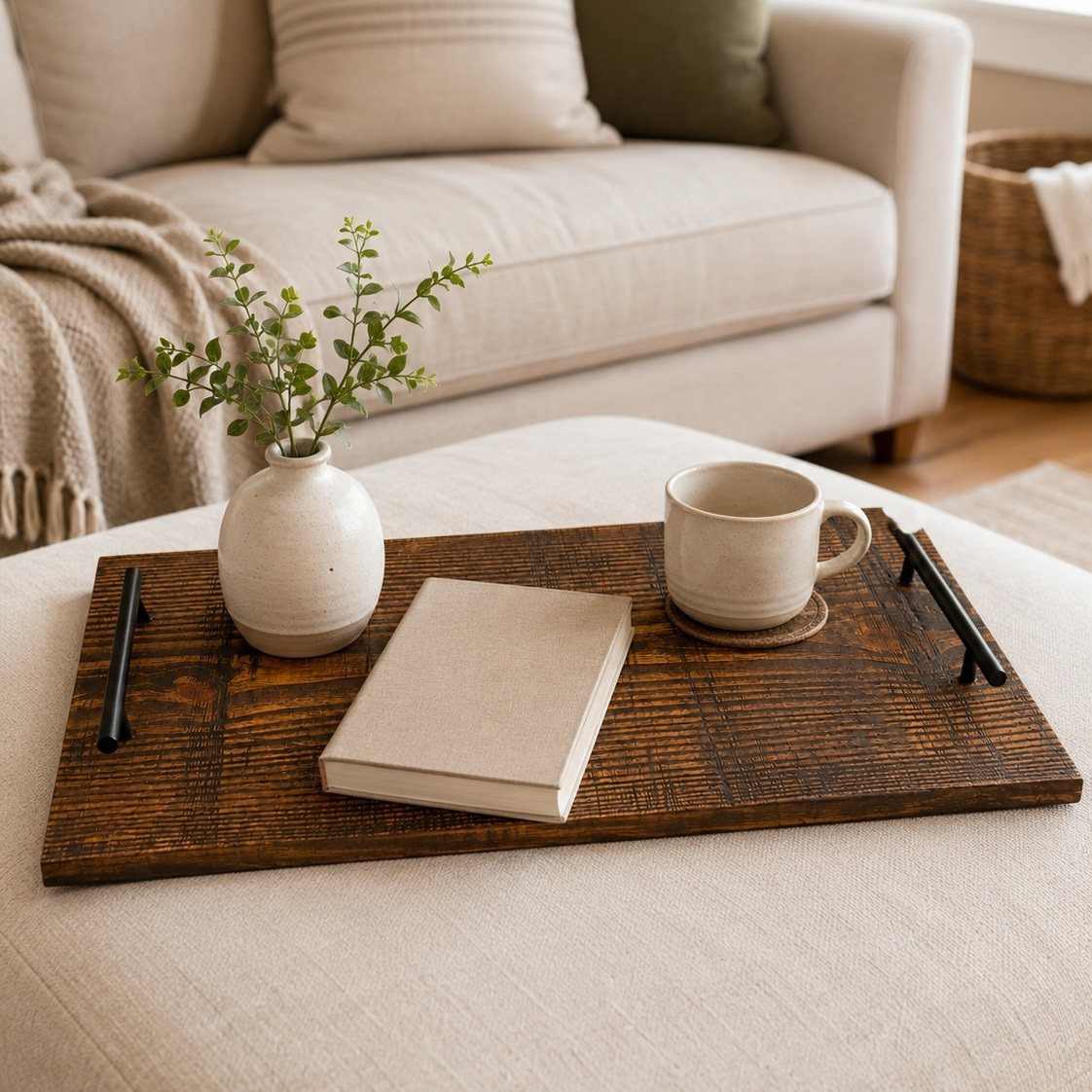
A handled tray corrals small items on an upholstered ottoman so the surface stays tidy and you can lift everything off in one move when you need the ottoman as a footrest.
The tray also protects fabric from spills and keeps mugs from tipping.
Keep what you put on it low and simple: a book, a candle, a small vase with greenery. Too many items or anything tall makes the tray look cluttered and blocks sightlines across the room.
Choose a tray in dark wood or painted finish that contrasts with the ottoman color.
18. Natural Stone Fireplace
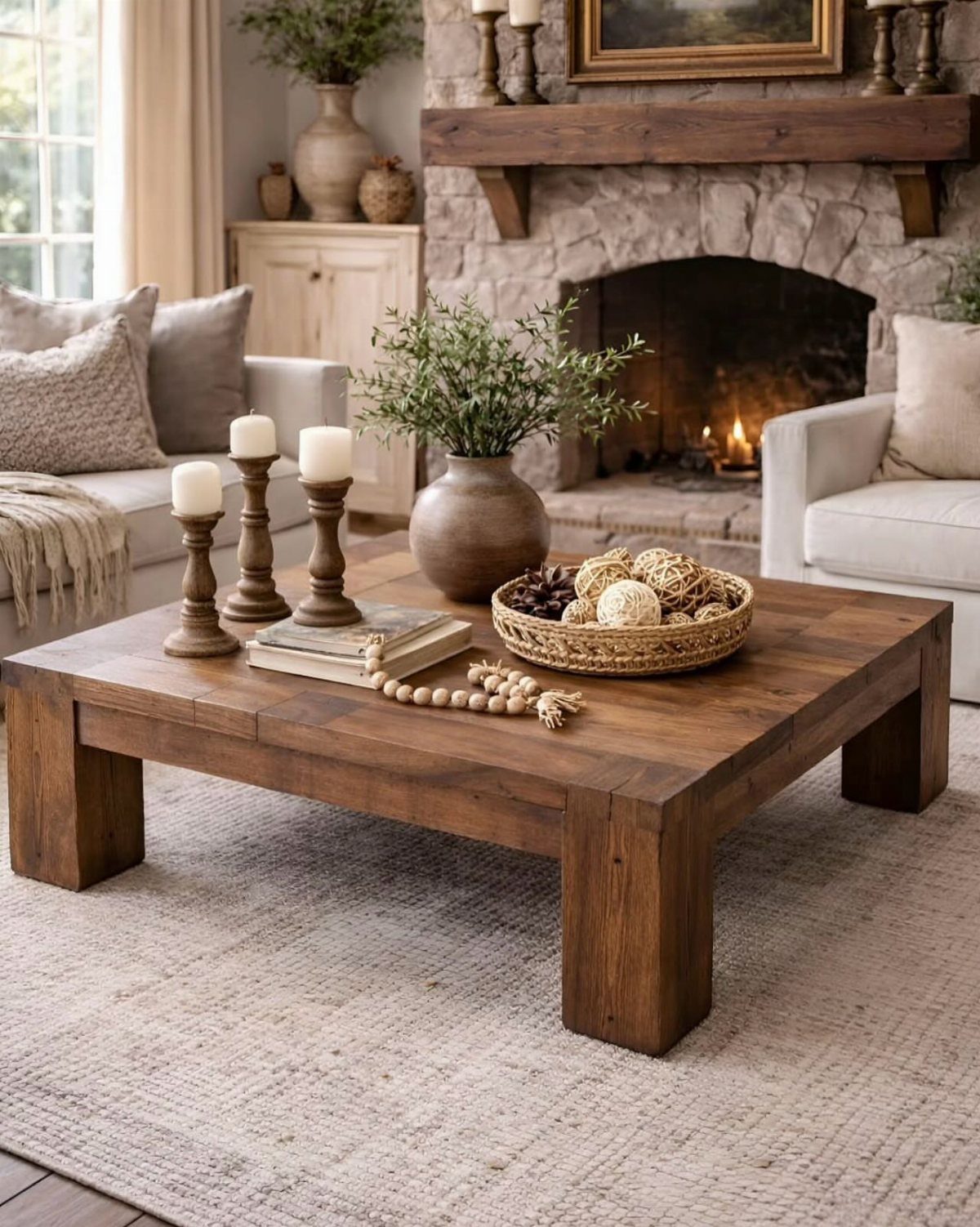
Stacked stone rising to the ceiling makes a fireplace the anchor of a farmhouse living room and gives you a textured surface that holds attention without needing decor.
The irregular shapes and natural color variation add depth that painted drywall cannot match.
Real stone is heavy and expensive, requiring a reinforced foundation and a mason to install.
Manufactured stone veneer weighs less and costs a fraction of the price, and it installs over a metal lath with mortar. The seams and color variation look convincing from a few feet away.
Leave the mantel simple so the stone stays the focus.
Choosing the Right Furniture
A sofa with clean lines balances a rustic coffee table better than another distressed piece does.
The mistake shows up when every surface in the room carries visible grain or weathered finish. The weight piles up fast.
Pick 1 or 2 anchor pieces in wood, then let the rest of the furniture pull back.
A reclaimed media console stands out when the end tables are metal or glass. A bench under the window grounds the layout when the rest of the seating is plain.
Slipcovers work because you can pull them off and wash them, and because the loose fit suits the style without looking fussy.
A rocking chair or a vintage stool adds character, but only if the room has space for it without crowding the traffic path.
Comfort matters more than matching. Choose pieces you’ll actually use, then let the textures do the rest.
Balancing Rustic and Modern
If the floor is already wood, stop at 1 more large wood piece and fill the rest with metal, glass, or fabric.
A reclaimed coffee table or a substantial media console carries the rustic side. The other furniture should stay light.
Pair a rustic piece with something refined. A reclaimed coffee table pairs cleanly with a structured sofa and a metal lamp.
A heavily textured wood bench balances an upholstered ottoman and a woven basket. Too many rustic pieces in one room flatten the contrast and make the space feel predictable.
Balancing rustic textures with modern lines is what keeps the style from tipping into cluttered traditional farmhouse territory.
One hero wood piece reads intentional. Five of them read like a catalog spread.
Glass, metal, and clean-lined fabrics keep the room from tipping too far rustic.
Creating a Cozy Atmosphere
Use what the room already has. A fireplace anchors the space without adding anything.
A big window dressed with quiet drapes does it too. A limewash wall or a painted contrast adds structure when the room has no built-in architecture.
Soft, muted colors set a cozy tone.
Pale blues, greens, and yellows relax the room without going stark. Whites and beiges work when you want warmth without color.
Matching flattens the room. Related tones feel refined and give the space depth.
Frequently Asked Questions
What color couch goes with farmhouse decor?
Neutrals like white, cream, oatmeal, and light gray give you the most flexibility when you want to swap pillows or rugs without starting over.
A slipcover in linen or cotton fits the casual feel of farmhouse style, and it comes off for washing when life happens.
Is farmhouse decor going out?
No, farmhouse style continues to evolve and remains popular for its warmth and comfort. The look thrives on simplicity and natural materials rather than trends, so it adapts without losing what makes it work.
What is modern farmhouse decor?
Modern farmhouse decor combines rustic charm with clean lines and natural textures for a cozy, inviting space.
It calls back to simpler times but stays current by balancing rough materials like wood and stone with refined pieces in metal, glass, or structured fabric.






