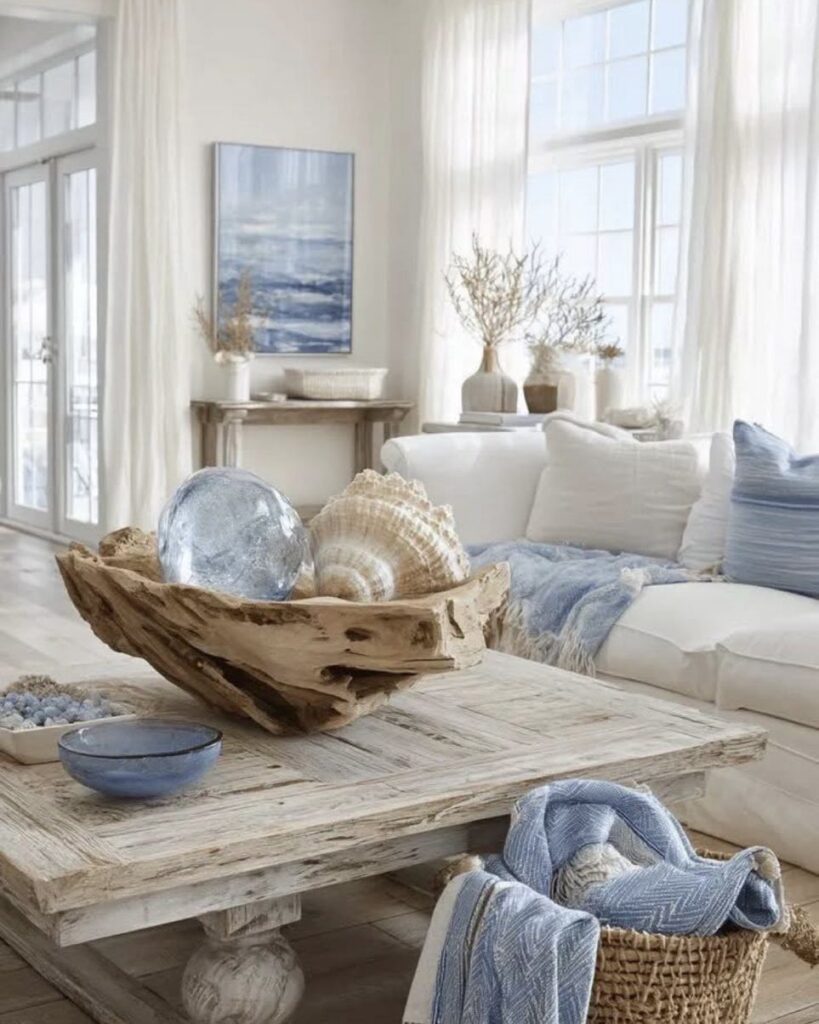
A beach house living room can run from a handful of colorful pillows on a neutral sofa to a canoe hung from vaulted ceiling beams, and the distance between those options is the point.
If you’re renting or working with fixed finishes, stick to what you control: paint colors, fabric, furniture, and decor that sits on a surface instead of going into the wall.
If you own the space and can commit to structural changes, shiplap walls, painted French doors, and open-beam ceilings shift the room permanently.
A single piece of driftwood furniture or one statement anchor on the mantel does more than a shelf full of shells.
1. Soft Blue and Sandy Beige Colors
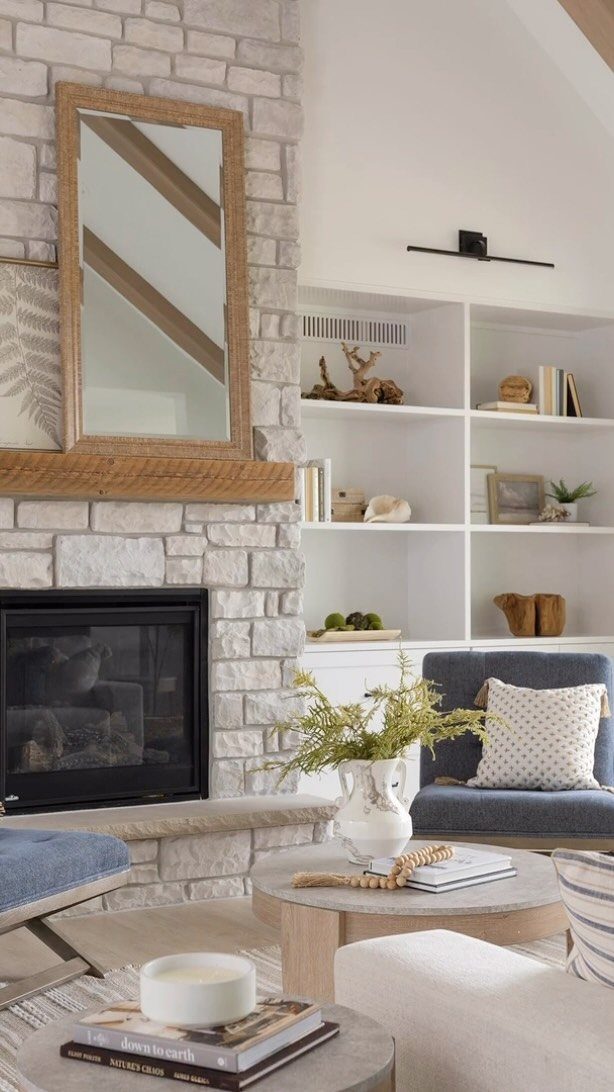
Pale blue and warm beige ground a beach house living room without taking over the room.
Blue reads instantly as ocean and sky, beige as sand, and together they keep the space calm enough that the rest of your choices can be practical.
I pull blue into upholstered pieces like armchairs or accent chairs, where it anchors a seating area, and let beige cover larger surfaces like sofas, ottomans, or area rugs.
White walls and shelving stay neutral, and a stone fireplace in grey or tan adds texture without adding another color to manage.
The palette works in any light and suits renters who can’t repaint.
Incorporate the soothing colors of the sand and ocean into your living room decor to transform the space into a year-round seaside retreat.
2. Driftwood and Reclaimed Wood Furniture
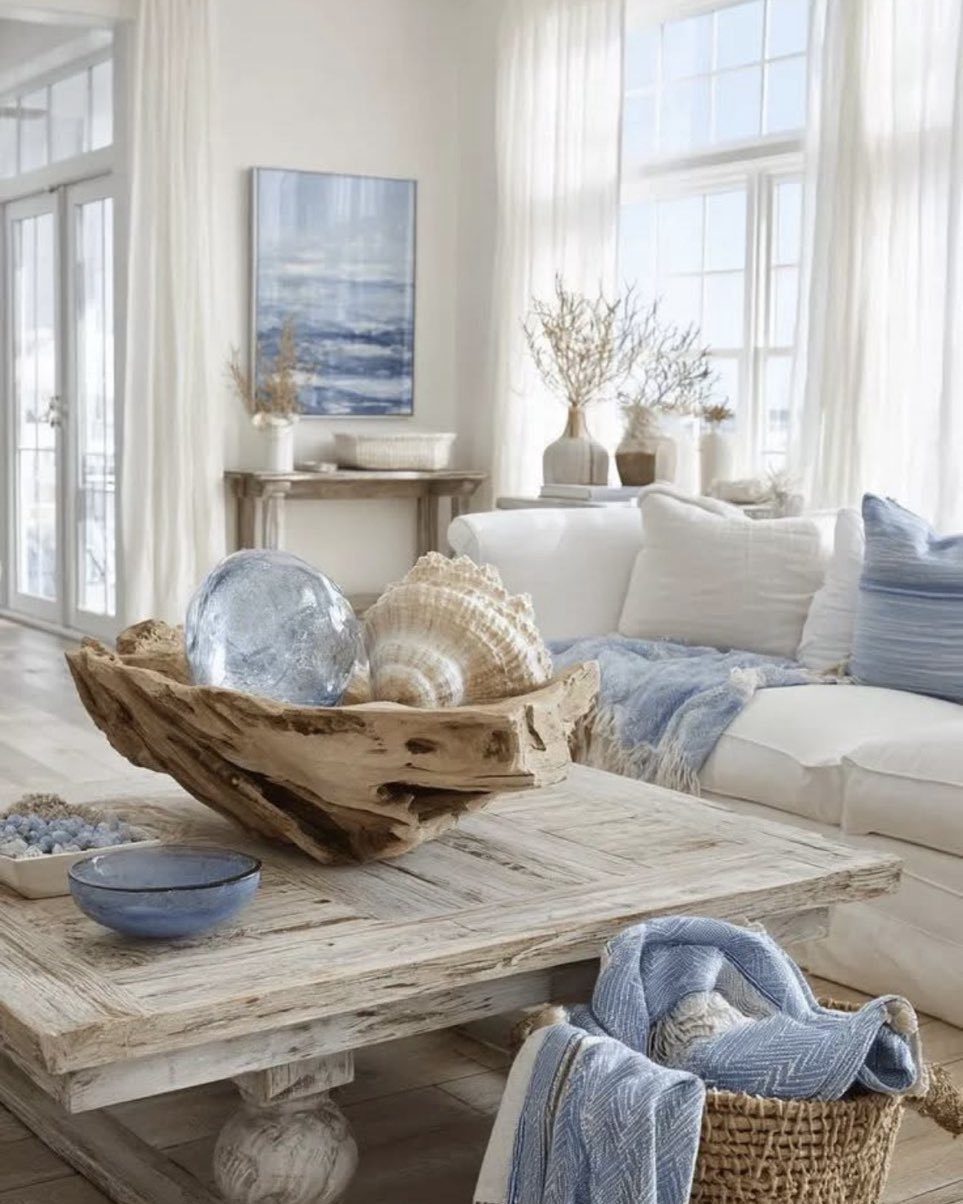
A reclaimed wood coffee table brings weight and texture into a space that can otherwise tilt too clean.
The grain shows weathering, knots, and color variation that new wood lacks, and that history sits well against white upholstery and painted walls.
Driftwood works on a smaller scale. A bowl carved from it holds shells or sits empty on an end table, and the bleached grey tone contrasts with darker furniture.
Both materials read as coastal without relying on blue paint or nautical prints, and both suit a living room that wants texture over theme.
3. Ropes, Anchors, and Shells
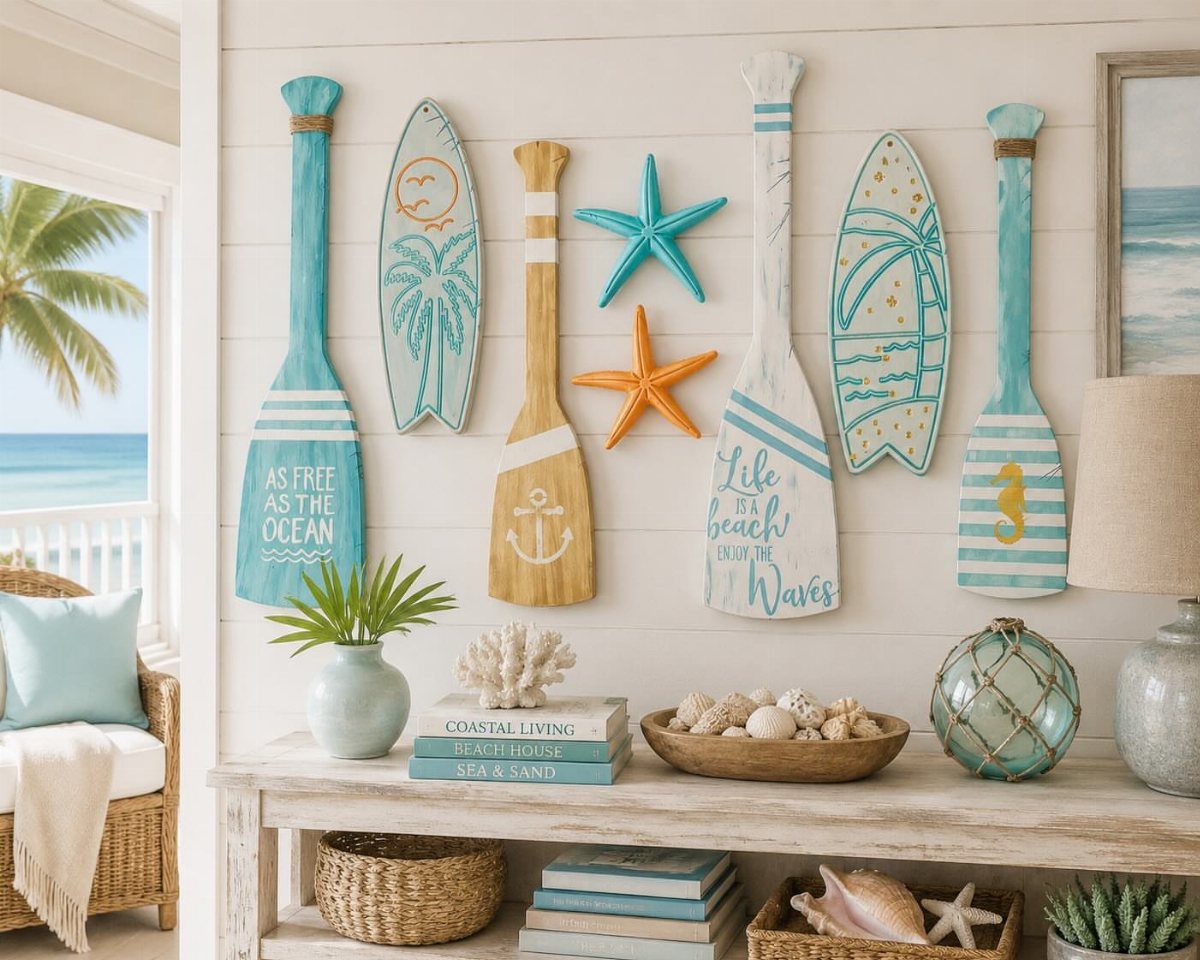
Rope, anchors, and shells make the beach house connection obvious, and that directness is the point. Hung on a wall or arranged on a console table, they anchor the room to its location without subtlety.
Decorative oars and surfboards work vertically above furniture, starfish and coral fill trays or shelves, and rope can wrap vases or picture frames.
The look is immediate and literal, which suits a vacation home where you want the theme clear from the entry. In a year-round house, I use fewer pieces and space them farther apart.
4. Open Floor Plan with Large Windows
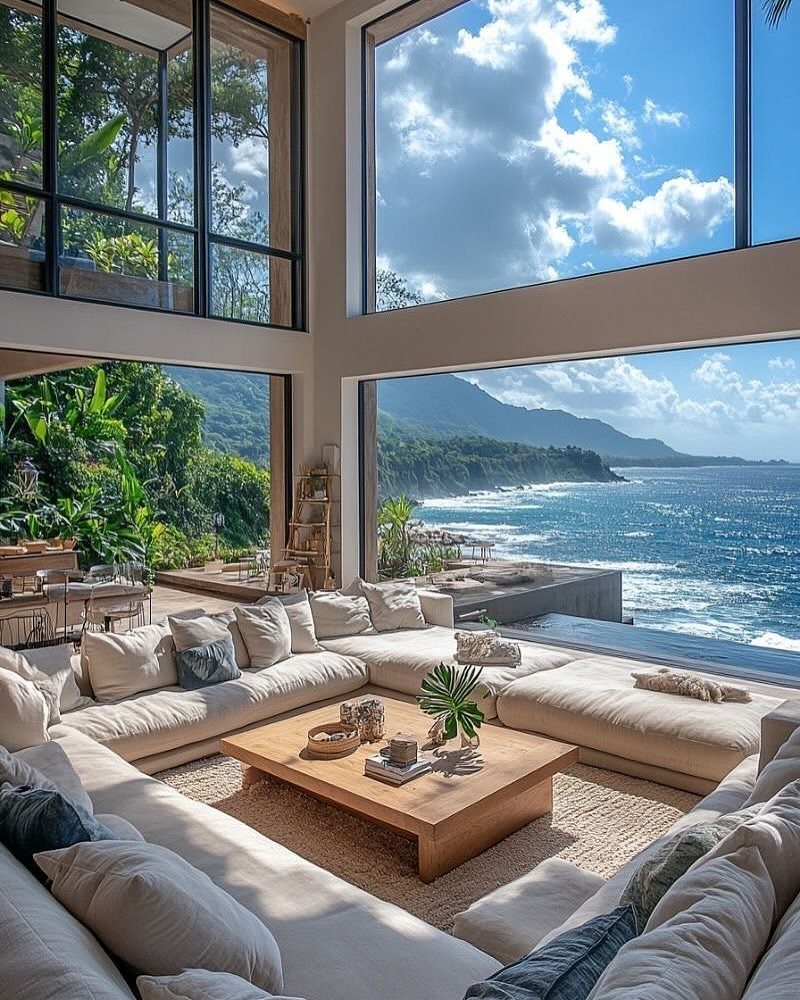
An open floor plan with floor-to-ceiling windows lets the view run through the room instead of stopping at the wall.
The layout connects living space to kitchen or dining areas without barriers, and the glass pulls the ocean or coastline into the room as a backdrop you don’t have to decorate around.
Furniture stays low and neutral so it doesn’t compete with the view.
A sectional in beige or grey, a wood coffee table, and minimal wall decor keep the focus outward. The setup works best when the windows face water or landscape worth seeing.
5. Open-Beam Ceilings
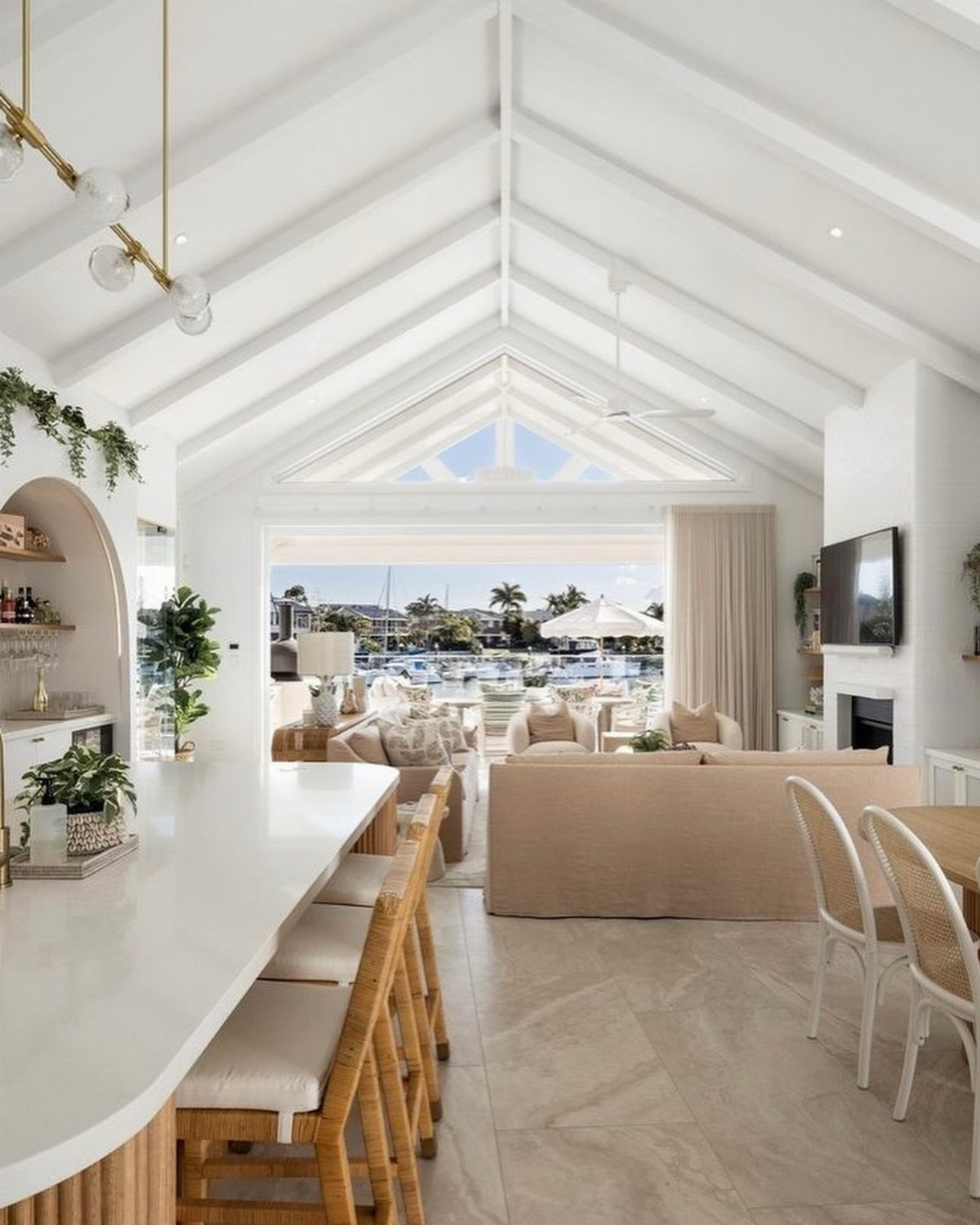
White vaulted ceilings with exposed beams lift the room and hold light longer than a flat ceiling.
The beams add structure without darkness if they’re painted white or left in pale wood, and the height makes a small footprint feel less tight.
The look suits beach houses where airflow and brightness matter as much as style.
Paired with an open floor plan, the ceiling prevents any boxed-in feeling, and the beams give the eye a stopping point that isn’t furniture or decor. One downside: higher ceilings mean higher cooling costs in summer.
6. Glass Furniture and Mirrors
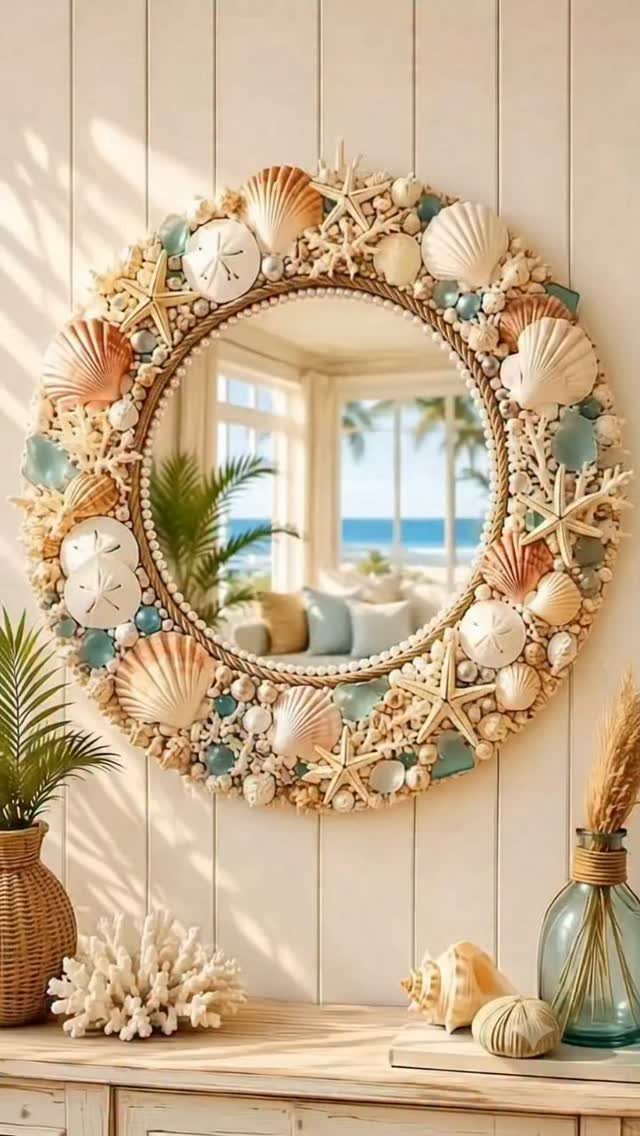
A mirror framed in seashells and starfish reflects light and reinforces the theme at the same time. The frame works above a console table or in an entryway where you want a focal point that stays off the floor.
Glass furniture, like a coffee table with a clear top, keeps a room from feeling crowded. It takes up physical space but not visual weight, which matters in a small living room where every piece competes for attention.
Both mirrors and glass suit bright rooms where reflection and transparency work with the light instead of blocking it.
7. Incorporating Beach-Inspired Art
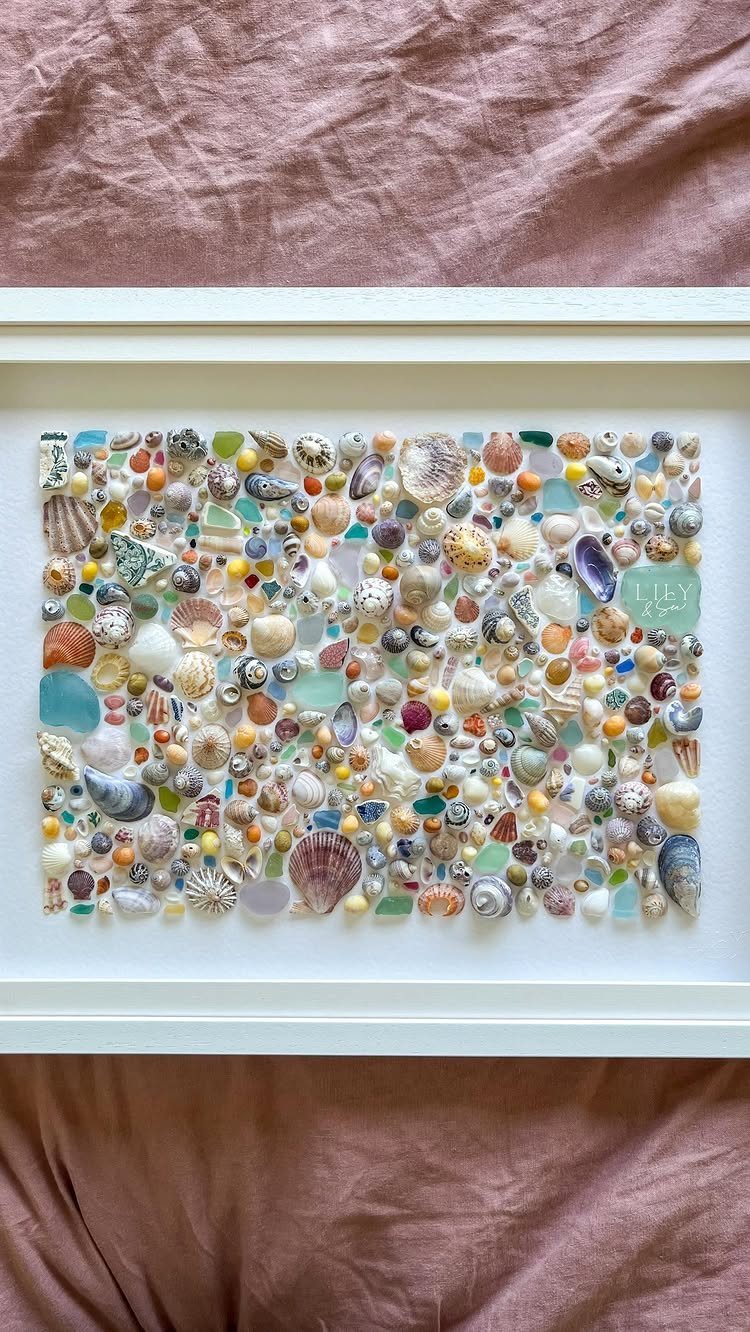
Framed art made from shells, sea glass, or coral puts texture on the wall instead of a flat print.
The pieces catch light differently than paper, and the materials tie directly to the coast without needing a beach scene painted on them.
One large frame works above a sofa or console table.
Smaller pieces in matching frames can group on one wall, but the materials themselves carry enough visual weight without needing many. The look suits a room where you want the beach connection obvious without adding another soft blue pillow.
8. Indoor Plants
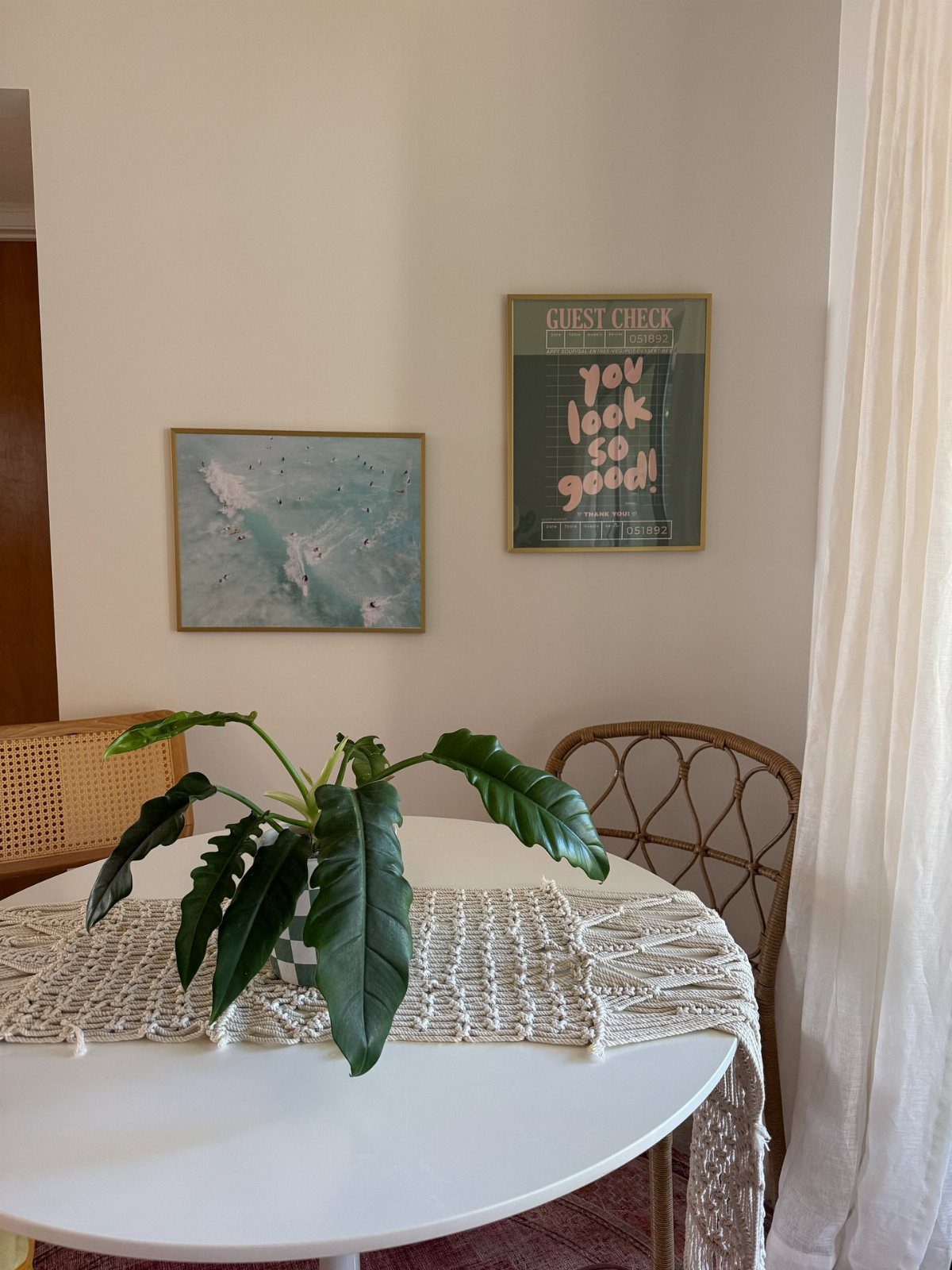
A potted plant on a console or end table brings green into a room that otherwise runs white, beige, and blue.
The shape and texture contrast with upholstery and wood, and the plant reads as alive in a way that dried arrangements don’t.
I use palms, fiddle-leaf figs, or snake plants in white or natural fiber pots. They hold up in bright rooms with good light and don’t need daily attention.
9. Patterns in a Cohesive Color Palette
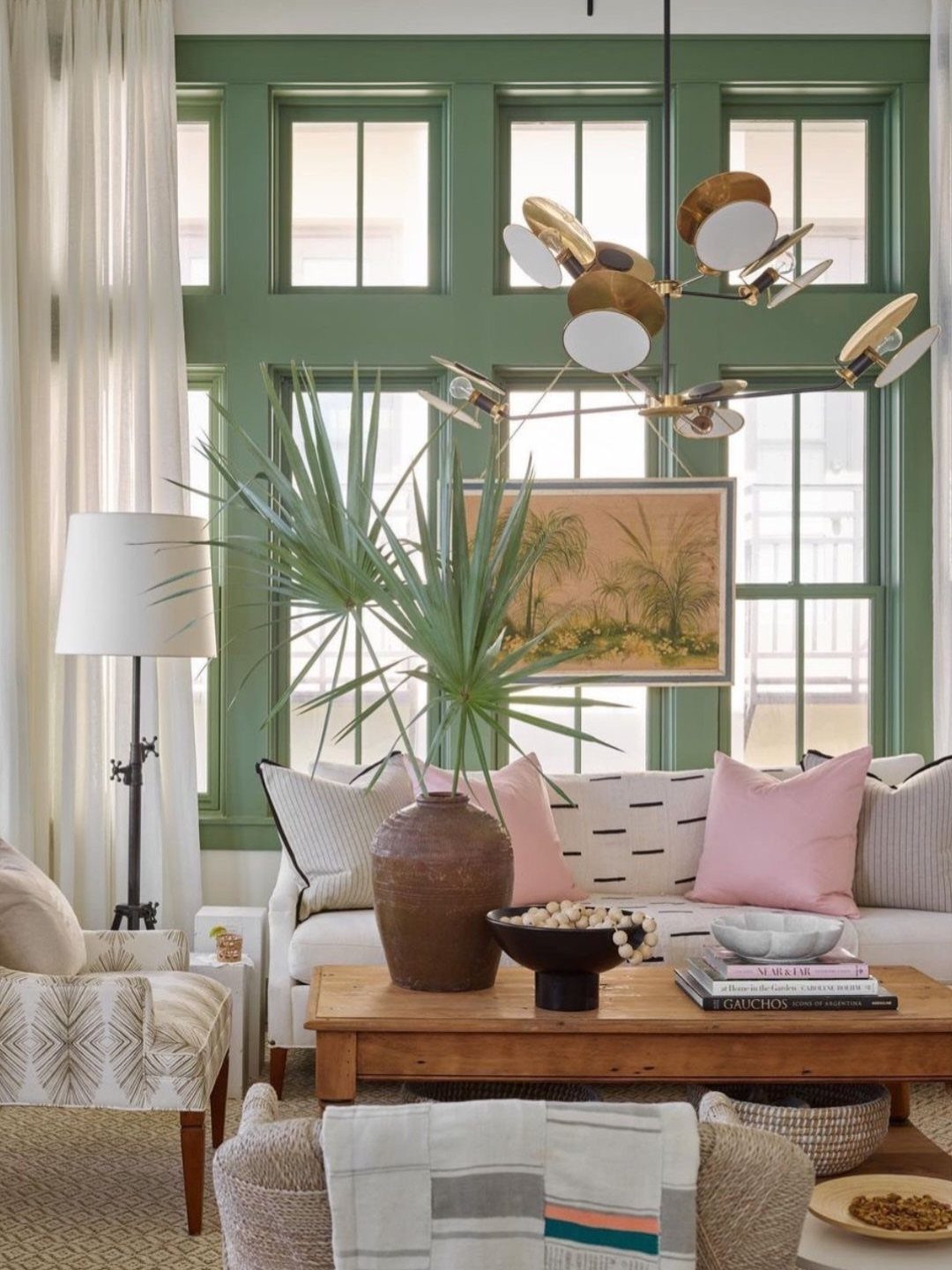
Patterned pillows and upholstery in the same color family add detail without clashing. Stripes, florals, and geometric prints can sit on one sofa if the palette stays tight, and the mix keeps the room from reading as one matched set.
Pink, beige, and white work together, as do blue, grey, and cream. The patterns do the work of adding interest, so the colors can stay calm.
10. Table Lamps, Pendant Lights, and Floor Lamps
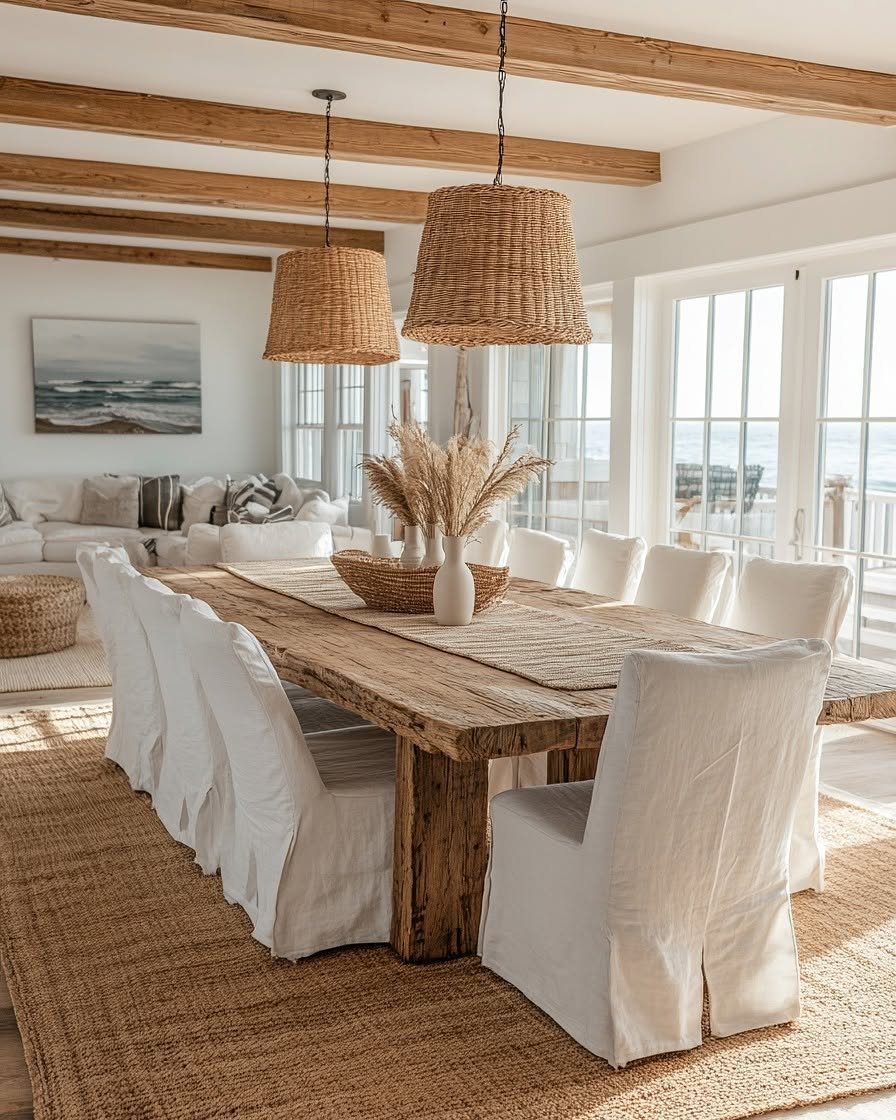
Woven pendant lights over a dining table or seating area soften the light and add texture overhead.
The natural fiber reads as casual and coastal, and the scale of the fixture suits a room with high ceilings or an open floor plan.
Floor lamps and table lamps fill corners and side tables where overhead light doesn’t reach. I choose bases in wood, ceramic, or woven materials that match the furniture, and keep shades in white or linen.
11. Colorful Pillows and Throws
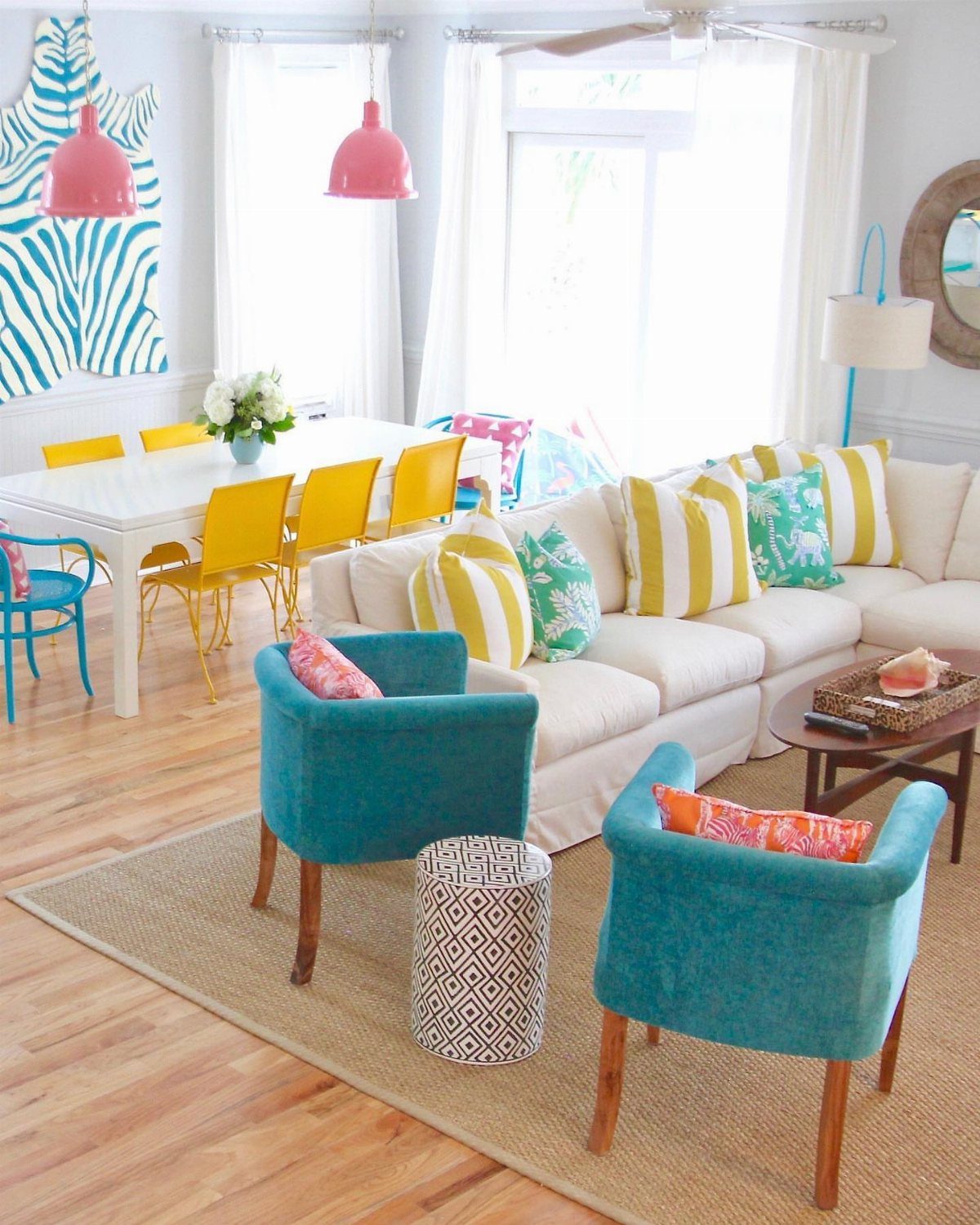
Bright pillows in coral, teal, yellow, or pink pull a neutral sofa into a beach house without reupholstering it. The color sits on surfaces you can change seasonally, keeping textile updates affordable.
Mix solid colors with simple patterns like stripes or dots, and keep the palette limited so the grouping reads as intentional. The approach suits renters and anyone working with existing furniture.
12. Striped or Knit Throws

A striped knit throw draped over a sofa arm or chair back adds color and pattern in a piece you can move or store.
The stripes bring a nautical reference without anchors or rope, and the knit texture works in a room that otherwise skews smooth and upholstered.
I choose throws in cotton or cotton blends that hold up to regular use and washing. The weight suits spring and fall, and the look stays casual enough for a vacation house.
13. Soft, Flowing Fabrics
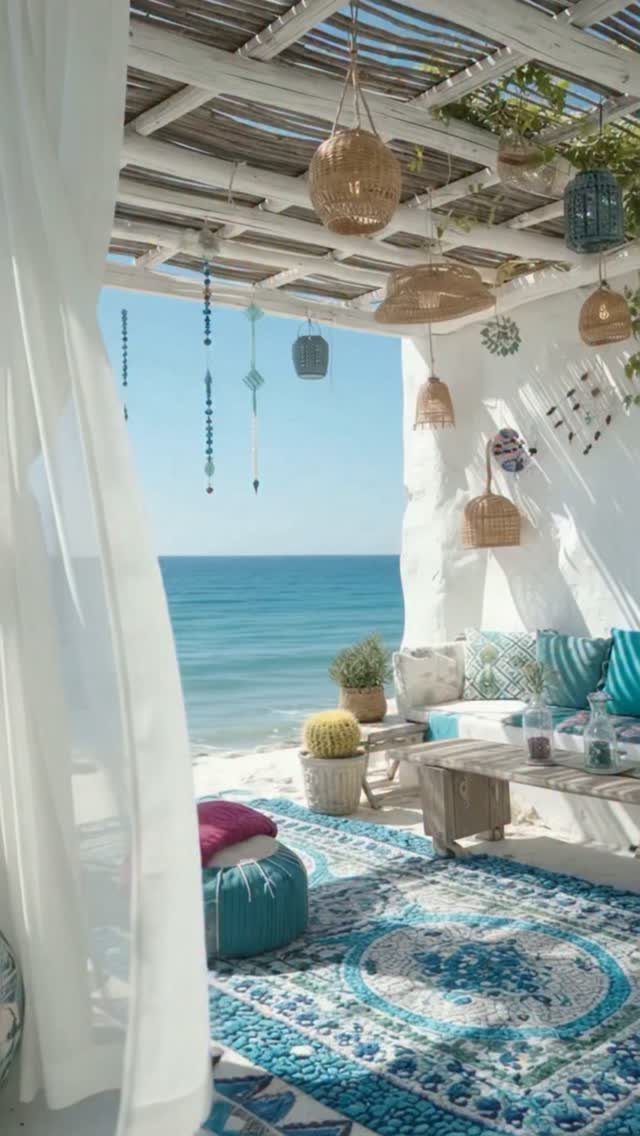
Sheer white curtains soften the edges of a room with large windows and let light in while still moving with the breeze.
The fabric reads as relaxed rather than formal, and the flow suits a beach house where stiffness works against the setting.
Linen or cotton voile hung on simple rods works better than heavy drapes.
The material needs to be light enough to move but not so thin it looks cheap. I skip blackout linings in a living room where natural light is part of the point.
14. Coastal-Themed Lighting Fixtures
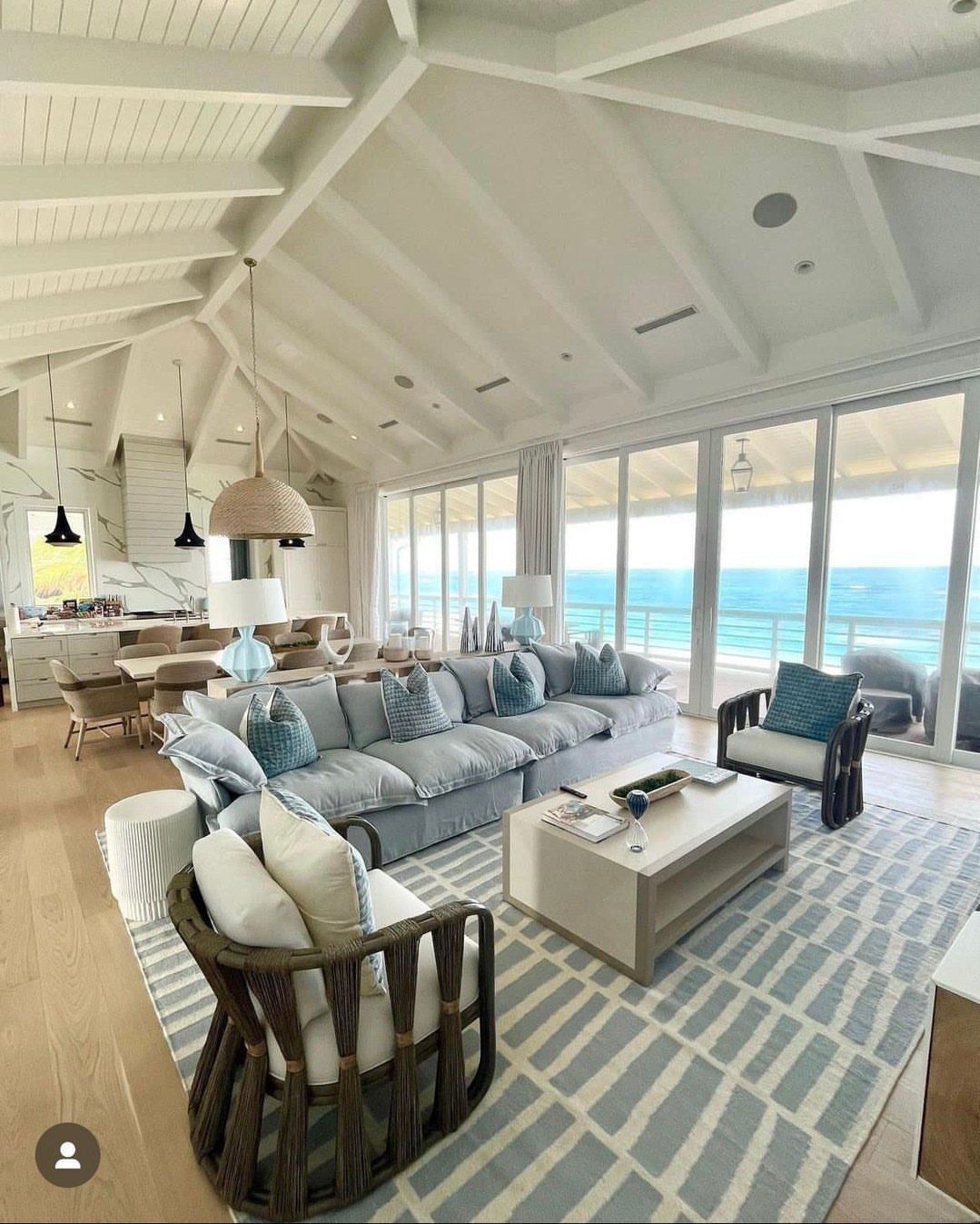
A pendant light in natural fiber or whitewashed wood brings coastal texture overhead without relying on shell-covered bases or anchor motifs. The fixture sits above a seating area or dining table and reads as beach house without stating it outright.
Woven rattan or rope-wrapped fixtures in neutral tones suit rooms with open ceilings.
The scale should match the space: a large fixture over a long table, smaller ones grouped over a console or sectional. Metal lantern-style fixtures in brushed nickel or matte white work when you want clean lines instead of texture.
15. Decorative Ceiling Fans
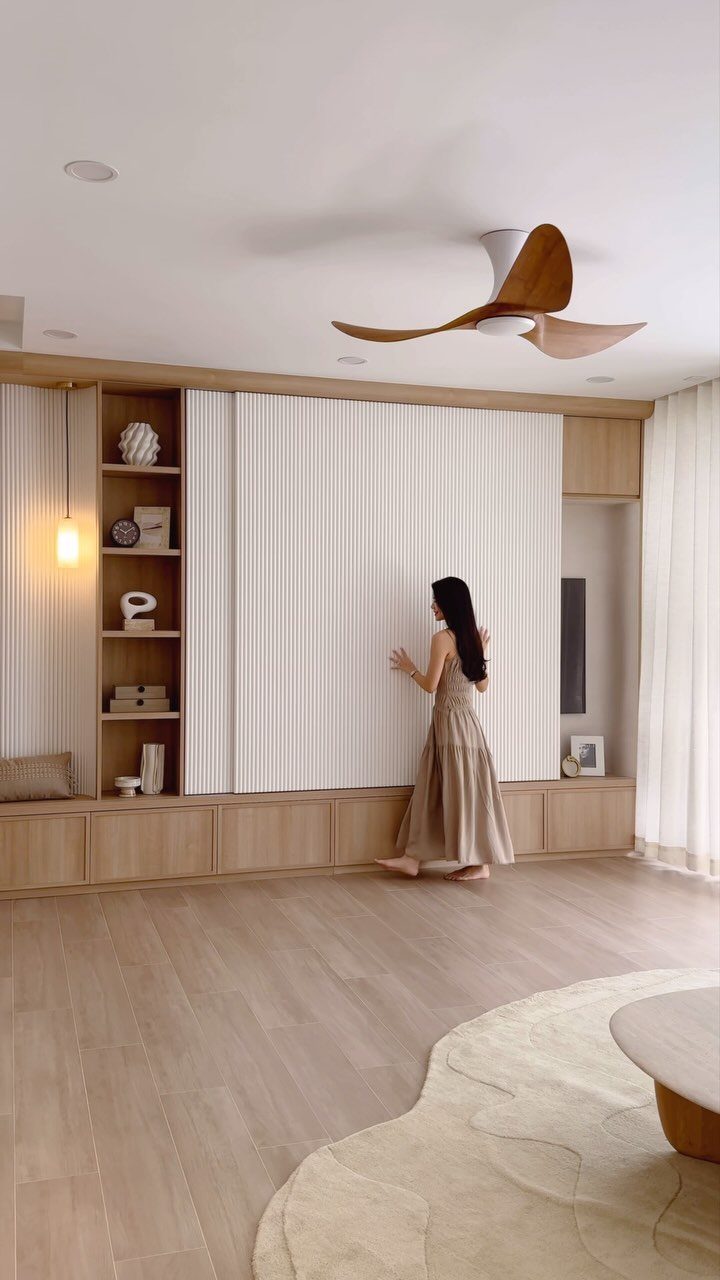
A ceiling fan with wood blades or a woven finish moves air and reads as part of the decor instead of an appliance you tolerate. The blades stay visible, so the material and finish matter as much as the function.
Light wood or whitewashed finishes suit a neutral room, darker wood works with reclaimed furniture and beams.
The fan should match the ceiling height: standard mounts for typical rooms, downrod extensions for vaulted spaces. I choose models with integrated lighting when the room lacks overhead fixtures, and skip them when table and floor lamps cover the lighting.
16. Travel Souvenirs
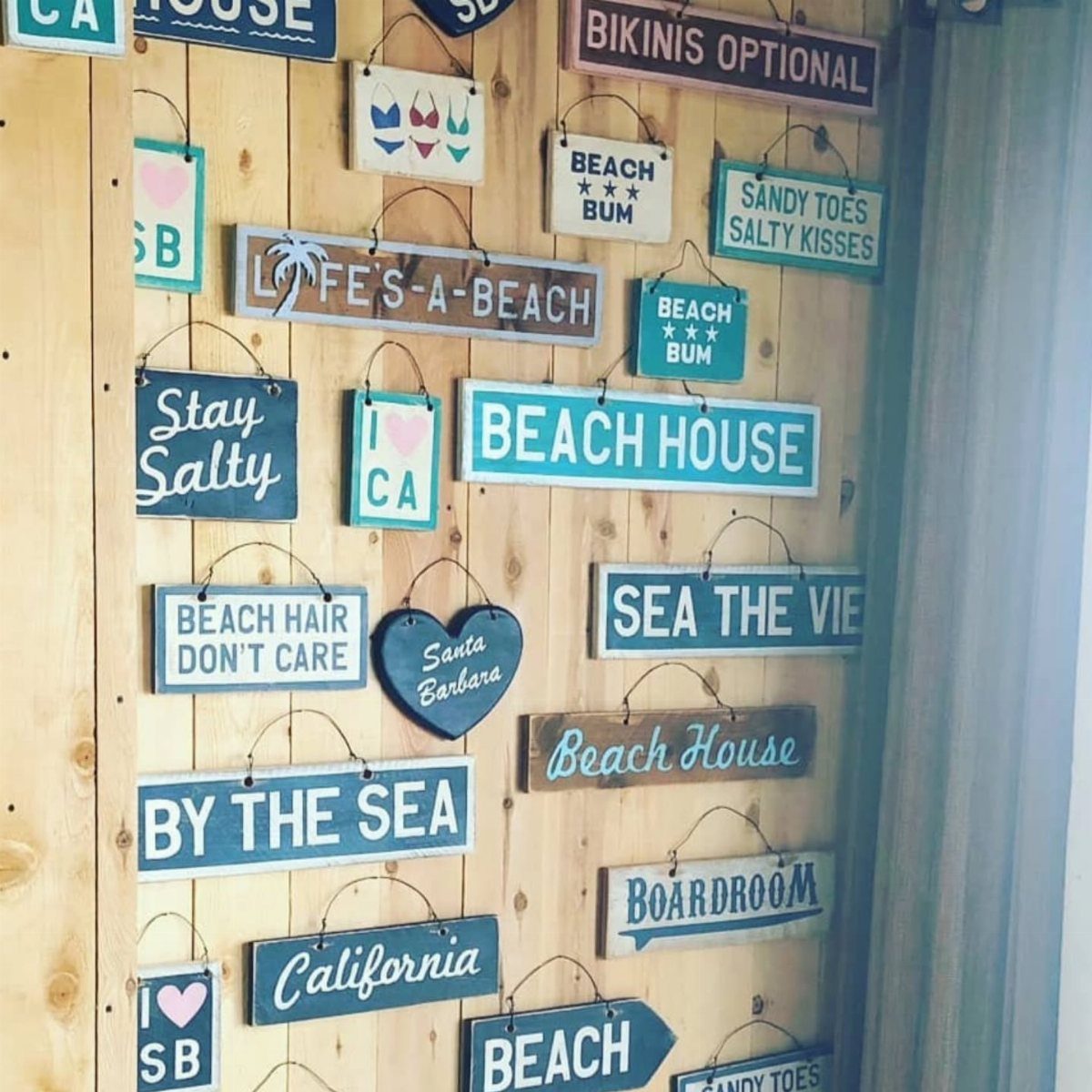
Signs and plaques from beach towns you’ve visited personalize the space in a way generic coastal decor can’t. The names and phrases tie the room to specific places, and the collection builds over time rather than arriving all at once.
Wood signs work on shiplap or painted walls, metal ones suit rooms with industrial touches.
I group them on one wall instead of scattering them, and keep the finishes consistent so the arrangement reads as intentional. The look suits a vacation house where the literal approach fits the use.
17. White Shiplap Walls
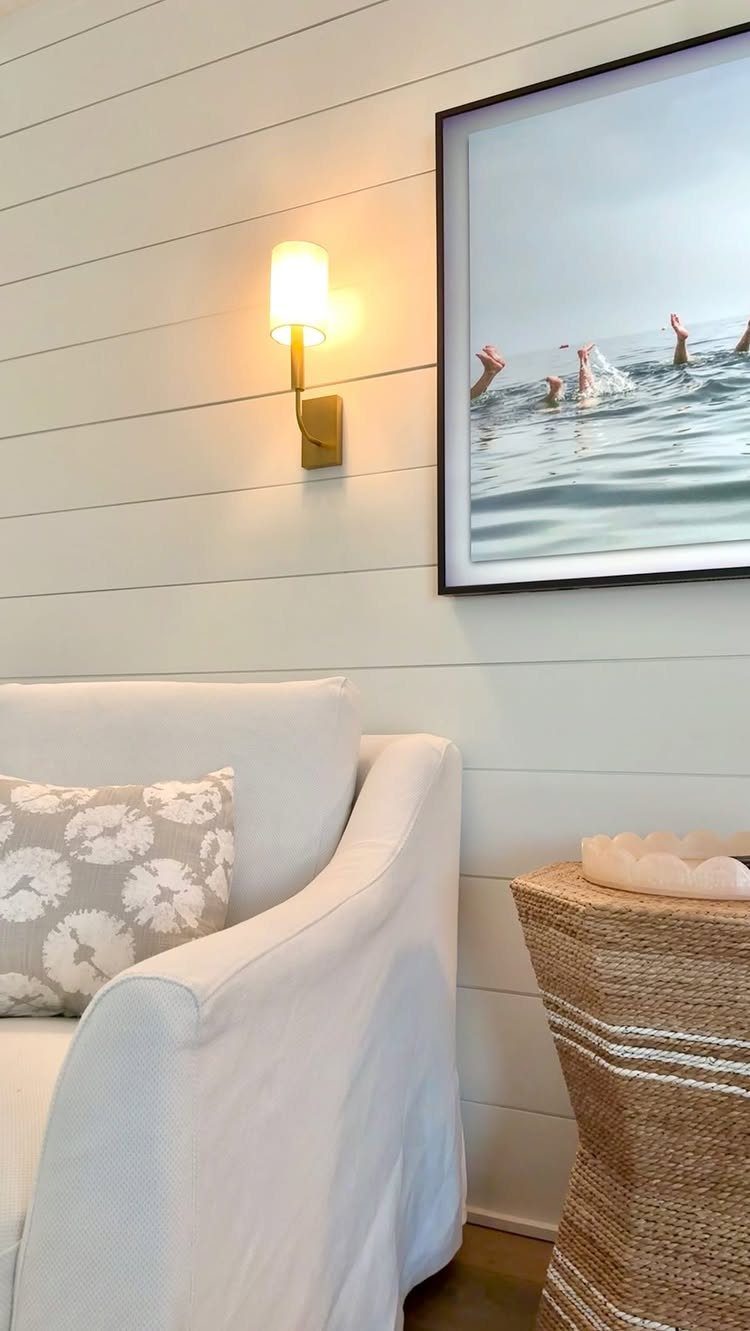
Shiplap painted white adds horizontal lines and texture without color or pattern. The boards run across the wall in even rows, and the seams between them catch light and shadow in a way flat drywall doesn’t.
The look suits rooms where you want classic coastal style without leaning on blue paint or nautical prints.
Shiplap works floor to ceiling or as a wainscot, and it covers imperfect walls underneath. One trade-off: installation takes longer than paint, and the cost runs higher if you’re hiring it out.
18. Indoor Sand Flooring
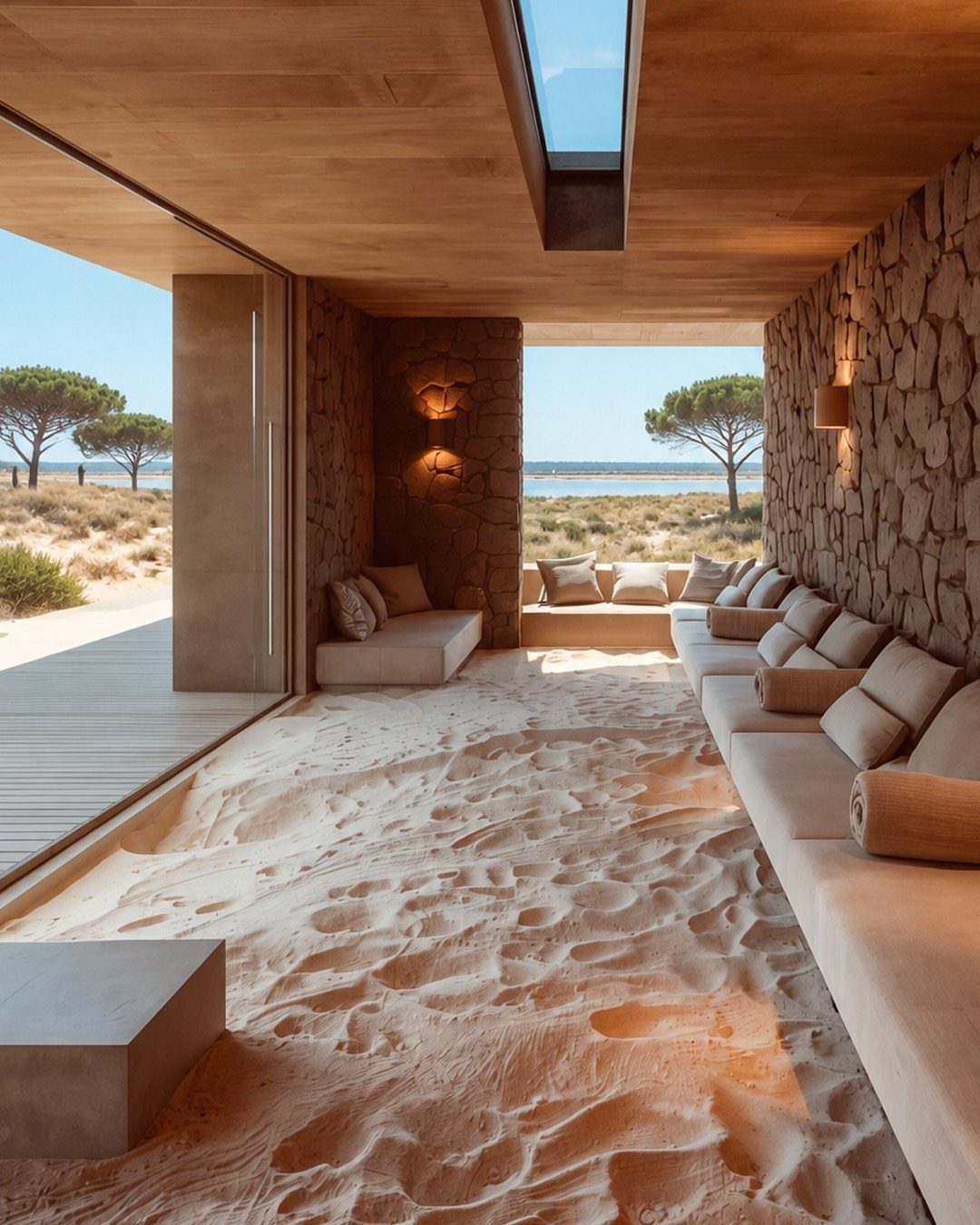
Sand spread directly over the floor brings the beach indoors in the most literal way possible. The texture underfoot reads as vacation house, and the look suits a lounge or sunroom where indoor-outdoor boundaries don’t need to stay firm.
The setup requires containment: low stone curbs or built-in benches that frame the sand and keep it from tracking through the rest of the house.
Maintenance means raking and replacing sand as it compacts or gets carried out, which is daily work in a high-traffic space. The idea works best in a room that opens to the beach and where you expect bare feet.
19. Hanging Canoe Ceiling Accent
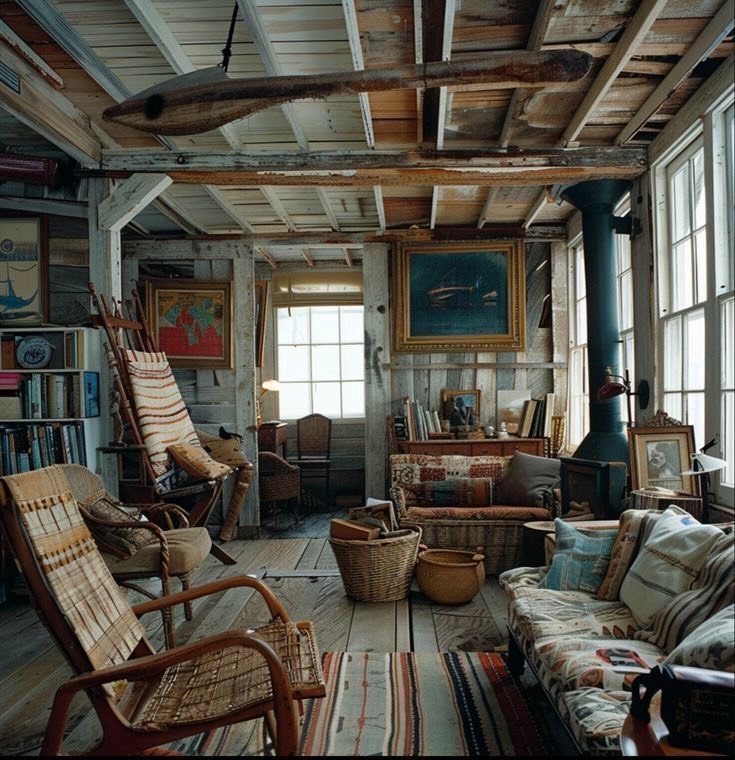
A canoe hung from the ceiling pulls focus upward and fills space that most decor never reaches. The piece works as sculpture in a room with high or vaulted ceilings where the vertical room otherwise stays empty.
The canoe needs secure mounting: lag bolts into ceiling joists or beams, with heavy-duty cable or chain rated for the weight.
A vintage wood canoe carries more weight than fiberglass, so check your ceiling joists before you hang one. Measure the room first so the canoe clears furniture and walkways with enough margin that people can move underneath without feeling crowded.
In a smaller room or one with standard 8-foot ceilings, the canoe overwhelms the space.
20. Turquoise French Doors
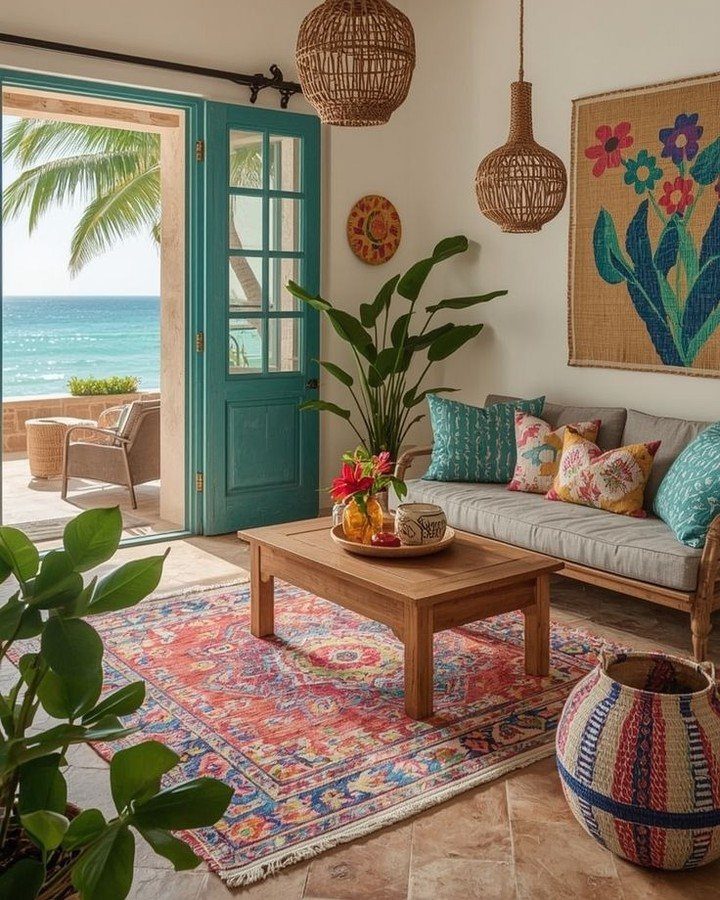
Painting French doors in turquoise or aqua makes the threshold the focal point and brings saturated color into a room that might otherwise stay neutral. The doors frame the view and read as intentional rather than leftover builder white.
I choose exterior-grade paint in a satin or semi-gloss finish for durability and ease of cleaning. Turquoise works with white trim and natural wood furniture, and the color stays visible whether the doors are open or closed.
The setup requires a view worth opening to: ocean, deck, or garden. Without that, the color draws attention to what’s behind the door, which isn’t always the goal.
Mixing Styles
A vintage rattan chair pulled next to a low-profile sectional in white linen brings 2 eras into the same room without forcing them to match.
The clean lines of contemporary upholstery keep the space from reading too rustic, while older pieces add character that new furniture often lacks.
I choose pieces where the style sits in the shape and material rather than in heavy detailing.
A mid-century coffee table in light oak works with wicker accent chairs, and both suit a neutral palette where the furniture itself provides the variety.
The approach works when you want a coastal living room that feels collected rather than ordered from one catalog. Each piece should hold its own without needing the others to explain it.
Functional Storage Solutions
Baskets woven from seagrass, rattan, or water hyacinth sit under console tables or beside sofas and hold what would otherwise pile on surfaces. The texture reads as coastal, and the containment keeps a small living room from looking cluttered.
I choose baskets with lids for storing throws or remotes, open ones for magazines or firewood. Sizes should fit the space: large baskets under a console, smaller ones on shelves.
Driftwood shelves mounted on white walls add storage without blocking light.
The wood grain and weathered finish bring texture to a flat surface, and the open design keeps the wall from feeling heavy. Each shelf should mount into studs with hardware rated for the weight it will carry.
Frequently Asked Questions
What are some good ideas for a beach house?
Use natural materials like reclaimed wood and rattan, stick to light colors such as soft blue, beige, and white, and choose comfortable upholstered seating that suits long afternoons.
A room that feels calm and uncluttered, where the materials and palette do the work of setting the tone.
What’s the aesthetic called for beach houses?
Beach house style is called coastal. The design leans toward comfort and calm rather than formality.
What is the difference between Hamptons and Coastal Style?
Hamptons style leans more refined and polished, with tailored furniture and a cleaner look, while coastal style is relaxed and casual. Coastal rooms use weathered wood, woven textures, and a looser approach to symmetry, where comfort outweighs formality.