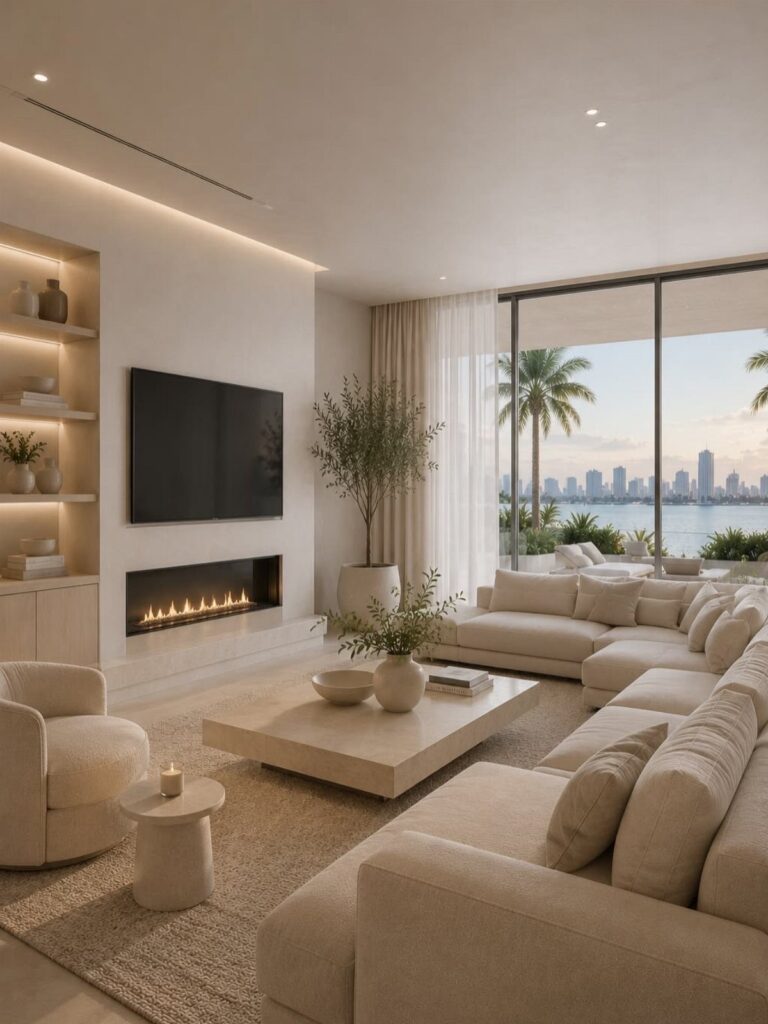
Modern living room interiors run from seaside blue and white that lets you change accents later to beige and brown neutrals, monochrome schemes, and rooms that mix floral with geometric patterns or pair sage green walls with tufted blue seating.
1. Seaside Blue and White Living Room
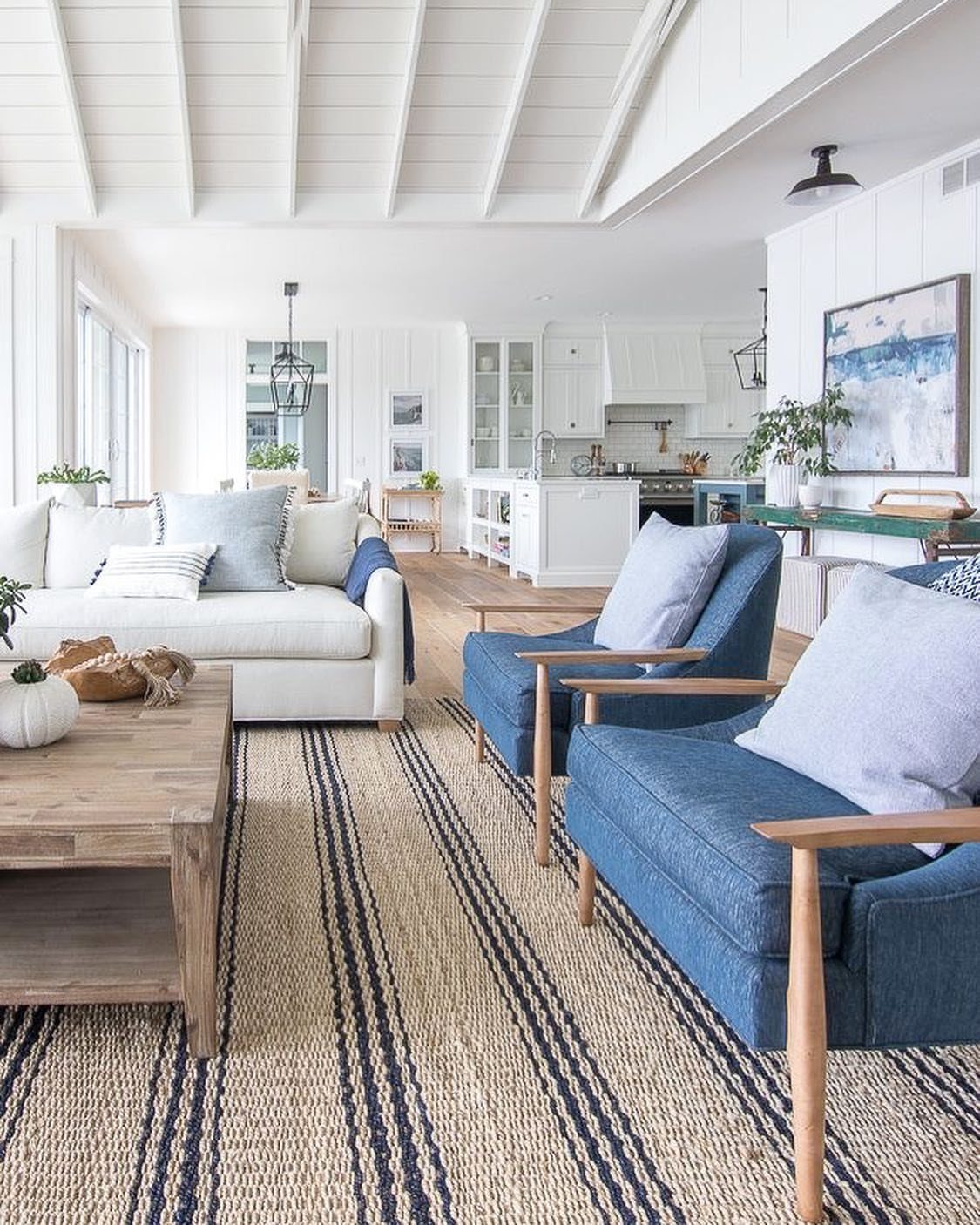
Blue and white holds up across generations because each one keeps the other readable. The stripe in the rug ties the palette to the floor while staying subtle, and the jute texture keeps it from feeling too formal.
Swap the blue chairs for white and add blue in the pillows if you want flexibility to change the tone later.
White walls and a light floor let you introduce pattern or color through the rug, art, or upholstery without repainting.
2. Modern Living Room Decor
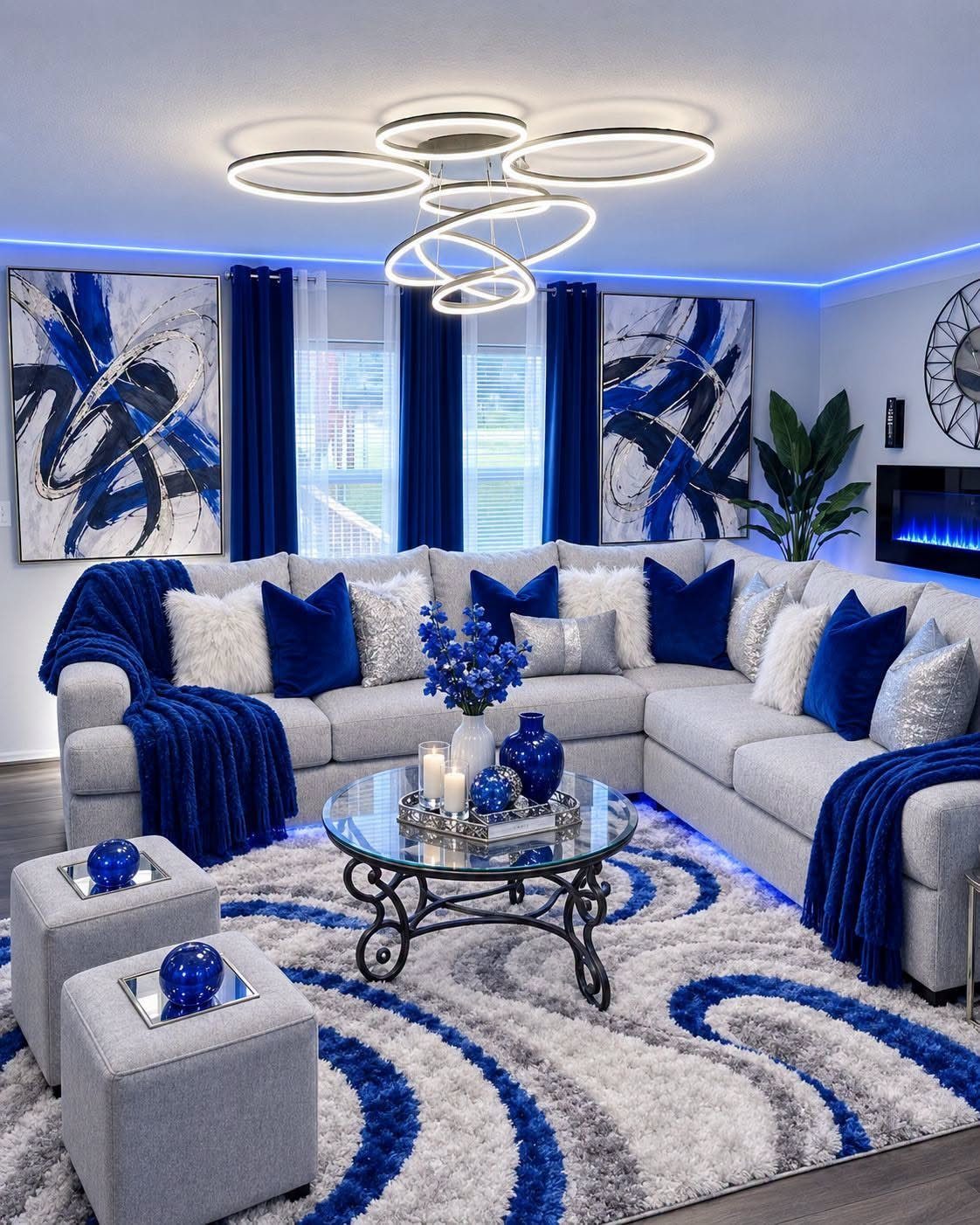
The sofa and art establish the bones, but the rug and lighting turn a furnished room into a finished one. A sculptural ceiling fixture draws attention up, which makes standard-height ceilings feel taller than they are.
Royal blue works because it’s used twice and in different forms: solid pillows and a looser pattern in the rug.
If you lean on one accent color, repeat it in at least 2 places so it reads as a choice instead of a leftover.
3. Floor-to-Ceiling Windows
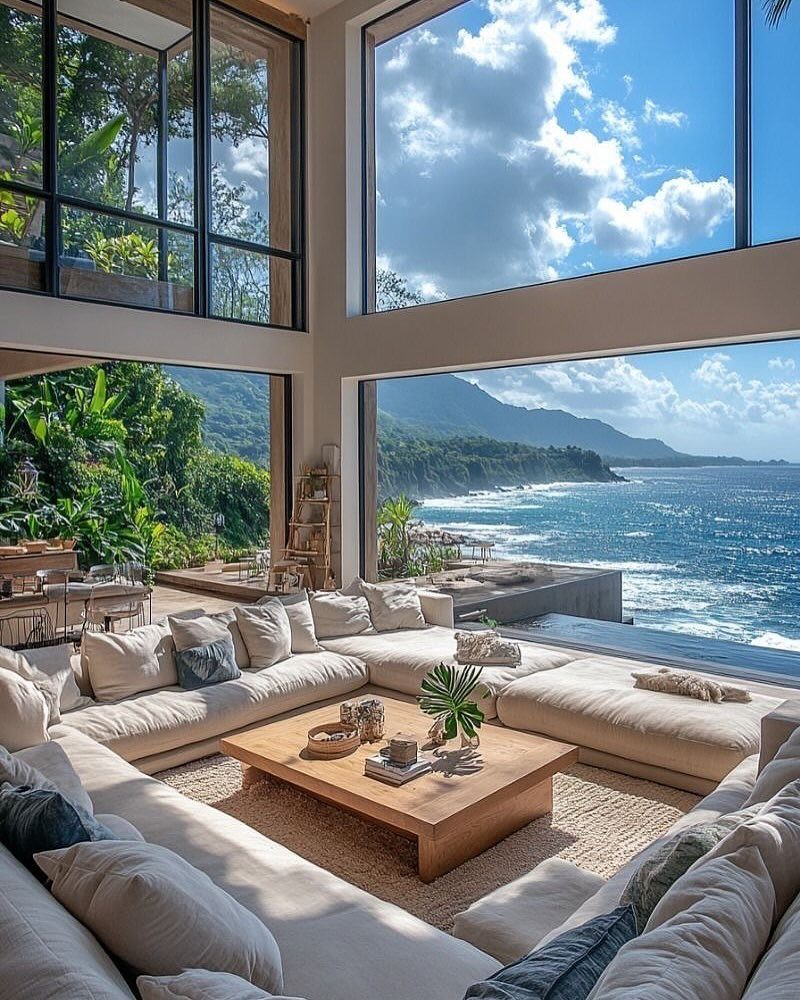
Windows that run floor to ceiling pull natural light deeper into the room and make the view part of the design.
If your space has them, keep window treatments minimal or skip them entirely on walls that face low-traffic outdoor areas.
The sectional here floats in the center rather than backing up to a wall, which works when the view is the anchor.
In a room without that advantage, push the sofa closer to one edge and use the open space for a console or shelving.
4. Vintage Furniture with Contrasting Colors
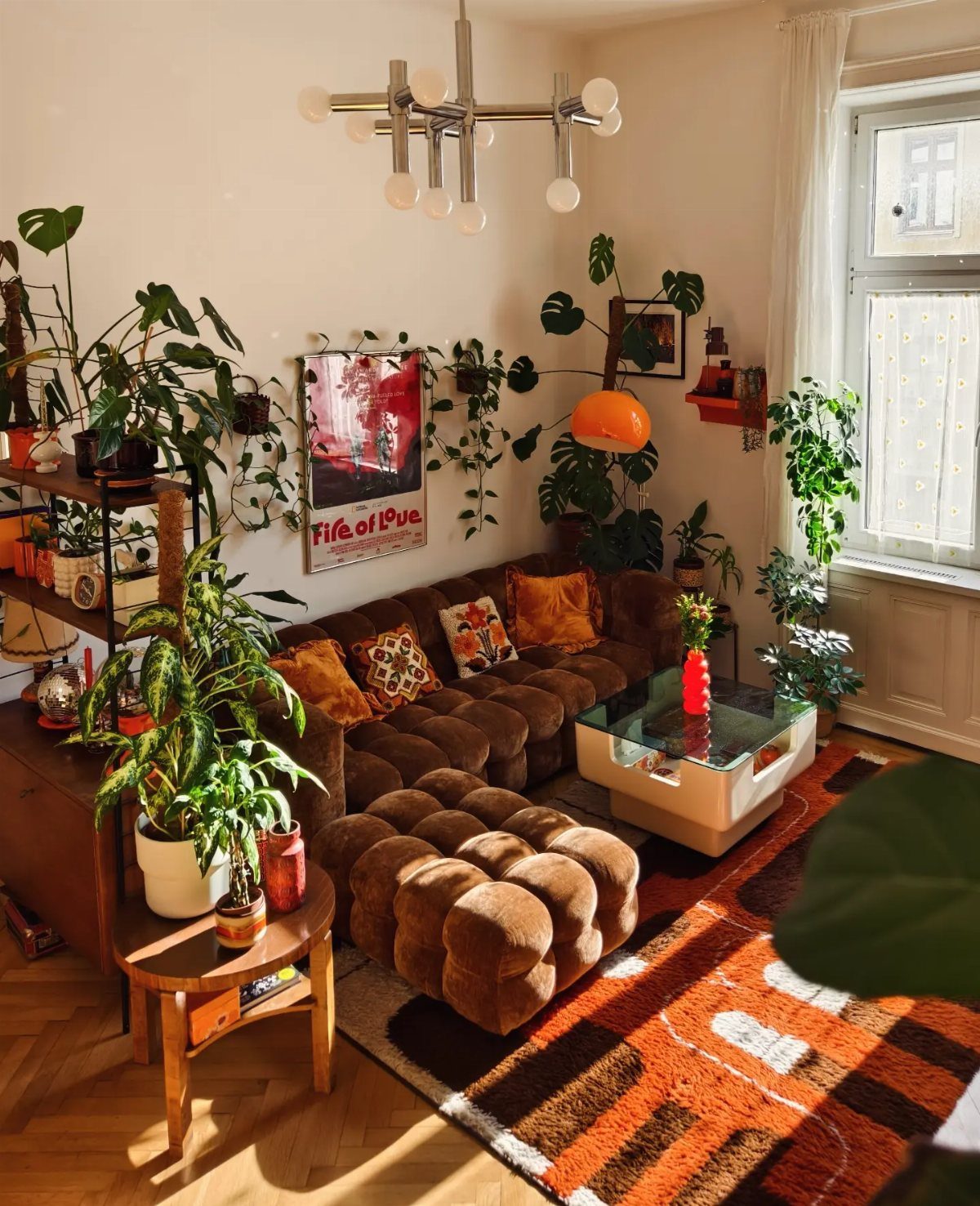
Velvet tufting and an orange geometric rug are both strong moves, and they work together because the brown in the sofa is deep enough to let the rug stand out.
Plants in different heights fill vertical space without adding more furniture.
This look leans retro, so it rewards commitment: go all the way with vintage-style lighting and framed prints instead of mixing in too many clean-lined pieces.
If you’re starting from scratch, the rug is the easiest place to introduce the warm tone that holds everything else in place.
5. Oversized Rug
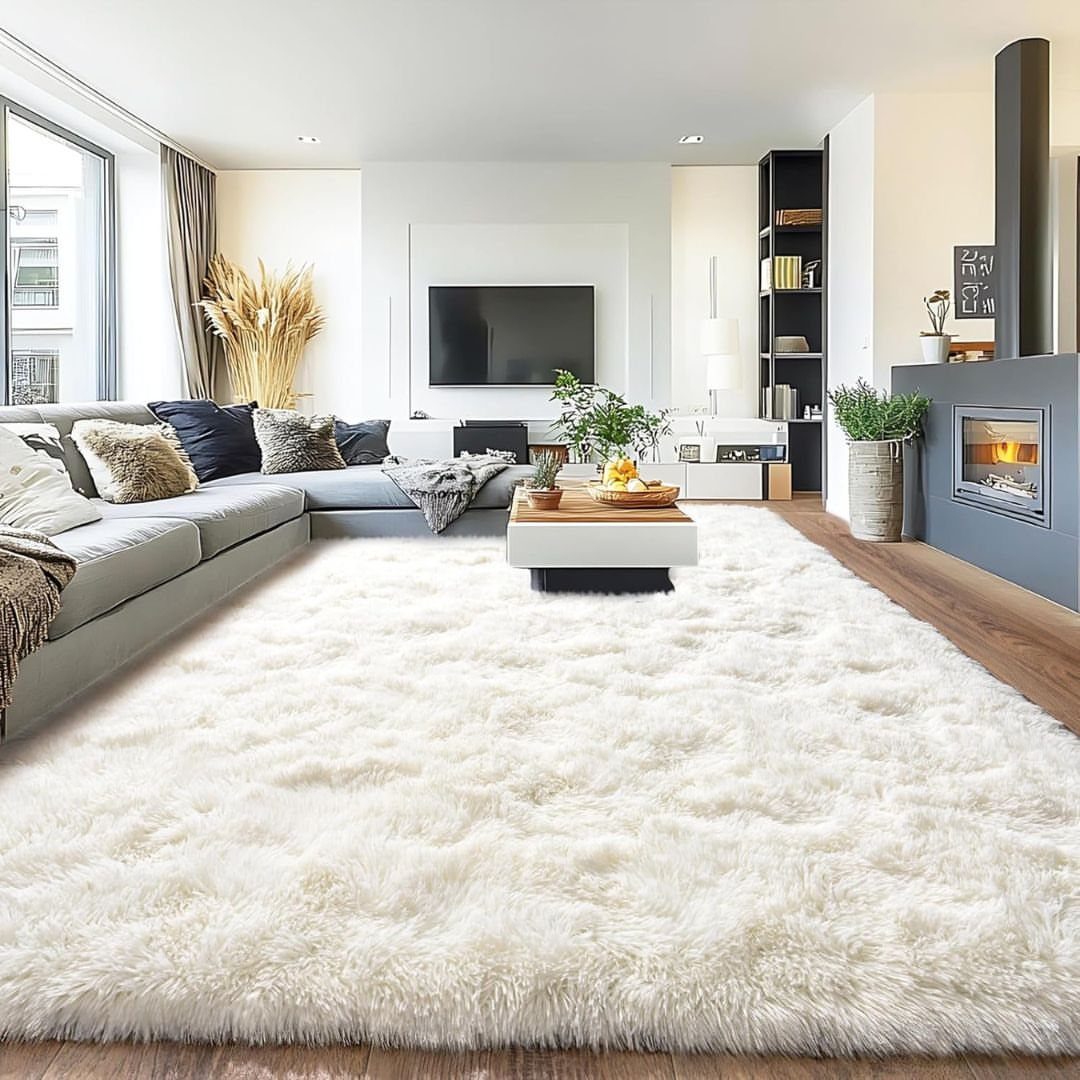
A rug this size unifies the furniture and keeps the sectional from floating. Shag adds texture without pattern, which works when the rest of the room runs neutral and the fireplace or TV is already pulling focus.
Make sure the rug extends at least 12 inches past the sofa legs on all sides. Anything smaller reads as an accent rug instead of an anchor, and the room loses its center.
6. Create a Gallery Wall
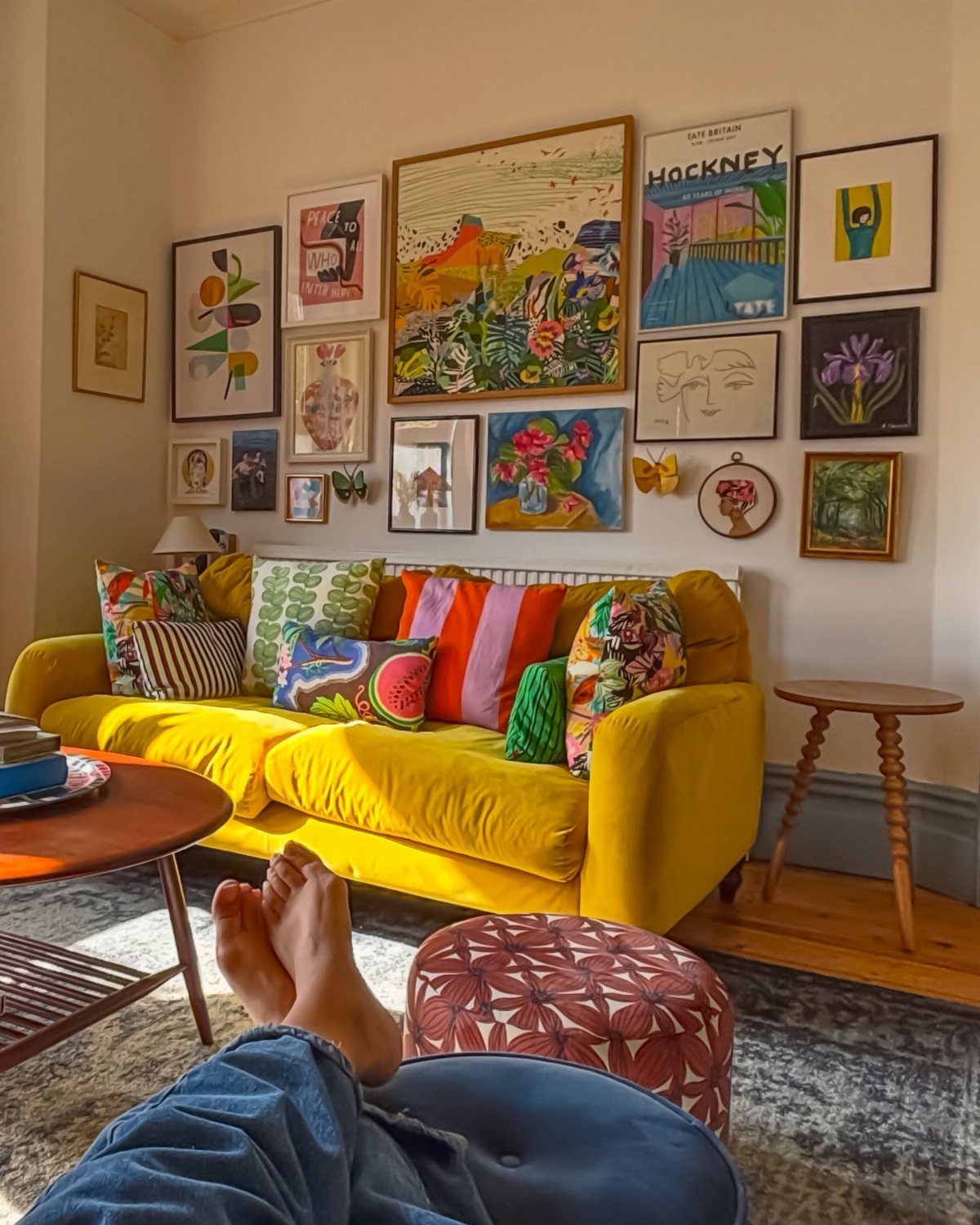
A gallery wall lets you build the look over time instead of committing to one large piece. Mix frame sizes and colors, but keep the spacing between frames consistent so the wall reads as intentional rather than crowded.
Start by laying the arrangement on the floor and photographing it before you hammer anything.
The yellow sofa anchors the palette, so the art can range wider in color without the wall feeling chaotic. If your sofa is neutral, pull one or two colors from the art into your pillows.
7. Plush Seating
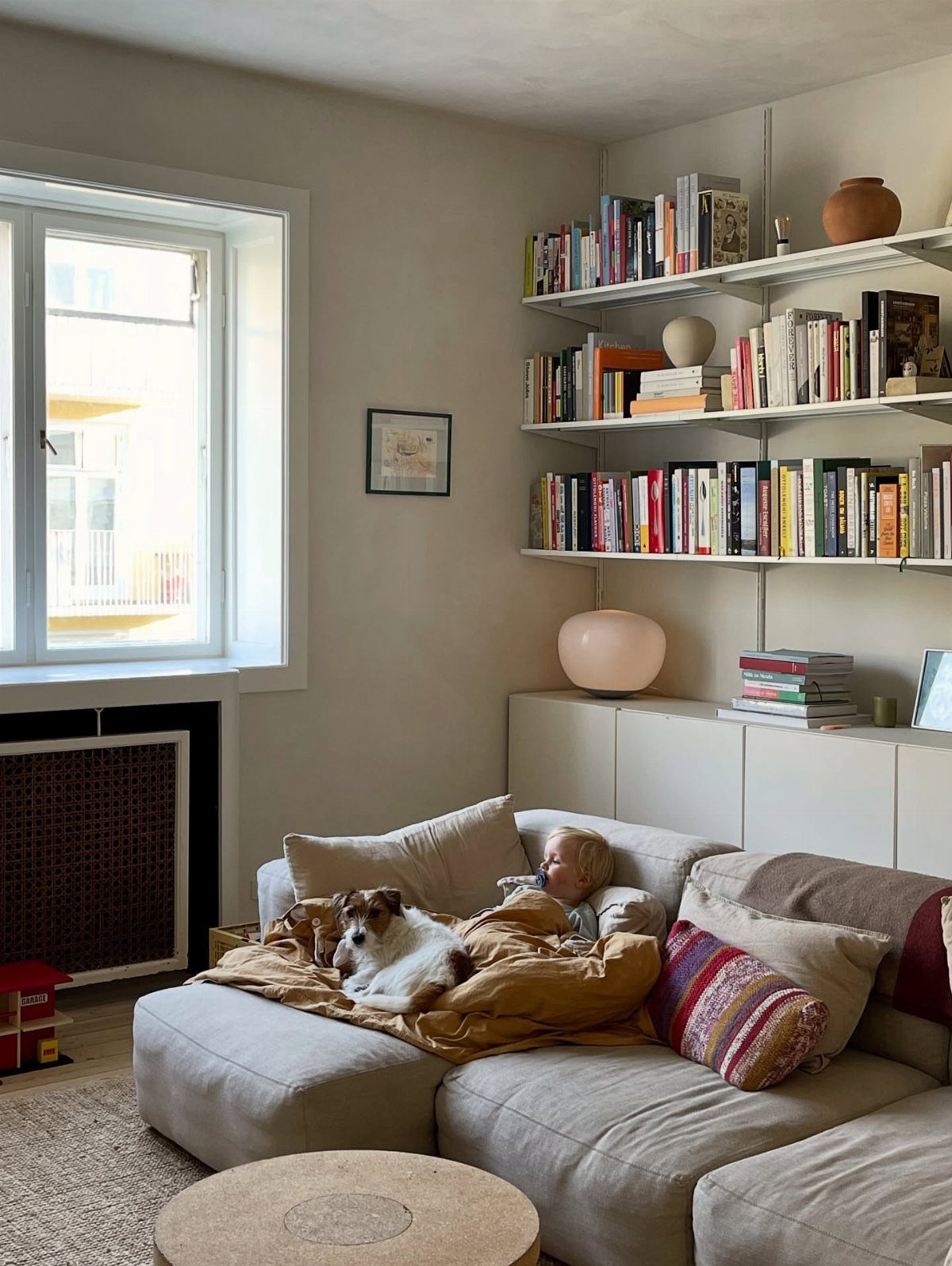
Plush upholstery softens a modern room without adding pattern or contrast, which matters when you want the space to feel calm rather than layered.
The pale tone here keeps the sectional from dominating, and the low profile makes the ceiling feel higher.
This fabric does pick up spills, so keep a good upholstery cleaner on hand if you go this route.
If you’re still in it, go darker or choose a performance weave that resists stains. The size works because the sectional fills the room; a smaller sofa in this fabric can look unfinished without something else to anchor the space.
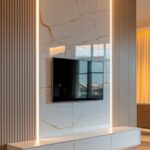
8. Monochrome Living Room Interior
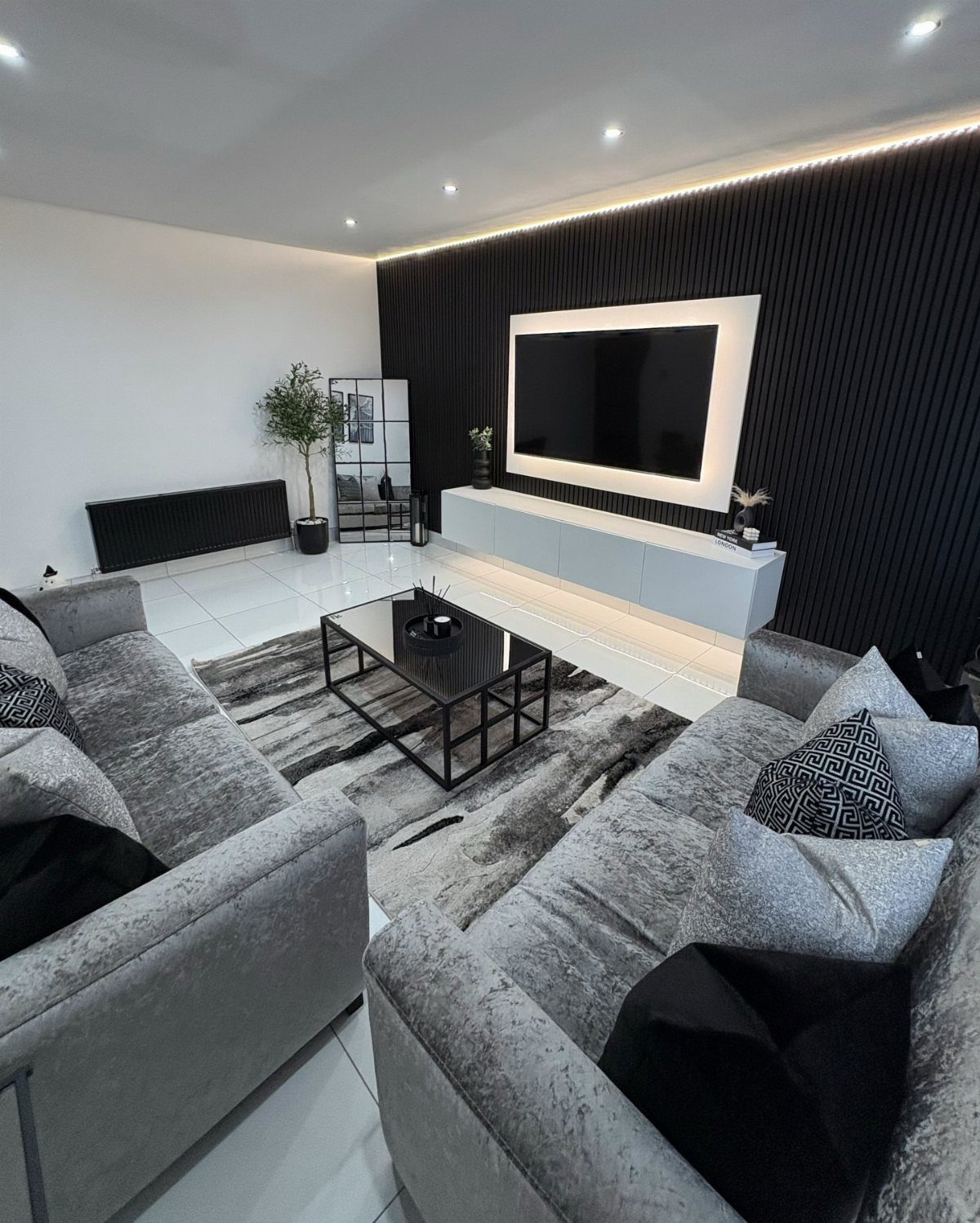
Grey and black absorb light instead of reflecting it, so this palette needs strong overhead or natural light to avoid reading flat.
The slatted wall adds dimension without introducing color, and mounting the TV inside it keeps the screen from floating.
The floating console underneath provides storage while keeping the floor visible, which makes the space look bigger than a full media cabinet would.
If your space lacks architectural texture, the slat treatment works on one wall, not all four, and the grey sofa keeps it from feeling too stark.
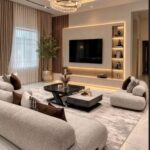
9. Beige, Cream, and Brown Neutrals
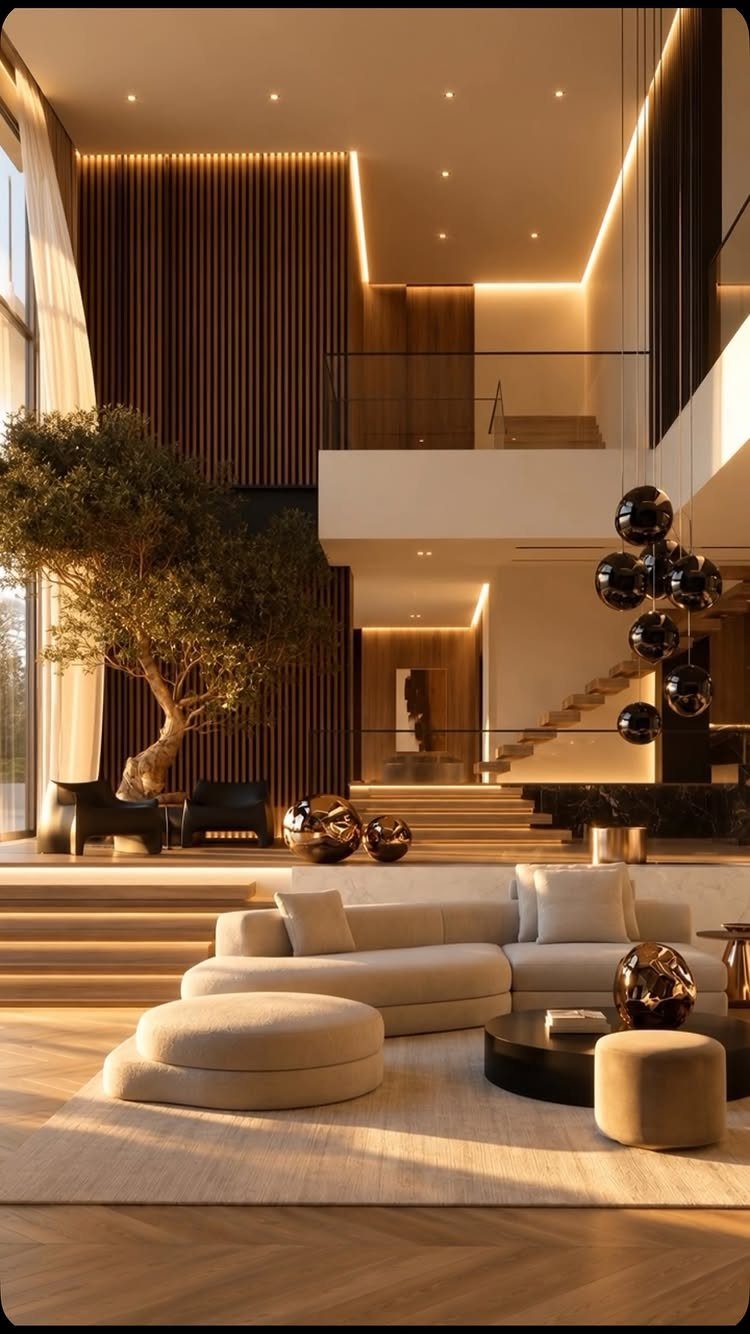
Layering neutrals in different materials keeps a beige room from washing out. The wood slats add vertical lines, the sectional provides a soft horizontal, and the tree introduces an organic shape that breaks up the geometry.
The mezzanine adds usable square footage without closing off the main space, which is worth considering if you’re working with high ceilings and an open plan.
Keep the sofa modular so you can reconfigure it when the room changes, and stick to one wood tone across the slats, furniture, and flooring so the neutrals stay cohesive.
10. Floral and Geometric Patterns
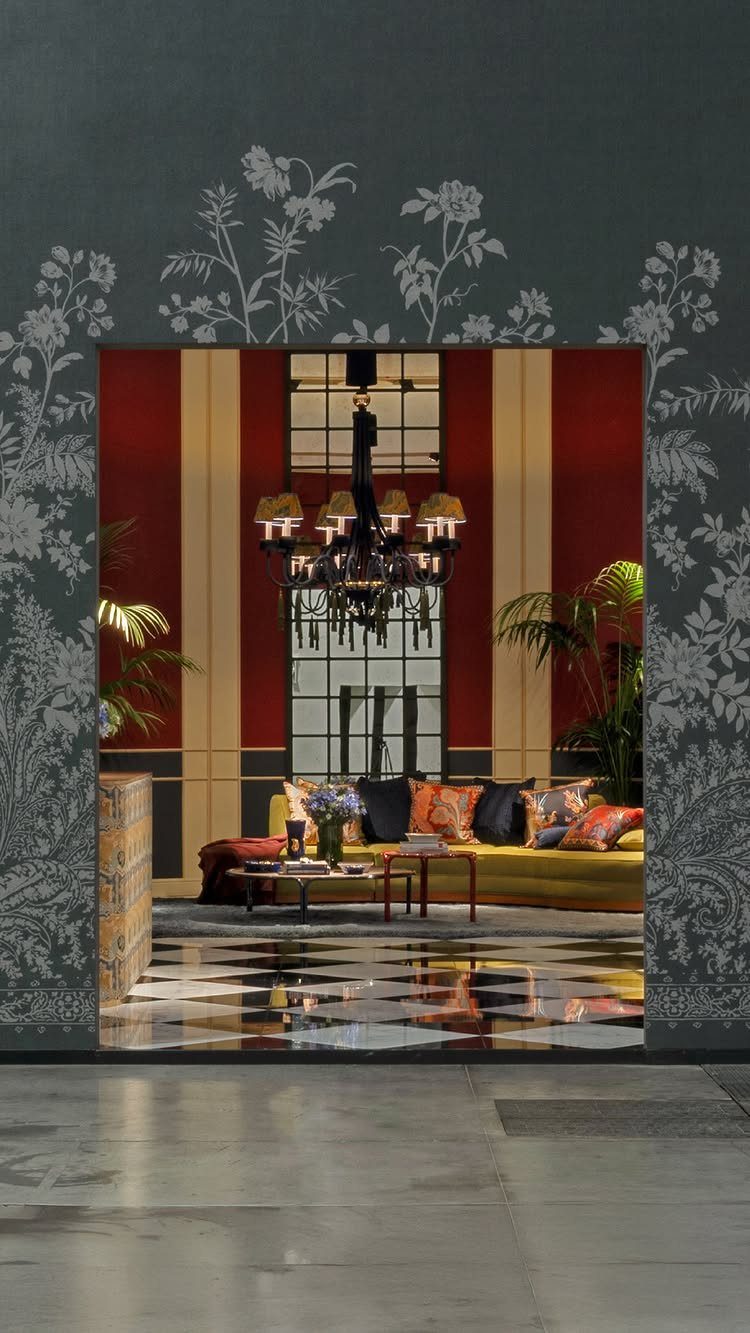
Red walls and a checkered floor are both loud, and they share the room because the silhouette behind the sofa stays subtle and the yellow upholstery picks up warmth from the red.
This mix works when the patterns differ in scale: large florals on the wall, tight geometry underfoot, and mid-size florals in the pillows.
If you’re starting smaller, introduce the floral through pillows or curtains first and add the floor pattern later.
11. Sculptural Furniture Statement Piece
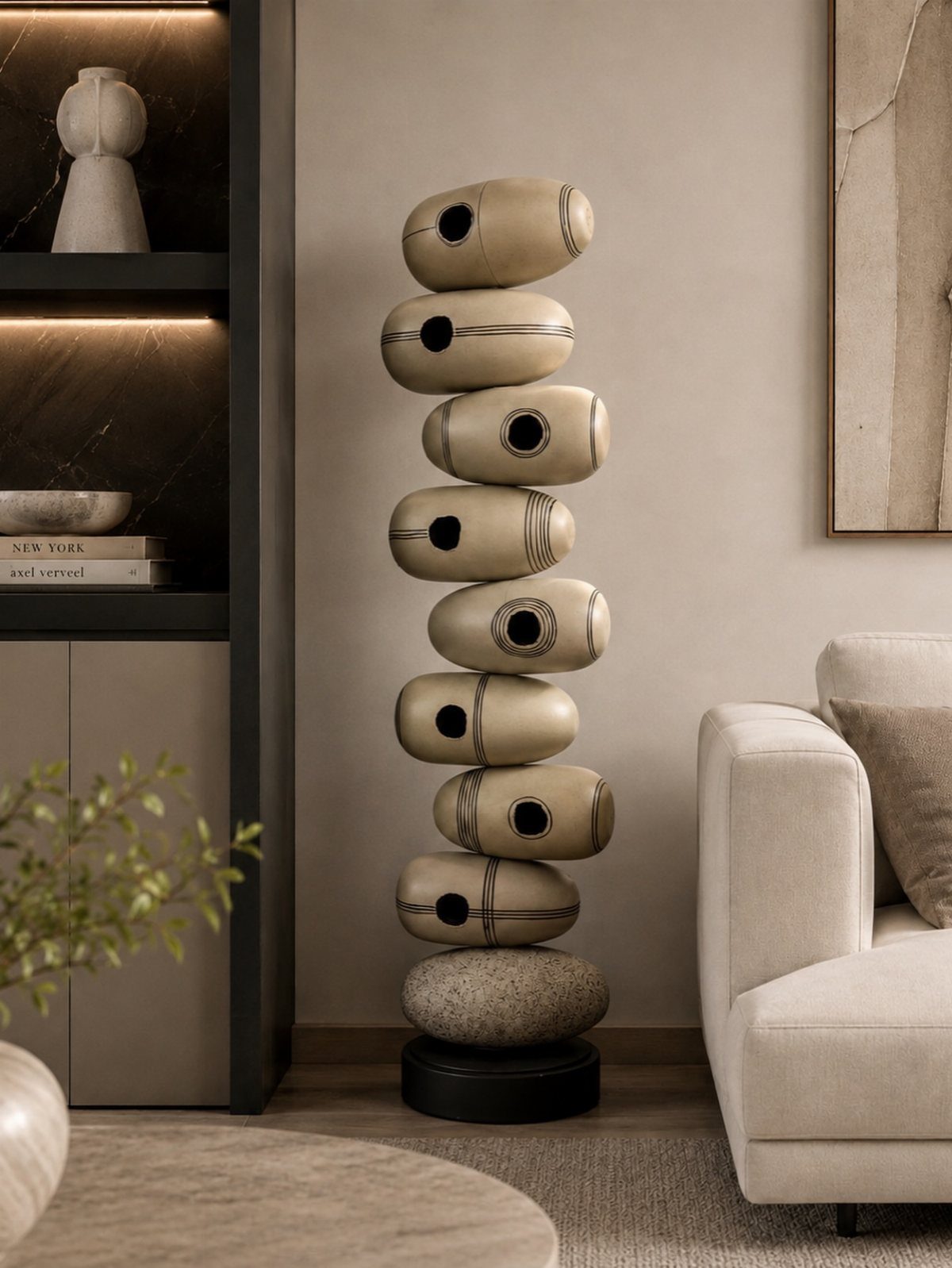
A sculptural piece this tall draws your attention upward and fills vertical space without requiring wall mounting or shelf weight.
The stacked form reads as art and as a lamp, which makes it functional in a way that a pedestal sculpture isn’t.
Place it beside the sofa rather than in a corner so it stays visible from multiple angles.
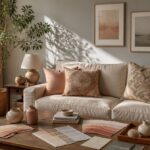
12. Throws, Pillows, and Rugs
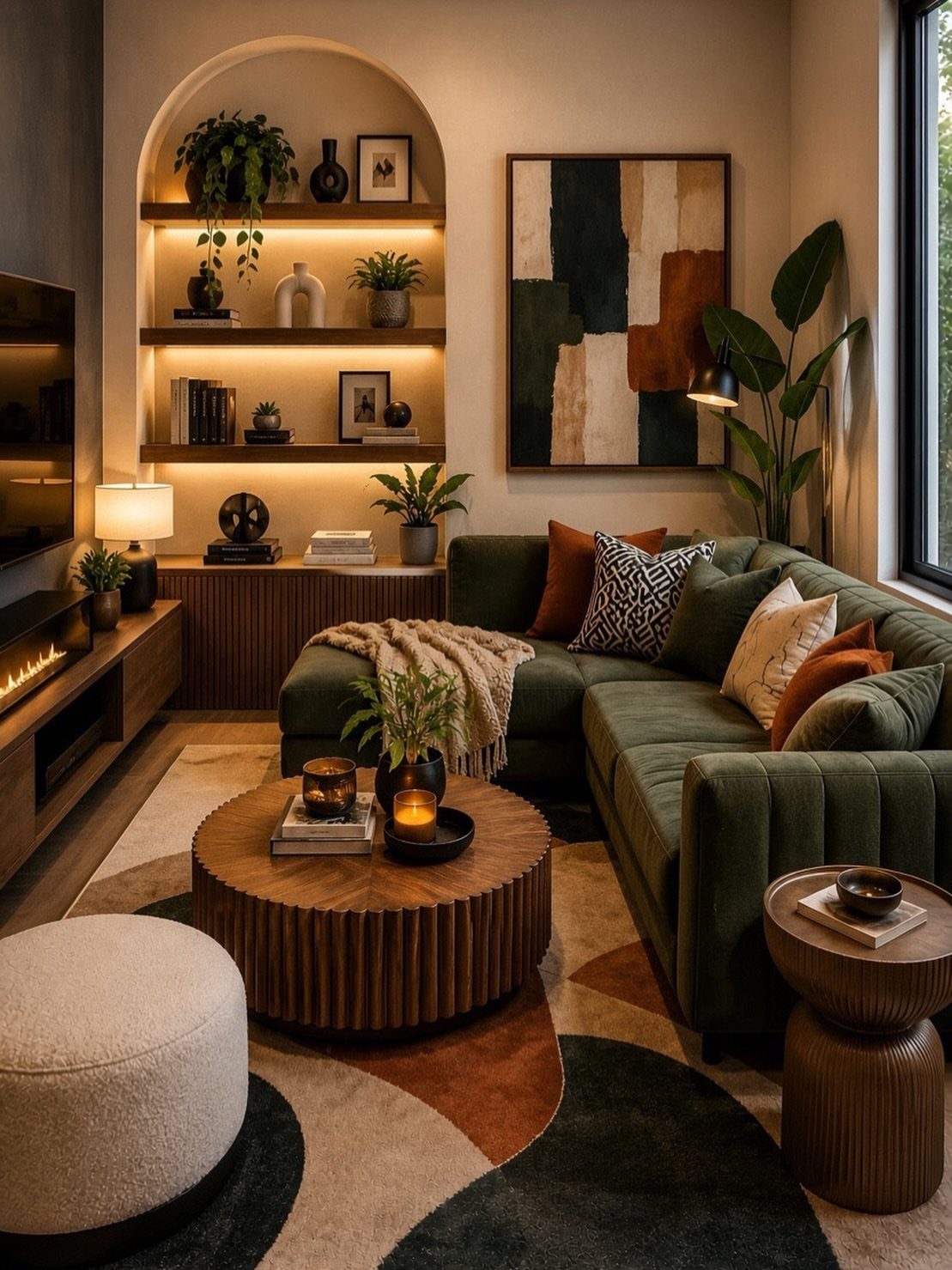
Throws and pillows let you change the room’s tone without replacing furniture.
The mix here works because the patterns differ in scale and the colors repeat: the green from the sofa shows up in the rug, and the pillows pull in the geometric shapes.
Layer pillows of different sizes per sofa section so they don’t line up evenly. The throw draped over the arm changes the visual weight and gives you something to reach for without walking to a closet.
If the rug and pillows share the same pattern density, the space looks busy; keep one busy and the other simpler.
13. Incorporate Indoor Plants
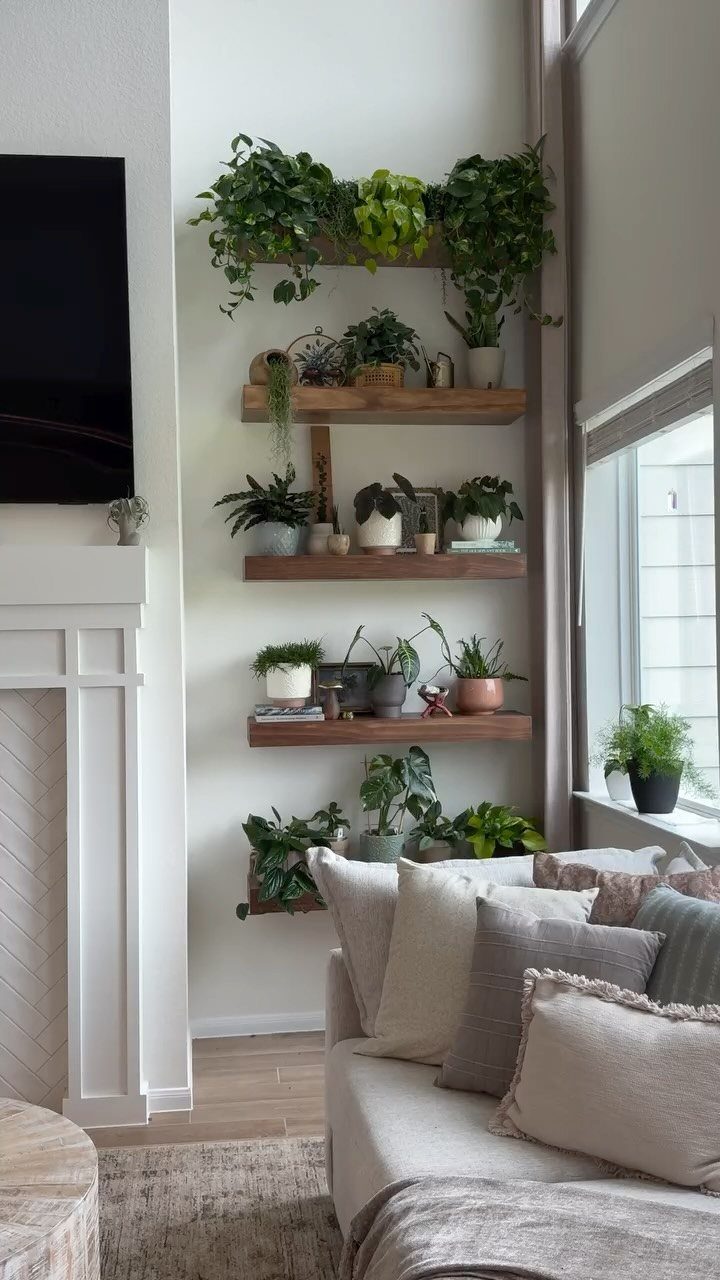
Floating shelves let you stack plants vertically without taking up floor space, which matters when the room is already anchored by a sofa and media console.
Group plants of different heights and leaf shapes so each shelf reads as a layer rather than a repeat.
Place the shelves where they catch indirect light if your plant selection includes pothos, snake plants, or philodendrons.
Direct sun through nearby windows works for succulents and cacti, but most common houseplants burn or fade under it. Water on a schedule and keep a tray underneath each pot so runoff doesn’t stain the wood.
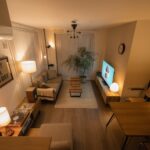
14. Open-Concept Living and Dining Room
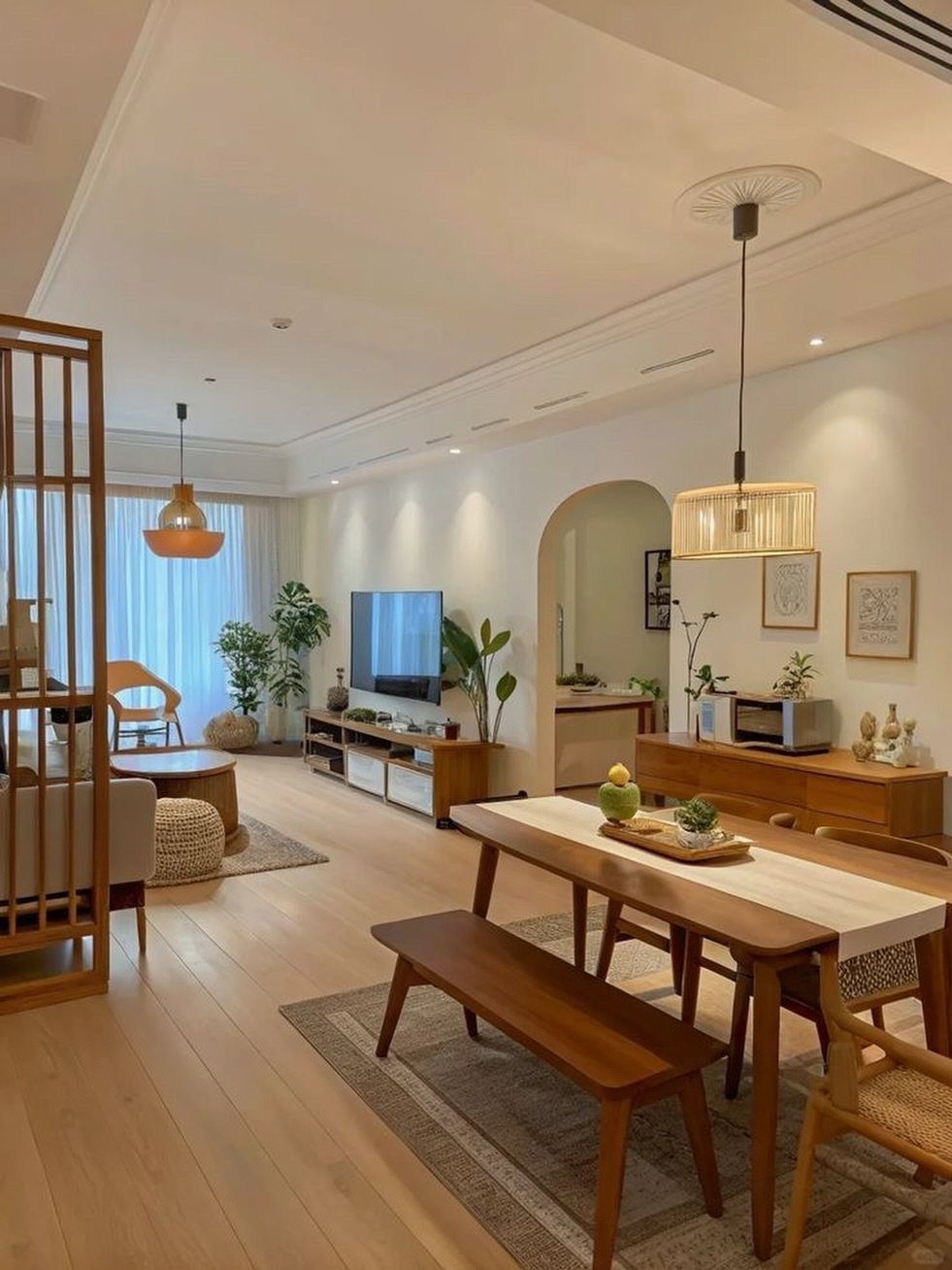
Repeating the wood tone across the dining table, bench, and media console ties the 2 zones together without a dividing wall.
The sofa faces the TV while the table sits perpendicular, which lets both areas function independently without one blocking the path to the other.
If your layout allows it, float the sofa a few feet from the wall instead of pushing it back.
That creates a walkway behind it and keeps the dining area from feeling like a separate room. Stick to one or two accent colors across both spaces so the eye moves smoothly between them.
15. Use Unique Lighting Fixtures
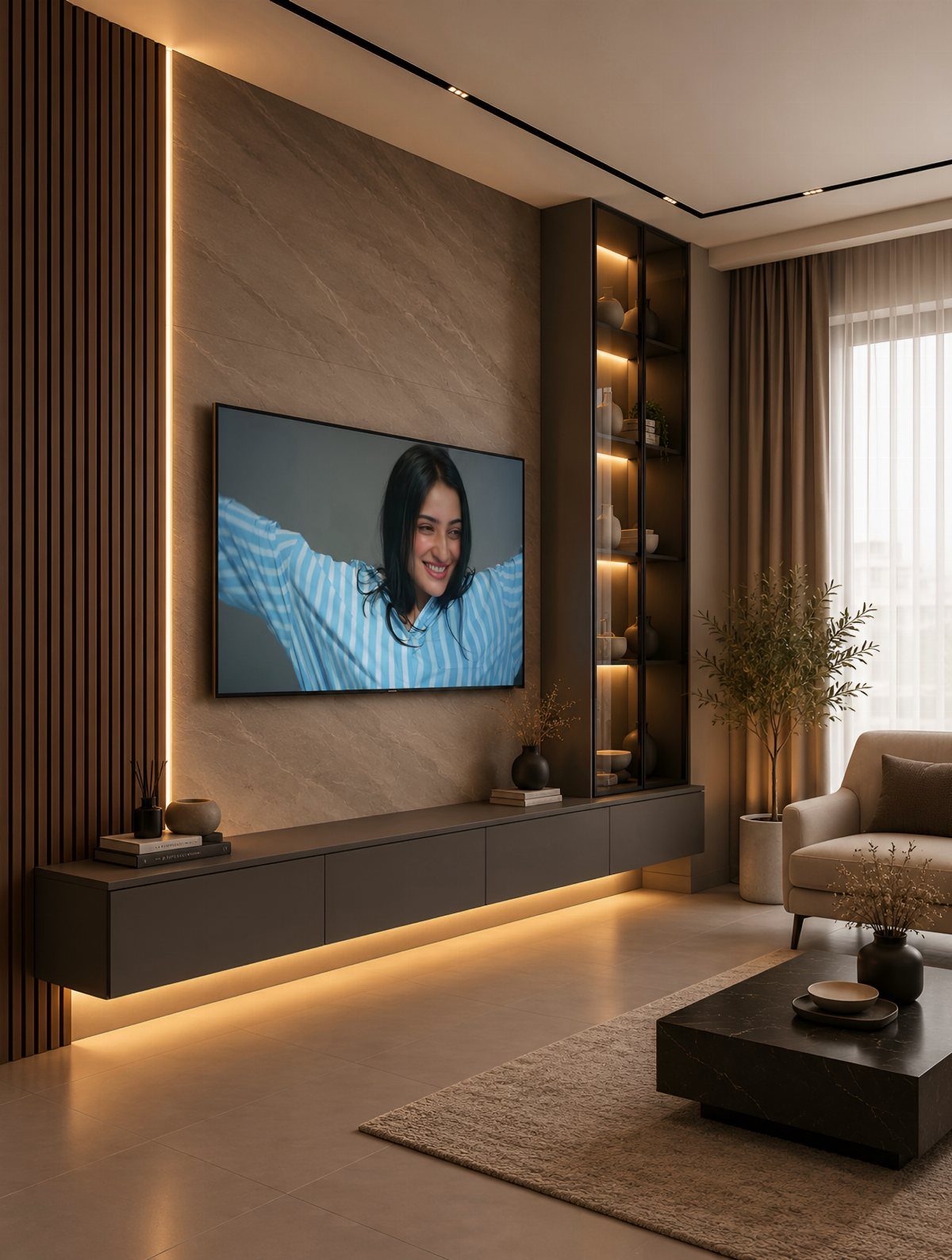
Strip lighting behind the console and inside the shelving adds a warm glow that makes the wall texture visible after dark. It’s a quieter alternative to a table lamp and keeps the surfaces clear for storage or decor.
Install the strips on a dimmer so you can drop the intensity when the TV is on.
Warm white reads softer than cool white in a living room, and adhesive-backed LED strips go up in under an hour without running new wiring.
The floating console keeps the light from sitting directly on the floor, which would flatten the effect.
16. Mid-Century Modern Green and Wood
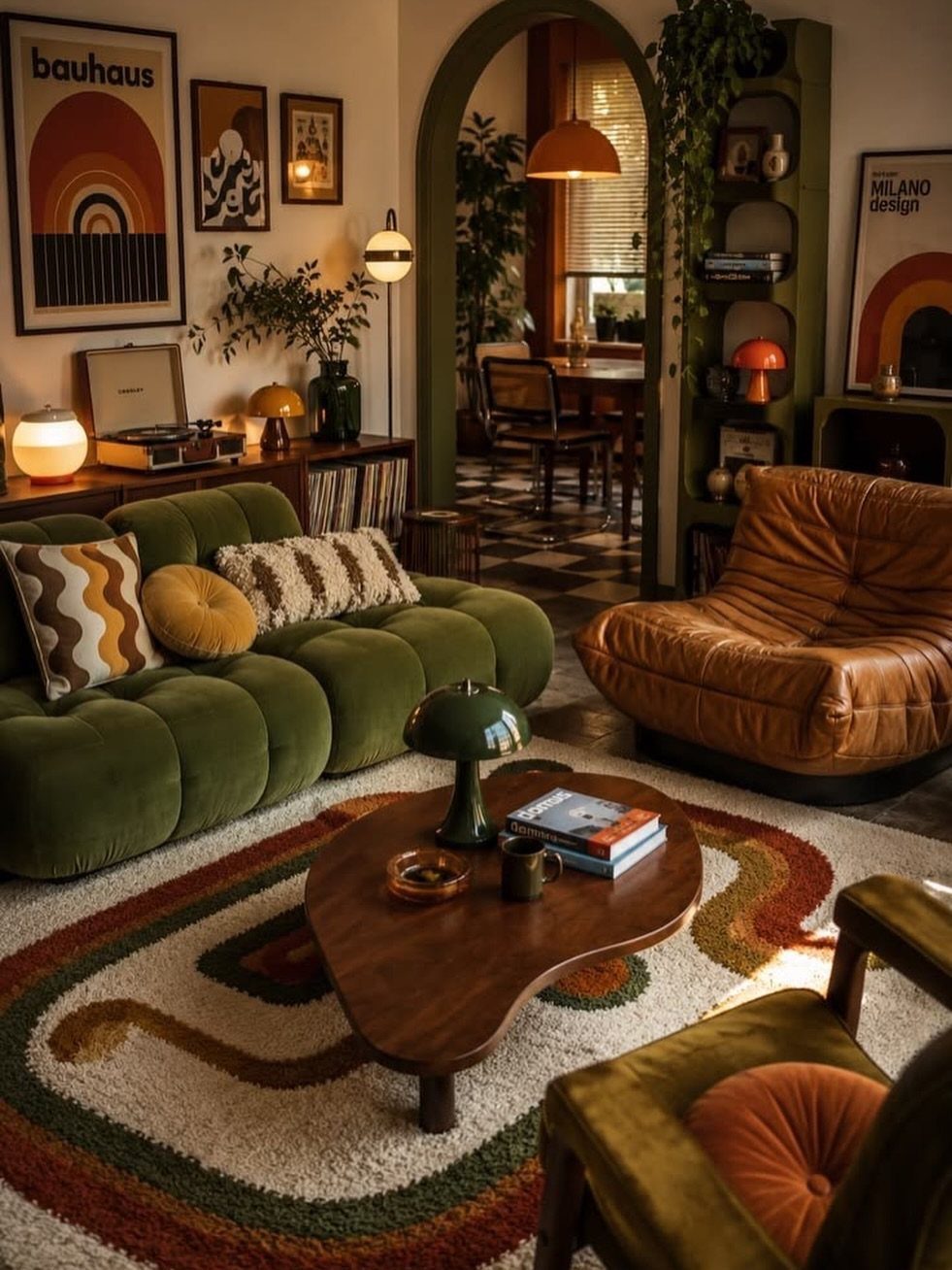
Green velvet softens the angular wood furniture and leather, and the curves in the sofa and coffee table keep the room from reading too geometric. The brown chair adds a second seating texture without competing for attention.
This palette works because the green is saturated enough to hold its own against the wood tones.
Lighter or greyer greens would wash out. The kidney-shaped table is period-correct for mid-century design, but a round or oval wood table would do the same job if you already own one.
Keep the art minimal and framed in black or wood so the color stays in the furniture.
17. Coastal White and Wood Accents
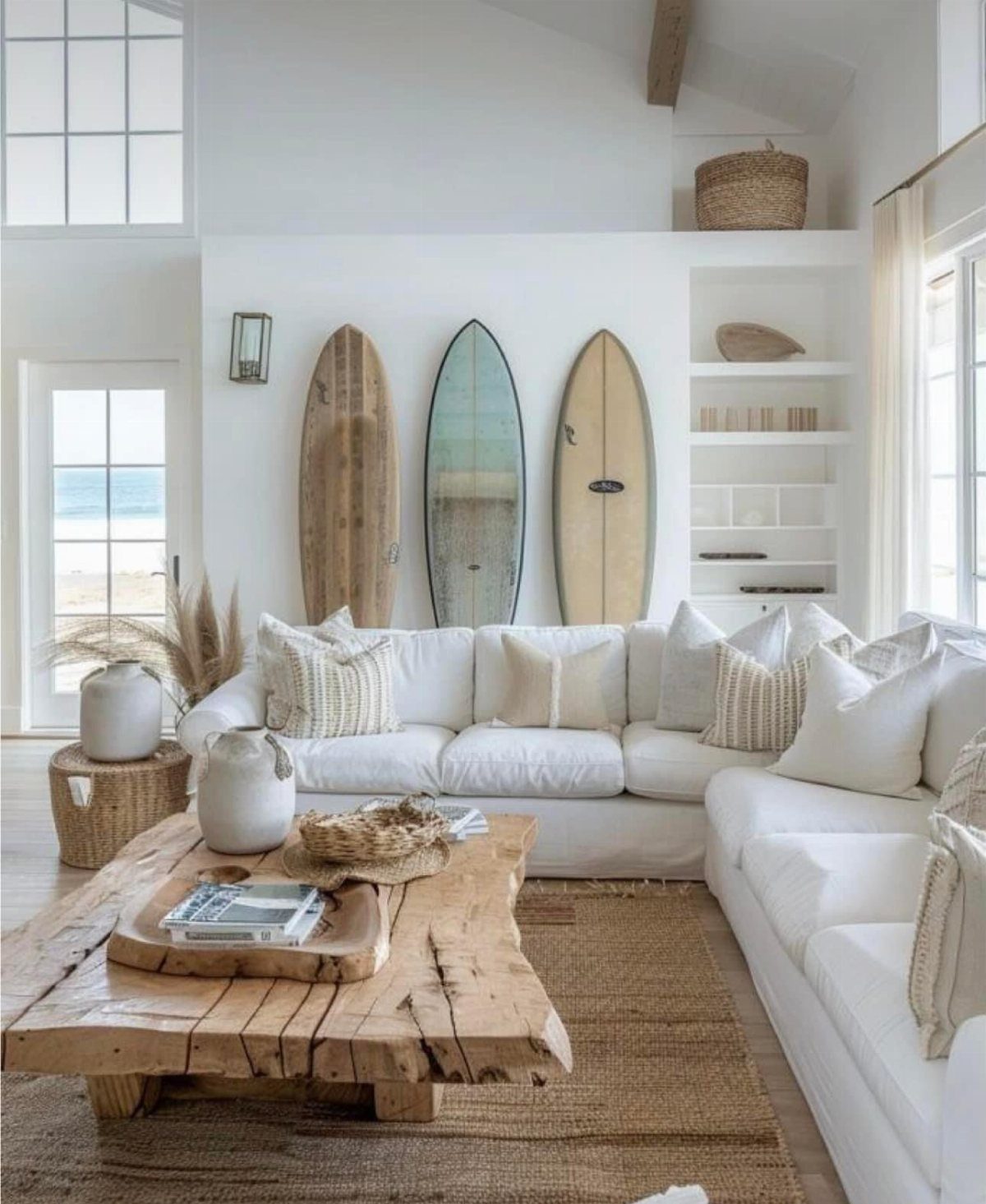
White walls and upholstery make the wood table the visual anchor, and the live edge keeps it from reading too polished.
The jute rug adds texture underfoot without introducing color, which matters when you want the space to stay bright and uncluttered.
Surfboards mounted on the wall bring in vertical lines and reinforce the coastal theme.
If you don’t surf, swap them for paddles, driftwood, or tall plants in woven baskets. The sectional works because it’s deep enough to lounge on; a shallow sofa in this much white can look like a waiting room.
18. Arched Floor Lamp with Sectional
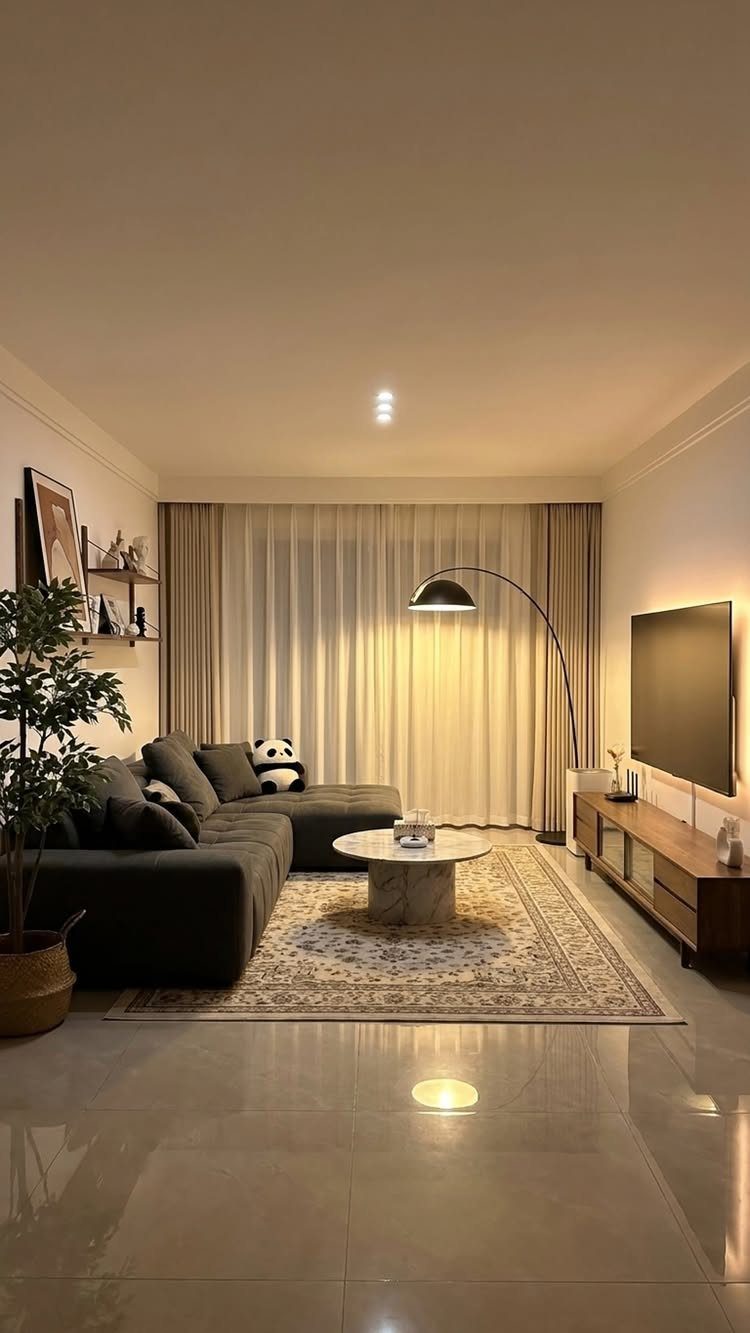
An arched floor lamp puts light directly over the seating without a ceiling fixture, which works when you’re renting or the room lacks overhead wiring.
The curve lets you position it behind the sectional so the bulb hovers above the cushions instead of off to one side.
The marble coffee table stays low and round, which keeps the center open and avoids sharp corners in a high-traffic path.
Dark grey upholstery hides wear better than lighter tones, and the modular sectional lets you reconfigure the layout when the room changes. Place the lamp where the cord can reach an outlet without crossing the walkway.
19. Sage Green and Tufted Blue
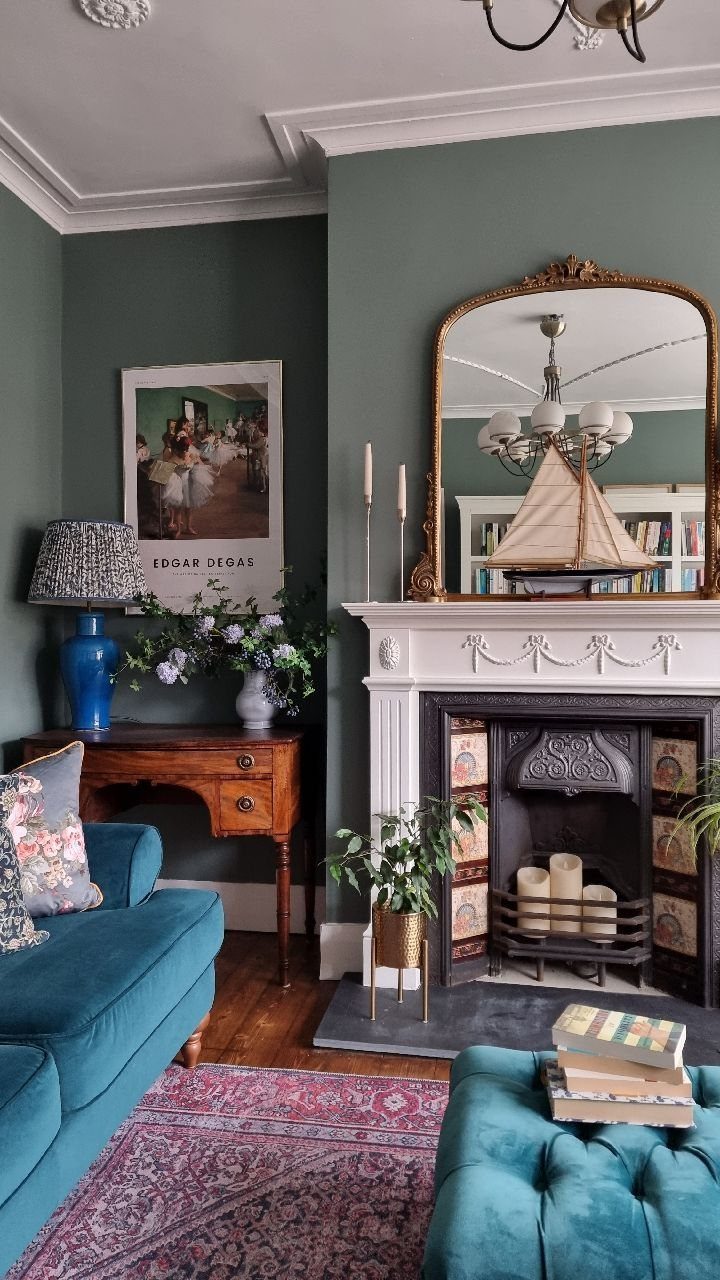
Sage green reads cooler than olive or mint, which lets the tufted blue furniture stand out without clashing.
The white fireplace breaks up the green and gives the eye a place to rest, and the gold mirror adds warmth without introducing a third main color.
Tufting adds texture to a solid-color sofa or ottoman, which matters when the palette stays this calm.
If you’re painting, test the green on a large board first; sage shifts from grey to yellow depending on your light. Keep trim and built-ins white so the green doesn’t close in the room.
Living Room Paint Ideas
Wipeable paint matters when small hands touch walls daily. Look for scrubbable or washable finishes labeled for high-traffic areas, which let you remove fingerprints without lifting the color.
Monochrome schemes demand planning before you paint.
Pick your furniture and accessories first so they complement the intensity, then test the wall color on a sample board in your actual light. Bold works when the rest of the room supports it.
Creams and browns stay fresh when you bring in texture through linen, wool, rattan or stone instead of layering more paint.
A striking vase or a tall plant keeps the neutral palette from reading flat, and the natural tones layer without competing.
Wallpaper is an alternative when you want pattern or texture without adding another coat. Use it on one accent wall and let that shade guide your furniture choices, or pair it with a tile or laminate highlight.
Living Room Furniture Ideas
Glass, leather, and wood read as different materials even when they share the same space, which keeps a room visually interesting without adding color or pattern.
Glass, wood and leather in the same room give you 3 finishes that feel different without fighting each other.
Mid-century coffee tables bring a recognizable silhouette that bridges contemporary and family-friendly design. Keep the proportions low so the table doesn’t block sightlines across the room.
Bookshelves add function and fill vertical space without requiring a large footprint. Ottomans work as extra seating and as a place to rest your feet, which matters when the room serves multiple people at once.
Match the furniture shape to the room structure when possible. In a square room, a square sofa keeps the proportions clean, and lining the sofa height with the windowsill ties the furniture to the architecture.
Small Living Room Tips
White walls make a small living room feel larger because they reflect light instead of absorbing it. Keep furniture minimal and in proportion to the space so the room doesn’t feel crowded.
Symmetry removes the need for extra seating. 2 sofas facing each other create balance and define the conversation area without adding side chairs or ottomans.
Hang a large mirror opposite a window so it reflects natural light back into the room. Sheer drapes let that light stream in without the weight of heavy fabric, and angular floor lamps highlight dark corners.
Brass hardware, a sculptural vase or a single wall hanging pull the eye toward what you chose, not how much floor you have.
A photo wall does the same thing: it gives the eye somewhere to land and keeps it traveling across the room.
Frequently Asked Questions
How to make a living room more modern?
Pick statement lighting with a geometric profile, keep furniture lines simple, and size the rug so it runs 12 inches or more beyond where the sofa legs sit.
Repeating one accent color in at least 2 places makes it read as a deliberate choice rather than scattered, and keeping the palette focused lets each piece stand out.
If your ceiling height is standard, a statement fixture draws attention up and makes the room feel taller.
What is an organic modern style living room?
It pairs natural materials like jute, live-edge wood, and indoor plants with modern furniture in clean silhouettes.
The wood becomes the visual anchor while white walls and neutral upholstery keep the space bright, and layering different leaf shapes and plant heights adds organic texture without pattern.
Woven baskets, driftwood, or tall greenery reinforce the natural side without requiring built-ins or wall mounts.
What are some creative ideas for a lounge area?
An arched floor lamp positions light over the seating without ceiling wiring, and floating shelves stack plants vertically to fill the wall without taking floor space.
A sectional that breaks apart gives you new layouts when you need them, and a throw tossed over the arm adds texture in 5 seconds.
LED tape tucked behind a media console or mounted inside open shelving puts light on the wall instead of the floor and leaves surfaces free.
What are the different types of living room design styles?
Mid-century modern relies on angular wood furniture, curved sofas, and kidney-shaped tables, while coastal leans on white walls, live-edge wood, and jute with minimal color.
Monochrome interiors layer grey and black with slatted walls for dimension, and vintage looks commit fully to tufted velvet, warm geometric rugs, and retro lighting.
Each style works when the furniture, palette, and texture choices stay consistent rather than mixing too many opposing directions.