A retro living room pulls from the 60s and 70s, when bold color, low-profile sofas, shag rugs, and rich wood tones shaped interiors that still feel distinctive today.
The choice between vintage pieces and modern reproductions depends on your budget and how much time you want to spend hunting, since original teak and walnut furniture costs more now but reproductions from current manufacturers work for most budgets.
1. Low-Profile Sofas
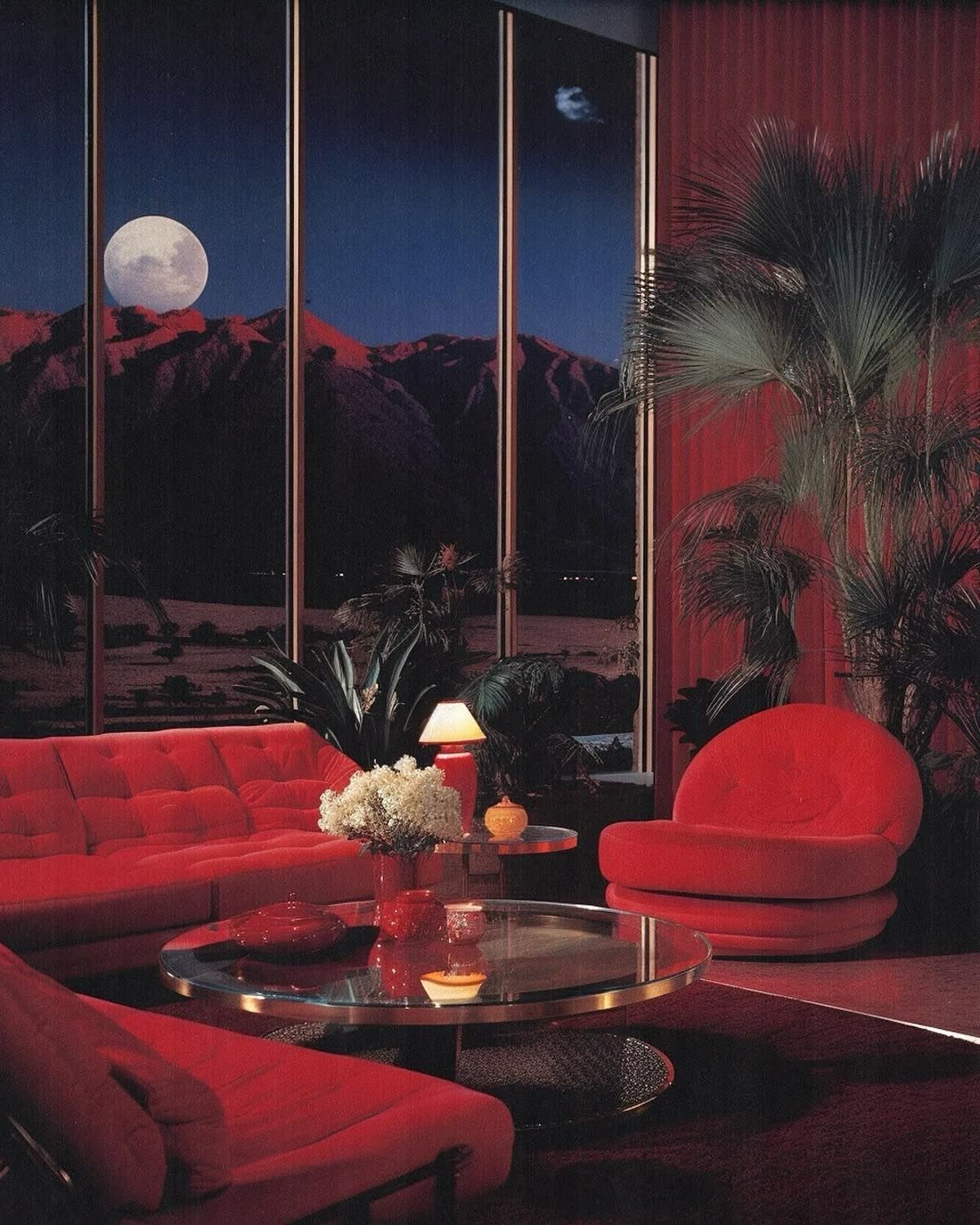
A sofa that sits low to the floor reads instantly as mid-century, and the silhouette leaves sightlines clear. The low profile works especially well in smaller spaces where tall furniture can make the ceiling feel closer than it is.
Look for pieces with legs that lift the frame just a few inches off the ground and clean lines without heavy rolled arms. The glass table in front lets the red stand out as the room’s anchor color.
2. Incorporate Quirky Lighting Fixtures
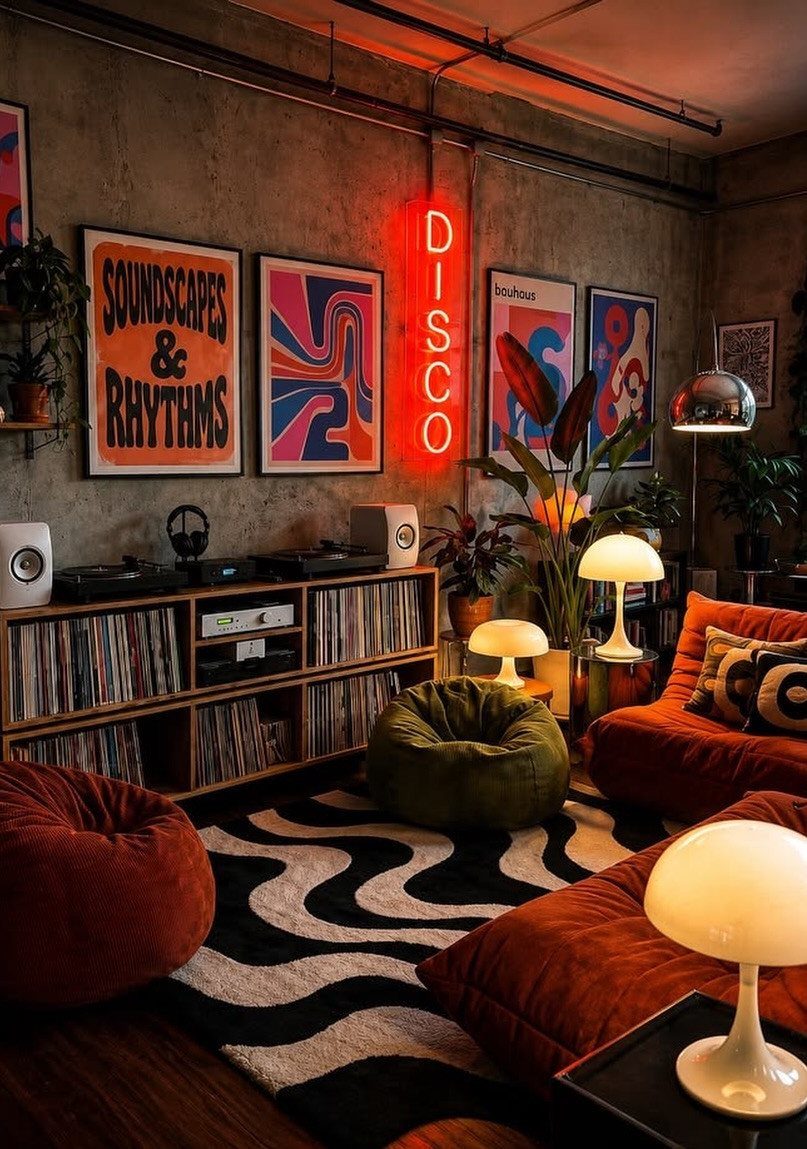
Lighting from the 60s and 70s pulled attention in a way overhead fixtures never could. Mushroom lamps, arc floor lamps, and neon signs all qualify, and pairing two or three unusual shapes in one room keeps the eye moving.
The neon here sets the tone immediately, while the mushroom lamps on the side give softer task light without matching too closely.
Thrift stores and estate sales turn these up regularly, and reproductions fill in when an original is out of budget.
3. Shag Rugs
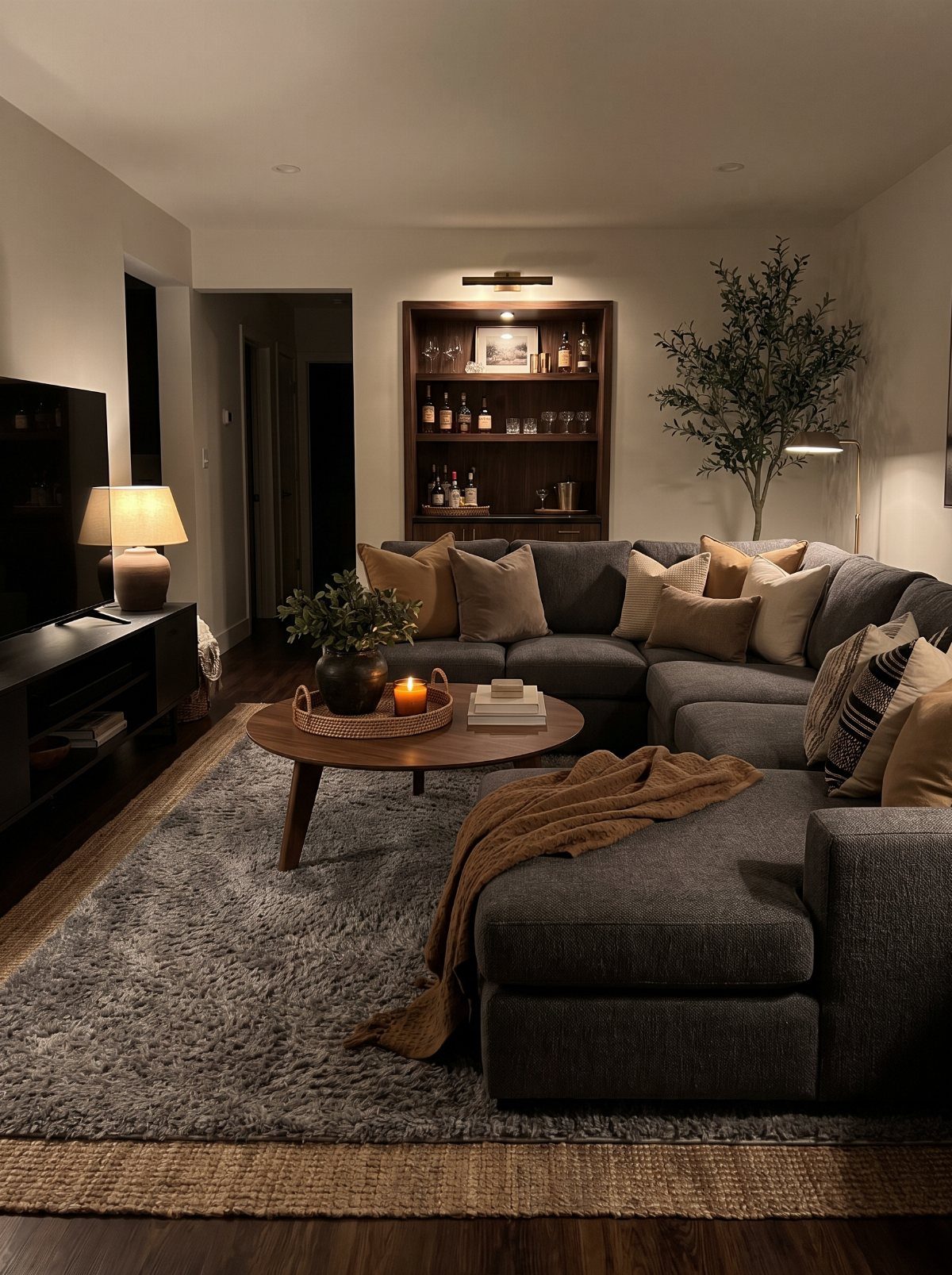
Shag arrived in the 60s and stayed through the 70s because it softened hard lines and added texture without pattern.
A high-pile rug in a neutral tone grounds a seating area and pairs well with low furniture that might otherwise feel stark against hardwood or tile.
Vacuum with the beater bar off to keep the pile from matting down.
4. Teak, Walnut, and Oak Furniture
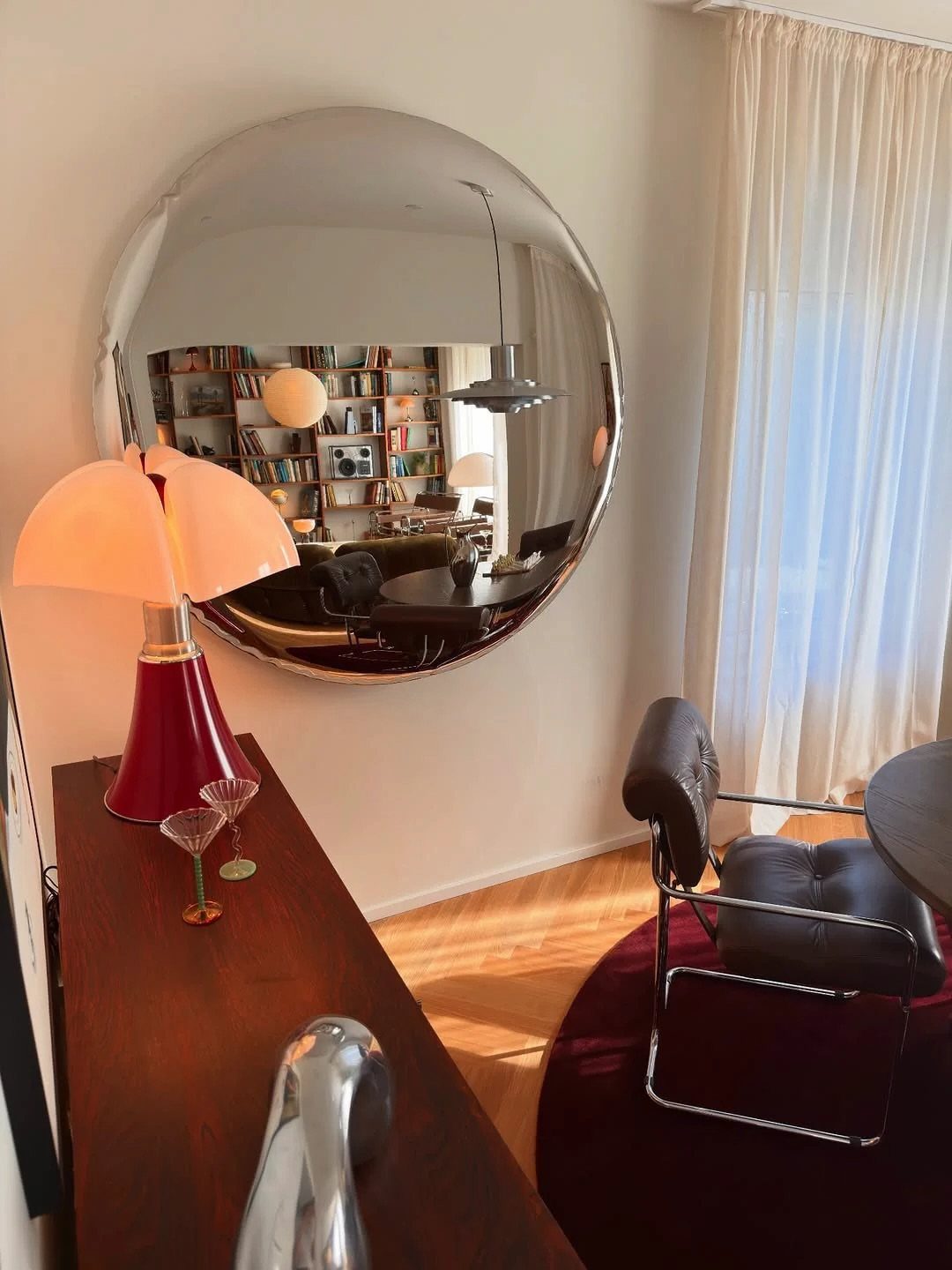
Rich wood tones anchor a retro room better than painted pieces, and these 3 species dominated mid-century design for good reason.
Teak and walnut both age into deeper tones, while oak holds a lighter honey color that suits spaces with less natural light.
The sideboard here shows the kind of horizontal grain and tapered legs that make these woods recognizable even across a room. Vintage pieces cost more now, but new manufacturers are making credible reproductions at prices that work for most budgets.
5. Geometric Rugs
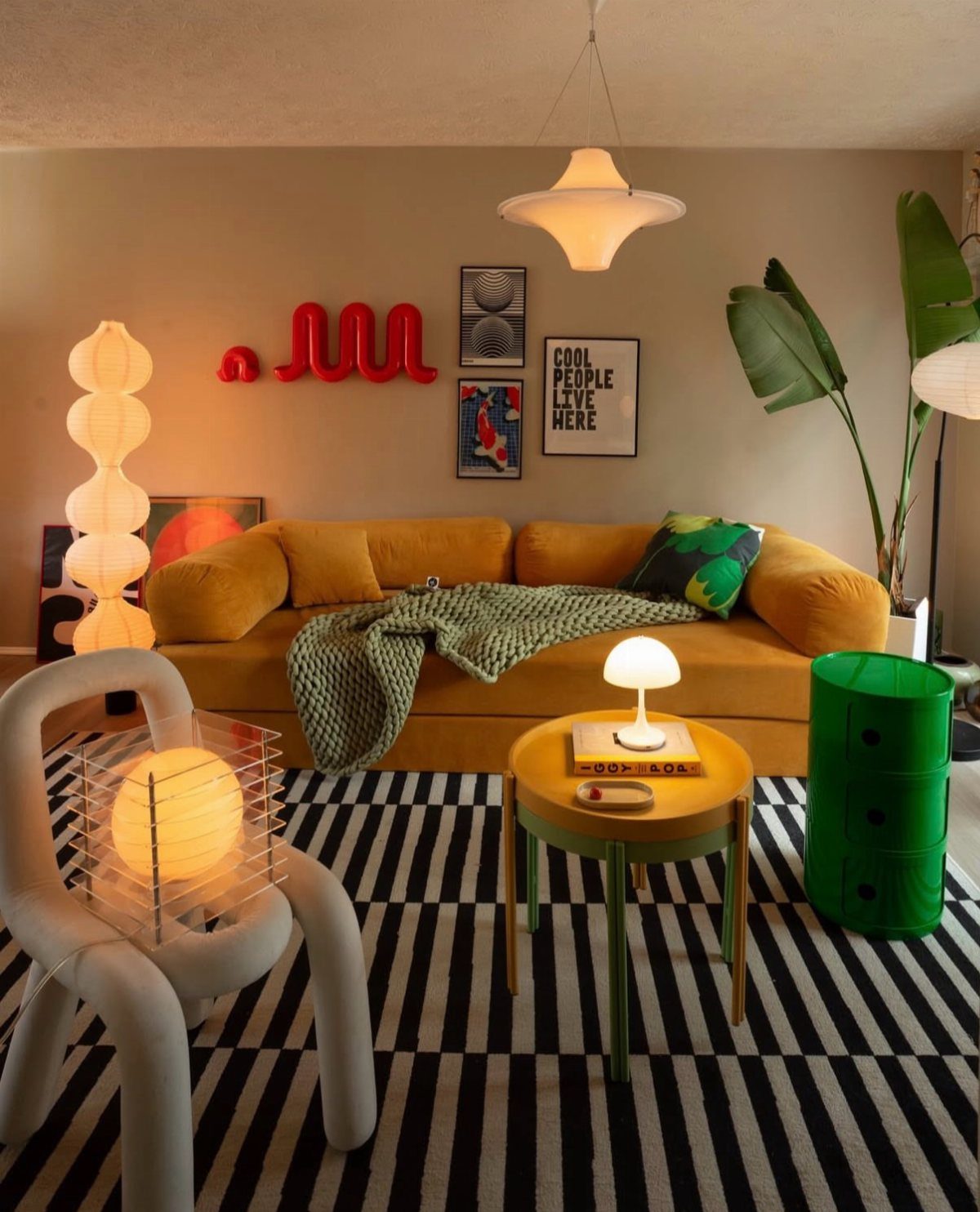
Bold stripes, chevrons, and overlapping circles were staples of 60s and 70s textile design, and a rug is the lowest-commitment place to bring that pattern into a room.
Geometric rugs also define a seating area when walls and furniture are more neutral. Look for high-contrast color combinations and patterns that repeat at a scale large enough to read from standing height.
6. Wall Art
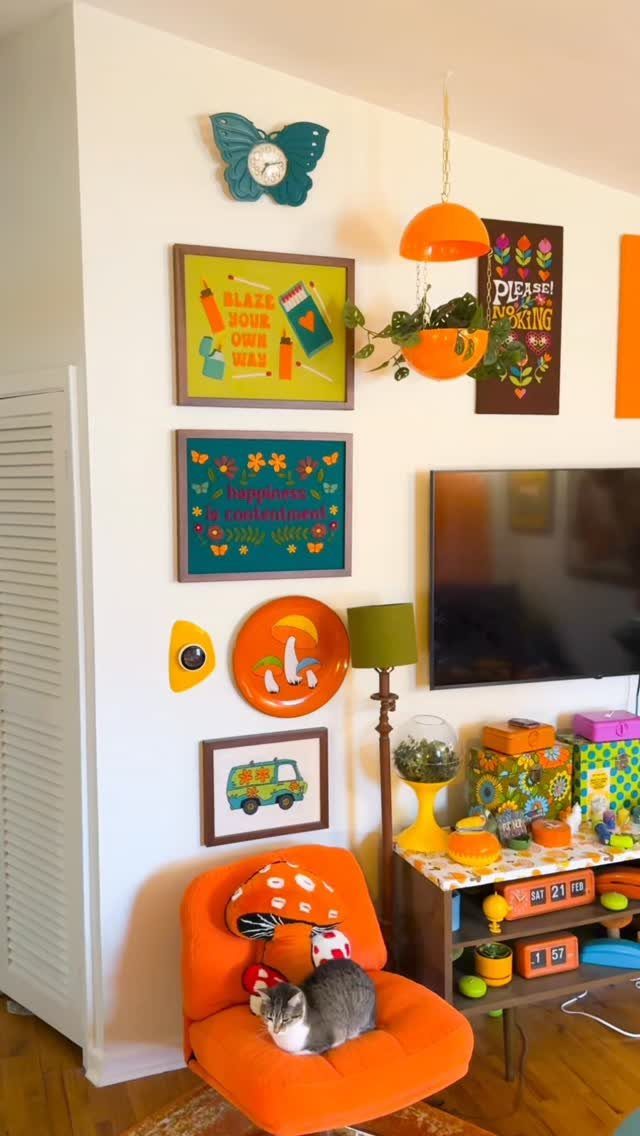
Posters from the 60s and 70s leaned on bright colors and bold typography, and a gallery wall built around them fills vertical space without the cost of custom art.
The mix here spans travel prints, concert posters, and hand-lettered phrases, all framed simply so the content does the work.
Reproductions of original designs are widely available, or you can frame record sleeves, magazine covers, and advertising prints from the era. Arrange them salon-style with tight spacing between frames for a collected-over-time look.
7. 1 Bold and Vibrant Tones
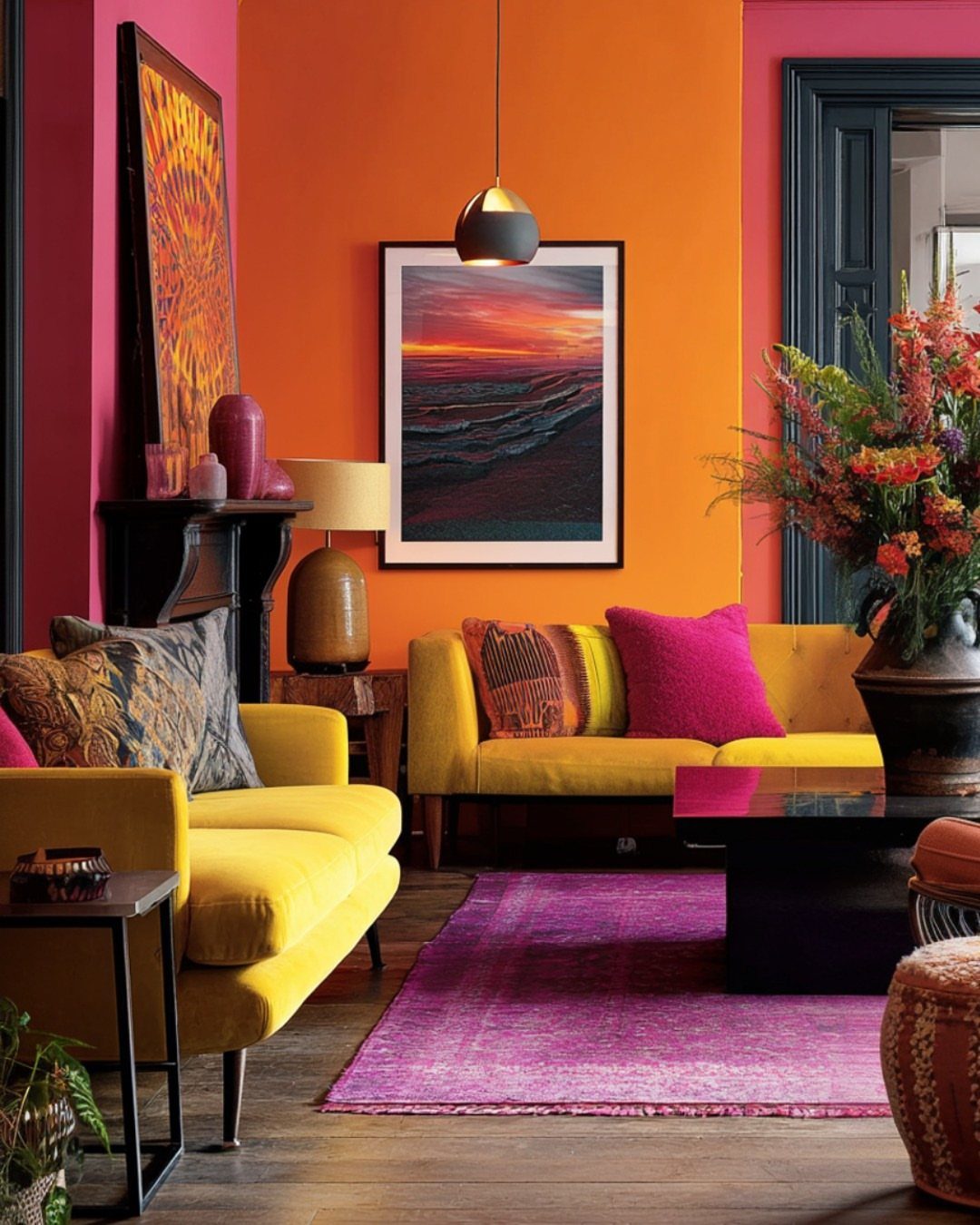
Mustard yellow, burnt orange, avocado green, and deep teal all showed up in 60s and 70s interiors because they gave rooms energy without needing much else.
The orange wall anchors the palette, and the yellow sofa and pink rug layer in two more saturated tones that would clash in a softer scheme but lock together when all three go bold.
Pick one wall for the boldest color and let furniture or rugs carry the next two. Good natural light makes the difference, since deep tones can darken a room that starts dim.
8. Vintage Ceramics and Retro Clocks
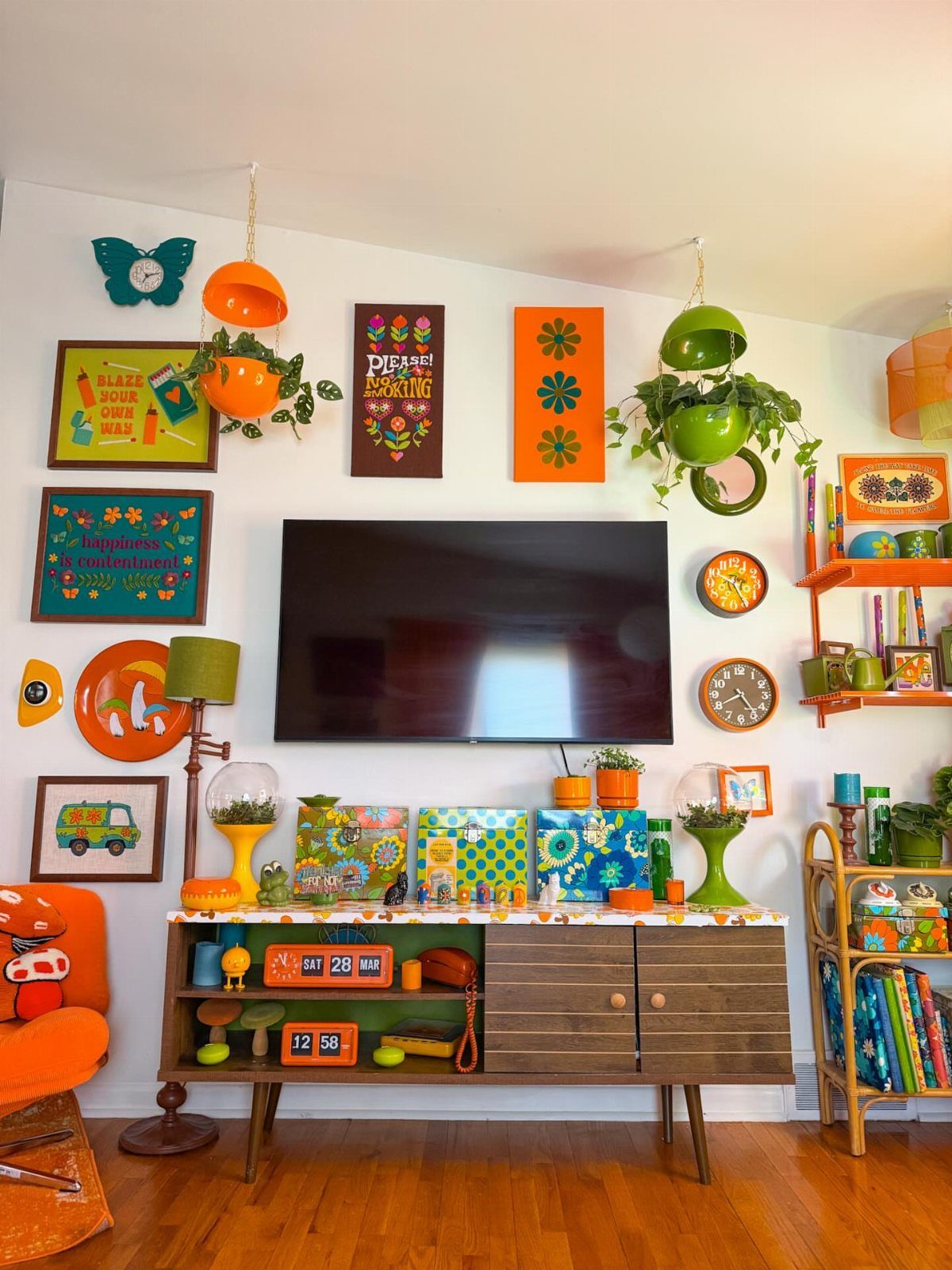
Small decorative objects from the 60s and 70s add personality without taking up floor space, and grouping them on a sideboard or shelf gives the collection more presence than spreading pieces across the room.
Vintage ceramics in organic shapes and retro clocks with colored faces both suit the era and turn up regularly at flea markets.
The mix here shows different scales and finishes, which keeps the display from reading as too matchy. Layer taller pieces toward the back and let smaller objects fill in front.
Retro home decor is characterized by vibrant colors and patterns, furniture from the 60s and 70s, and a big dollop of fun and nostalgia.
9. Vinyl Record Player Setup
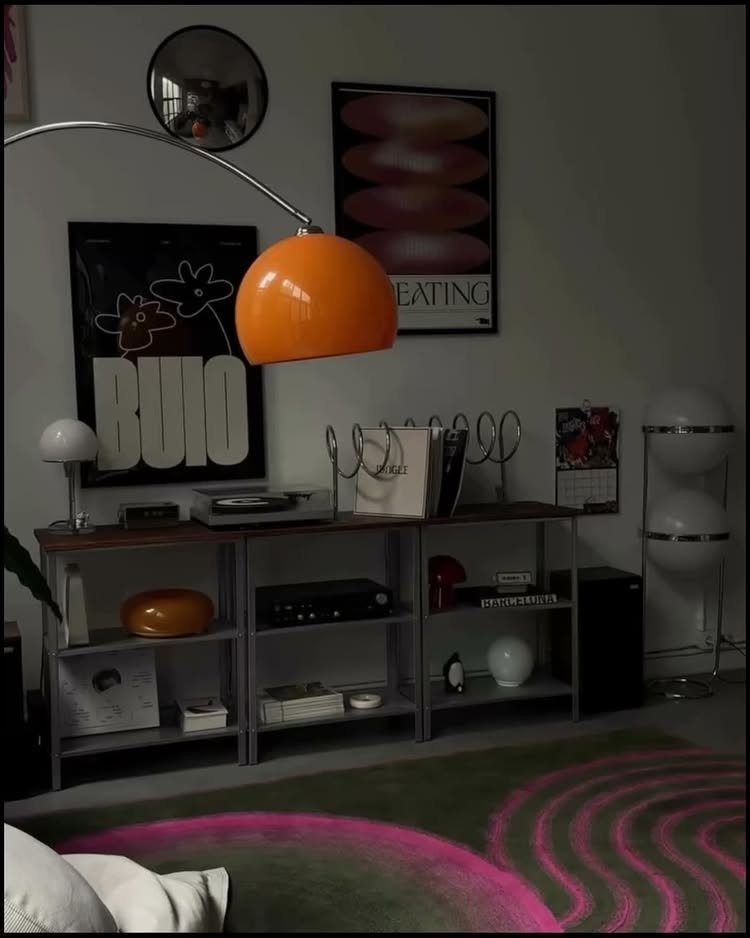
A record player on open shelving brings both function and a focal point, especially when the setup includes visible album covers that rotate as the collection changes.
Metal shelving suits the mid-century aesthetic and costs less than wood credenzas that serve the same purpose.
The orange arc lamp here defines the corner and directs light down onto the records without needing overhead fixtures. If the turntable sits near a window, keep it out of direct sun to avoid warping the vinyl.
Blending Vintage with Modern Touches
Mixing vintage and contemporary pieces stops a retro space from turning into a museum display.
Modern upholstery on a vintage frame, or a sleek media console next to a 70s arc lamp, lets you live comfortably without sacrificing the era’s character.
Contemporary pieces also solve practical gaps. A flat-screen TV, updated lighting controls, and USB-accessible side tables all belong in a space you use daily, and pairing them with vintage furniture gives you a collected look rather than a staged one.
The balance tips when one side takes over. If most of the furniture reads mid-century, a few clean-lined modern pieces ground the space and leave its personality intact.
If the room starts contemporary, a couple of standout vintage finds add warmth and weight that new furniture rarely brings on its own.
Choosing Quality Furniture
Mass-produced furniture rarely matches the build quality of older pieces, and that difference shows in the joints, the finish, and how long it lasts.
Look for solid wood construction, dovetail joinery, and hardware that feels substantial when you open a drawer or door.
Buying from different decades gives a room the layered feel that actual homes had. A 1940s side table next to a 1970s sofa, with a 1960s lamp on top, reads as authenticity rather than a catalog matched set.
Statement pieces, whether vintage finds or well-made reproductions, anchor the room and give you a design direction to build from.
A standout chair or unique lighting fixture sets the tone, and everything else can respond to its shape, material, or color without locking you into one narrow era.
Creating a Cohesive Look
A cohesive retro room holds together through repetition of color, material, or silhouette, not by matching every piece to the same decade.
A Togo-style sofa pairs well with a minimalist concrete coffee table when both share clean lines and low profiles, even though their origins differ.
Light flooring and white or neutral walls give bold furniture and saturated color room to stand out.
When the walls and floor stay quiet, a mustard sofa, an orange arc lamp, and a teal rug can coexist without overwhelming the space.
Layering texture and scale adds depth. Retro lighting in a clean modern space, or sleek metal shelving displaying vintage ceramics, creates contrast that looks intentional.
The room works when each piece responds to something else in the space, whether that’s a shared color, a repeated shape, or a complementary finish.
Frequently Asked Questions
How can I modernize my living room?
Pair vintage furniture with contemporary pieces so the room stays functional without looking like a display.
Pair a streamlined console with a tall vintage lamp, or reupholster an old frame in current fabric, and the room looks like it came together over years instead of one trip.
Keep walls and floors neutral to let bold furniture stand out.
How to make a room feel vintage?
Start with wood furniture that has angled legs, pick 1 or 2 strong accent colors from the 60s or 70s palette, and fill in with smaller vintage finds like pottery or a wall clock from that period.
Group accessories on a sideboard or shelf so they read as a collection rather than scattered pieces. Mix in a few modern pieces with straight lines so the room feels like someone actually lives there.
What are some good decorating ideas for an older home?
Buy furniture from different decades rather than matching everything to one era, since actual homes accumulate pieces over time.
Check for solid wood, dovetailed drawers, and heavy hardware when you shop: those details hold up longer than anything built in volume today.
One good vintage find, like a chair or a floor lamp, gives the room a starting point without tying you to a single decade.
What flooring works best in a retro living room?
Walnut or teak floors, terrazzo tile, or a geometric rug over plain carpet or concrete all fit the period without announcing it. Pale floors and quiet walls let strong furniture colors take center stage instead of competing for attention.
Can I create a retro style living room in a small home?
Low-profile furniture keeps sightlines clear and makes the ceiling feel higher, which matters more in smaller spaces.
Use bold color on one wall and let accessories like lighting and rugs carry the retro feel without adding bulk. A sectional you can reconfigure works better in tight spaces than one fixed sofa.
What’s the difference between retro and mid-century style?
Mid-century stays spare and functional, with straight lines and pieces mostly from the 40s through the early 60s. Retro reaches farther into the 60s and 70s, picks up brighter colors, and brings in rounder, more expressive shapes.