
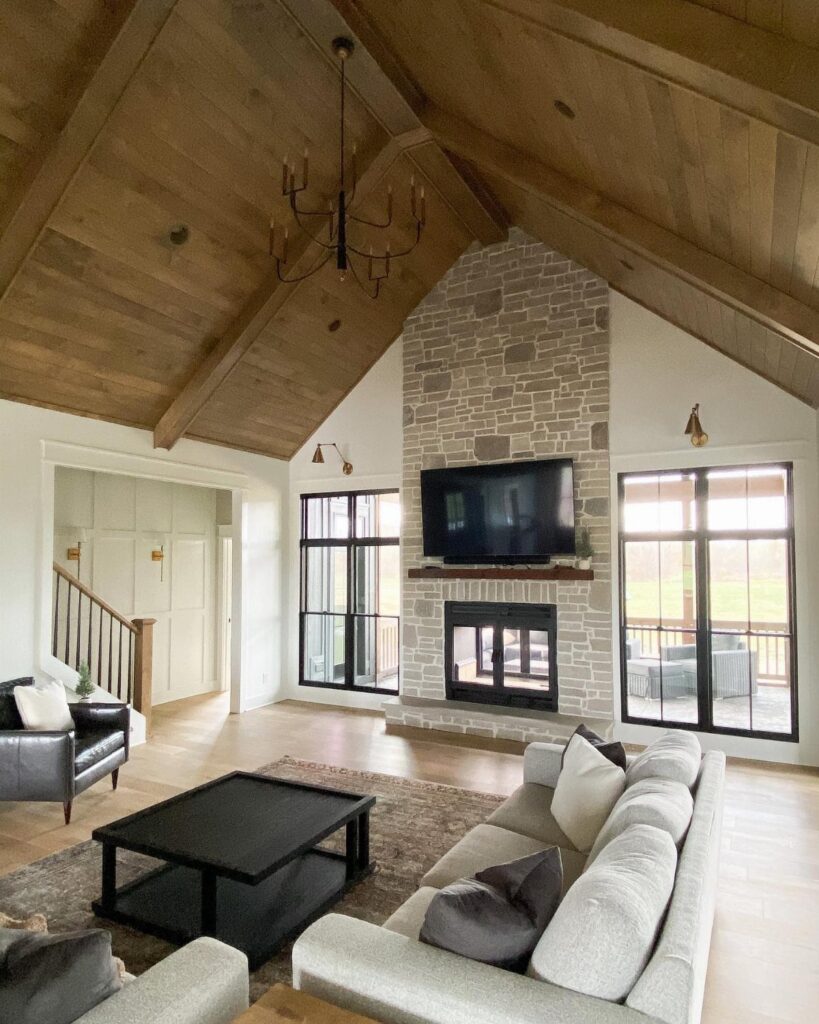
A fireplace positioned mid-wall sets the room’s center, while a low linear insert leaves space above for a single wide piece of art.
Stone cladding from floor to ceiling turns the fireplace into a vertical focal point you notice the moment you step inside.
1. Centralise the Fireplace
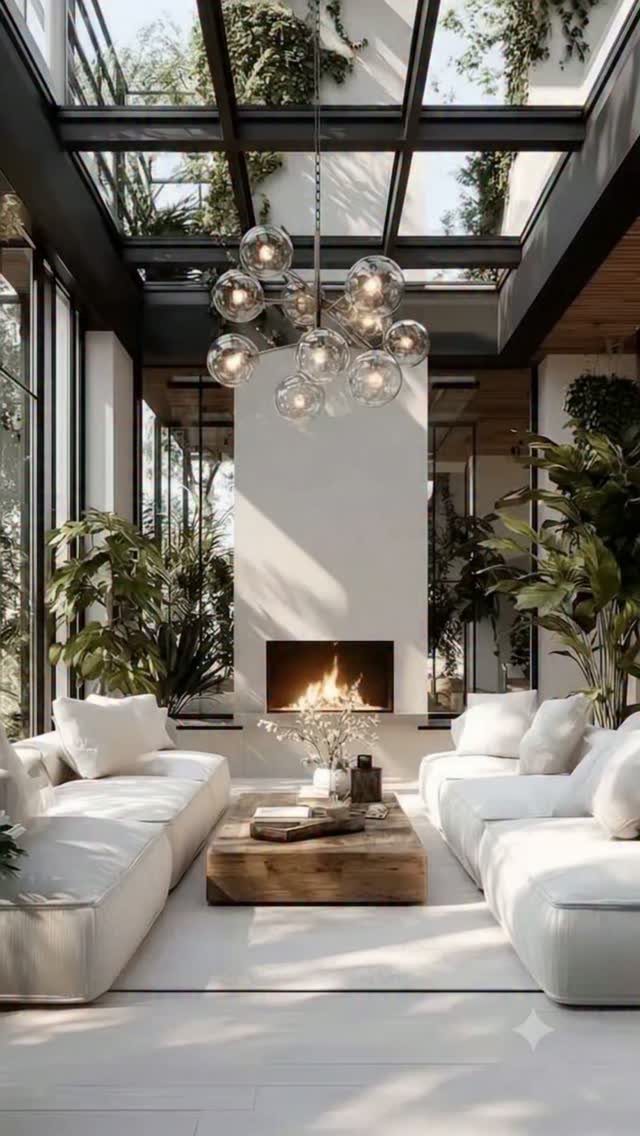
A fireplace sitting dead center in the room anchors everything else around it. The sofas face it directly, the coffee table lines up with it, and the whole layout becomes a conversation about that one point.
I like this for rooms wide enough to let furniture float. When you pull seating off the walls, the fireplace stays the clearest reason for why everything sits where it does.
The symmetry makes decorating faster because you match one side to the other instead of trying different arrangements until something looks balanced.
If your fireplace already sits mid-wall, you’re halfway there. Move the sofa opposite and let the rest follow.
2. TV Above Fireplace
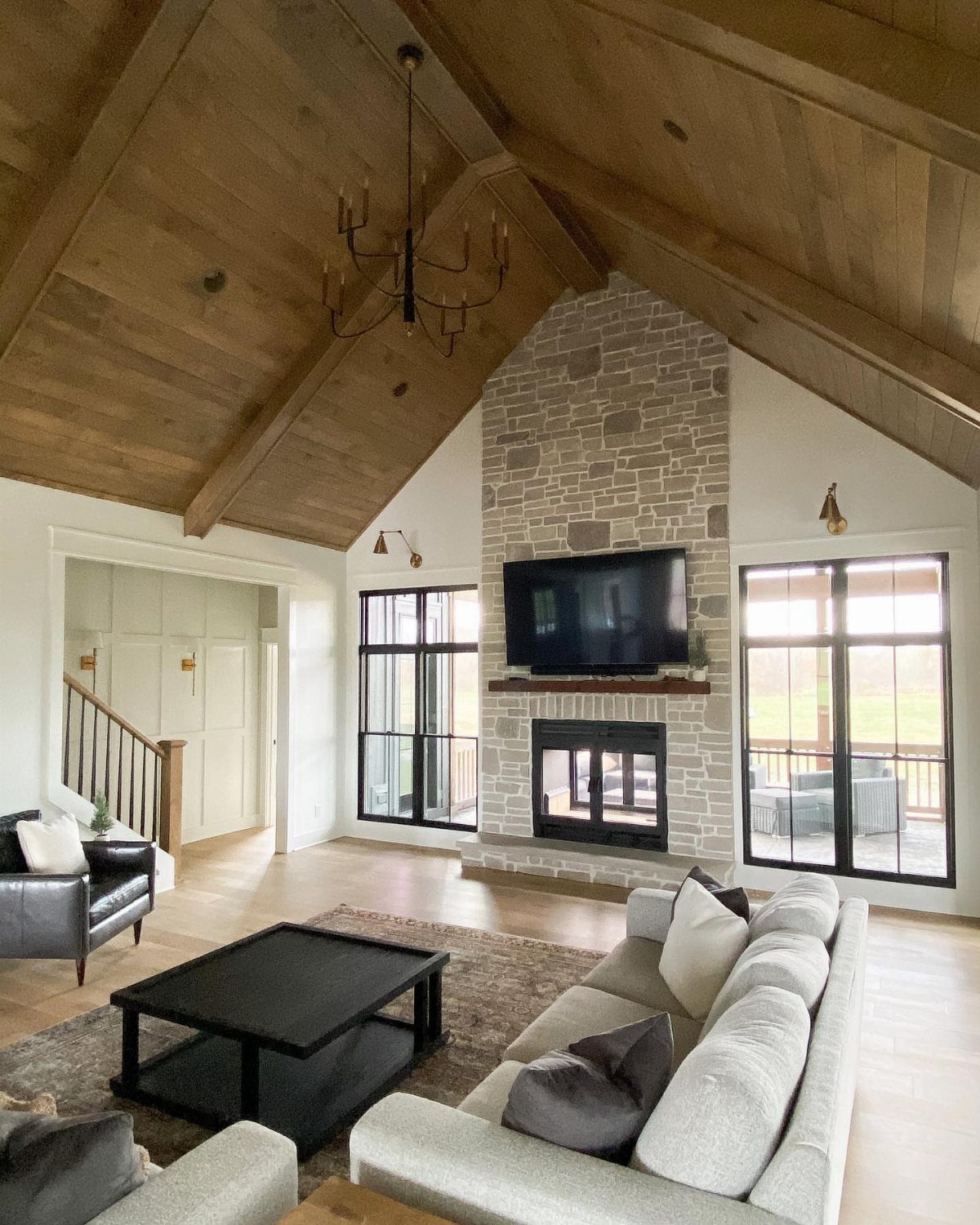
Mounting the TV directly above the fireplace solves the problem of where both go without giving up wall space to either one. You get your focal point and your screen in the same vertical line, and the room stays clean.
You give up comfortable viewing angles.
If the mantel sits high, the TV does too, and you’ll tilt your head more than you would with a lower console. I’d keep this for rooms where you watch casually, not for daily movie nights.
A recessed power outlet behind the TV hides the cord. If the fireplace vents through the chimney, check clearance before you drill.
3. Minimalist Fireplace Design
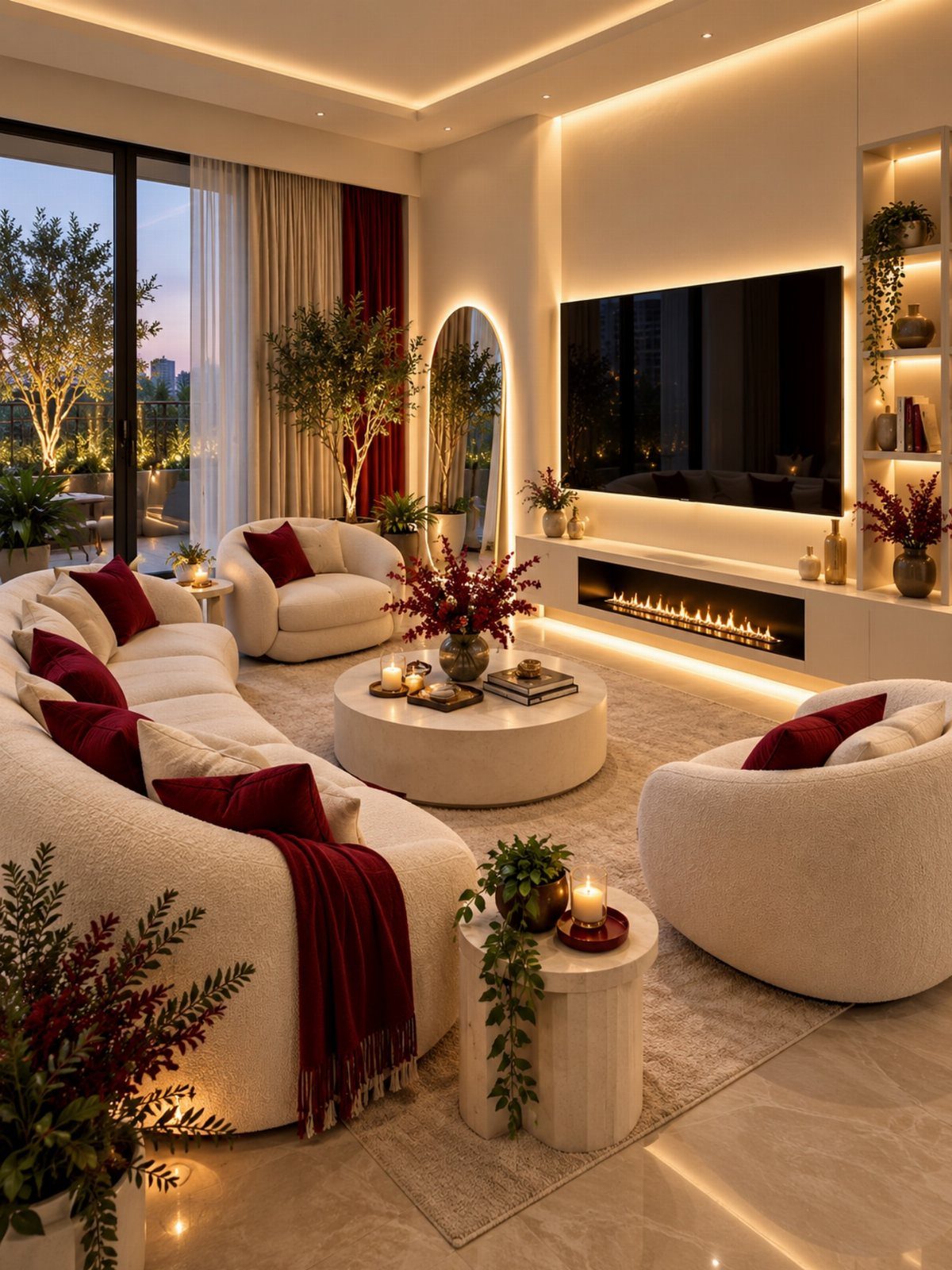
A long, low-profile gas insert sits flush with the wall and disappears into the architecture instead of announcing itself. No mantel, no surround, just a slot of flame that runs horizontal and stays quiet.
This suits modern builds and tight layouts where a traditional hearth would eat too much floor space. The line of fire stretches wide enough to register as a feature without needing decor to fill in around it.
Installation usually means running a gas line and framing a recess, so it’s easier during a remodel than as an add-on. Once it’s in, you control it with a switch or a remote.
4. Decor Around Fireplace
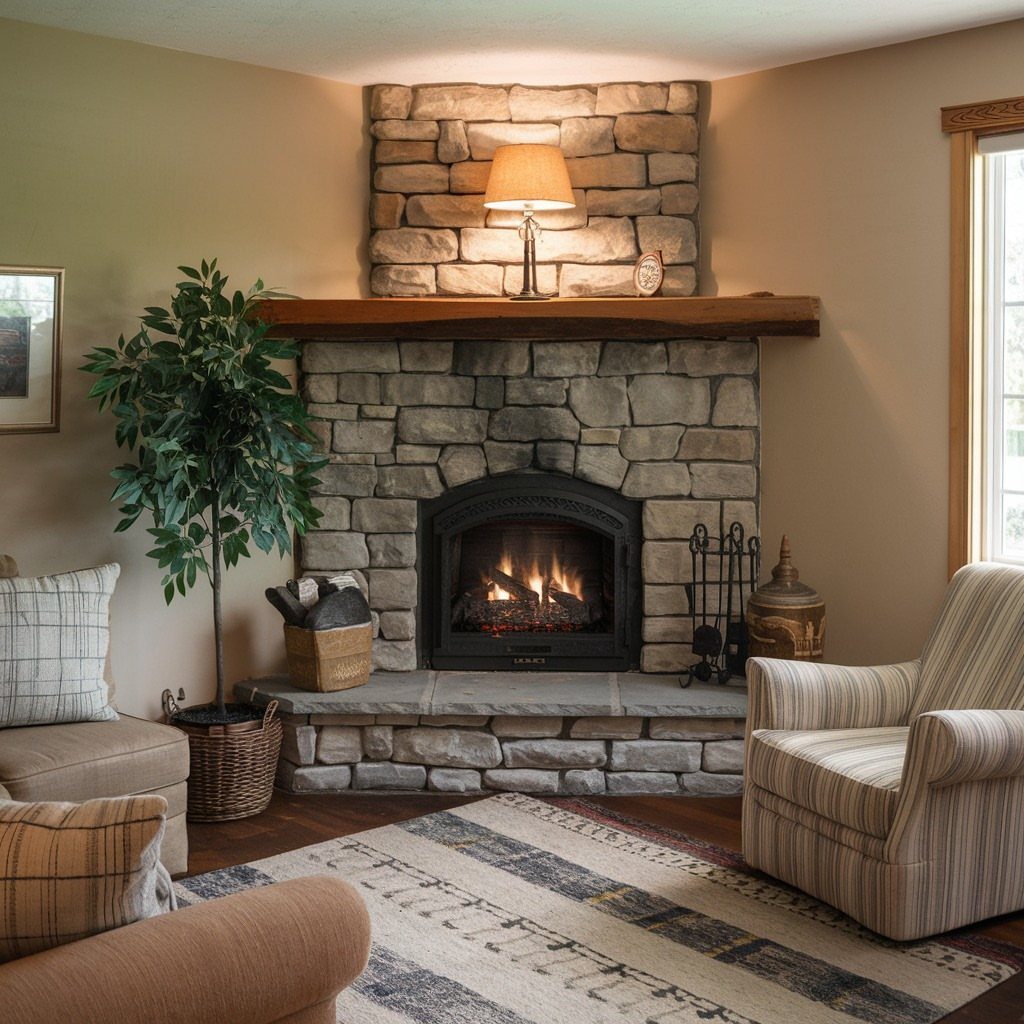
The mantel becomes useful when you treat it like a shelf that changes.
A single tall object on one side, a short stack or a plant on the other, and negative space between them gives the fireplace something to say without crowding it.
I keep a basket of split wood next to the hearth even when the fireplace isn’t burning.
It looks ready and fills the corner without needing a side table. A lamp on the mantel works if the cord can drop behind the frame or tuck into a corner.
Swap pieces seasonally. What sits there in October doesn’t need to stay through March.
5. Natural Light and Fireplace
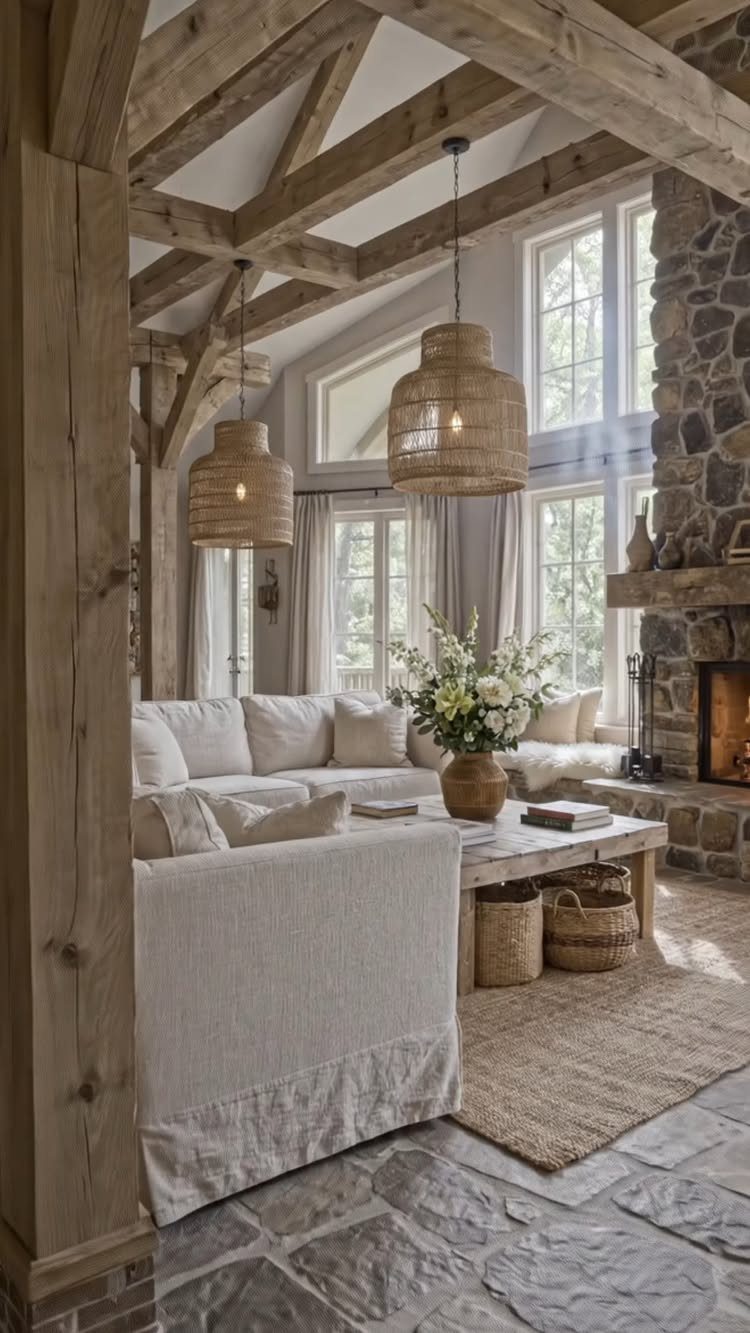
Windows flanking the fireplace let you use it year-round without the room feeling dim or closed in. The daylight keeps the space open during the day, and the fire takes over at night when the glass goes dark.
This layout works best when the fireplace sits on an exterior wall and the windows are already part of the framing. Adding them later means cutting through structure, which gets expensive fast.
I’d leave the windows undressed or use linen panels that pull all the way back. Heavy drapes compete with the stone and make the fireplace feel smaller than it is.
6. Accent Wall Fireplace
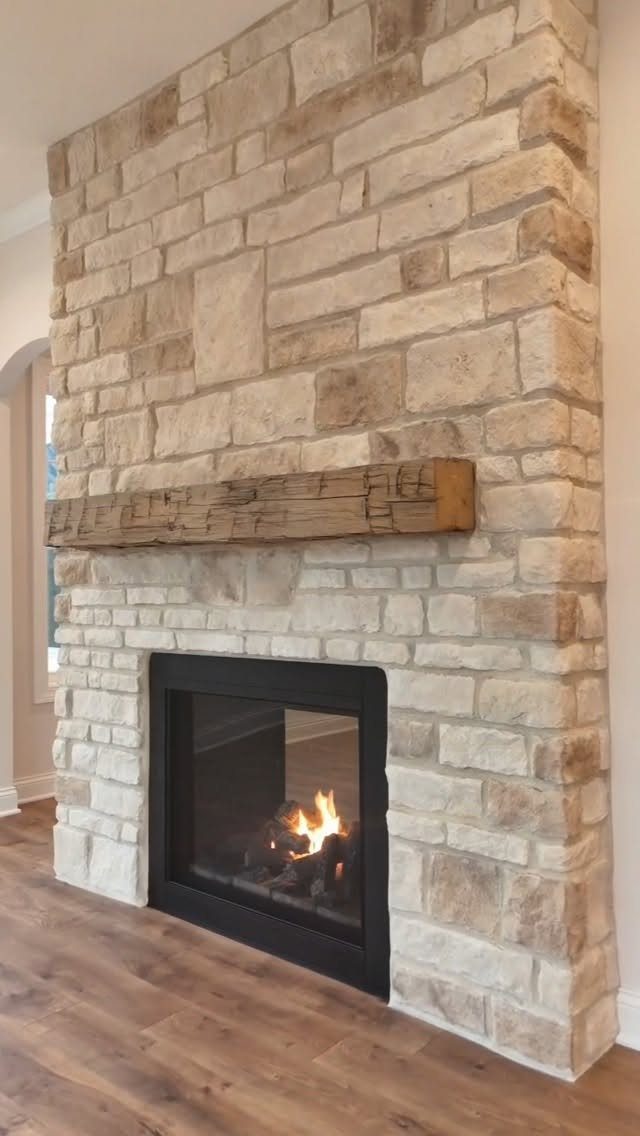
Running stone or tile from floor to ceiling behind the fireplace gives it its own vertical stripe and separates it from what sits beside it.
The material change is enough to make the fireplace the first thing you see, even if the room is full.
This works with stacked stone, shiplap, or large-format tile. The install goes faster if you start from a clean drywall base and use a ledger board to hold the first row level while the adhesive sets.
Paint the adjacent walls a shade lighter so the accent reads clearly. If the stone is warm, the wall color can stay neutral without looking washed out.
7. Built-In Shelves with Fireplace
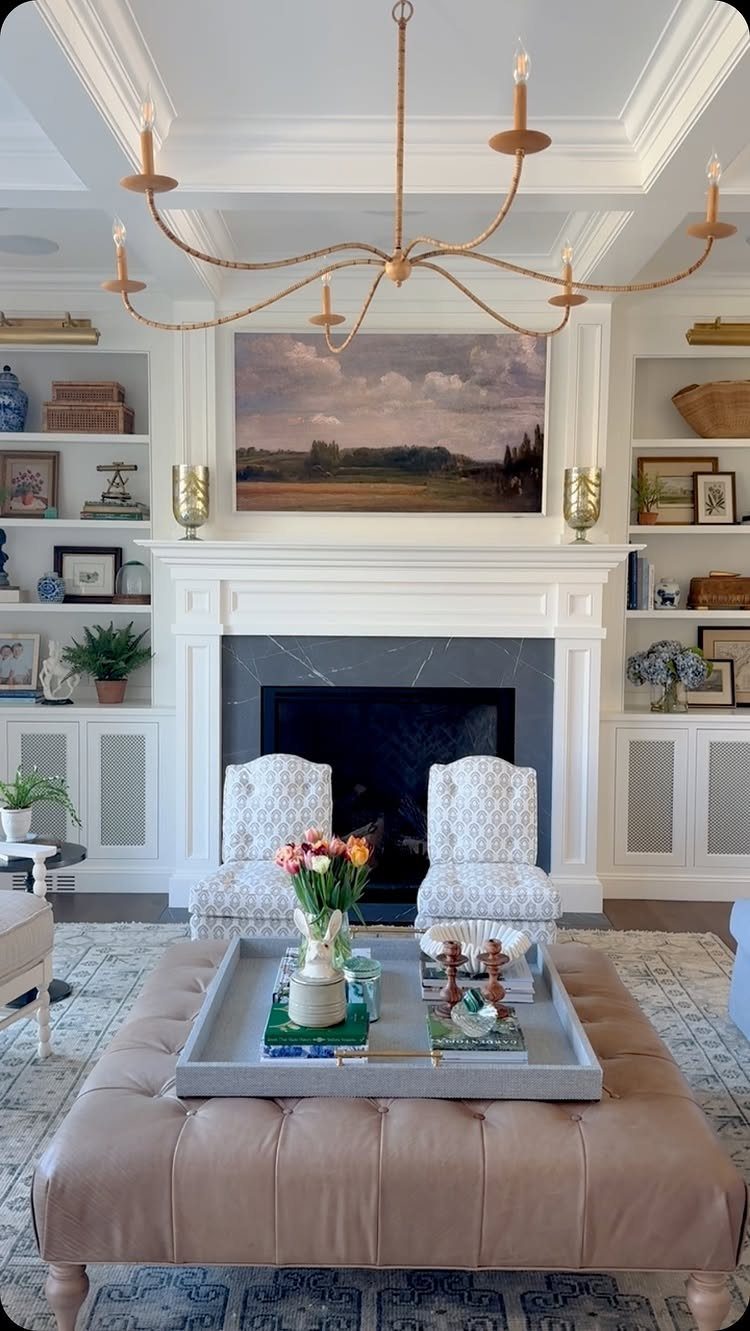
Shelves on both sides of the fireplace give you storage and display without adding furniture to the floor.
Books, baskets, and a few objects fill the vertical space and make the fireplace feel like part of a working wall instead of a feature that floats alone.
This works best when the shelves are built in during construction or a remodel, so the depth matches the fireplace surround and everything reads as one piece.
Painting the shelves and the fireplace the same color makes the whole arrangement feel cohesive.
If your mantel is narrow, use it for one or two pieces and let the shelves carry the rest.
8. Rustic Stone Fireplace
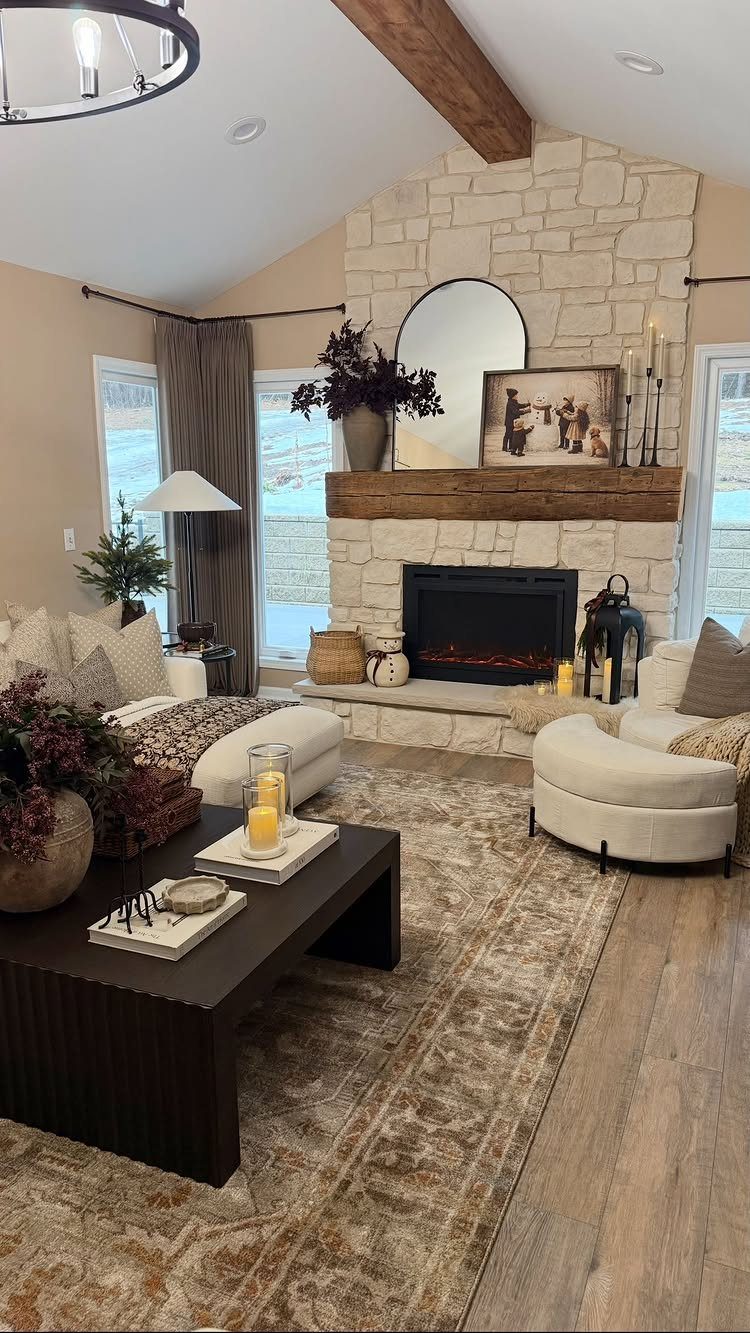
Stacked stone running up the wall brings texture in without needing pattern or color. The rough surface catches light differently than drywall, and a solid wood mantel across the middle breaks up the vertical run.
The stone reads as permanent, so this suits a house you own and plan to keep. Installation takes longer than tile because each piece needs to fit against the one beside it, and the grout lines stay irregular.
Layering artwork on the mantel instead of hanging it above the stone lets you change what’s there without drilling into the face.
9. Linear Fireplace with Art
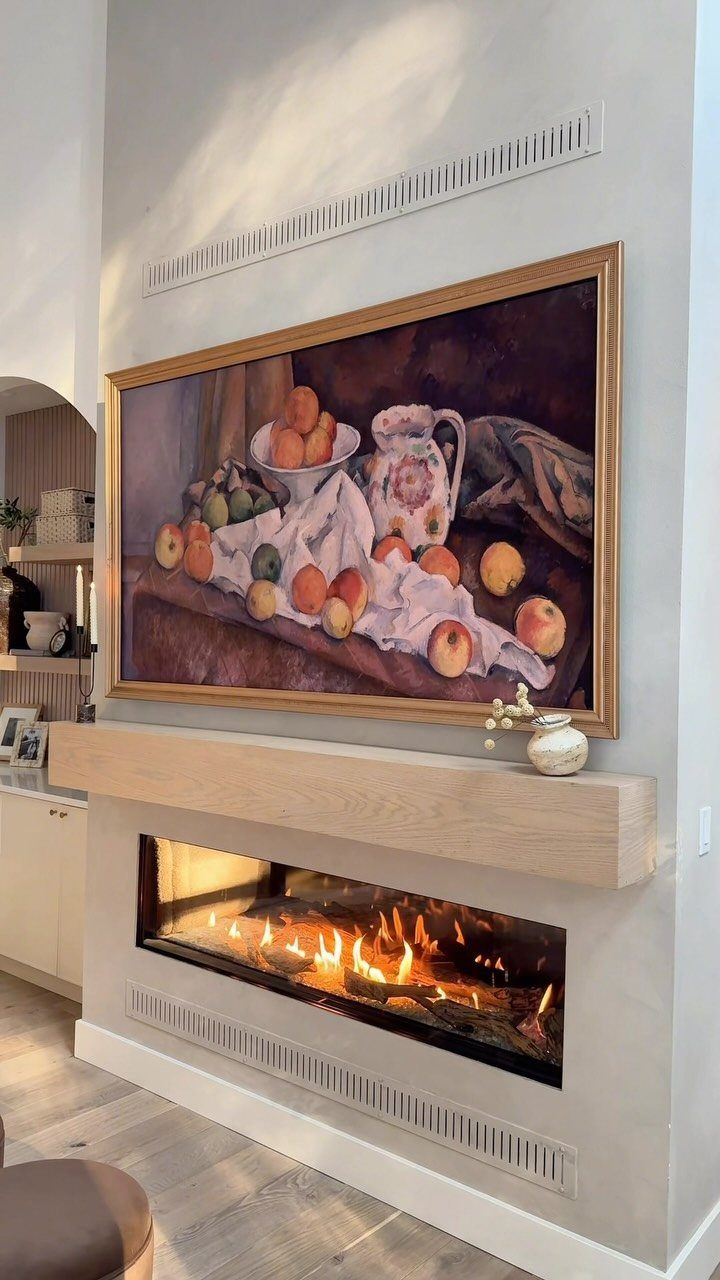
A linear fireplace sits low and horizontal, so the wall above it stays open for a single large piece of art. The painting becomes the height, and the fireplace becomes the warmth, and neither one fights for attention.
The slim mantel gives you a ledge without adding bulk. If you mount the art instead of leaning it, keep the bottom edge close to the mantel so the 2 read as connected.
This layout works in narrow rooms where a tall fireplace would make the ceiling feel lower. The horizontal line pulls your eye across instead of up.
Frequently Asked Questions
How to layout a room with a fireplace?
Place the fireplace in the center of the wall and arrange seating to face it directly.
Symmetry takes the guesswork out of furniture placement because you’re mirroring one side rather than trying arrangements from scratch. Pull furniture off the walls if the room is wide enough to let everything float around that center point.
Does a living room have to have a fireplace?
No, a living room doesn’t need a fireplace. It’s a focal point when you have one, but plenty of rooms work without it by centering the layout around a TV, a window, or a piece of furniture instead.
How to stage a fireplace mantle?
Balance a tall piece on one end with something low on the other and give them room to breathe. A lamp sits fine if its cord tucks out of sight, and swapping things seasonally keeps the display from going stale.






