
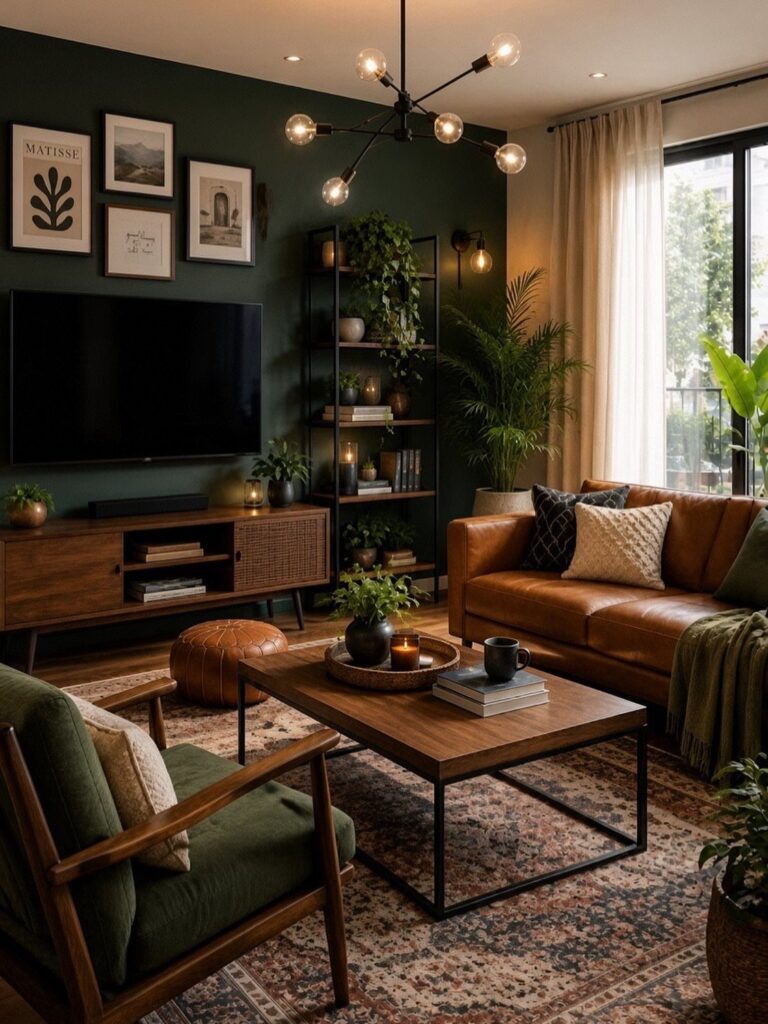
Brown and green share an earthy base, which makes them stable together without needing a third color to balance the room.
A dark green sofa pulls the eye first and lets brown anchor through wood or leather, while an olive accent wall or curved sofa sets a softer stage for brown upholstery and carved wood details.
Olive works in low-light rooms because it reads warm, mint opens up small spaces when paired with organic wood elements, and muted green upholstery grounds contemporary earth-tone artwork without competing for attention.
1. Olive Green Accent Wall
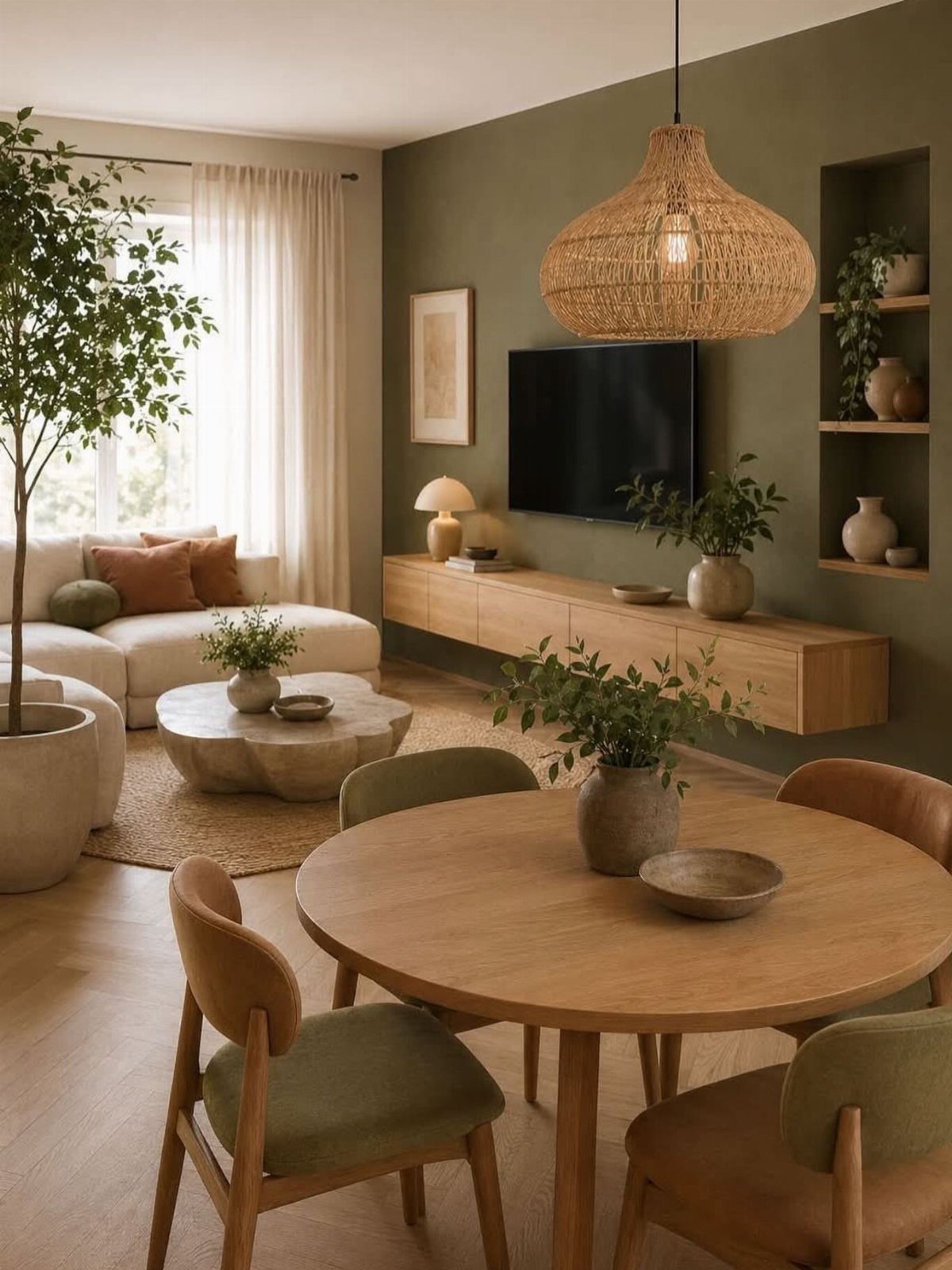
An olive green wall behind the furniture shifts the space without repainting the whole room. The color holds brown furniture and neutral upholstery together, and it reads warm instead of stark white.
Pick a flat or eggshell finish so the color stays soft under daylight. Olive sits between sage and hunter, closer to khaki than to forest, and that middle ground lets wood tones run light or dark.
2. Cozy Reading Nook
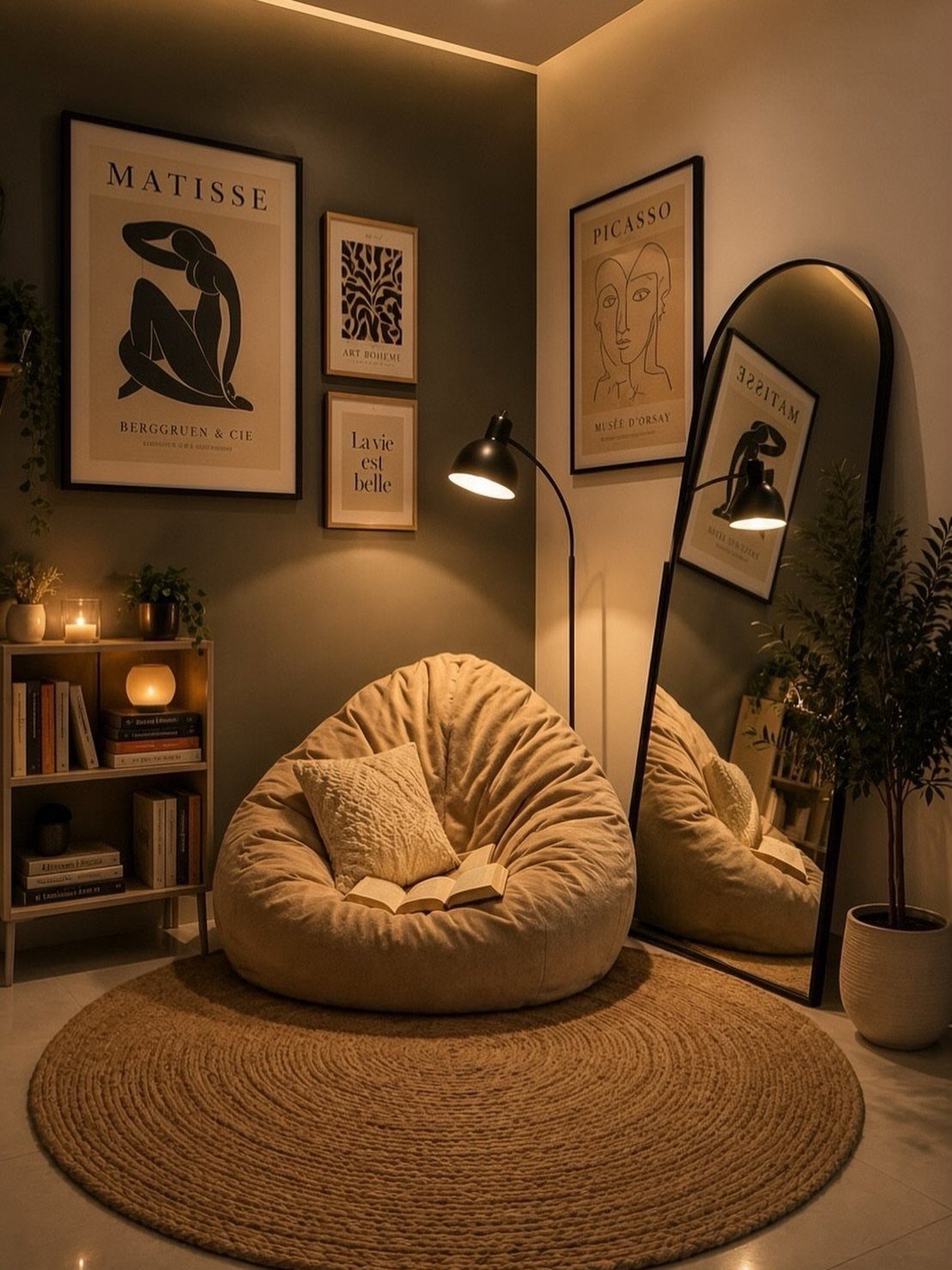
A corner with a chair, lamp, and rug carves out a spot to sit without taking up the center of the room. The beanbag here keeps the look soft, but an armchair or floor cushion works just as well.
Position the lamp close enough that you can reach the switch without standing. Green walls amplify the connection to brown furniture elsewhere in the room, and the art keeps the corner from feeling empty.
3. Rustic Coffee Table with Modern Couch
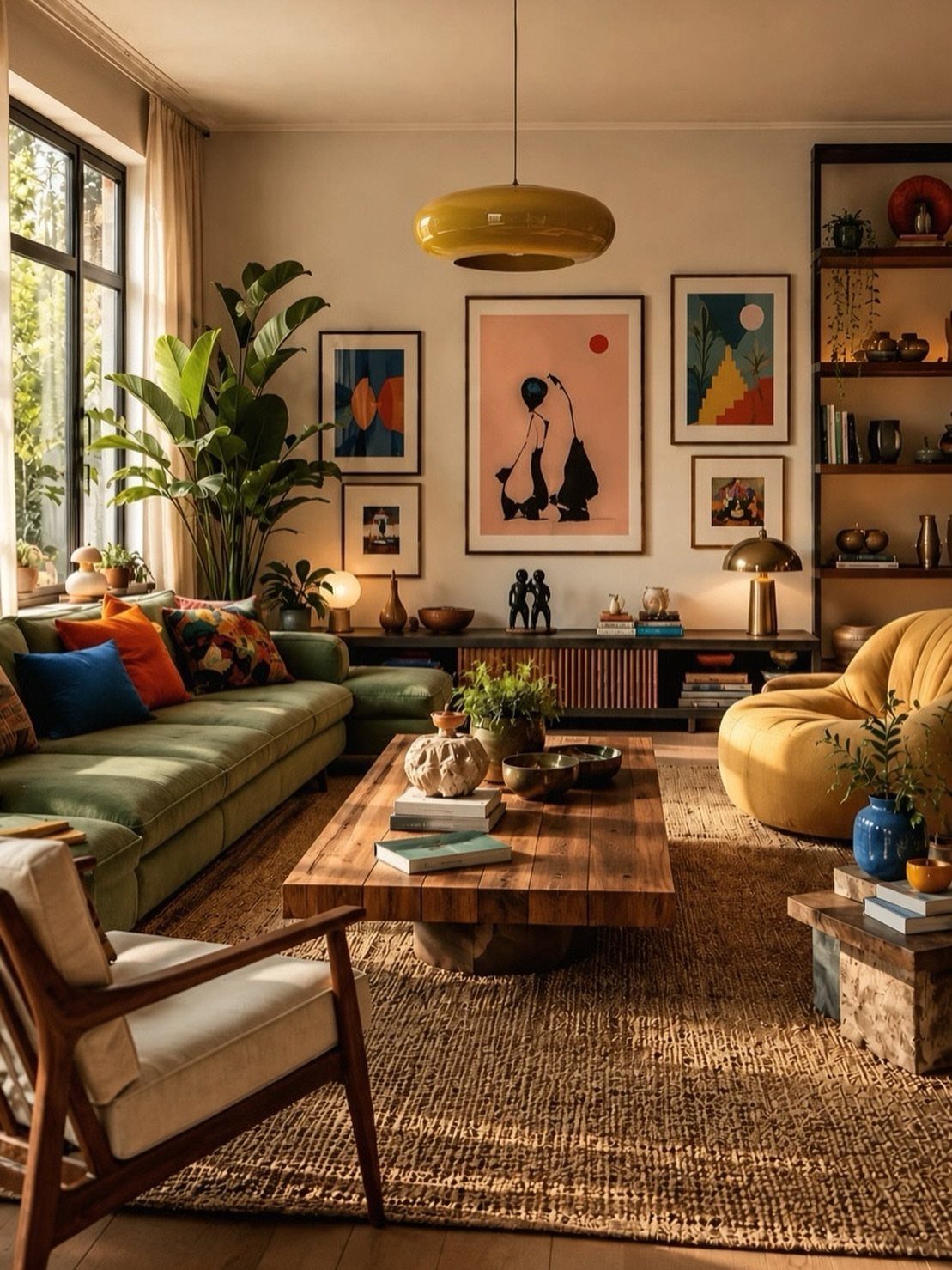
A heavy wooden coffee table with visible grain and uneven edges holds its own next to a streamlined green sofa. The contrast in finish keeps the pairing from feeling too coordinated, and the table’s mass anchors the arrangement.
Look for reclaimed wood or a slab-style table with a rough surface.
The thickness needs enough mass to balance the scale of the sofa. A jute rug underneath ties both pieces to the brown-and-green palette without adding another solid color.
4. Textural Layers of Brown and Green
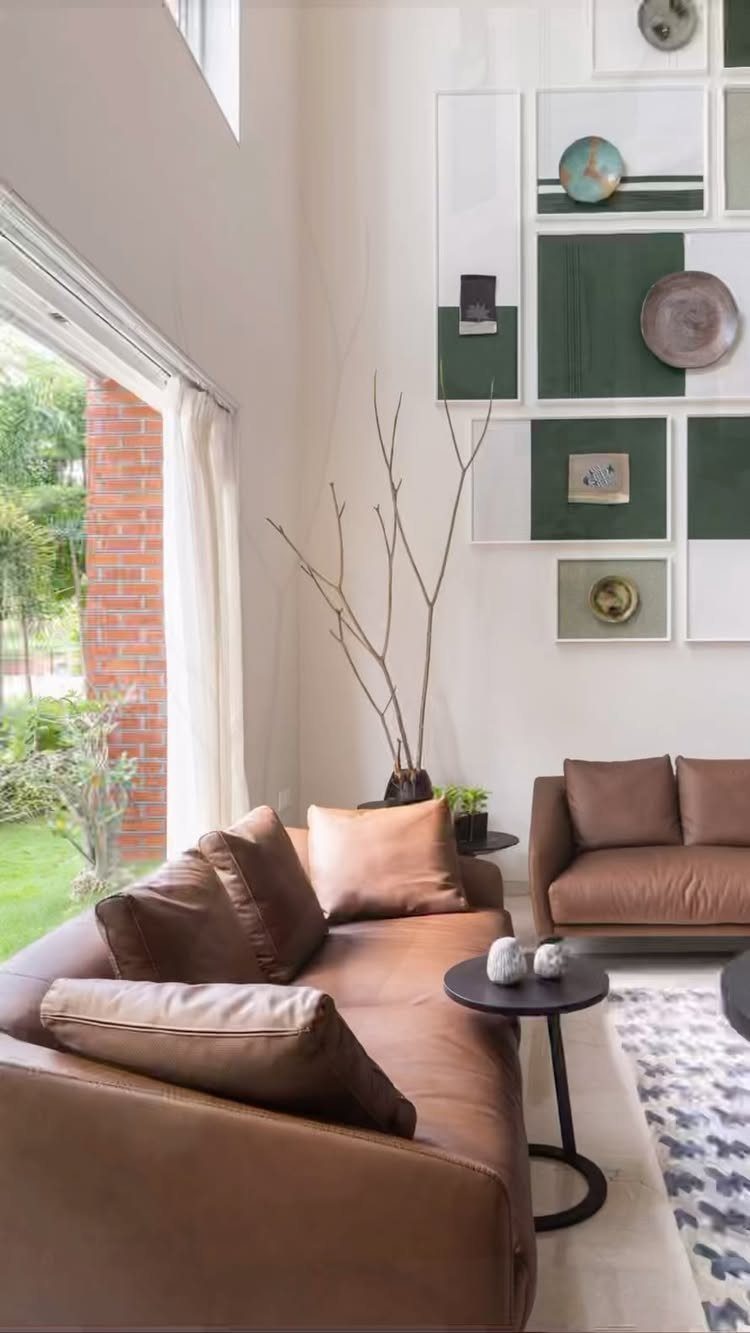
Smooth leather sofas and dimensional wall panels in 2 finishes give brown and green weight without pattern. Panels break up a long wall and create a display surface at the same time.
Mount square or rectangular panels at eye level, spaced a few inches apart so each one reads as a separate object.
Painted MDF or wood panels work, and you can paint them any shade of green that complements the leather. The branches add height and fill vertical space without blocking light or sightlines.
5. Blending Green Plants and Brown Rattan
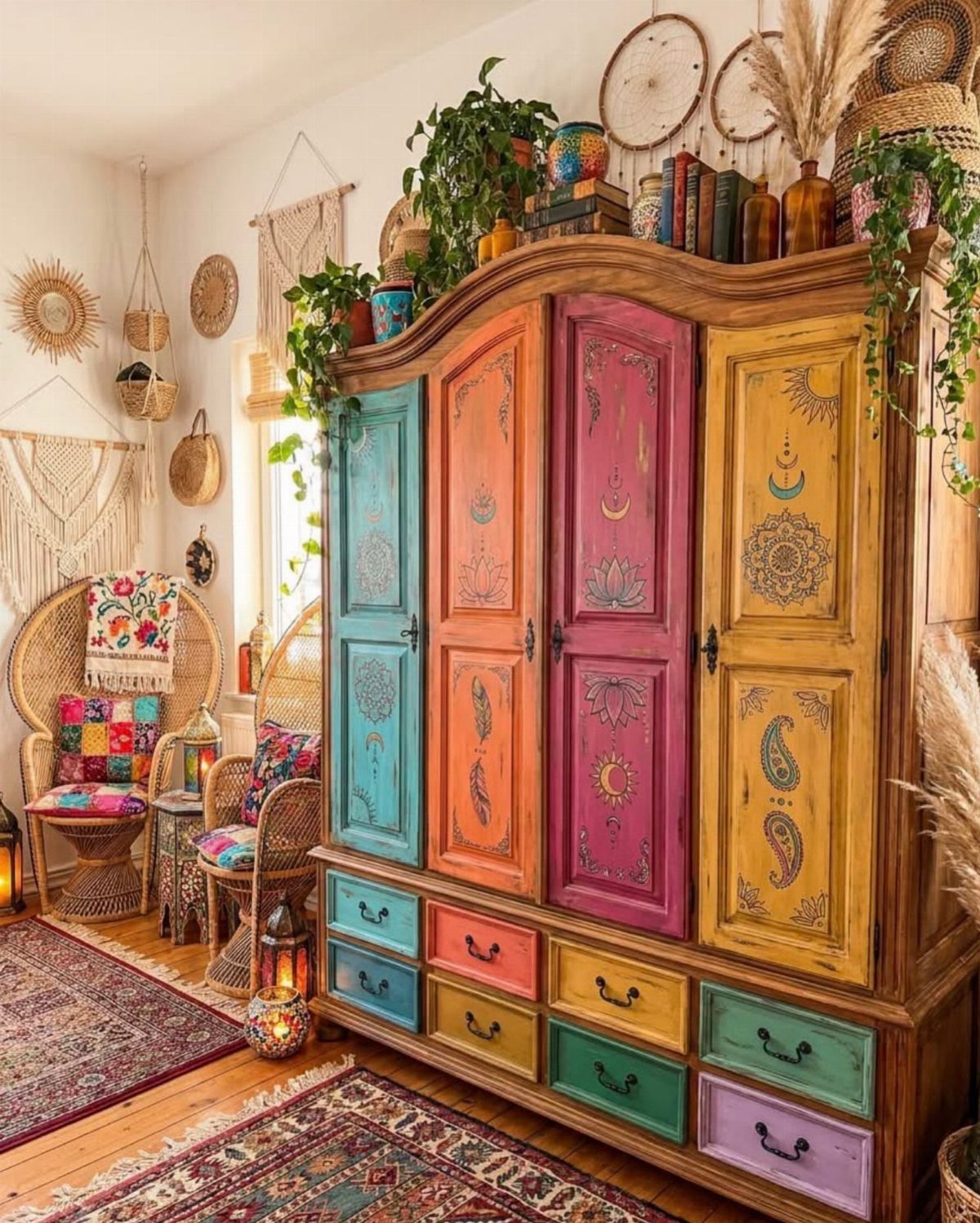
Rattan chairs and woven wall hangings bring in brown without wood grain, and live plants supply the green. The mix feels collected instead of matched, which suits a room that already has pattern and color.
Group plants on top of tall furniture so the greenery sits at different heights.
Rattan works as seating, baskets, or trays, and the natural variation in tone keeps it from reading as one flat brown. Pair it with rugs that have warm colors so the green plants stand out against the floor.
6. Teak Wood Frames with Muted Green Upholstery
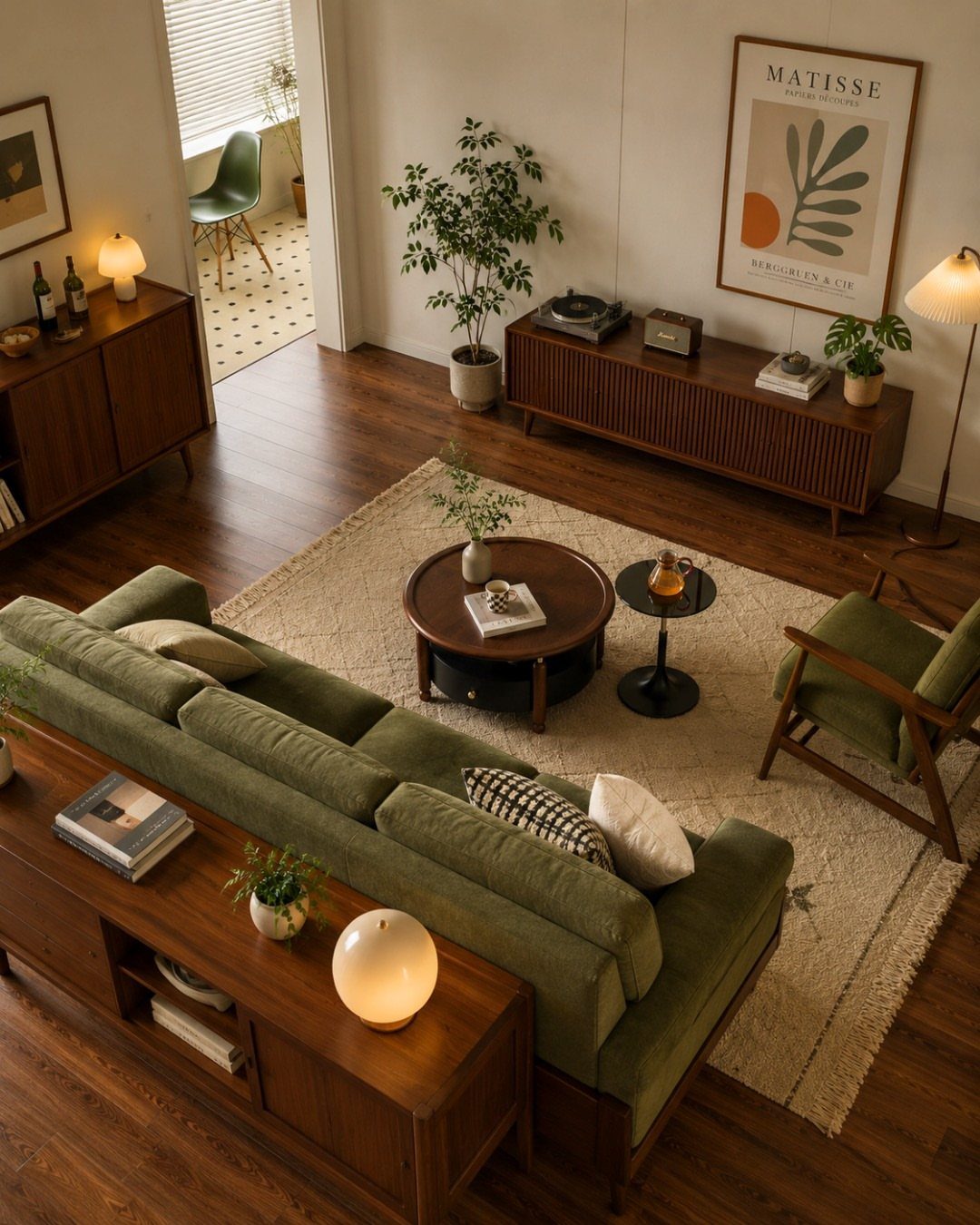
Teak frames around a sofa and armchair add brown structure without covering the upholstery. The muted green fabric reads calm next to the warm wood, and the exposed frame keeps the pieces from looking heavy.
Teak weathers to gray outdoors but holds its honey-brown color indoors with occasional oiling.
Look for frames with simple lines so the upholstery does the color work. A low coffee table in the same wood ties the seating together, and a rug in a lighter brown softens the floor without competing with the furniture.
7. Contemporary Earth Tone Artwork
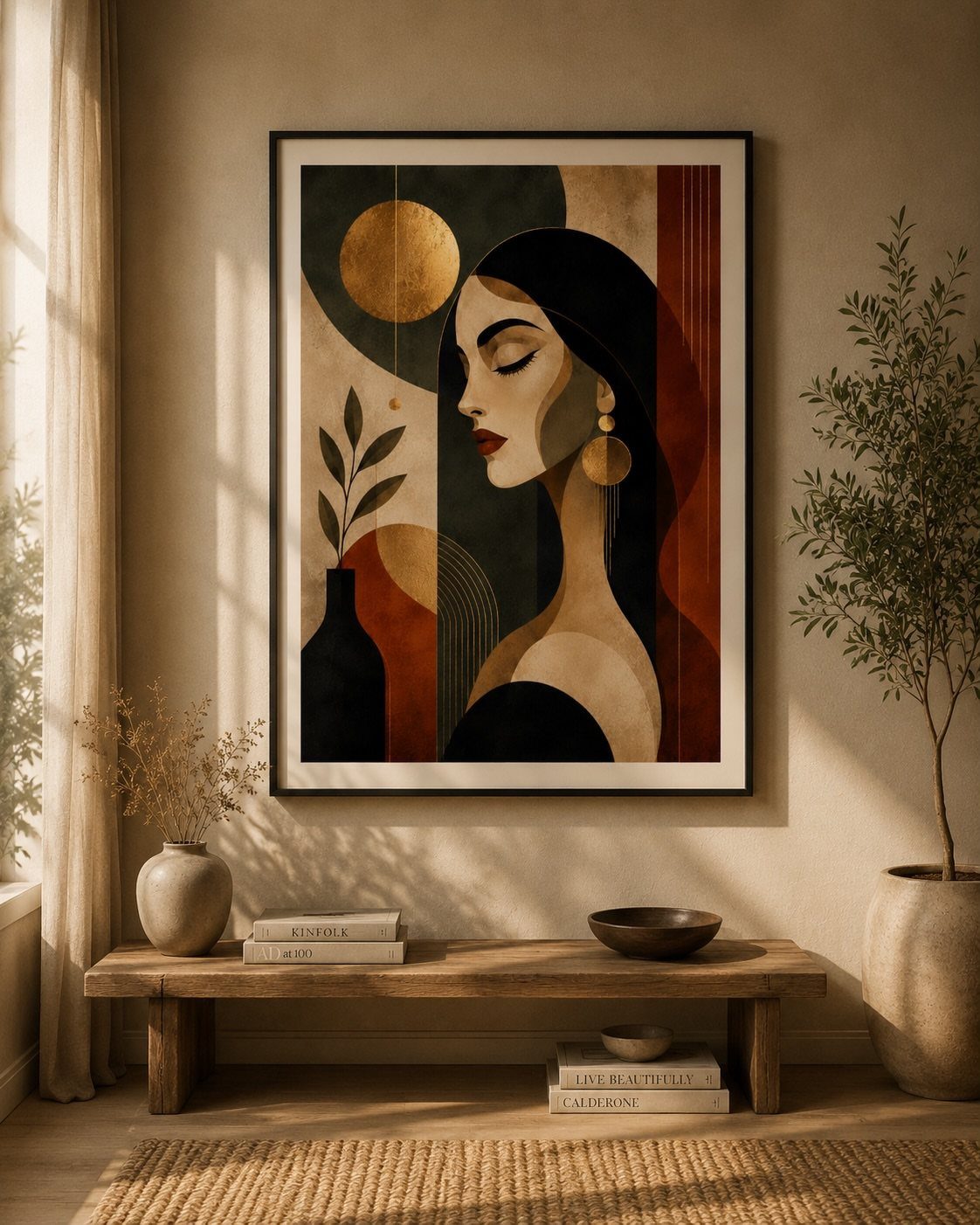
A single piece of art in warm tones pulls brown and green together without adding more furniture.
The figure and background here repeat the colors already in the room, so the piece reads as part of the palette instead of a new layer.
Hang the frame low enough that it relates to the furniture below it. The vase and plant on the bench extend the vertical line without blocking the art.
8. Indoor Plant Corner
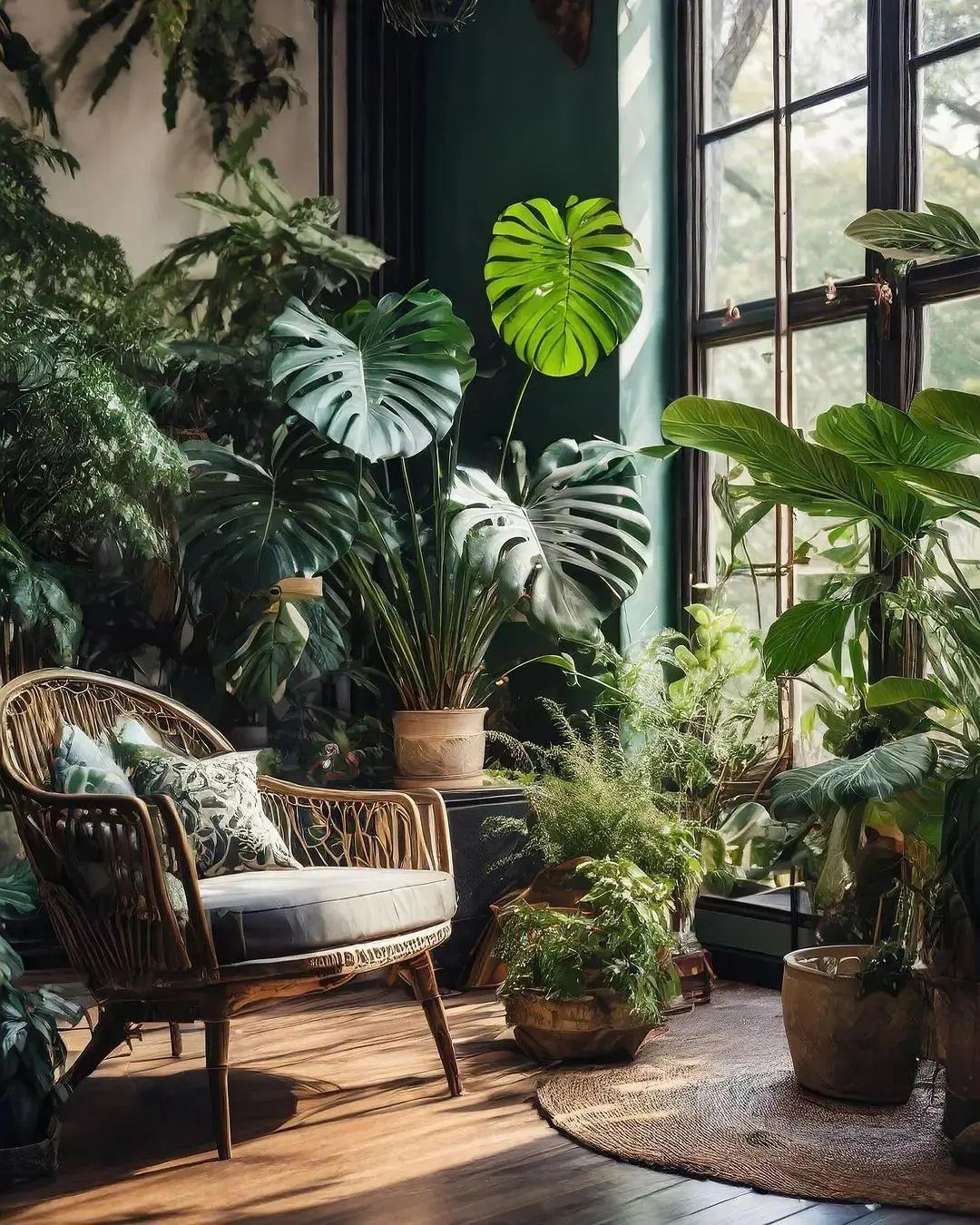
Grouping plants in one corner concentrates the green and turns it into a feature instead of scattering it around the room. The wicker chair adds brown and gives the corner a reason to exist beyond storage for pots.
Place the corner near a window so the plants get enough light.
Use different pot heights and plant sizes so the arrangement has depth. The jute rug defines the zone and keeps the pots off the floor, which makes watering easier and protects the surface underneath.
9. Dark Green Sofa with Walnut
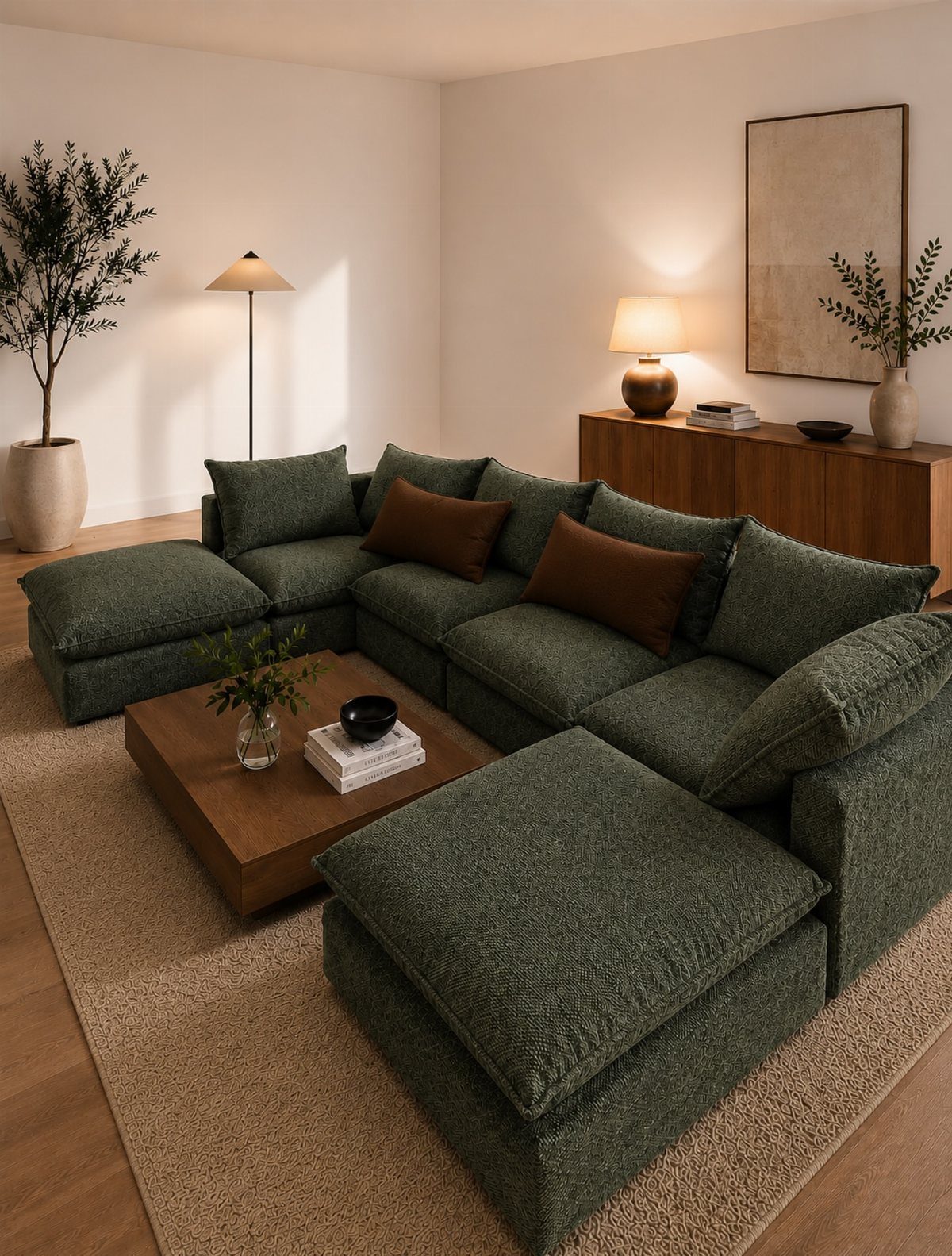
A dark green sectional anchored by walnut furniture gives the room weight and keeps the palette from reading too soft.
The brown pillows tie the sofa to the wood without matching exactly, and the low profile of the coffee table leaves sightlines open.
Position the sectional so the longer side faces the main seating area, with the coffee table close enough to reach from either section. The sideboard adds storage and repeats the wood tone at a different height.
10. Curved Olive Sofa on Brown
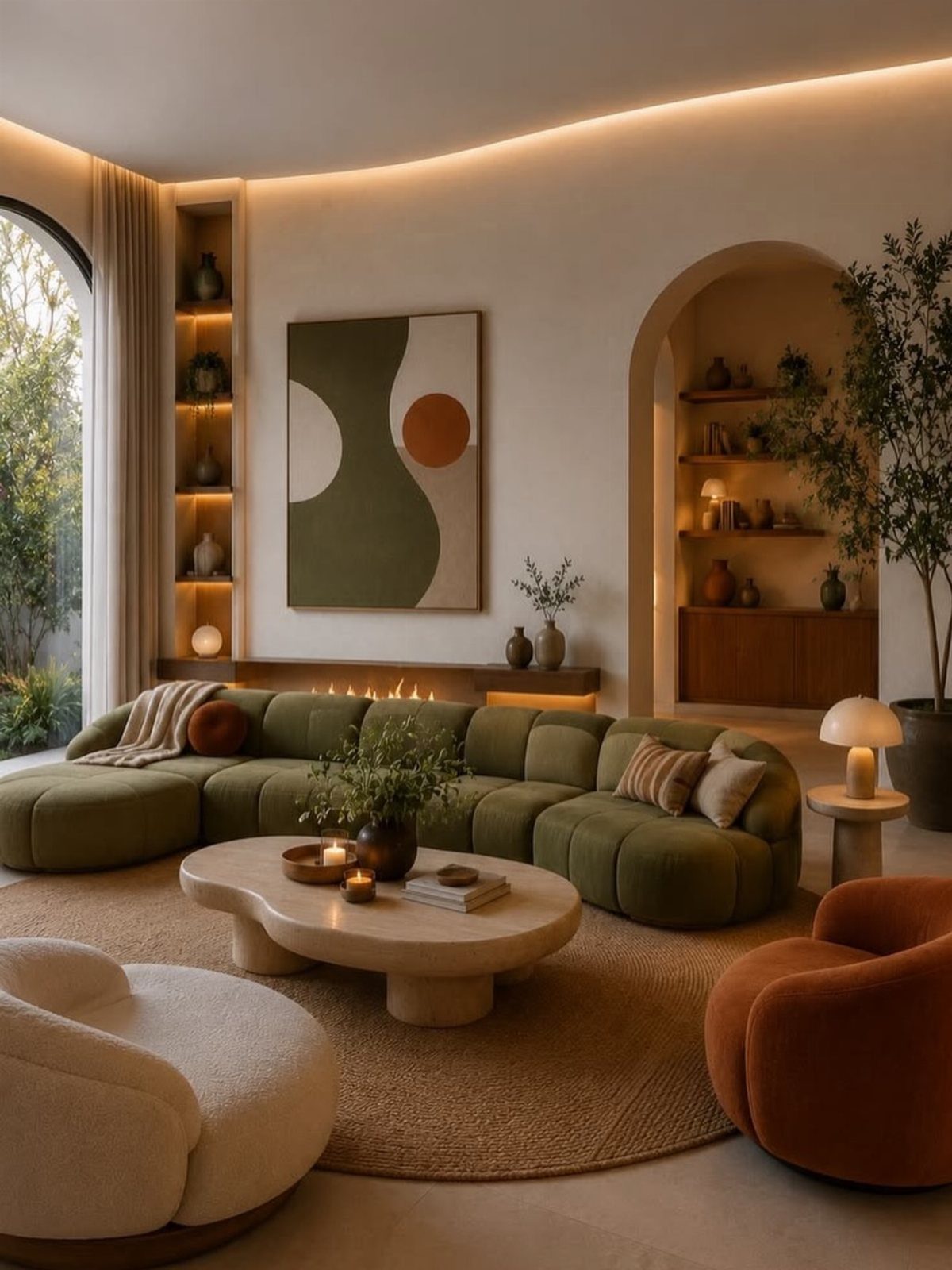
A curved sofa in olive softens the room’s geometry and works over a round rug that mirrors the shape. The brown rug grounds the green without adding sharp lines, and the light coffee table keeps the center open.
Modular pieces let you adjust the curve to fit the room.
Space the sections a few inches apart or push them together depending on how much seating you need. The terracotta chair on the side introduces a warm accent that complements both brown and green.
11. Wood Slat and Textured Accent
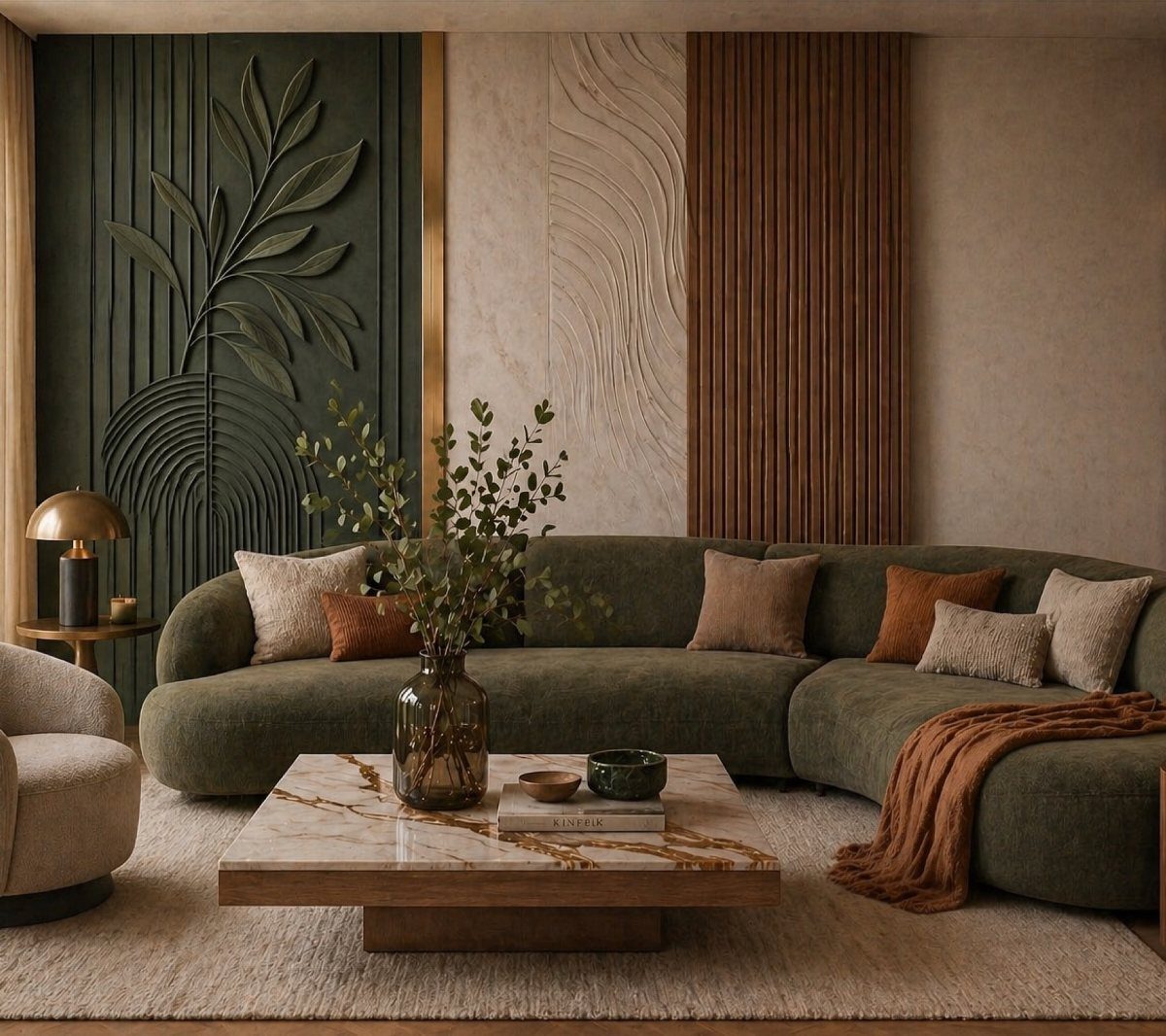
Vertical wood slats behind the sofa add brown texture at eye level, and the green panel breaks up the slat rhythm without covering the whole wall.
The olive sectional in front carries the green forward, and the brown throw ties the 2 materials together.
Mount the slats with even spacing so they read as a deliberate pattern.
The textured green panel can be fabric, painted MDF, or wallpaper, and it only needs to cover a section of the wall to register as a separate surface.
Keep the slats and panel in the same plane so neither one shadows the other.
12. Botanical Velvet and Carved Wood
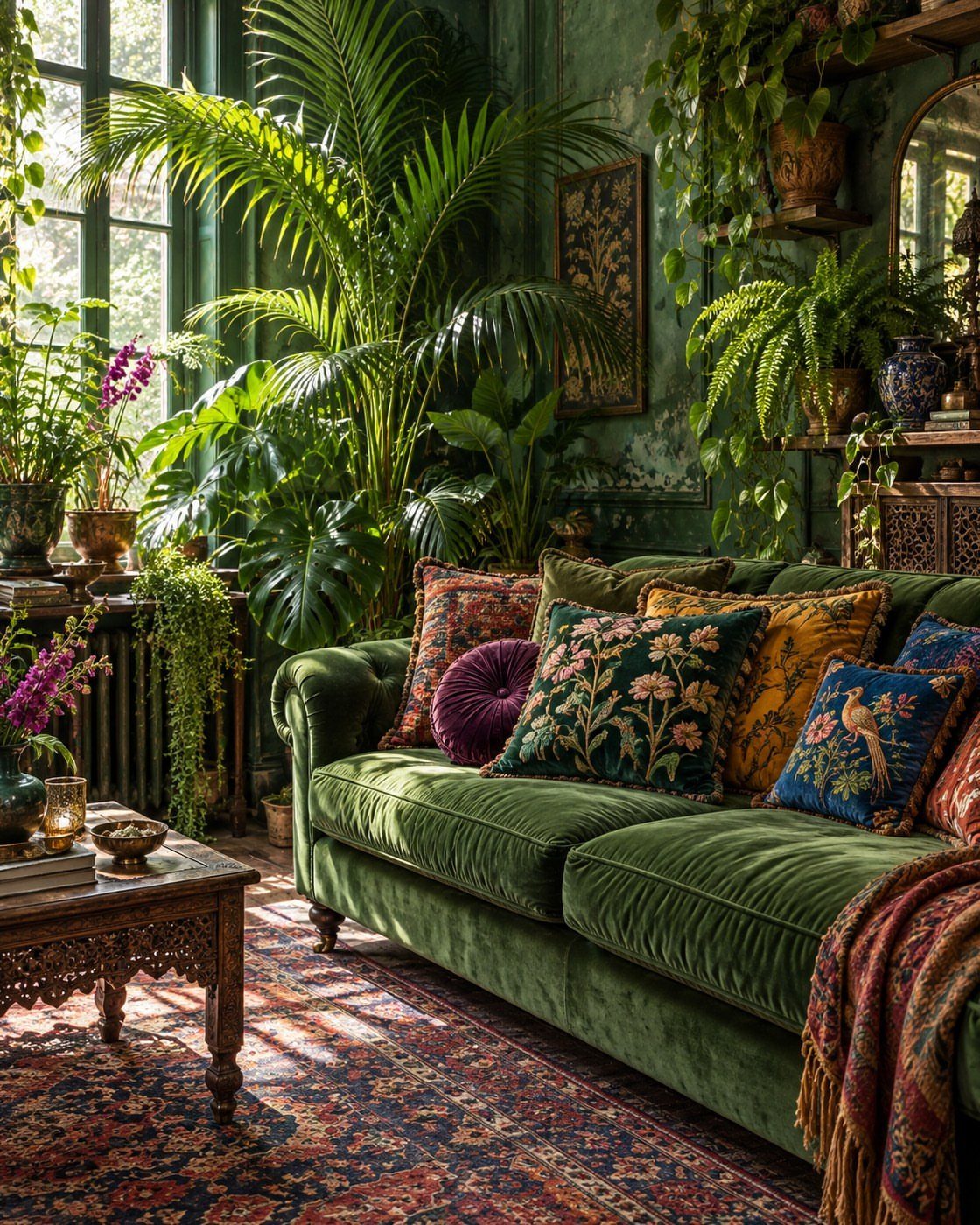
Dark green walls and a matching velvet sofa saturate the room with color, and the carved wood coffee table holds its own against that intensity. The plants multiply the green and keep the space from feeling closed in.
Velvet reflects light differently than matte upholstery, so the sofa shifts tone depending on where you sit.
The carved details on the table add visual interest at a scale that competes with the plants. Use botanical print pillows to bridge the solid green sofa and the live greenery around it.
13. Curved Mint Sofa and Organic Elements
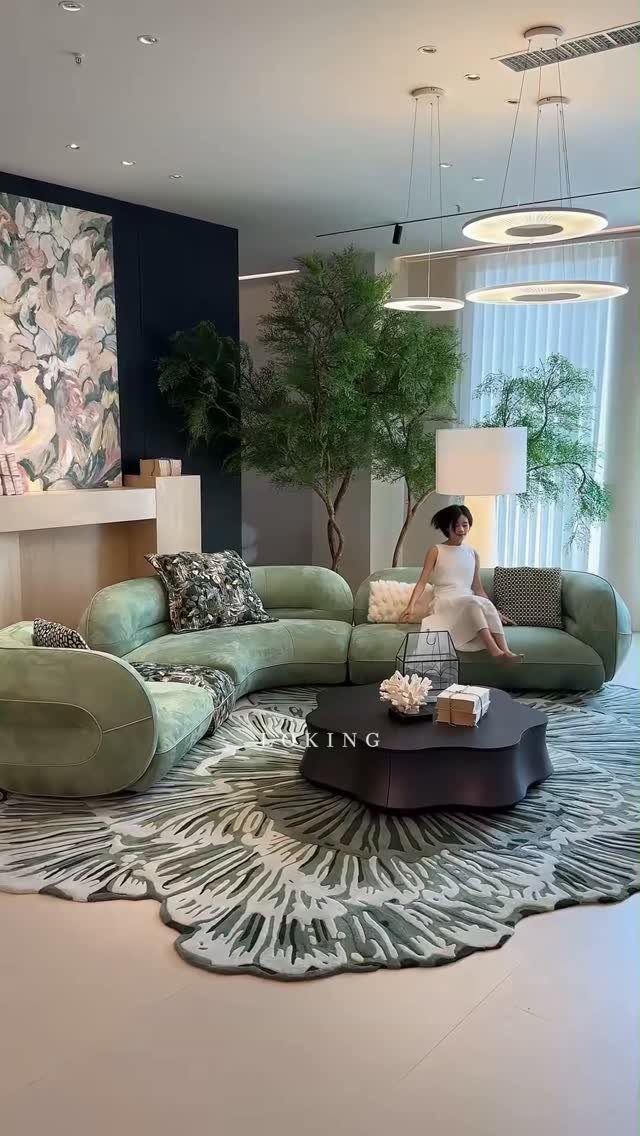
A curved mint sofa over a botanical rug lets the green stay light while the dark wood coffee table carries the brown.
The organic shape of the table keeps the pairing from looking too formal, and the printed rug ties both colors into the floor.
Position the sofa so the curve faces the seating area.
The table’s irregular edge needs enough surface to hold what you use without crowding the center. Live plants in the corners extend the botanical layer and fill vertical space the rug leaves open.
Choosing the Right Shades
Sage and olive greens work in rooms with limited natural light because they carry warmth that cooler greens lack. Forest green and emerald deepen a space and pair best with lighter browns to keep the room from closing in.
On the brown side, amber and rust brown sit close to beige and reflect more light than chocolate or espresso. Lighter browns open up a small room, while dark brown adds contrast when the green stays pale or mid-tone.
Mixing multiple shades of green or brown in one room adds depth without introducing new colors.
A sage wall with olive upholstery, or an amber sofa with walnut side tables, keeps the palette unified while giving each surface its own tone.
Black anchors both colors and works as trim, frames, or hardware. Creamy neutrals lighten the palette without competing, and gold or copper accents add shine where brown and green risk feeling too flat.
Styling Tips
A green accent wall works best on the longest unbroken surface in the room so the color reads as intentional instead of leftover. Paint it before arranging furniture so you can test the tone in morning and evening light.
Leather softens over time and develops a patina that keeps brown from looking stiff. Position a leather sofa where it gets indirect light to slow fading, and condition it once or twice a year to maintain the surface.
Jute or sisal rugs bring in brown texture underfoot and handle traffic better than wool in high-use areas. Size the rug so the front legs of seating pieces sit on it, which pulls the furniture grouping together visually.
Green curtains in linen or cotton filter light without blocking it entirely. Hang them close to the ceiling and let them break at the floor to add height.
Color Combinations
Black trim or black furniture legs sharpen the edges of a brown-and-green room and keep the palette from blending into itself.
Use it on window frames, door casings, or the base of a coffee table where it creates contrast without dominating the space.
Creamy tones lighten brown and green without introducing a third color family. A cream rug or throw pillows in off-white balance darker furniture and make the room feel larger.
Gold pulls warmth out of brown and complements green without clashing.
Add it as picture frames, lamp bases, or cabinet hardware where it catches light. Copper works the same way but reads more industrial, which suits rooms with exposed wood grain or metal furniture.
Layering different browns or greens in one room adds variation without extra colors. You might set sage paint behind an olive velvet chair, or anchor a camel leather sofa with walnut built-ins.
Frequently Asked Questions
Do green and brown go together in the living room?
Yes, they create a grounded palette that feels natural without reading cold. Both colors carry warmth, and layering different shades of each one adds depth without introducing competing color families.
Is green complementary to brown?
They reflect the same palette you see outdoors and pair without tension. Mixing light and dark tones of either one keeps the pairing from feeling flat.
What is a good color combination of green and brown?
Black sharpens the edges and keeps brown and green from blending, while creamy tones lighten the palette without adding a third color family.
Gold or copper accents pull warmth out of brown and catch light where the room risks feeling too matte. Several shades of one color give depth on their own.






