
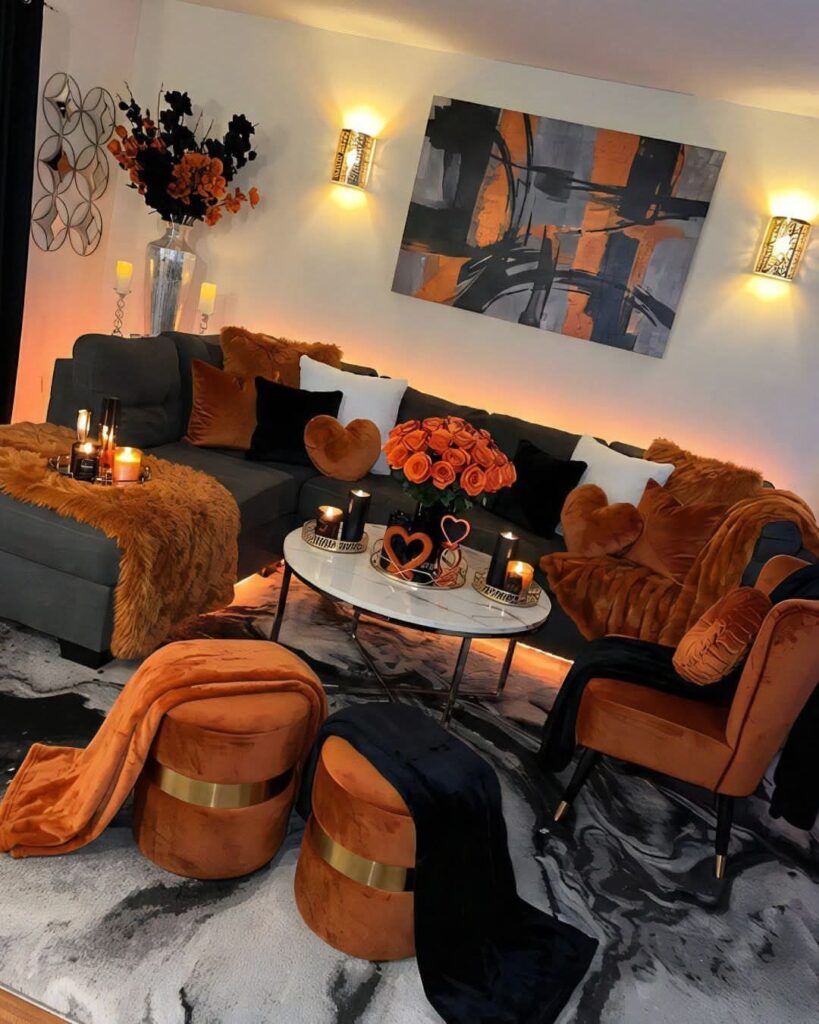
Paint sets the backdrop, and the furniture arrangement, lighting, and textures that fill the room make it feel finished.
The choice between a saturated dark green wall and a soft neutral comes down to how much natural light hits the space through the day.
1. Living Room Paint Ideas
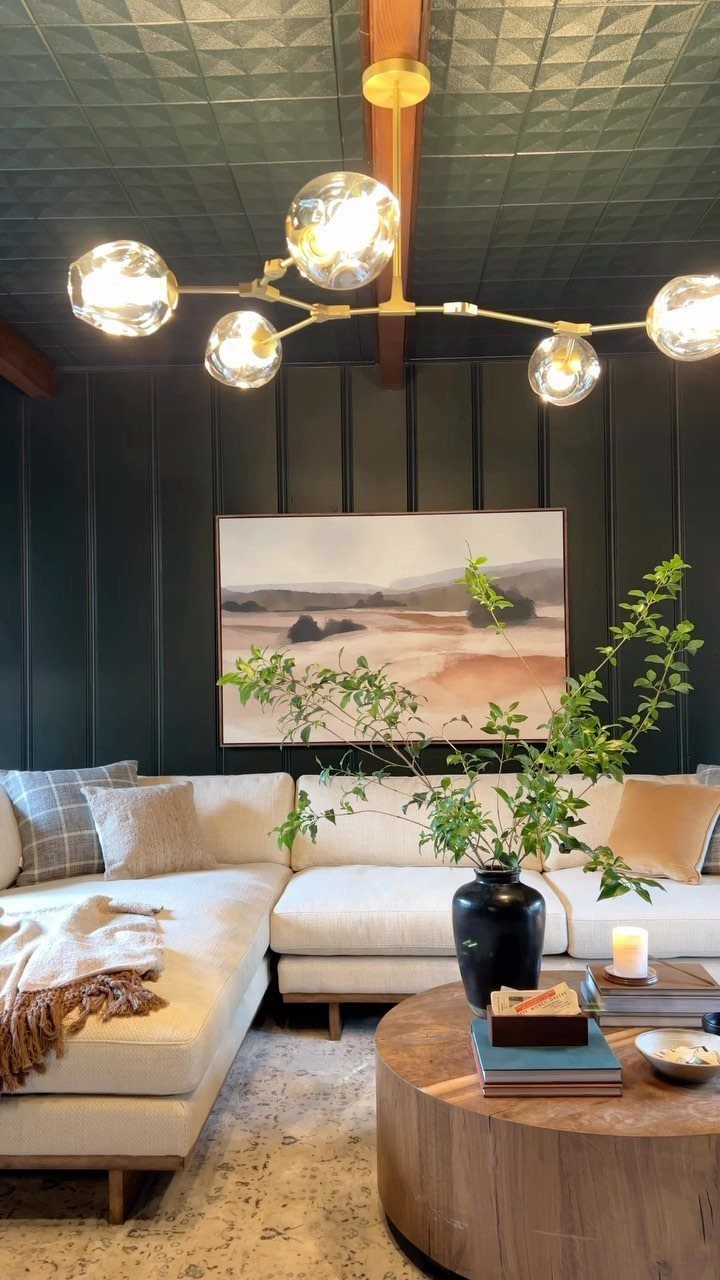
Dark green walls anchor a living room in a way lighter colors can’t. The paneled finish adds texture without pattern, and when you carry the same color across the ceiling, the room feels intentional rather than cautious.
If your living room gets decent natural light, a saturated green like this one holds up through the day without turning muddy. Pair it with white upholstery and wood tones so the space doesn’t read too heavy.
Test a sample on 2 walls before you commit. Green shifts more than gray or beige depending on which direction your windows face.
2. Sofas Facing Each Other
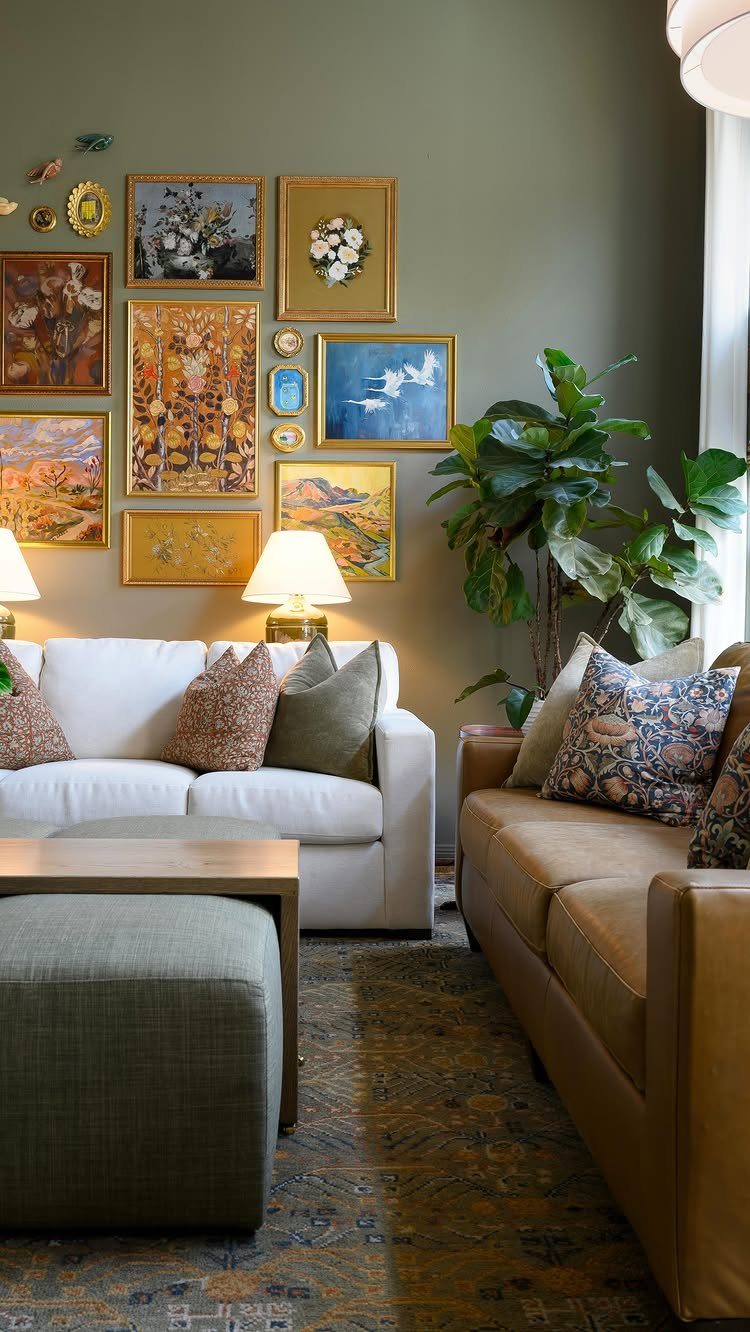
2 sofas facing each other open up the center of the room and give you a layout that actually supports conversation. Instead of everyone angling toward a TV, the seating forms its own zone.
This setup needs a wider room so you have enough clearance between the sofas without the space feeling tight. A rug that runs under both pieces ties them together visually.
If one sofa is a hand-me-down or something you’re keeping until it dies, this is a good way to balance it with a newer piece in a complementary material.
“Putting a large sofa in a small space might seem counterintuitive at first, but in this living room, it was exactly what was needed,” says Los Angeles designer Francesca Grace, who chose the furnishings for this Samaha Studio project.
3. Layered Lighting
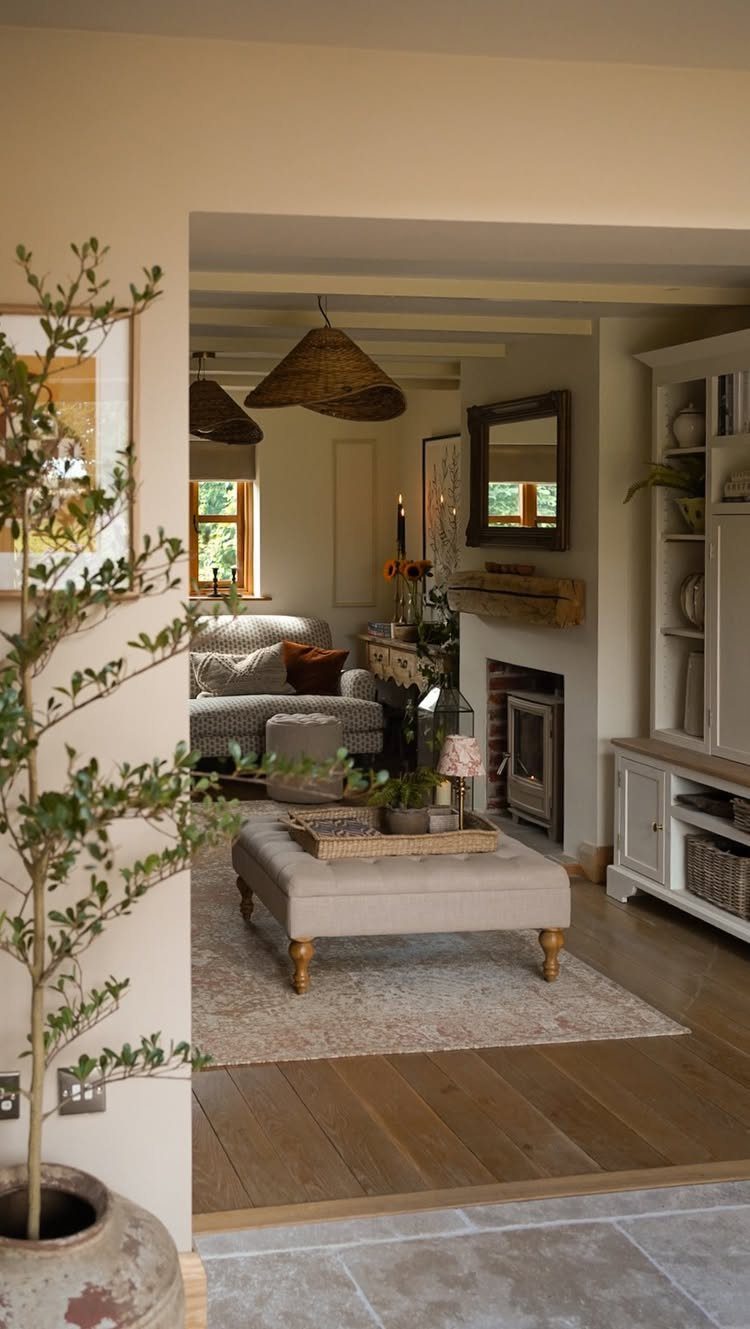
Overhead lighting alone flattens a room. Adding a table lamp, a pair of pendants, and a few candles gives you control over where the light lands and how warm the space feels after dark.
The woven pendants here drop low enough to light the conversation area without glare, and the small lamp fills in the corner. Candles aren’t just mood, they’re practical fill light when you don’t want the ceiling fixture on.
Put each light source on its own switch or plug so you can layer them at different times of day. Never rely on one source doing all the work.
4. Functional Decor
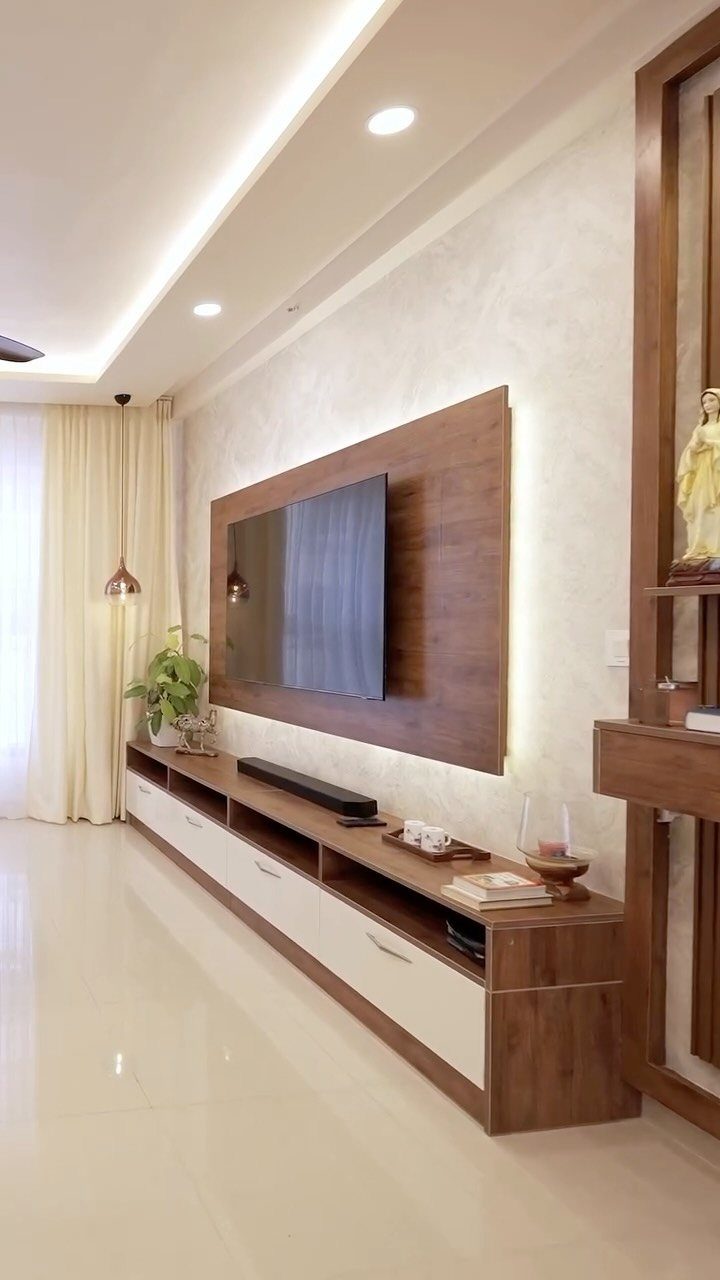
A wall-mounted TV panel with built-in lighting turns a screen into something that belongs in the room instead of floating awkwardly on drywall.
The long console underneath gives you closed storage for remotes, chargers, and everything else that piles up near a TV.
Run a wood panel floor to ceiling and hide the cables behind it. Integrated LED strips add a soft backlight that reduces eye strain when you’re watching in the dark.
If you’re mounting a TV yourself, run the power and HDMI cables through the wall before you install the panel. Doing it after is twice the work.
5. Modern and Vintage Pieces
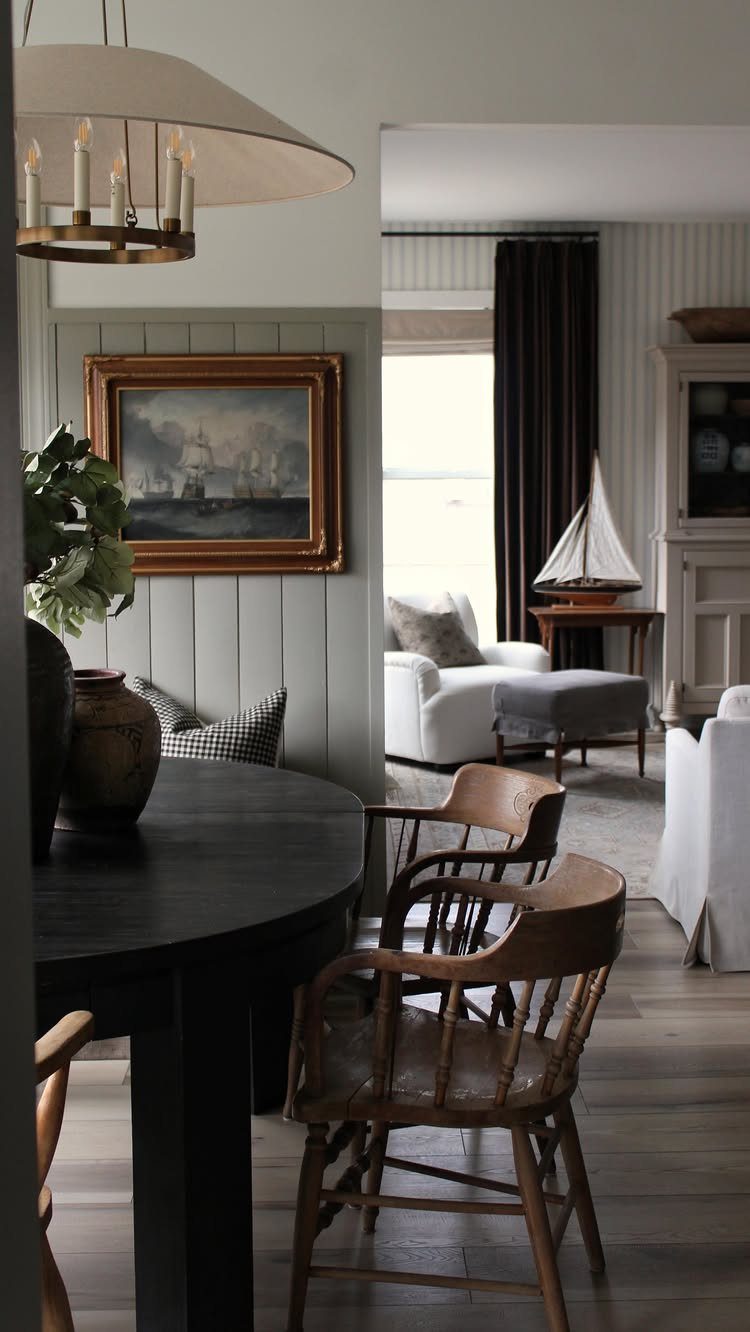
The contrast between finishes gives you more flexibility than committing to a single style.
Match undertones, not eras. The warm wood here works with the cream upholstery because neither one is fighting for attention.
Start with larger pieces in different styles, then repeat one material or color in smaller items to tie them together.
6. Mirrors Opposite Windows
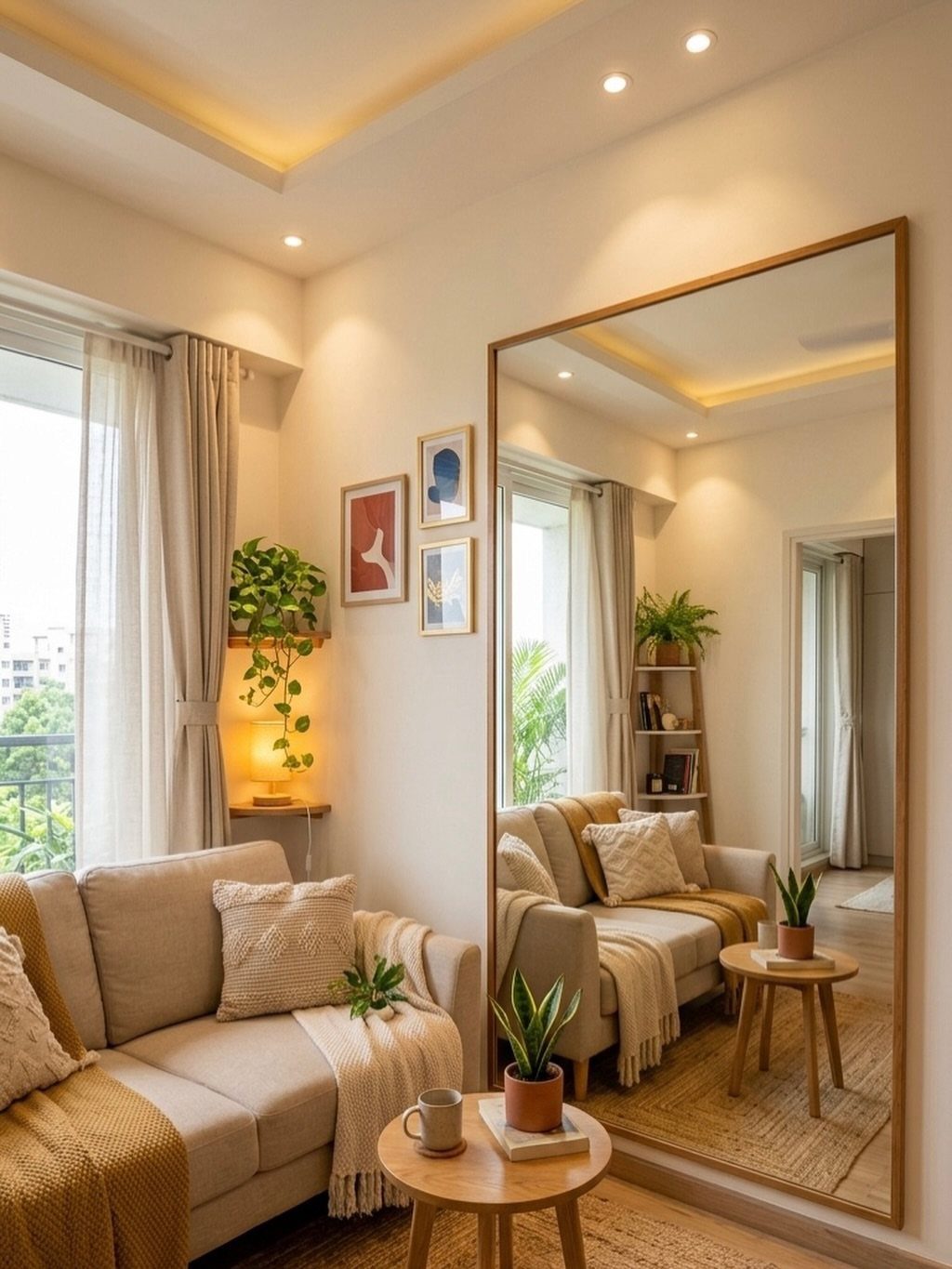
Placing a large mirror opposite a window doubles the natural light in the room and reflects the view back into the space.
A floor mirror works better than a smaller wall-hung piece because it catches more of the window and bounces light deeper into the room. Lean it at a slight angle to adjust what it reflects.
This setup suits a room where the window looks out onto something worth seeing twice. If your view is a brick wall, angle the mirror to reflect a plant or artwork instead.
7. Cushions, Throws, and Rugs
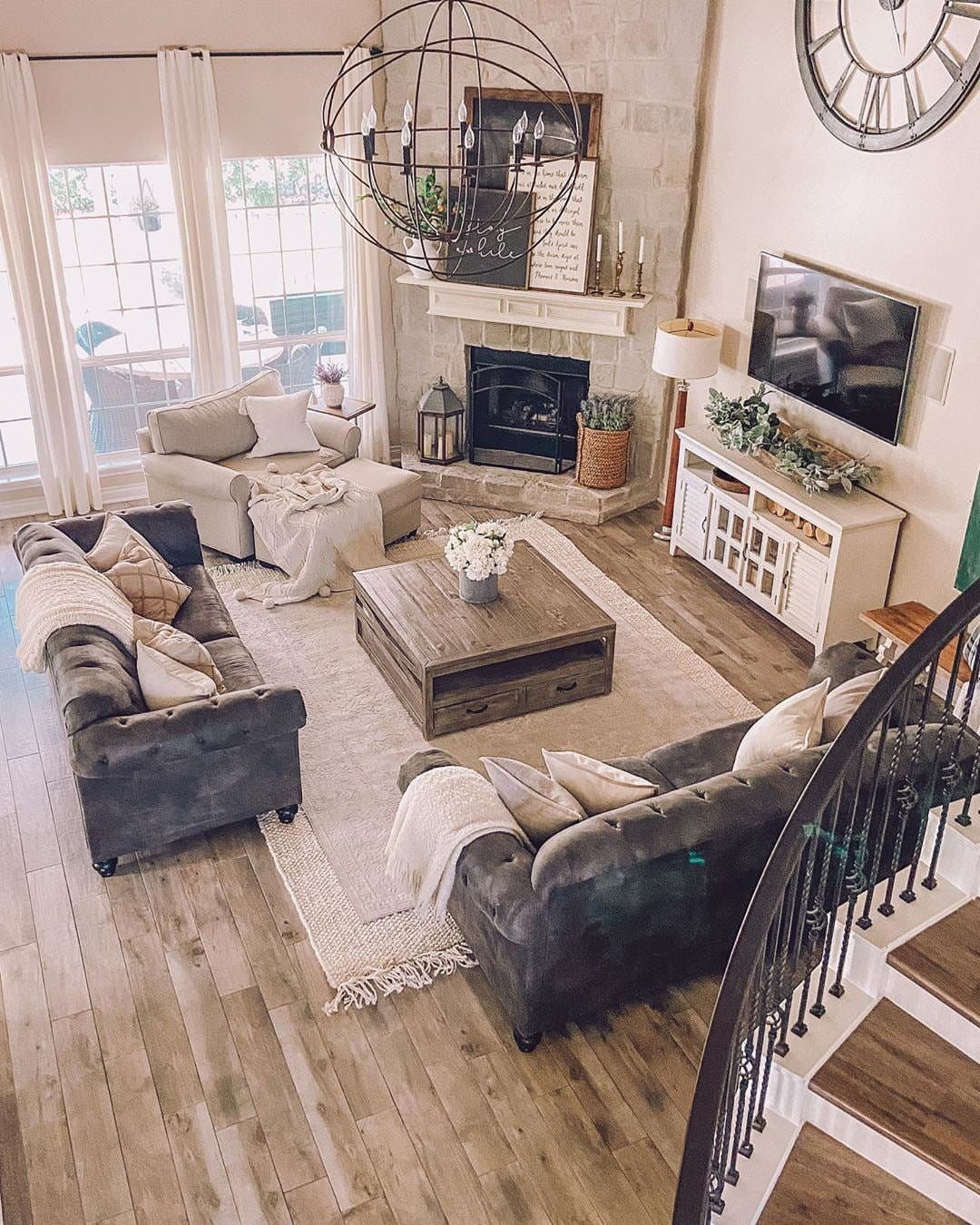
Layering soft pieces in similar tones adds warmth without creating visual clutter. The throw pillows and blankets here pull from the same palette as the rug and furniture, so the texture shows up but the color stays calm.
Choose a rug large enough that the front legs of your sofa sit on it. Smaller rugs make the seating feel disconnected from the floor.
Stick to 3 pillow covers per sofa and one throw per seat. More than that and you’re moving them every time someone sits down.
8. Indoor Plants
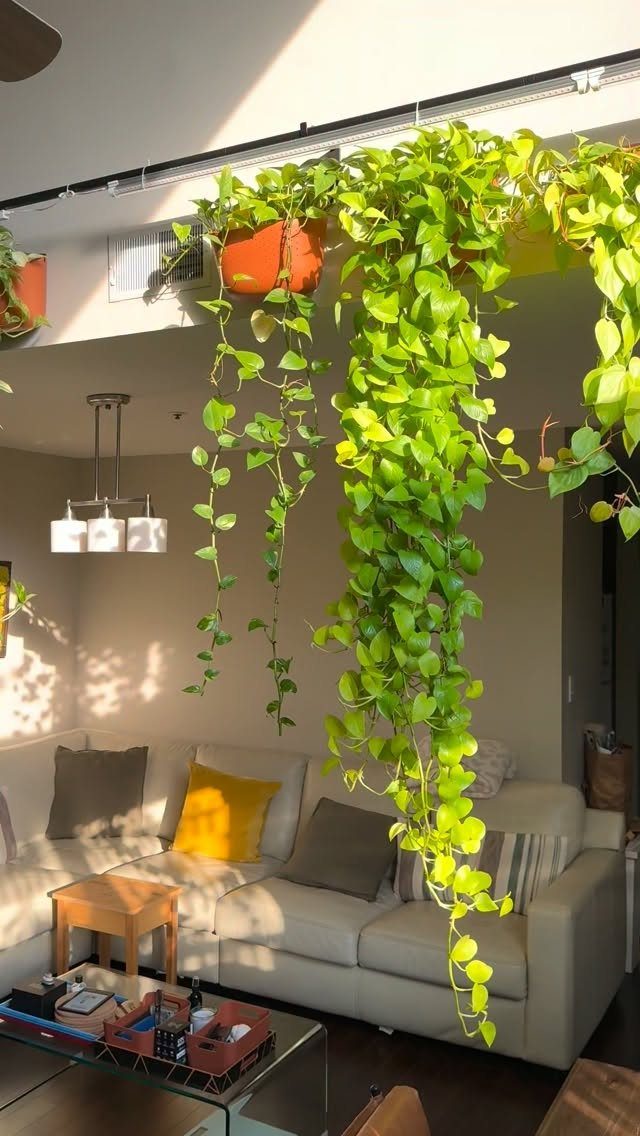
A trailing plant hung above the sofa fills vertical space and softens the hard lines of furniture without taking up floor area.
Pothos and philodendron are both low-maintenance trailers that tolerate average indoor light. Water when the top inch of soil is dry.
Hang the planter where it won’t drip on upholstery. A ceiling-mounted rail lets you adjust placement without patching holes.
9. Built-in Shelves
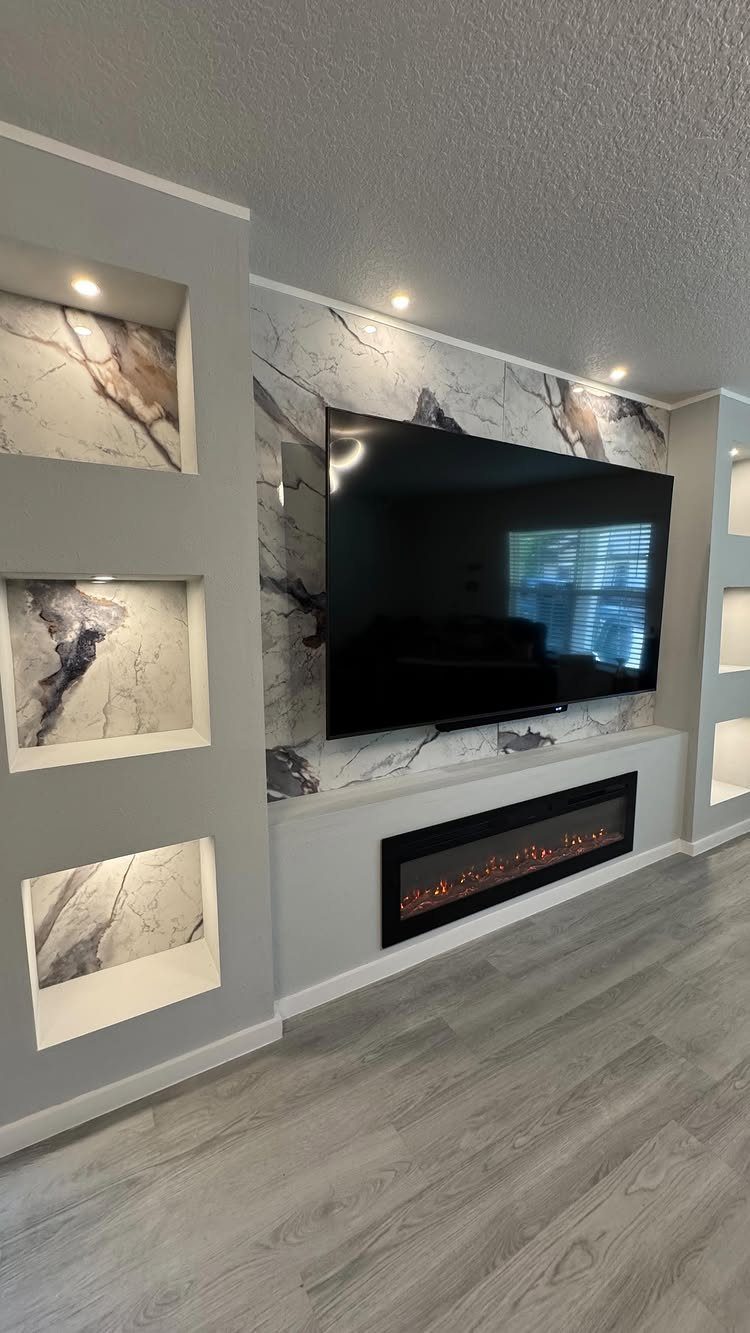
Recessed shelves built into the wall around a TV give you display space and storage without furniture crowding the floor.
The niches here are backed with marble to match the accent panel, but you could use wood or paint depending on what the rest of the room needs.
Frame the TV with symmetrical openings so the screen feels like part of the wall instead of stuck on top of it. Wire the fireplace and TV during the framing stage so cords stay hidden.
This approach suits a room where the TV wall is the main focal point and you have the budget for custom millwork.
10. Seasonal Decor
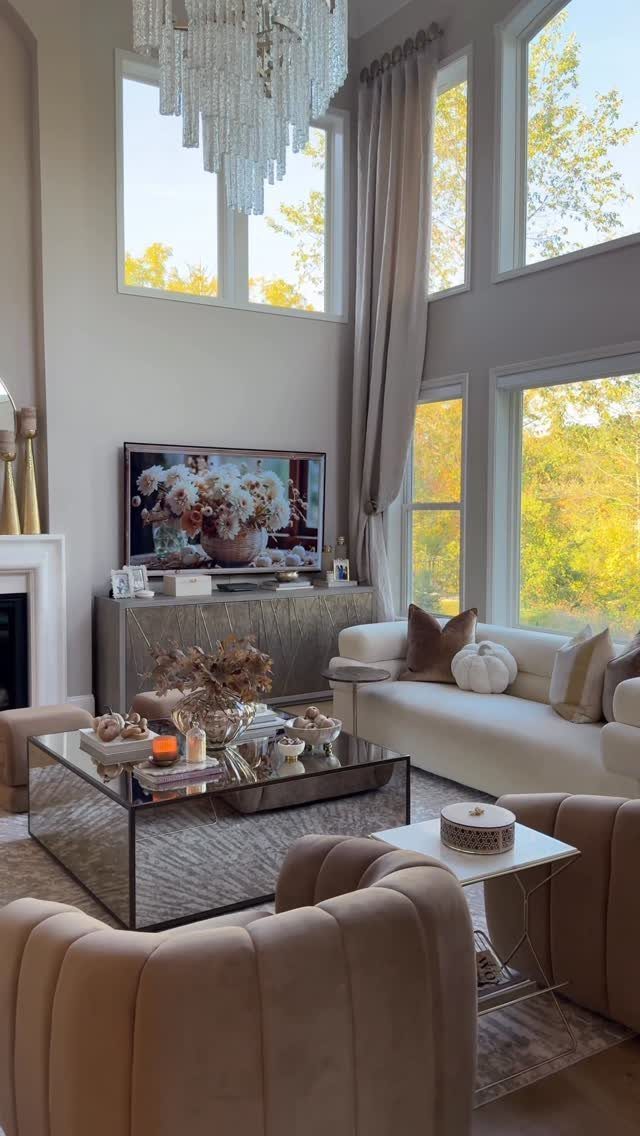
Swapping pillows and adding a few seasonal pieces keeps the room from feeling static without a full redecoration. The white pumpkins and dried florals here bring fall in without overwhelming the neutral palette.
Store off-season decor in labeled bins so you’re not hunting through closets every few months. Keep seasonal swaps small so they take less than an hour.
Choose seasonal colors that work with your existing furniture. If your sofa is already warm-toned, stick with autumn and spring palettes that don’t clash.
11. Unique Lighting Fixtures
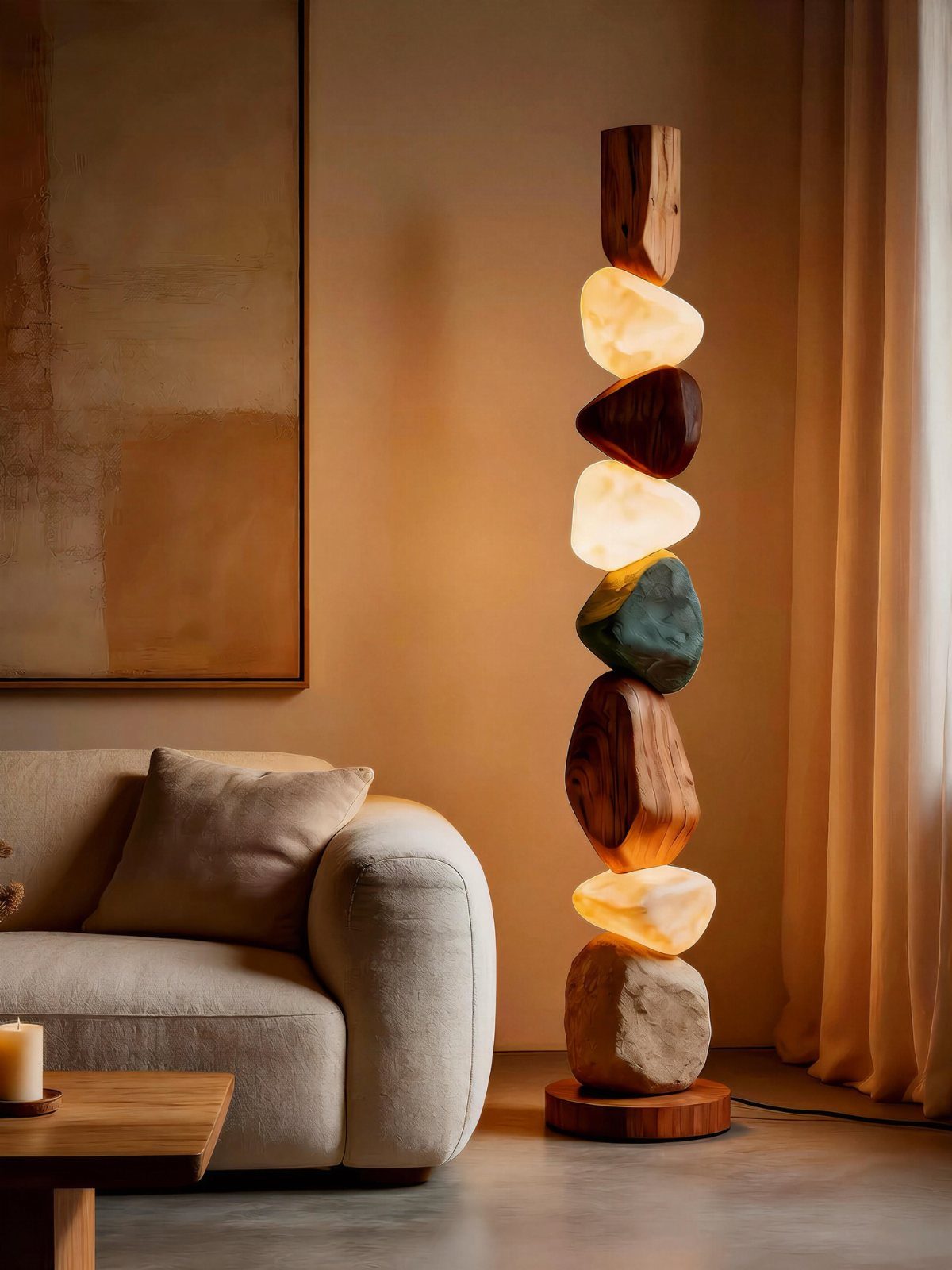
A sculptural floor lamp reads as art when it’s off and gives you task lighting when you need it.
The stacked stone and wood design here draws the eye up and adds texture in a room that might otherwise feel flat.
Place a statement lamp in a corner or next to seating where it won’t get knocked. Plug-in designs are easier to move than hardwired fixtures if you rearrange furniture.
Go for a lamp with a dimmer or low-wattage bulb. Full brightness on a piece this bold can feel harsh at night.
12. Coffee Table Ottomans
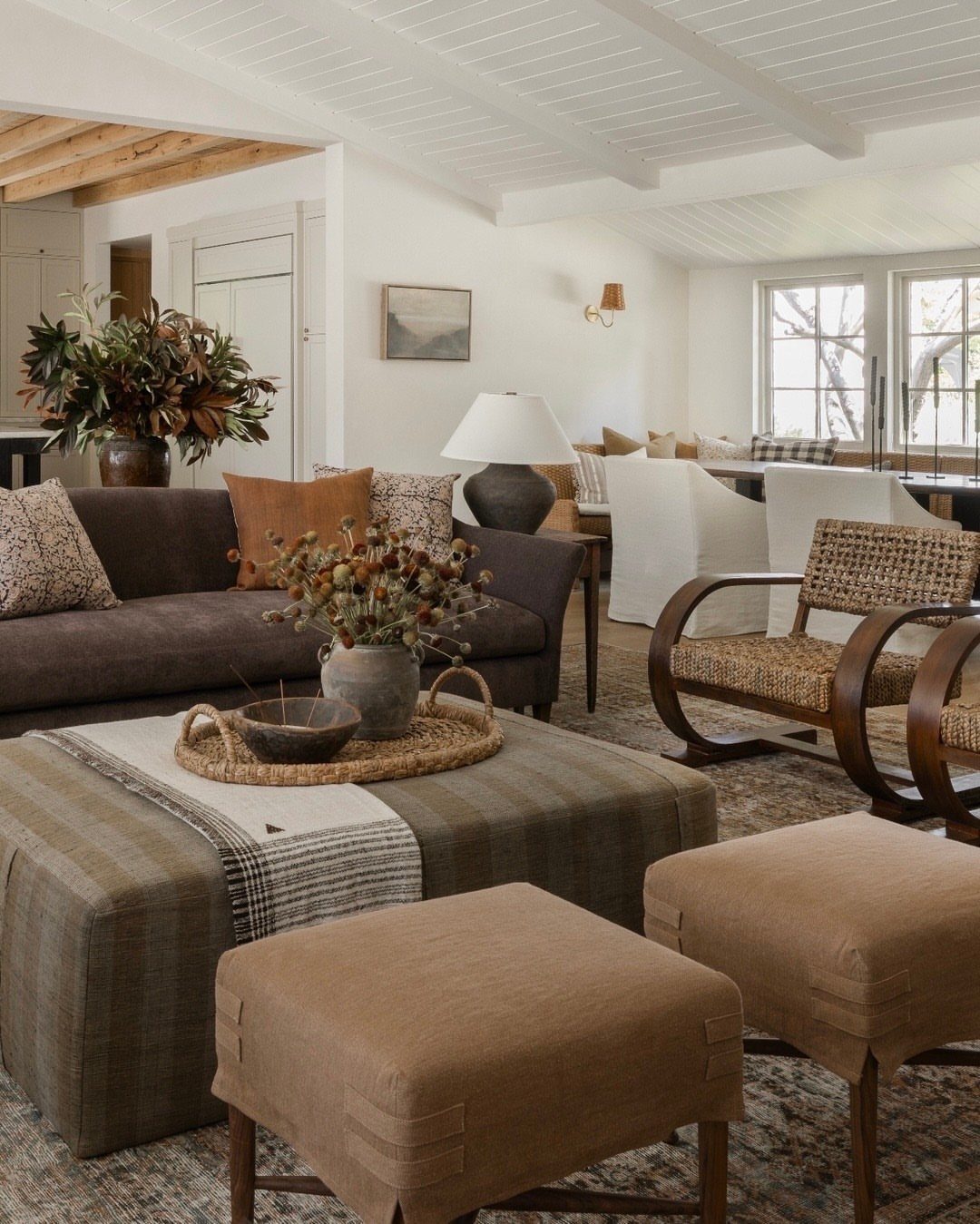
An upholstered ottoman does the job of a coffee table while giving you extra seating when you need it.
A large ottoman holds a tray for drinks and books, and smaller ones tuck under the console or pull out for guests.
Pick a fabric that can handle daily use. Performance linen or tight-weave cotton holds up better than velvet if you’re setting cups on it.
Add a wood or metal tray on top so the surface stays stable. Without it, drinks tip and remotes slide off.
13. Wood and Stone
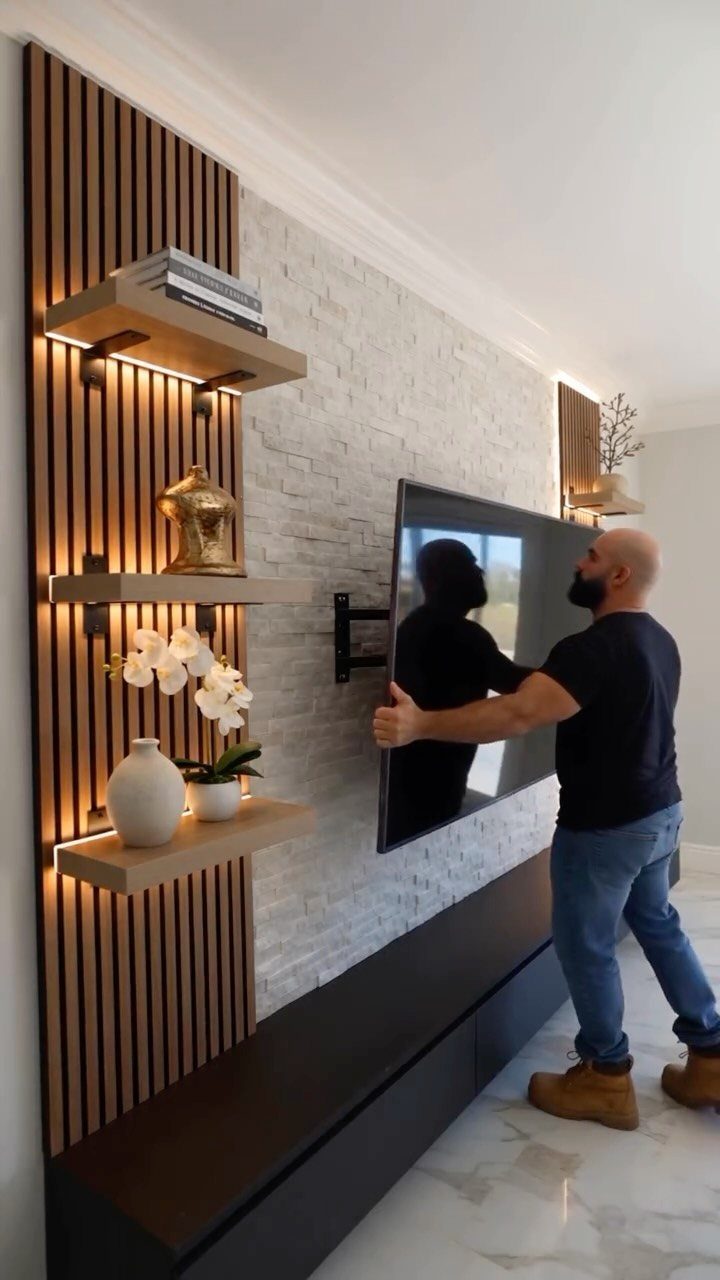
Combining wood slats with a textured stone panel breaks up a flat TV wall and gives you built-in display space without adding furniture.
Vertical wood framing the screen and a stone backdrop behind it add contrast without competing with the rest of the room.
This setup works best when planned during a renovation so you can hide cables and power inside the wall. Adding it later means surface-mounted conduit or a cord cover.
Stick with one wood tone and one stone finish. Mixing more than that on a single wall reads busy instead of layered.
14. Large Piece of Art
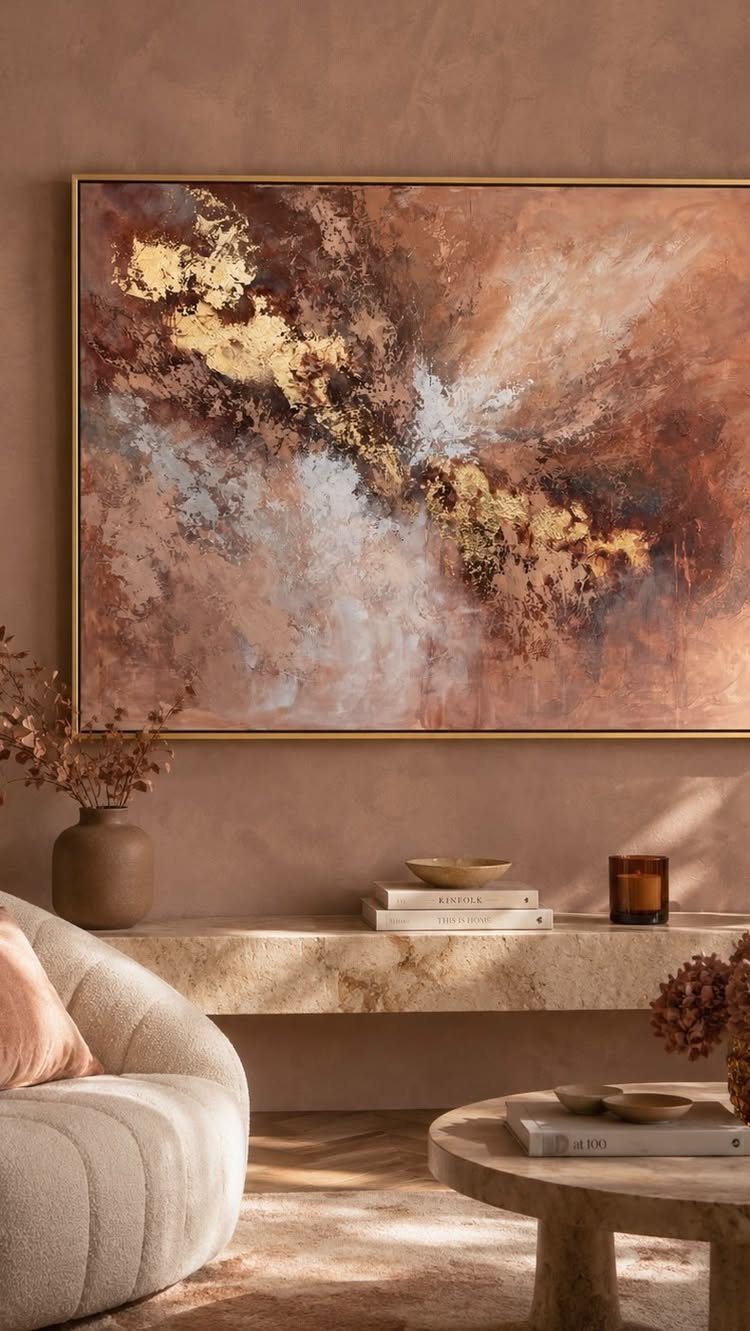
One large piece of art fills a wall without the guesswork of arranging a gallery. The abstract painting sits above the console with the bottom edge clearing the table so the two feel connected without crowding.
Choose art with colors already in the room so it ties in without forcing a new palette.
15. Curved Furniture Styling
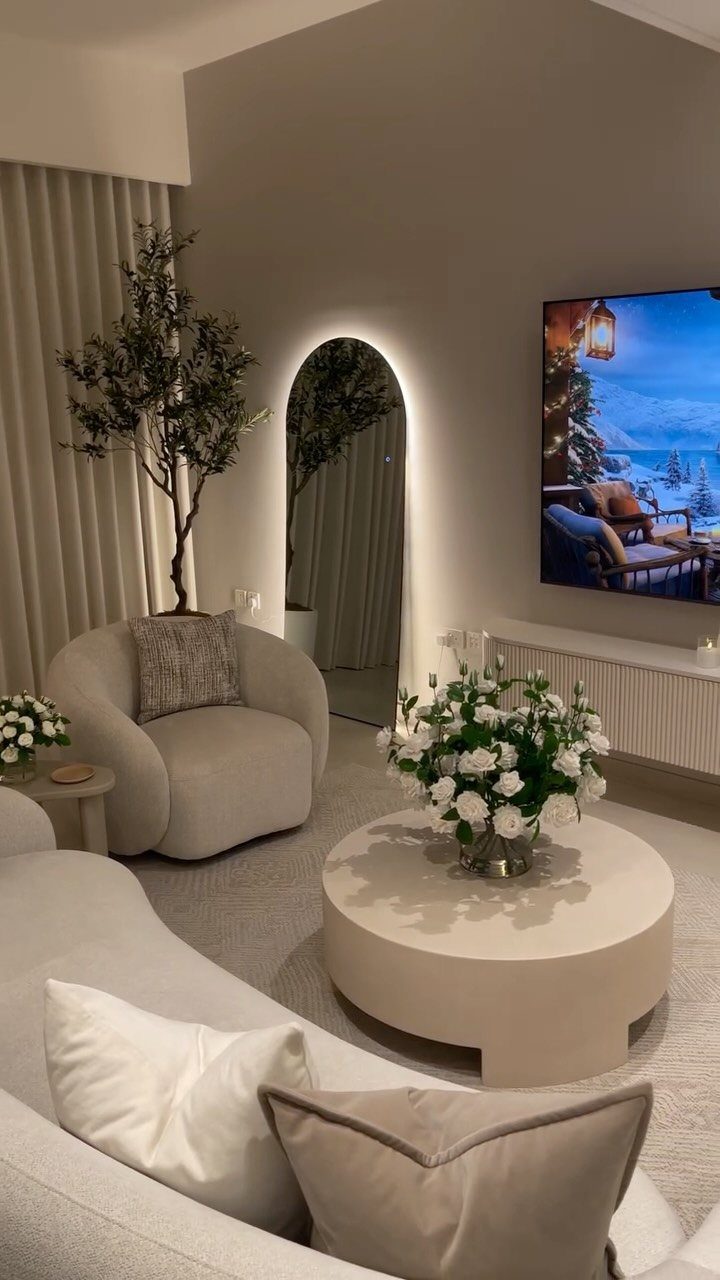
Rounded furniture softens a space that might otherwise feel boxy. The curved sofa, circular table, and arched mirror here repeat the same shape in different scales, so the room feels deliberate without matching too closely.
Curved pieces take up more floor space than straight-edged ones because you can’t push them flush against walls. Budget extra clearance behind a curved sofa so the back has room to breathe.
This look suits open-plan rooms where furniture floats in the center rather than lining the perimeter.
16. Chunky Modular Seating
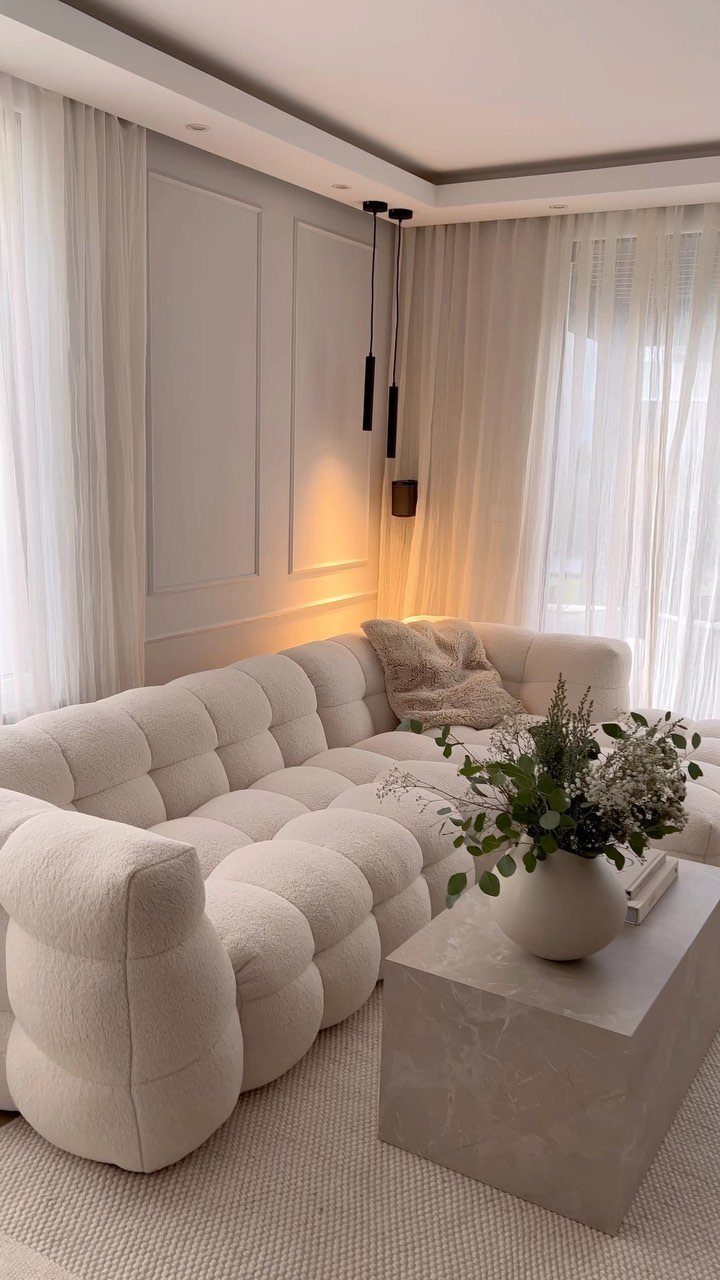
A low-profile modular sofa with deep tufting gives you flexible seating that rearranges as your needs change. The oversized sections here form an L-shape, but you could separate them into smaller conversation zones if the room layout shifts.
Modular pieces work well in rentals where you might move to a different footprint. Look for units that connect without tools so you’re not left with orphaned sections that don’t fit the next space.
Pair a bulky sofa with a sleek stone or glass table so the room doesn’t feel overstuffed.
17. Glam Gold Accents
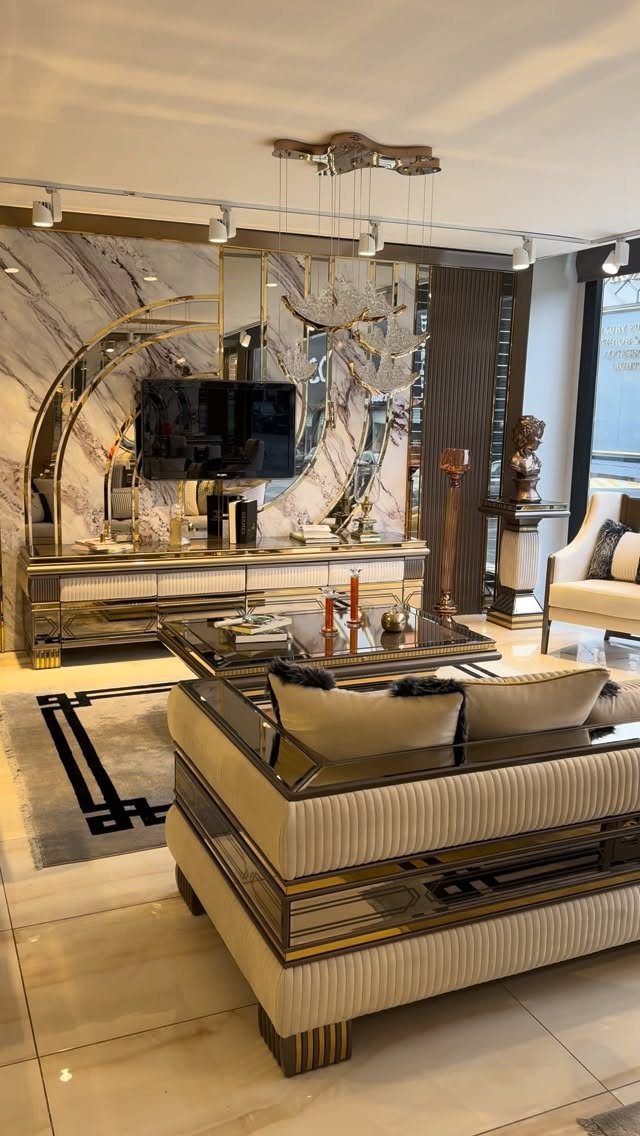
Gold trim on furniture legs, frames, and mirrors adds polish without covering large surfaces. The ribbed upholstery here keeps the texture neutral while the metal accents pull your eye around the room.
Stick to one metal finish throughout the space. Mixing gold with chrome or brass reads unintentional unless you’re confident layering metals.
This approach suits a room with neutral walls and flooring where the metallics can stand out. Too much pattern or color competes with the shine.
18. Sculptural Tiered Coffee Table
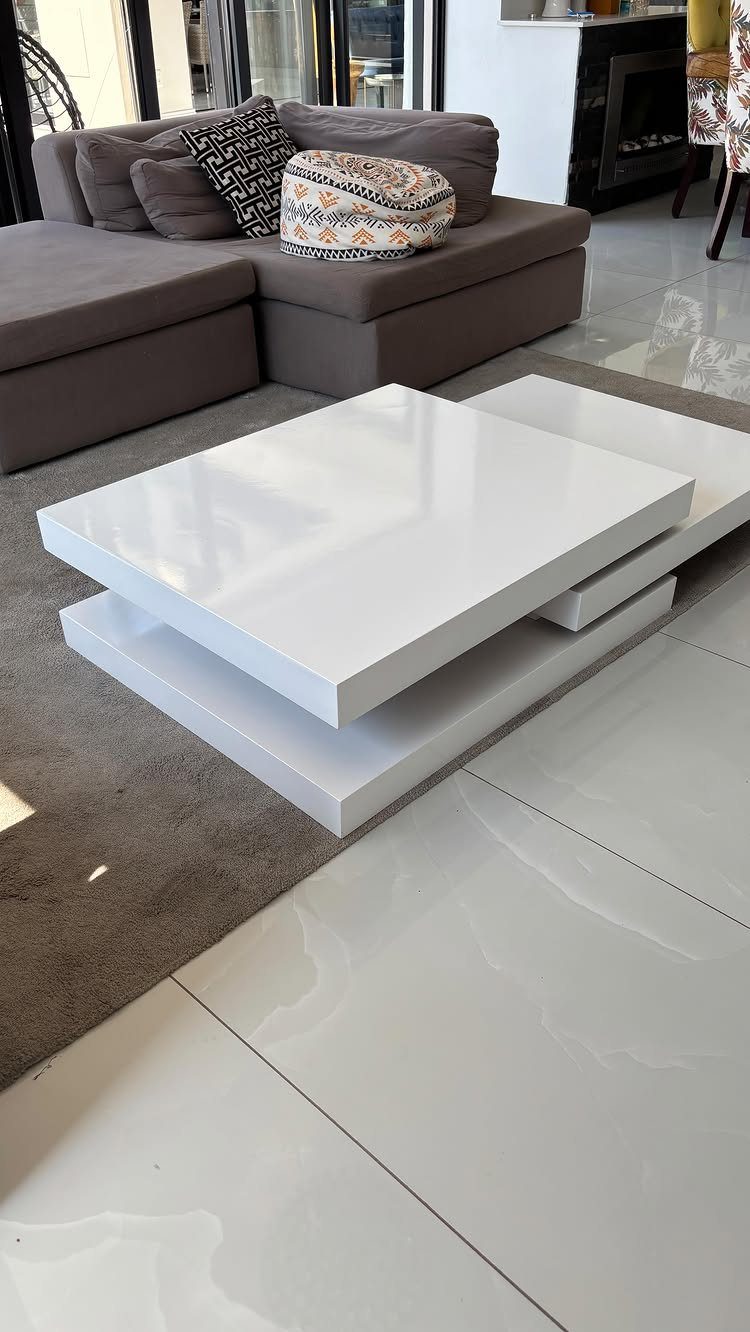
A tiered table stacks 2 or 3 surfaces at different heights, so you get more usable area without widening the footprint. The geometric design here holds drinks on the lower level and books or a small plant on top.
This style suits smaller living rooms where a standard coffee table would block traffic. The layered shape adds visual interest without taking up extra floor space.
White or light finishes show scuffs faster than wood or dark tones. If you have kids or pets, choose a material that hides wear.
Choosing the Right Colors
Start with how you use the room.
A soft neutral makes a small living room feel open and uncluttered, while a deeper shade on one wall pulls focus and creates a spot that feels separate from the rest of the space.
Carrying the same muted tone across walls and trim suits a minimalist room where you want the architecture to recede. If the room has traditional molding or built-ins, warm neutrals and muted greens hold up over time without reading dated.
In a compact city apartment, committing to one saturated color across every surface ties the room together and reflects what you see outside the windows. The furniture and art then build off that single hue instead of competing with it.
Color shifts more than you expect depending on the time of day.
Creating Functional Spaces
A living room that supports more than one activity needs zones that don’t bleed into each other.
Arrange seating to face inward for conversation, then place a reading chair or desk in a corner where it won’t interrupt the main gathering area.
Using rich materials keeps a minimal layout from feeling cold. A textured rug, wood furniture, or concrete accent grounds the space while the streamlined shapes hold the room open.
Historic pieces can sit next to contemporary ones as long as the overall layout stays practical.
A vintage rug under a modern sofa works when both serve the way you actually move through the room, not just the look you’re after.
Balance minimalism with warmth so the space invites you to sit down, not just admire it from the doorway.
Incorporating Personal Touches
An antique screen or a rug from another era adds character without requiring a full room redesign.
Place a single meaningful piece where it anchors a corner or fills a blank wall, then let smaller items like ceramics or books layer in around it.
A gallery wall that mixes framed art with objects you’ve collected over time gives the room a lived-in feel. Arrange pieces before you commit to nails so the spacing looks intentional rather than haphazard.
Mix cultures and time periods within a limited color palette so the variety holds together instead of reading as clutter. One bold textile or artwork can carry the personal side while the furniture stays neutral.
Frequently Asked Questions
What’s trending for living room decor?
Saturated paint colors like deep green, sculptural lighting that doubles as art, and modular seating that rearranges as your needs change are all gaining traction.
Natural materials like wood slats, stone panels, and woven pendants add texture without pattern, while gold accents and curved furniture soften spaces that might otherwise feel too rigid.
How do I make my living room look nice?
Start with a layout that supports how you actually use the space, then layer in lighting at different heights so you’re not relying on one overhead fixture.
A rug large enough to fit under the front legs of your sofa anchors the seating, and keeping soft pieces like pillows and throws to 3 per sofa prevents clutter while adding warmth.






