
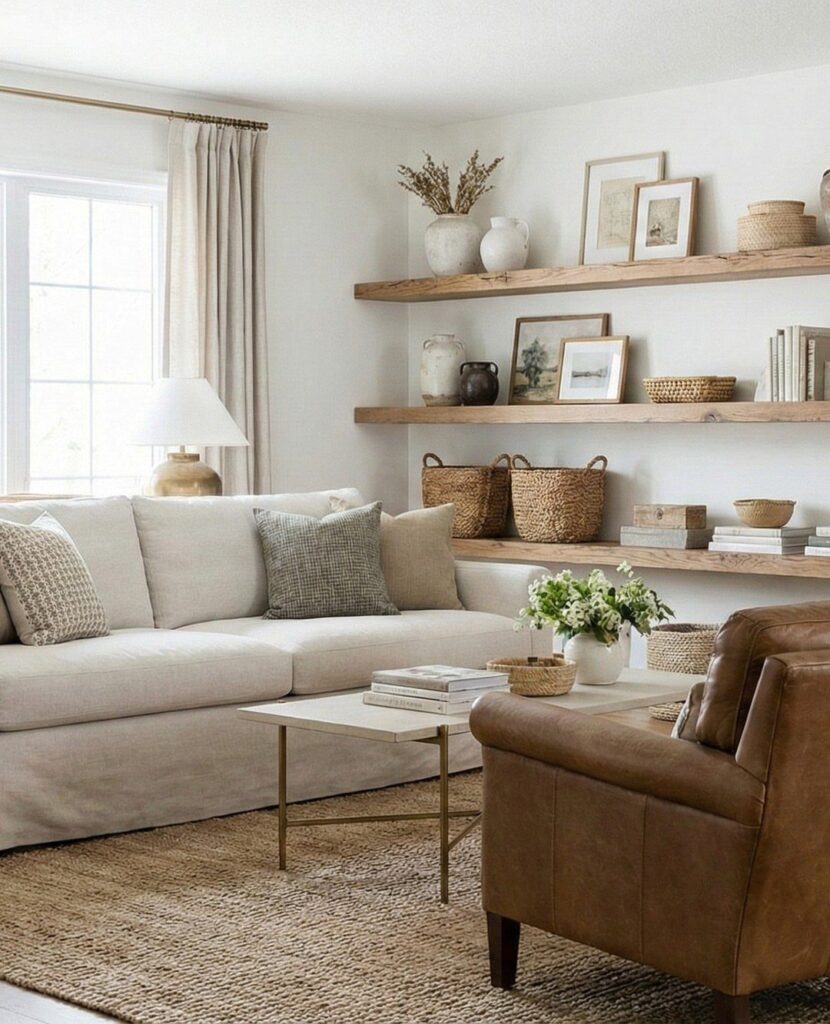
Floating shelves range from 2-inch solid wood that holds hardcovers and pottery to shallow hexagon ledges made for succulents and air plants.
The choice comes down to what you’re putting on them: weight decides the material and mounting method, and how you arrange them sets the look.
1. Sturdy Solid Wood Shelves
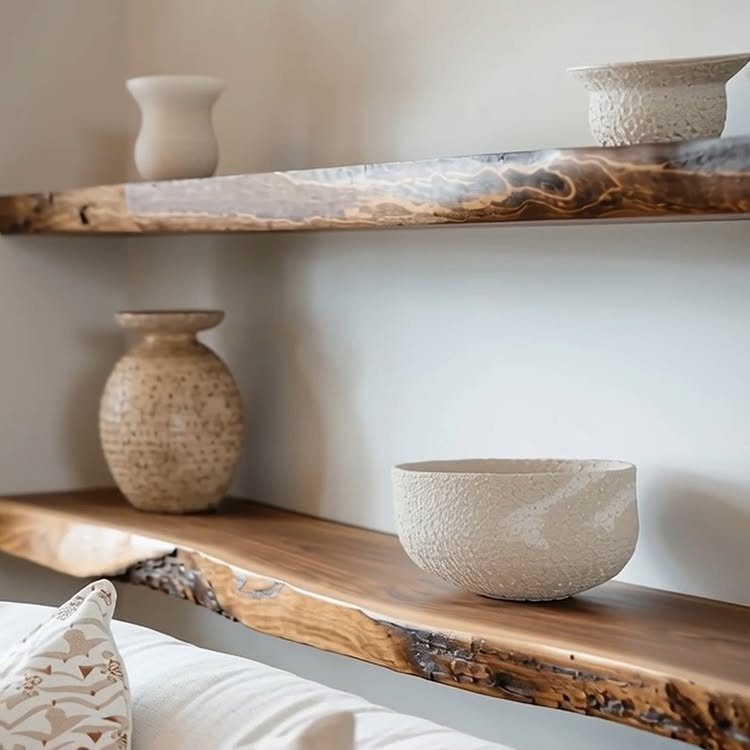
Solid wood shelves handle weight that other floating options can’t: small appliances, stacks of hardcovers, heavy pottery. The thickness gives you the bracket support you need without visible hardware.
I look for shelves at least 2 inches thick if books or ceramics are going on them.
Live-edge pieces like these bring texture without needing much styling. The irregular edge does half the work.
If you’re mounting one, find the studs. Drywall anchors alone won’t hold up over time when the shelf carries real weight.
Each shelf has a 30-pound weight capacity when installed correctly (read: into a stud), leaving plenty of room for your plants, puzzles, hefty coffee table books, or little one’s LEGO creations.
2. Irie Mango Wood Floating Shelf
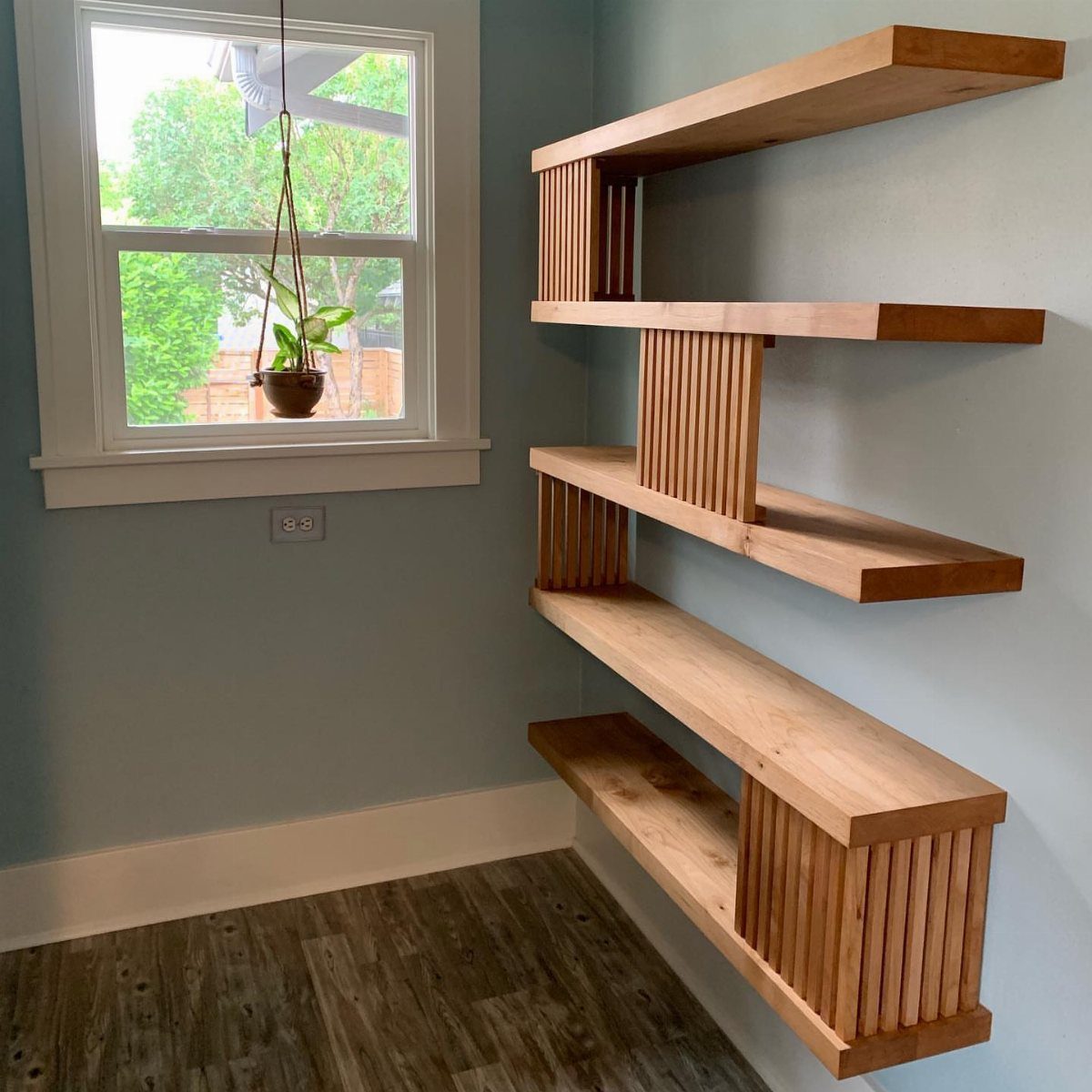
Mango wood brings warmth without going dark, and the slat dividers keep items upright without adding separate bookends. The rating tells you these hold up in real homes.
The vertical dividers work well if you’re displaying records, small framed prints, or cookbooks that lean. Without them, lighter items tend to slide around on a smooth shelf.
These suit renters who want something polished but still plan to move. The wood stays light enough to transport, and the look fits multiple rooms if you rearrange later.
3. Minimal White Floating Shelves
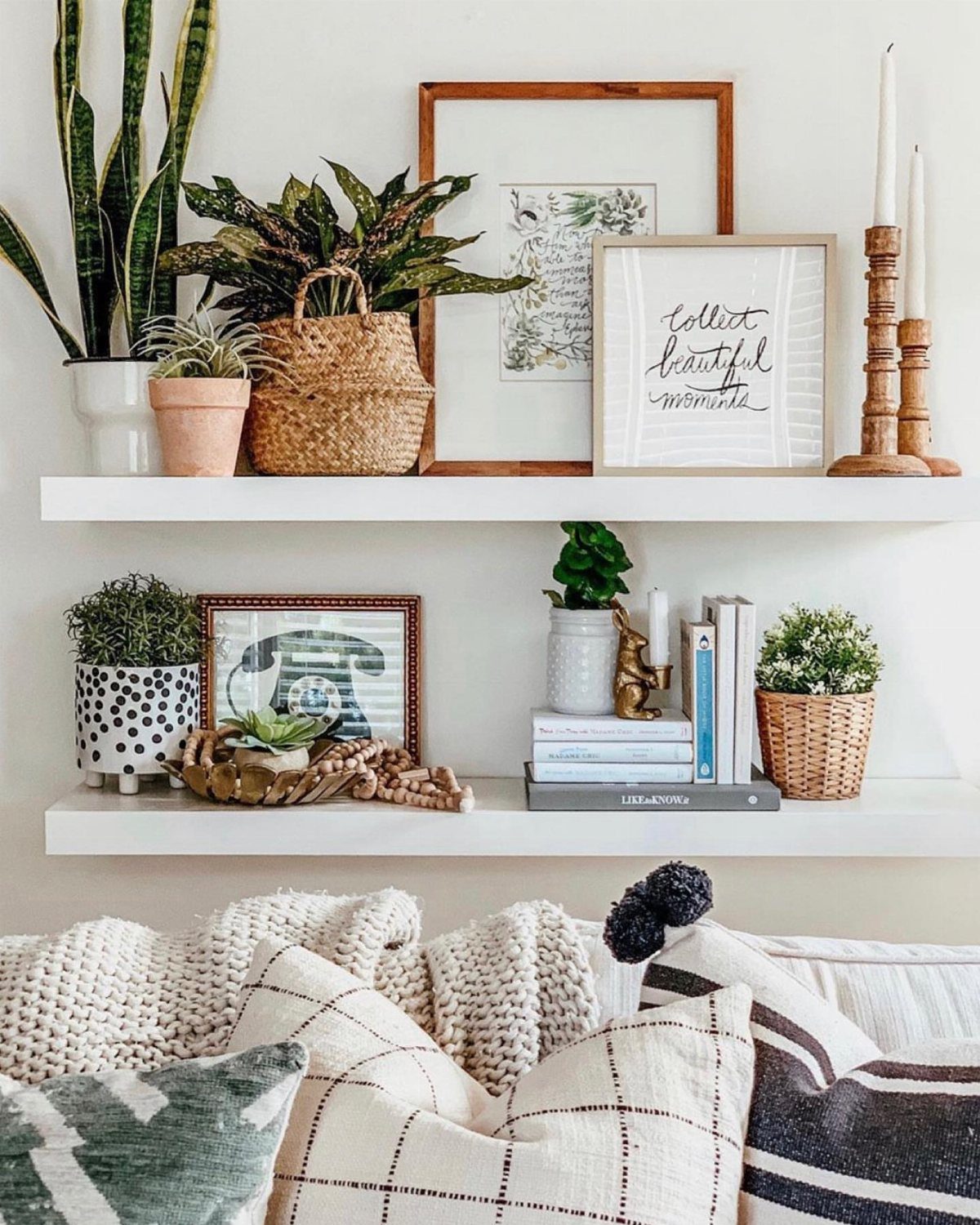
White shelves disappear into light walls, so the items you put on them read first. That makes a tight space feel less crowded than dark shelves would, even when the same amount of stuff sits on them.
The white backdrop lets you layer without the shelf itself competing for attention.
If your walls are off-white, paint the shelf to match instead of buying pure white.
4. Reclaimed Wood Shelves
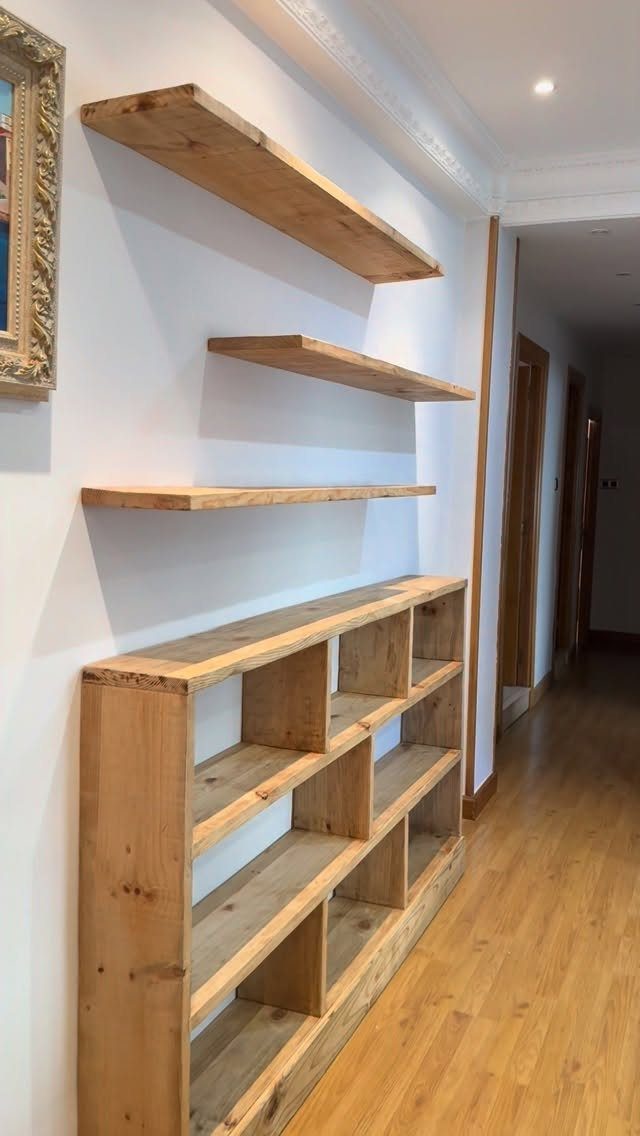
Reclaimed wood carries the marks of its first use: nail holes, saw cuts, color shifts from sun exposure. No 2 pieces match, which gives a room character that new lumber doesn’t.
The finish is usually already there, so you skip the staining step. Just seal it if the surface feels rough or if you’re putting drinks directly on it.
Reclaimed material costs more than construction-grade pine but less than most hardwoods. The look suits rooms where you want age and texture, not a clean modern line.
5. Corner Floating Shelves
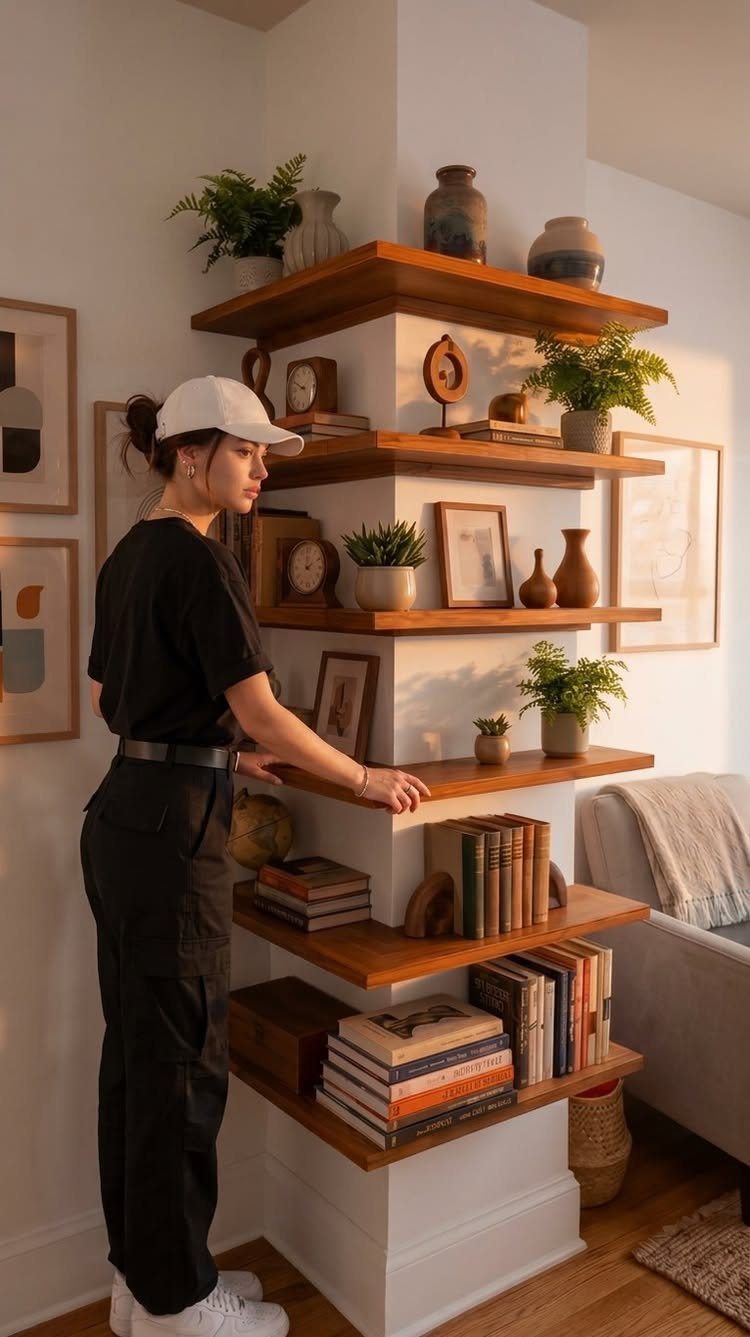
Corners sit empty in most rooms, and a corner shelf turns that dead space into display without blocking traffic or taking up floor area. Shelves like these hold as much as a small bookcase.
The wrapping shape keeps items from falling off the back, which matters more on a corner mount than a flat wall. You can stack books spine-out or set small plants where they get light from 2 windows.
Installation takes longer than a straight shelf because you’re leveling on 2 walls at once, but the return in usable space is worth it.
6. Long Statement Shelves
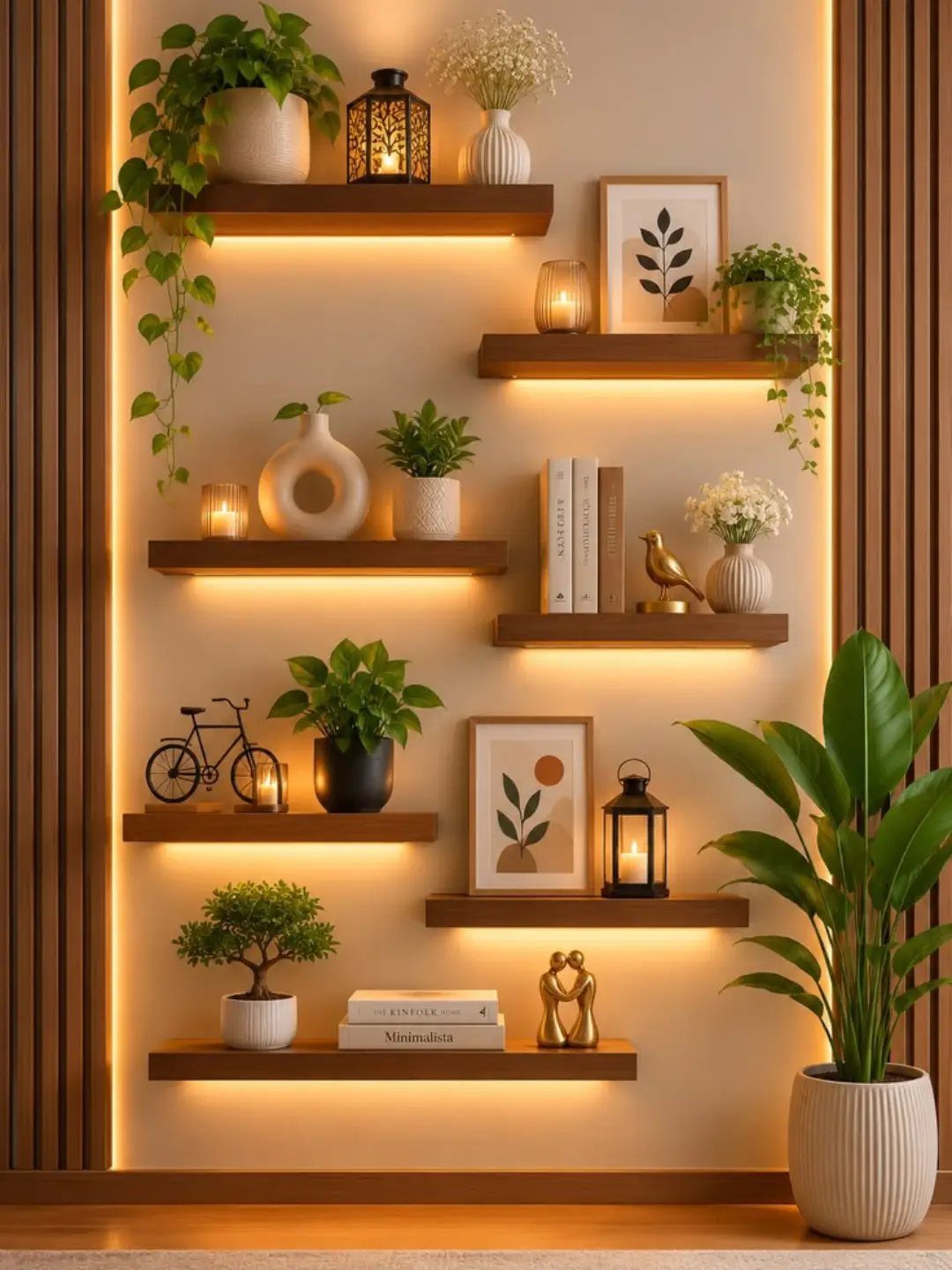
A shelf that runs most of the wall length changes how the room reads. It gives you one strong line instead of scattered small pieces, and it holds enough that you can rotate what’s on display without crowding.
The LED backlighting detail costs about as much as adhesive LED tape and plugs into a standard outlet.
Long shelves need extra mounting points instead of just 2, so plan for additional brackets hidden underneath or screws into studs spaced along the length.
7. Multi Layer Floating Shelves
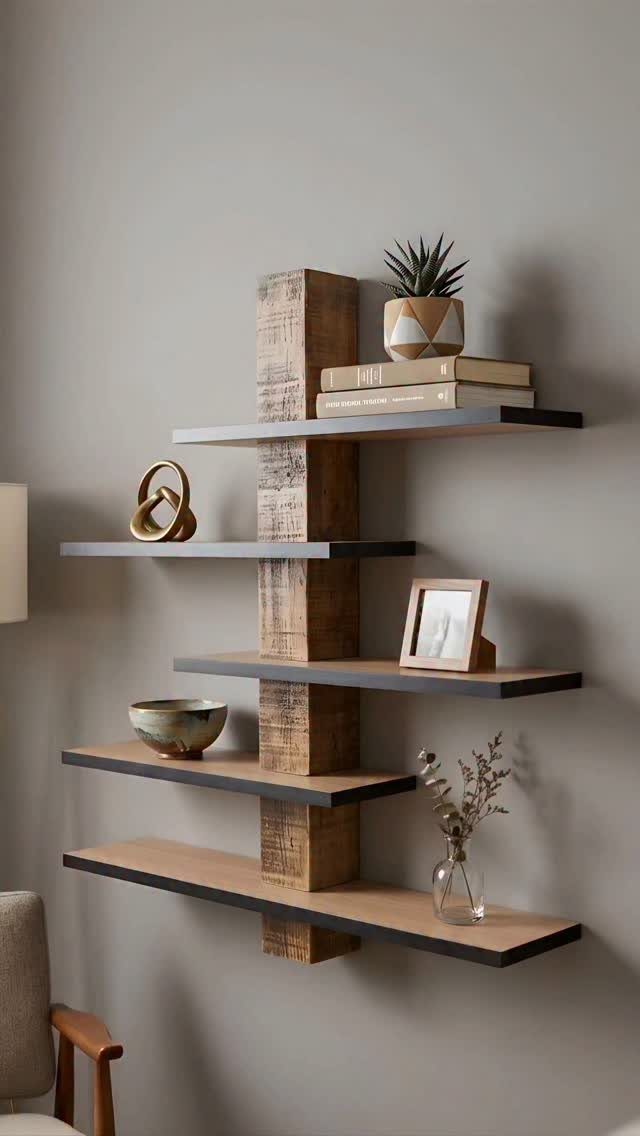
Stacked layers give you display depth without mounting multiple shelves separately. One central post carries platforms staggered vertically, so you can group items by size instead of spreading everything along a single line.
The setup works well for collections that look better in clusters: small plants at different levels, a row of framed photos with objects in front, or books mixed with candles.
Each layer holds less weight than a full-span shelf, so keep heavier items on the lower tiers.
Most mount with a single bracket behind the center post.
8. Floating Shelves Holding Media Devices and Decor
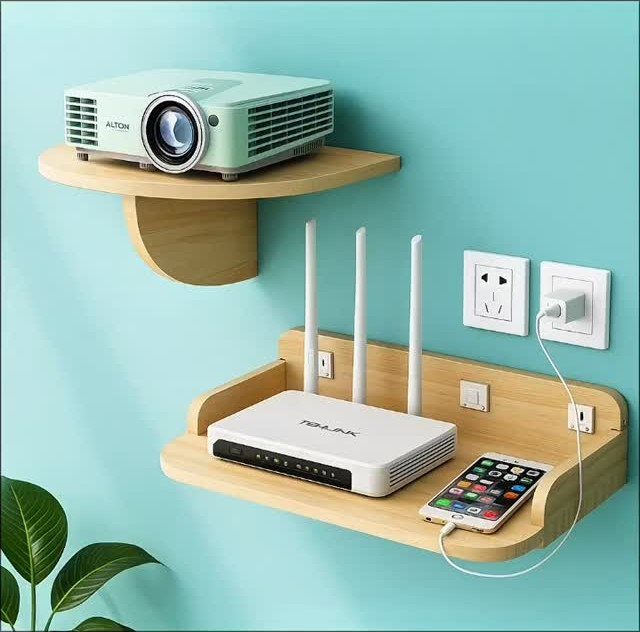
Media devices need a place where cords can reach outlets without trailing across the wall. A floating shelf keeps the projector, router, or charging phone off the floor and out of furniture that might block ventilation or signal.
Mount the shelf near an outlet so you’re not running extension cords. If the device has vents, leave at least 2 inches of clearance on all sides so heat can escape.
The open bottom makes it easy to unplug or swap cables without moving the shelf itself.
9. Floating Shelves with Integrated Lighting
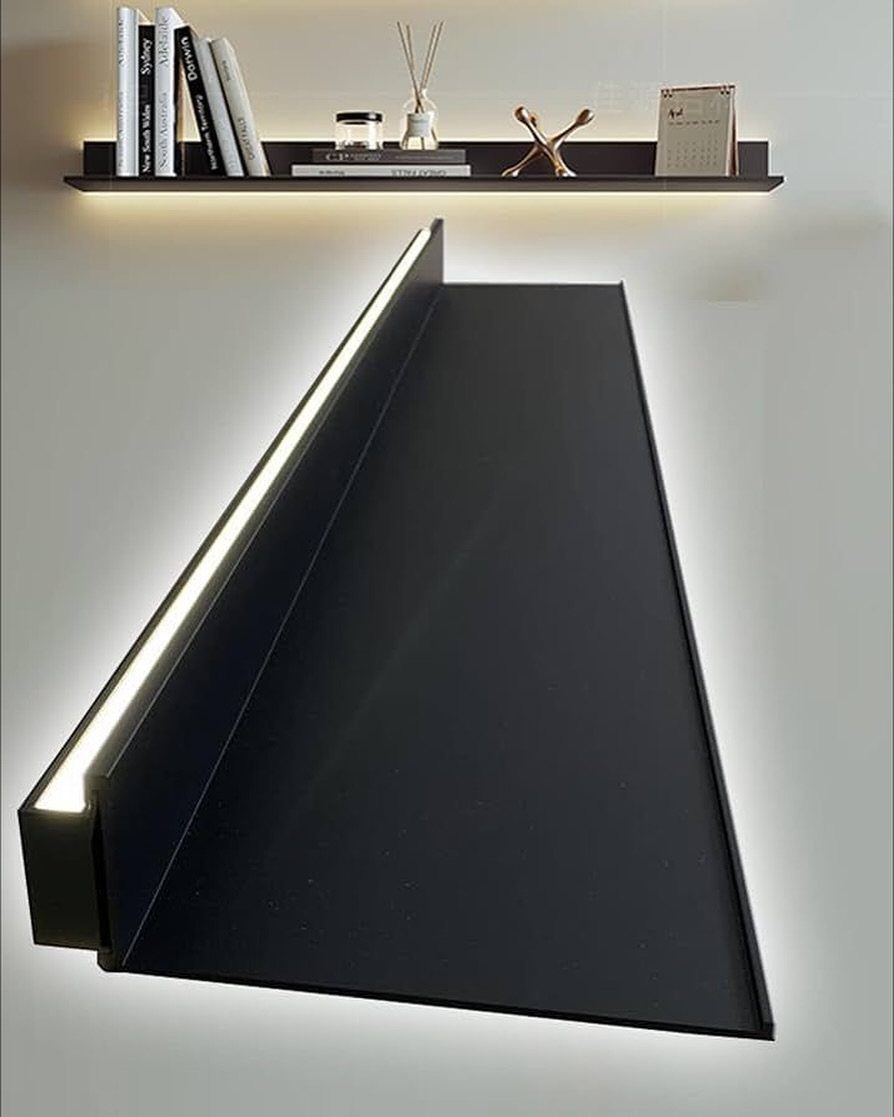
Built-in lighting sits flush with the underside of the shelf, so you skip the separate tape and wiring step.
The strip runs the full length and plugs into a standard outlet, same as adhesive LED tape but cleaner looking because nothing shows.
The light spills down onto the shelf below or onto the wall behind your items, which brings out texture in ceramics or book spines better than overhead room lighting does.
Black shelves with white walls give you the most contrast. The LED draws about 5 watts, so it costs almost nothing to leave on all evening.
10. Geometric Hexagon Floating Shelves
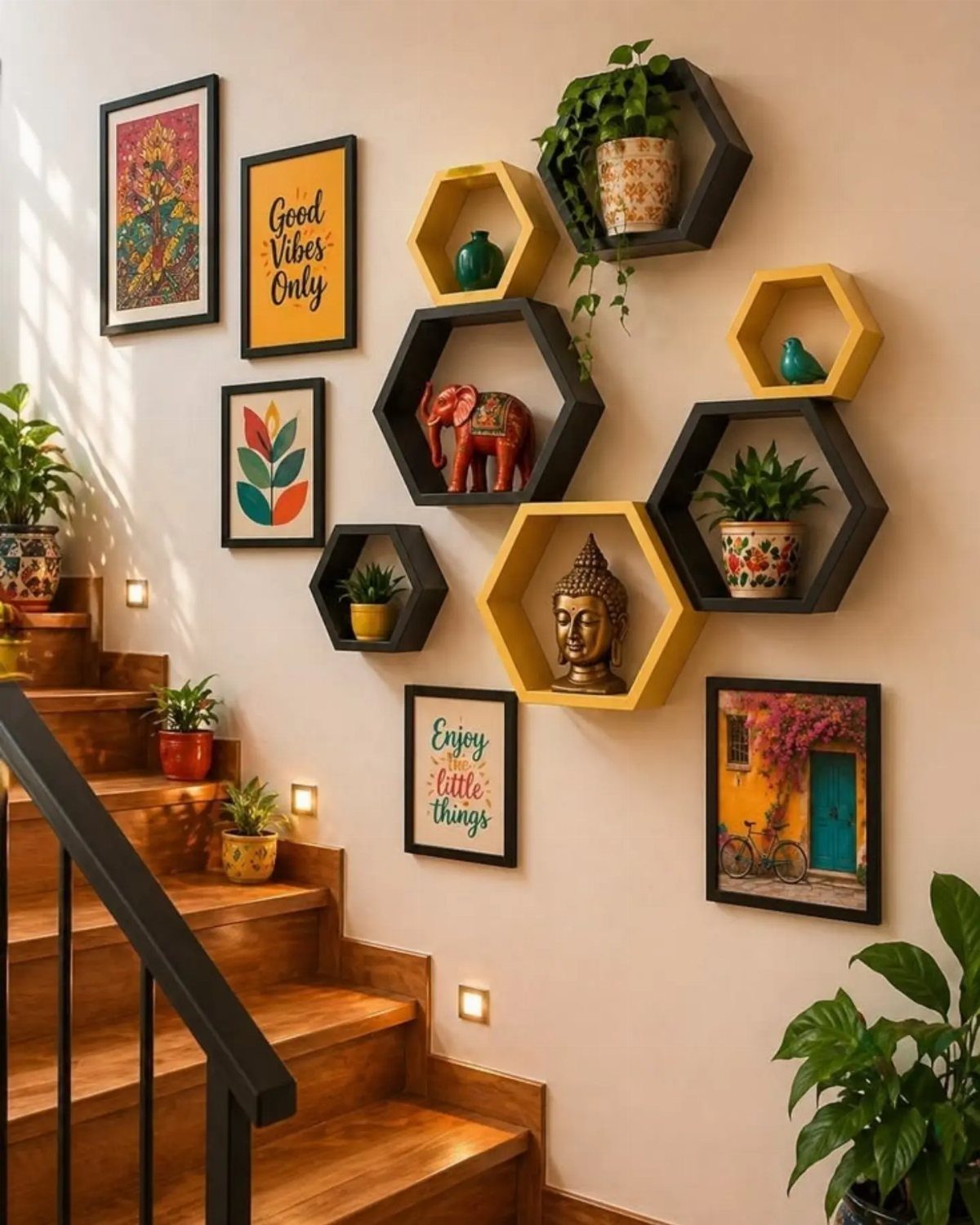
Hexagon shelves break up a blank wall faster than rectangles because the shape itself creates pattern, even when you only mount 2 or 3. The color contrast brings in personality without repainting every wall.
Each hexagon holds one or two small items.
If you’re clustering several, map the layout on the floor first so you know where the anchors go. Odd numbers read better than even when you’re grouping shapes.
The shallow depth keeps items visible but won’t hold books or anything heavy. Use these for lightweight decor: succulents, air plants, small sculptures.
11. Single Minimalist Black Floating Shelf
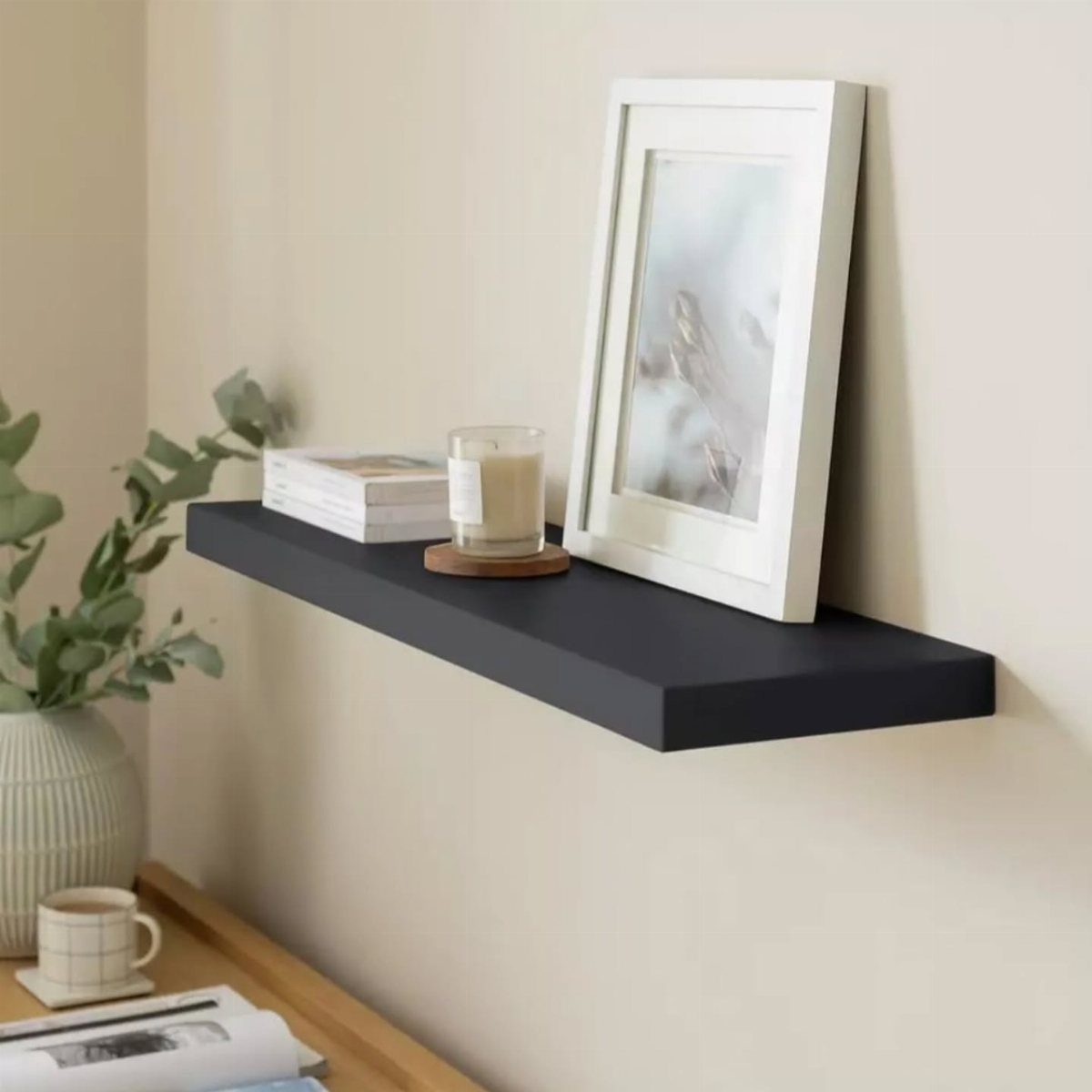
A single black shelf on a light wall gives you a spot to land your eye without committing to a full gallery or shelving unit.
The narrow profile holds just enough for a tight composition: one framed print, a candle, and 2 or 3 books stacked flat.
Black reads formal, so the styling stays simple. Too many small objects make the shelf look cluttered against the clean line.
If the wall is already busy with art or pattern, skip this and go with white instead. The black only works when you leave the surrounding wall open.
12. Floating Shelves Above the Sofa
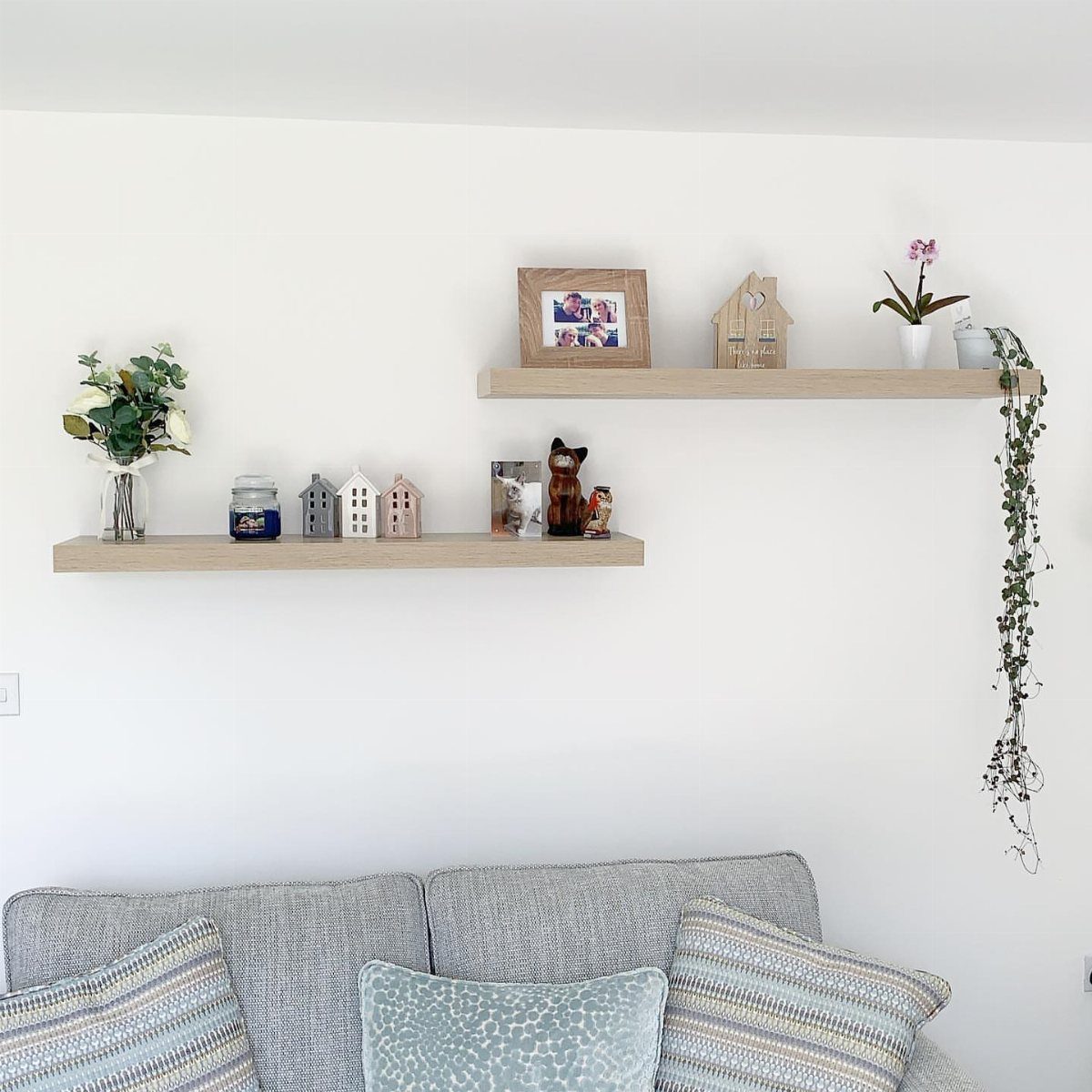
Shelves above the sofa bring the wall closer without hanging art that might shift when you sit down hard or when kids climb over the back. The height keeps decor out of reach but still visible from the couch.
Leave at least 8 inches between the top of the sofa and the bottom shelf so throw pillows don’t bump into it. Two shelves spaced vertically let you vary the height of what you display without everything sitting on one line.
Trailing plants like pothos soften the straight edge and fill space without adding more shelves.
13. Built-In Niche Floating Shelves
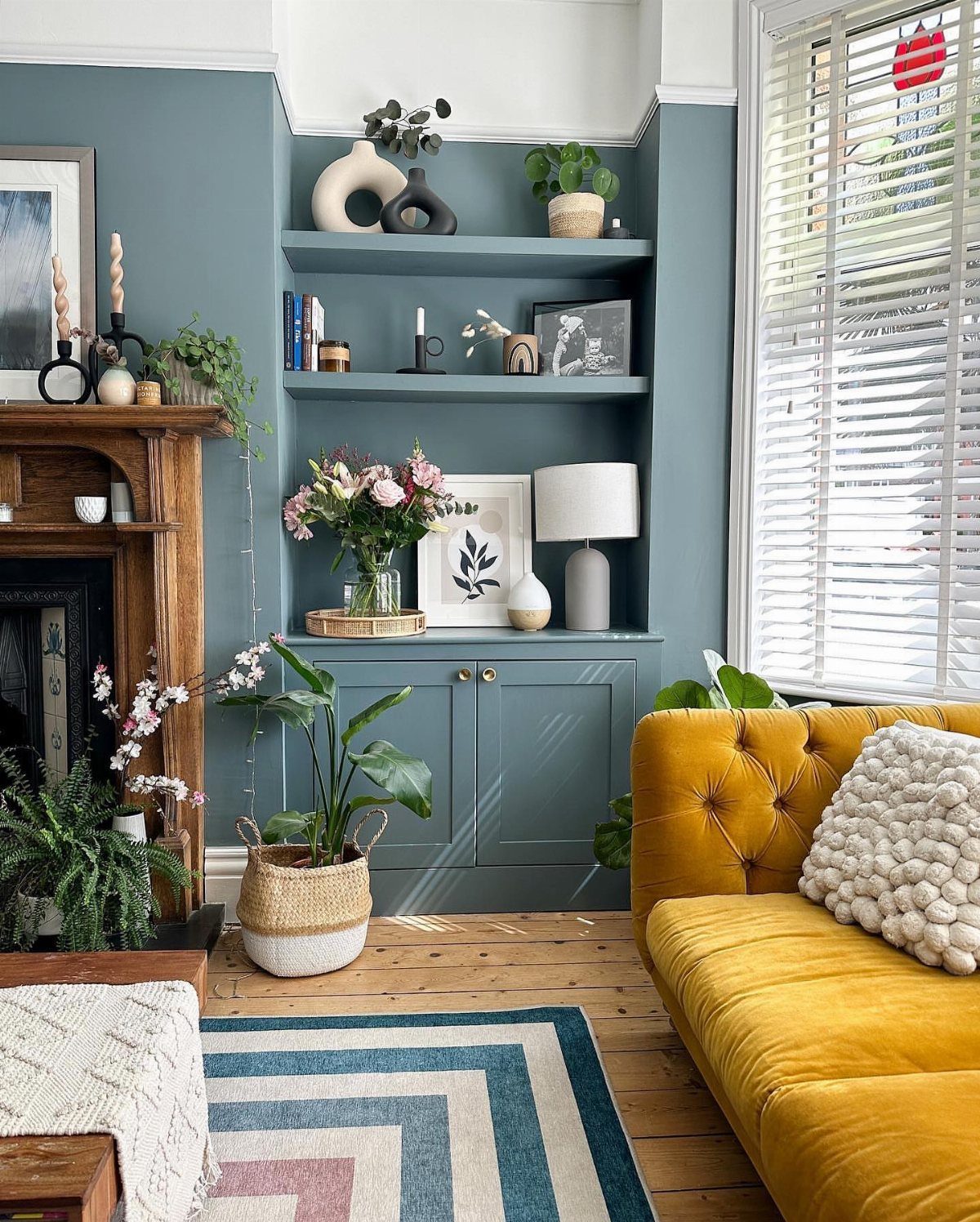
A recessed alcove lets you mount shelves without hardware showing on the wall face. The shelves sit inside the niche, which gives you clean edges and a built-in frame around what you display.
If you’re working with an existing alcove, paint the back wall a different color than the room to add depth. The contrast makes items pop without needing extra lighting.
Mounting inside a niche means you’re attaching to the sides instead of the front wall, so measure twice before drilling. The fit needs to be tight enough that the shelf doesn’t shift.
14. Floating Shelf Above TV
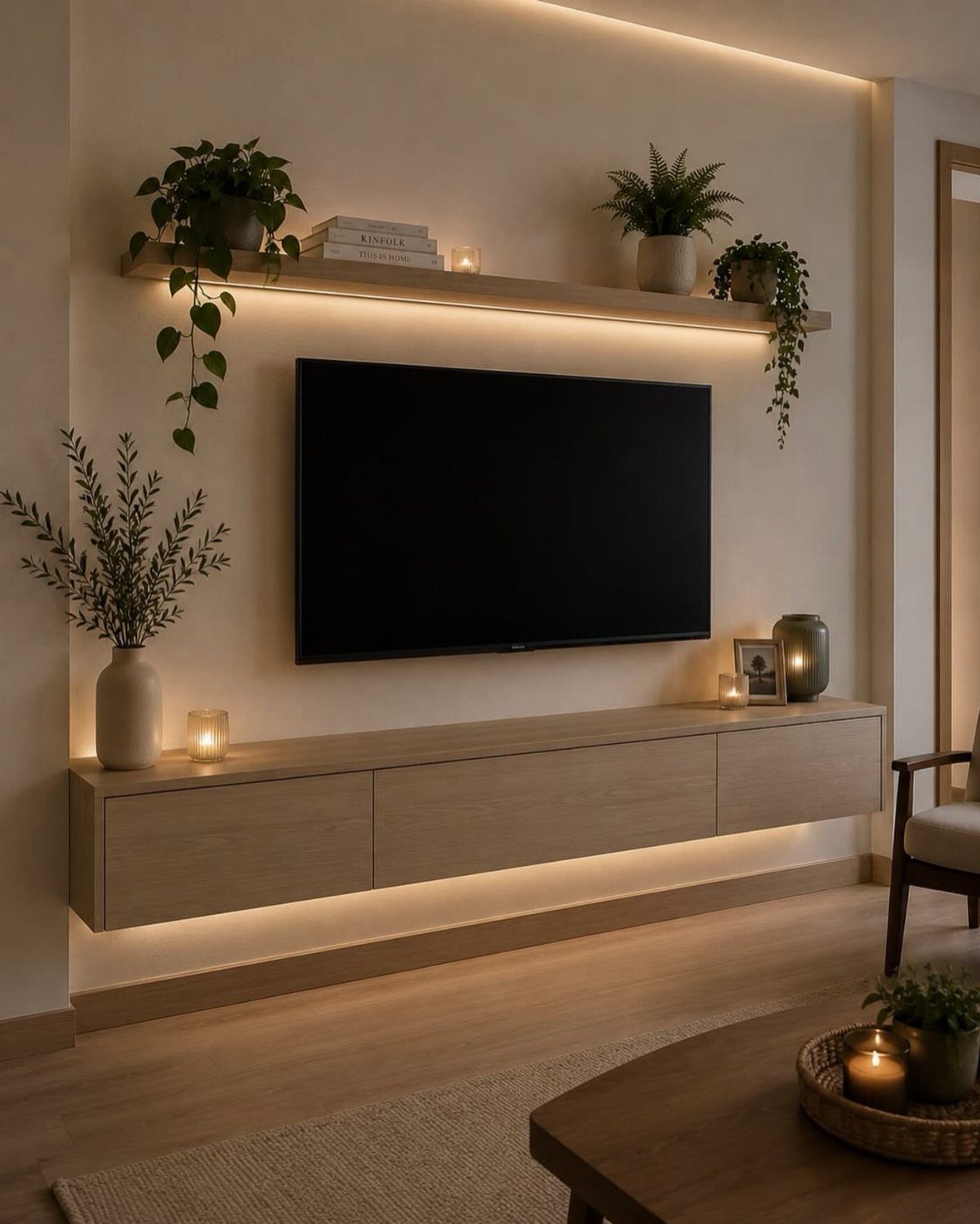
A shelf above the TV fills vertical space that usually stays empty and keeps the screen from floating on the wall. The low profile holds enough for a few books and plants without blocking the picture.
Mount it high enough that you’re not looking up at objects when you’re watching. Mount it high enough that you can see what’s on it without tilting your head up from the screen.
Avoid anything that drapes over the edge. Trailing plants work better on shelves beside the TV than directly above it.
15. Staggered Floating Shelves
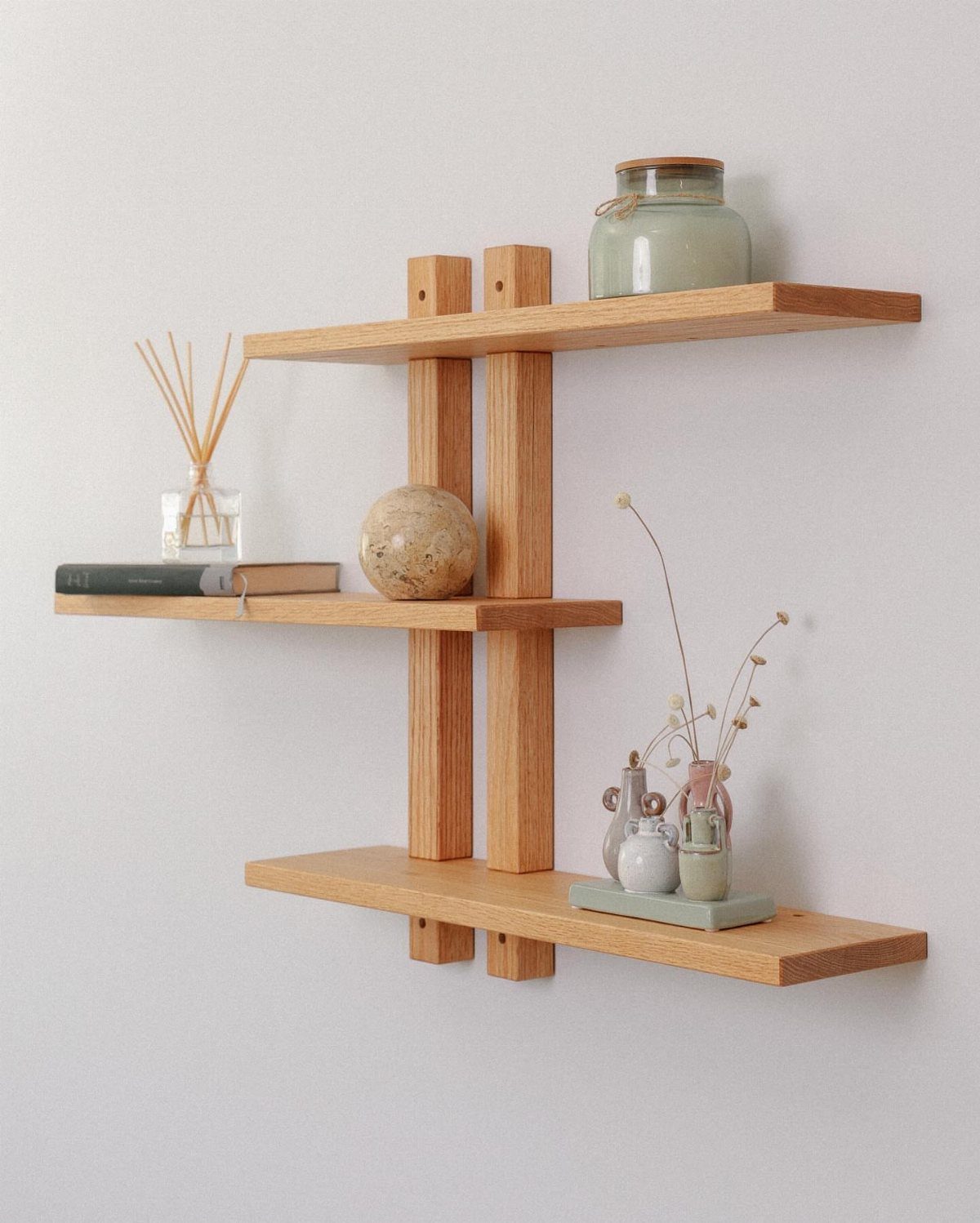
Staggered shelves give you vertical storage without lining everything up on one plane. The offset layout lets you group small items at different heights, which fills a narrow wall better than a single long shelf would.
The asymmetry looks deliberate when you space the shelves evenly apart. Odd spacing reads as a mistake instead of a design choice.
Keep the items light. Each shelf holds less weight than a full-span mount because the brackets are smaller and spaced for the short length.
16. Slatted Accent Wall Shelving
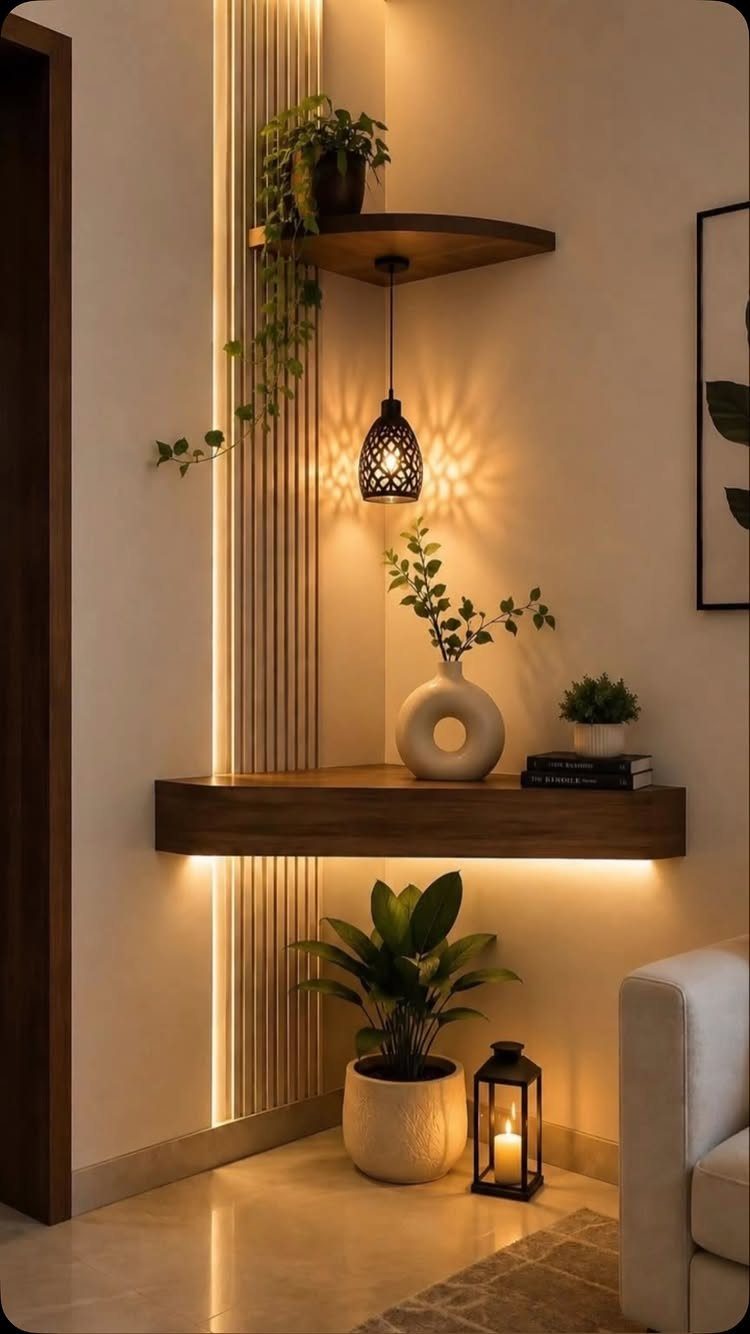
Slatted walls give floating shelves a textured backdrop that adds interest without competing for attention. The vertical lines make the room feel taller, and the shelves sit flush against the slats without needing spacers.
The slat spacing dictates where you can mount the shelf. Find the solid backing behind the slats before you drill, or the bracket won’t hold.
Dark shelves on light slats bring contrast. Matching the wood tones makes the shelf disappear into the wall, which works if you want the items to read first.
17. Floating Picture Ledge
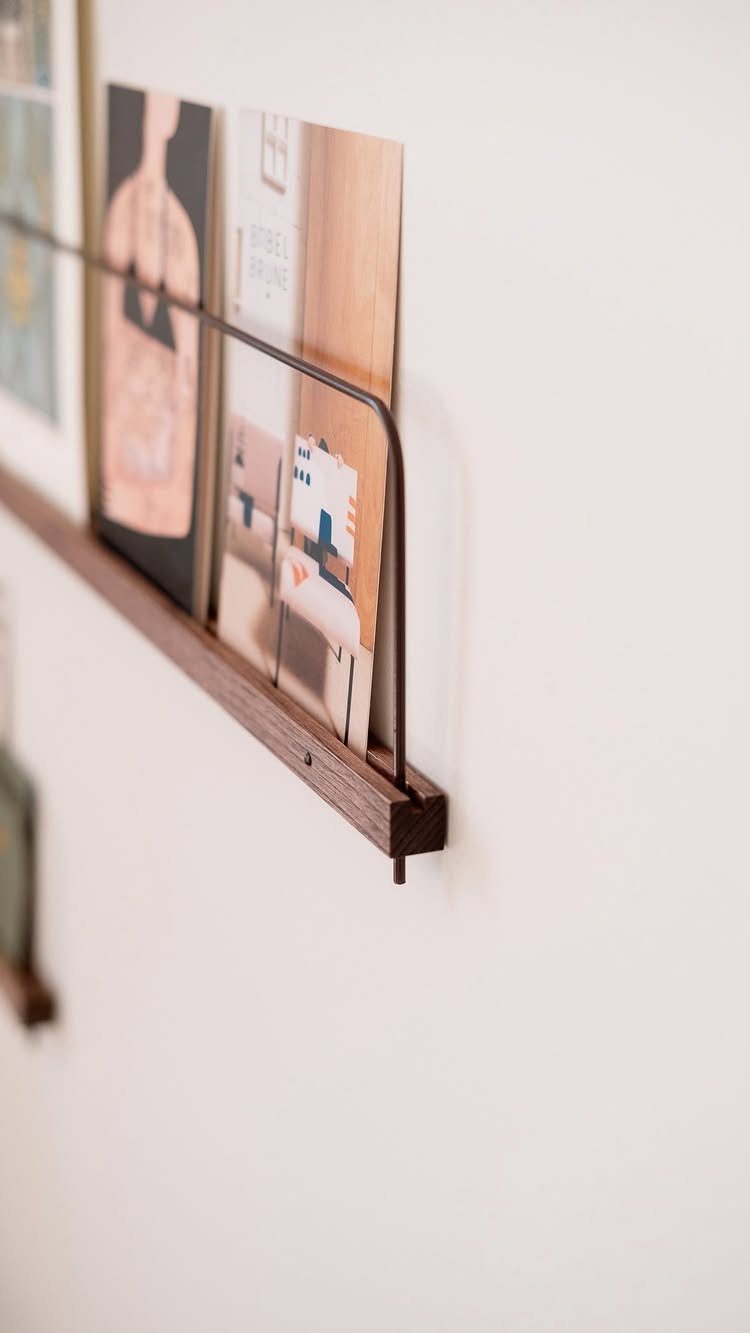
A picture ledge holds frames upright without mounting hardware on each one, so you can swap prints without patching nail holes.
The shallow lip keeps items from sliding off, and the narrow depth suits hallways or tight walls where a full shelf would jut out too far.
Layer smaller frames in front of larger ones to fill the space without crowding. The rail keeps everything in place even when you overlap edges.
Ledges handle lightweight prints and frames better than heavy wood or thick glass, so keep that in mind when you choose what goes up.
Installation Tips for Floating Shelves
Find the studs before you drill.
Check the weight capacity listed for the shelf and the mounting hardware separately. The shelf might carry more weight than the brackets can, so check both ratings and use the lower number.
Use brackets that attach to studs whenever possible.
If studs don’t line up with where you want the shelf, toggle bolts or heavy-duty anchors work for lighter loads, but test them first with weight that matches what you plan to put up.
Measure multiple times before you mark holes. A shelf that sits even slightly off-level reads as a mistake, and patching mistakes in drywall shows through paint.
Styling Floating Shelves
Group items in odd numbers. 3 books stacked flat with a small plant beside them reads better than pairs lined up evenly across the shelf.
Leave space between objects so each one stands out.
A tall vase next to stacked books next to a low candle gives the eye places to move instead of everything sitting at the same level.
Keep colors simple.
If the shelf or wall already brings contrast, stick to neutral decor. If the backdrop is plain, one or two accent colors work without overwhelming the space.
Rotate what’s on display instead of adding more. A shelf that holds everything you own loses focus.
Choosing the Right Shelf Material
Solid wood handles weight better than MDF or particleboard and ages without chipping at the edges. Oak and walnut bring warmth and hold up under books or ceramics that would sag a lighter material over time.
Glass shelves work for lightweight display pieces but crack under heavy loads. Tempered glass is stronger than standard, but check the weight limit before you put anything substantial on it.
MDF with laminate keeps costs down and suits small bright spaces where you’re not loading the shelf heavily. The finish stays smooth, but water damage shows fast if you set drinks directly on it without coasters.
Metal brackets with hardwood shelves suit industrial decor and handle more weight than wood alone because the steel carries the load.
Frequently Asked Questions
What are some creative ideas for shelving in my living room?
Corner shelves turn unused wall space into display area, slatted accent walls add texture behind mounted shelves, and hexagon shapes create pattern even with just 2 or 3 pieces.
Staggered shelves at different heights fill narrow walls better than a single long shelf, and picture ledges let you swap frames without new nail holes.
Shelves that stretch across most of the wall create a single focal line that holds the room together instead of breaking it into small pieces.
How much weight can wooden shelves hold?
Thick solid wood at 2 inches or more carries heavy pottery, book stacks, and appliances without sagging when you hit studs. Look at the weight rating on the shelf material and the bracket separately, then stick to whichever one is lower.
Toggle bolts or heavy anchors hold lighter displays when you miss the studs, but direct stud mounting carries the most weight without sagging over the years.
Are floating shelves still a thing?
Floating shelves remain popular because they add storage and display space without taking up floor area.
That thin profile saves floor space and keeps sight lines open in small rooms and modern layouts where every inch counts. The hardware stays hidden, so the shelves disappear into the wall and let your items read first.
Is it difficult to hang floating shelves?
Installation takes care but is manageable when you find the studs first and measure multiple times before drilling. Even a half-degree tilt catches the eye as crooked, and patching the holes later leaves marks that show through most paints.
Corner installs double the leveling work since both walls need to line up, and shelves over 4 feet need a third bracket or the ends droop.
What is the best floating shelf size to be placed in a living room?
Shelves that span 4 to 6 feet fill a wide wall without floating in dead space and give you room to swap out what you display as seasons change.
Picture ledges 3 to 4 inches deep fit narrow hallways and slim walls where a standard shelf would stick out into traffic. Match the depth to what you’re holding: books and ceramics need at least 2 inches of thickness for proper bracket support.
Do heavy objects work with floating shelves?
Heavy objects work when you mount into studs and choose solid wood at least 2 inches thick. Drywall anchors on their own start to pull loose after a few months once the load settles in.
Check both the shelf and bracket ratings, go with the smaller number, and put your heaviest pieces on the bottom row when you stack multiple shelves.






