
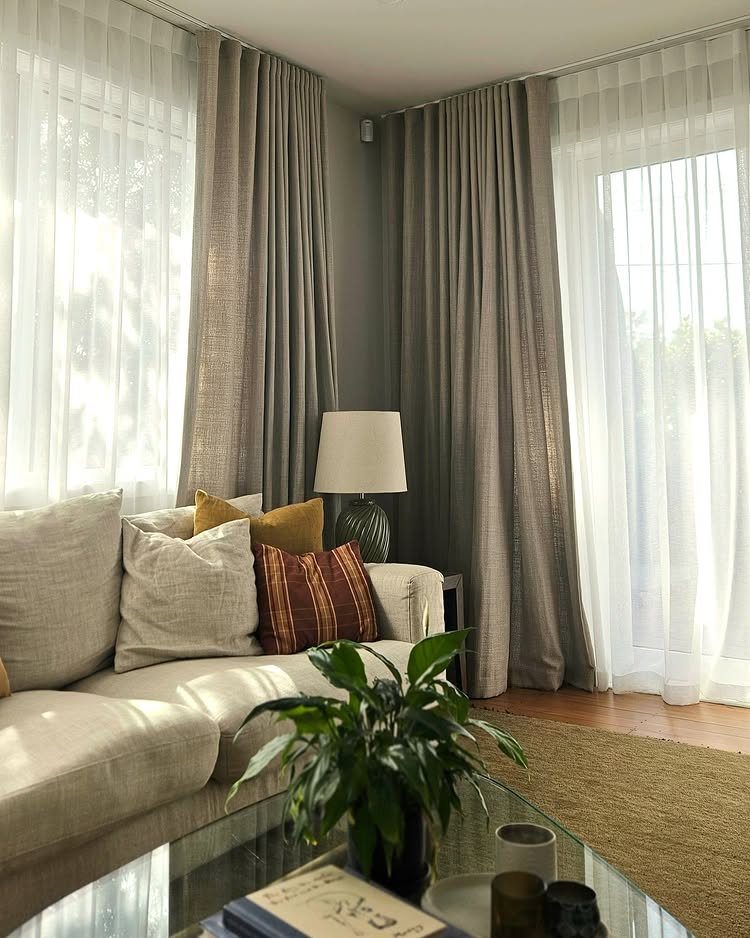
The choices below sort by how curtains layer, filter or block light, and where they hang relative to the window frame.
If afternoon sun lands directly on a screen or heats the room, blackout fabric or a sheer-plus-blackout combination solves it.
Pairing curtains with a Roman shade or woven blind gives you light control without taking up floor space when the fabric is open.
I mount the rod 4 to 8 inches beyond the frame on each side so the panels clear the glass completely when pulled back, which brings in more light and makes the window feel wider.
1. Double-rod Layered Look
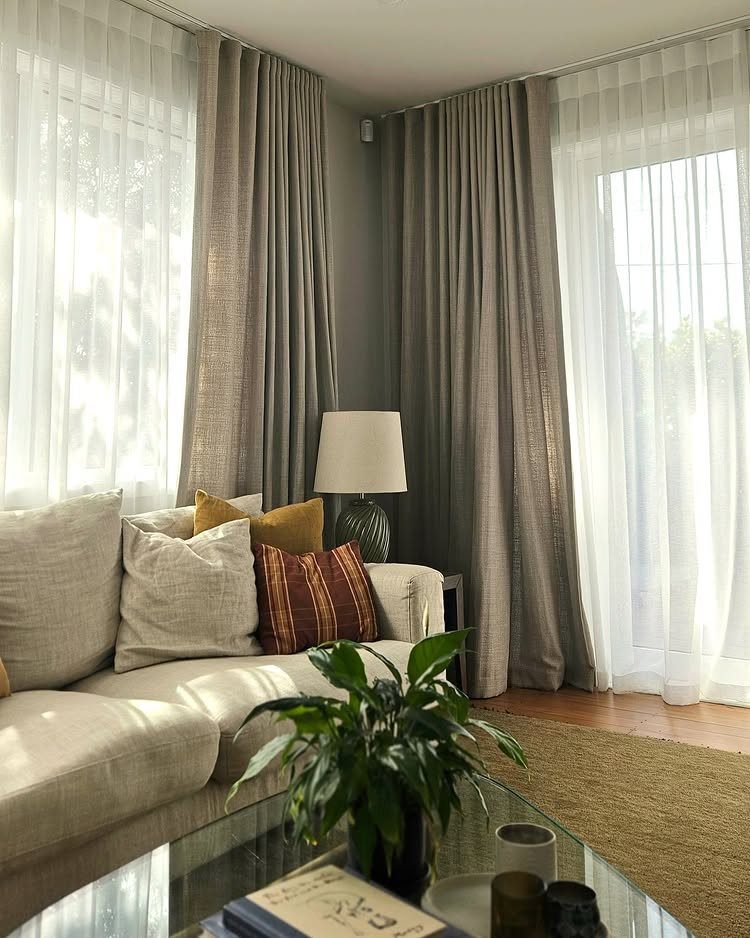
A double rod holds a sheer panel close to the glass and a heavier drape a few inches in front of it.
The sheer filters daylight during the day while the outer drape blocks heat and glare when you need it, and you can draw just one layer or both depending on the hour.
I like this setup for west-facing windows where afternoon sun gets aggressive. The sheer stays closed most of the time, and the heavier panel pulls across only when the light is too much.
Mount the inner rod an inch or two closer to the wall than the outer one so both panels have room to move without catching.
2. Curtain Styles
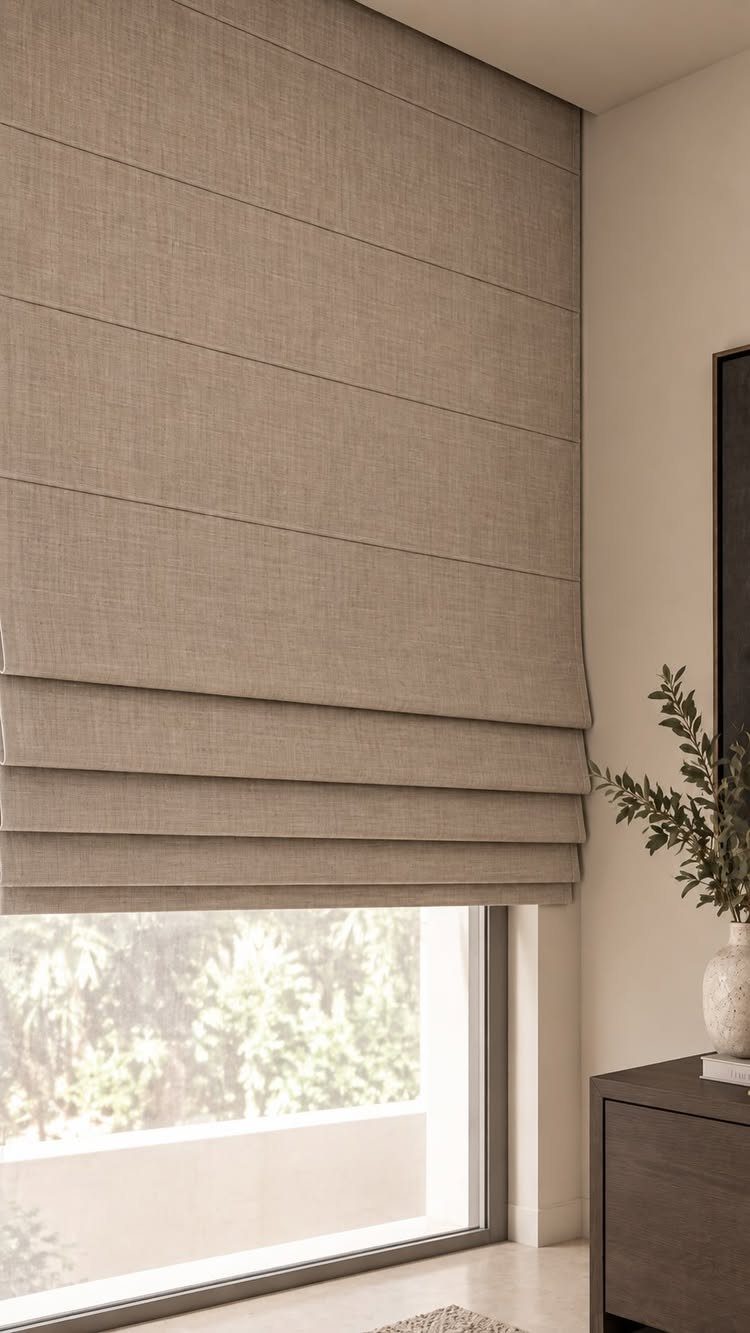
Roman shades fold into horizontal pleats when raised and lie flat when lowered, giving you clean lines and full coverage without the fabric bulk of a drape.
They work well in smaller living rooms where floor-length panels would overwhelm the space or block furniture placement.
The tailored look suits modern and transitional rooms. If you want softness, pair a Roman shade with a side panel on each edge of the window.
Alone, they read architectural. With panels, you get the best of both.
3. Curtains Extended Beyond the Window Frame
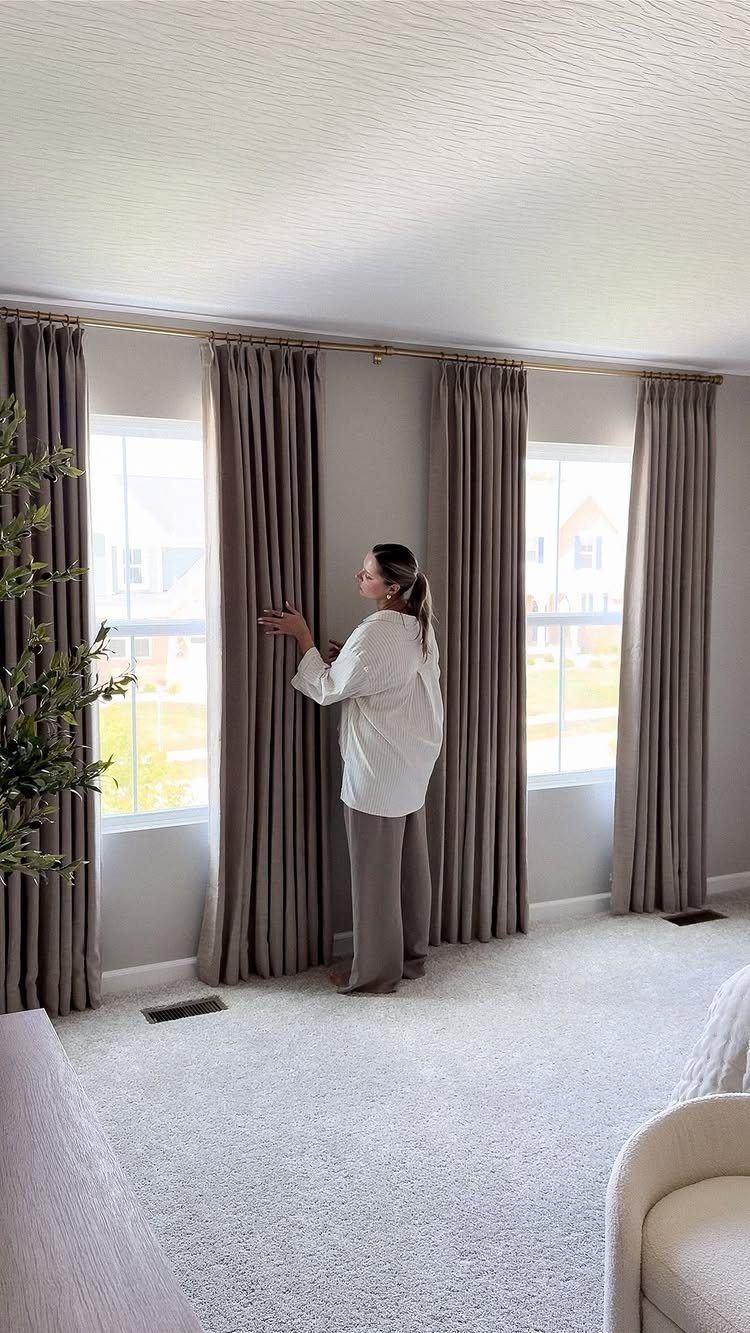
Extending the rod past the window frame on each side lets the curtain stack off the glass when open, which means more daylight and a wider look to the window itself. The panels frame the window instead of covering it.
This is the single easiest way to make a standard window feel larger without changing the trim or the glass. I mount the rod above the frame as well, which adds height and makes the ceiling read taller.
4. Airy Linen for a Bright, Relaxed Room
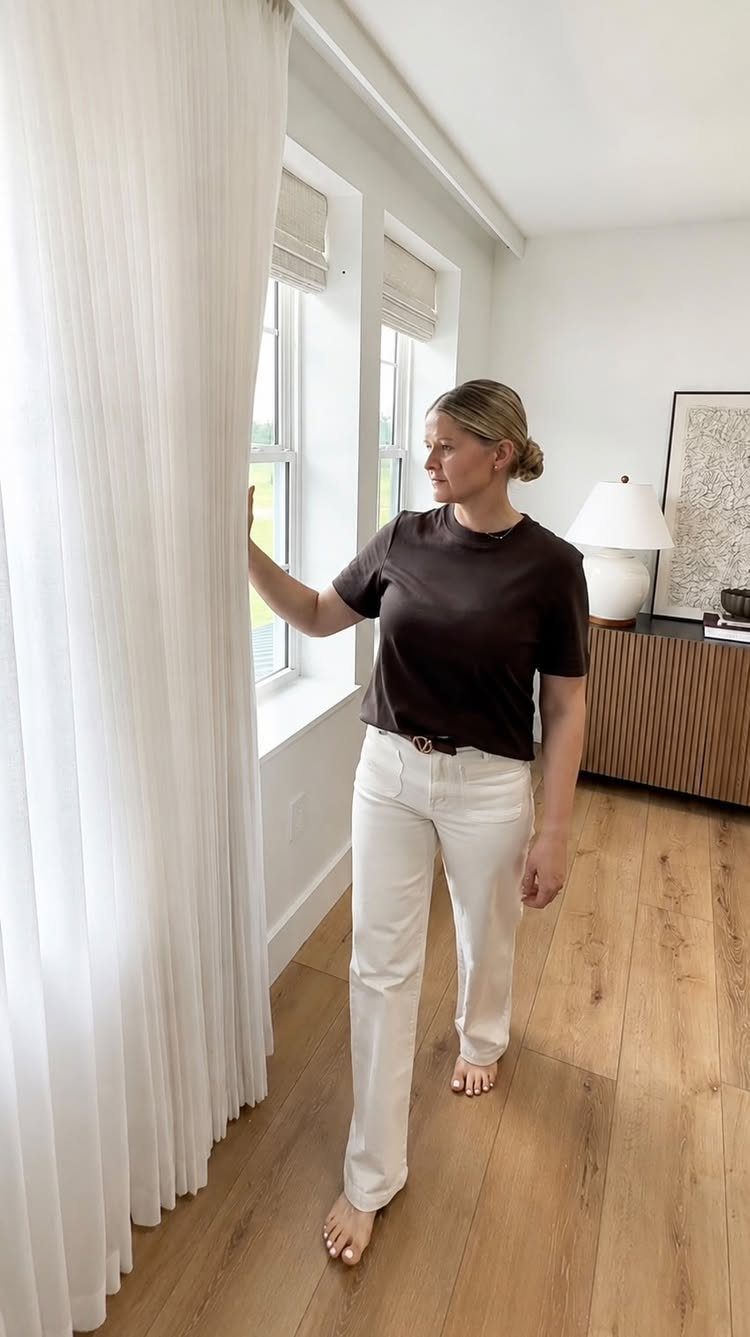
Linen curtains filter light gently, so you get privacy during the day and a soft glow instead of harsh sun.
The fabric wrinkles naturally, which keeps the room from feeling too formal, and it holds up better than cotton in bright windows because the fiber doesn’t break down as fast under UV.
White and natural linen are the easiest to work with.
They go with anything and age well. If your room gets strong sun, expect the fabric to fade slightly over a few years, but linen fades evenly and still looks good.
5. Combination 1: Sheer + Blackout Panel
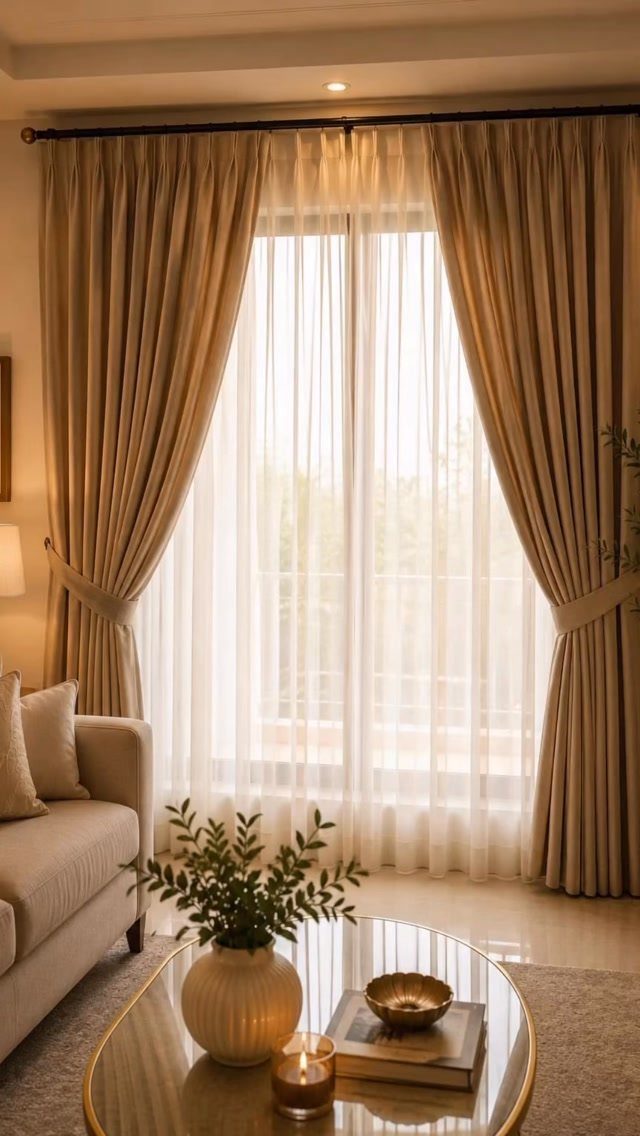
The sheer stays closed during the day for diffused light and privacy, and the blackout panel pulls across when you need to cut glare on a TV screen or block afternoon heat.
You can use each layer separately or close both at night for full darkness.
This setup works best on a double rod so each panel moves independently.
If you use a single rod with rings, the sheer tends to get tangled behind the heavier panel, and you’ll spend more time adjusting them than you want to.
6. Deep Pinch Pleat Curtains

Pinch pleat curtains are gathered into deep, stitched folds at the top, which gives the header structure and makes the fabric hang in clean vertical lines instead of bunching or sagging.
The pleats are sewn down from the top edge and spaced along the width to create that structured, tailored look.
This style works best with heavier fabrics like linen, cotton velvet or lined cotton because the weight helps the pleats hold their shape.
Light sheers don’t have enough body to make the folds look intentional, and the header ends up looking limp.
7. Curtains Paired with Woven Shades
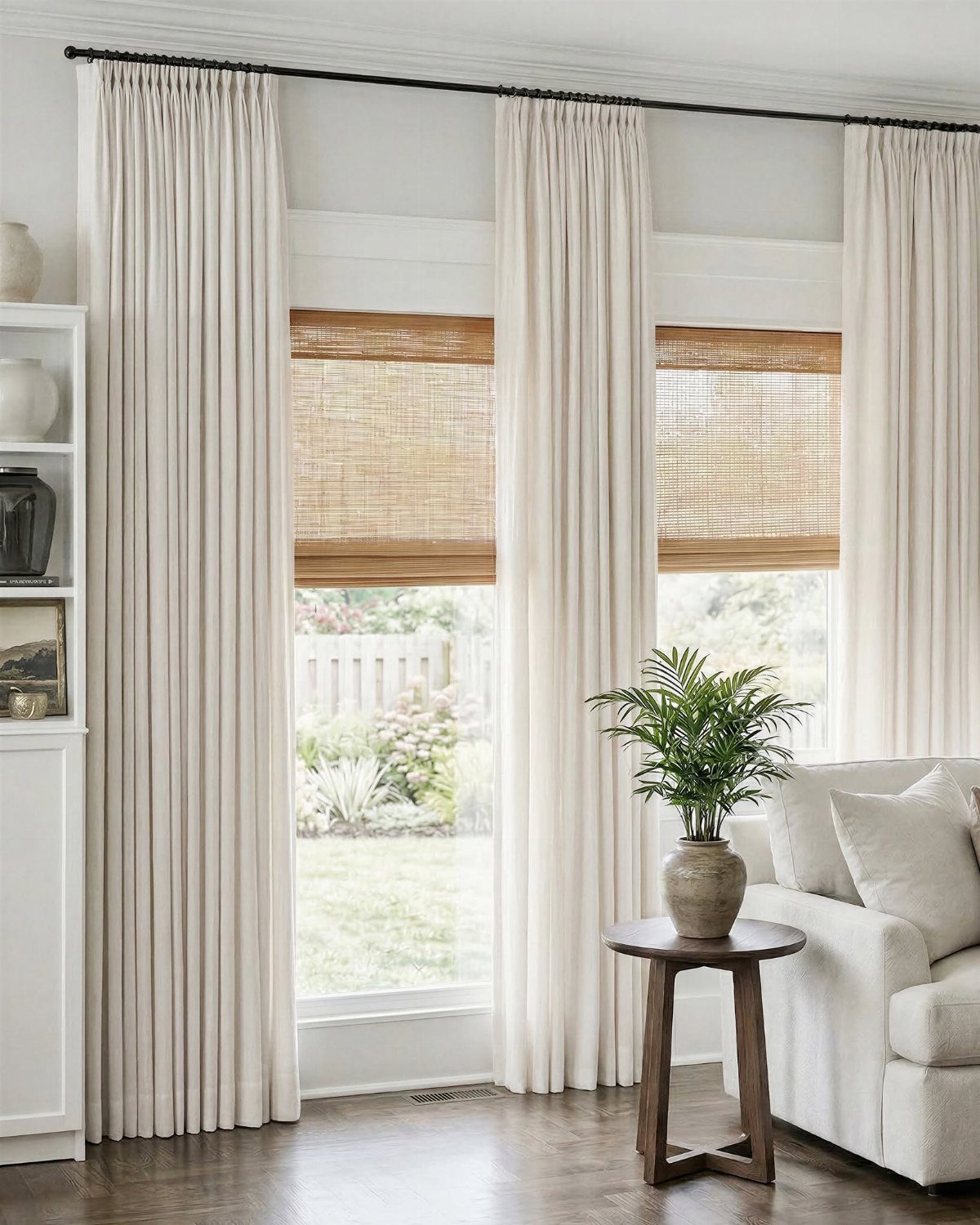
Woven shades give you privacy and light control without blocking the window entirely, and pairing them with curtain panels on each side softens the harder texture of the shade.
The panels frame the window and add fabric weight to the room, while the shade does the work of filtering sun or blocking it out when lowered.
This setup keeps the window functional without losing wall space to stacked fabric. When the shade is up, the curtains stay where they are and the view stays open.
8. Curtains Layered Over Roman Shades
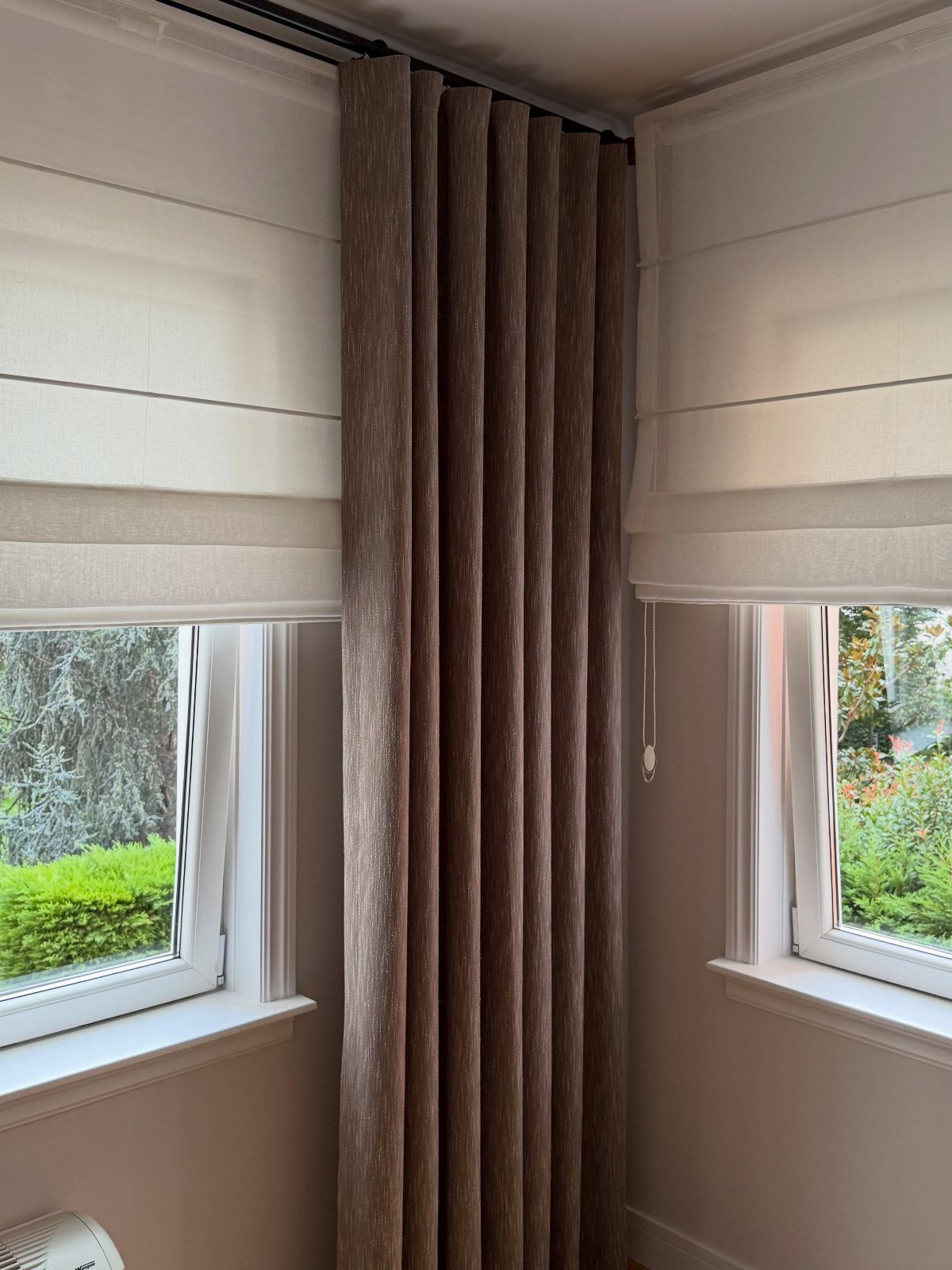
Placing curtain panels between two windows instead of on each one separately ties the wall together and makes the space between the windows feel intentional.
The Roman shades handle light control on each window independently, and the center drape adds height and color without doubling your fabric cost.
If your windows sit close together, this layout saves you from crowding too many panels into a narrow span. The single drape in the middle anchors the wall and keeps the setup from looking fussy.
9. Ornate Drapery with Decorative Tassels
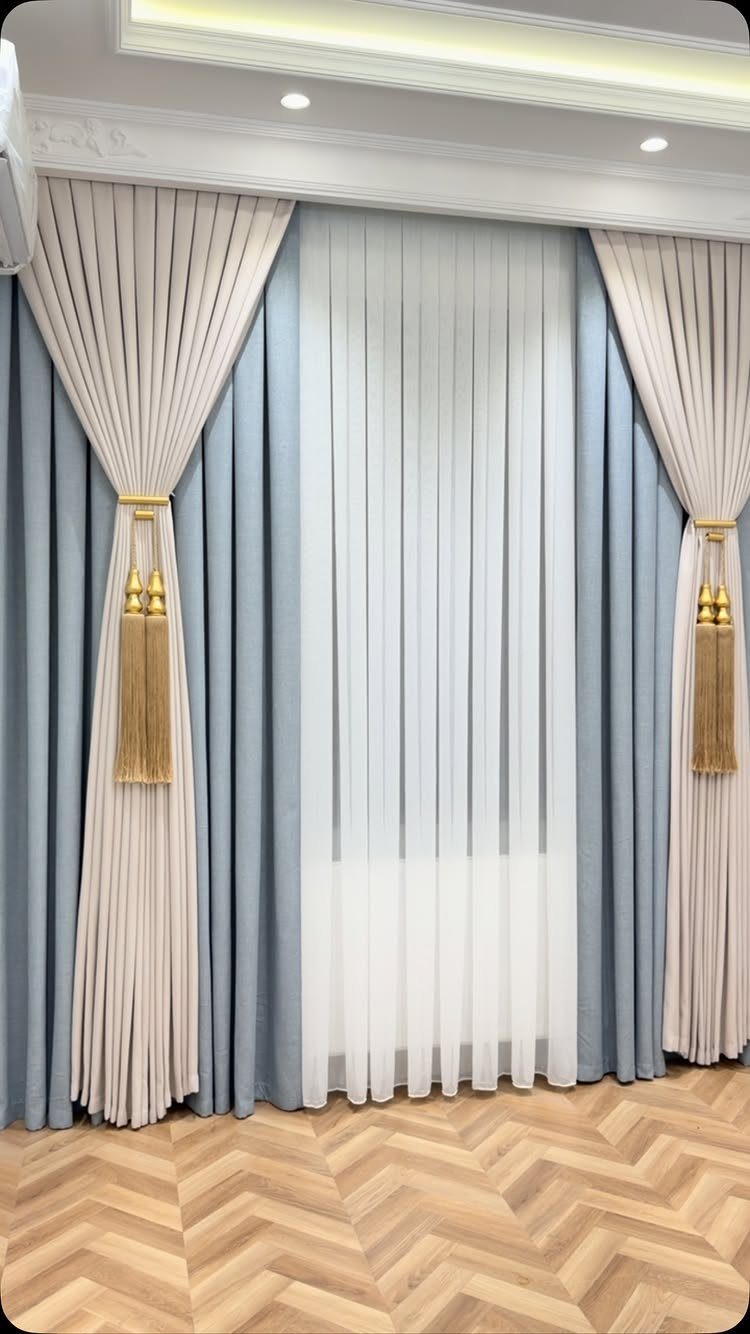
Layered drapes in 2 coordinating colors, held back with tassel tiebacks, give you a formal look that still works in a casual room if the colors stay soft.
The tassels add detail without pattern, and they hold the fabric in a controlled curve instead of letting it bunch.
This style reads traditional, so it pairs best with rooms that already lean that way. If your furniture is modern or minimal, the tiebacks and the layered fabric will feel out of place.
10. Subtle Patterned Drapery
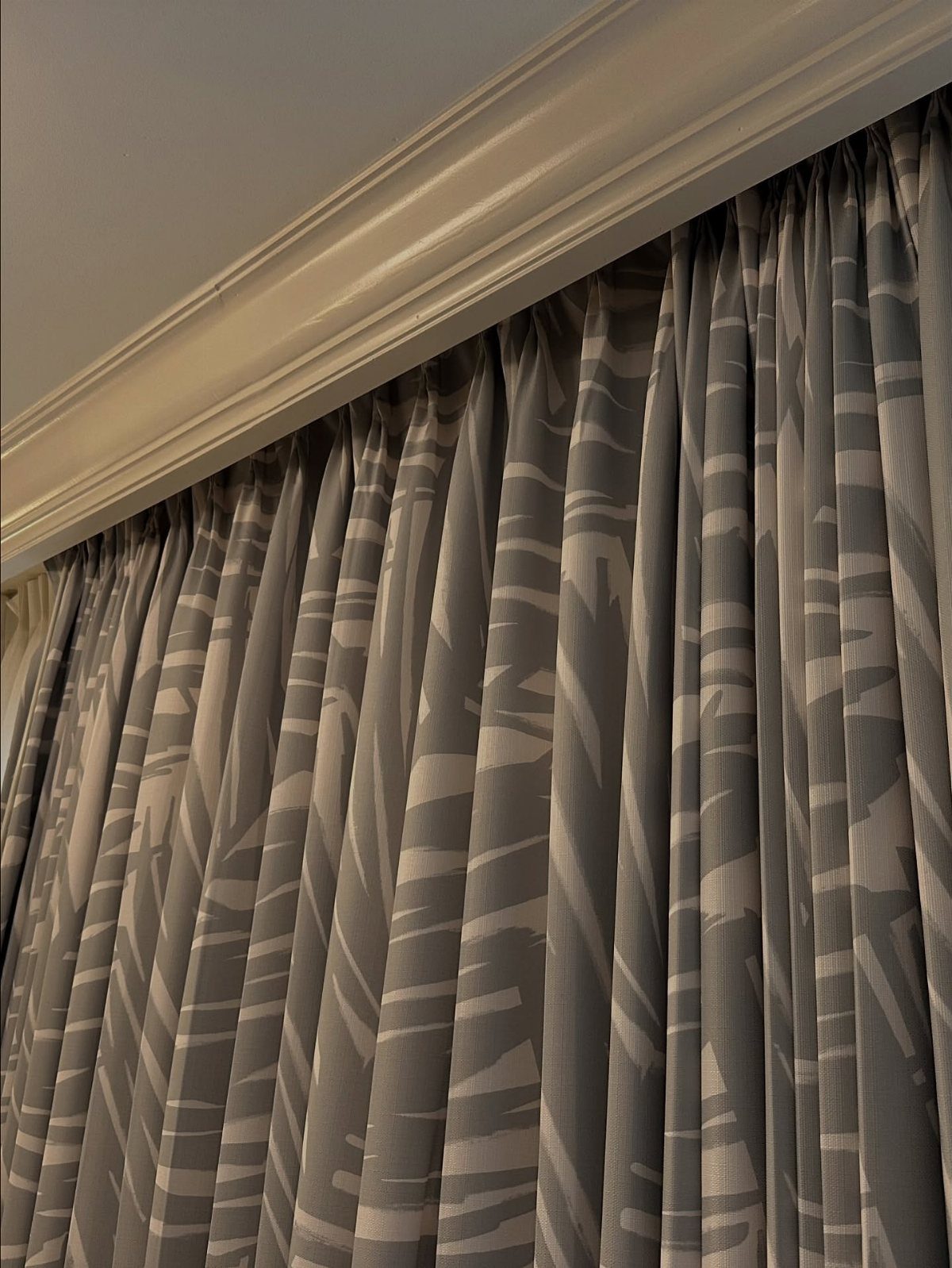
A small-scale pattern on curtains adds texture to a room without competing with furniture or art.
Tone-on-tone prints like a leaf motif in grey on grey fabric give you movement and detail that show up close but read as solid from across the room.
This option works well if you want pattern but your sofa, rug or throw pillows already carry the bold prints. The pattern stays quiet enough that your furniture and art hold the room’s attention.
11. Soft White & Lightly Filtered Tones
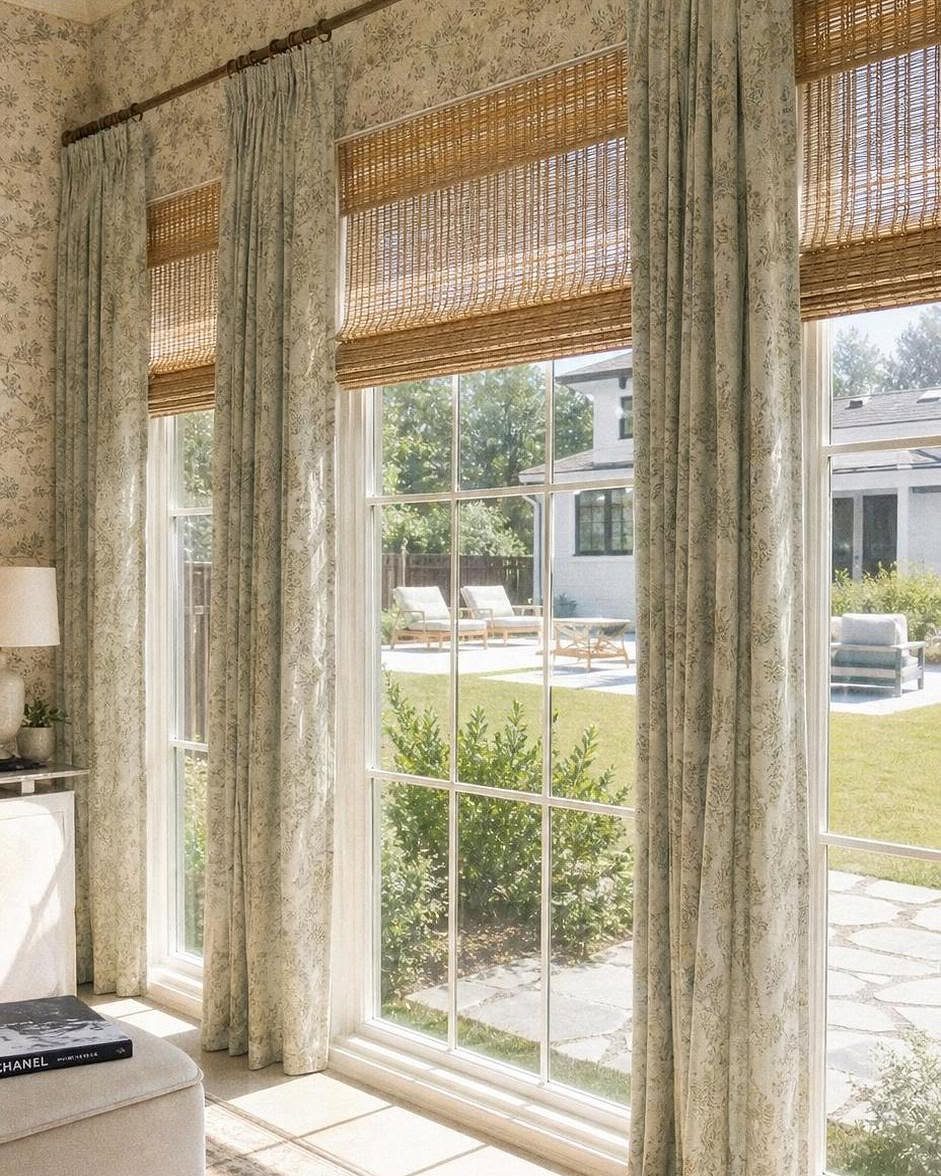
White and cream curtains paired with natural woven shades keep a room light and cohesive, especially when the walls, trim and furniture stay in the same range.
The curtains filter glare without adding color, and the shades bring in texture where the fabric doesn’t.
This palette makes small rooms feel larger because there’s no visual break between the window treatment and the walls. If you want contrast or a focal point, this isn’t it, but for a bright, open look it’s hard to beat.
Whatever, there’s no denying that curtain colors play an important part in all your rooms’ interior design. And the decision you make is likely to be one you live with for a long while, so investing the time to choose well is worth it.
Measuring for Curtains
Measure the window width first, then multiply by 2 to 2.5 to get the fullness you need for the panels. That extra fabric creates fullness when the curtains are closed instead of pulling flat across the glass.
I hang most rods 4 to 8 inches above the frame, so that’s where my tape measure starts.
Curtain Maintenance
Cotton curtains usually go in the machine on a gentle cycle with low heat in the dryer, which makes them the easiest option if you want to wash panels at home.
Linen often needs a cold wash or professional cleaning because it wrinkles heavily and can shrink if the water is too hot.
The fabric doesn’t hold up to water, and velvet in particular will crush or lose its nap if you try to machine wash it.
Check the label on blackout and thermal linings before you wash them. Some are machine-safe, others are spot-clean only, so check the tag before you commit to a fabric you can’t maintain yourself.
Light Control Options
Sheer curtains work well in rooms where you want brightness during the day and don’t need privacy after dark, or where the view is worth keeping visible.
Light-filtering fabric softens the sun but keeps the room bright, and that’s what I reach for most often in a living room.
The catch: they look solid in daylight but turn transparent at night once you switch the lights on, so privacy disappears after dark.
Blackout fabric stops glare completely, and that matters if you’re watching a large screen or if afternoon sun lands right on it. They also block heat better than lighter fabrics.
Frequently Asked Questions
How to pick out the right curtains?
Start with what the room needs before you look at style: light control, privacy after dark, or heat blocking.
Once you know the function, match fabric weight and opacity to that need, then measure for panels that are 2 to 2.5 times your window width so they look full when closed.
Style comes last, after you’ve narrowed the options that actually work in the space.
What is the rule of thumb for curtains?
I hang the rod 4 to 8 inches above the frame and let it stick out past both edges so fabric clears the glass when you pull it open.
Buy panels that add up to 2 to 2.5 times your window’s width so you get enough fabric to look full. This makes the window look larger and the ceiling read taller without changing the trim.
What is the trend for living room curtains?
Layering a sheer or shade with a heavier drape gives you flexibility to adjust light and privacy independently instead of settling for one fixed level.
A double rod or pairing curtain panels with woven or Roman shades keeps the setup functional without crowding the wall with fabric. The layers work separately or together depending on the time of day.
How to choose luxury curtains for a living room?
Look for something with weight, cotton velvet or lined linen, that falls straight and holds its shape.
Add a header that holds its shape, pinch pleats work well, and let the hem sit right at the floor or pool an inch past it. The weight and tailoring read more finished than light cotton or synthetic blends.






