
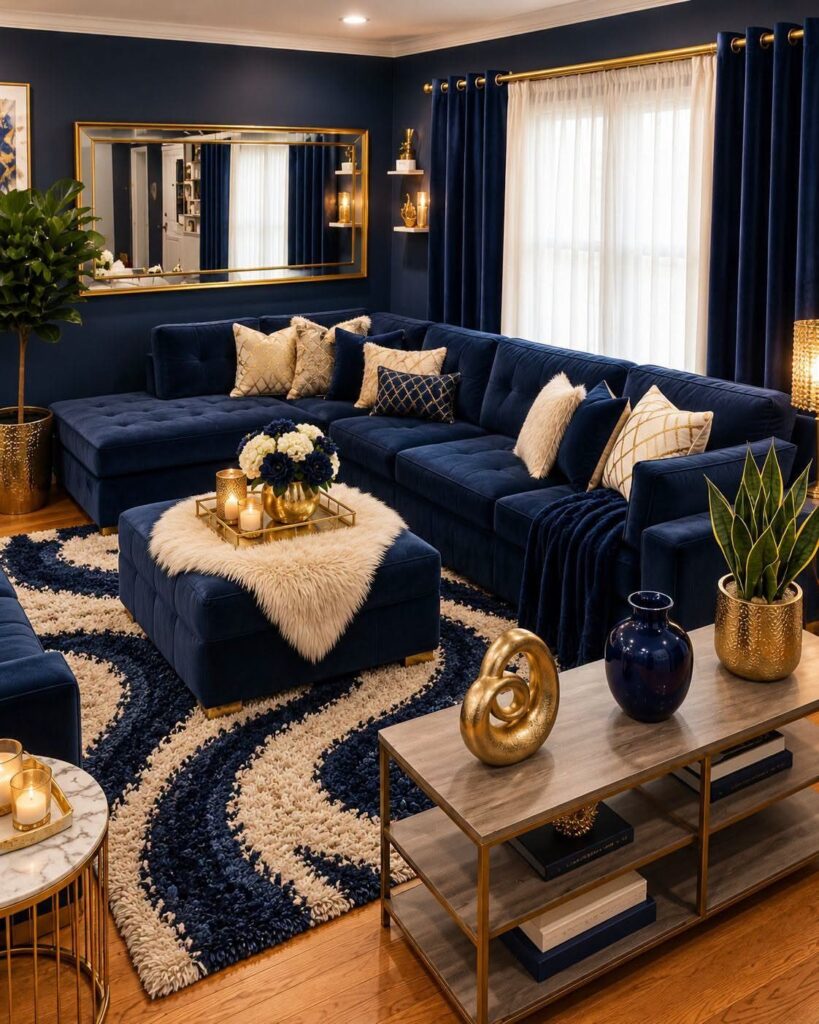
Navy works whether you want one anchored piece, a whole room wrapped in color, or something in between like curtains or a painted ceiling.
A navy sofa or accent chairs give you saturated color without requiring extra lamps, while navy walls or a ceiling need layered lighting at multiple heights to keep the room from going flat.
If you are testing it for the first time, pillows give you a low-risk way to see how the blue reads in your space before you paint a wall or order a sofa.
Sample any navy paint on a board and check it morning through evening, because undertones shift more than you expect.
1. Navy Statement Sofa
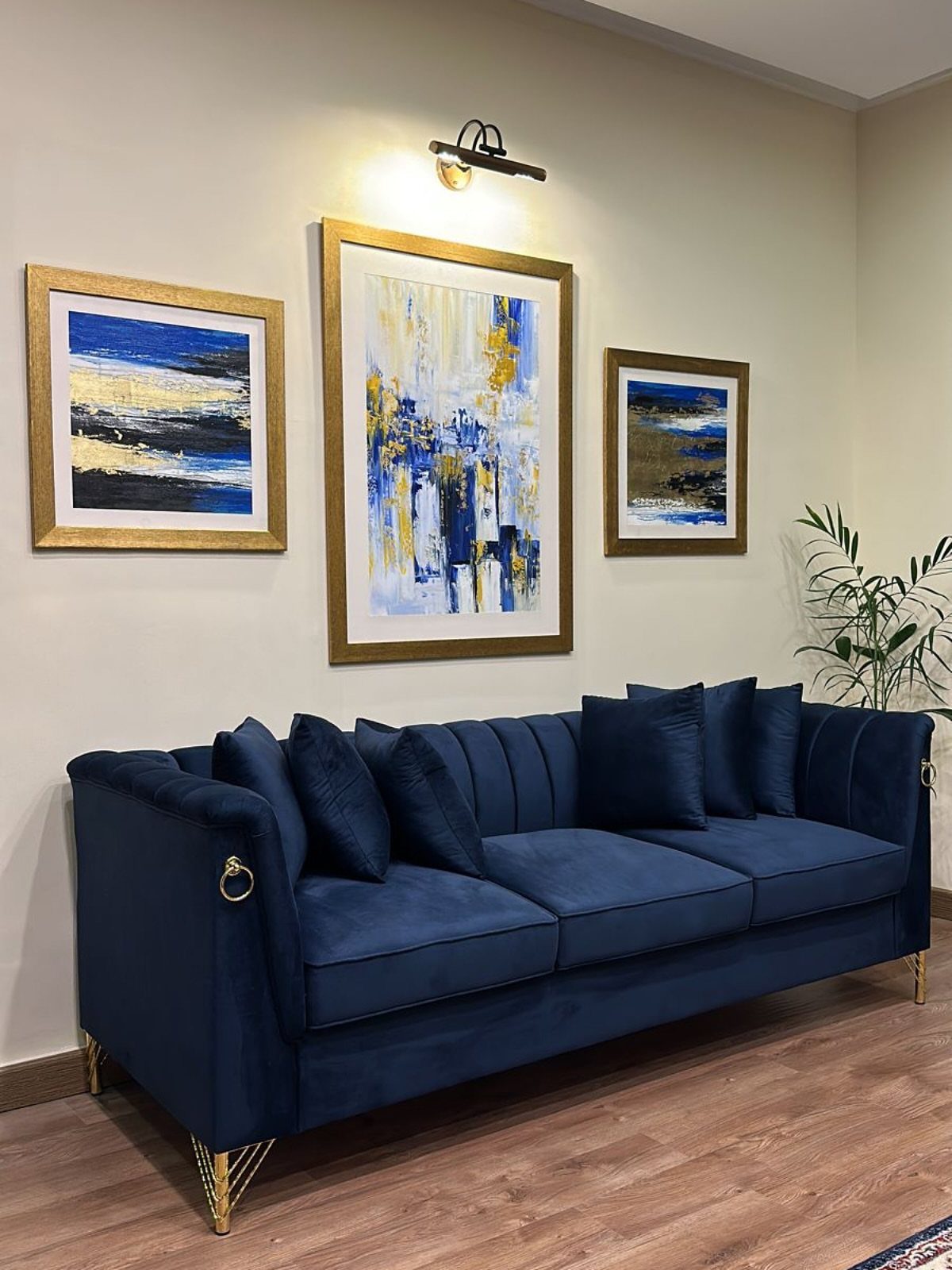
A navy sofa anchors the room and gives you a piece that holds color without needing pattern or busy upholstery.
Velvet adds depth because the nap catches light differently depending on the angle, so navy reads richer than it would in a flat weave.
Gold or brass legs lift the profile and keep the sofa from sitting heavy on the floor. If your space leans neutral everywhere else, this is where one saturated piece does the work.
2. Navy Walls
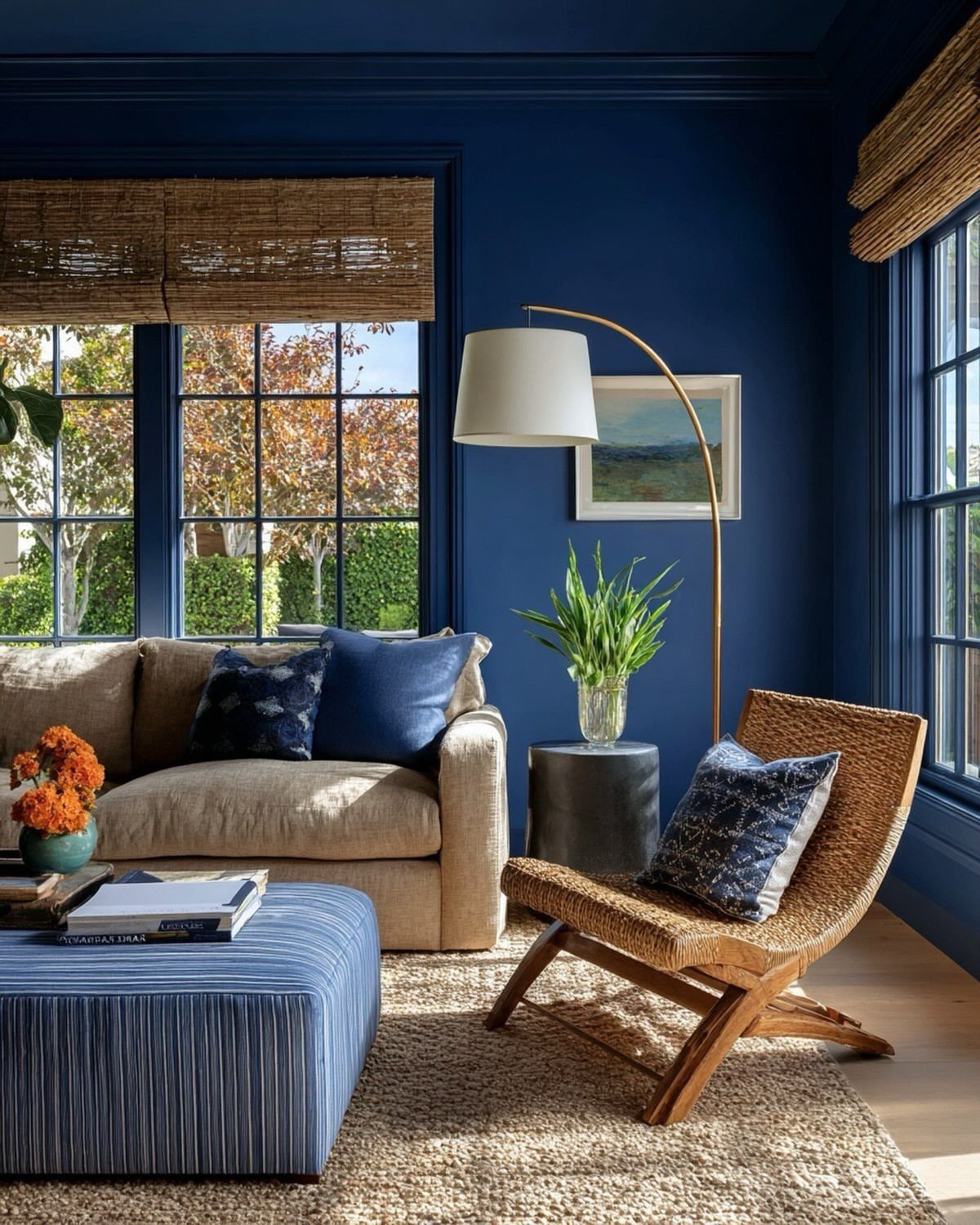
Painting all 4 walls navy turns the room into a wrapped space that feels smaller in footprint but taller in mood.
The color recedes instead of closing in if you keep the ceiling white or off-white and let natural light hit at least one wall during the day.
Lighter furniture reads clearer against the dark field. A beige or linen sofa, blonde wood, and woven textures all stand out more than they would on a pale wall.
The room holds its own temperature, and that makes it feel separated from the rest of the house in a way some people want in a living room.
3. Navy Curtains
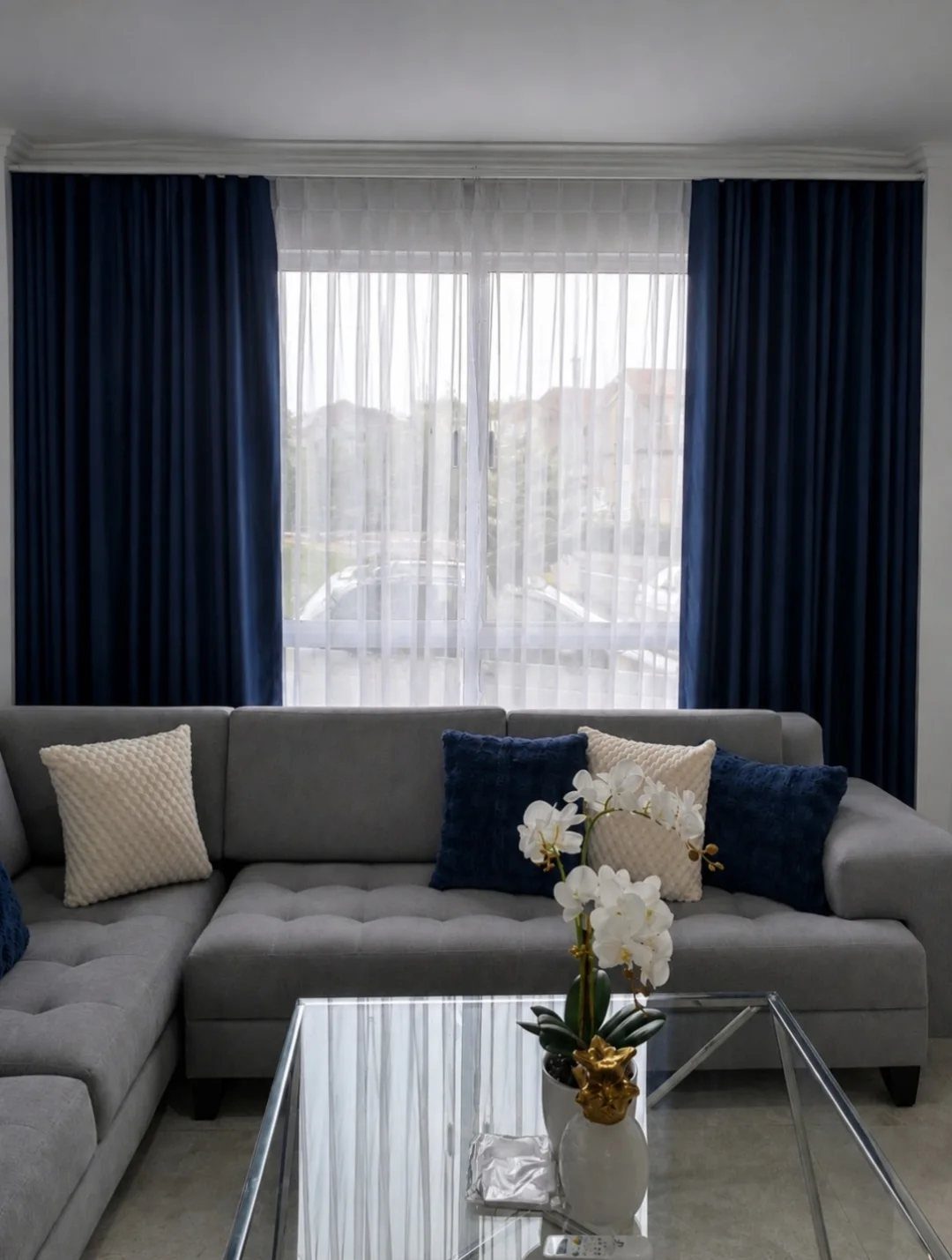
Curtains in navy frame the window without blocking the view, and they add color in a spot that is often left neutral.
Pair them with sheer white panels behind if you want privacy during the day and the option to filter light without cutting it entirely.
Full-length panels that run floor to ceiling make the window look taller. If your sofa or chairs sit neutral, the curtains carry the navy so the room does not need it everywhere else.
4. Navy Ceiling
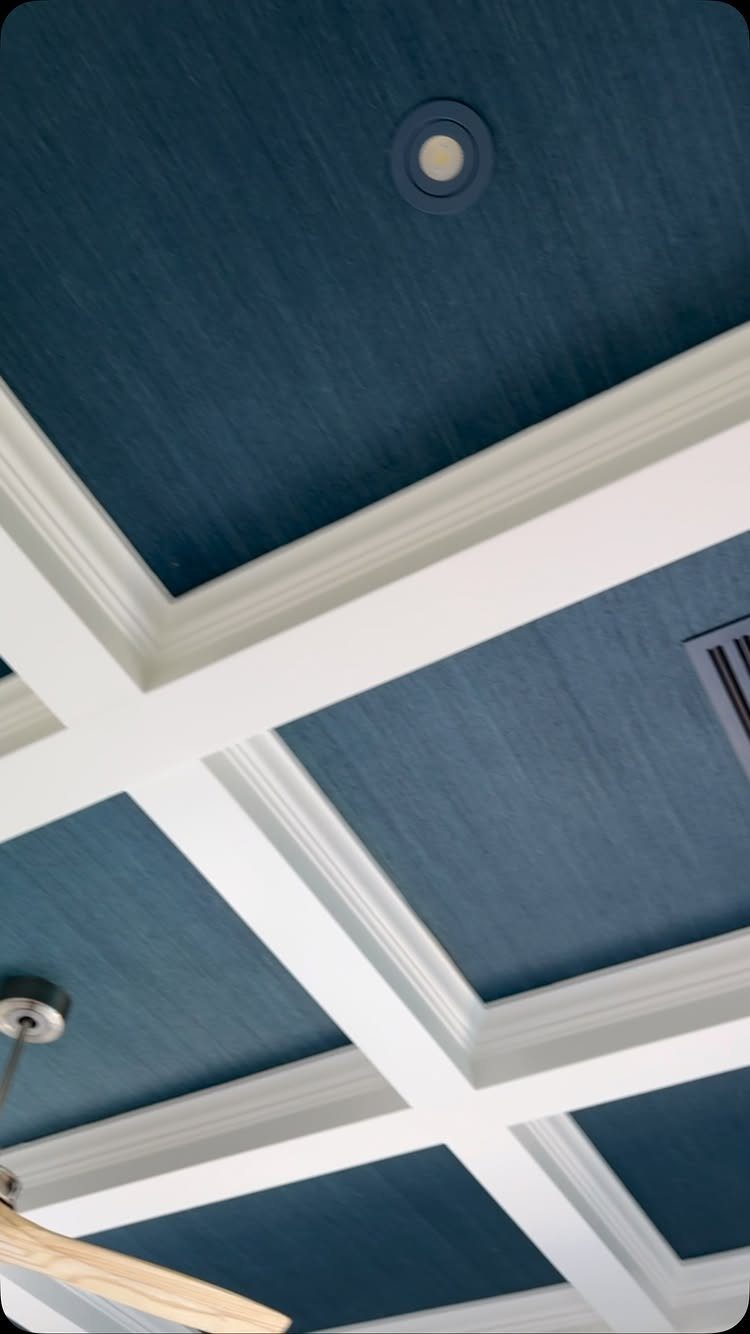
Coffered ceilings with navy panels between white beams flip the usual expectation and put the color overhead instead of underfoot.
The contrast makes each recess read as its own square, so the ceiling becomes part of the room’s architecture instead of a surface you ignore.
This works best in a room with enough height to handle the visual weight. A recessed light in each coffer keeps the navy from going too dark.
5. Navy and Brass
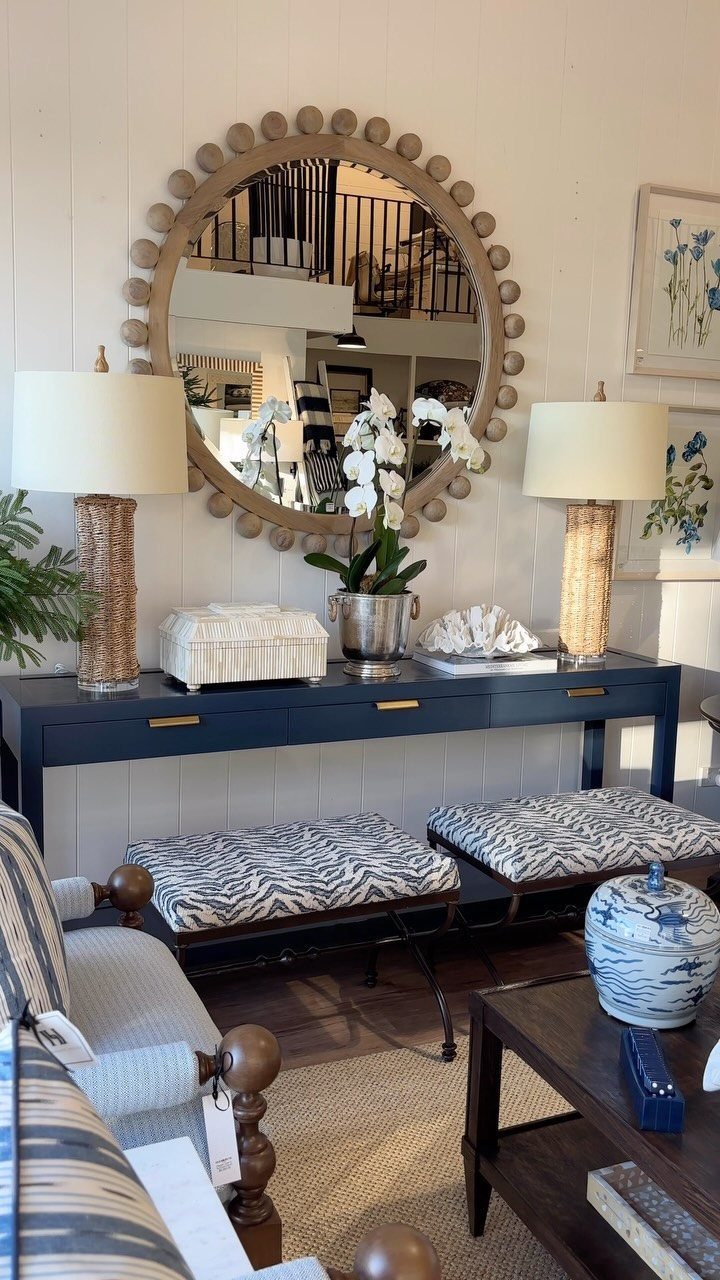
Brass hardware on navy furniture gives you a warm metal that does not compete with the blue the way chrome or nickel might.
The combination works because brass has yellow in it, and that sits opposite blue on the wheel without clashing.
A console table in navy with brass pulls or leg caps brings the pairing into the living room without committing a whole sofa or wall. Top it with a brass-framed mirror or lamp, and the room holds a consistent thread.
6. Navy Built-ins
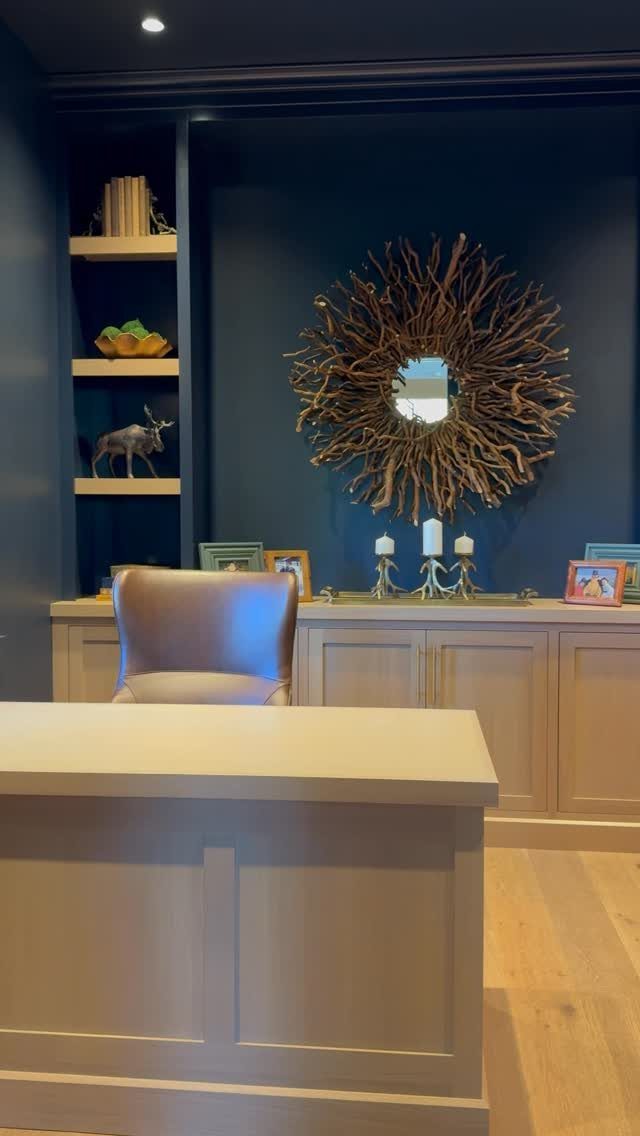
Built-ins painted navy make storage part of the room’s color scheme instead of something you try to hide or match to the trim.
The shelves and cabinets become the backdrop for whatever you put on them, and lighter objects read sharper against the dark interior.
Leaving the desk or countertop in natural wood or white keeps the built-in from going monochrome.
If the rest of the room is light, this gives you one anchored wall that organizes the space and holds the navy in one spot.
7. Navy Accent Chairs
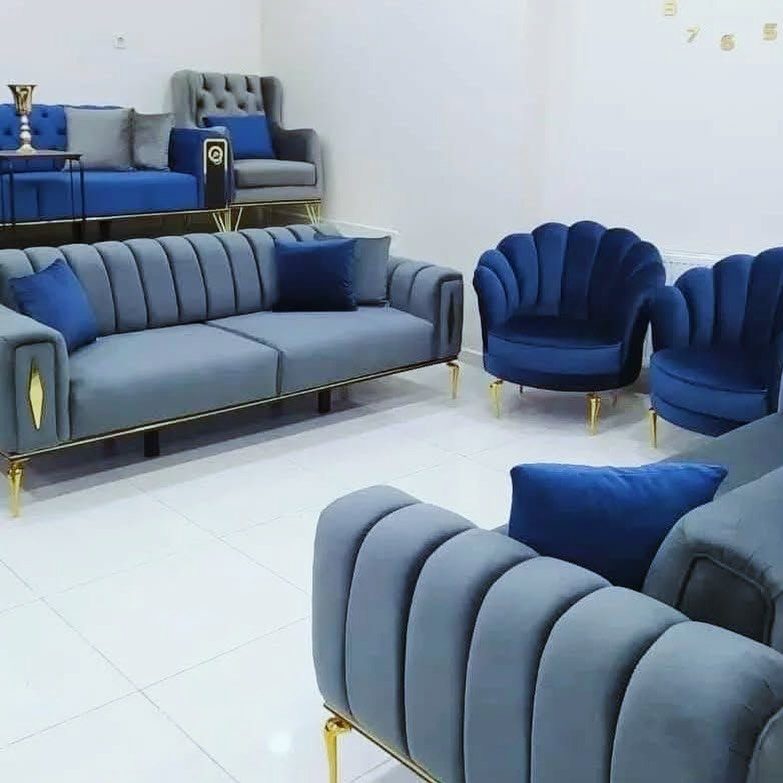
Shell chairs in navy velvet bring sculptural shape to a corner or flanking spot without the visual weight of a full sofa. The curved back sits lower than most upright chairs, so they read open even in a small room.
Gold or brass legs keep the base light and tie the chairs back to hardware elsewhere in the space.
If your sofa already runs neutral, 2 accent chairs let you add navy in a pair that balances the room without covering every seat.
8. Navy Blue Area Rug
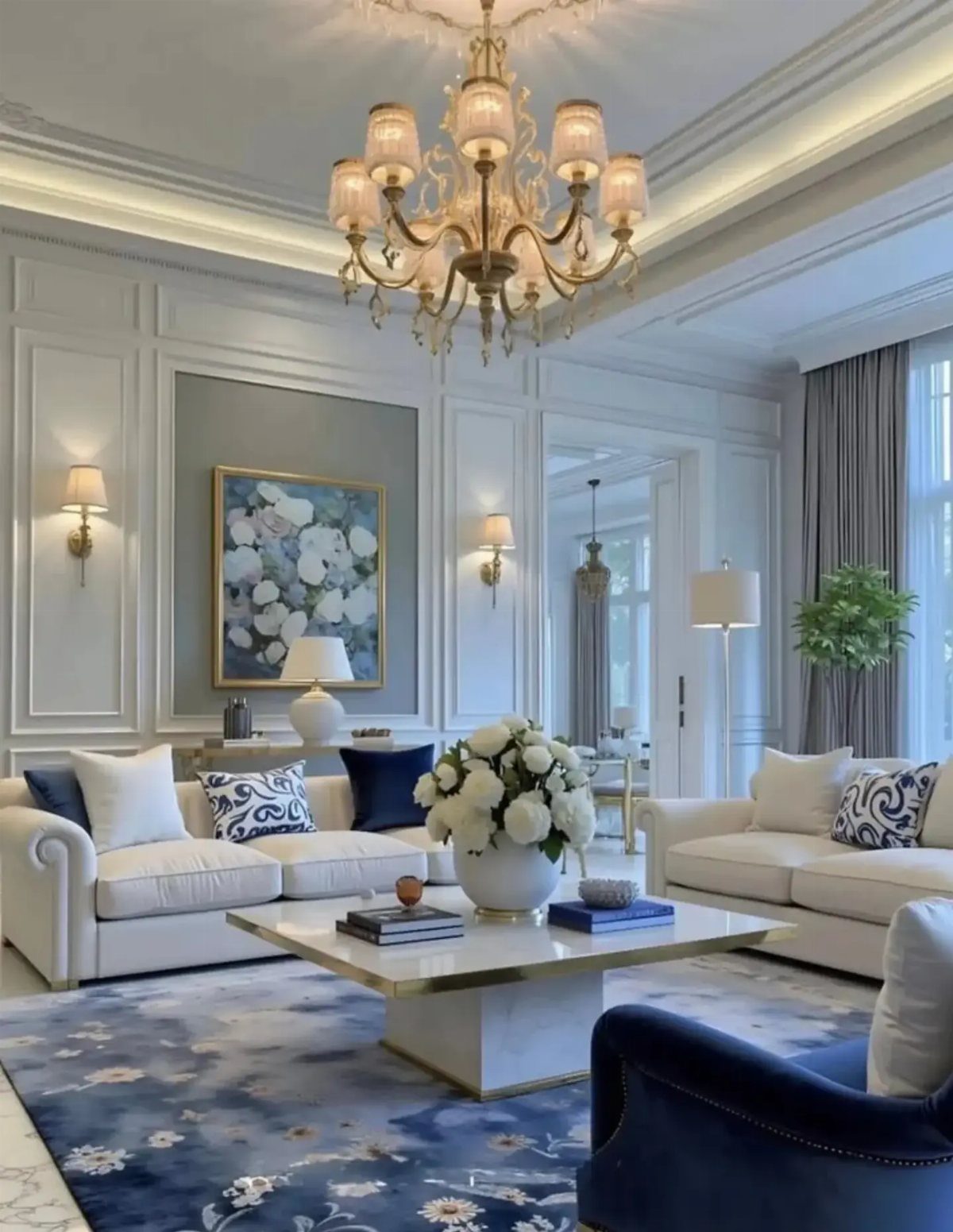
A navy rug with a floral or botanical pattern grounds a light room and gives the floor a layer that pulls focus without requiring dark furniture.
White or cream sofas stay crisp against the contrast, and the rug defines the seating area when the walls and trim run pale.
Size it so the front legs of your sofa and chairs sit on the rug. That keeps the furniture visually tied together instead of floating around the perimeter.
9. Navy Blue Accent Pillows
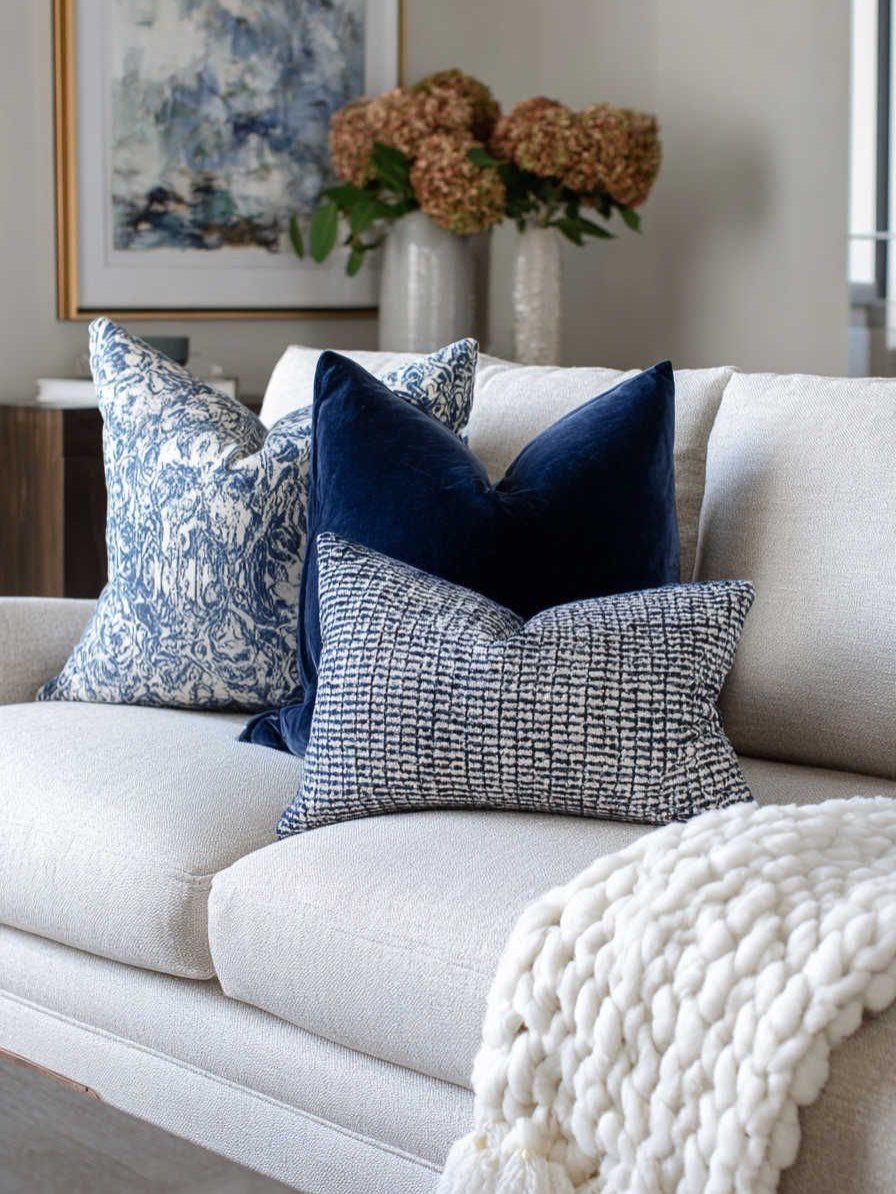
Pillows are the fastest place to test navy if you are not ready to commit a sofa or wall.
Mix solid velvet with patterned linen or cotton, and vary the sizes so the arrangement does not look like a matched set.
On a grey or beige sofa, navy pillows give enough presence to register as intentional color when you use enough of them to balance the neutral base.
Layer in one cream or white throw to soften the line without losing the contrast.
10. Navy Blue LED Lighting
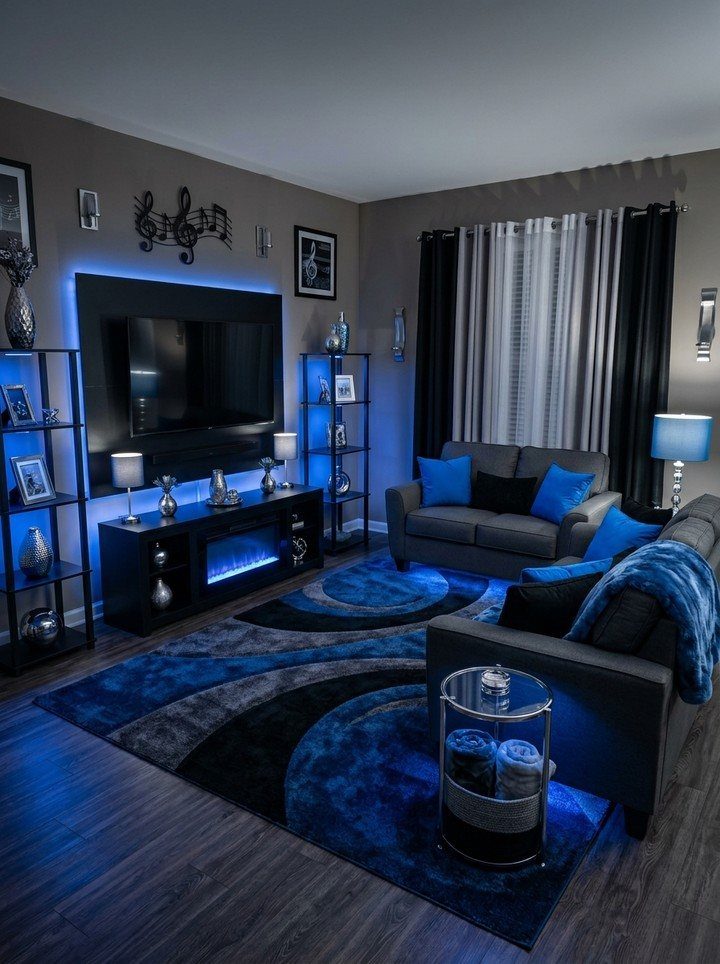
LED strips set to navy wash the wall behind the TV or the underside of a console in colored light that changes the room’s mood without permanent installation.
The glow works best in a space where the furniture and walls stay neutral, so the blue reads as an accent rather than competing with existing color.
Most strips come with a remote that lets you adjust brightness and switch colors when you want a different effect. Mount them out of direct sight so you get the glow without seeing the diodes.
11. Navy with Earthy Tones

Pairing navy with rust, terracotta, camel or warm taupe softens the blue and keeps the room from reading too cool. The combination works because the warm tones bring yellow and orange undertones that sit opposite blue and add balance.
Start with a navy sofa and layer in pillows, throws or a pouf in earthy shades. Natural wood furniture and woven textures like jute or linen continue the warm thread without adding more color.
Navy Color Versatility
Navy pairs as easily as grey or beige because it sits dark enough to work as a neutral base but still registers as color.
Metallics find their footing against navy because the contrast is strong enough to let brass, gold, or brushed nickel read clearly. The blue does not compete with the metal the way a softer neutral might blur the line.
Navy flatters warm light.
Under incandescent bulbs or evening lamps, it turns richer instead of going flat or cold. That makes it more forgiving than charcoal in a living room where most of your hours happen after dark.
It does not date the way trend colors do. Navy does not tie itself to a single decorating moment the way trend colors do, which is one reason it ages well.
Lighting Considerations
Navy absorbs light instead of reflecting it, so a navy living room needs more sources than a pale one would.
Layer in table lamps, floor lamps, and sconces at different heights so the light reaches multiple planes instead of pooling in one spot.
Warm bulbs keep the blue from going cold.
A 2700K or 3000K temperature brings out the richness in navy instead of turning it flat or grey. That difference matters more in a dark room than it does on white walls.
A mirror on the wall opposite a window bounces daylight back into the room and makes the space feel brighter. That helps a navy space stay readable without relying entirely on artificial sources after the sun moves.
If your living room does not get strong natural light, keep navy on one or 2 surfaces instead of wrapping the whole room. A sofa or accent wall gives you the color without requiring as much correction from lamps.
A navy blue living room has the power to take a casual space to a contemporary and elegant one.
Testing Navy Shades
Navy shifts more than any other color between the paint chip and the wall because it sits dark enough that undertones take over in low light.
A color that looks warm and inky on the card can turn flat or violet once it covers 4 walls in low or indirect light.
Sample the paint on a large board or directly on the wall, and check it at different times of day.
Morning light, afternoon sun, and evening lamps all pull different tones out of the same navy. If it goes too dark or too cool in your actual lighting, move one shade lighter or warmer before you commit the whole room.
The same rule applies to fabric. A navy sofa in a showroom sits under bright retail lighting that does not match your living room.
Ask for a swatch and bring it home so you can see it next to your flooring and in your natural light before you order.






