The choice depends on your budget, whether you’re renting, and how much construction you’re willing to take on.
A painted accent wall takes a gallon and a weekend, while a recessed niche or sliding panel means drywall cuts and framing but pulls the screen into the architecture.
1. Integrated Fireplace TV Wall
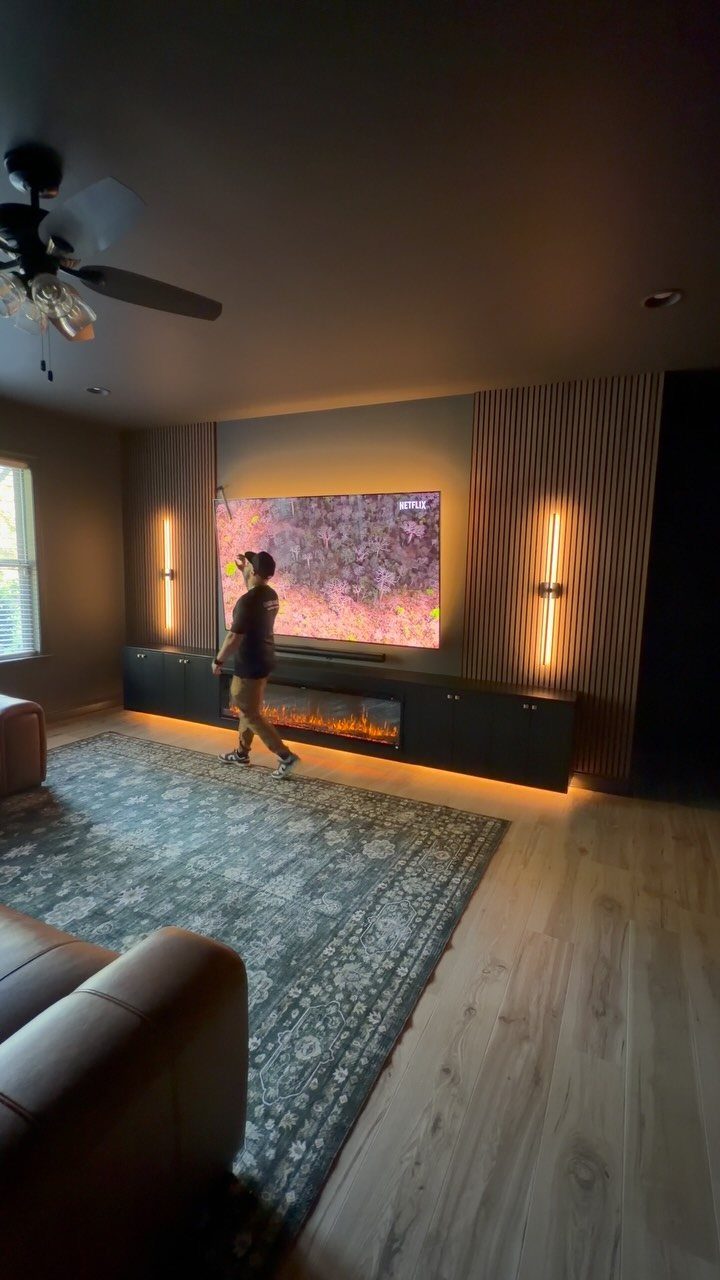
Mounting the TV above a linear fireplace gives you a focal point that works year-round.
The heat stays low enough that most wall-mounted TVs handle it fine, though I’d leave some clearance between the fireplace opening and the bottom of the screen.
Electric units make this simpler since they mount flush and need only an outlet. Gas fireplaces throw more heat, so check the manual for clearance before you commit to the layout.
This layout makes sense in a room where the seating sits far enough back that you’re not craning your neck to watch.
2. Recessed TV Wall
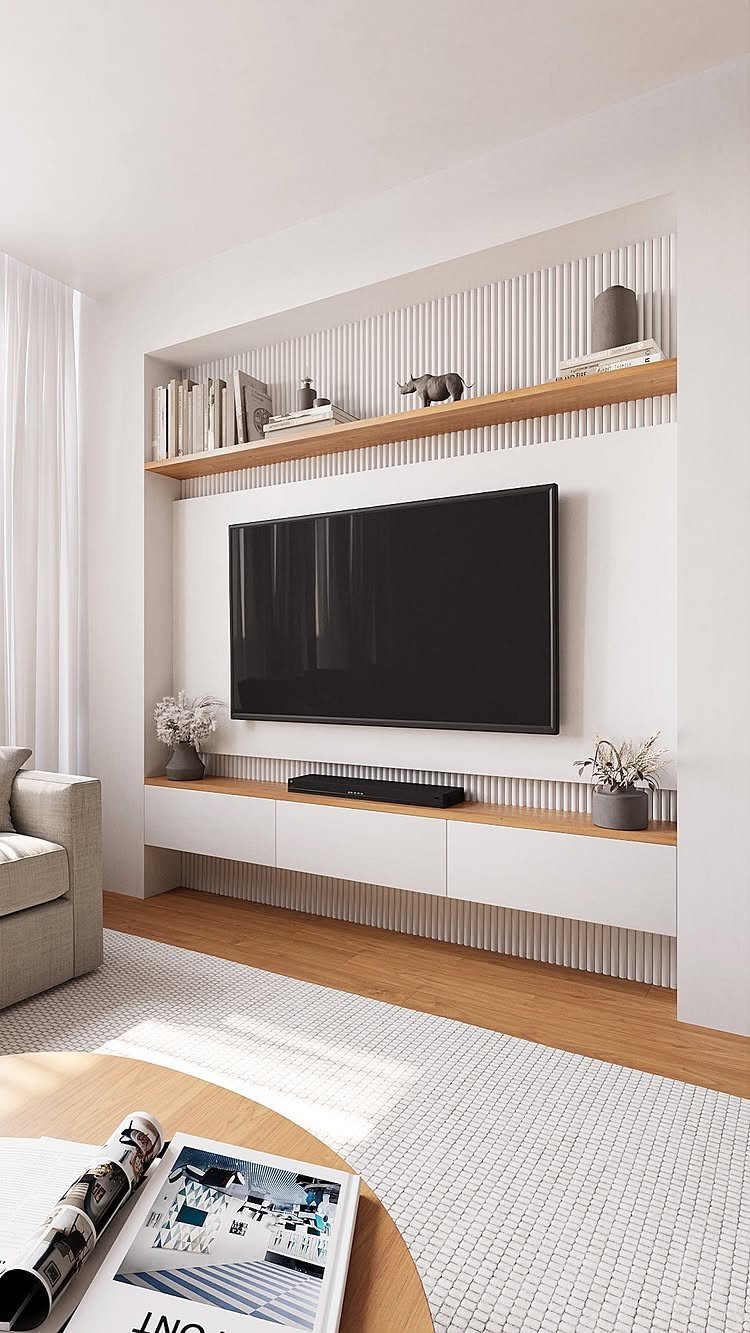
Building a recess into the wall lets the TV sit flush instead of jutting out on a bracket. The look stays clean, and you can run a shelf above it without the screen getting in the way.
Framing the recess takes drywall work, so this suits a renovation or new build more than a quick weekend fix.
Renters can get a similar effect with a deep frame or shadow box built around the TV, though it won’t sit as far back.
If you’re opening the wall anyway, pull the power and cables through before you close it up.
3. Painted Accent Wall
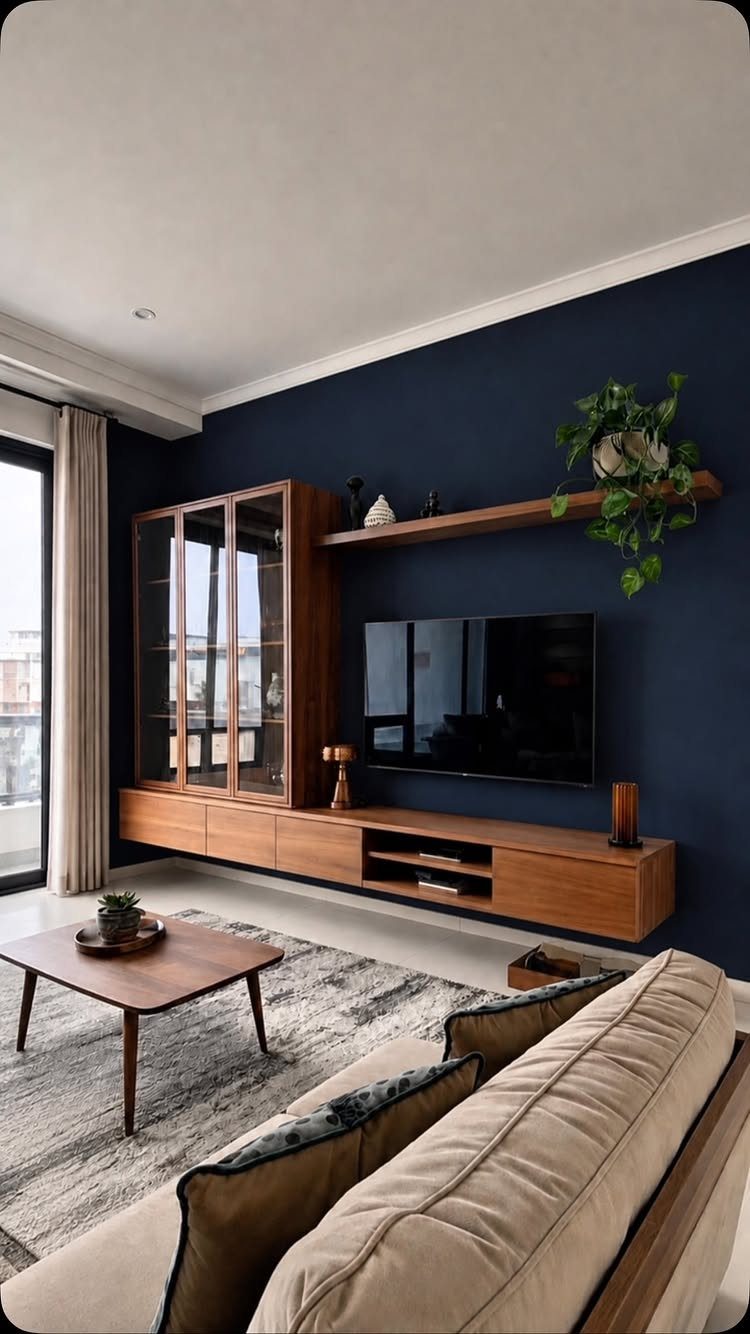
Painting the wall behind the TV a few shades darker than the surrounding walls draws your eye without adding texture or depth.
Dark blue, charcoal, or deep green all work, and the color gives the screen a boundary so it doesn’t float in the middle of white space.
This is the fastest option on the list. A gallon of paint and a couple of hours gets you there, and it’s easy to repaint if you change your mind.
Sometimes, the best thing you can do is distract — and whimsical wallpapers and paint jobs can help you turn a statement TV wall into a standout living room feature.
4. Minimalist Floating Wall Units
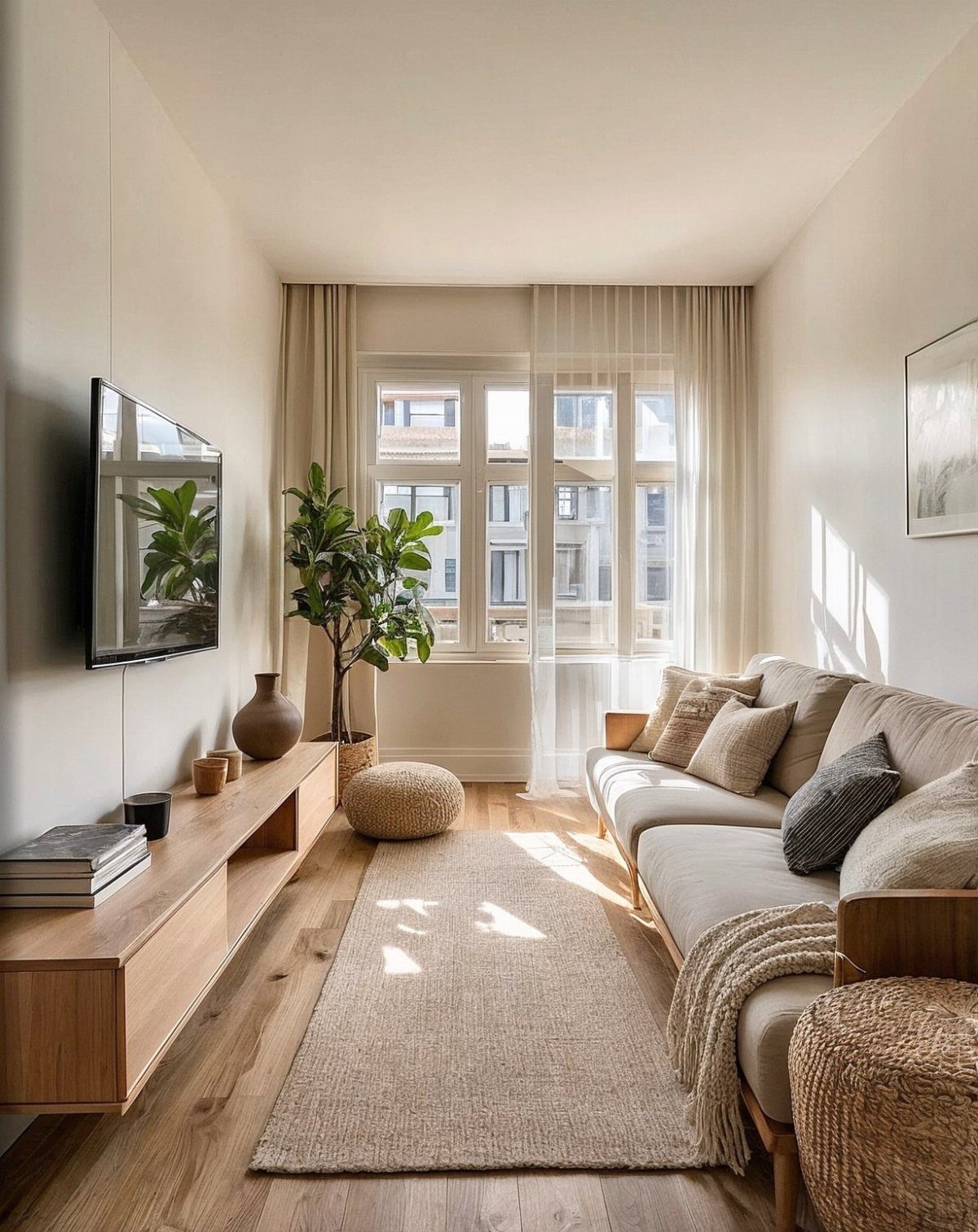
A floating console under the TV keeps the floor clear and gives you storage without the bulk of a full cabinet. The look is light and works in a small room where a heavy stand would crowd the space.
Most floating units mount to the studs with a cleat or bracket hidden inside the cabinet. Make sure the bracket is rated for the weight of the console plus whatever you plan to store inside.
The gap underneath lets you tuck a soundbar or run a robot vacuum through without moving furniture.
5. Wood Paneling
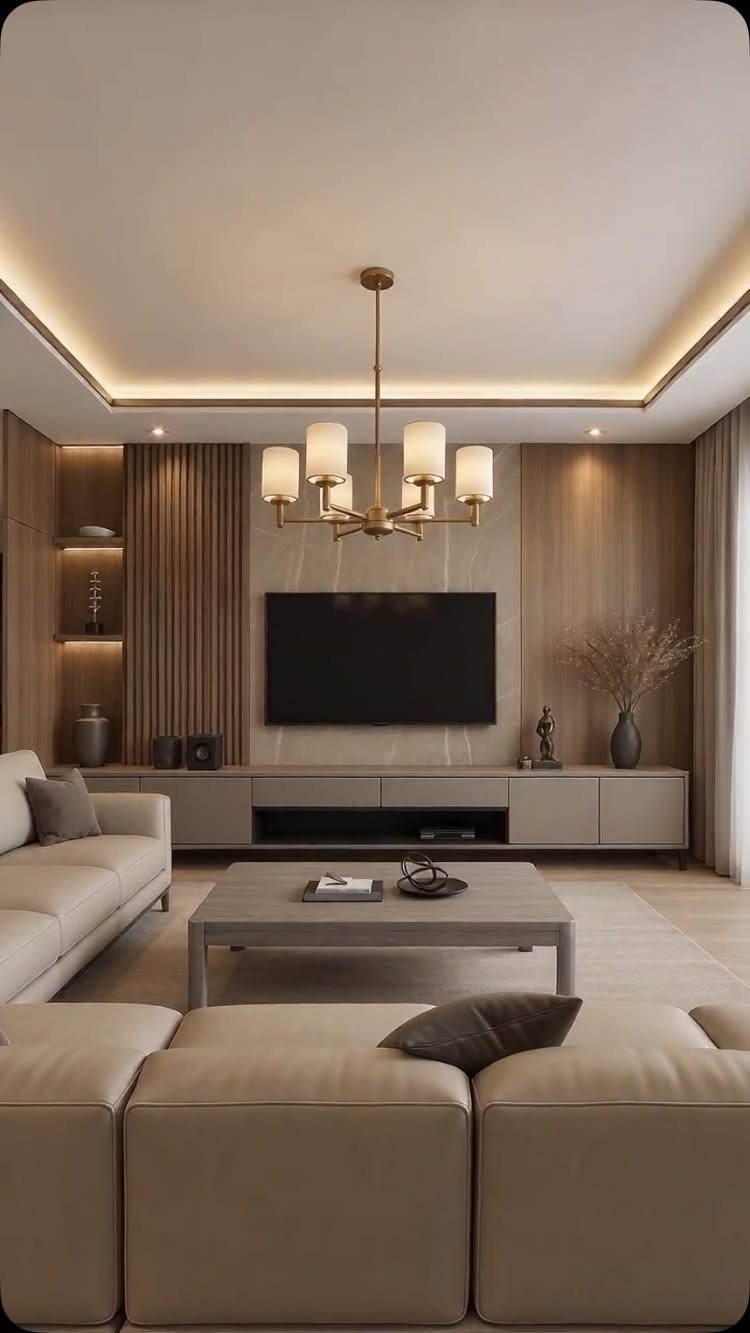
Vertical wood paneling adds warmth and hides the fact that the TV is just hanging on drywall.
The grain runs floor to ceiling, which makes the wall feel taller, and you can stain or paint the wood to match what’s around it.
Tongue-and-groove boards or plywood strips both work. I’d run them over a cleat or furring strips so you have something solid to mount the TV bracket into.
The texture absorbs sound better than a plain wall, which helps if the room echoes.
6. LED-Backlit TV Walls
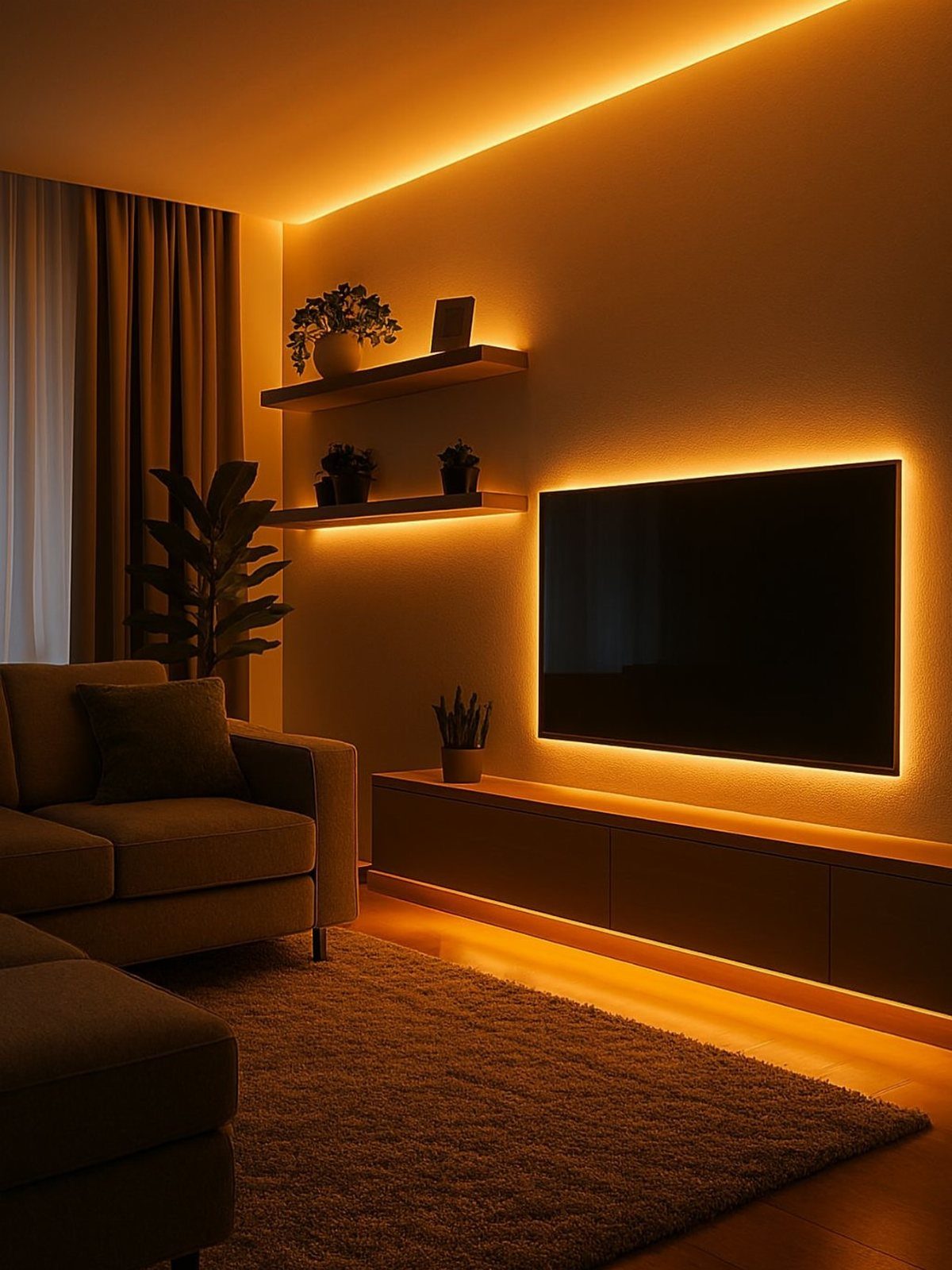
LED strips behind the TV and shelving soften the glow from the screen and add color while staying compact.
The backlighting makes the most sense in a room you use at night, where the ambient light keeps the TV from feeling too bright against a dark wall.
Adhesive LED strips run on low voltage and stick to the back of the TV or the edge of the shelf. Most kits come with a remote so you can change the color or dim them down.
I’d skip this if the room gets a lot of natural light. The effect disappears in bright conditions.
7. TV Above Media Console
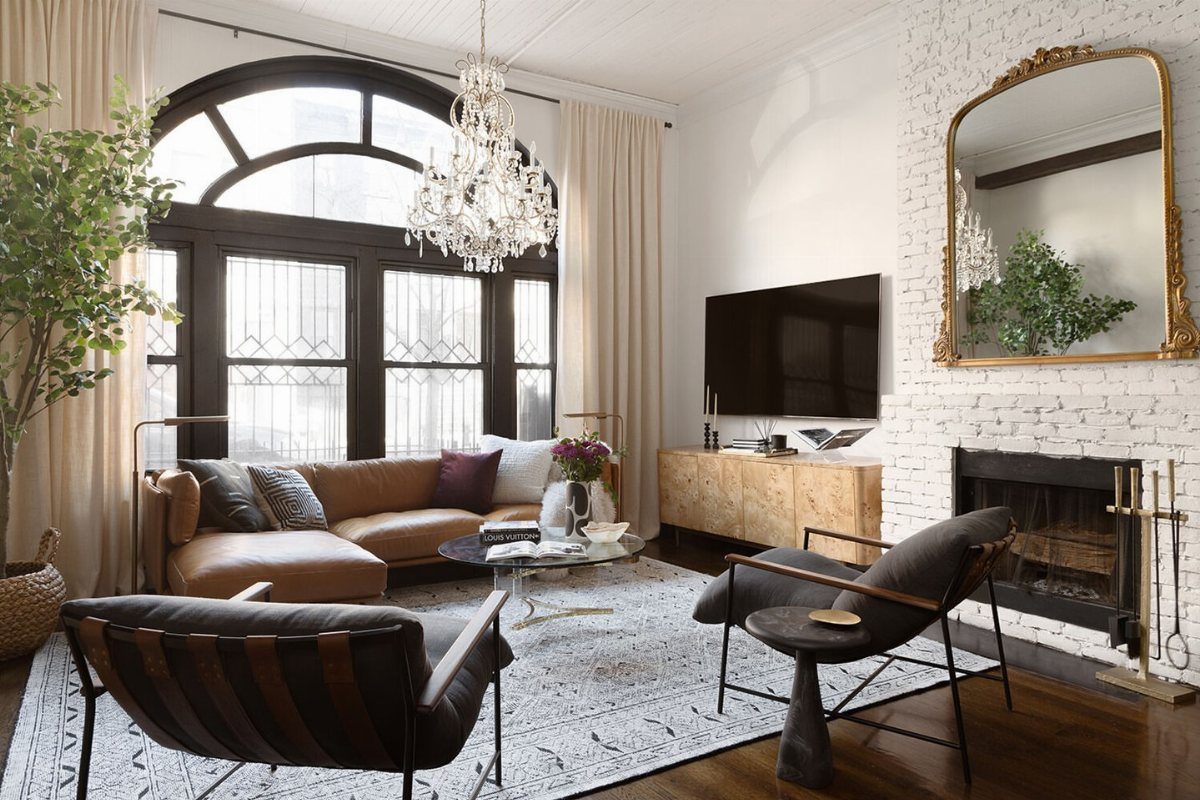
Placing the TV on top of the console instead of mounting it to the wall keeps your options open if you rearrange or move.
The console holds your gear and hides the cords, and you can swap the TV out without patching holes.
The console should sit low enough that the screen lands at eye level from the couch. If the console is tall, the TV ends up too high and you spend the whole movie looking up.
A soundbar fits on the console in front of the screen or inside if the cabinet has an open shelf.
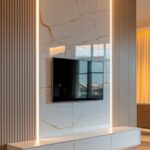
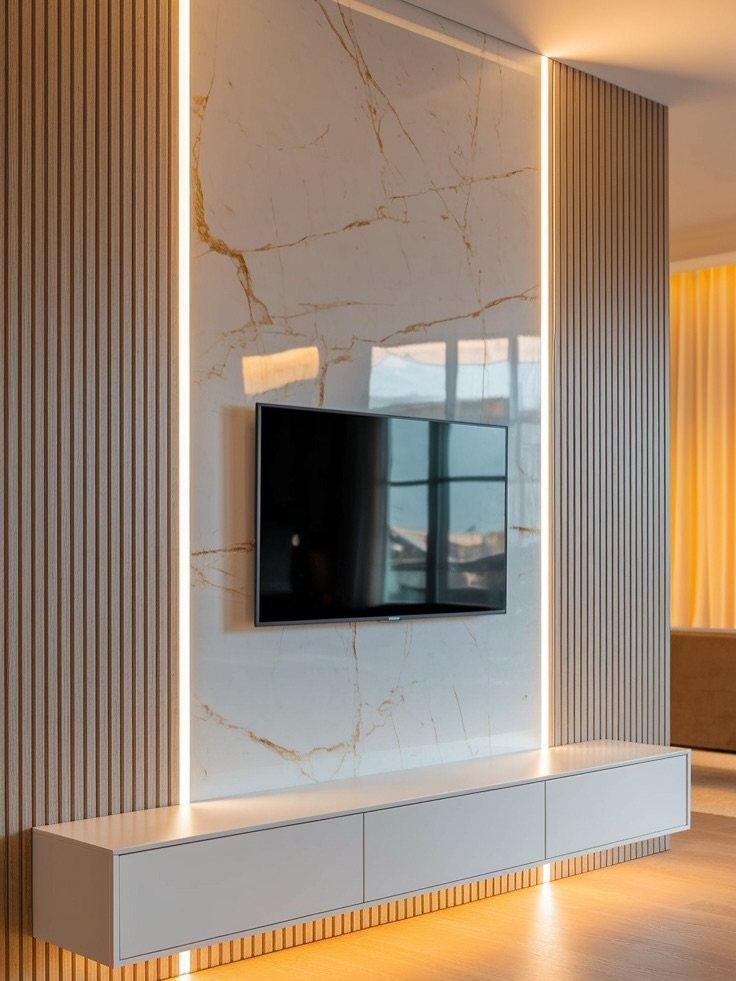
8. Marble TV Feature Wall
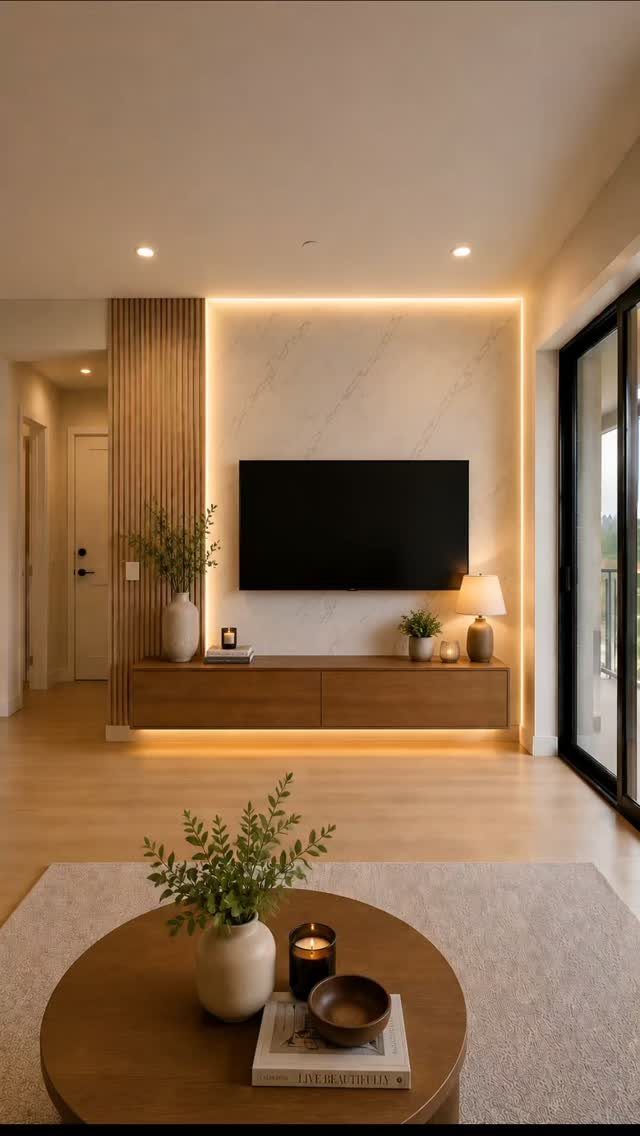
A marble slab behind the TV adds polish without covering the whole wall. The veining gives you pattern, and the stone reads as permanent even when it’s a thin panel glued over drywall.
Book-matched marble costs more but puts the grain in a mirror image across the seam.
A single slab or porcelain tile that mimics marble gets you the look for less, and most people won’t spot the difference from across the room.
Backlighting the edges makes the stone glow, though it only shows up at night.
9. Textured Stone TV Wall
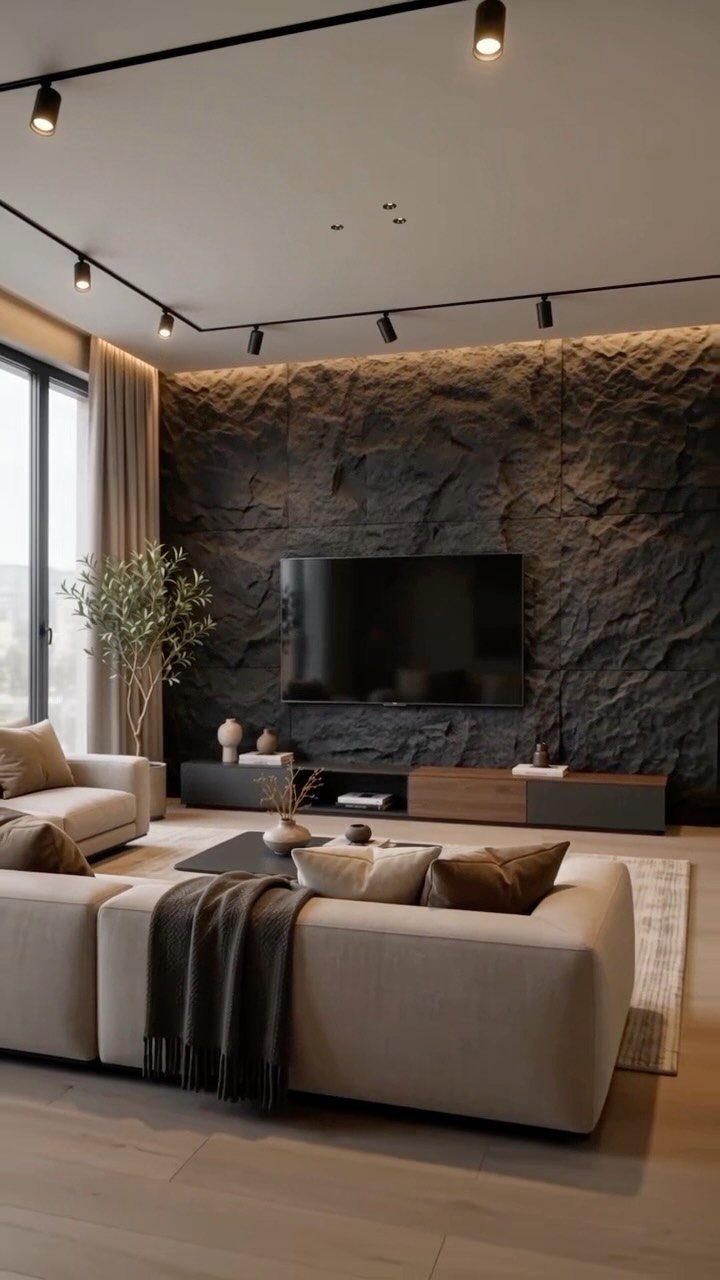
Textured stone gives the TV wall weight and contrast, and the rough surface catches light in a way flat paint doesn’t.
Stacked ledger stone or a 3D stone panel both work, and you can cover just the section behind the screen instead of running it wall to wall.
Stone veneer weighs less than full stone and goes up with adhesive, so it’s easier to install yourself.
Track lighting or recessed spots angled at the wall bring out the texture after dark.
10. Sliding Panel Concealed TV Wall
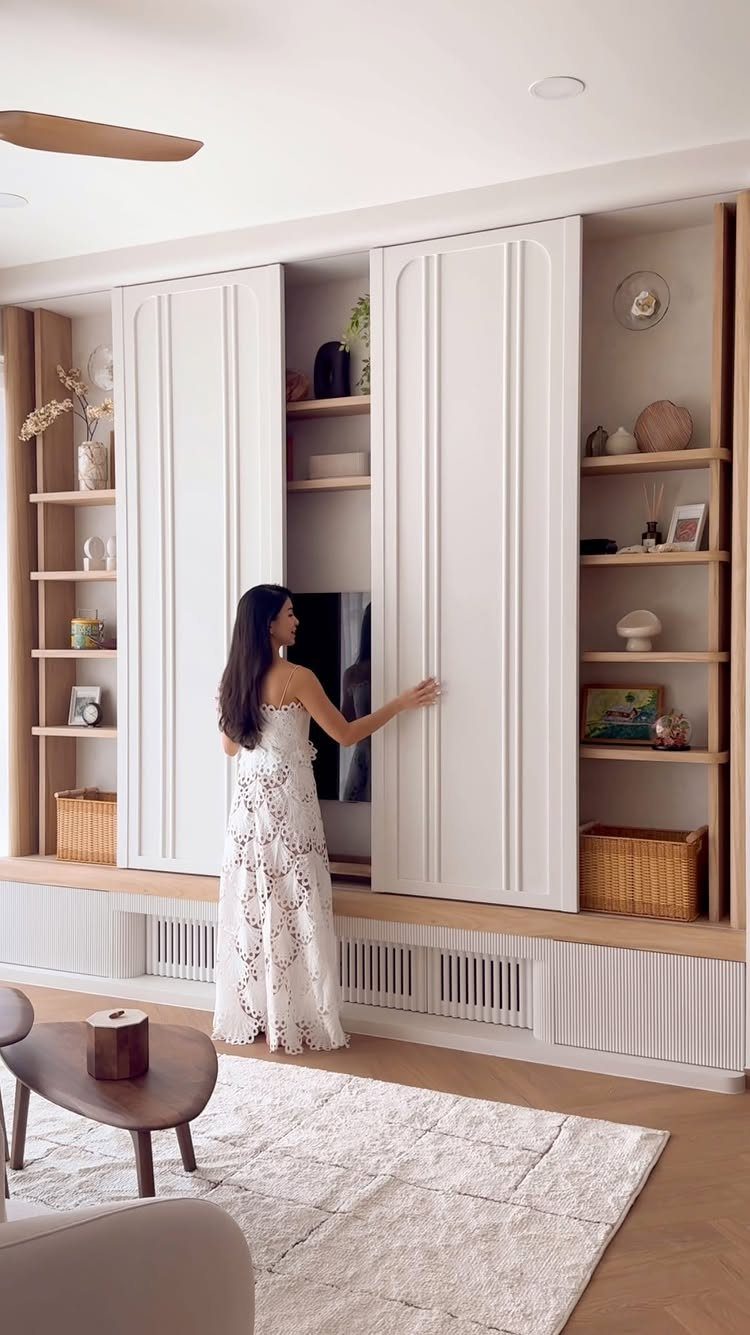
Sliding panels let you hide the TV when you’re not using it, which makes sense if the screen dominates the room or you want the wall to look like built-in storage.
The panel tracks along the front of the unit, so you don’t need space beside the TV for it to swing open.
The hardware mounts inside the cabinet or along a rail at the top. Soft-close tracks keep the panel from slamming, and a finger pull or recessed grip makes it easy to slide without a handle.
This takes more planning than a simple mount, but it’s the cleanest way to make the TV disappear.
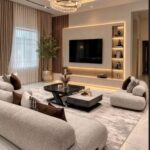
11. Accent Wall with Open Shelving
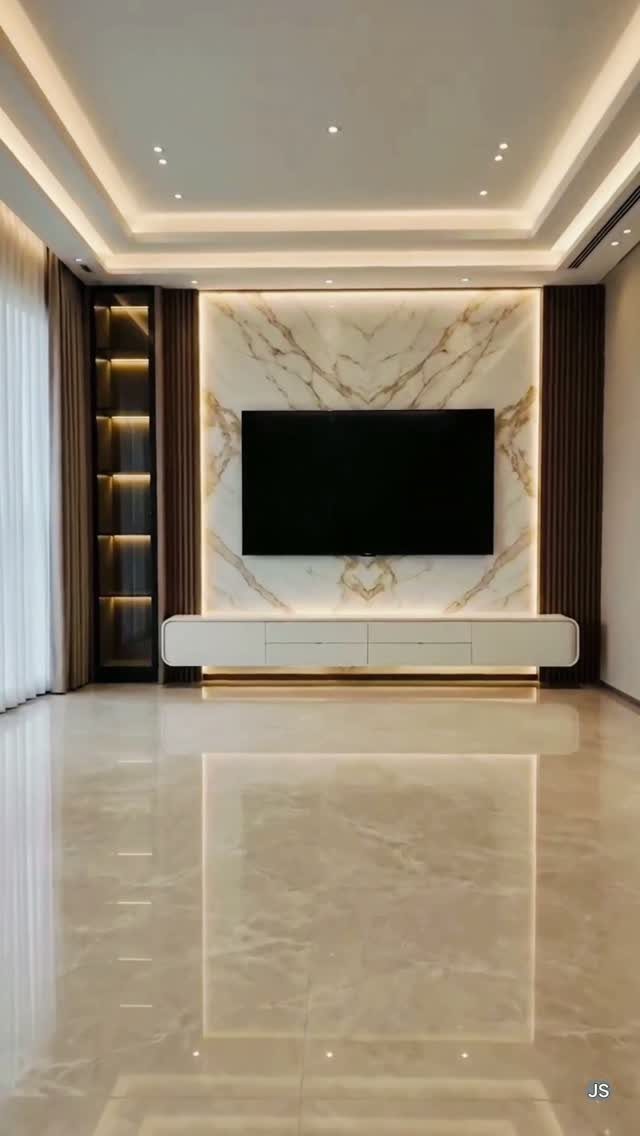
Open shelving next to the TV gives you room for books, plants, or display pieces without blocking the screen. The vertical shelves balance the wide rectangle of the TV, and the spacing between shelves adds rhythm to the wall.
Built-in LED strips inside the shelves highlight what you put on them and add soft light when the TV is off. Floating shelves are the lighter option if you’re not building a full unit, though you lose the integrated look.
Keep the shelves low-profile so they don’t compete with the screen.
12. Concrete Wall
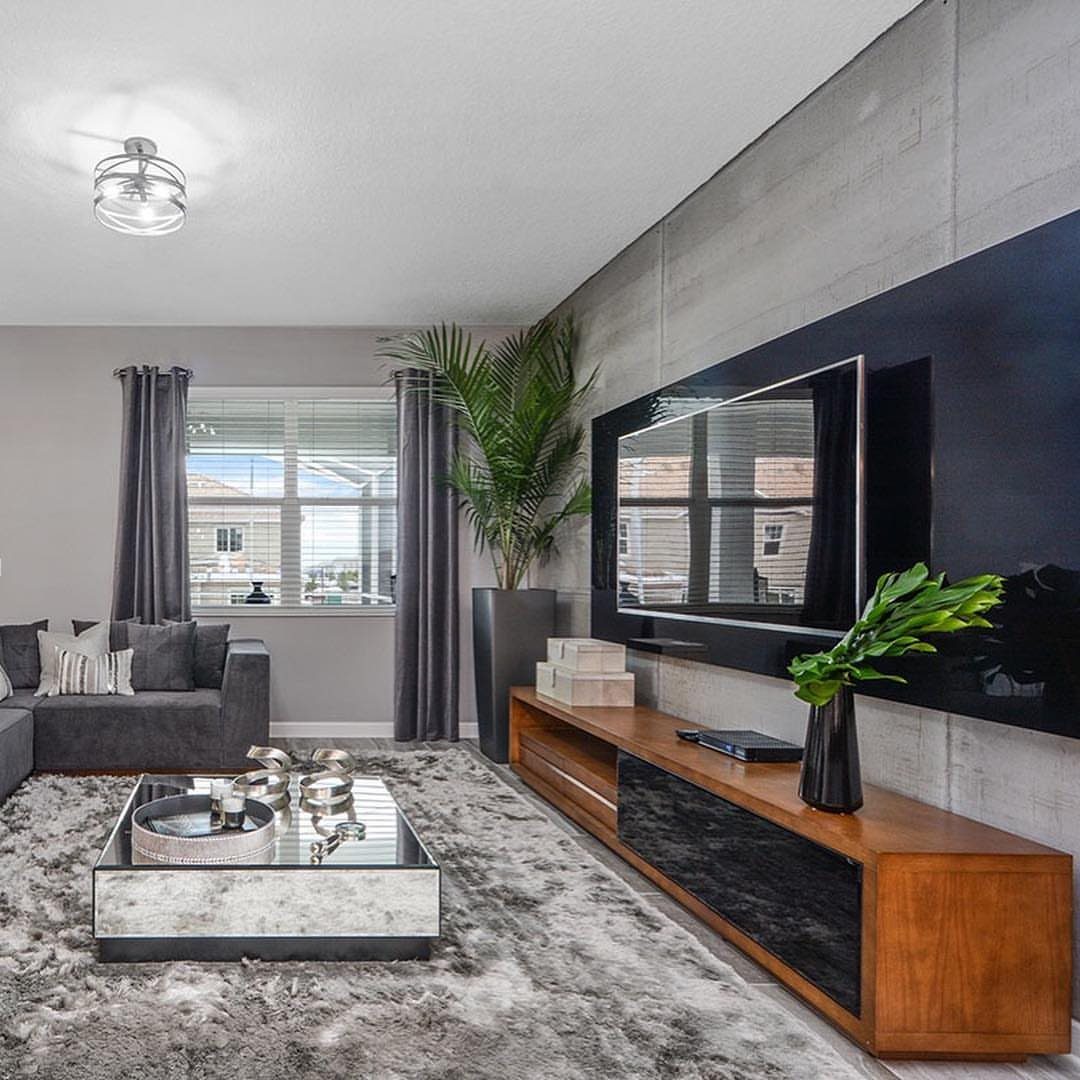
A concrete wall gives you an industrial backdrop that makes the TV feel intentional instead of stuck on drywall. The matte gray holds the screen without pulling focus, and the texture reads as architecture rather than decoration.
Real poured concrete takes formwork and curing time, so most people use concrete panels or a skim coat of micro-topping over existing drywall. Both give you the look in a weekend, and you can seal them to keep dust down.
This suits a modern or loft-style room more than a traditional one.
Pros and Cons of TV Walls
A dedicated TV wall brings order to a room that centers on the screen.
The design gives the TV a place instead of leaving it to float on blank drywall, and the wall holds your eye without the screen becoming the only thing you notice when it’s off.
The cost and scope vary. Stone veneer, custom cabinetry, or a recessed wall run higher and need more skill, and most of those options lock the layout in place once they’re done.
Renters face tighter limits.
Anything that needs drywall cuts, permanent wiring, or structural changes to the wall won’t fly under most leases. Floating shelves, paint, removable panels, and furniture-based layouts all stay within bounds and reverse when you move out.
Planning for TV Walls
Start with the wiring before you settle on a finish.
Power, HDMI, and cable all run cleaner inside the wall than taped along the baseboard, and opening the wall after the TV is mounted or the paneling is up means pulling everything back apart.
Measure the vertical space from the floor to where the center of the screen will sit.
Media gear needs ventilation and access. A closed cabinet keeps the equipment out of sight, but the receiver and streaming box both need airflow or they’ll overheat.
DIY Options
Wood paneling, open shelving, and painted accent walls all suit a DIY install. Paneling goes up with a nailer or construction adhesive over furring strips, and you can cut the boards to length with a miter saw.
Built-in storage around the TV takes more time but stays within reach if you’re comfortable with a drill and level.
Prefab cabinets flank the TV and tie together with a top shelf or crown molding, and the whole unit reads as custom once it’s painted to match the wall.
Frequently Asked Questions
How high should a TV be mounted?
Mount the TV so the center of the screen sits at eye level when you’re seated on the couch.
This keeps you from craning your neck and makes long viewing sessions more comfortable. If the console or mount puts the screen higher than that, you’ll spend the whole time looking up.
Where to place a TV in your living room?
Place the TV where it becomes the focal point without fighting other features in the room.
Mounting it above a linear fireplace gives you a year-round centerpiece, or you can hang it beside the fireplace if you want the mantel to stay clear.
The TV should land at eye level from your main seating, with enough distance that you’re not sitting too close to the screen.
Can I put a TV on my wall?
Yes, as long as you mount it properly into the studs with a bracket rated for the TV’s weight.
Renters face tighter limits since most leases won’t allow drywall cuts or permanent wiring, but a console-mounted setup or floating shelves that attach to studs both work without breaking lease rules.