
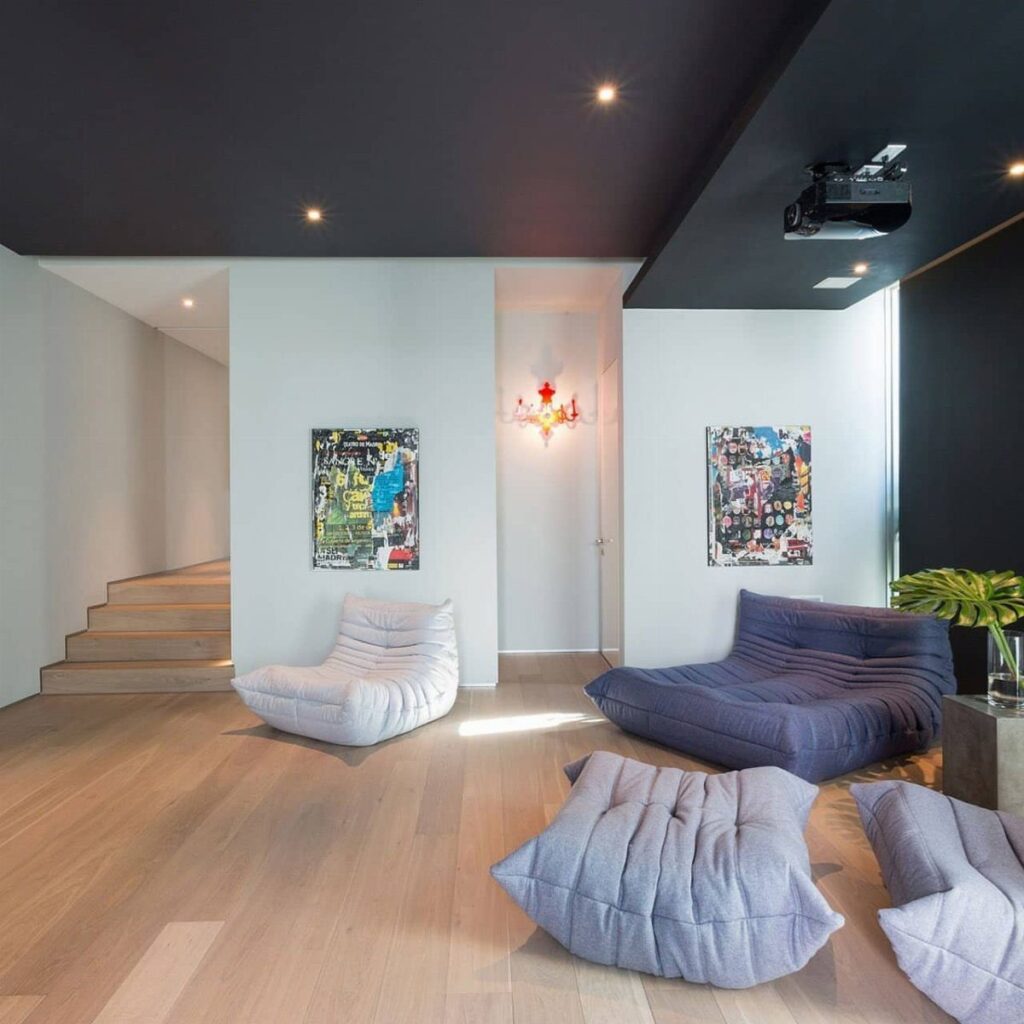
A black accent wall costs anywhere from the price of 2 gallons of paint to several hundred dollars if you’re adding molding, slats or LED strips.
1. Black Fireplace Wall
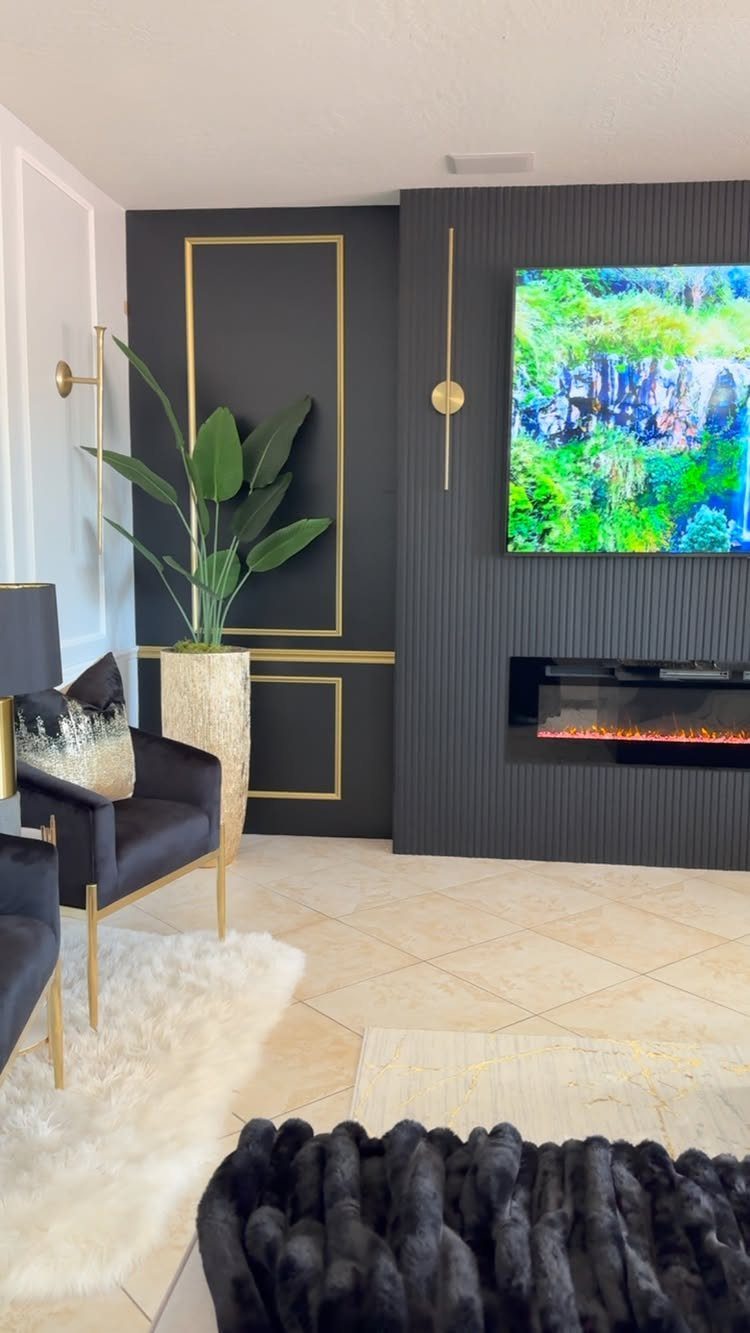
Painting the wall behind your fireplace black turns it into the room’s anchor. The dark backdrop makes flames more visible and pulls attention to the hearth without needing to change the mantel or surround.
This works whether you have a gas insert, a wood-burning box, or just a blank niche. If you’re mounting a TV above the fireplace, black hides the screen when it’s off and keeps wires less obvious.
Matte black paint typically needs 2 coats plus primer for solid coverage. Use semi-gloss only if you want the wall to reflect light; matte reads richer and absorbs glare from windows.
2. Black Ceiling Living Room
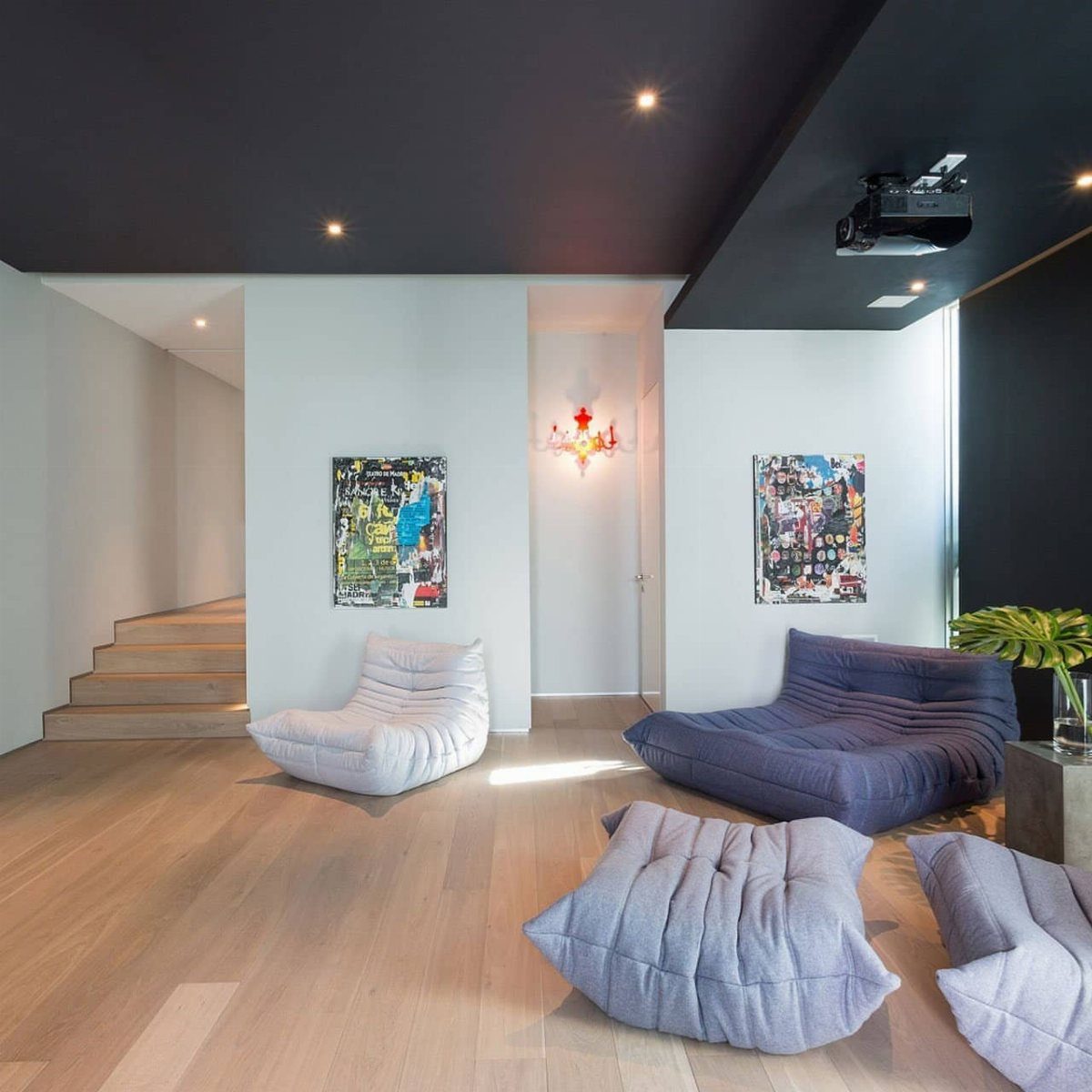
A black ceiling drops the visual weight overhead and makes the space more contained without shrinking the floor plan.
Matte or flat black hides imperfections and ductwork better than lighter colors. If your ceiling has beams, coffers, or texture, black reads them as intentional detail instead of clutter.
Paint over popcorn texture or remove it first.
A smooth black ceiling takes 2 coats; textured surfaces may need 3. Keep trim and walls light to hold contrast, or the room starts to feel like a cave.
3. Textured Black Wall Panels
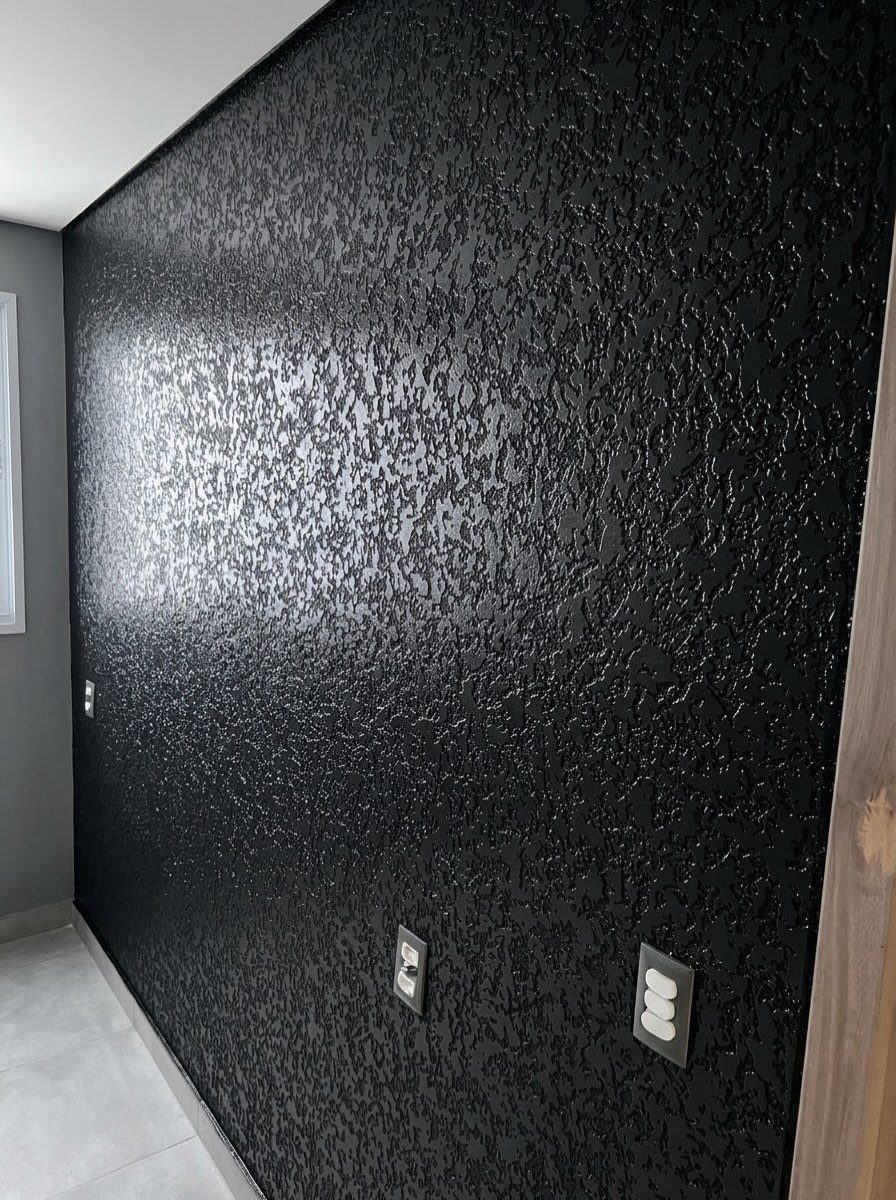
A textured black wall gives you depth without adding molding or battens. The stippled surface catches light at different angles and breaks up the flat plane, so the wall reads as dimensional even when square footage is tight.
You can get this with textured paint, a heavy roller, or joint compound applied with a trowel and left rough.
Each method takes about the same time, but joint compound gives you the most control over how deep the texture goes.
Finish with matte black paint.
Gloss flattens the texture by reflecting evenly; matte lets shadows sit in the valleys. Keep electrical outlets where they are; moving them costs more than the wall treatment itself.
4. Black Wall with Framed Molding
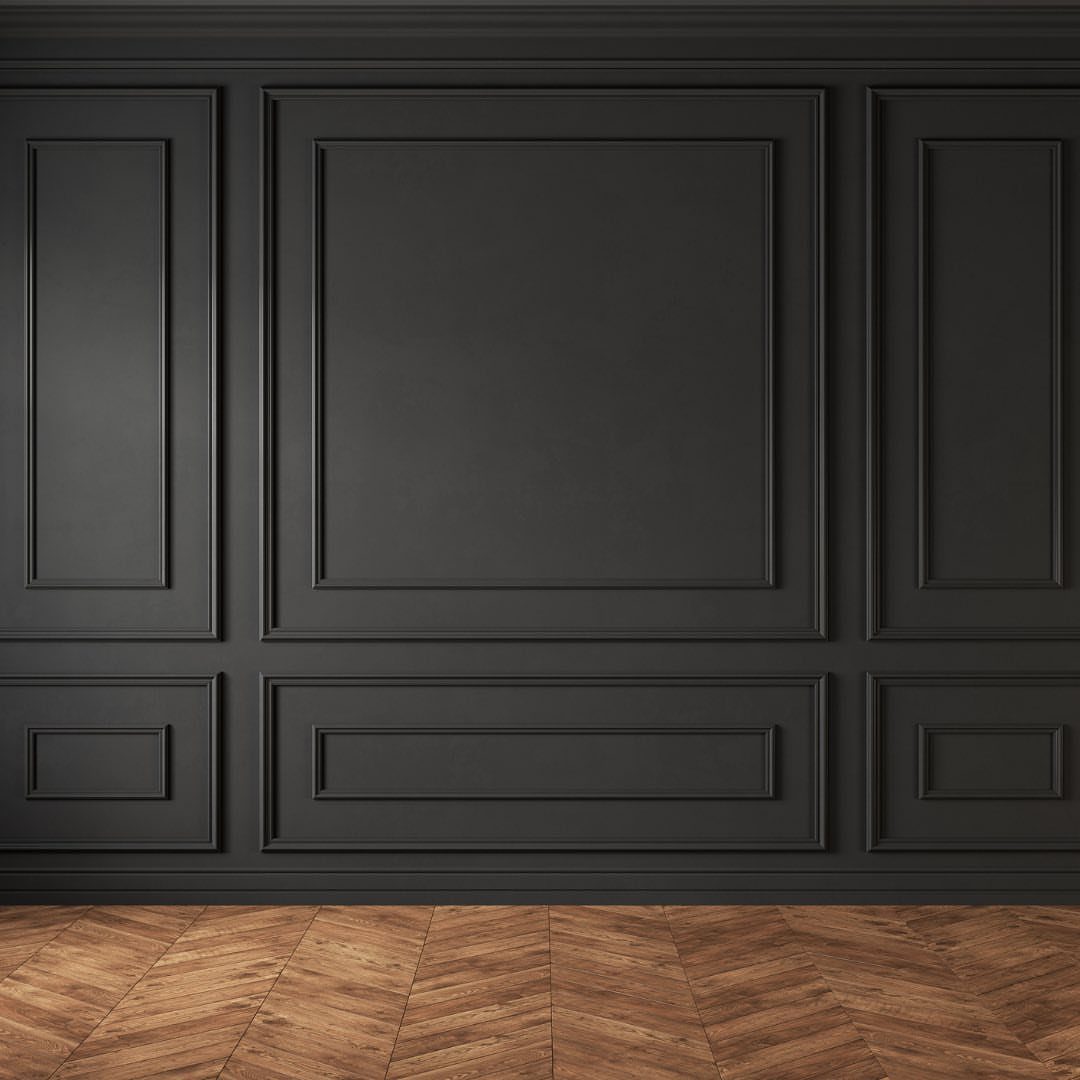
Adding rectangular molding panels to a black wall gives you a formal look that costs less than you’d expect. The frames create shadow lines that break up the dark surface and make the wall feel taller.
Cut 1×2 or 1×3 pine boards to size, arrange them in a grid or staggered layout, and nail them directly to the wall. Paint everything black after installation so the molding and background read as one continuous surface.
Space the panels evenly and leave breathing room between the top rail and the ceiling, and between the bottom rail and the baseboard. Matte paint softens the contrast; satin makes the frames pop.
5. Board and Batten
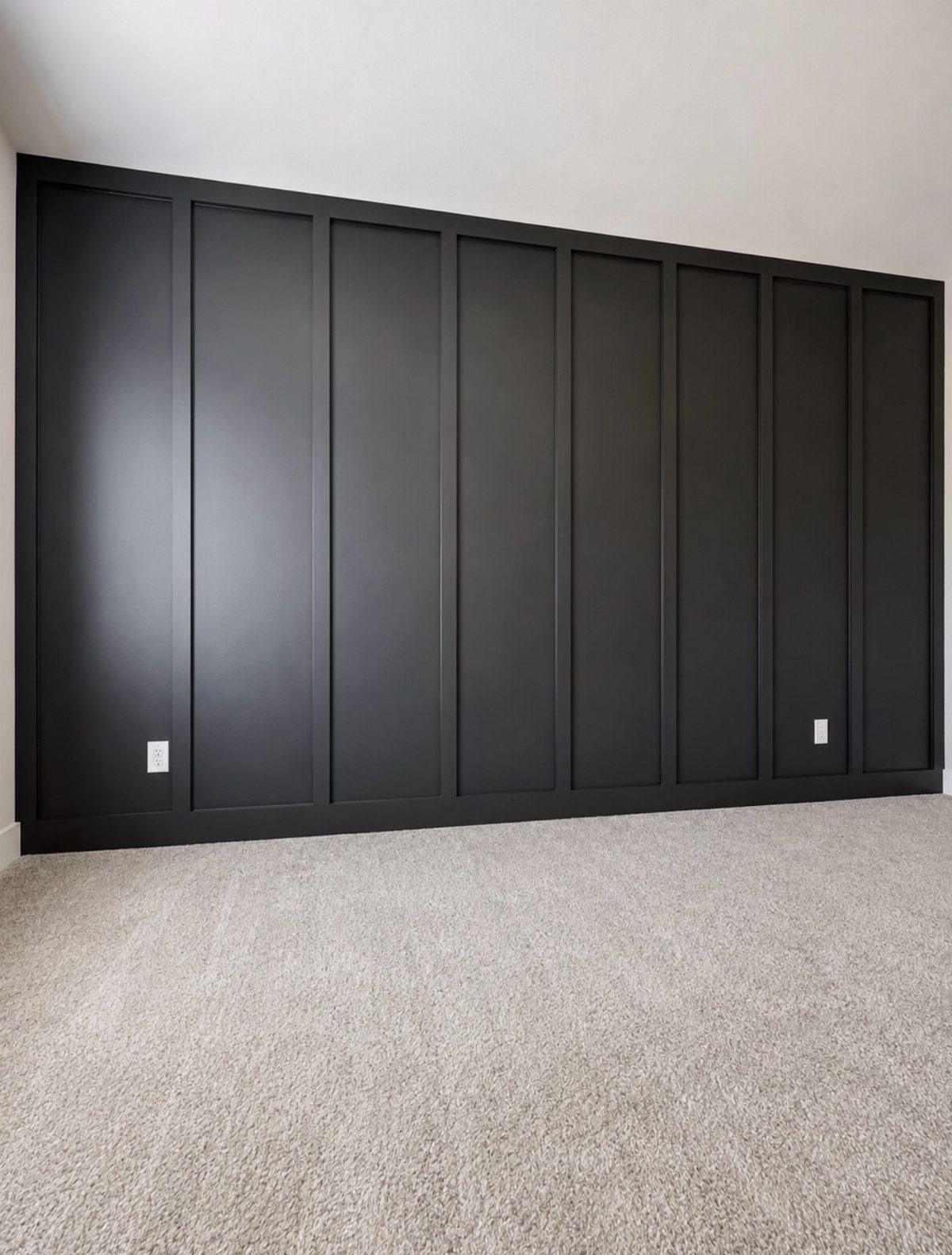
Board and batten gives you vertical lines that stretch the wall and add rhythm without much material. The narrow battens sit on top of a smooth black base, creating shallow grooves that catch light and make the wall feel taller.
Nail the boards into studs or glue them down if you’re renting, and space them far enough apart that each one registers on its own.
Paint the wall black first, then add the battens and paint everything again. 2 coats keep the seams from showing.
This reads more modern than traditional shiplap and costs about the same.
Matte black keeps the focus on the lines; if you want the battens to stand out more, paint them in a slightly different sheen instead of a different color.
6. Black Accent Wall with Gold Accents
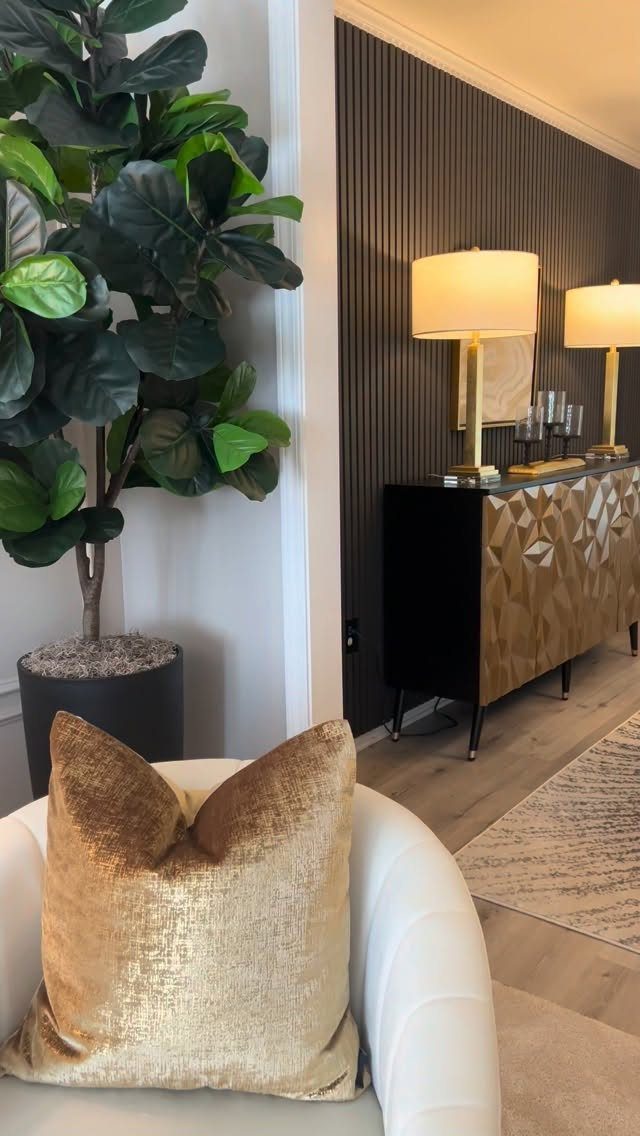
Pairing black with brass or gold accents gives you a high-contrast look that feels finished without adding pattern. The warm metal softens the black and reflects light back into the room, so the wall doesn’t absorb all the brightness.
Use gold in small doses: lamp bases, picture frames, hardware on a console, or legs on furniture.
Too much metal competes with the wall instead of supporting it. Matte black paint holds the metallics better than gloss, which can wash them out.
If you have existing silver or chrome fixtures, switch them out or skip the gold entirely. Mixing warm and cool metals in the same sight line reads as unintentional.
7. Geometric Designs in Black Accent Wall
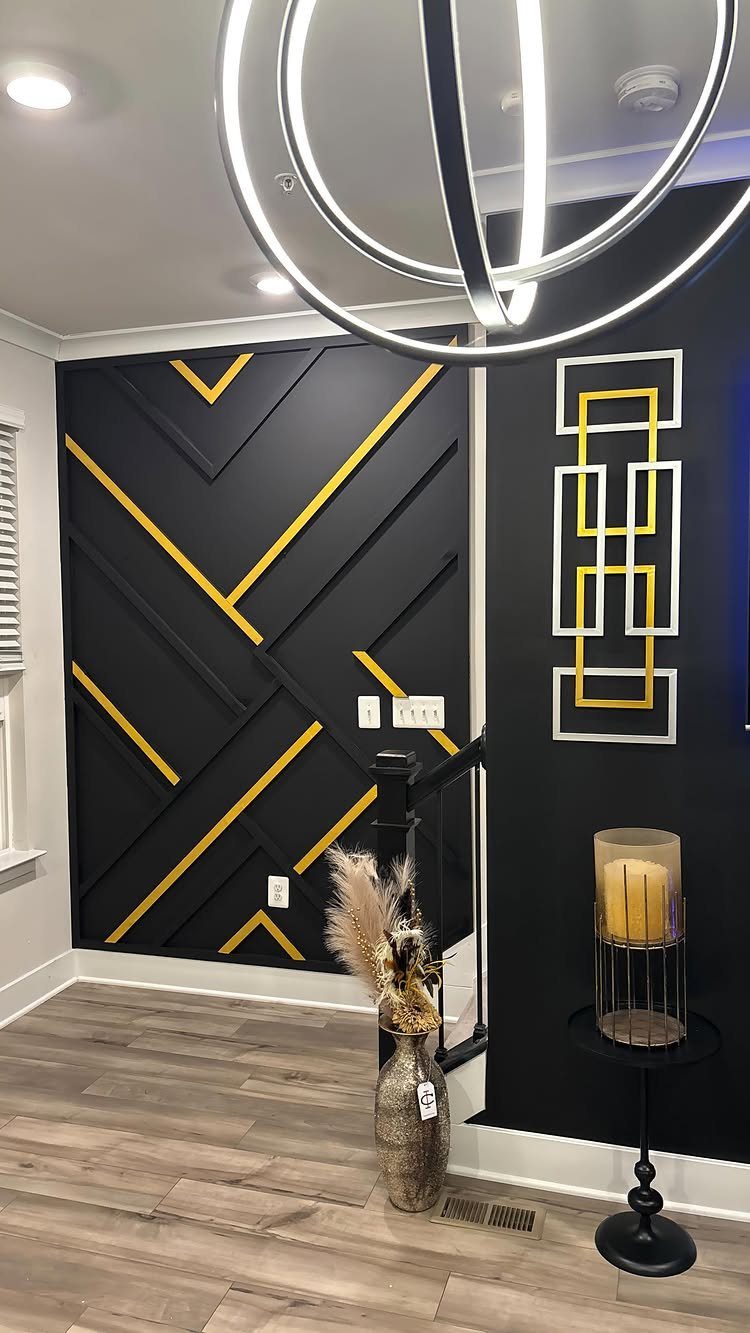
Geometric patterns cut from molding or thin strips give a black wall structure without heavy framing. The lines can run diagonal, hexagonal, or in offset blocks, and the angles catch light differently than flat paint.
Mark your layout in pencil first, then glue or nail each piece in place.
Paint everything black after assembly so seams disappear. Gold or brass strips cost more but show better against matte black; painted wood reads more subtle.
This suits a small wall or the space above a console. Full-room coverage can feel busy.
8. Black Wall with Acoustic Panels
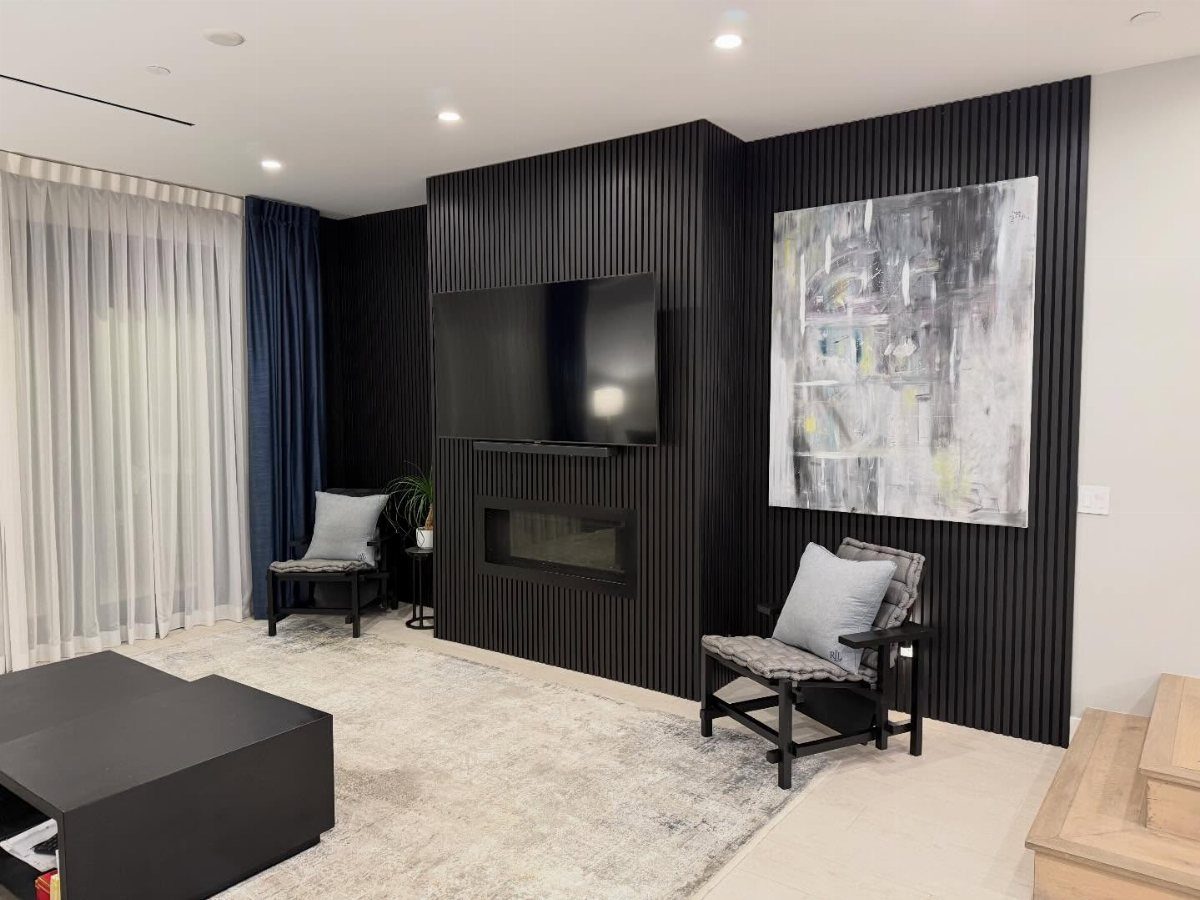
Acoustic panels absorb sound while covering the wall, so you get better audio in a room with a TV or stereo and a finished look at the same time. The slats break up echo without needing separate wall treatments.
Black fabric-wrapped panels or slatted wood versions mount with clips or adhesive.
Space them evenly or cluster them around the screen. Matte black blends with the wall; if you want the panels to stand out, leave narrow gaps between each one.
This works best in rooms where sound matters. In a quiet living room, the cost may not be worth it.
9. Black Slatted Wall with LED Lighting
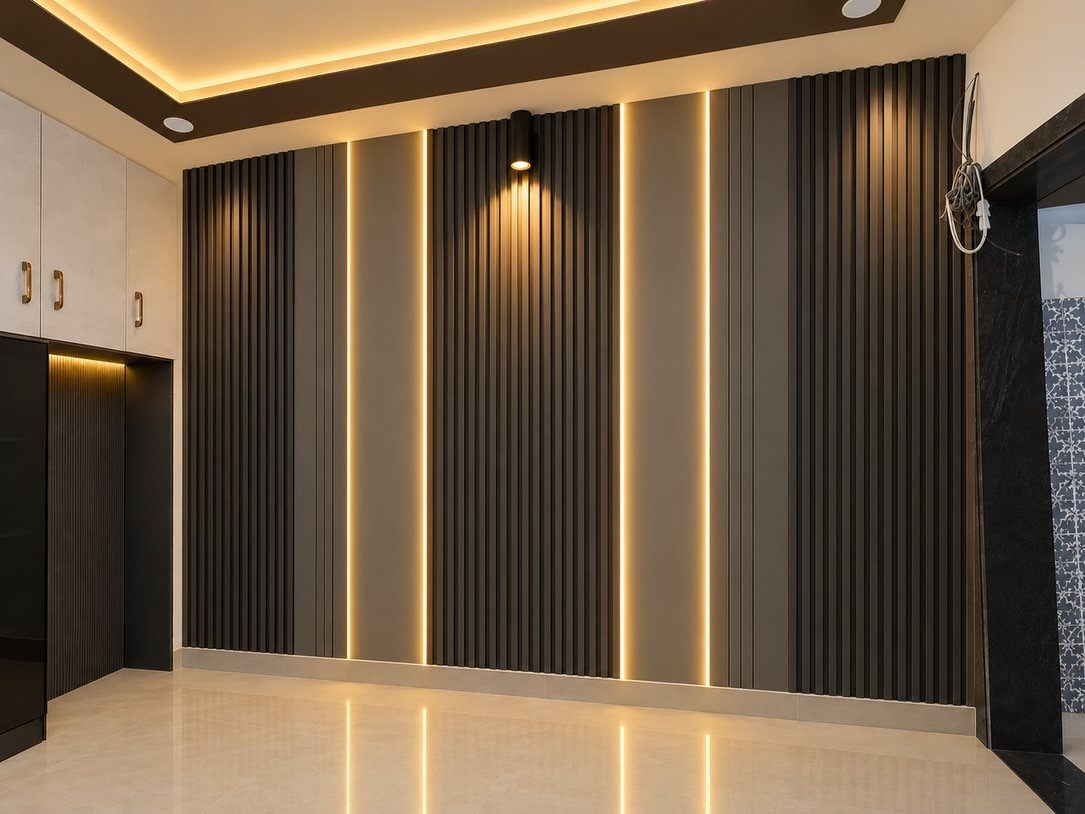
Vertical slats with LED strips tucked behind them light the wall from within and make the black surface glow instead of receding. The warm light softens the dark color and adds depth without taking floor space.
Mount the slats on furring strips to leave a gap for the LED tape, then run the wiring through the wall or baseboard. Warm white LEDs read softer than cool white; dimmable strips let you adjust brightness.
This pulls attention to the wall, so it works best when that wall is already the room’s focus. Skip it if you prefer the black to stay neutral.
10. Black Wall with Illuminated Shelving
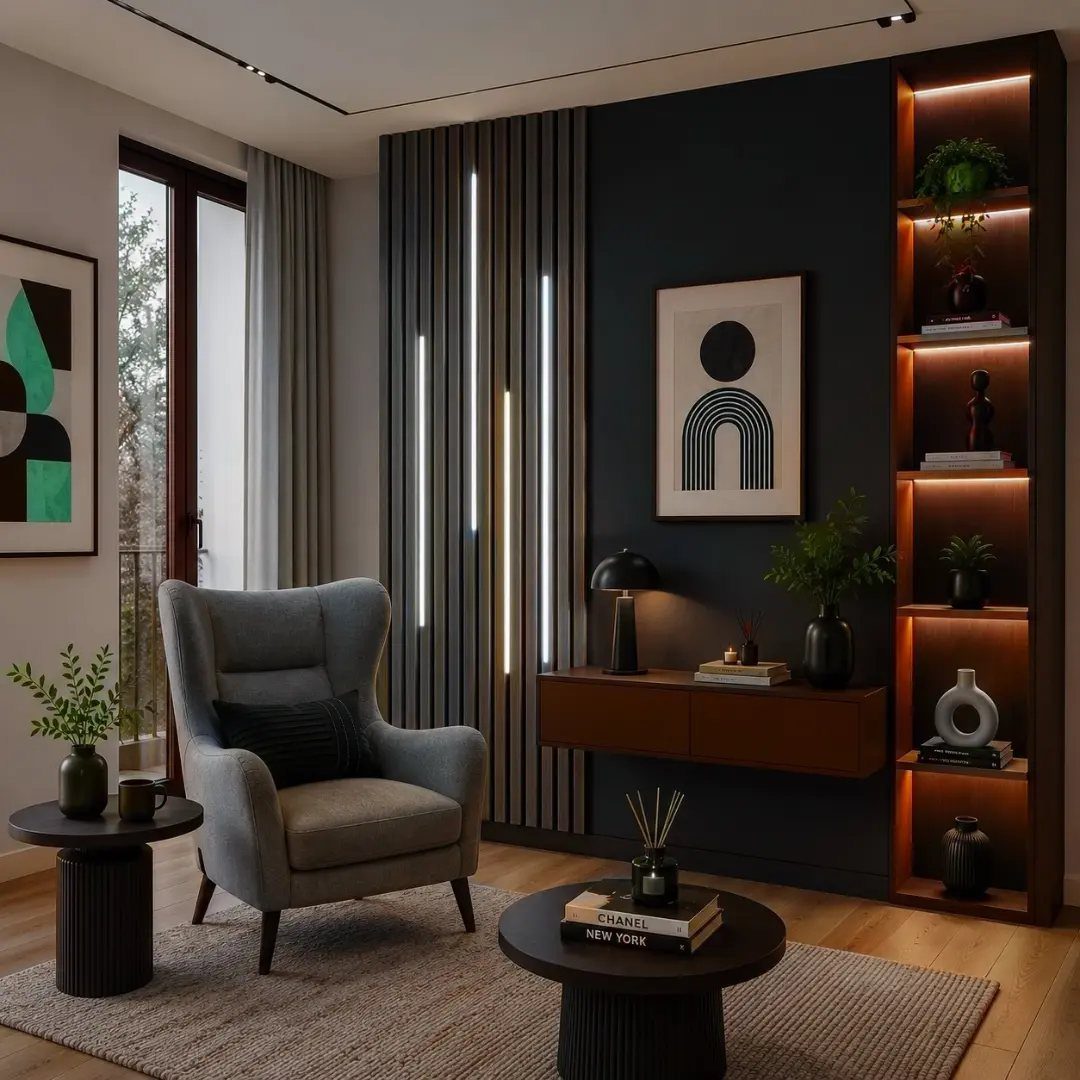
Built-in shelves with backlit edges turn a black wall into storage and a light source at the same time. The glow separates each shelf while stopping the dark surface from feeling heavy.
Run LED tape along the back edge of each shelf before mounting, then paint or stain the shelves to contrast with the black. Floating shelves work if you can’t build in; just leave space behind them for the light strip.
This suits rooms where you need display space and want the wall to stay interesting after dark.
11. Black Wall with Abundant Plants
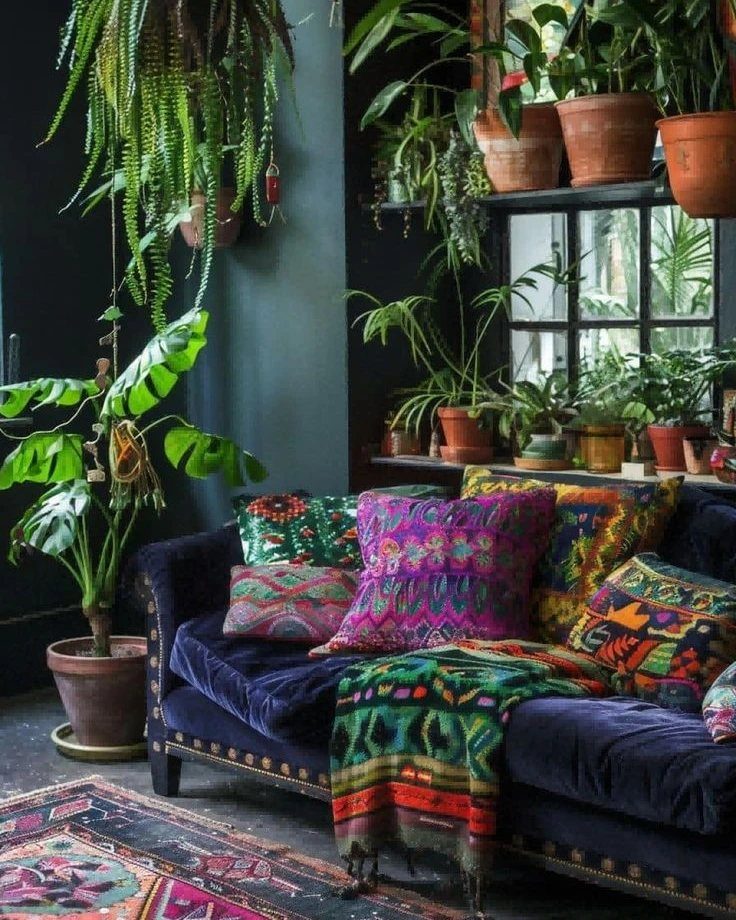
Hanging plants soften a black wall and bring green in, no floor space needed. The dark backdrop makes leaves stand out more than they would against white, and the contrast feels intentional instead of accidental.
Use wall hooks or a rail system if you’re renting, or screw planters directly into studs.
Mix trailing plants like pothos with upright ones to vary the silhouette. Water carefully; black shows drips and water stains more than lighter colors.
This works if you already keep plants alive. If you forget to water, the dead leaves show worse against black than against any other color.
12. Dark Lower Wainscoting Paneling
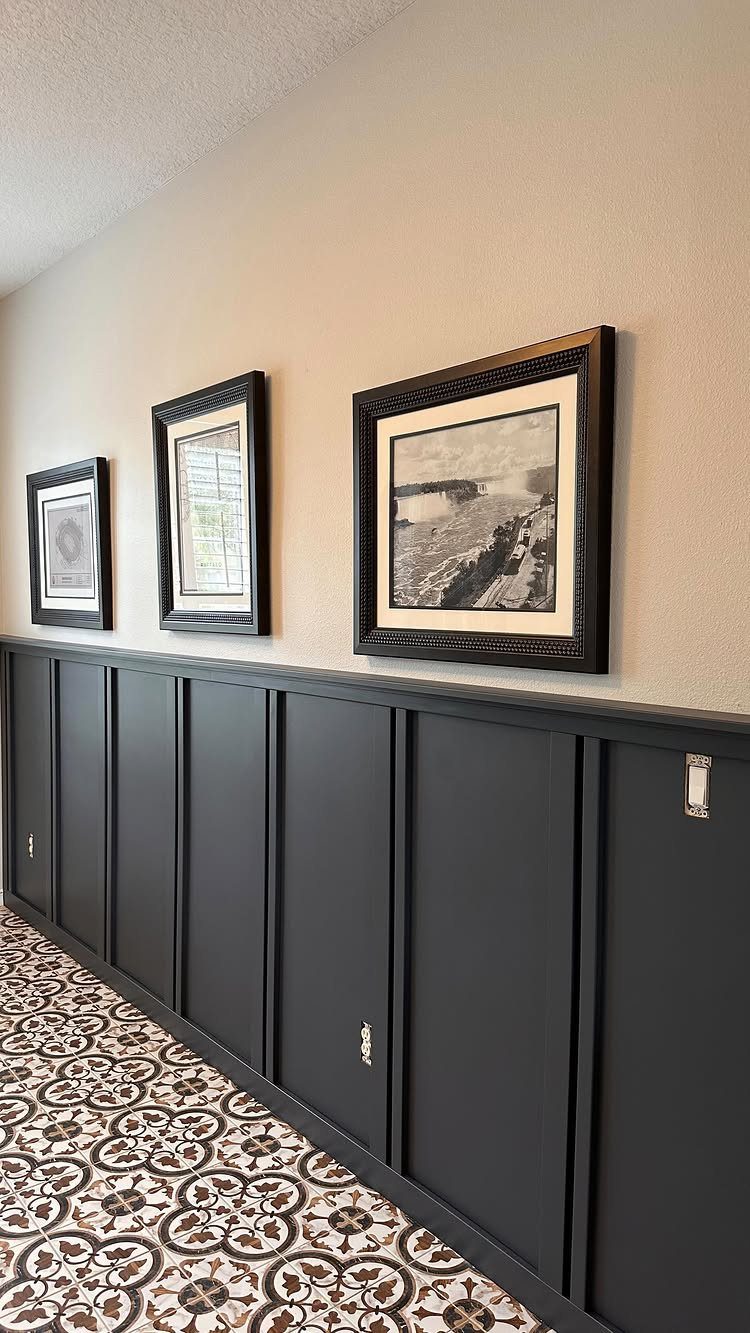
Black wainscoting on the lower half of the wall gives you the weight of a dark accent without committing the whole surface. The division makes the ceiling feel higher while stopping the room from reading too closed in.
Install panel molding or beadboard up to chair rail height, then paint it black and leave the upper wall light.
The line should sit around waist height, adjusted for ceiling height. Matte black reads richer; semi-gloss is easier to wipe down in high-traffic areas.
This suits narrow spaces or rooms where you want the drama of black but need the upper walls to reflect light.
13. Living Room Office Accent Wall
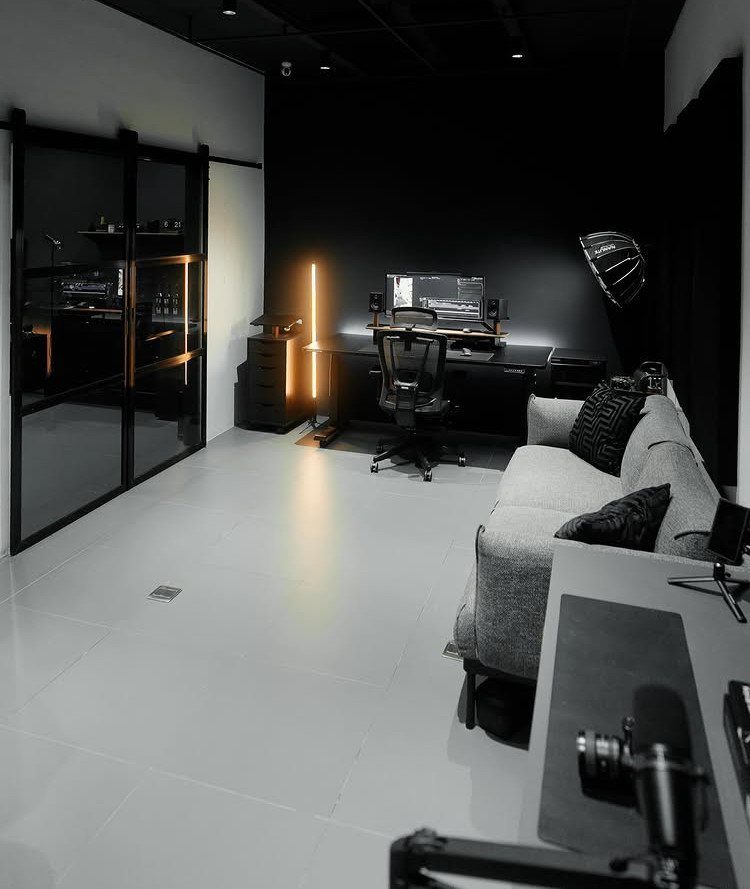
A black wall behind a workspace visually separates office furniture from the rest of the room. The dark plane signals function and holds the desk area distinct even when it shares square footage with a sofa.
This works in open layouts where you need a home office corner but don’t want a full wall or curtain.
Mount monitors to the black wall or set the desk against it. The contrast makes cables less visible and stops the workspace from blending into the living side.
Paint the wall matte black and keep adjacent walls light. If the desk sits at an angle, paint only the section directly behind it.
14. Smooth Matte Black Wall
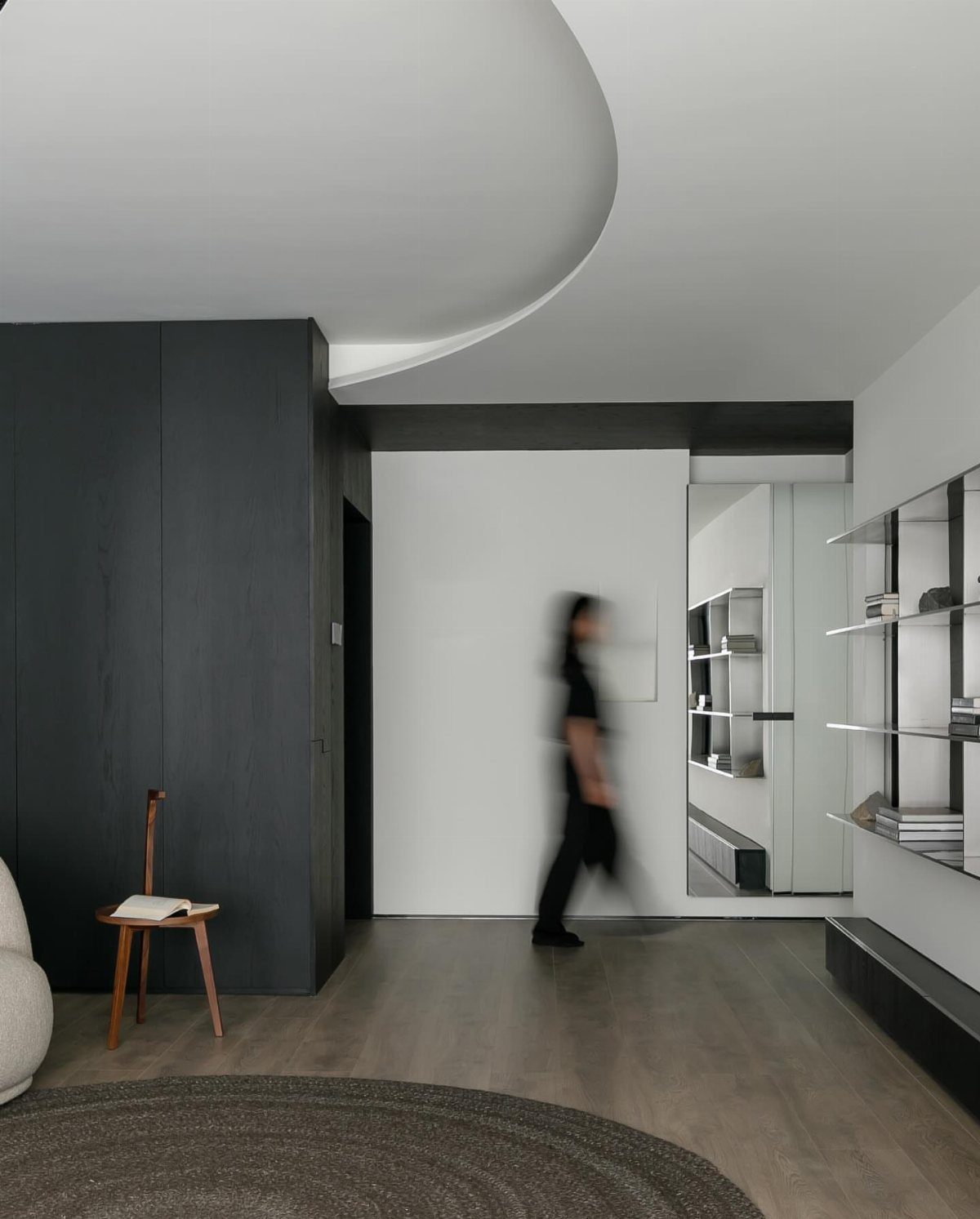
A single charcoal or deep black wall against white surrounds and light wood stops a space from reading as sterile.
The dark plane anchors the space while the white reflects light back, so you get the weight of black without losing brightness.
2 coats hide seams and patches. Leave trim white and let the floor stay natural; too much black closes the room in.
Skip it if your windows face north or the room already feels dim.
Tips for Decorating with Black
Balance black with warm textures like wood, woven baskets, natural textiles, and brass. The coolness of black needs something that brings warmth back in, or the room starts to feel sterile instead of dramatic.
Layer your lighting instead of relying on one overhead fixture. Table lamps, wall sconces, and warm bulbs keep the space from feeling heavy, and they let you adjust brightness room-wide instead of just turning one switch on or off.
I pair black with white trim, beige upholstery, or terracotta and camel tones.
Test the idea in a hallway or around the fireplace before you take it into the living room. You’ll get comfortable with how black behaves in your light before you paint a larger surface.
Choosing the Right Wall
The best wall for a black accent is usually the one behind the sofa, opposite the entry, or flanking a fireplace.
Pick a wall with clean edges: no door cutting through the middle, no windows at different heights, no sloped ceiling pulling the eye somewhere else.
Black reads strongest on a clean surface where the color can hold attention without competing with architectural clutter.
A wall mostly covered by a tall bookcase or a floor-to-ceiling curtain is not the right candidate. If you can’t see most of the wall from the doorway, the effect gets cut in half.
Lighting Considerations
Black absorbs light, so a room that already feels dim will read darker once the wall goes in.
Use light-colored drapes, rugs, and blankets to reflect brightness back into the space. The black wall will still anchor the room, but the surrounding surfaces keep it from swallowing all the available light.
Larger windows or sheer curtains help if you can swing them. When more lighting is not an option, paint a smaller wall or stop the black halfway up.
Frequently Asked Questions
Is black wall in style?
Black accent walls remain a current trend in home design.
The color works across different decorating styles and creates contrast that makes lighter furniture and wood tones stand out. It also helps anchor a room and adds definition to architectural features like fireplaces or built-ins.
What do accent walls look like?
Accent walls vary in color, texture, and pattern depending on the design approach. A black accent wall can be smooth matte paint, textured panels, vertical slats with lighting, board and batten, or framed molding.
Pick the wall that already draws your eye: behind the sofa, framing the fireplace, or the first surface you see from the doorway.
Does a dark accent wall make your room look smaller?
A dark accent wall does not necessarily shrink a room if you balance it correctly. Light walls on the other three sides, a mirror or two, and furniture that shows a bit of floor keep the room from closing in.






