
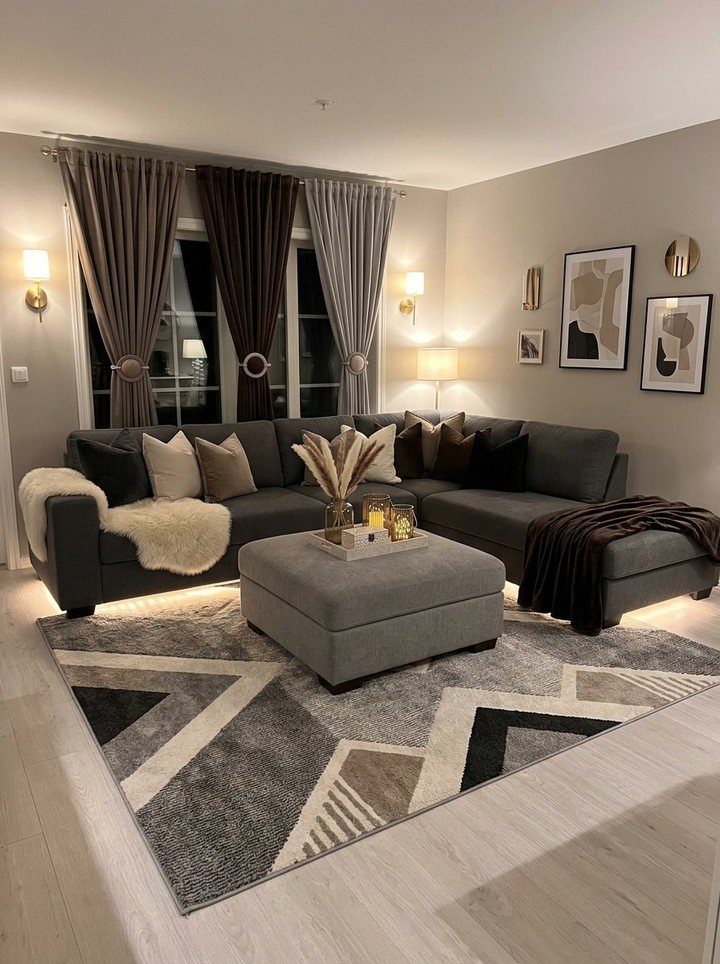
Layered sheers under drapery give you daytime diffusion and nighttime privacy on 2 rods spaced a few inches apart, while a single pinch-pleat panel suits a formal room that’s already busy.
The amount of light your window gets and how much clearance sits between the casing and the ceiling will narrow the field faster than budget alone.
Velvet and lined cotton qualify as heavy drapes that muffle street noise and insulate better than standard-weight panels, though you’ll pay more per panel for the extra fabric and lining.
1. Layered Sheers Under Drapery
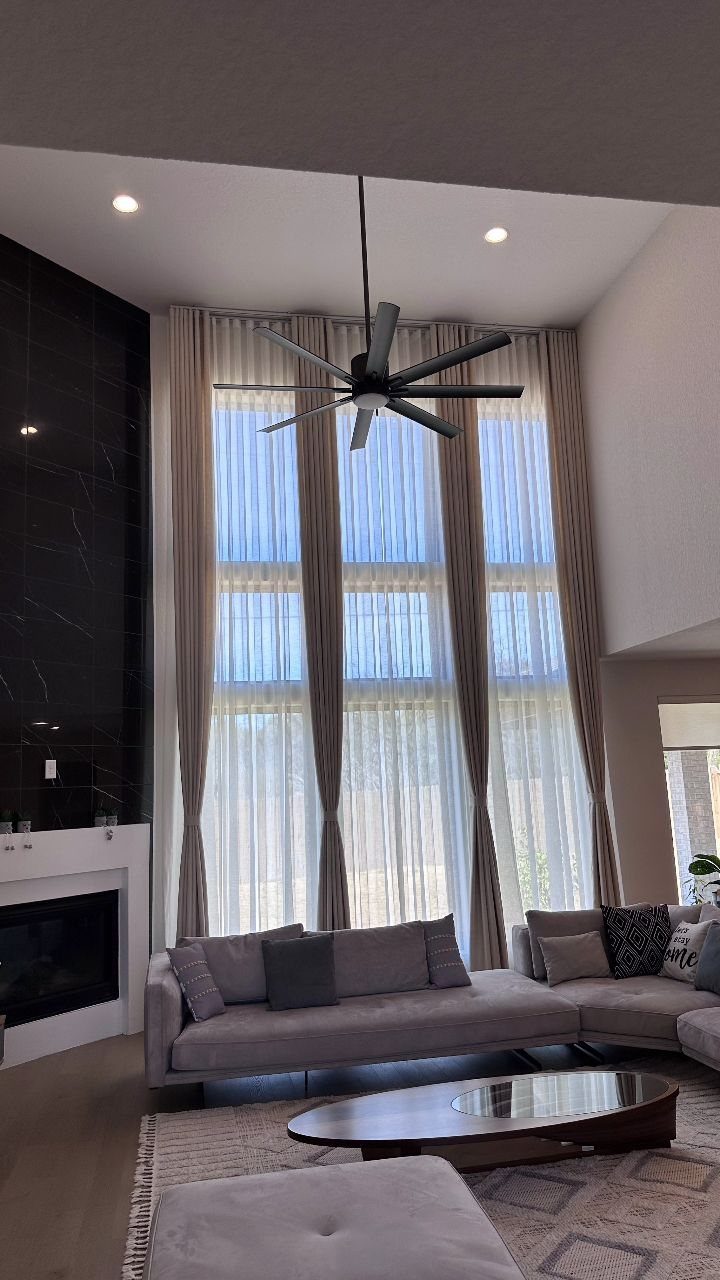
Sheers soften daylight while the outer layer blocks it when you need privacy or sleep. I hang the sheer on a rod closer to the glass and the drapery on a second rod in front, spaced a few inches out.
This setup gives you control without blackout shades.
Pull the sheers across during the day for diffused light, then close the drapery at night. The beige outer panels warm the room, and white sheers keep it bright.
If your window is shallow, mount both rods on the wall above the frame instead of inside it.
2. Heavy Drapes
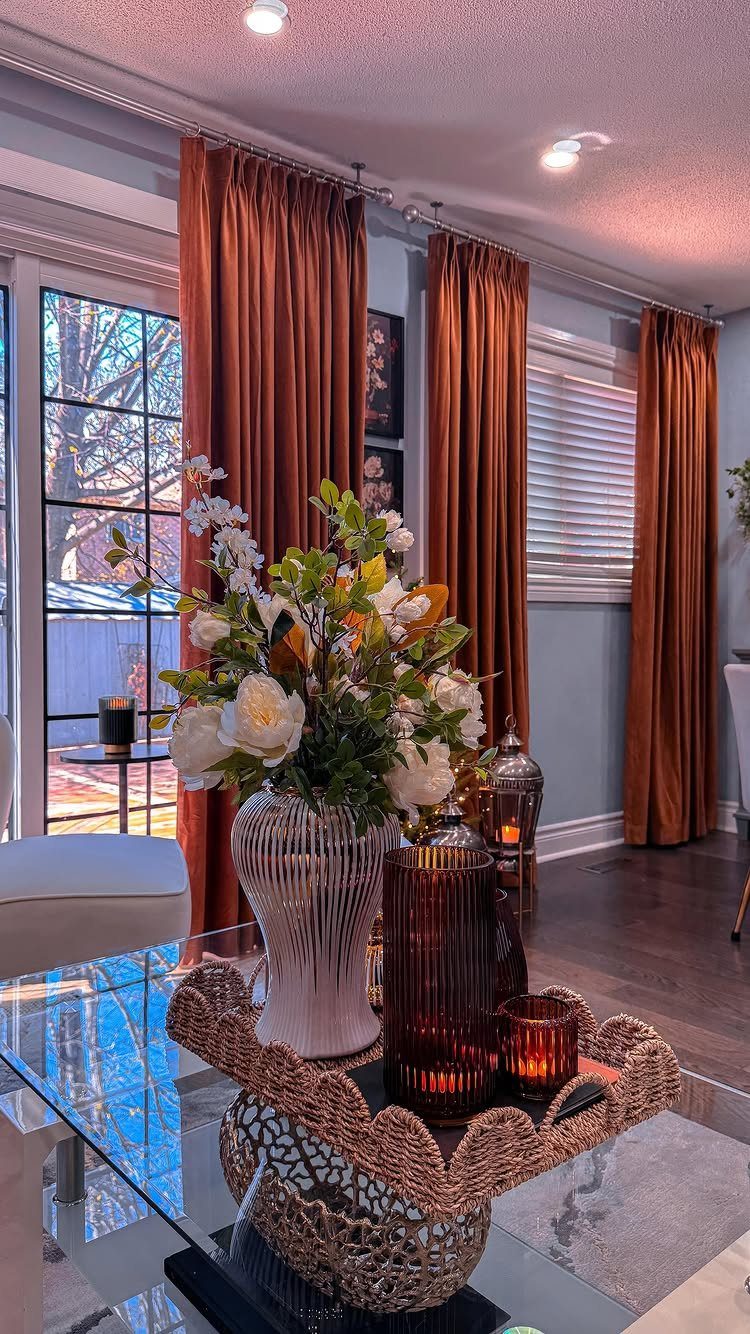
Thick fabric blocks light and insulates better than standard-weight panels. Velvet, lined cotton and wool blends all qualify, and the weight keeps them hanging straight without constant adjusting.
The burnt orange in this room warms a neutral palette without reading as loud as red. Heavy drapes also muffle street noise, which matters if your living room faces a busy road.
Expect to pay more per panel because of the extra fabric and lining.
I would budget for panels that hold up rather than the thinnest option at the store. Hang them high and let them pool slightly for a fuller look.
3. Floor-to-Ceiling Drapery Panels
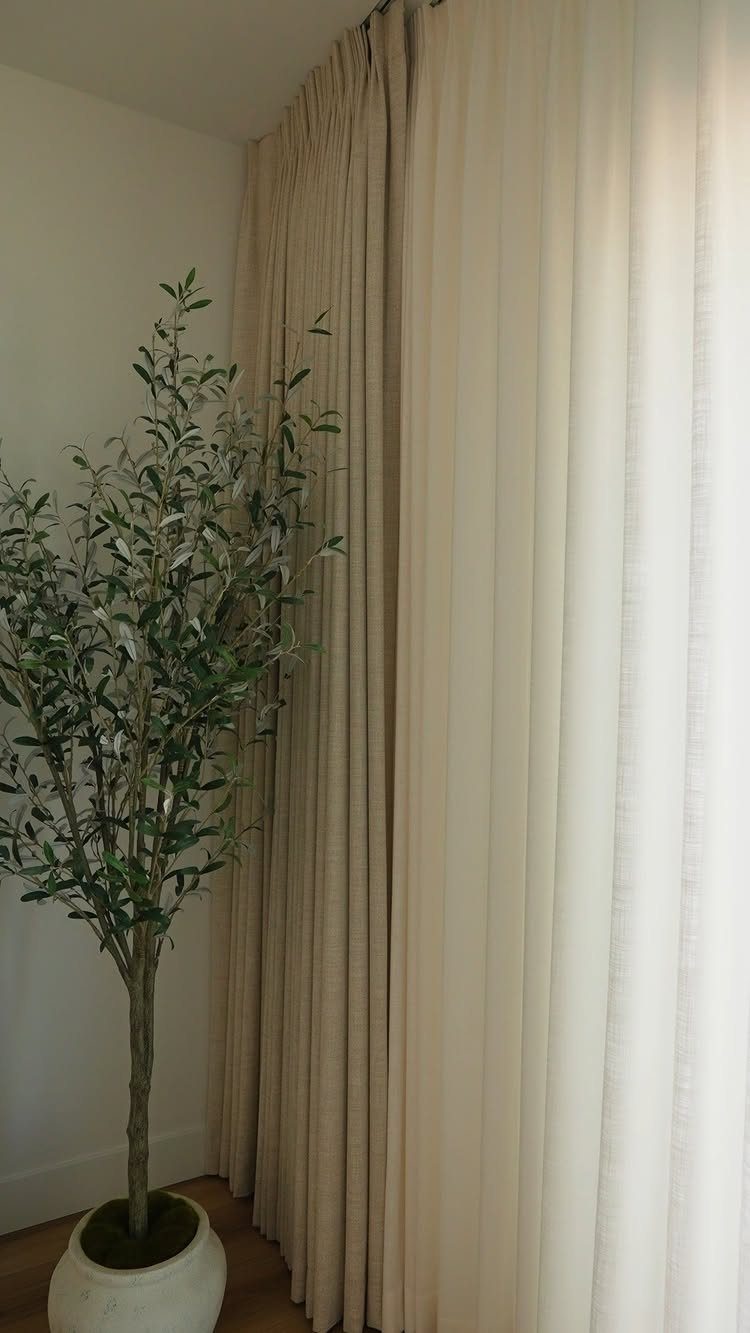
Mounting the rod at the ceiling line instead of just above the window frame makes the wall look taller. The panels draw the eye up, which helps in rooms with standard ceiling height.
I use a simple rod and rings, nothing ornate, so the fabric does the work. Measure floor to ceiling and add enough length so the panels just skim the floor or puddle slightly if you prefer that look.
Cream and beige work in most rooms. If you want pattern, keep it subtle so the vertical line stays clean.
4. Bold Colors
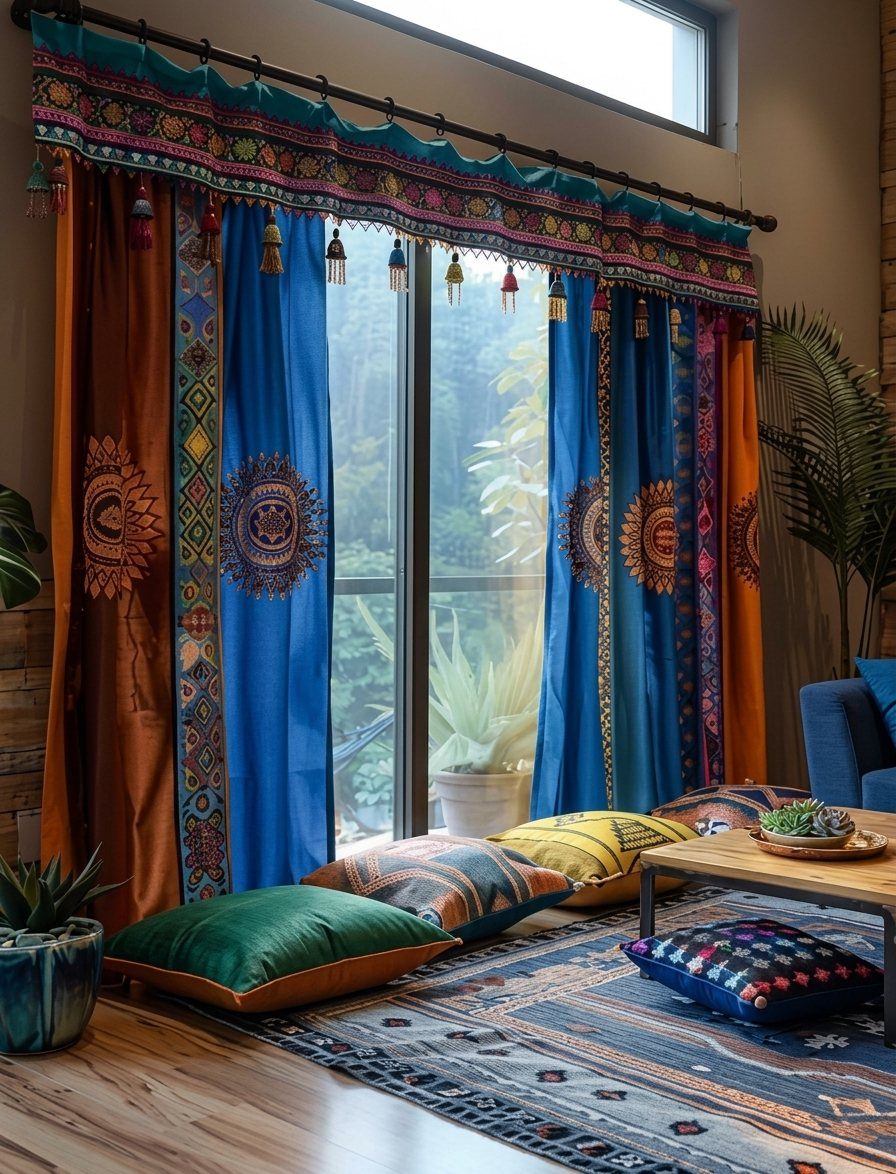
Color pulls a room together when the rest of the palette is neutral, or it can double down on an existing scheme.
The blue and orange here repeat in the rug and pillows, which ties the space together without matching everything.
I like a bold print when the walls and furniture stay simple. If your sofa is patterned, go with a solid curtain in one of its colors instead.
The valance at the top adds detail, but you can skip it if your ceiling is low. Bright curtains also fade faster in direct sun, so rotate them or line them with a fade-resistant backing.
5. Tailored Pinch-Pleat Panels
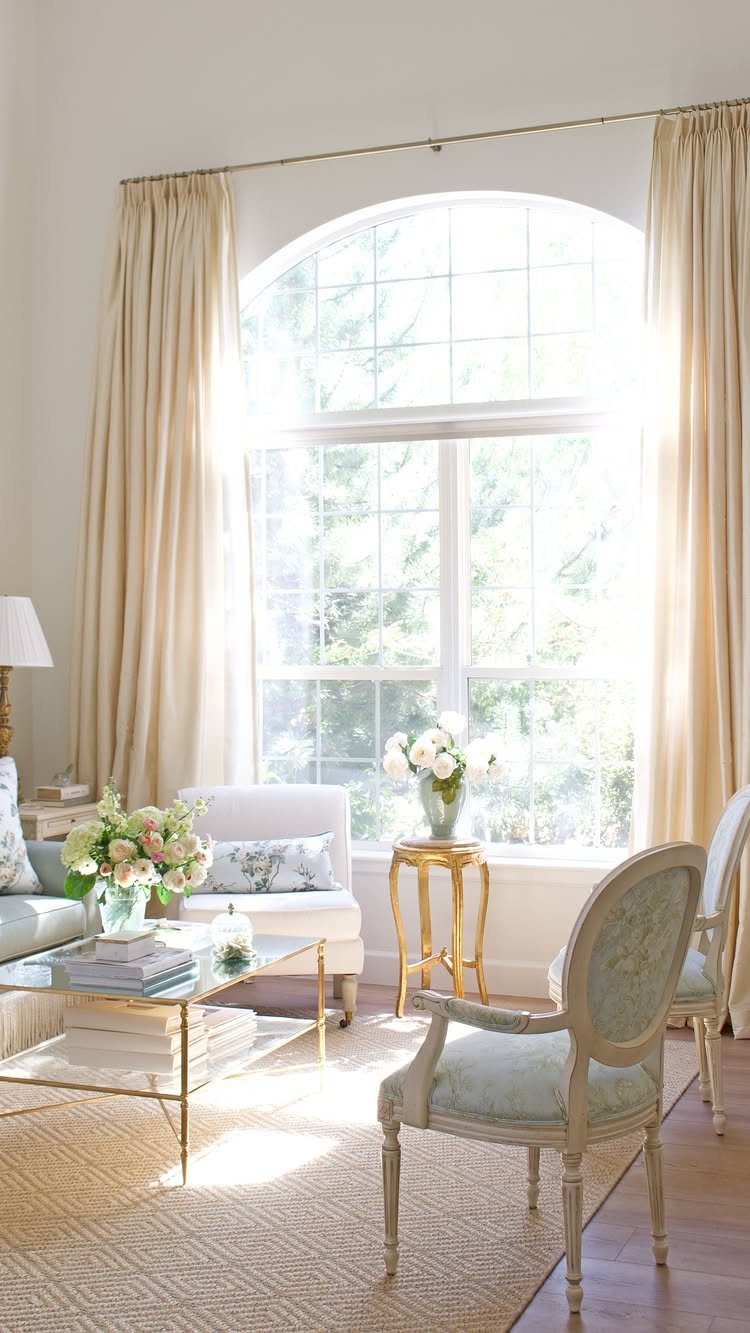
Pinch pleats hold their shape because the fabric is stitched into deep folds at the top, usually 3 or 5 per pleat. The structure gives a tailored look that suits traditional and transitional rooms.
I prefer them in cream or ivory when the rest of the room is busy, like this one with the arched window and glass table. The pleats catch light and add texture without pattern.
Order panels with the pleats already sewn, or buy flat panels and have them tailored. Allow an extra inch or 2 at the bottom for a slight puddle, which softens the formality.
6. Modern Concealed Ceiling Tracks
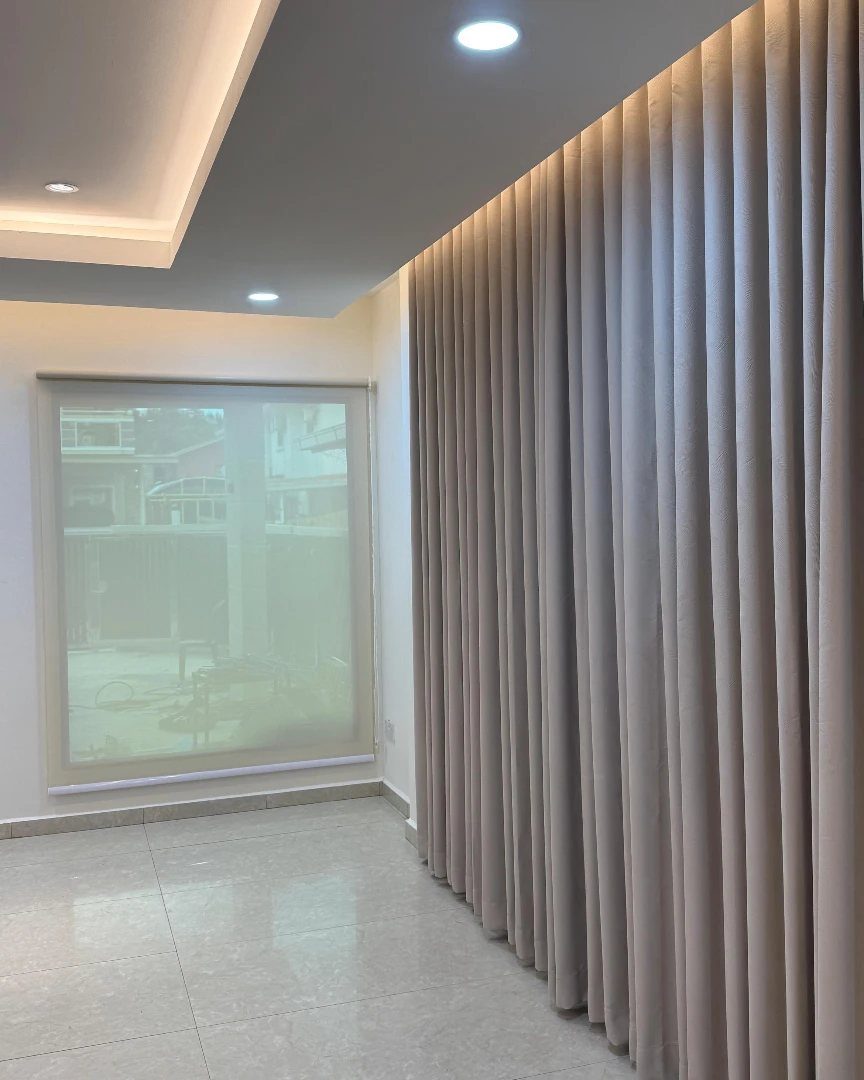
The track hides in the ceiling so nothing interrupts the line of the curtain. This works well when the ceiling is low or the window spans most of the wall, because a visible rod would crowd the space.
I like this for sliding doors and corner windows where a traditional rod can’t reach. The pleated panels hang cleanly without hardware showing, and you can pull them open without lifting or adjusting anything.
Most tracks use clips or carriers that slide inside the channel. Installation requires screwing into the ceiling, so find the joists or use anchors rated for the weight of your fabric.
Choosing the Right Look
Window orientation decides how much control you need. West-facing glass gets afternoon glare that washes out a TV screen, so lined or layered fabric matters more than on a north wall.
When the recess is too shallow, brackets won’t fit and you’ll mount outside instead.
Measure the recess before you plan anything that sits inside the frame. A radiator right under the sill or molding that meets the casing will cut off half your choices before you start.
Fabric can blend or contrast. If the walls and furniture are neutral, the curtain is where color can land.
Measuring for Curtains
Check how much clearance you have between the top of the casing and the ceiling.
That gap decides whether you can mount the rod high enough to add visual height. Whether you have 4 inches or 14 will send you down completely different paths.
Giving yourself room to stack the fabric past the frame when the panels are open keeps the daylight clear and makes the window read wider.
Common Mistakes
Stopping the fabric a few inches short of the baseboard chops the height and makes the whole treatment look unfinished.
Let them reach the floor or rest an inch past it. Once you cut fabric, you cannot add length back.
One panel pulled flat looks skimpy even when the fabric itself cost real money.
Skip oversized finials if the rod sits close to a corner or another wall. Slim end caps or rods that curve into the wall keep the hardware from crowding the space.
Frequently Asked Questions
What is the most stylish way to hang curtains?
Mount the rod at the ceiling line instead of just above the window frame so the wall reads taller.
Position brackets wide enough that open panels stack past the frame and leave the glass clear. Fabric that touches the floor or trails an inch past it looks deliberate.
How to choose luxury curtains for a living room?
Pick thick fabric like velvet, lined cotton or wool blends that hang straight and hold their shape.
Panels need enough fullness to avoid looking flat when pulled across, which means ordering wider than the window itself. High-quality fabric costs more but lasts longer and reads richer than thin material.
Which color curtain is best for a living room?
Color reads as intentional when the walls and sofa stay quiet, or when the curtain pulls from a tone already sitting in the room.
Cream and off-white go anywhere without asking much of the rest of the space. When pattern lives on the upholstery, pull a solid from it instead of layering prints.






