
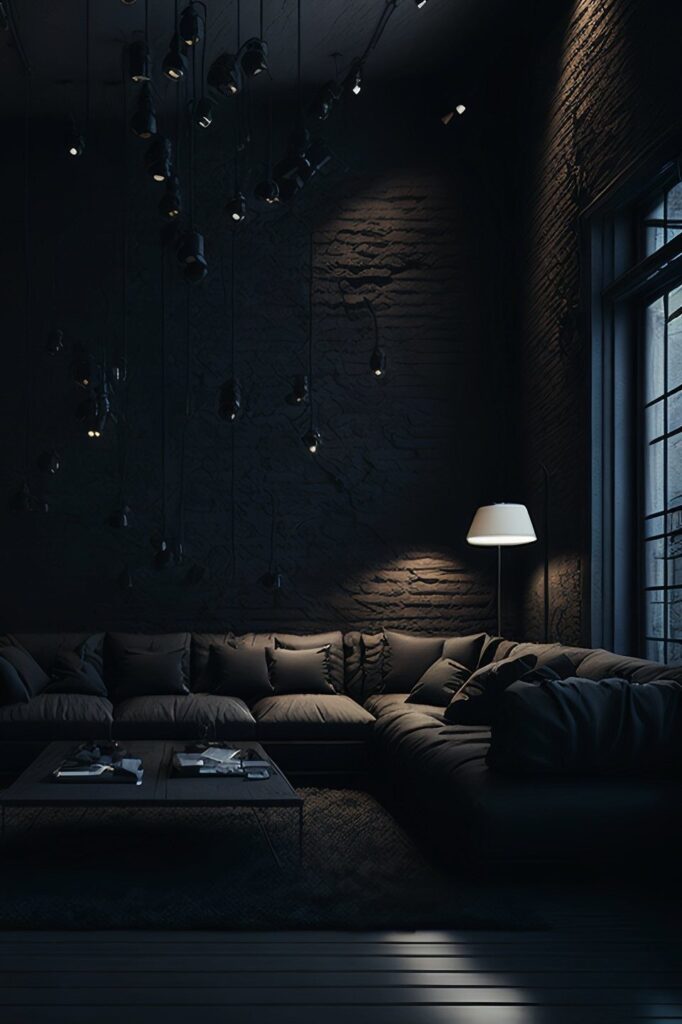
Some of these ideas need nothing more than paint and a bulb swap, while others call for paneling or a full fireplace treatment.
1. Plush Velvet Fabrics
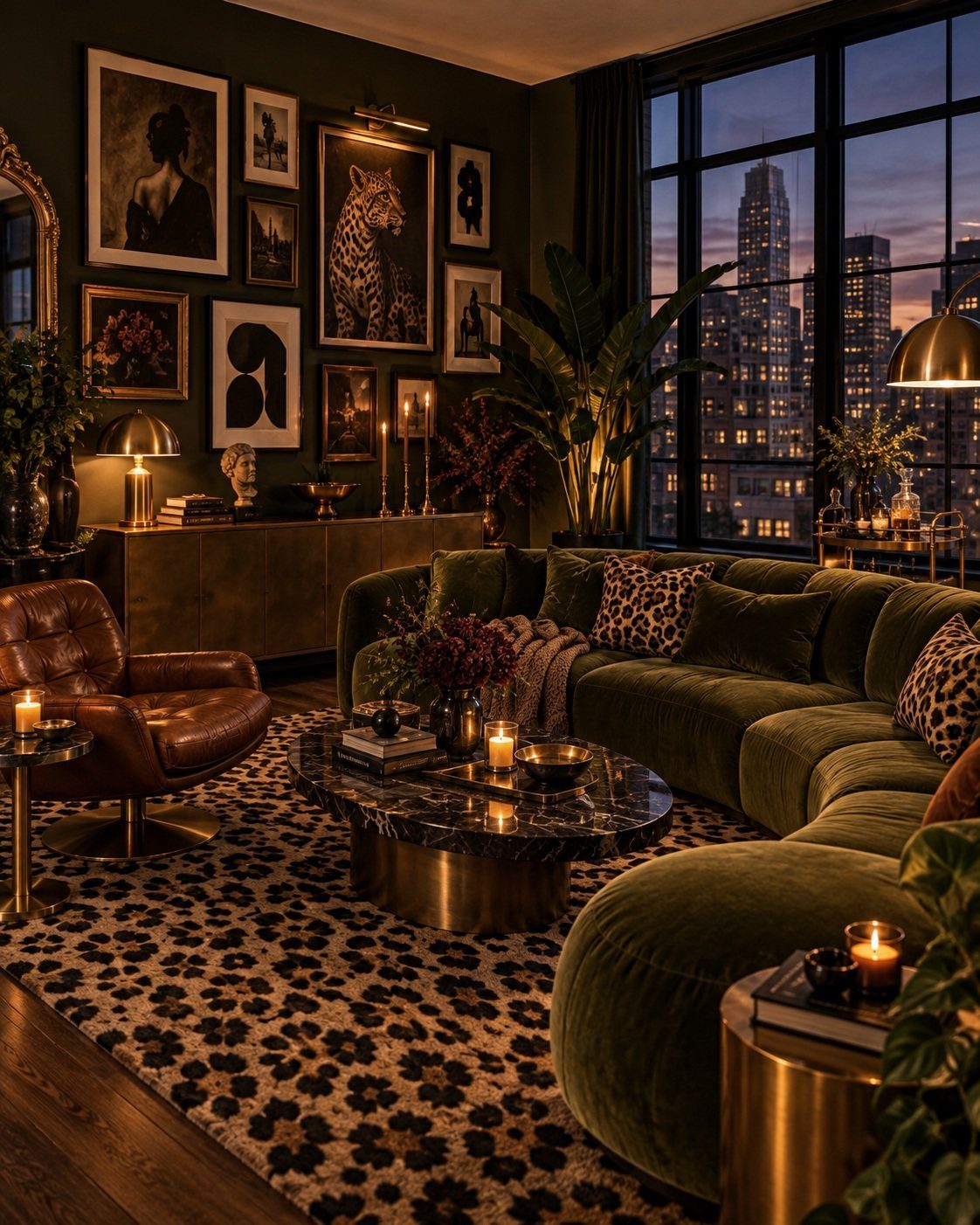
Velvet brings the kind of depth dark rooms need. The nap catches light differently across its surface, so a single piece reads as several shades at once instead of disappearing into the wall.
A sofa or a pair of chairs gives you enough fabric to make the effect work. Green, charcoal, or burgundy all hold up better than lighter jewel tones in a room with little natural light.
The texture alone adds warmth without needing pattern, which makes velvet a good first move if you’re not ready to commit to wallpaper or a bold rug.
2. Large-Scale Patterns
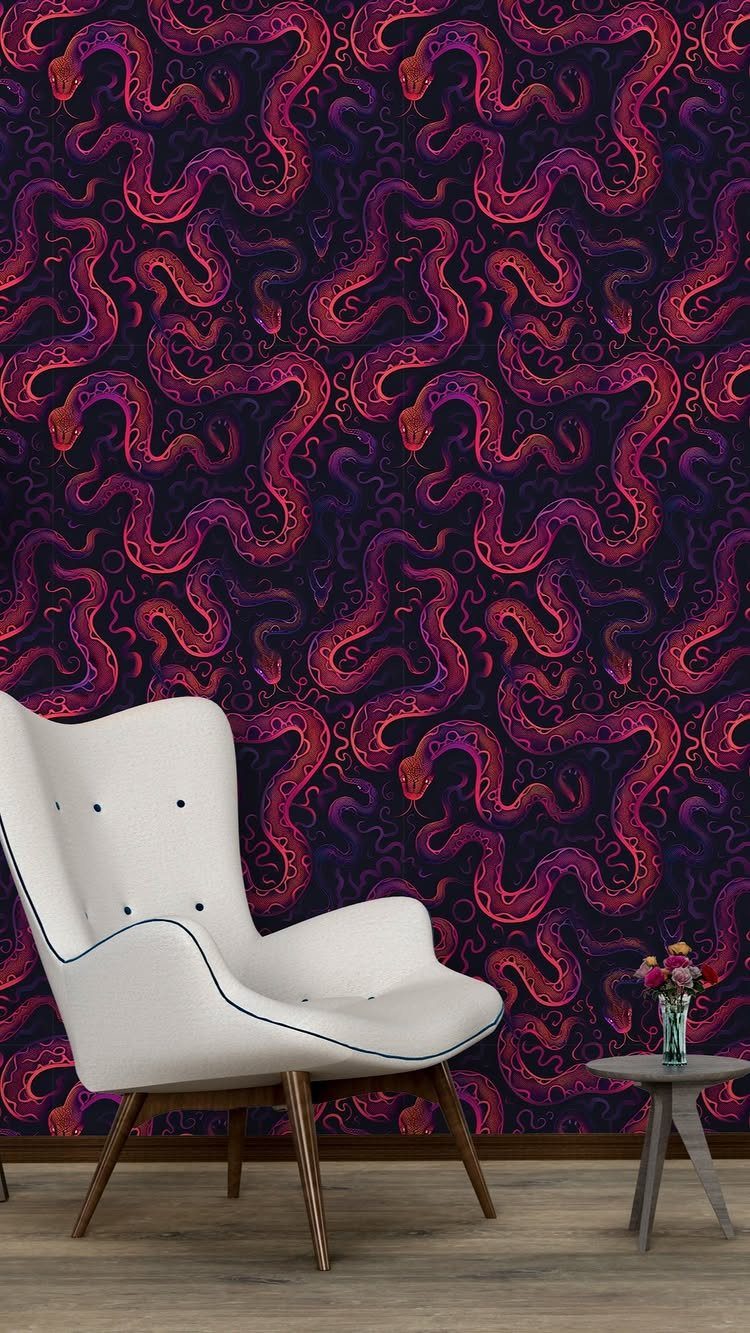
A bold pattern pulls attention in a way solid dark walls can’t. Snakes, florals, or abstract shapes at this scale turn one wall into the room’s anchor without adding light or breaking up the moody palette.
Look for designs with at least one shade darker than your trim. That contrast keeps the pattern from feeling like an afterthought.
Install it on the wall behind your seating. A single accent wall is enough; more than that and the room loses its focus.
3. Warm-Toned Light Bulbs
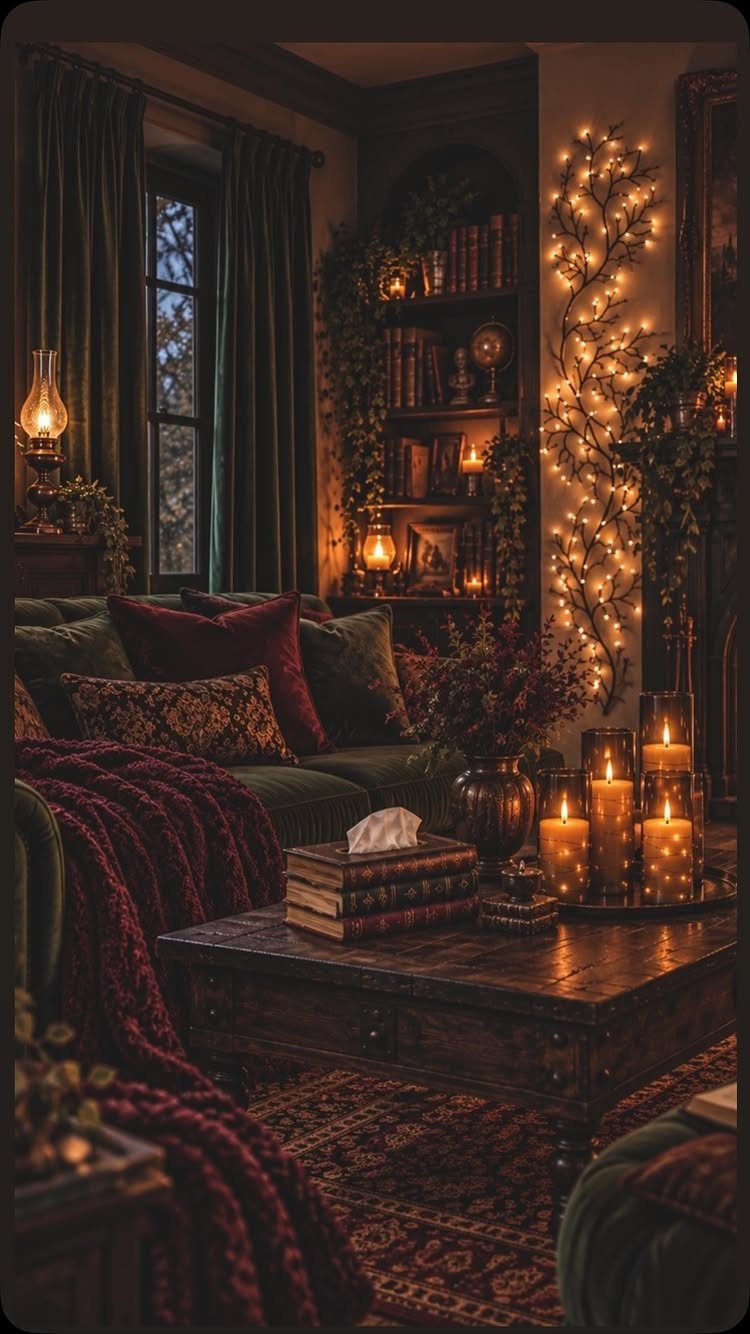
Cool white bulbs flatten a dark room. Warm bulbs at 2700K or lower bring out the brown and red undertones in charcoal, navy, and olive, so the space feels intentional instead of dim.
Layer your light sources.
A single overhead fixture won’t reach the corners, and those shadows turn moody into cave-like. Table lamps, floor lamps, and string lights spread the glow without adding glare.
Candles help, but only if you actually light them. A row of unlit candles just looks like you’re staging the room for a photo.
4. Dark Ceiling
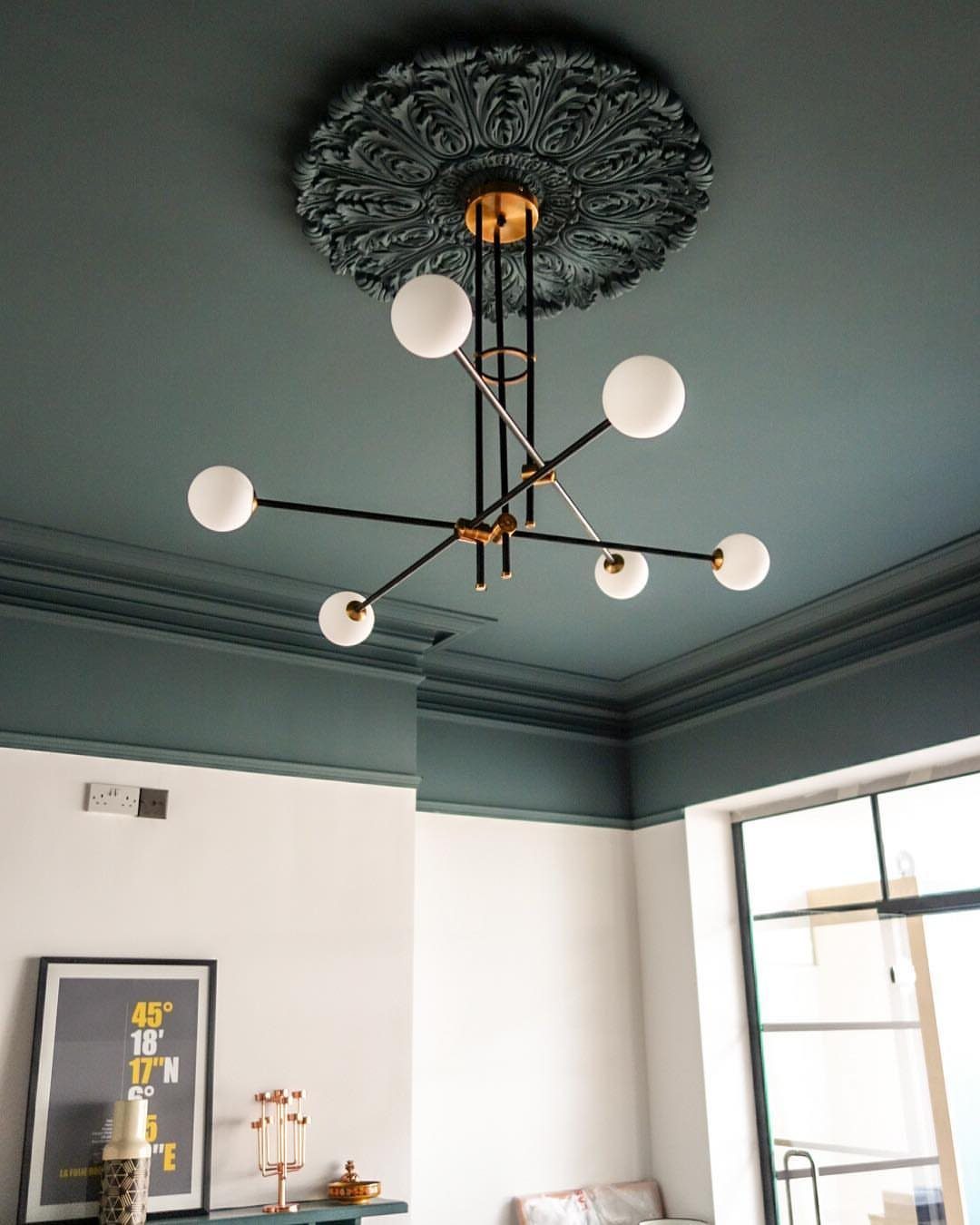
Painting the ceiling the same dark color as the walls pulls the room together in a way white never will. The ceiling stops acting like negative space and becomes part of the envelope.
Teal, charcoal, or deep plum all work. If your walls are already dark, go one shade darker on the ceiling so there’s still definition where they meet.
A ceiling medallion or a statement fixture keeps the plane from feeling empty. Without one, a flat expanse of dark paint can read unfinished.
5. Gothic Elements
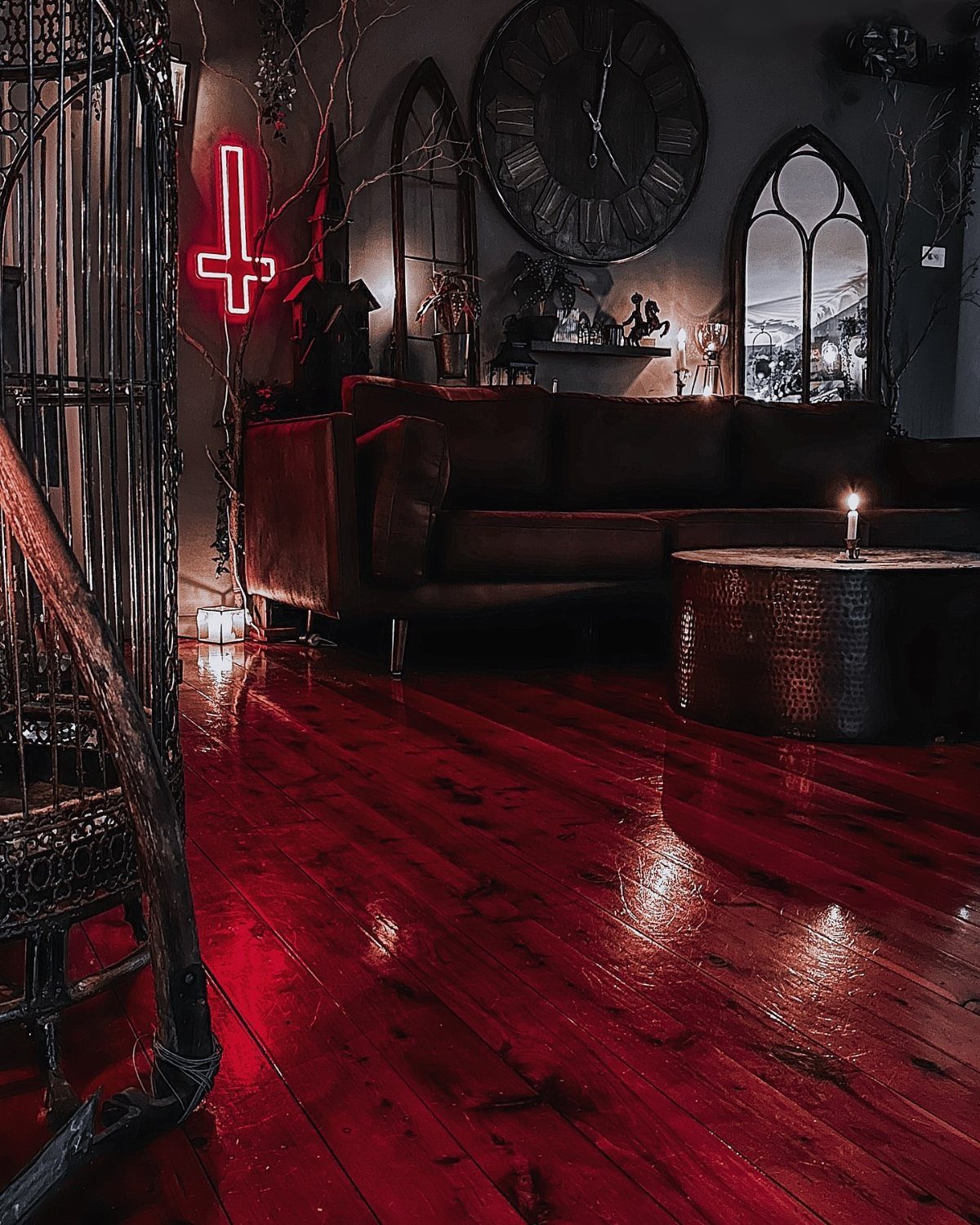
Arched mirrors, wrought iron, and anything with a pointed or medieval silhouette give a dark room the kind of drama suburban neutrals can’t touch. Gothic details work because they were made for stone interiors with little daylight.
Start with one or two pieces. A mirror with a gothic arch or a candelabra-style chandelier sets the tone without turning the room into a costume.
Neon signs in red or white add a modern edge if you want to keep it from feeling like a period room. The contrast between old forms and new light makes both read sharper.
6. Deep Red Walls
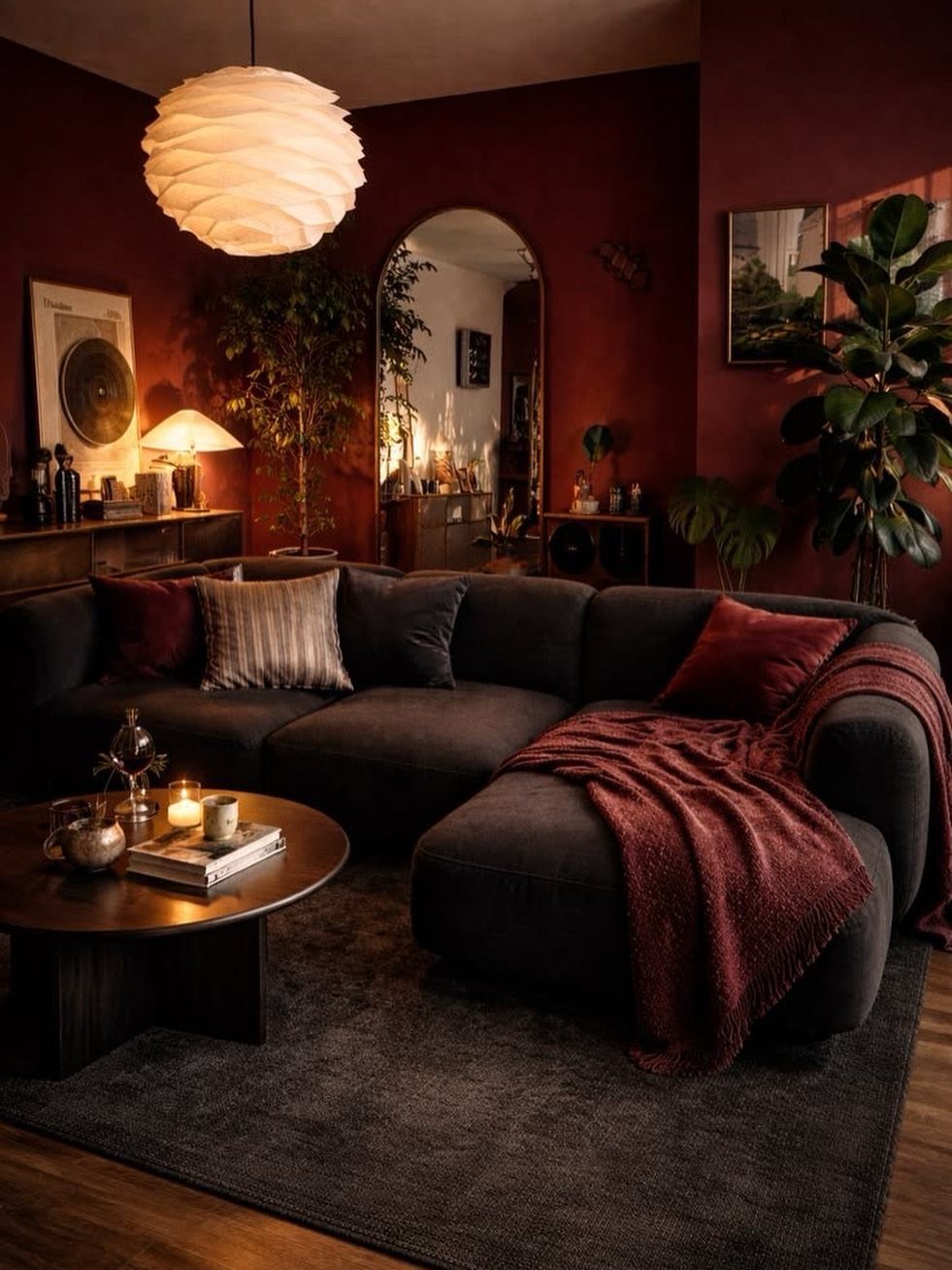
Deep red sits between burgundy and rust, dark enough to hold a moody palette but warm enough to keep the room from feeling cold.
It works especially well if your furniture is already dark and you need the walls to do the work.
Pair it with charcoal upholstery and brass or black metal accents. White or cream trim keeps the red from swallowing the room whole.
Test a sample on at least 2 walls before you commit. Red shifts more than any other color depending on which direction the light comes from.
For a truly dark and moody look, choose colors with a low LRV, as they absorb more light, contributing to that deep, rich and enclosed feeling within a room.
7. Black Brick Accent Walls
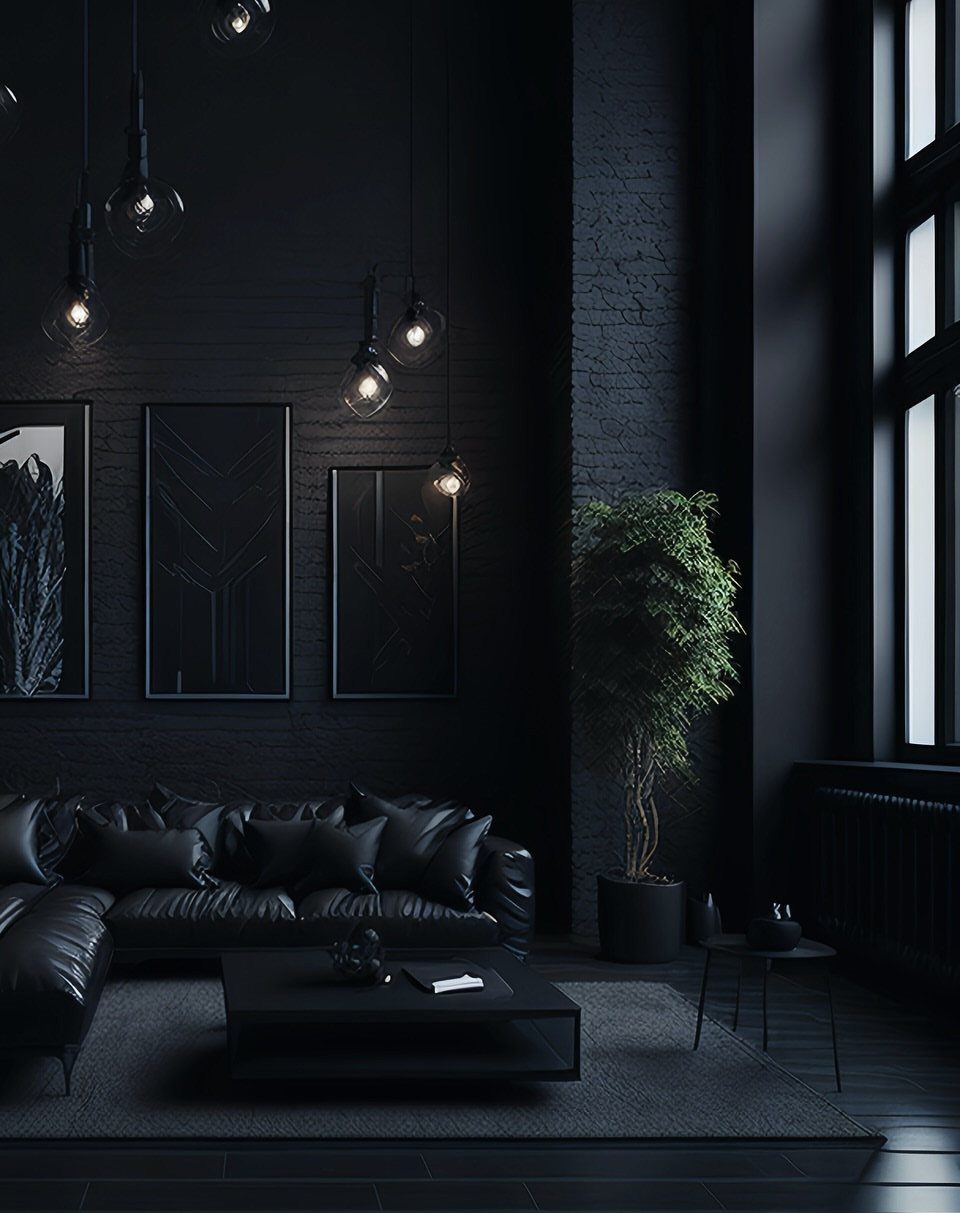
Brick painted black reads industrial without needing exposed ductwork or metal everywhere else. The texture keeps it from feeling flat the way black drywall can.
If you’re painting existing brick, use a masonry primer first.
Latex paint sits on top and peels in a year. Acrylic masonry paint soaks into the surface and holds.
Black furniture against black brick works if you add contrast somewhere else. A light rug or cream trim keeps the room from collapsing into one dark mass.
8. Dark Olive Green Paneling
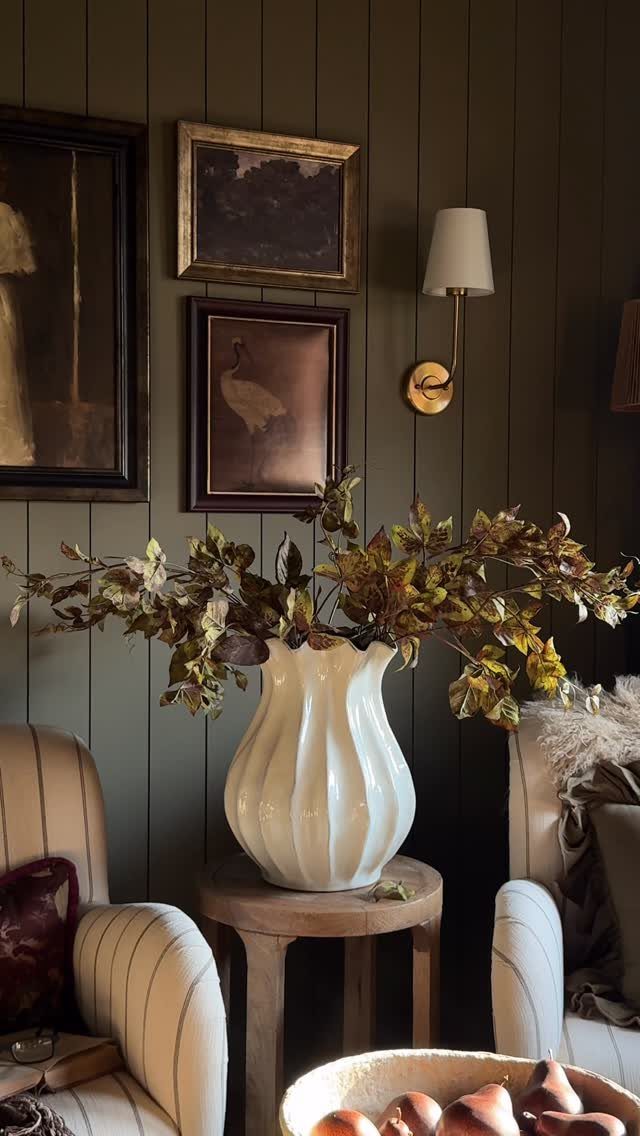
Paneling in dark olive gives you the structure of wainscoting without the formality. The green holds warmth better than charcoal or navy, so the room feels grounded instead of cold.
Picture-frame molding is the simplest version. Run 1×3 or 1×4 boards in rectangles directly over painted drywall, then paint the whole wall one color.
Hang art low, just above the chair rail if you have one. High-hung frames float in a way that works on white walls but not here.
9. Stone Fireplace with Black Walls
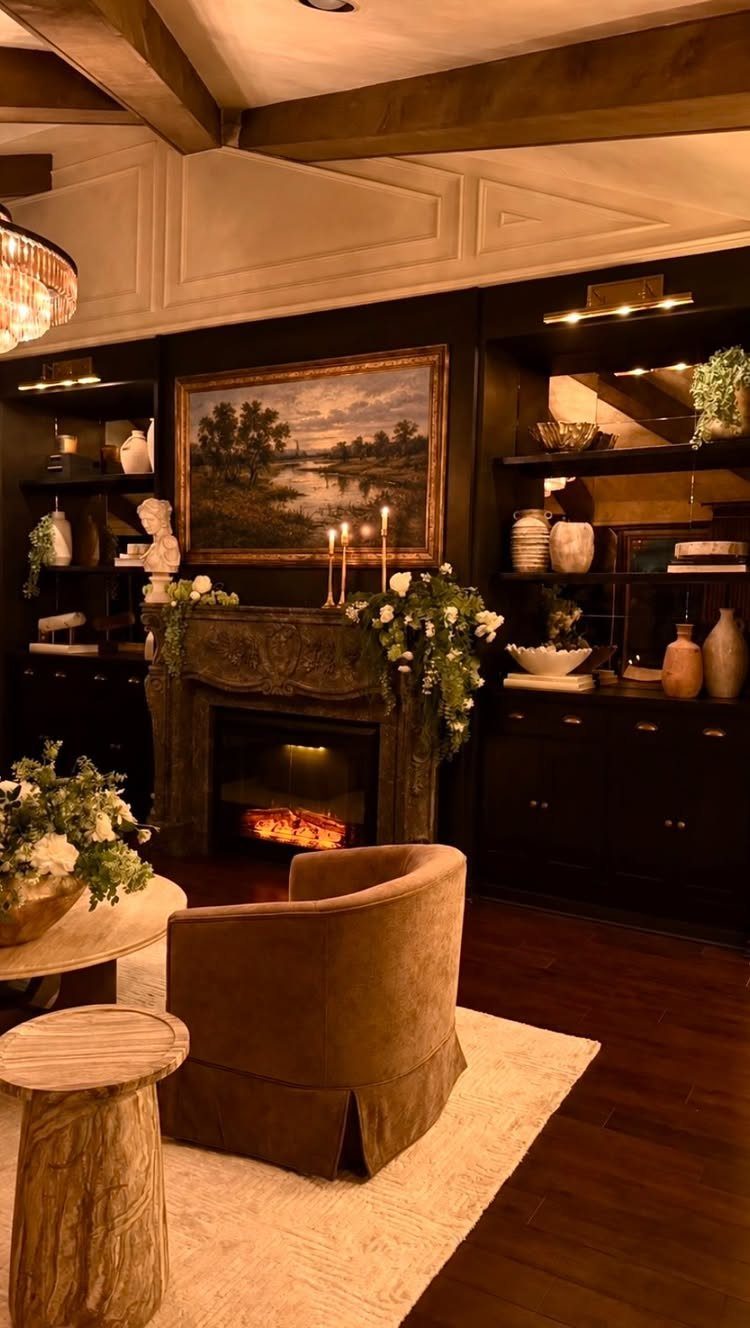
Stone pulls heat into the room in a way painted brick or tile doesn’t. The irregular surface catches firelight, and black walls make that flicker the only thing moving.
If you’re adding stone veneer over an existing surround, stack it floor to ceiling. A half-height surround with drywall above it looks unfinished once the walls go dark.
Wood beams overhead balance the weight of a stone fireplace. Without them, the fireplace can feel bottom-heavy.
Choosing the Right Colors
A color that looks rich on a single swatch can read completely different once it wraps the room, and the shift gets worse if your windows face north.
North light is cooler and flatter.
It pulls the warmth out of charcoal and navy, so what looked sophisticated in the store can feel cold once it’s up. South-facing rooms get warm afternoon sun, and that same paint will glow.
If your room gets little natural light, stick with warm-toned darks. Charcoal with brown undertones holds up better than true gray.
Paint samples at different times of day. Morning light and evening light are not the same thing.
Creating Balance
A dark room turns gloomy when everything sits at the same visual weight.
I offset all that darkness with a lighter anchor piece: a pale rug under the coffee table, a canvas with some off-white in it, or brass hardware that throws a little reflection.
Mirrors and brass both reflect enough to keep the space from feeling flat. If the room still feels closed in, add one more reflective surface before you repaint.
Texture matters as much as color.
Flat charcoal walls look better next to lacquered molding, and I throw in linen pillows or a sheepskin to keep texture from going flat. A room with no variation in sheen reads one-dimensional no matter how good the palette is.
Plants bring life without adding clutter.
Functionality in Design
A dark room needs light from more than one source.
Add a floor lamp and at least one table lamp.
Spread them across the room so the light reaches all 4 corners. If you can still barely see, add another fixture before you adjust the paint.
Cool white flattens everything.
Sheer curtains or translucent shades let in diffused light without washing out the mood. A dark room that gets no daylight at all needs more lamps, not lighter walls.
Frequently Asked Questions
Will dark interior design work in my home?
Dark colors work in nearly any space, including small rooms and those with limited natural light. Instead of making a room feel smaller, deep tones create intimacy and warmth by wrapping the space in a deliberate envelope.
Balance the darkness with reflective surfaces, layered lighting, and at least one lighter anchor piece so the room doesn’t flatten into a single dark mass.
How do I make my room dark and moody?
Start with a dark wall color that has warm undertones, then add multiple light sources at different heights so all 4 corners get coverage.
Layer in varied textures like velvet upholstery, painted brick, or picture-frame paneling to keep the surfaces from reading flat.
One lighter element, whether a pale rug or brass hardware, gives the eye somewhere to rest and keeps the room from turning gloomy.






