
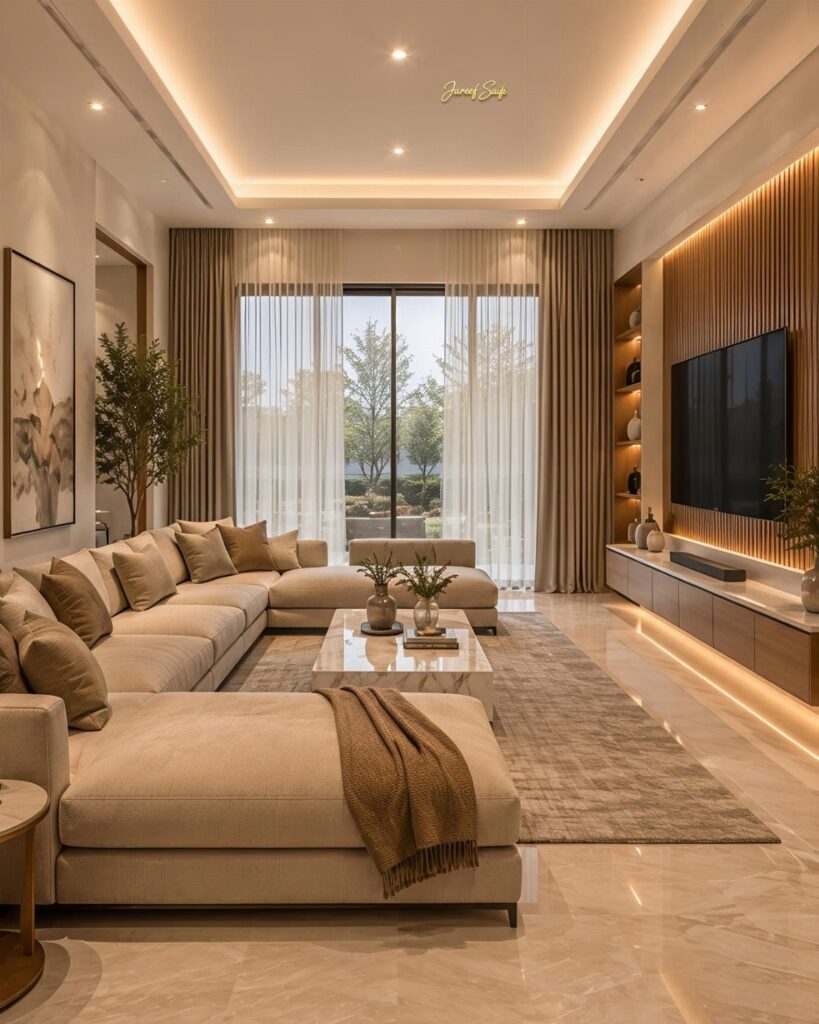
A sectional that seats 6 or more pulls the group into one conversation instead of scattering people across mismatched chairs, and the right coffee table height keeps snacks and remotes within reach without blocking sightlines.
Built-in shelving flanking the fireplace uses the full height of the wall and fits the alcoves exactly, while a freestanding media console does much of the same job and leaves with you if you move.
Performance fabric wipes clean with a damp cloth, leather ages instead of wearing out, and solid wood takes a dent without chipping through to particleboard underneath.
1. Sofas and Chairs
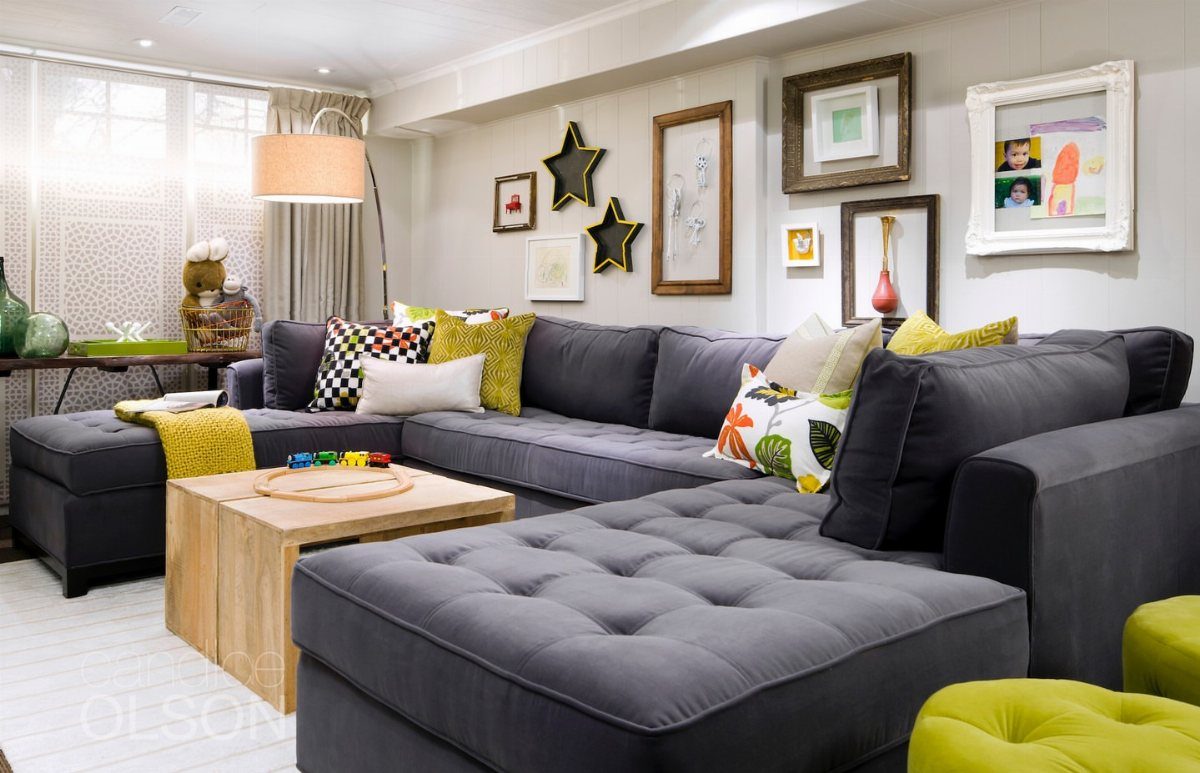
A sectional that seats the whole group without leaving anyone on the floor makes the room work. The L-shape pulls conversation into a corner, and the deep cushions mean people stay longer than they would on a stiff dining chair.
Look for something upholstered in a fabric that can take spills. Performance weaves shed most stains with a damp cloth, and the tufted back gives shape without fussy piping that wears out first.
Pillows in a few strong colors lift the grey without repainting.
2. Layered Lighting
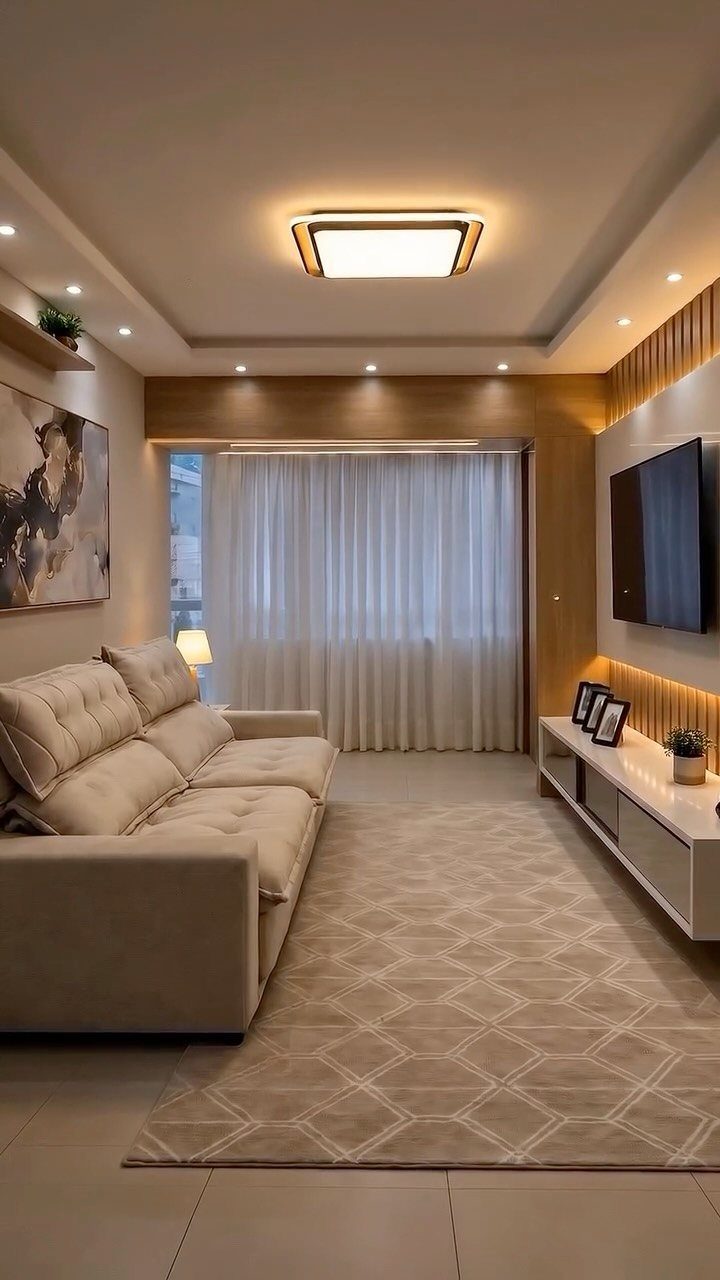
One overhead fixture leaves the corners dark and flattens everything under it. Adding table lamps, floor lamps, or recessed spots means you can turn on only what the moment needs.
Recessed ceiling lights brighten the whole space evenly, while a lower fixture over the sofa pulls the eye down and adds a second layer of light. A lamp on the console or side table fills in wherever the overhead misses.
Dimmers let you drop the level for movies without walking to flip switches.
3. Cozy Color Schemes
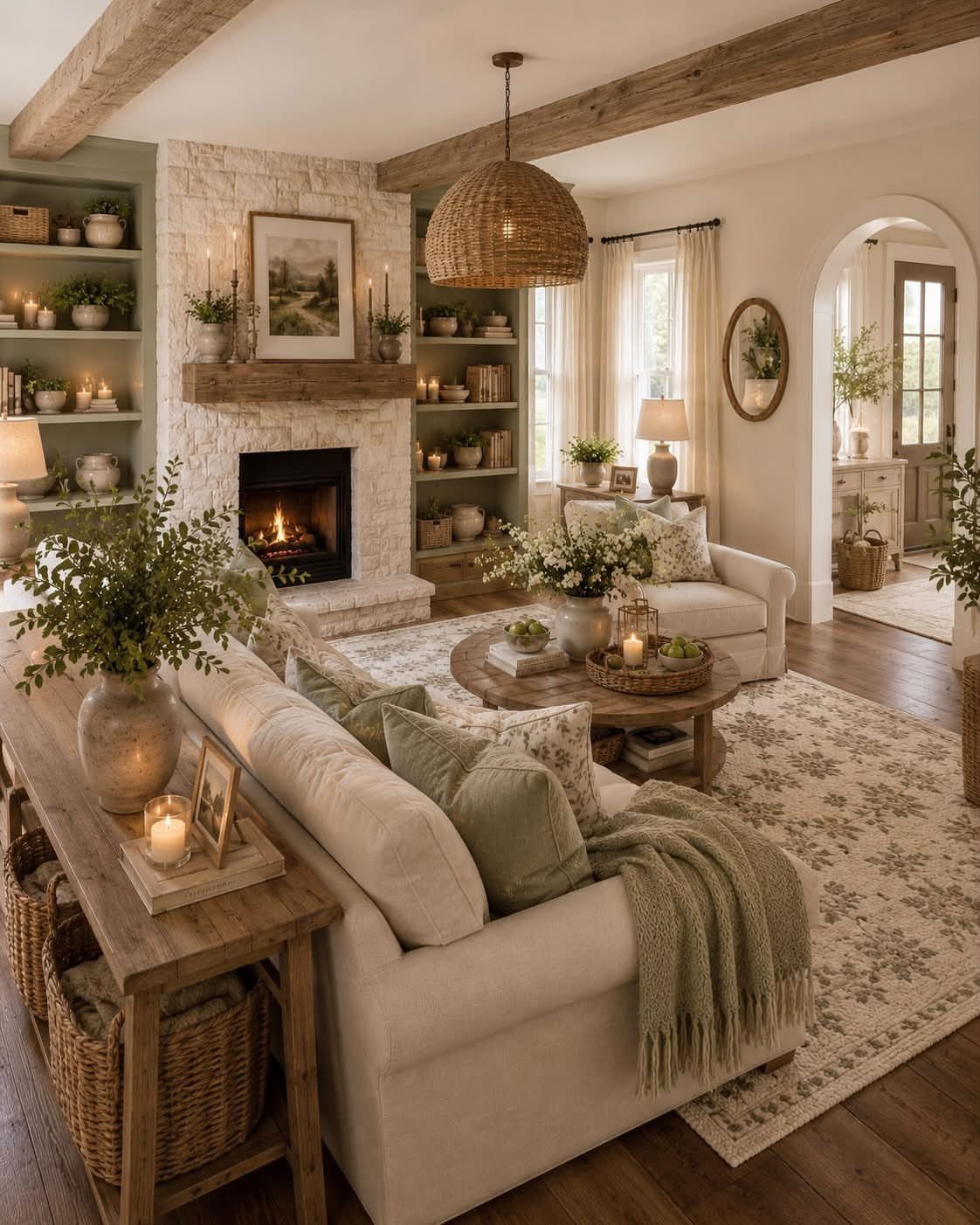
Neutrals in the warm half of the palette, creams and soft greens and the brown tones in raw wood, make a room feel settled the minute you walk in. The fire helps, but the color does most of the work.
Green brings the outside in and skips the full wall of paint. Use it in pillows, throws, or a single chair, and the room reads as calm instead of cold.
Stone around the fireplace adds texture that white drywall cannot, and the rough surface catches the light differently all day.
4. Gallery Walls of Family Photos
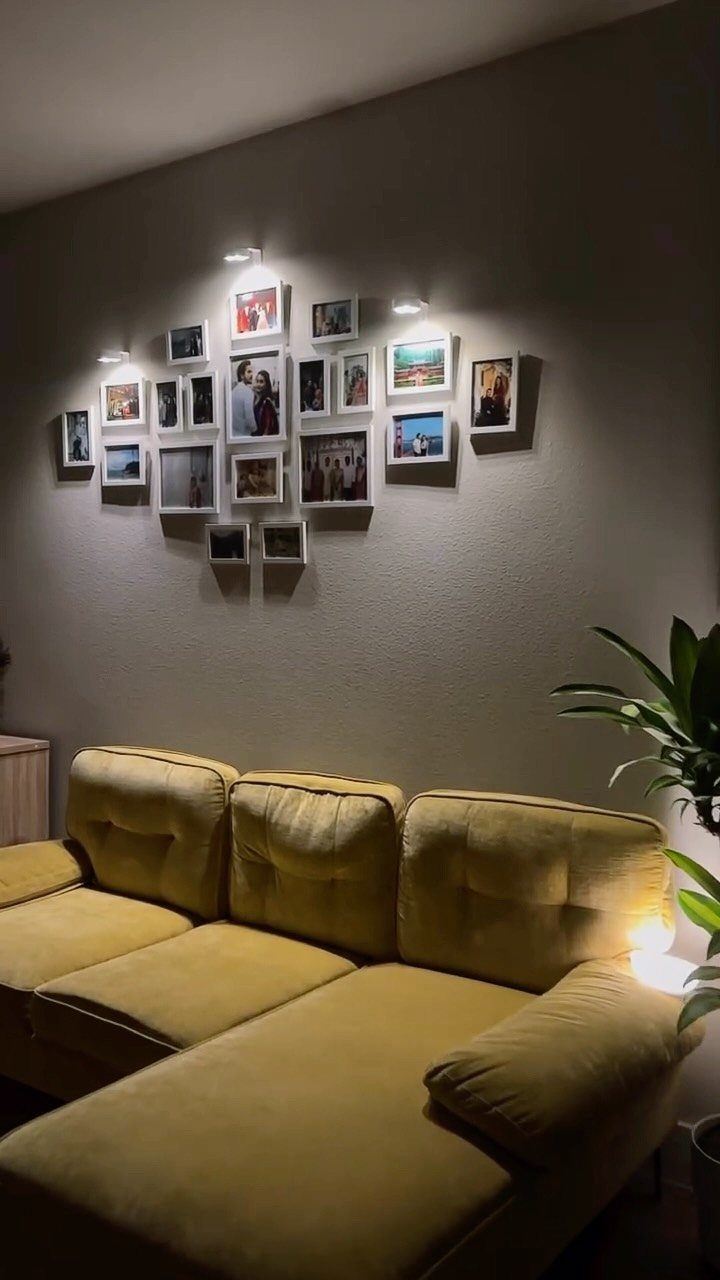
Framing family photos in matching frames and hanging them in a tight grid turns snapshots into something that belongs on the wall. The repetition makes the collection feel intentional, not scattered.
Small frames, 5×7 or 8×10, keep the wall from looking like a museum. Hang them close, an inch or two apart, and use a level so the grid reads clean from the opposite wall.
Spotlights angled down from the ceiling highlight the photos without washing them out. Black frames disappear against a dark wall and let the faces do the talking.
5. Throws, Pillows, and Rugs
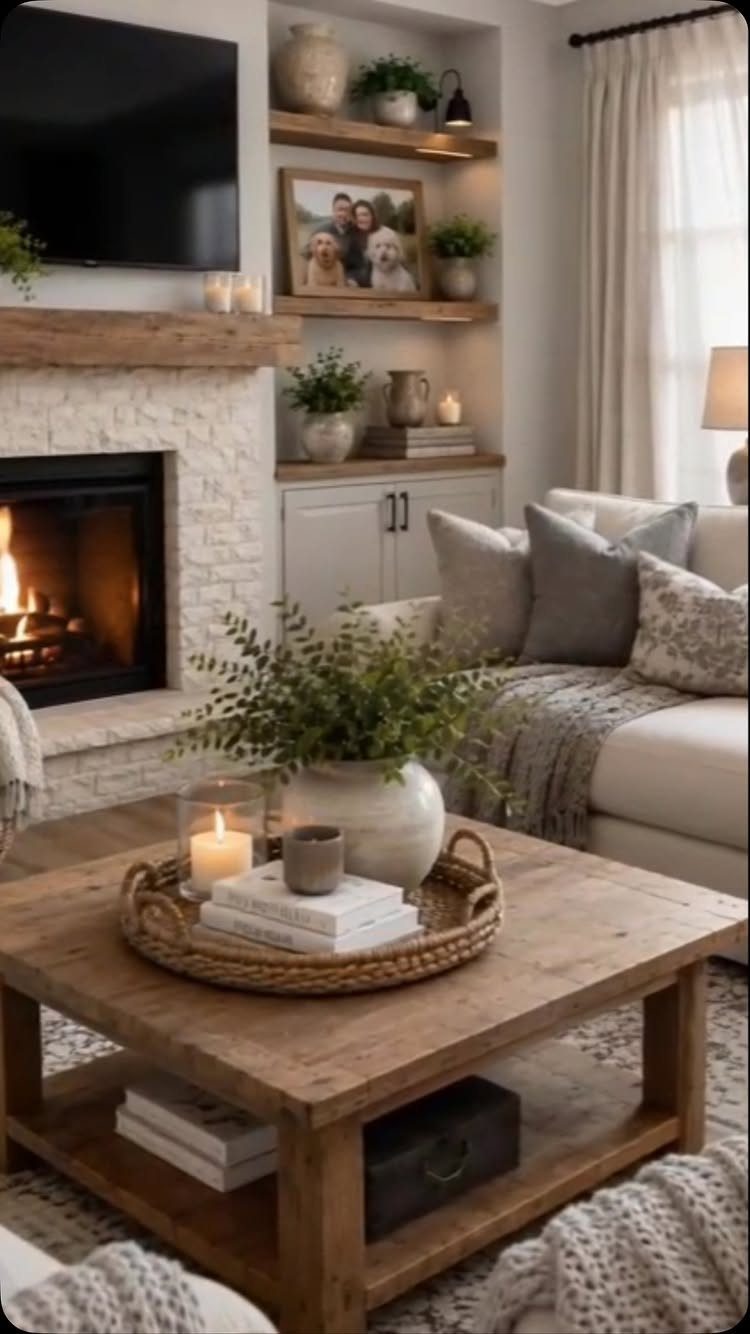
Textiles soften hard surfaces and give the room a finished look without construction.
A chunky knit throw folded over the arm of the sofa invites someone to sit down, and a rug under the coffee table anchors the furniture so it reads as a group instead of pieces pushed against the wall.
Pillows in different textures, linen next to velvet or a cable knit, add depth without clashing. Stick to a narrow color range and the mix works.
Rugs in natural fiber or a low pattern hide traffic better than solid light colors.
6. Furniture Arranged in Zones
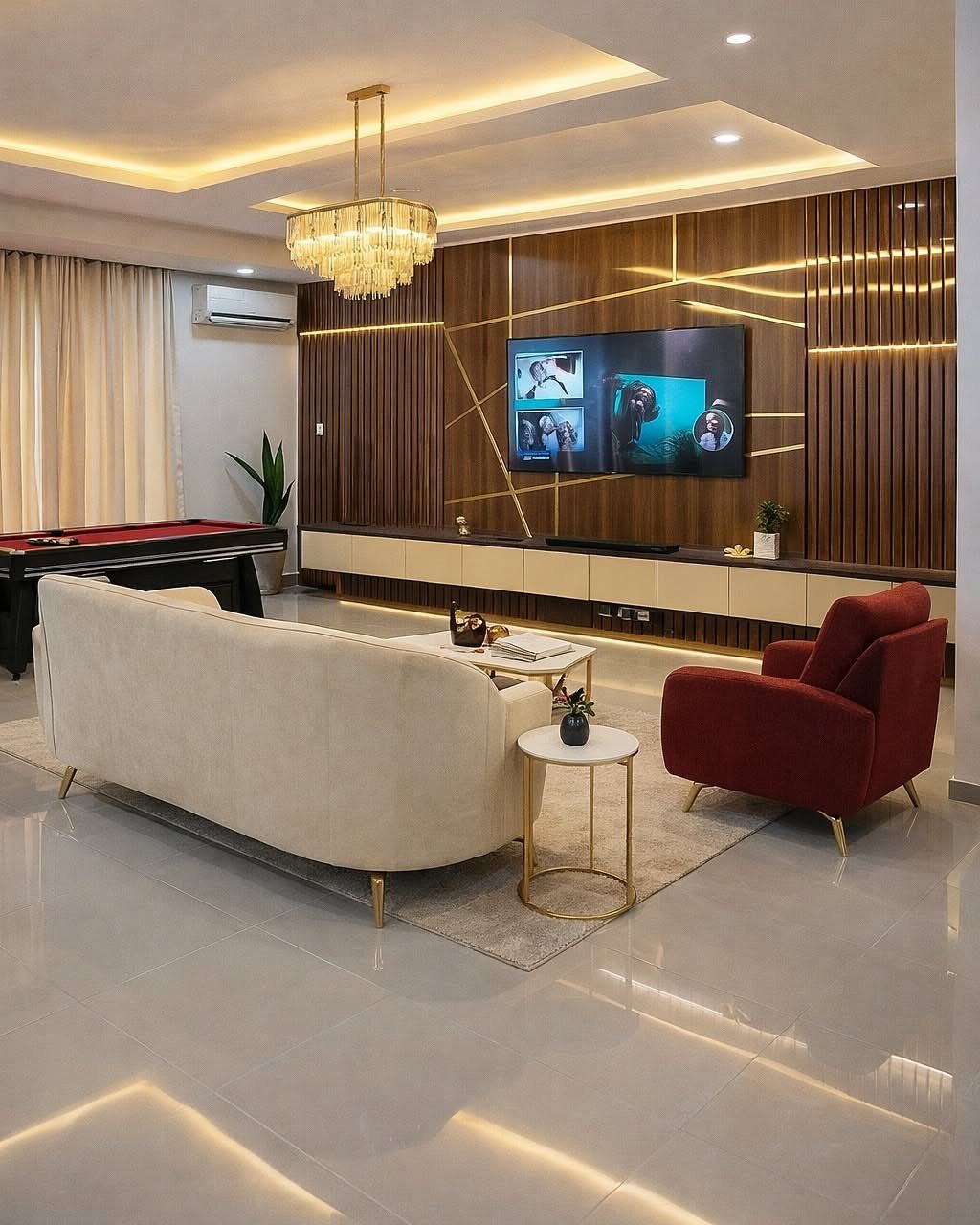
Dividing the room into separate areas, one for watching TV and another for playing or working, means more than one activity can happen without everyone tripping over each other.
Leave enough walkway between zones so someone can move from one side to the other without squeezing past furniture.
A large room needs this kind of division or it feels empty in the middle. Smaller spaces benefit too, as long as each zone has enough room to be usable.
7. Furniture That Doubles as Storage
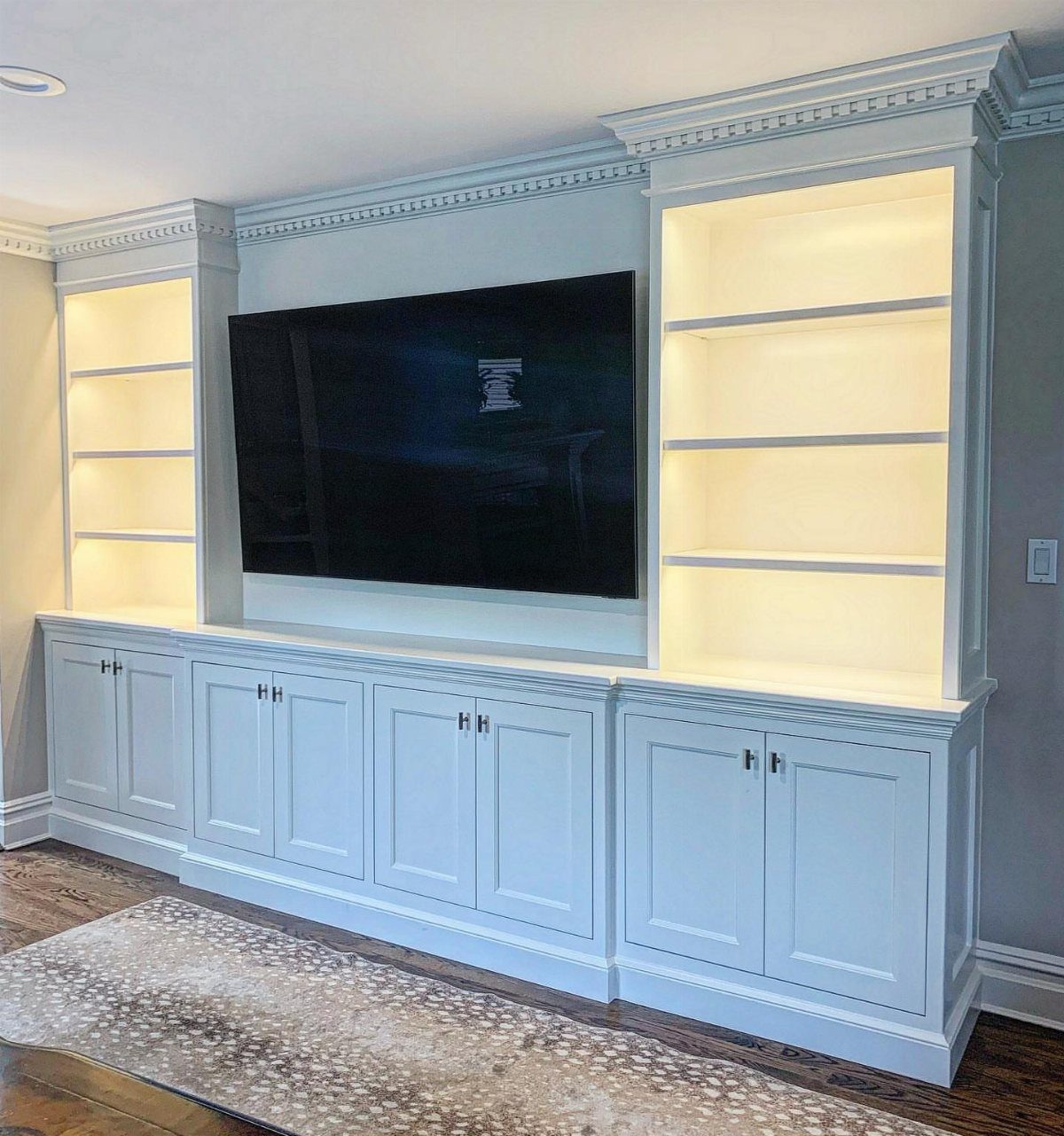
The split keeps remotes, charging cables, and stacked games out of sight while books or a few pieces of pottery fill the upper rows.
Built-ins fit the wall exactly and use height a standalone console cannot reach. If you rent or move often, a tall bookcase with doors at the bottom does the same job and goes with you.
The closed storage below the television puts everything you need within reach of the sofa without scattering it across the coffee table.
8. Focal Points
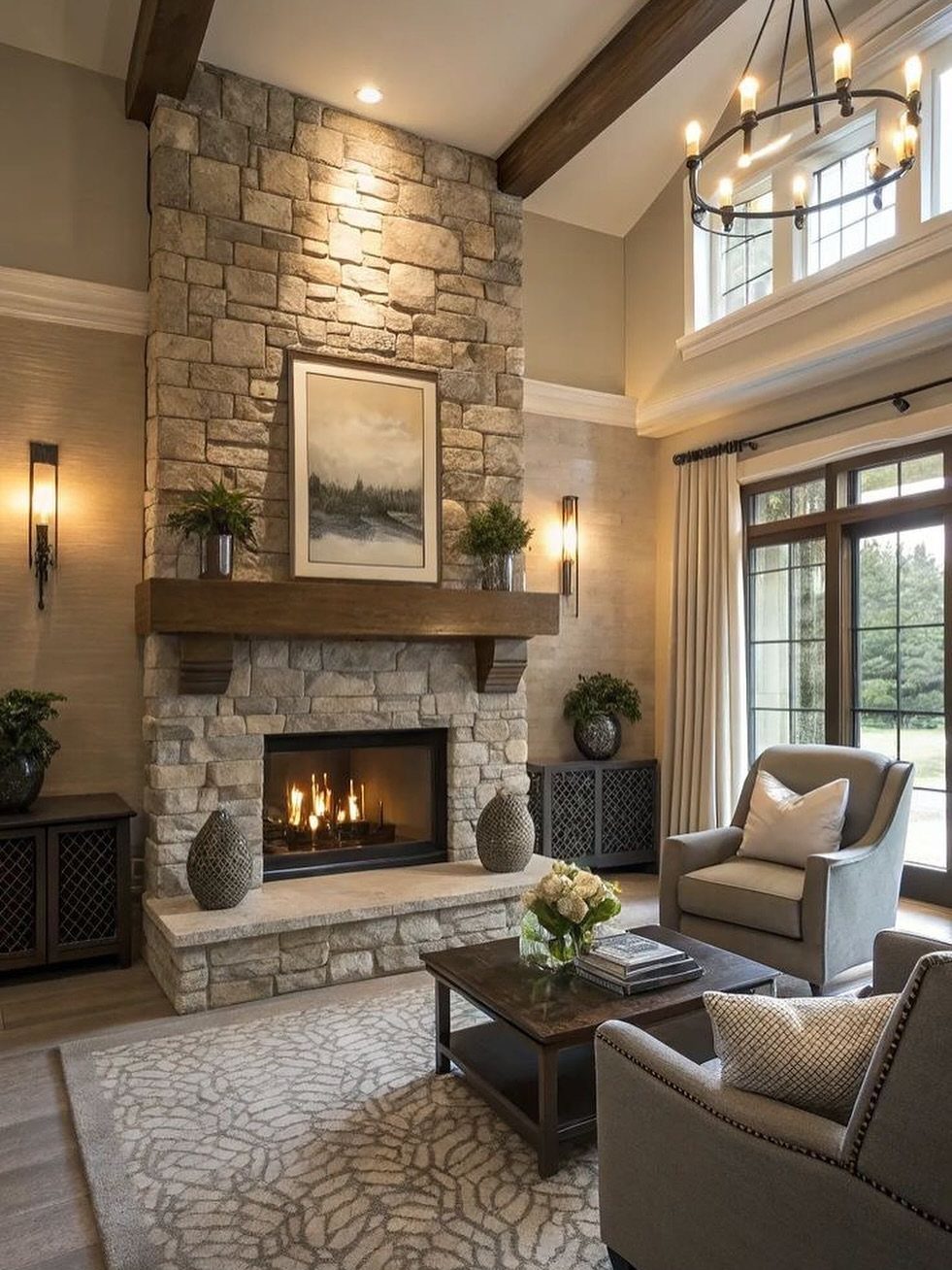
A stone fireplace draws attention the moment someone steps into the room, and everything else arranges itself around it.
The rough texture and the height of the chimney make it impossible to ignore, so the sofa and chairs face it instead of fighting for a different center.
Give the eye somewhere to land first, then arrange the furniture around that focal point.
9. Durable Leather Furniture
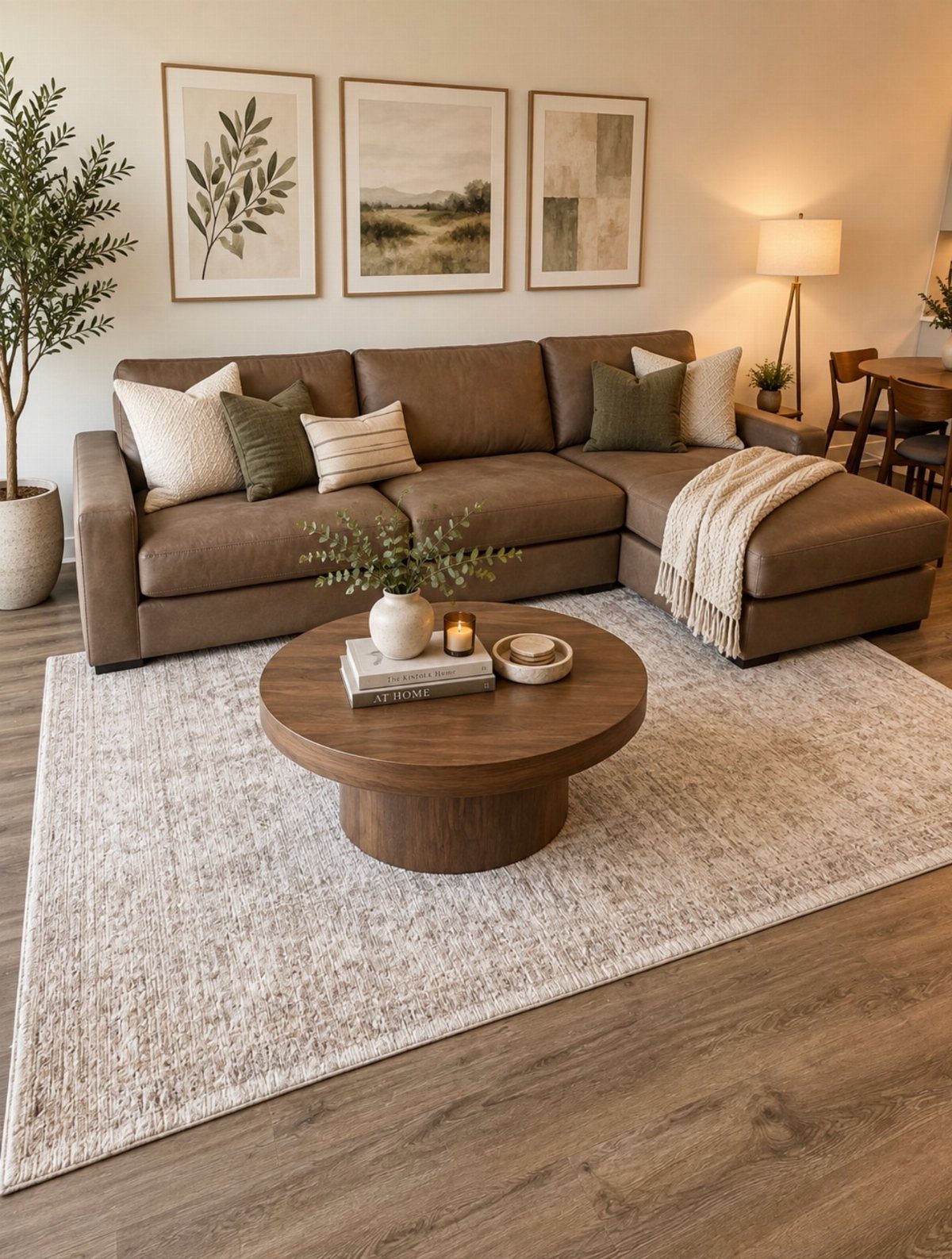
Leather ages instead of wearing out. Spills wipe off with a damp cloth, and scratches from pets or sharp belt buckles blend into the surface over time instead of tearing through upholstery.
A sectional in brown leather seats more people than separate chairs, and the color hides the dirt that shows up fast on lighter fabric.
The cushions stay firm longer than foam wrapped in cloth, and you skip the slipcover that never quite fits after the first wash.
Full-grain leather costs more up front but outlasts bonded or faux versions by years.
10. Maximizing Vertical Space
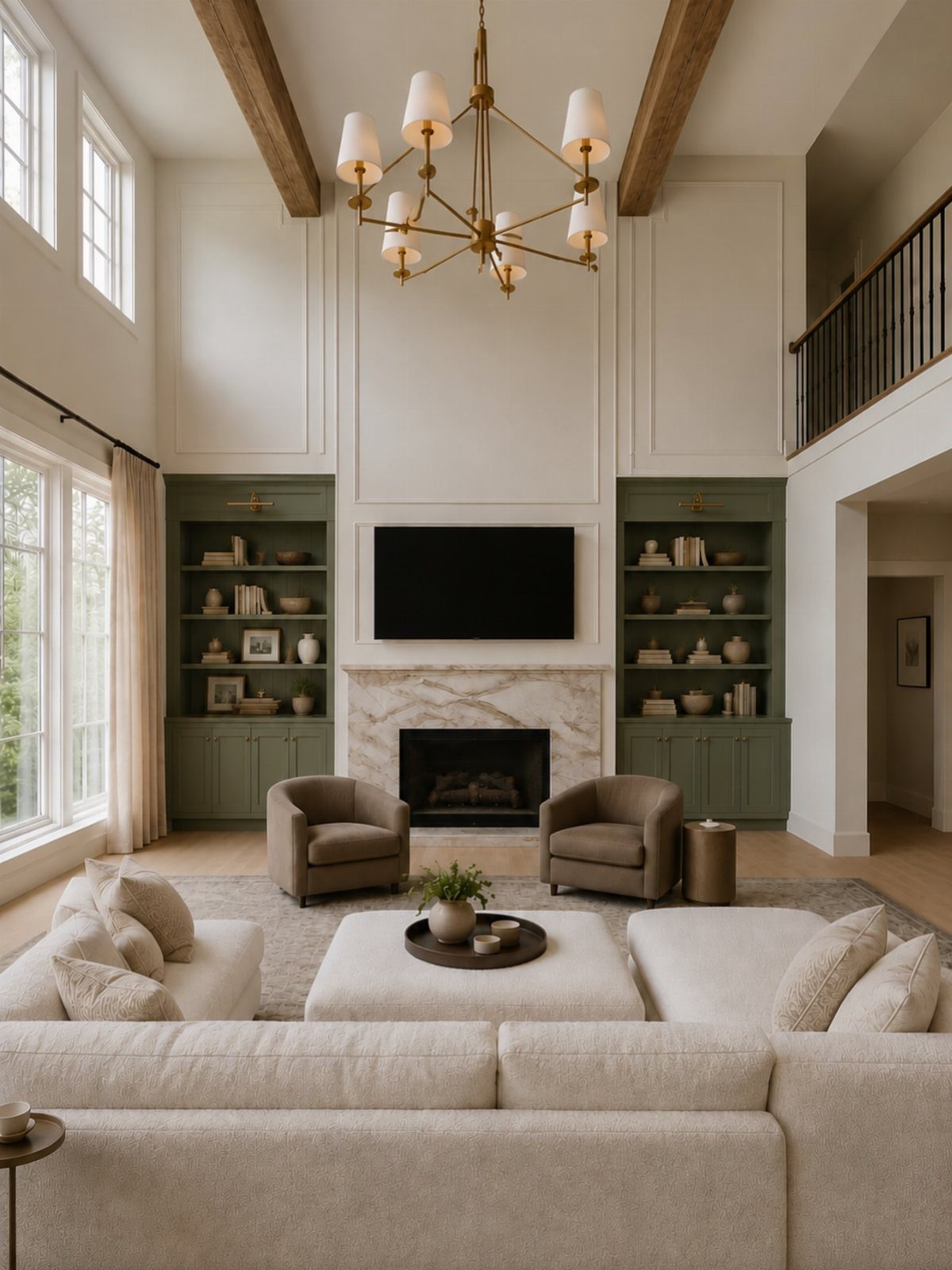
Tall built-in shelves climb the wall and pull the eye up, making the ceiling feel like part of the room instead of empty air overhead.
Filling that vertical space with books, bins, or a few decorative pieces balances the height and softens the scale.
A large chandelier hung low enough to catch the light without blocking sightlines adds scale at eye level. Exposed beams, if you have them, break up the expanse and give the ceiling its own detail.
Without something filling the upper third of the room, the furniture looks too small for the space.
11. Comfortable Coffee Tables
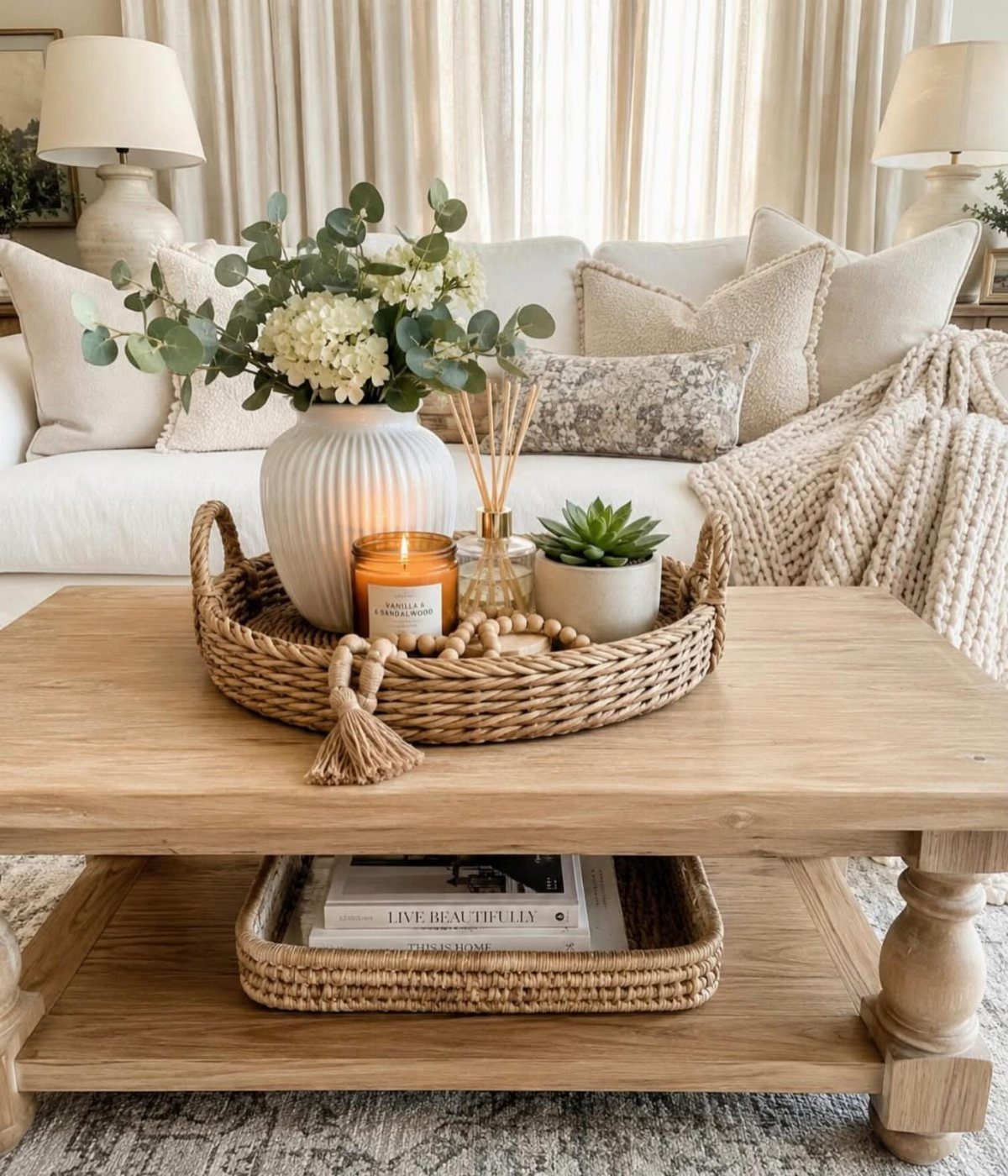
A coffee table in light wood with a lower shelf or a wide surface gives you a place to set drinks, stack books, and rest feet without worrying about marks.
The soft finish and rounded edges mean spills and bumps do not leave lasting damage.
A tray corrals smaller items so the table does not look cluttered, and it lifts off when you need the full surface for game night or takeout boxes.
Keep the height low enough that someone seated on the sofa can reach across without stretching.
Wood warms the room more than glass or metal, and the grain adds texture neutral upholstery lacks.
12. Low Profile Media Console
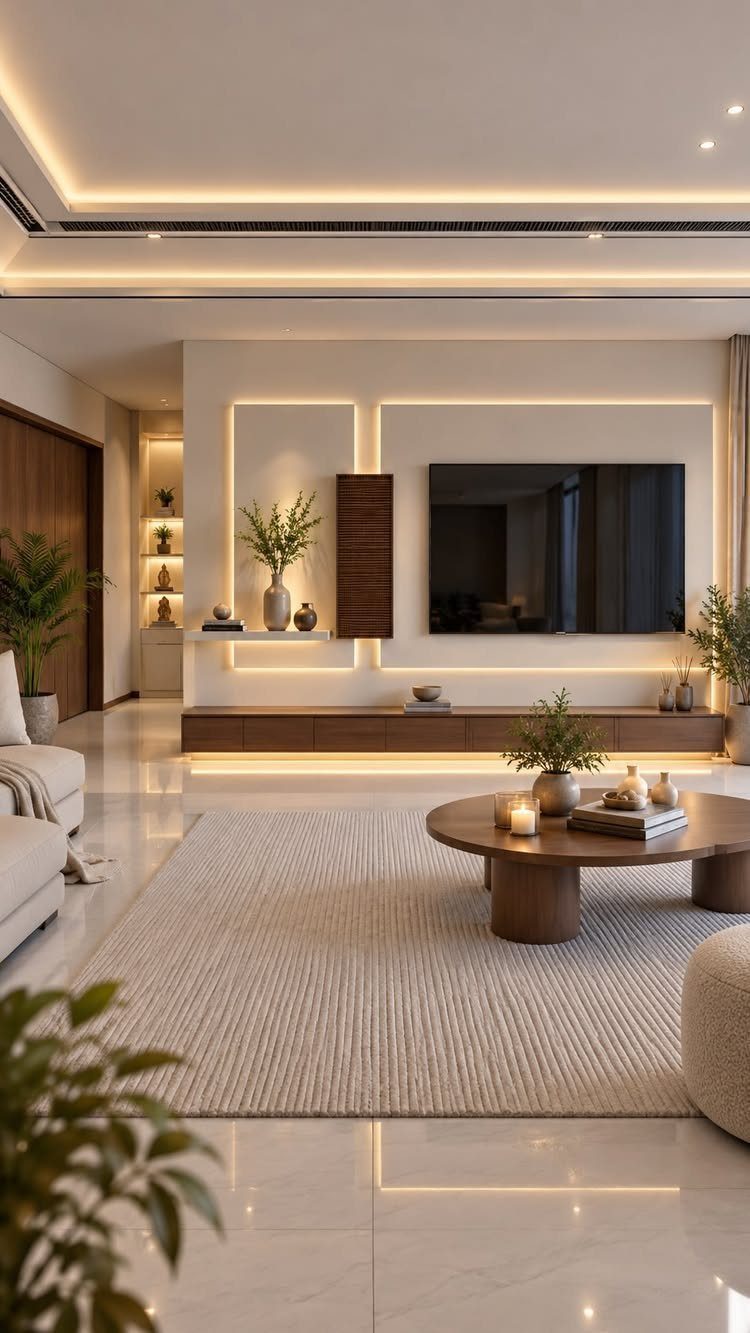
A low console keeps the television close to the floor so it does not dominate the wall, and the long horizontal line stretches the space.
The warm backlighting behind the screen softens the glow in a dark room and reduces the contrast that tires your eyes during long movies.
Mount the TV instead of setting it on the console, and the surface below stays clear for a soundbar or a row of low storage baskets.
The height matters: if the console sits too tall, the screen ends up above comfortable viewing level and you spend the whole movie looking up.
Dark wood grounds the setup without adding weight, and the clean front hides cables behind closed doors.
13. Floating Entertainment Center
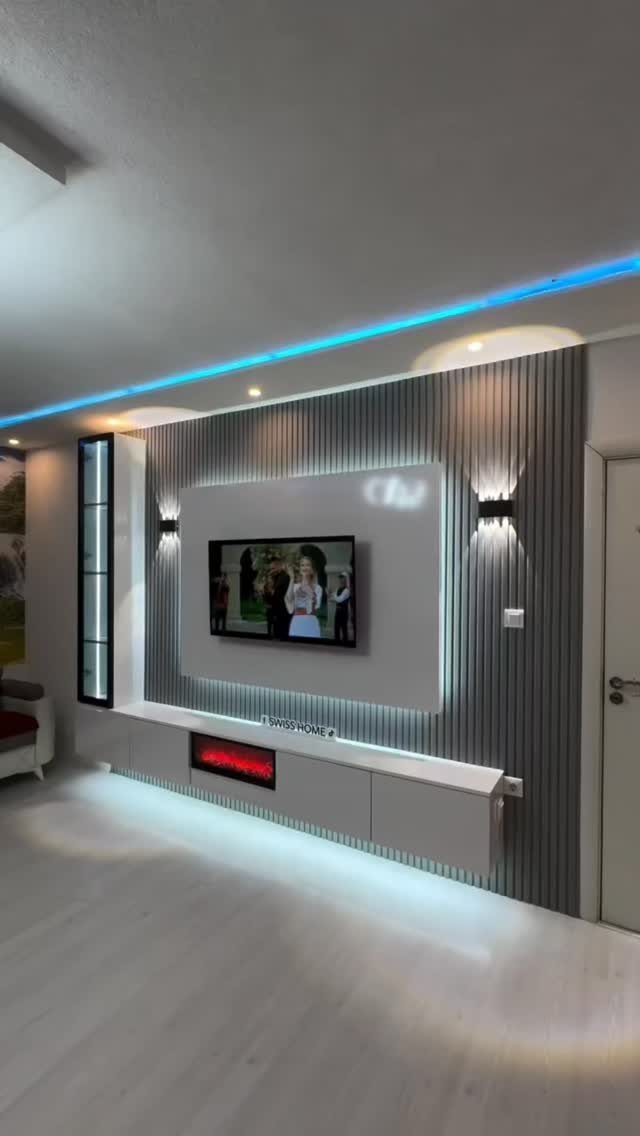
Mounting the console to the wall clears the floor underneath and opens up the space visually.
The white finish keeps the setup light, and the built-in fireplace sits directly below the screen so both read as one vertical element instead of competing focal points.
The blue LED strip behind the TV cuts glare when you watch in the dark and adds depth to the flat wall.
Wire management hides inside the wall or runs down through the back of the console if you mount it after drywall goes up.
The slatted panel behind the screen adds texture without paint or wallpaper.
14. Built-In Fireplace Flanking Cabinets
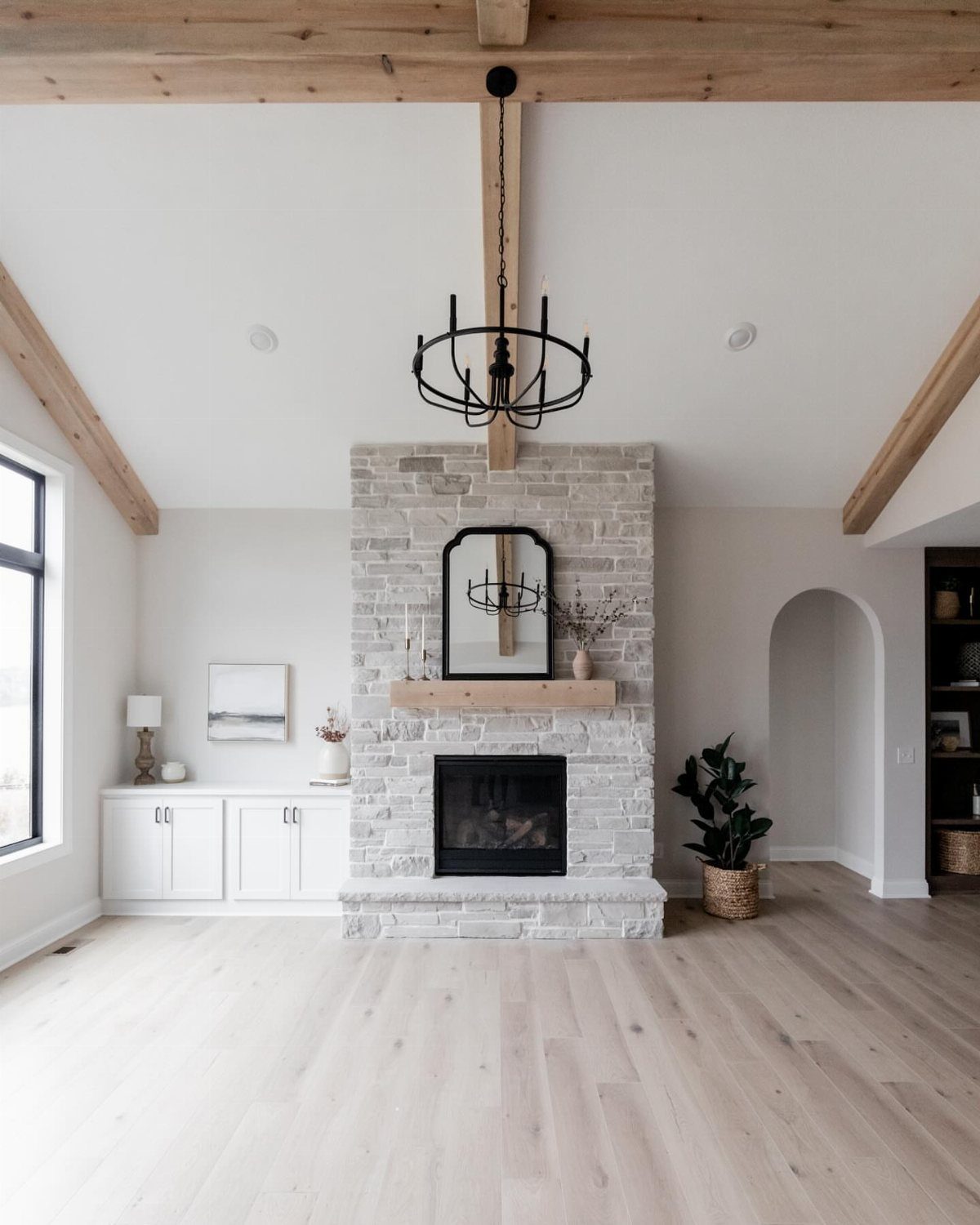
Base cabinets built into the recess beside the fireplace use space that would otherwise sit empty, and the closed doors keep clutter out of sight.
White paint makes them disappear against the wall so the stone chimney stays the focal point.
The cabinets hold games, extra blankets, or anything you need near the seating but do not want on display. Building them to the same depth as the fireplace surround keeps the wall plane flat and the lines clean.
If the alcoves are shallow, open shelves work better than doors that swing into the room.
Importance of Functionality
The room has to hold what actually happens in it. If you watch movies most nights, the seating faces the screen and the lighting dims without getting up.
If games spread across the floor every weekend, the coffee table moves or the rug gives enough clear space that nobody has to pack up mid-round.
Storage that closes keeps the mess from piling up on surfaces. An ottoman with a lid inside holds controllers and charging cables within arm’s reach of the sofa.
A bookshelf with lower cabinets hides bins of toys or stacked board games while the upper shelves stay open for anything you want visible.
The layout matters more than the style. If the furniture blocks the path to the kitchen or someone has to squeeze past the sectional to reach the other side, the room fights you instead of working.
Whether you have young children who are constantly wreaking havoc on your home or a grown family that you host on weekends or during holidays, a family-friendly living room is where some of life’s most important moments go down.
Choosing Durable Materials
High-traffic rooms need materials that look better after 5 years of use than 5 months. Performance fabric resists stains and wipes clean without leaving a water mark, and the weave holds up under friction better than untreated cotton or linen.
Solid wood furniture dents and scratches, but it does not fall apart.
A coffee table in oak or walnut takes the hit from a dropped remote or a kicked corner and keeps its shape, while particleboard wrapped in veneer chips through to the core and cannot be repaired.
Leather and tightly woven synthetics outlast anything loose or looped. Rugs in jute or low-pile wool hide dirt and hold their shape under furniture, while shag and high-pile styles mat down in the walkways first.
Creating a Welcoming Atmosphere
Warm tones and soft textures make a room feel like somewhere you want to sit, not pass through.
Lighting at different heights fills the room without the flat glare of a single overhead fixture.
A lamp on the side table, a floor lamp in the corner, and dimmers on the ceiling lights let you adjust the level to match what is happening, whether that is reading or watching a movie.
Personal touches, family photos in matching frames or a throw in a color you like, make the space yours without a full redesign.
Frequently Asked Questions
How do I plan out furniture in a room?
Start by asking how you use the room most often, how many people need to sit at once, and what the main focal point is.
Then sketch a to-scale plan on graph paper showing the furniture arranged around that focal point with clear paths for traffic.
What kind of furniture do you put in a family room?
A sectional or sofa, a coffee table, side tables with lamps, and storage pieces like a media console or bookcase cover the basics.
Family rooms need comfortable seating that fits your daily routine, durable surfaces that take spills, and enough storage to keep remotes and games within reach. The furniture should feel casual and inviting, not formal.
What is the difference between a living room and a family room?
A family room is a casual space for daily living where the TV stays on and the furniture takes a beating, while a living room is more formal and meant for hosting guests.
Family rooms sit farther back in the house or off the kitchen, and living rooms are usually closer to the front entry.
How do I create zones in my family room?
Group the furniture to separate activities: seating facing the TV in one spot, a play or work area in another, with a rug anchoring each one.
Keep the paths between zones wide enough to walk through without turning sideways. Without that structure, a big room reads as one empty center with furniture pushed to the edges.
What should I consider when choosing furniture?
Pick materials that hold up under daily use, like performance fabric that wipes clean and solid wood that takes hits without falling apart.
If the room is for movie nights, aim the seating at the screen and pick lamps you can turn down. Better-made pieces cost more at the register but hold up longer and look better the whole time.






