
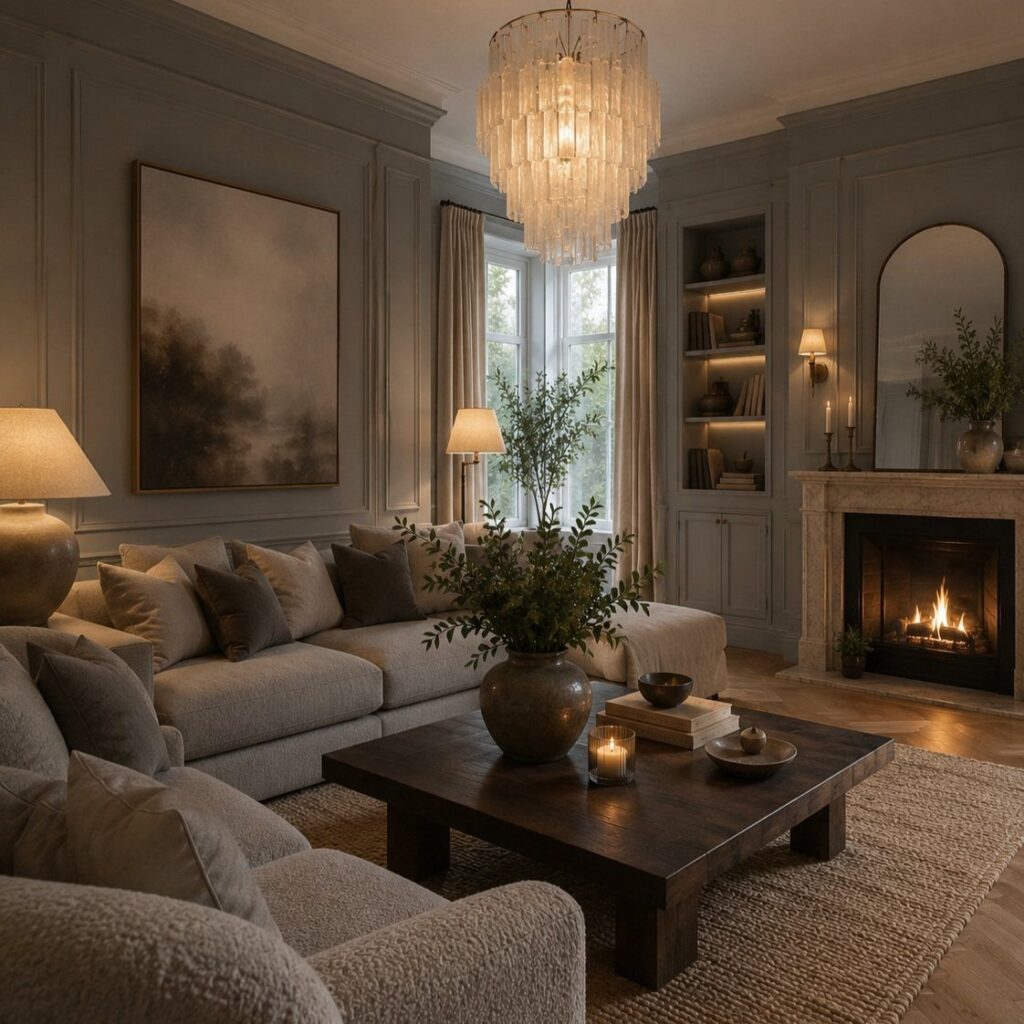
Chandeliers and pendants hang into the room and put light where you look first, while flush mounts and recessed lights keep the ceiling plane clean.
The choice comes down to ceiling height and whether you need one fixture to light the whole space or several layers working together.
Cove lighting reflects off the ceiling for even ambient coverage, and arc floor lamps let you light a seating area from behind without a ceiling mount.
1. Chandeliers
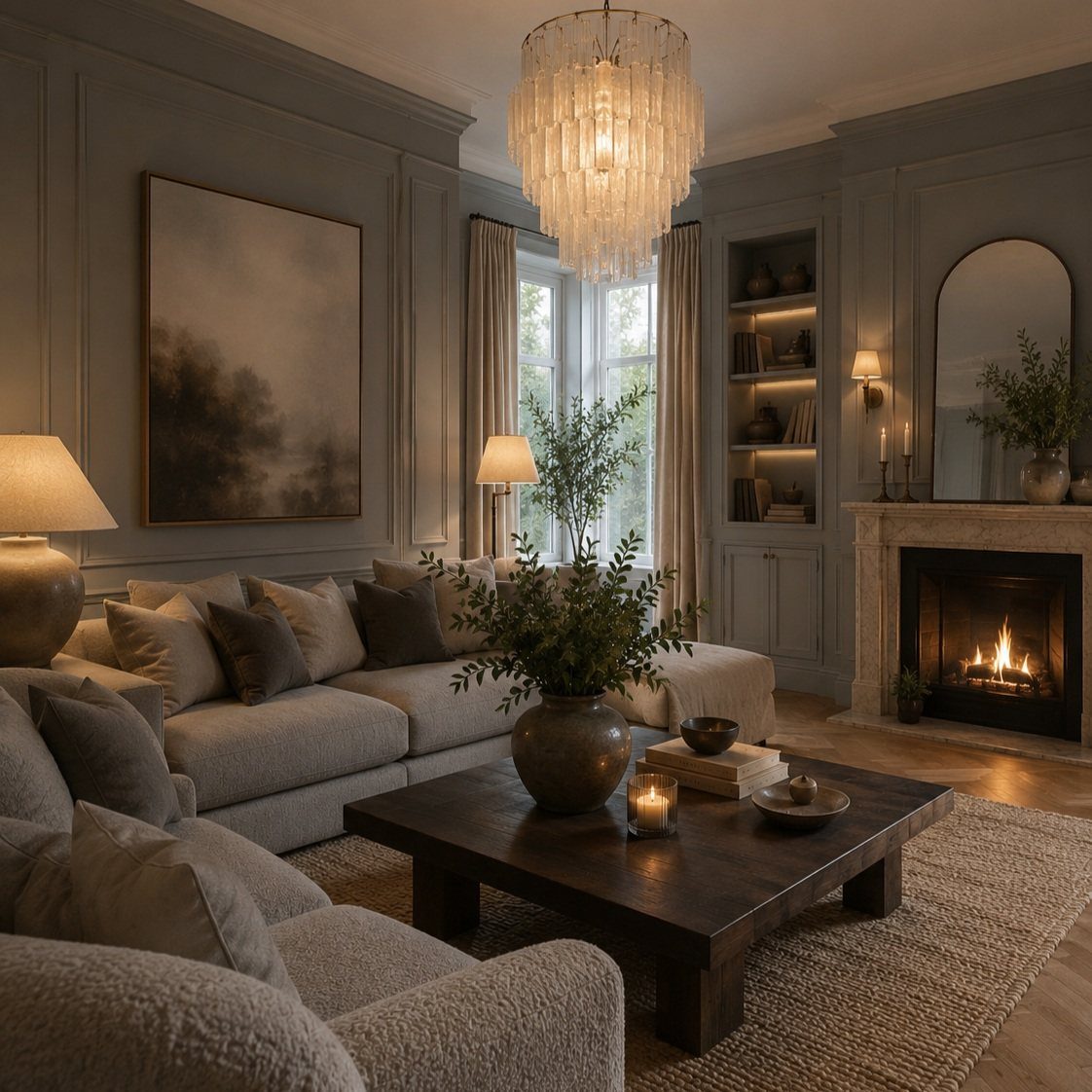
A chandelier puts light where guests look first, straight up from the seating area.
Crystal chandeliers throw small reflections across the ceiling and walls when the bulbs are on, which reads formal but works if the rest of the room stays simple.
Hang it so the bottom clears the floor by enough that no one hits their head, or raise it higher if you center it above a coffee table.
2. Flush & Semi-Flush Mounts
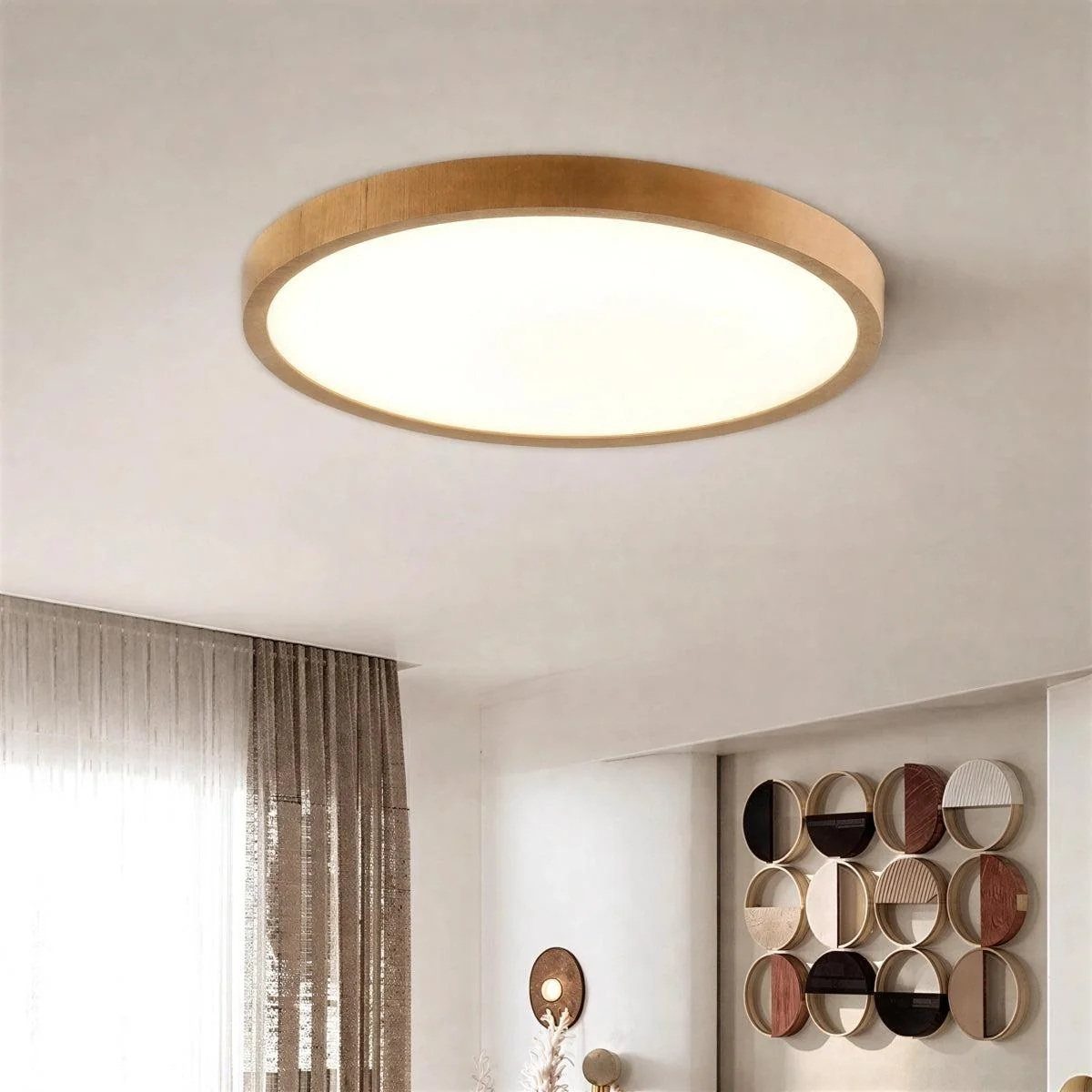
Flush mounts sit flat against the ceiling, and semi-flush versions drop down on a short stem. Both fit rooms where a hanging fixture would block sightlines or feel too low.
The wood rim in this one softens what can otherwise look builder-basic. Pick a diameter that suits the room’s proportions; a fixture that’s too small disappears, and one that’s too large crowds the ceiling visually.
Installation goes straight to the junction box, so most take under an hour if the wiring is already there.
3. Recessed Lighting
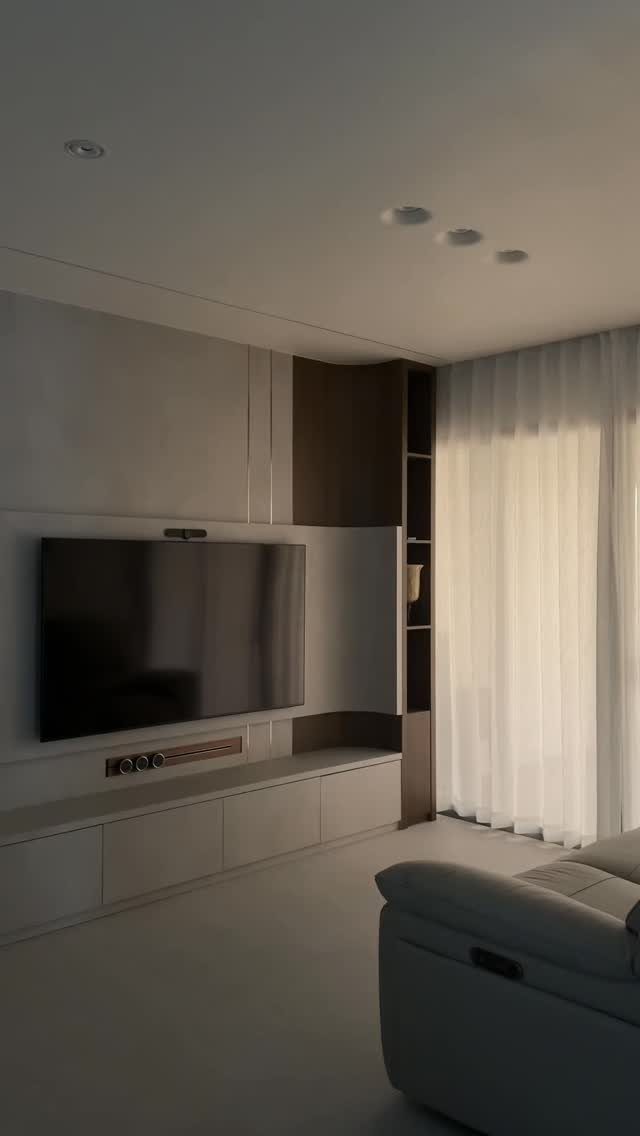
Recessed lights drop into the ceiling plane and leave the surface unbroken. Space recessed lights evenly across the ceiling for shadowless coverage, which suits open-plan rooms where a single fixture would leave corners dim.
Each housing needs clearance above the drywall, so this works best during construction or a remodel. Retrofit kits exist for finished ceilings, but cutting the holes yourself means patching mistakes if you miss a joist.
4. Pendant Lights
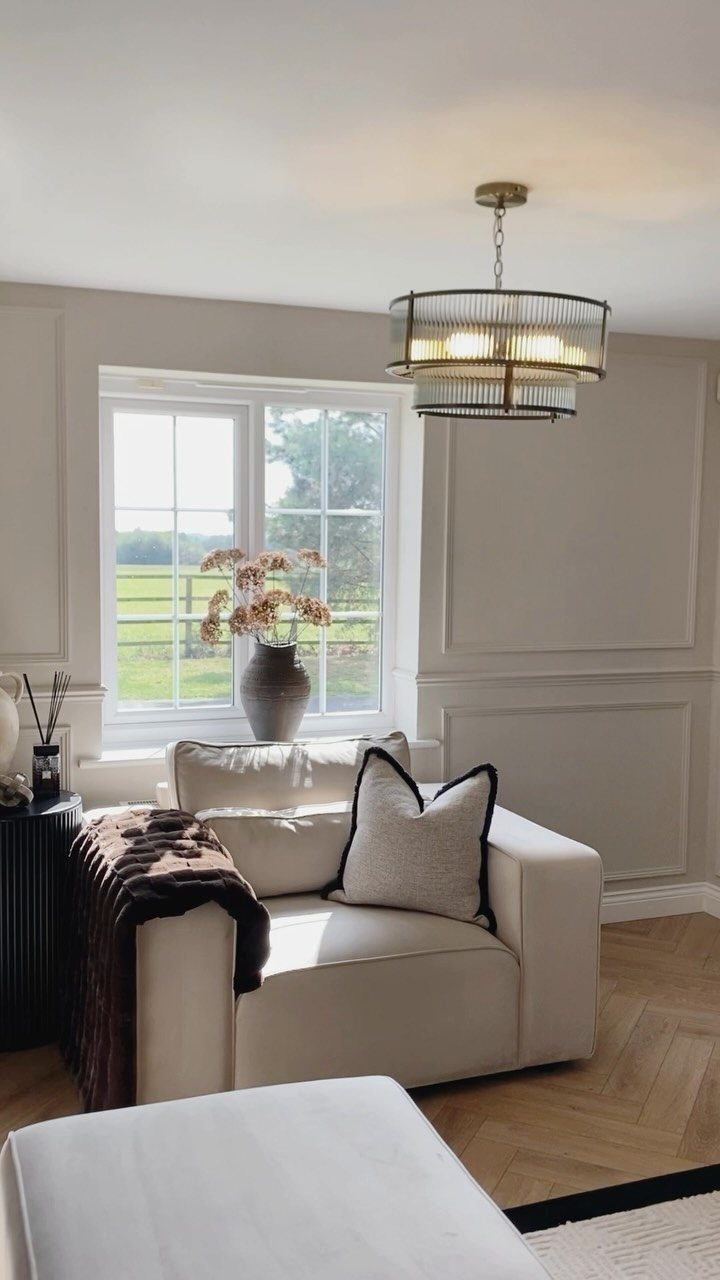
Pendant lights hang on a cord or chain and bring the source closer to eye level. That lowers the pool of light and keeps it softer than a ceiling-mounted fixture would, which suits reading corners or seating groups.
The tiered glass style here layers light through each shade, so you get both downlight and a glow that moves through the fixture itself.
Hang the bottom high enough to walk under in open space, or lower it if it’s centered over a table.
5. Track Lighting
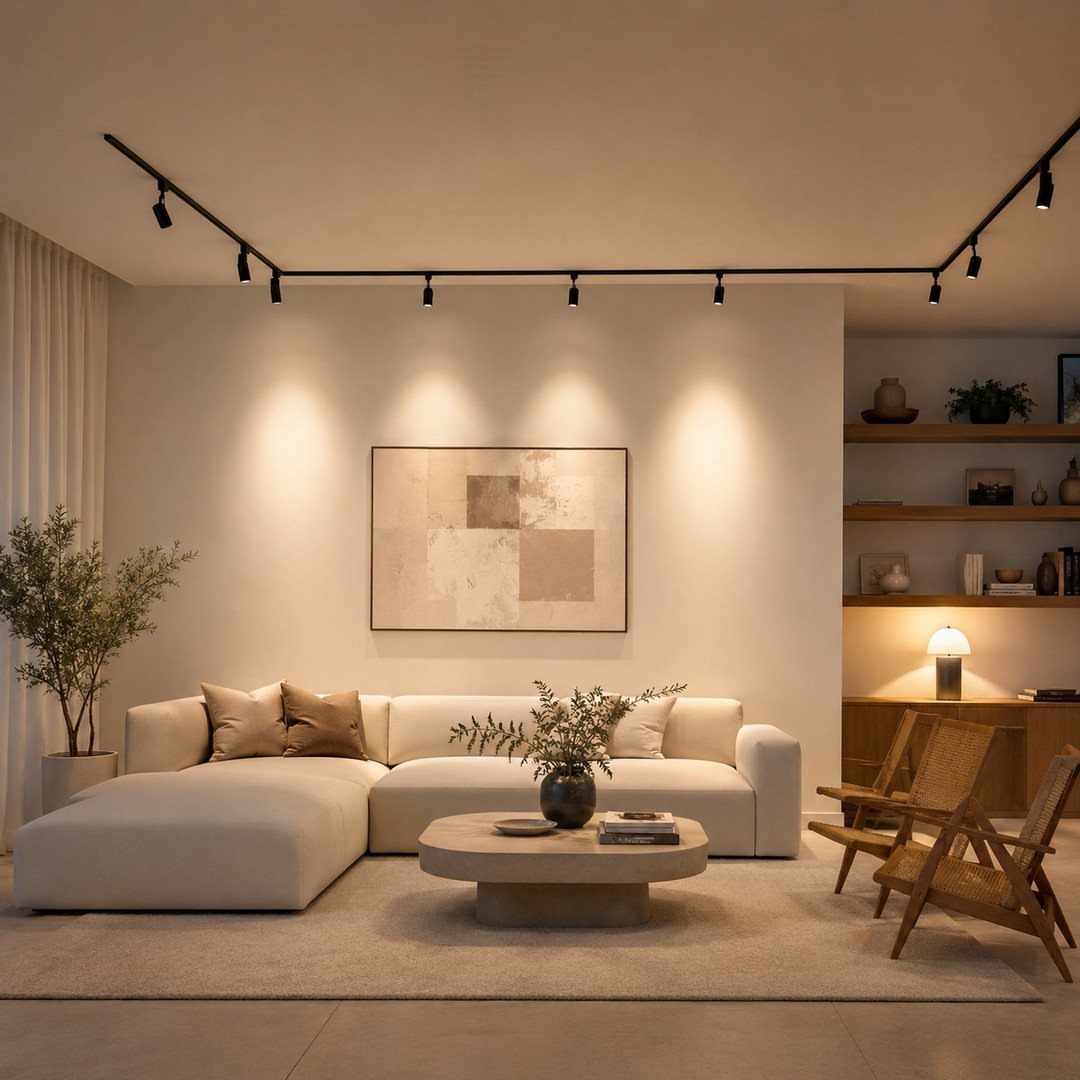
Track lighting mounts a rail to the ceiling and lets you clip light heads anywhere along it, then pivot each one toward whatever needs emphasis.
That makes it useful when you want to highlight art, adjust for furniture moves, or layer light across a long wall without running separate circuits.
The black rail here reads intentional rather than industrial because it’s narrow and the heads stay small.
Install track lighting parallel to a wall and a few feet out so the light hits vertically hung pieces at a slight angle instead of straight on.
6. Arc Floor Lamps
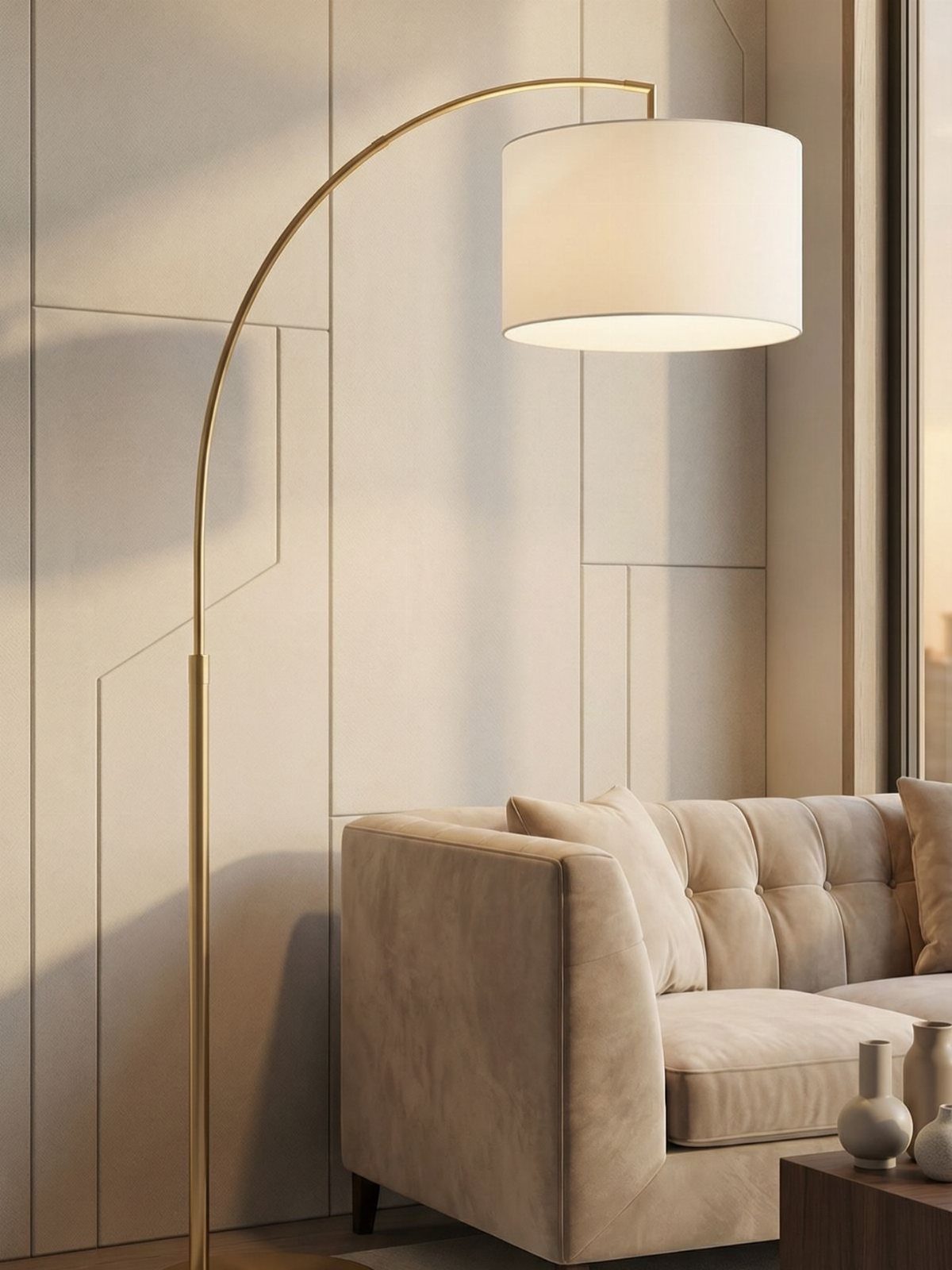
An arc floor lamp curves up and over from a weighted base, which puts the shade several feet out without a ceiling mount.
That lets you light a sofa or chair from behind without drilling, and you can move it when the layout changes.
Set the base behind or beside the seating so the shade hangs over the armrest, and make sure the arc clears the back cushions so it doesn’t feel crowded.
7. Ceiling Fans with Lights
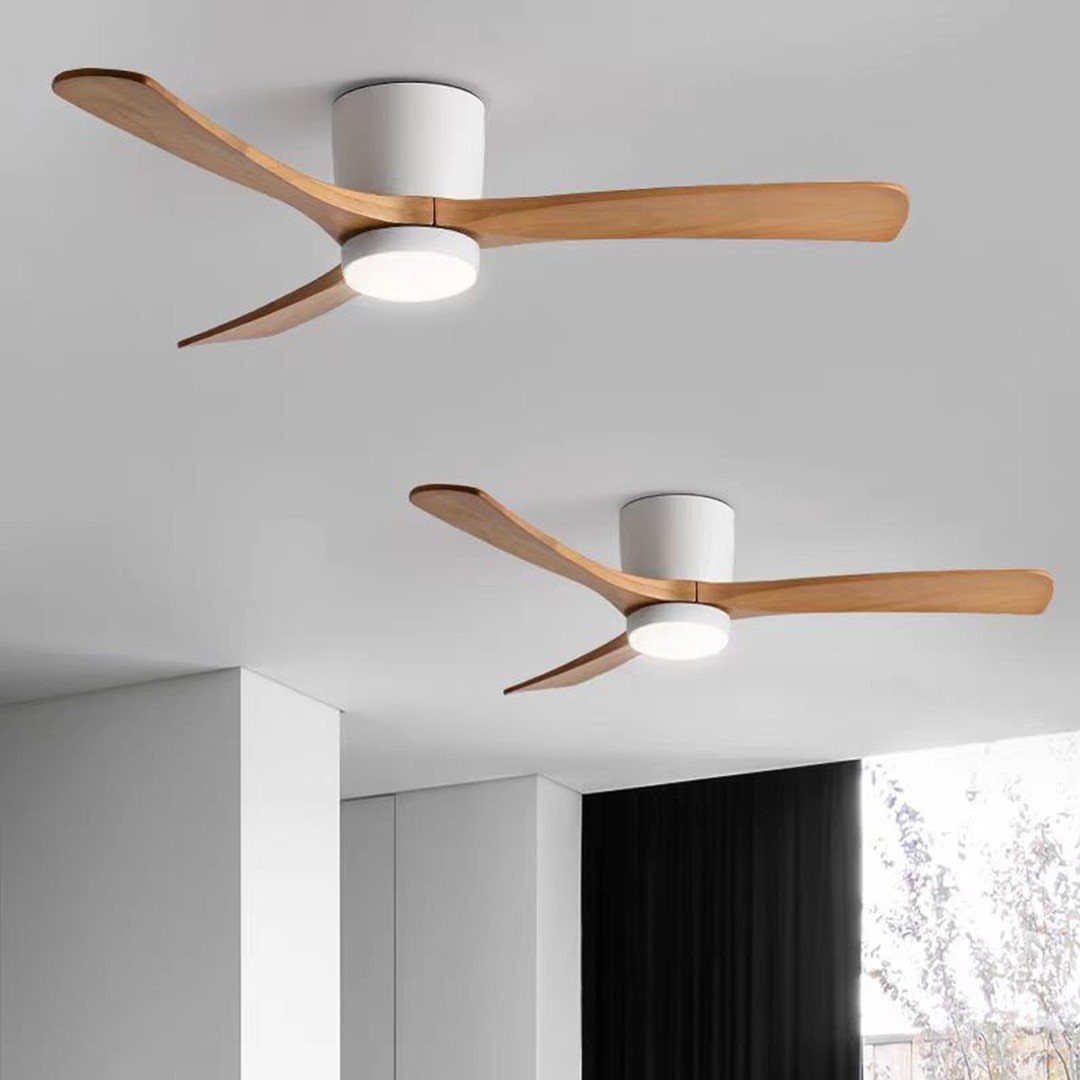
Ceiling fans with lights mount a motor and blade assembly to the ceiling with the bulbs built into the center housing or tucked into a fixture below it.
That covers both circulation and overhead light in one install, which saves a junction box and keeps the ceiling uncluttered.
The wood blades here soften the look so it reads warm rather than utilitarian.
Run the fan counterclockwise in summer to push air down, and reverse it in winter so it pulls warm air off the ceiling without creating a draft.
8. Cove Ceiling Lighting
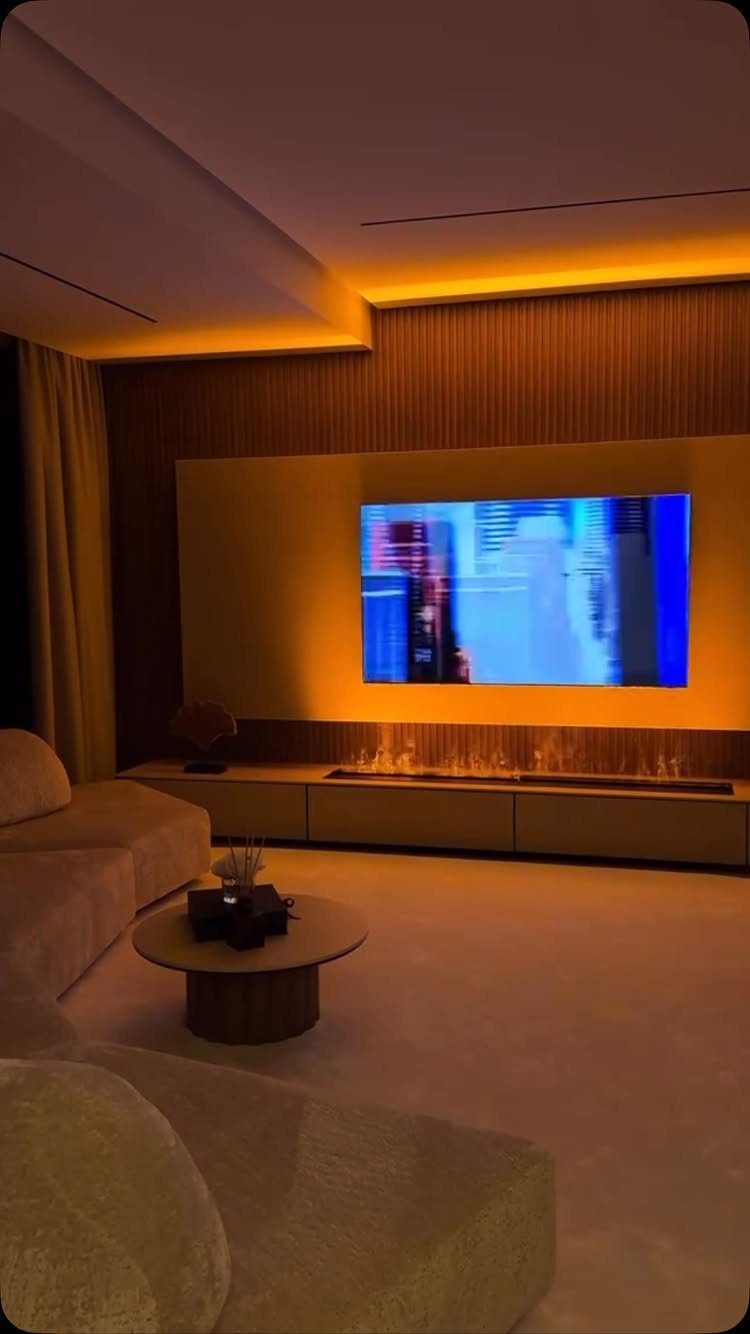
Cove lighting tucks LED strips into a recessed tray or ledge near the ceiling, so the light washes up and reflects down instead of shining directly into the room. That gives you even ambient light without visible bulbs or glare.
The warm orange glow here comes from choosing a lower color temperature, usually around 2700K. Wire the strips to a dimmer so you can drop the level for evening without switching to table lamps.
9. Backlit Accent Wall Lighting
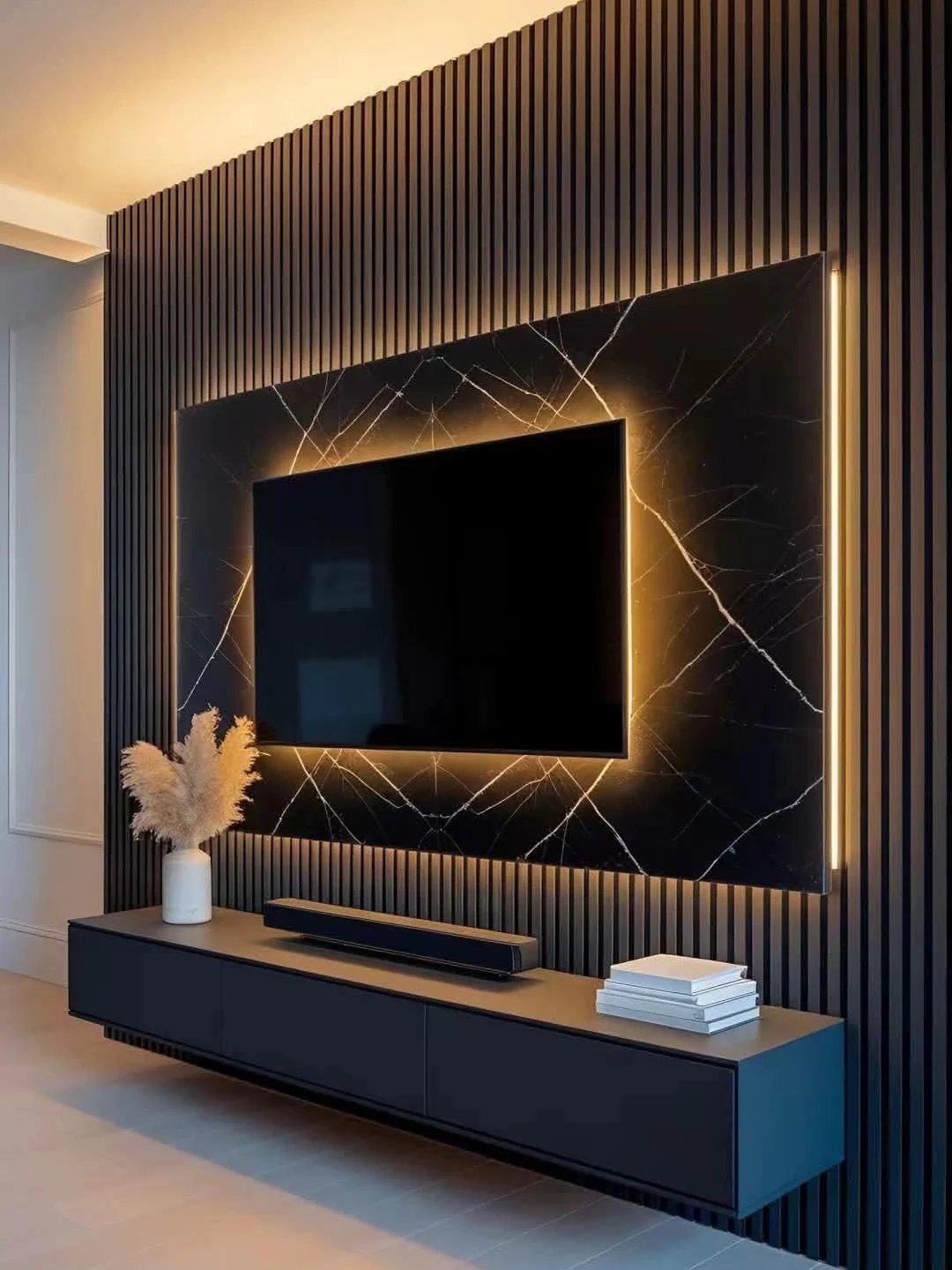
Backlit accent wall lighting mounts LED strips behind a material that sits slightly off the wall, so light spills around the edges and outlines the shape.
Warm LED strips behind the panel lift it off the wall and add depth without cluttering the sight line to the screen.
Adhesive-backed LED strips stick to the back of the panel, and most plug into a nearby outlet or wire into the same circuit as the TV. Keep the gap between panel and wall consistent so the light band stays even.
10. Ambient, Task, and Accent Lighting
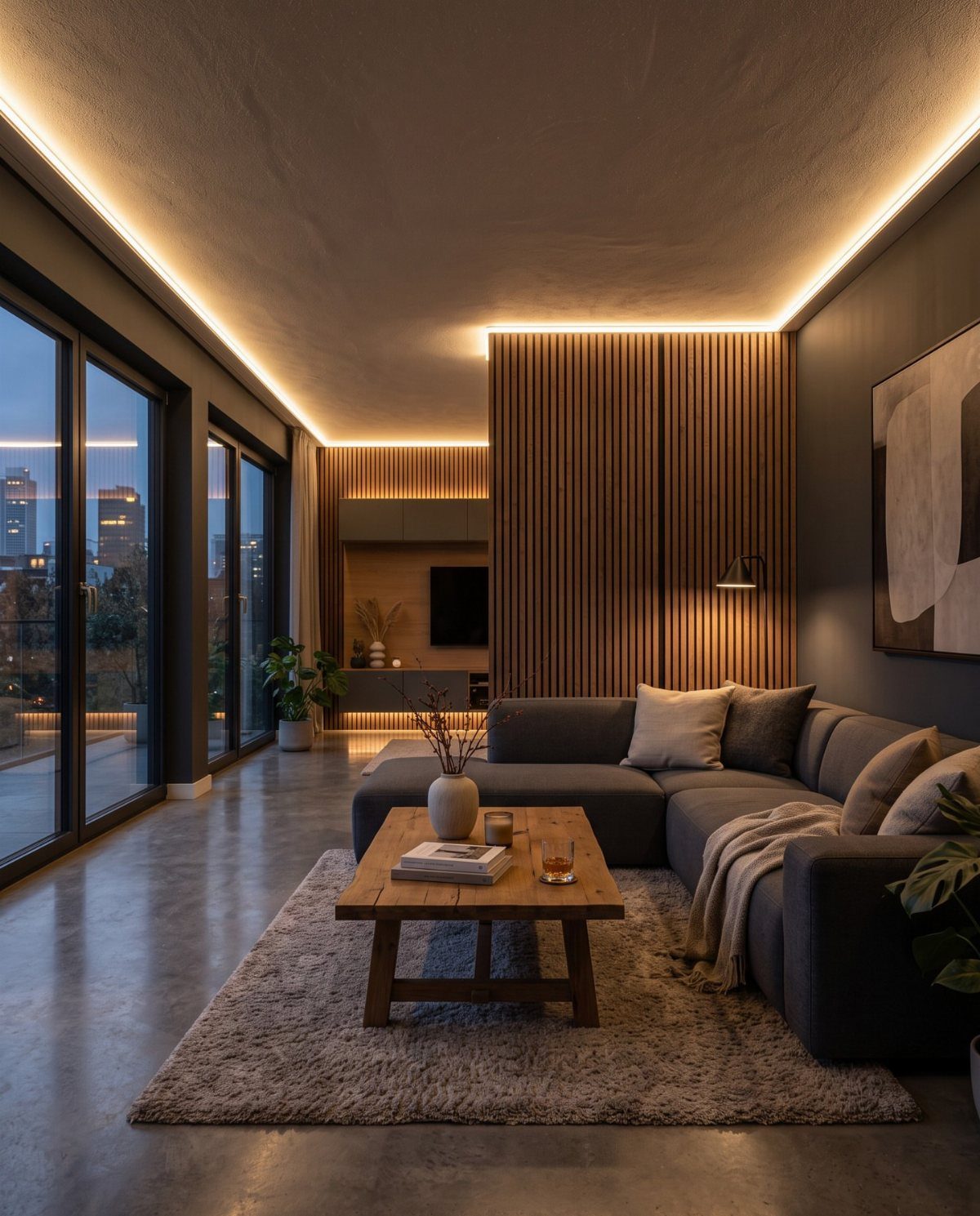
Ambient, task, and accent lighting layer 3 sources at different heights and purposes instead of relying on a single overhead fixture. The cove strip puts light on the ceiling so it bounces back down and spreads across the whole room.
Task light sits near where you read or work. Accent light picks out a detail, such as the slatted wall.
Put each layer on its own switch or dimmer so you can adjust the mix as the day changes. That flexibility means you get usable light for different activities without one bright fixture doing all the work.
Layering Light Types
Ambient light covers the room evenly so you can walk through it at night without turning on every switch. Ceiling fixtures and cove strips handle this layer.
Floor lamps beside a chair, table lamps on a side table, and sconces mounted near a desk all qualify. Position the source so it falls on the page or keyboard without shining in your eyes.
The contrast makes the room feel larger because it gives your eye something specific to land on instead of scanning an evenly lit plane.
Choosing the Right Color Temperature
Warm white, measured at 2700K to 3000K, keeps a living room feeling relaxed. That range matches incandescent bulbs, so it reads familiar and doesn’t push the space toward the clinical look that cooler temperatures bring.
Light above 5000K feels bright and crisp, which works in a garage or a workshop but turns a living room harsh. If a fixture came with a cool bulb, swap it for a warm one in the same base type.
Install a compatible dimmer switch, since not every LED works smoothly with every dimmer and some flicker or hum when the circuit doesn’t match.
Frequently Asked Questions
How to get good lighting in a living room?
Combine 3 types of light at different heights instead of depending on one ceiling fixture.
Ambient light from ceiling mounts or cove strips covers the whole room, task light from floor or table lamps falls where you work or read, and accent light from sconces or strips highlights a detail.
Wire each fixture to a separate switch and you can dial the mood in as daylight fades.
What are the different types of ceiling lights?
Chandeliers hang on chains and put light at the center of the room, flush and semi-flush mounts sit close to the ceiling, pendant lights drop down on cords, recessed lights install into the ceiling plane, and track lights mount a rail with adjustable heads.
Each fits a different ceiling height and sightline.
What type of ceiling light is best for a living room?
The best fixture depends on ceiling height and how you use the space.
Flush or semi-flush mounts work when a hanging fixture would block views, chandeliers suit rooms with high ceilings and formal seating, and recessed lights give even coverage across open plans.
Layering a ceiling fixture with floor and table lamps gives more flexibility than one source alone.
What are some minimalist light fixtures available?
Recessed lights and flush-mount LED panels keep the ceiling surface unbroken, which reads minimal because the fixture itself disappears.
Semi-flush mounts with simple wood or metal rims work when you need a visible fixture that stays quiet visually. Pick fixtures with clean lines and no decorative detail so the light does the work instead of the hardware.






