
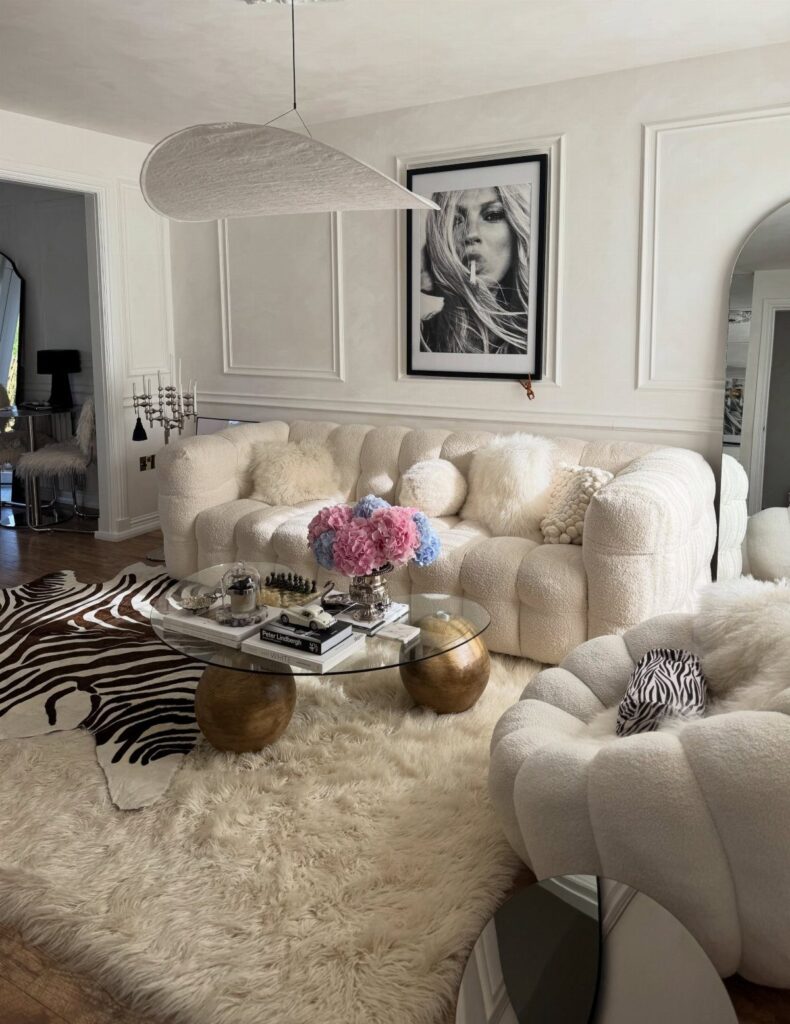
A white living room stays cozy when you add natural materials, color, contrast, and the right light.
The choice between jute, rattan, wood and stone comes down to where the piece sits: jute anchors the floor, rattan works in smaller doses like a side table or basket, and wood or stone adds weight on surfaces.
Dark accents, whether in furniture or floors, give a white room definition and keep it from floating.
1. Layer Different Whites
Mixing whites keeps a room from looking flat.
Start with one main white for your largest pieces, then pull in a second shade that’s 2 or 3 steps warmer or cooler on a paint strip. Cream softens a bright white room; a cooler white sharpens a warm one.
If everything matches too closely, the room reads as one flat plane. A small shift in tone is enough to make each layer readable.
2. Wood, Stone, Rattan, and Jute
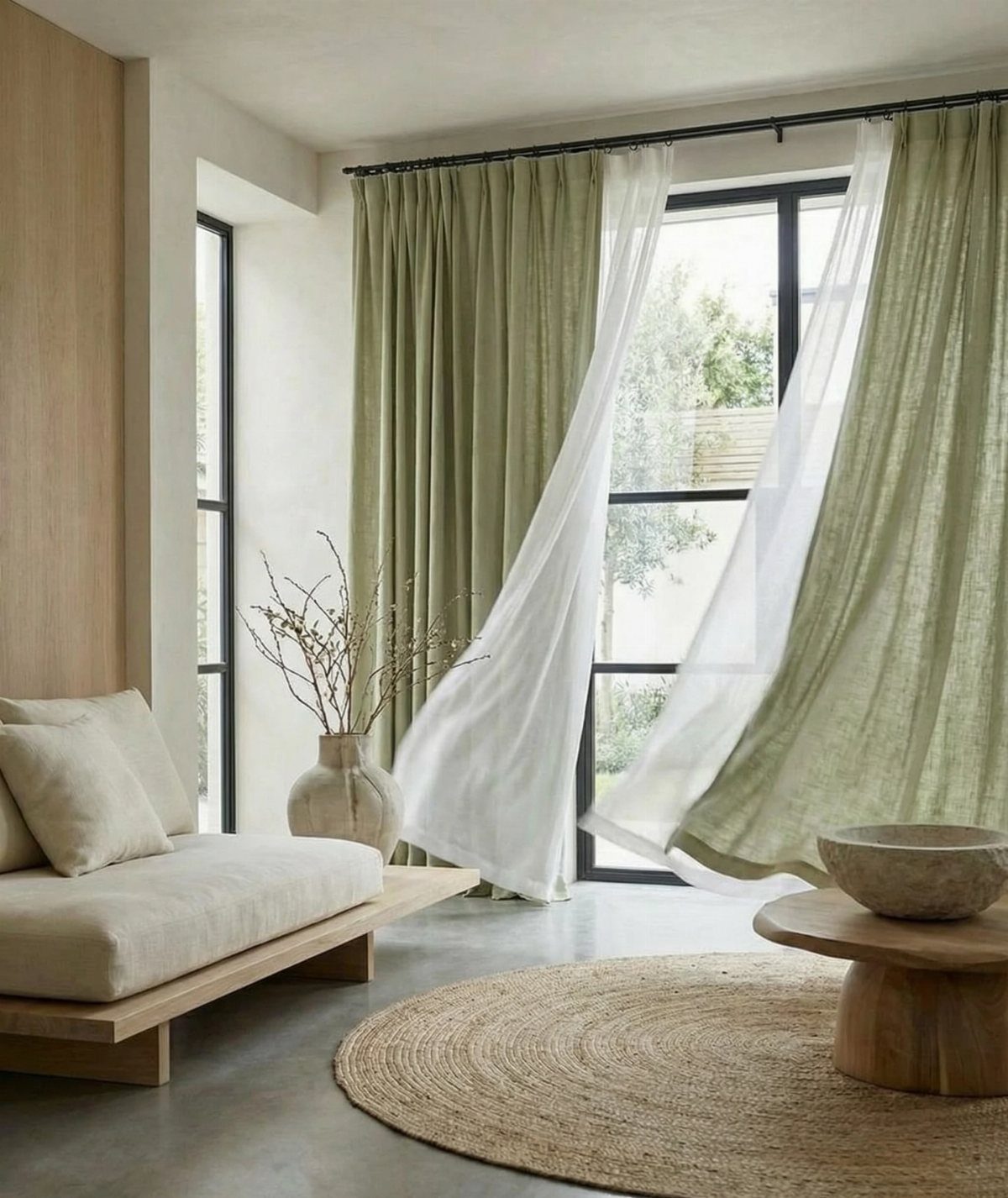
Natural materials warm up white without competing with it. Jute, rattan, wood, and stone each bring texture and a neutral base that holds up next to white walls and upholstery.
The rug anchors the room and softens the floor underfoot.
Jute is affordable and its loose weave adds grip without pattern. Wood furniture in a light finish stays consistent with the palette, and a stone bowl or vase on the table adds weight.
Rattan works well in smaller doses: a side table, a basket, or woven storage that tucks under a console.
3. Bright Artwork
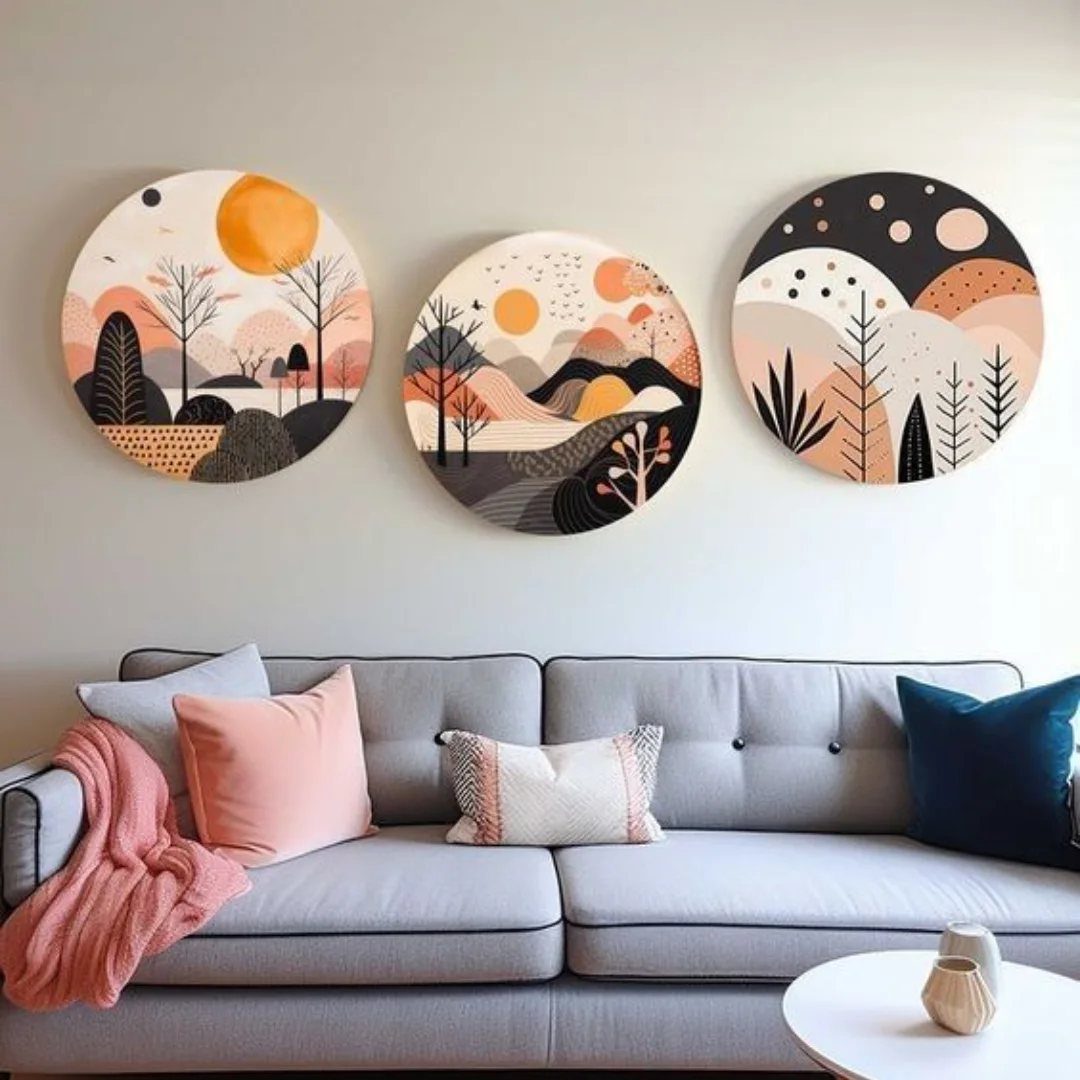
Bright artwork solves the problem of a white room feeling cold. The paintings here pull in color at eye level, and their circular shape keeps the wall from looking too rigid.
Abstract landscapes work because they bring in multiple tones without needing the rest of the room to match. If you’re starting from scratch, pick the artwork first and pull pillow or throw colors from it.
A single large piece works just as well as a grouping. The color sits above the sofa line, where you see it from across the room.
4. Contrast with Dark Accents
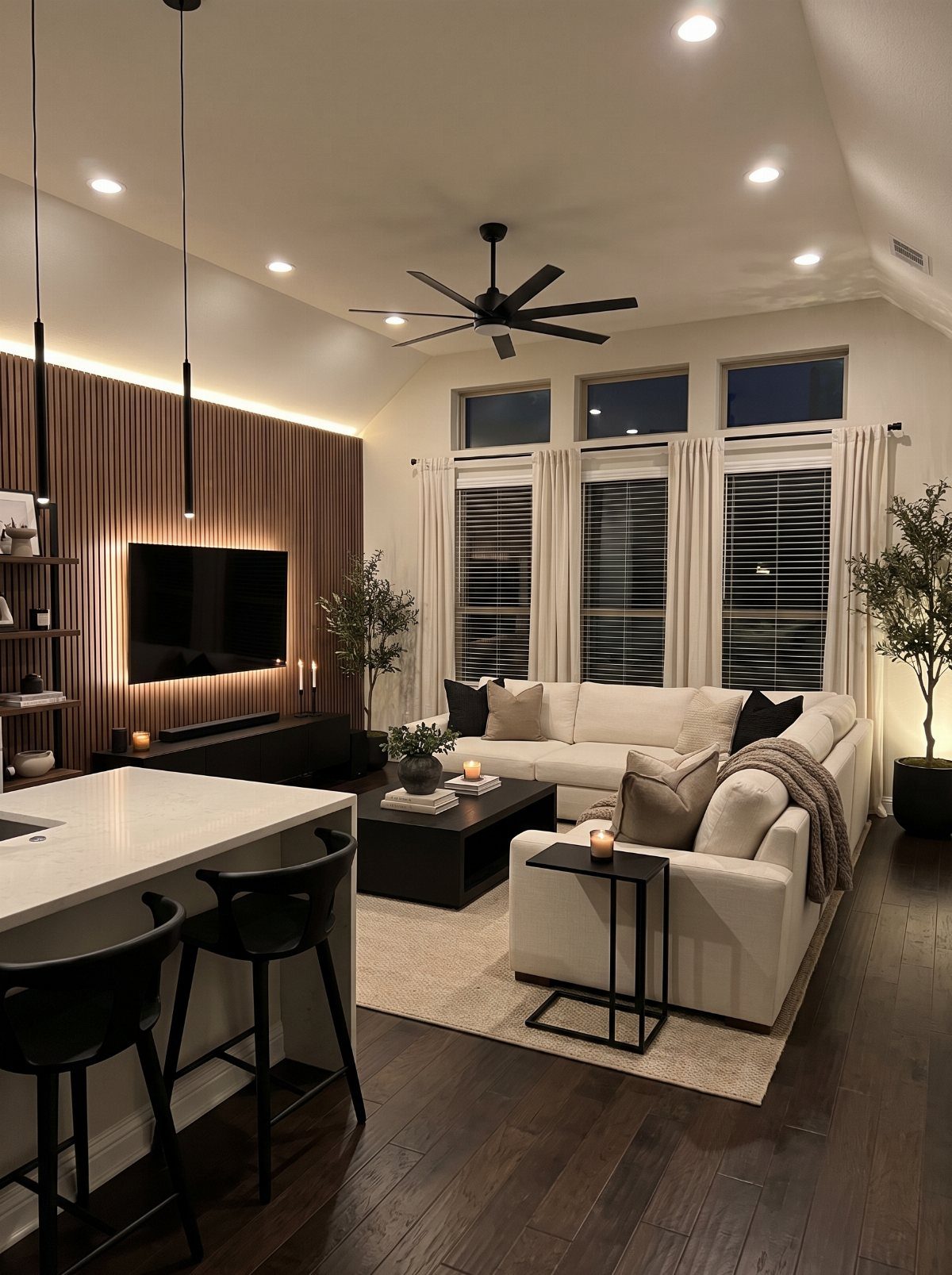
Dark wood and black furniture ground a white room. The coffee table and slatted wall here give the space weight, and the dark floor keeps the white from feeling too light.
A black coffee table costs about the same as a lighter wood one but reads stronger in a white room. If you’re working with existing dark floors, lean into them instead of trying to brighten everything else.
The contrast makes the white feel intentional instead of unfinished. A single dark piece is enough.
5. Accent Pillows
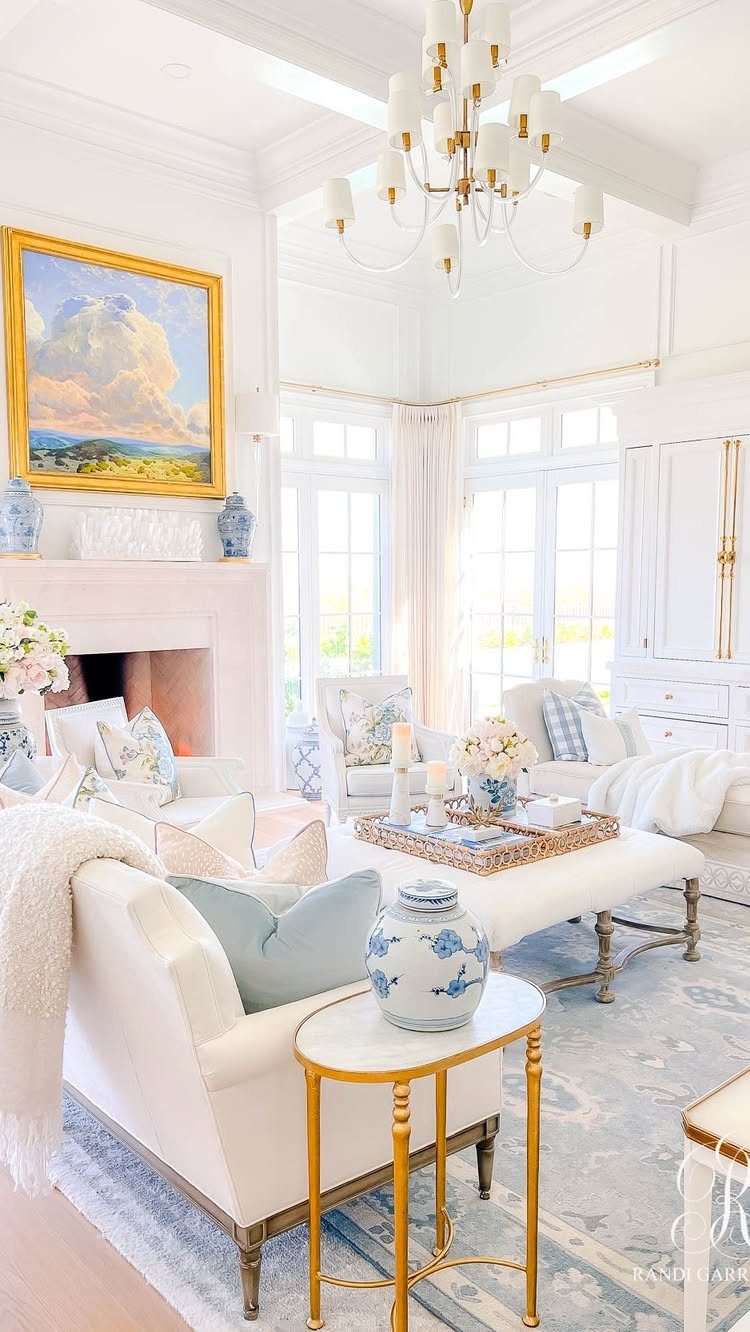
Pillows let you bring in color without repainting or replacing furniture. Blue and floral pillows soften the white sofas here, and they’re easy to swap out when you want a different look.
Performance fabrics hold up better if you’re using the sofa daily. They resist stains and clean easier than cotton or linen, which matters if you’re adding lighter tones to a white base.
Start with a mix of solids and one pattern. Blue works because it stays cool next to white; warmer tones like rust or terracotta would shift the whole room.
6. Cozy Reading Nook
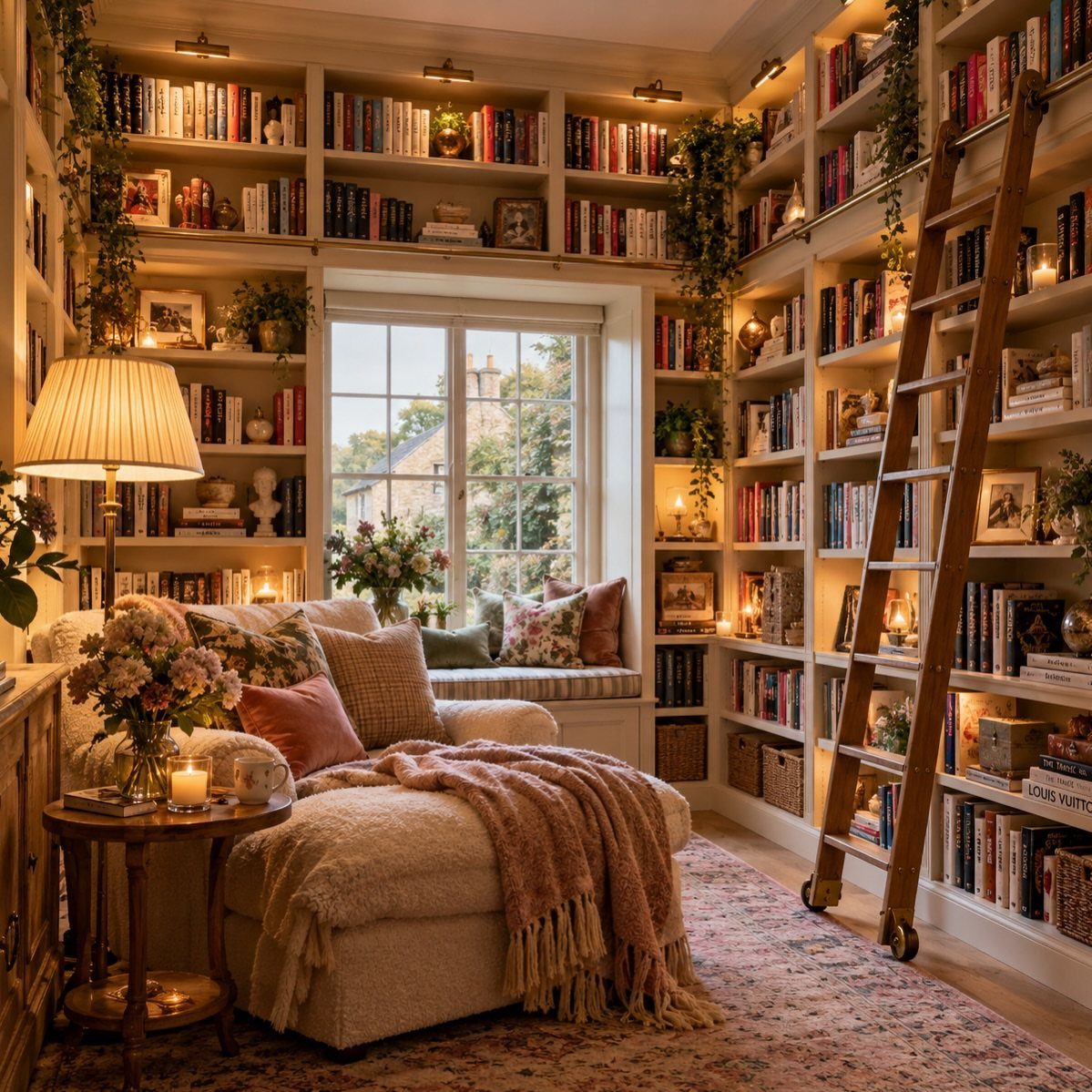
A reading nook makes a white living room feel lived-in. The chaise here sits low and deep, with shelves on 3 sides and a window behind it, turning one corner into a spot you’ll actually use.
Floor-to-ceiling shelves hold more books than most standalone bookcases and turn the corner into storage that furniture can’t match.
A chaise works better than an armchair because you can stretch out, and a pink throw adds warmth without taking up wall space.
If you don’t have room for a full nook, a single chair by a window with a small side table does the same thing on a smaller footprint.
7. Open Shelving
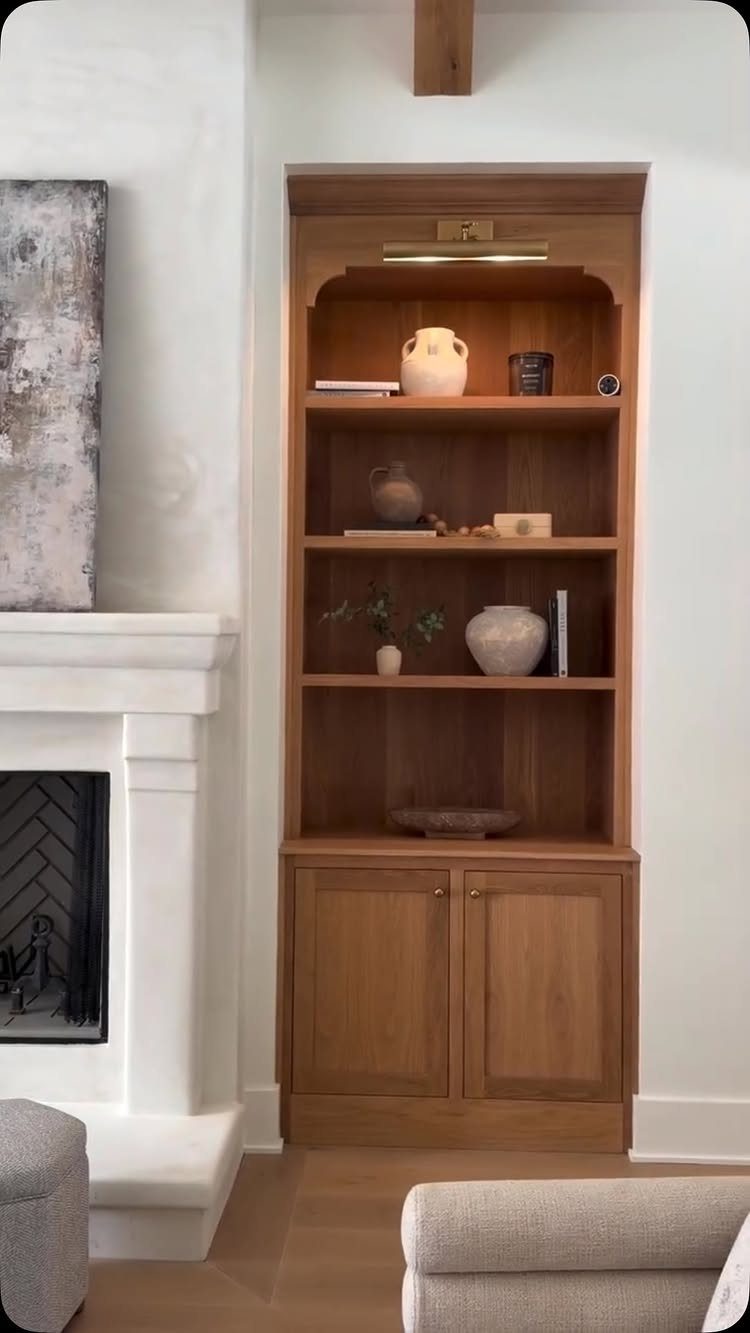
Open shelving displays what you want to see while keeping the walls light. Built-ins frame a fireplace or fill a corner without blocking sightlines, and wood shelves warm up white walls better than painted ones.
If you’re adding shelves, keep them shallow enough that books and vases sit flat without crowding the room. Style them with a few large pieces instead of filling every inch: a tall vase, a stack of books, a plant.
The wood tone here pulls in warmth without adding color.
8. Statement Rugs
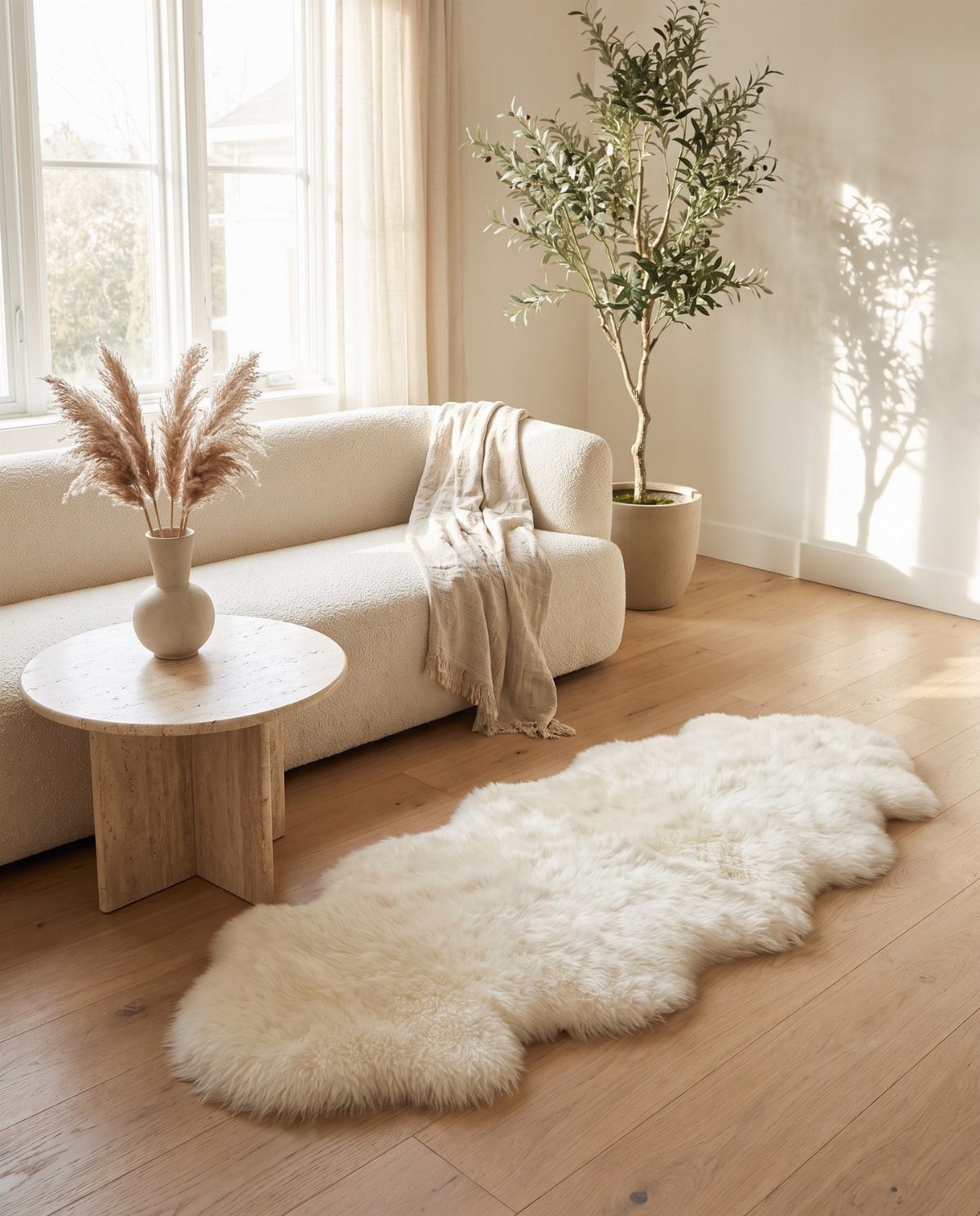
A rug anchors a white room and defines where the seating sits.
Faux fur works in low-traffic spots, a bedroom or a reading corner, but it shows dirt faster than jute or wool.
If the rug sits under a coffee table where people walk daily, a flatweave or low-pile wool rug holds up better and still adds warmth.
Size it so the front legs of your sofa sit on the rug, not just in front of it.
Creating a Cozy Atmosphere
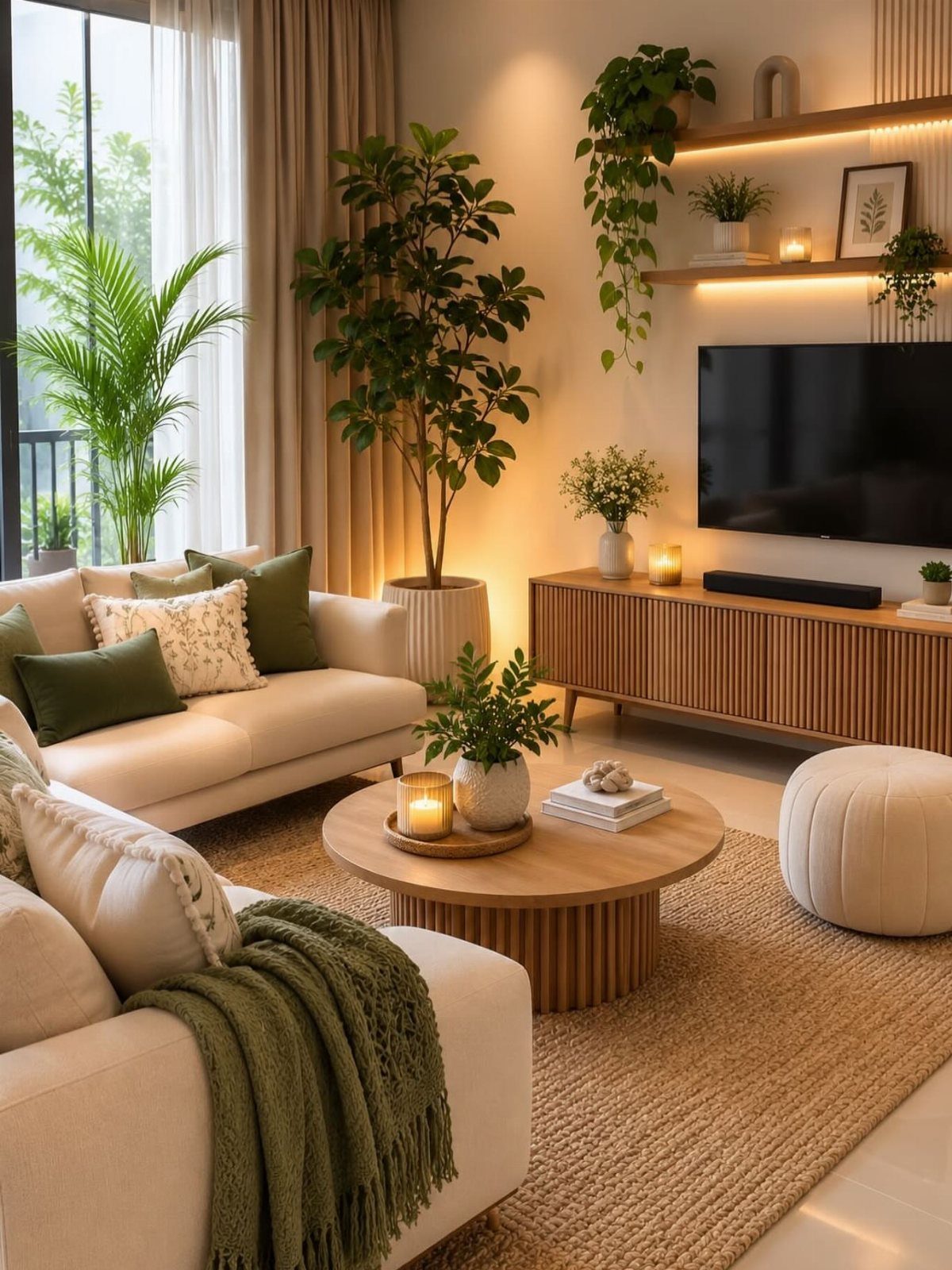
A white living room feels inviting when you add layers instead of leaving surfaces bare. Texture makes the difference between a room that looks finished and one that feels lived-in.
Mix materials at different heights: a chunky knit throw over the arm of the sofa, a stack of books on the coffee table, a ceramic bowl on a side table.
Each layer gives the eye something to land on without adding color.
Vintage pieces next to modern furniture keep a room from looking like it came out of a catalog. An older wood chair or a found object on a shelf signals that the room grew over time.
Storage that sits in view works better than hiding everything. A basket that holds throws or a low shelf that displays books you’re reading keeps the room functional without making it look unused.
Importance of Lighting
One overhead light flattens a white room and makes it feel stark. Layered lighting fixes that by putting light sources at different heights and in different spots around the room.
A floor lamp in one corner, a table lamp on a side table, and wall sconces if you have them spread light across the room instead of pooling it in the center.
Warm bulbs matter more in a white room than in a dark one because cool-toned bulbs make white walls look blue or gray.
Candles add a second layer in the evening, especially in winter. The flicker softens hard edges and fills in shadows that lamps miss.
Dimmable bulbs let you adjust brightness by time of day or what you’re doing, which is worth the small cost difference.
Seasonal Decor Changes
A white room lets you shift the look with a few small swaps instead of redecorating from scratch. By April I’m ready for tulips in a pitcher and linen pillows that bring back pale green or blush.
Changing accent pillows by season is easy because the covers come off and swap out. Pick colors that work with what you already have but shift the tone: deeper blues or rust in fall, pastels or brighter tones in spring.
Varying pillow sizes adds depth when you layer them on a sofa.
A white backdrop makes seasonal changes visible without needing to replace large pieces.
Frequently Asked Questions
How to make white walls cozy?
Add texture through throws, pillows, and rugs, then layer your lighting with floor lamps, table lamps, and candles instead of relying on one overhead fixture.
Natural materials like wood, jute, and rattan warm up the space, and using warm-toned bulbs makes a bigger difference in a white room than in a darker one. Candles help soften hard edges in the evening, especially during colder months.
What color sofa would look best on white walls?
White or cream sofas keep the room light and let you change the look with pillows and throws. Mixing 2 or 3 shades of white, one slightly warmer or cooler than the other, prevents the room from reading as one flat plane.
A neutral palette gives you flexibility to add color through artwork and accents instead of locking into one scheme.
Is white color good for a living room?
White works well as a backdrop because it lets you shift the look with small swaps instead of redecorating from scratch.
Natural materials like wood, stone, and jute add warmth without competing with white walls, and layering textures at different heights keeps the room from feeling stark.
The space feels brighter and more open as long as you bring in enough contrast through dark accents and varied finishes.






