
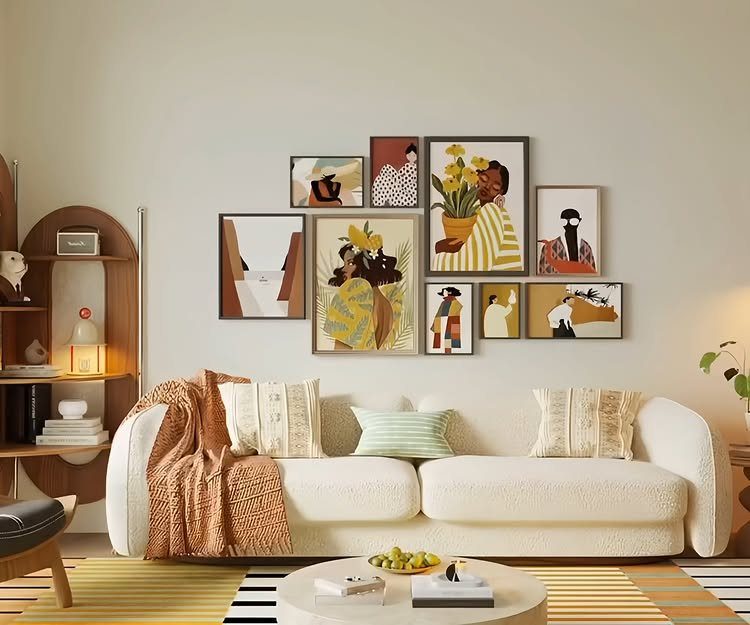
An accent wall in charcoal or navy pulls a room together without closing it in, while 3D panels add sculptural depth that needs no floor space.
The wall you pick depends on what the room already asks you to solve: a bare expanse behind the sofa calls for one large canvas that spans 2/3 of its width, a corner that sits empty takes floating shelves in natural wood, and a small living room doubles its perceived size when you mount a vertical mirror on the wall perpendicular to the window.
Backlit geometric features or slatted paneling around a wall-mounted entertainment center turn a functional surface into the focal point after dark.
1. Accent Walls
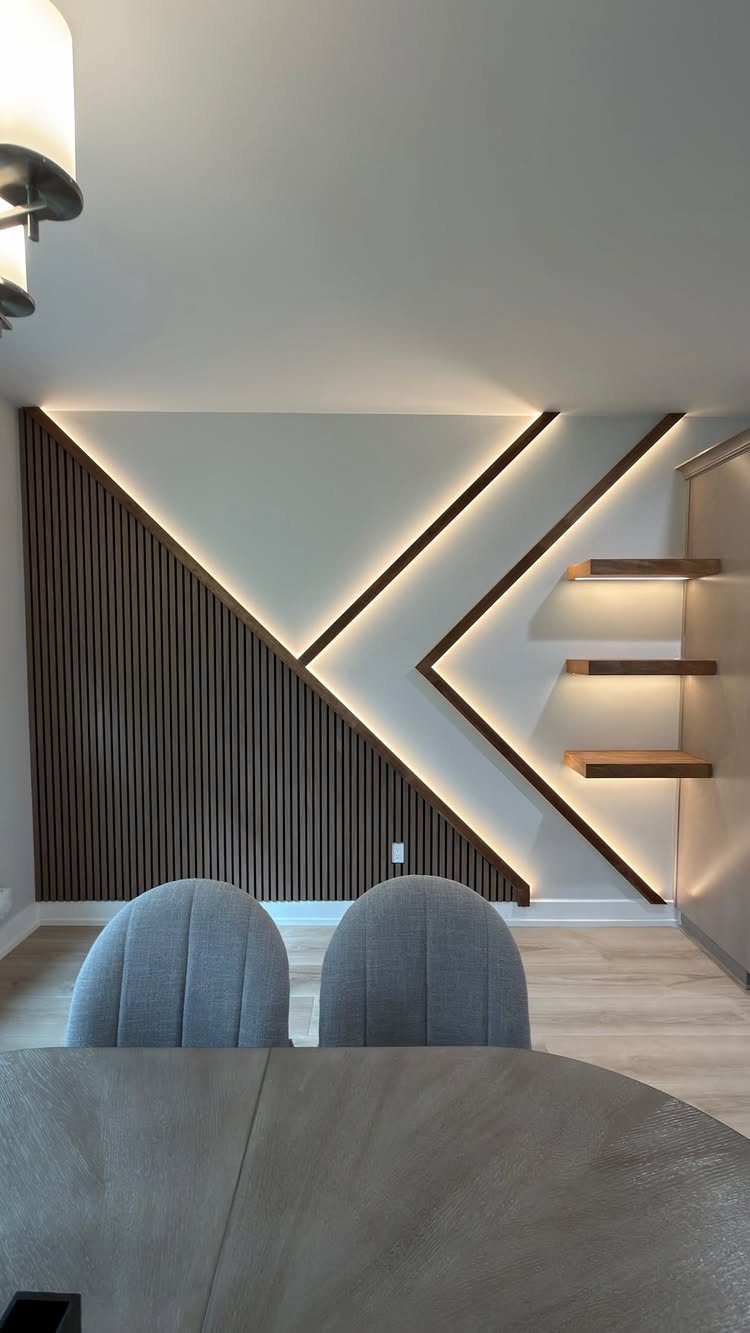
An accent wall pulls the room together by giving it one surface that stands apart from the rest.
Pick the wall behind your sofa or the one opposite the entry, where the choice looks deliberate. Dark tones like charcoal, forest green, or navy add weight without closing the room in, and they let lighter furniture pop.
2. Gallery Walls
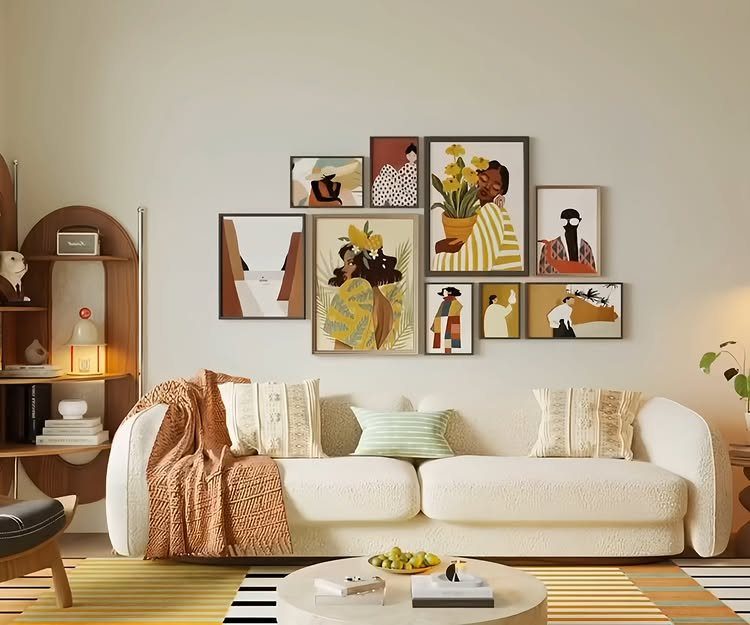
A gallery wall gives you room to display art you already own or prints you’ve been collecting, without needing one large piece. Keep the frames cohesive: match the frame finish or mat color, even when the art inside varies.
Hang the grouping so its center sits around 57–60 inches from the floor, which puts it where you naturally look in most rooms. Start with the largest frame in the middle or slightly off-center, then build outward in a loose grid.
Space frames so the wall reads as one installation rather than separate pieces floating on their own.
3. Using Mirrors Strategically
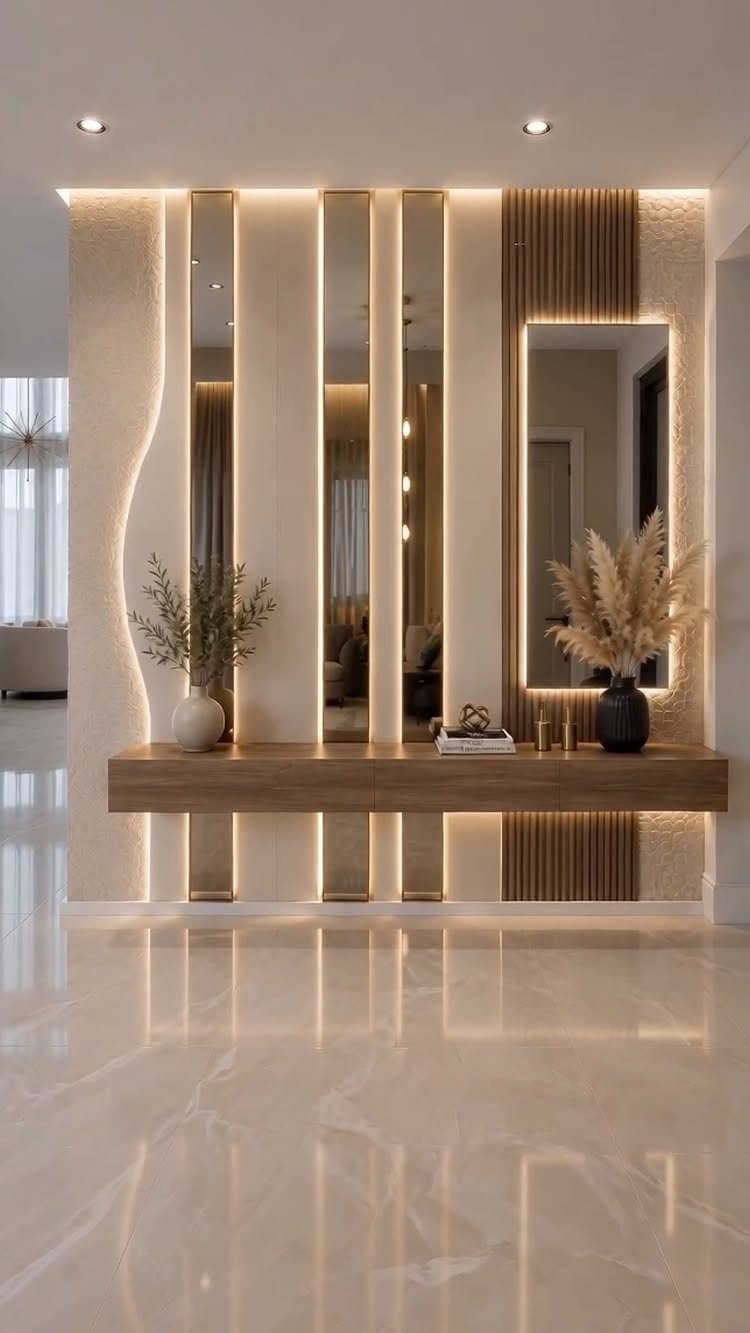
Mirrors placed on a living room wall bounce natural light deeper into the room and make smaller spaces feel twice their actual size. Vertical mirrored panels stretch the wall upward, while a floating console underneath grounds the composition.
Backlighting the panels with LED strips softens the reflection and adds dimension without glare. Mount the strips behind the mirror or along the top edge so the light washes down the surface.
This setup works best on walls perpendicular to windows, where the mirror catches indirect daylight without throwing hard reflections back into the room.
4. 3D Wall Panels
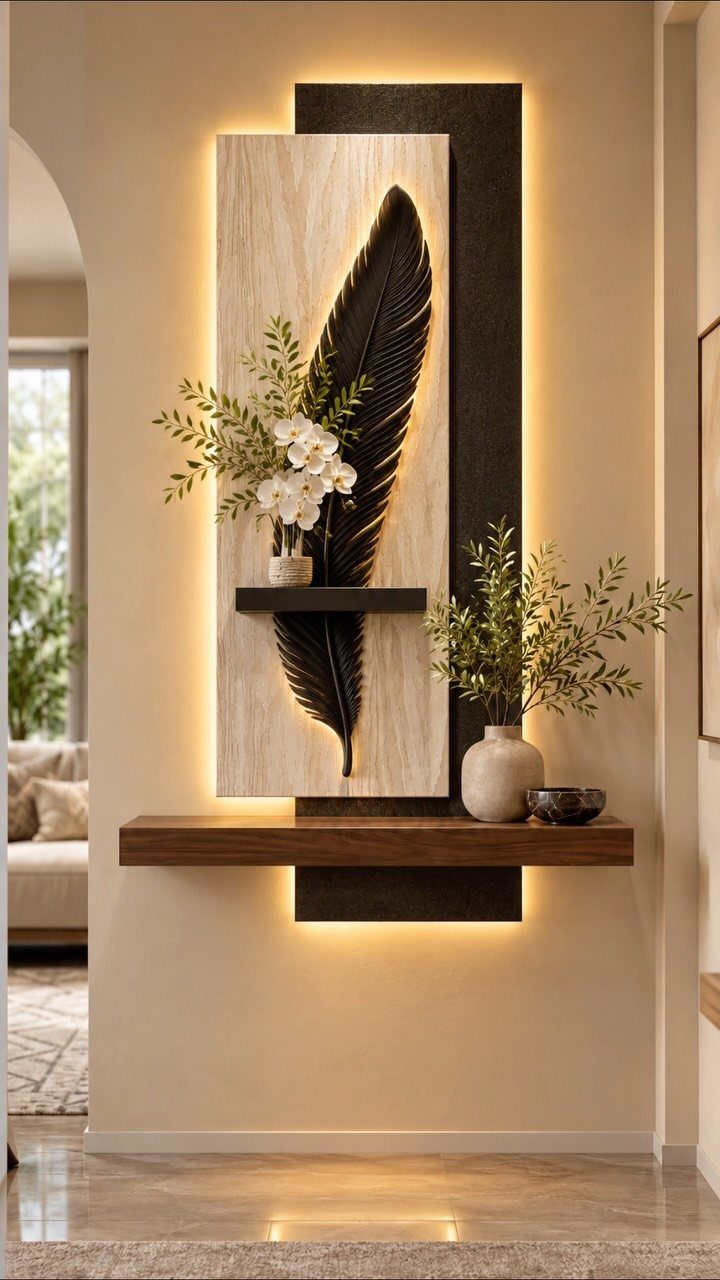
3D panels add sculptural depth to a flat wall and need no floor space.
Most panels mount with adhesive backing or clips, and backlighting them with LED strips turns the texture into a feature after dark.
Panels come in wood, MDF, foam, and resin. Wood holds up best in high-traffic rooms, while foam keeps the weight down if you’re mounting on drywall without studs behind it.
5. Wall-Mounted Entertainment Centers
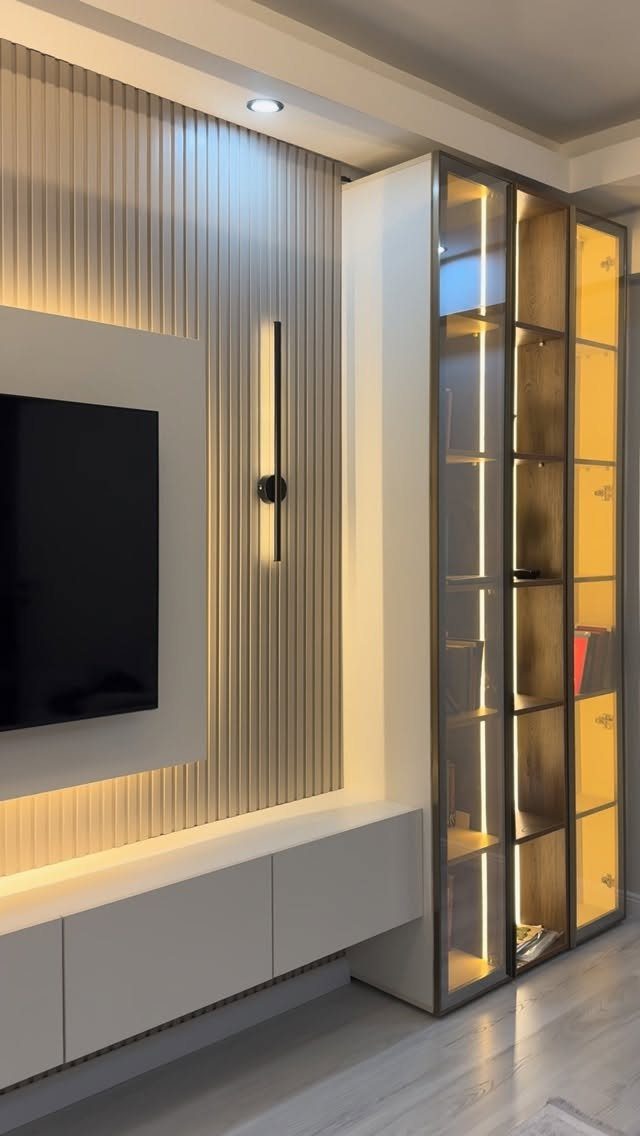
A wall-mounted entertainment center keeps your TV and storage off the floor, which opens up space underneath and reduces visual clutter.
Floating cabinets hold media equipment and cables out of sight, while slatted paneling around the screen softens the black rectangle.
Mount the TV so its center sits where you naturally look when you’re seated. Run power and HDMI cables through the wall or hide them behind vertical slats if you’re adding that detail.
6. Textile Wall Hangings
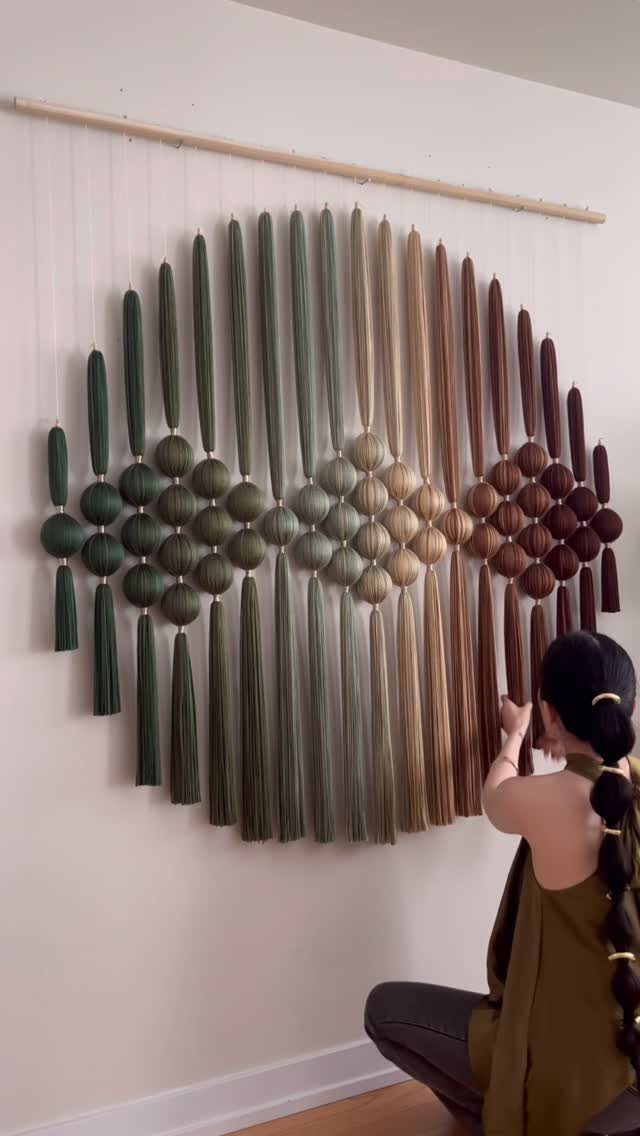
Textile wall hangings bring texture and warmth to a living room in a way flat art can’t.
Look for pieces that pick up 2 or 3 colors already in the room so the hanging feels tied to the space rather than dropped in.
Wool, cotton, and macramé all soften sound and add a handmade layer that balances harder finishes like metal and glass.
Mount the dowel with brackets or nails, centering it above a sofa or console.
7. Functional Wall Cabinets
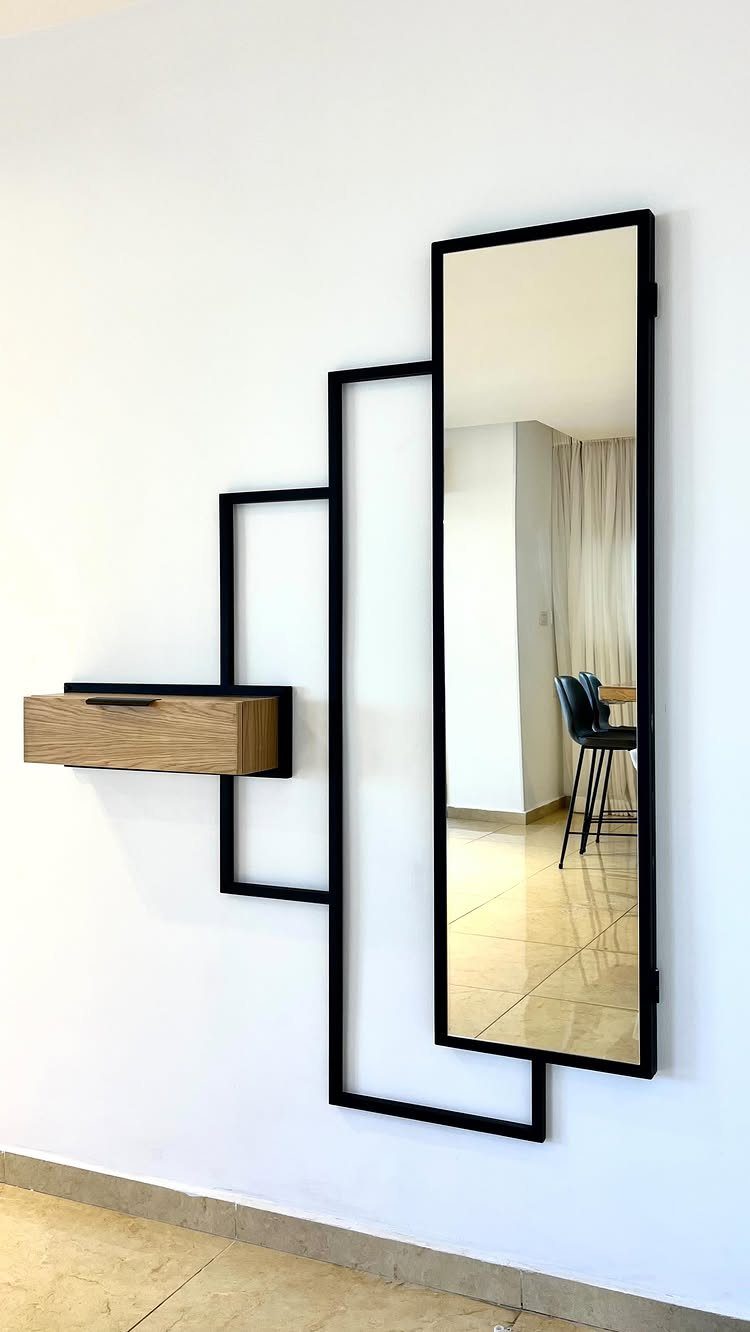
Wall cabinets with open shelves or drawers give you somewhere to drop keys and mail without taking up floor space in a small living room.
A slim unit mounted at waist height keeps the wall from feeling crowded and leaves room above for a mirror or art.
Look for pieces that match your existing hardware finishes so the install feels part of the room rather than an afterthought.
Anchor into studs if the cabinet will hold anything heavier than a phone and sunglasses.
8. Statement Wall Clocks
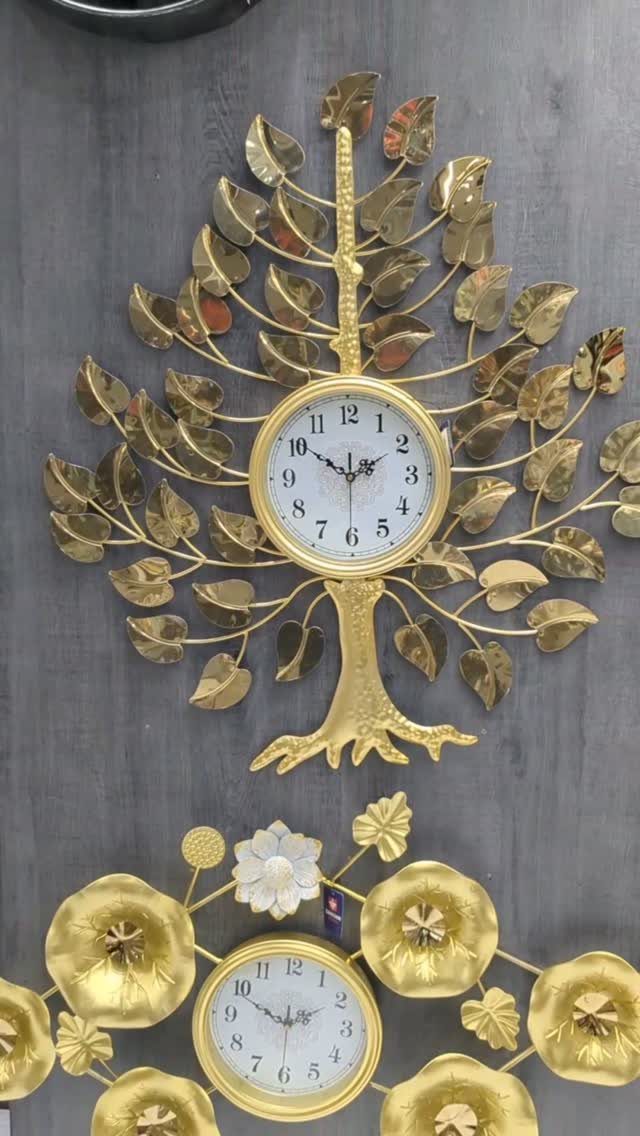
A clock large enough to fill the wall reads as art that happens to tell time, which gives you a functional piece that works on its own.
Metallic finishes like gold or brass catch light and add warmth to a dark wall. Sculptural designs with cutouts or raised detail create shadow lines that change throughout the day.
Mount the clock where you can see it from your usual seat, and make sure the mechanism runs silent if the room is quiet most of the time.
9. Large Artwork
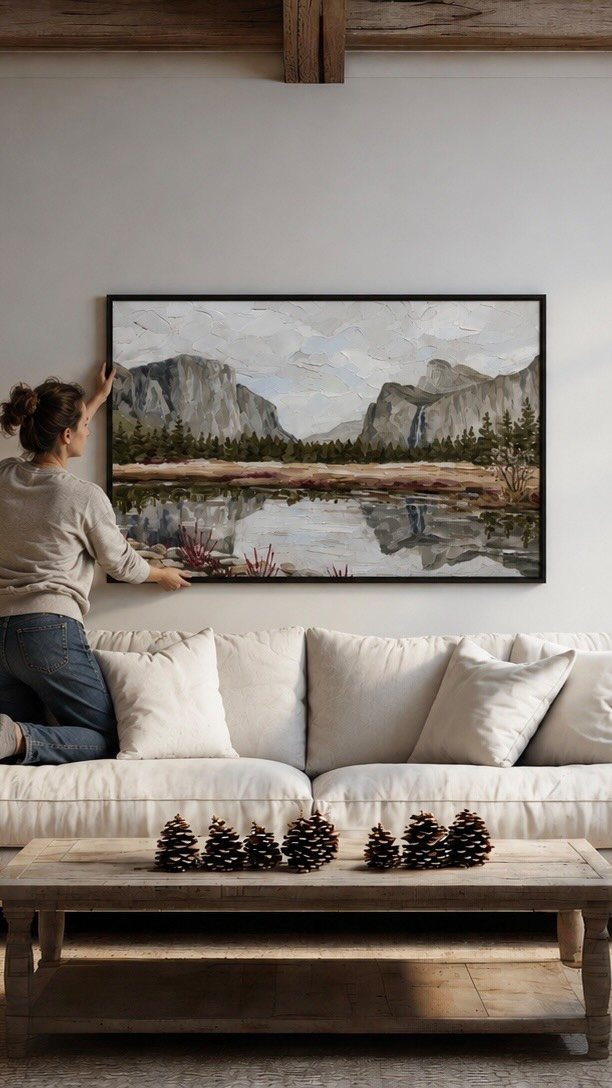
One large piece covers the same wall space as a gallery arrangement but skips the planning and leveling that comes with hanging multiple frames.
Scale the artwork so it spans roughly two-thirds the width of the furniture below it. Smaller pieces float, while an oversized canvas anchors the wall and pulls the seating area together.
10. Symmetrical Arrangements
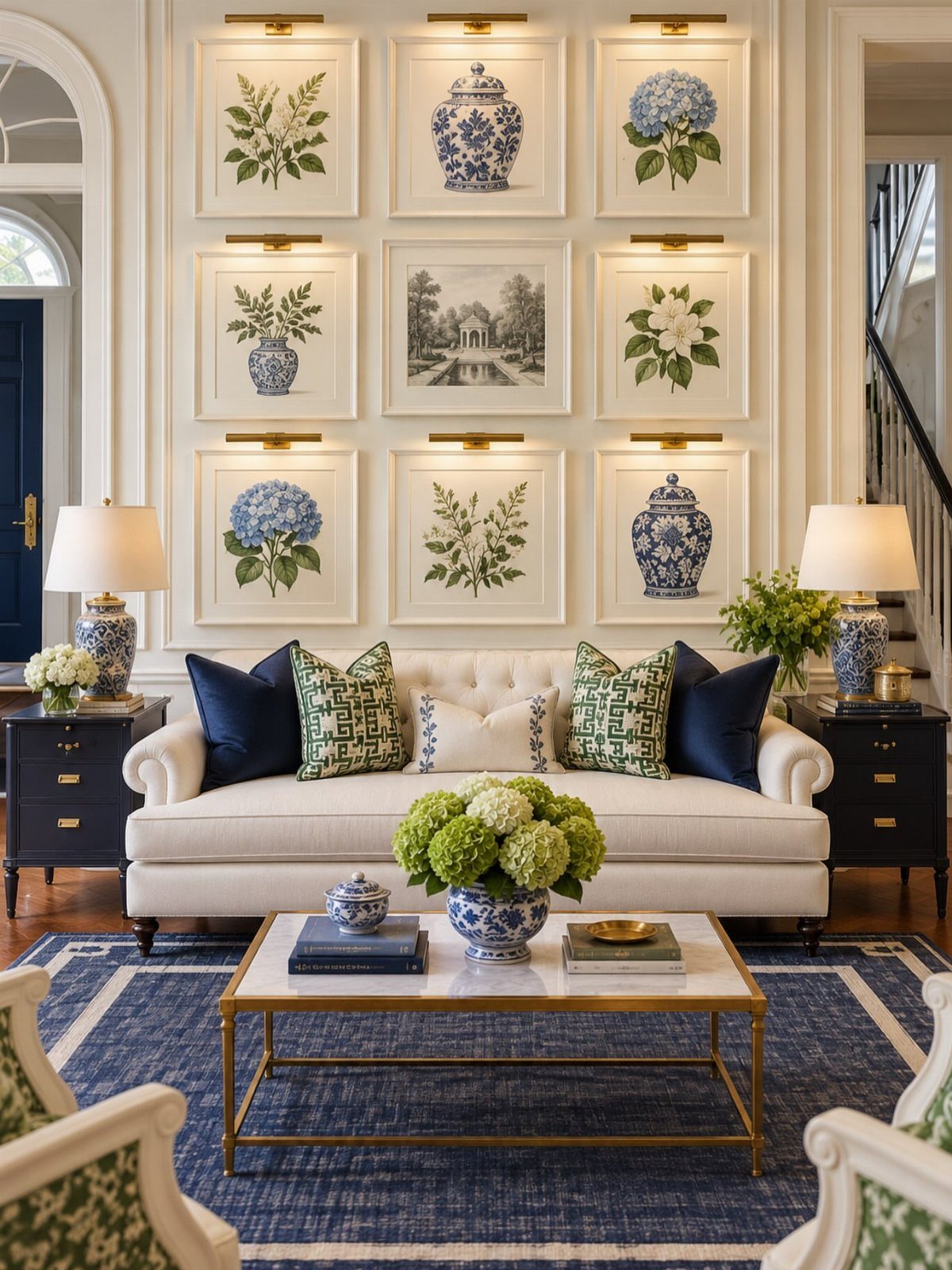
A grid of identical frames spaced evenly creates order on a wall that might otherwise feel too busy. The symmetry calms the space while still giving you room to display several pieces at once.
Measure and mark each spot before you hang anything, because uneven spacing breaks the grid faster than mismatched art does.
Use a level and painter’s tape to lay out the arrangement on the floor first, then transfer the spacing to the wall.
Matching mats inside the frames tighten the look even when the art varies in subject or color.
11. Decorative Wall Molding and Wainscoting
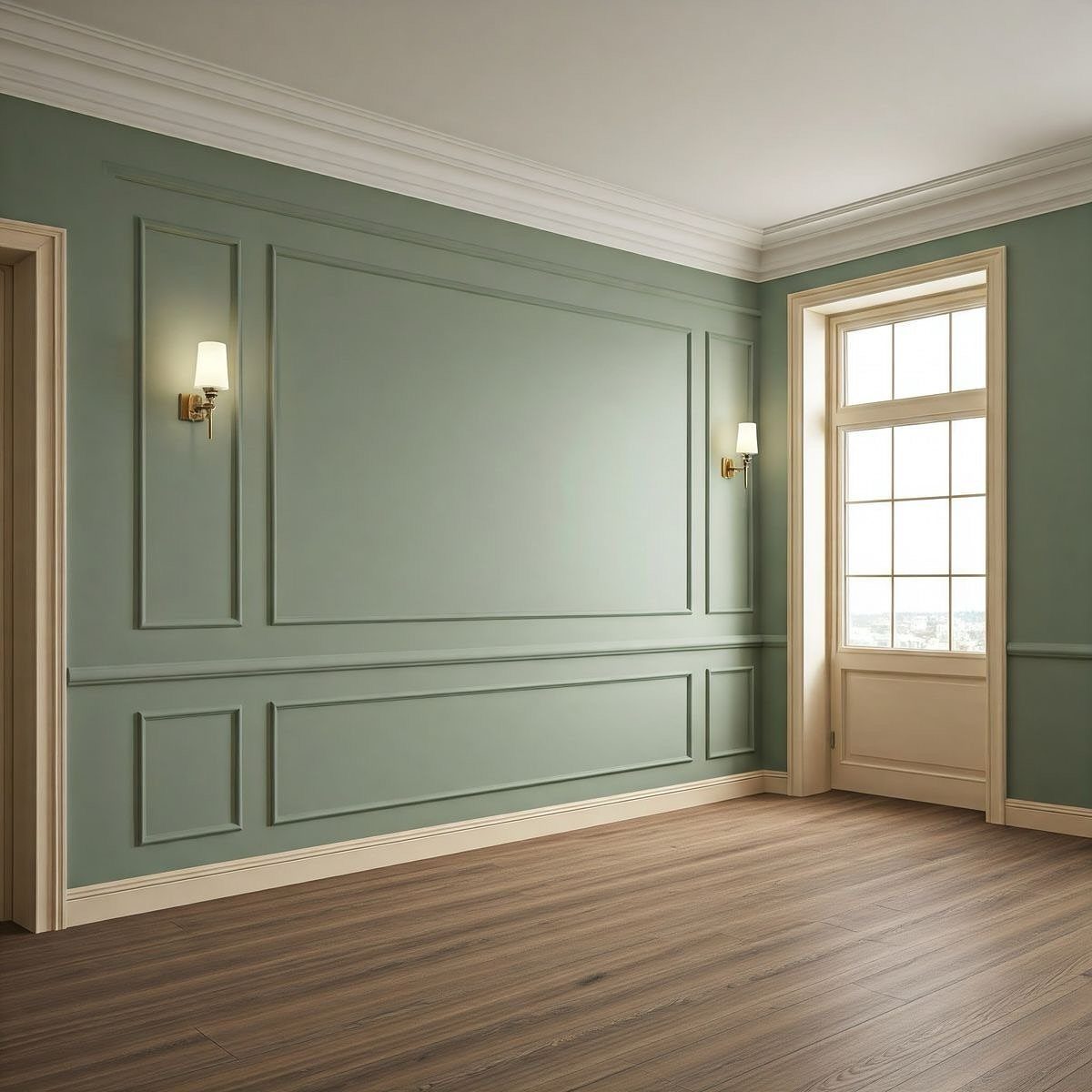
Picture frame molding adds architecture to a flat wall without cutting into your floor space or blocking furniture placement. The raised panels break up a large expanse and give the room a finished look that paint alone can’t deliver.
Install the molding low for traditional wainscot proportion, or run it full height in rectangles for a more formal treatment.
Paint the molding and wall the same color for a tonal effect, or use contrasting tones to make the frames stand out.
Pre-primed MDF molding cuts cleanly and takes paint better than raw wood.
12. Painted Wall Arches
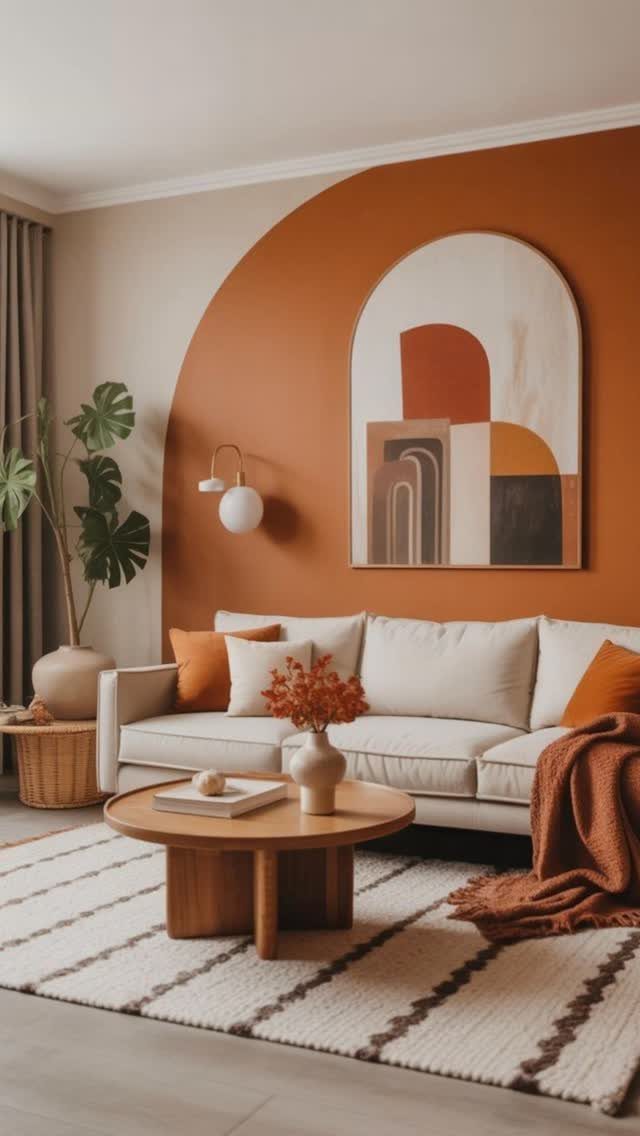
Painting an arch directly onto the wall frames whatever you hang inside it and adds architectural interest without installing anything.
The curve softens the hard lines of doorways and furniture, and you can size it to fit the space you have.
Tape off the shape with flexible painter’s tape, which bends smoothly around curves. A single coat usually covers when you’re painting over a lighter base color, but darker shades may need a second pass.
Center the arch over a sofa or console so the framed area balances with the furniture below it.
13. Backlit Geometric Wall Feature
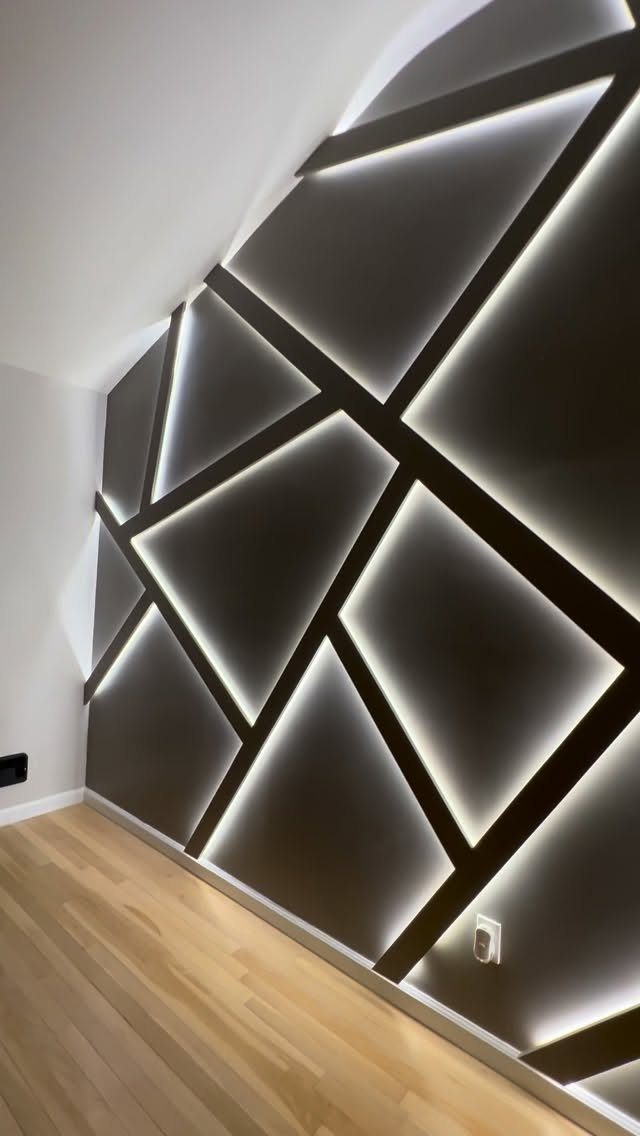
Black beams arranged in a geometric pattern and backlit with LED strips turn a flat wall into a sculptural focal point that changes as the light shifts.
The depth comes from mounting the beams slightly off the wall and tucking LED strips behind them so the glow washes outward. Cool white light reads crisp and modern, while warm white softens the contrast against a dark background.
This setup works best on a wall with no windows competing for attention, where the backlighting can hold its own after dark.
14. Vertical Slats and Marble Slabs
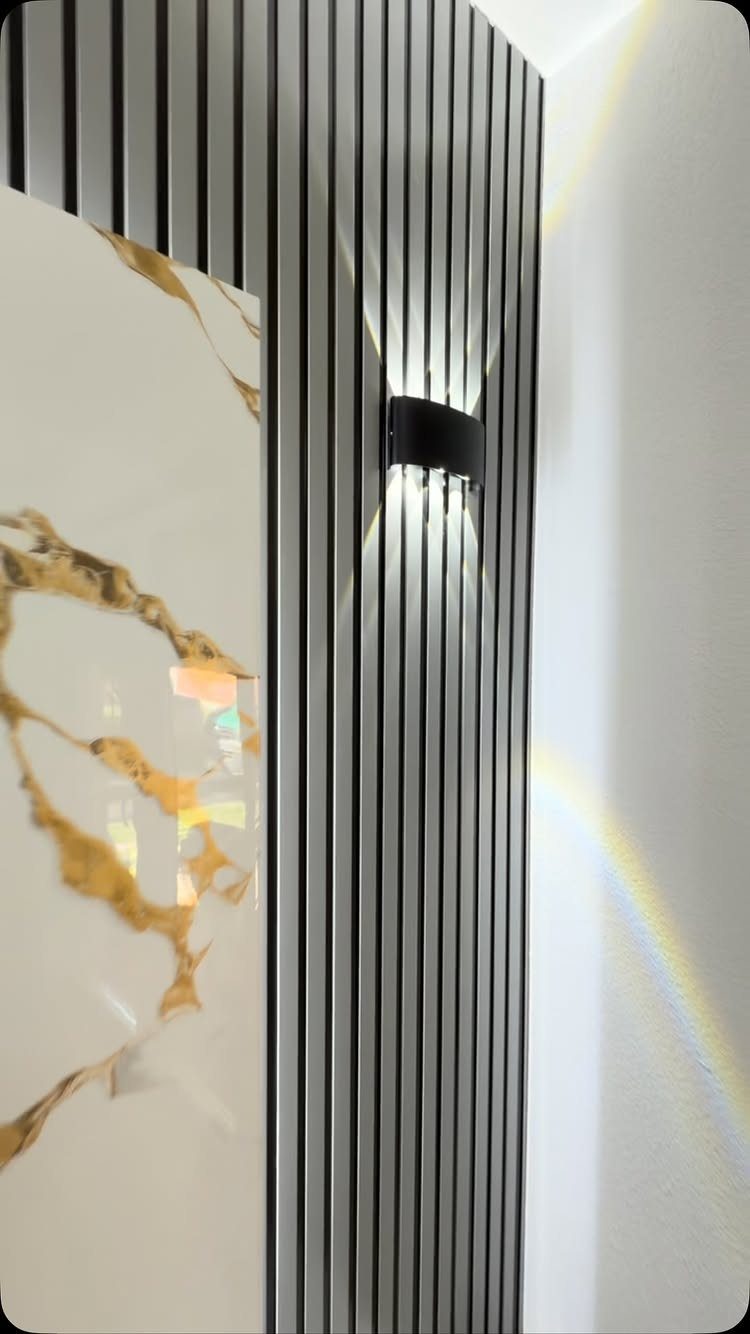
Pairing vertical slats with a marble panel breaks up a long wall and gives you a built-in backdrop for a sconce or shelf. The slats add rhythm, and the marble brings in natural veining that no 2 slabs repeat exactly.
Real marble costs more and weighs enough to need blocking behind the drywall, but it ages better than porcelain tile made to look like it.
Mount the sconce on the marble itself so the fixture reads as part of the composition rather than sitting next to it.
15. Floating Corner Shelves
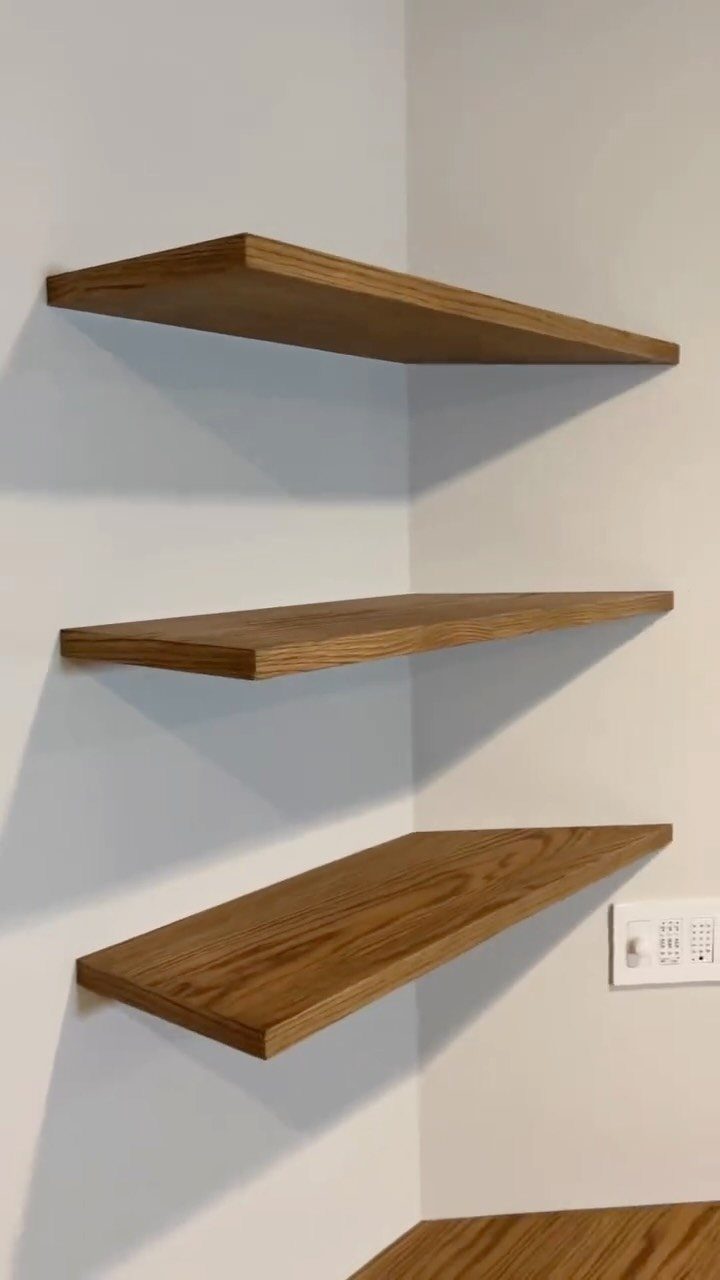
Corner shelves use wall space that usually sits empty and keep the rest of the room open for furniture.
Natural wood finishes warm up a white wall without adding color, and the grain shows best when the shelves catch light from a nearby window.
Mount each shelf into studs on both walls if the corner allows it, or use heavy-duty anchors rated for the combined weight of the shelf and whatever you plan to set on it.
Choosing the Right Size for Art
Aim for art that fills 60–75% of the wall when nothing else competes for the space. Measure height and width, then multiply each by 0.6 and 0.75 to bracket the size.
Do the same for the width: 5 times 0.6 gives 3 feet, and 5 times 0.75 gives 3.75 feet. The canvas should land between 5.4 and 6.75 feet tall and 3 to 3.75 feet wide.
Over a sofa or console, the piece should cover 2/3 to 3/4 of the furniture width. A 6-foot sofa needs art between 3.96 and 4.5 feet wide.
Creating a Focal Point
Pick one main element to anchor the wall and give the eye somewhere to land. In a busy room, one large piece holds attention better than a small collection spread across the surface.
Look at the room from the entrance and from where you sit most often. The sofa wall, TV wall, or fireplace should pull focus, not fight for equal billing.
A small living room reads more clearly when one focal point leads and the rest support it.
As one of the spaces you spend the most time in, living room wall decor ideas should be all about keeping your space feeling lively over a long period of time.
Avoiding Visual Clutter
Pick one anchor: fireplace, TV wall, sofa wall, or large-scale art.
Repeat one thread across what stays: frame color, wood tone, metal finish, or a curved silhouette ties unlike pieces together. Vary the visual weight so a bold gallery wall sits opposite quieter side walls and simpler furniture.
If your gaze bounces from TV to shelf to mirror to scattered frames, pull one layer out.
Frequently Asked Questions
How to arrange wall art in a living room?
Size your art to cover 60–75% of the available wall space, or 2/3 to 3/4 of the furniture width when hanging above a sofa or console.
In a grid or gallery wall, even spacing makes the whole thing read as one piece instead of a scatter of frames.
Mark your spots and check the distances before you drive a single nail, because uneven gaps ruin the look faster than frames that don’t match.
Which design is best for a wall?
Choose the wall behind the sofa, across from the door, or whichever surface your eye hits first when you step in.
A single strong element like large artwork, an accent color, or architectural molding works better than several competing treatments spread across multiple walls.
A single focal wall gives a small living room more clarity than spreading design effort across every surface.
What should I hang in my living room?
Figure out what the wall needs before you start shopping for things to hang.
If the room needs a focal point, hang large artwork, a mirror, or a gallery wall. If it needs more warmth, add a textile hanging or wood-toned frames.
If it needs more function, mount shelves or a slim cabinet. A wall does not need a little of everything, and one well-scaled piece often works better than several smaller items competing for attention.






