
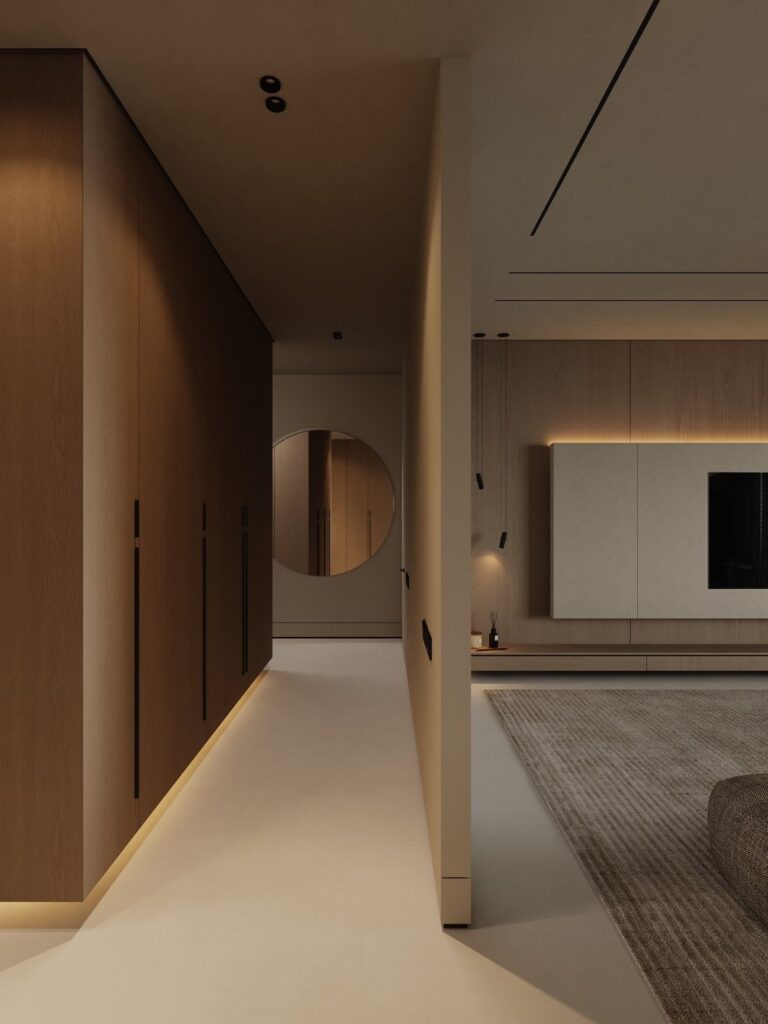
A grey sofa with beige chairs gives you contrast that keeps each piece distinct, while a beige sectional paired with large grey artwork or a grey coffee table anchors the room without matching every surface.
Pick the setup that fits your anchor piece: if the sofa already holds the room, add the second color through walls, curtains, pillows or a rug.
1. Grey Sofa with Beige Accent Chairs
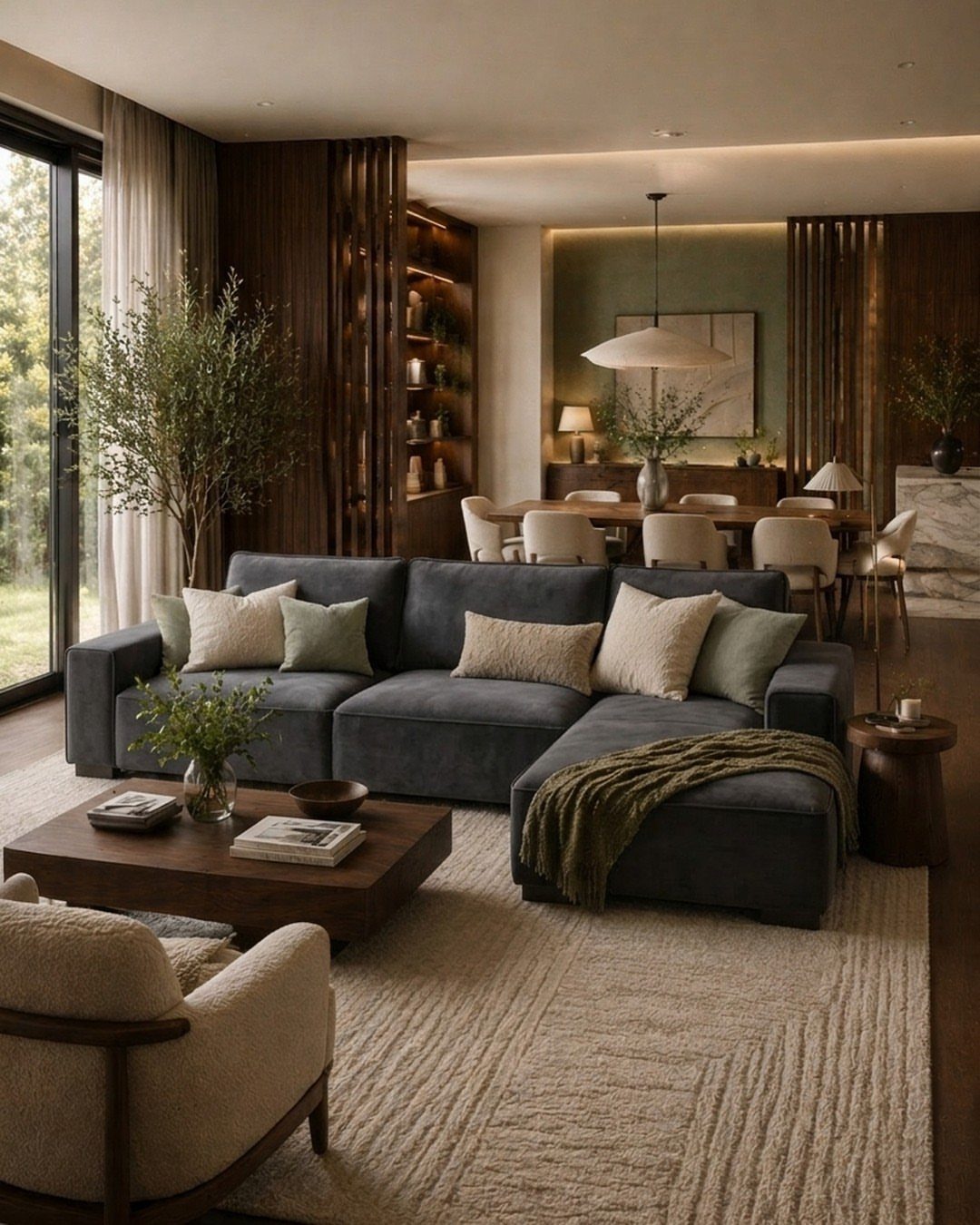
A grey sofa anchors the space, and beige chairs soften it without losing the modern edge. The contrast keeps each piece distinct, so neither color washes out the other.
This setup works well if the sofa already anchors the space and the room needs a second seating zone.
Beige chairs in linen or woven fabric read warm next to grey upholstery, and the pairing holds up whether the grey leans charcoal or mid-tone slate.
Add throw pillows in both colors to tie the palette across the seating.
2. Mix and Match
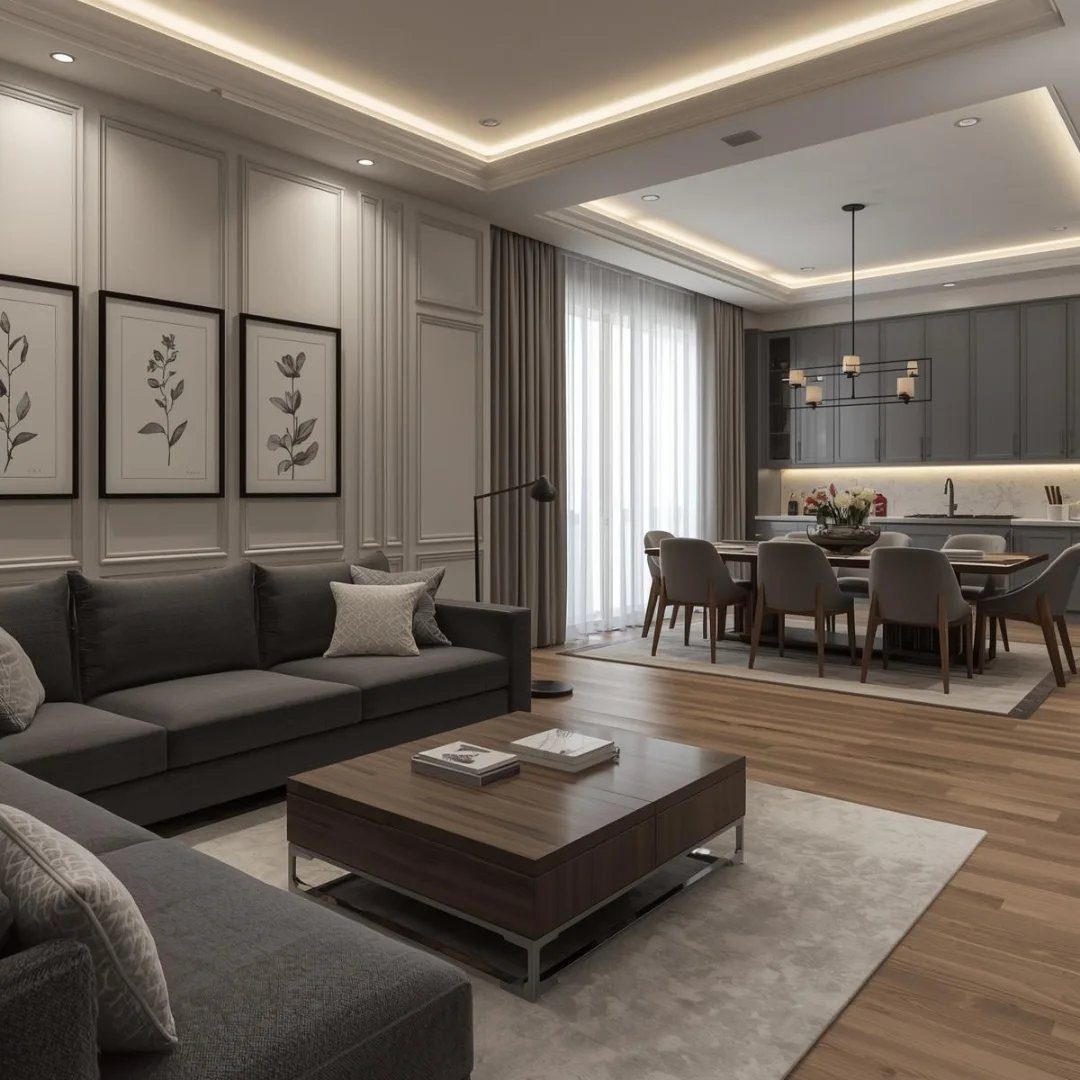
Layering different shades of beige and grey adds depth without pattern or bold color. A dark grey sectional sits against beige walls, or a charcoal rug runs under a lighter grey sofa with warm beige trim.
The variation keeps the palette from reading flat, and the wood coffee table in the center grounds the whole setup. I mix beige and grey across the walls, furniture and accents so the palette stays distinct but cohesive.
This approach works especially well in open-concept spaces where the living area flows into the dining zone.
3. Beige Walls with Grey Velvet Furniture
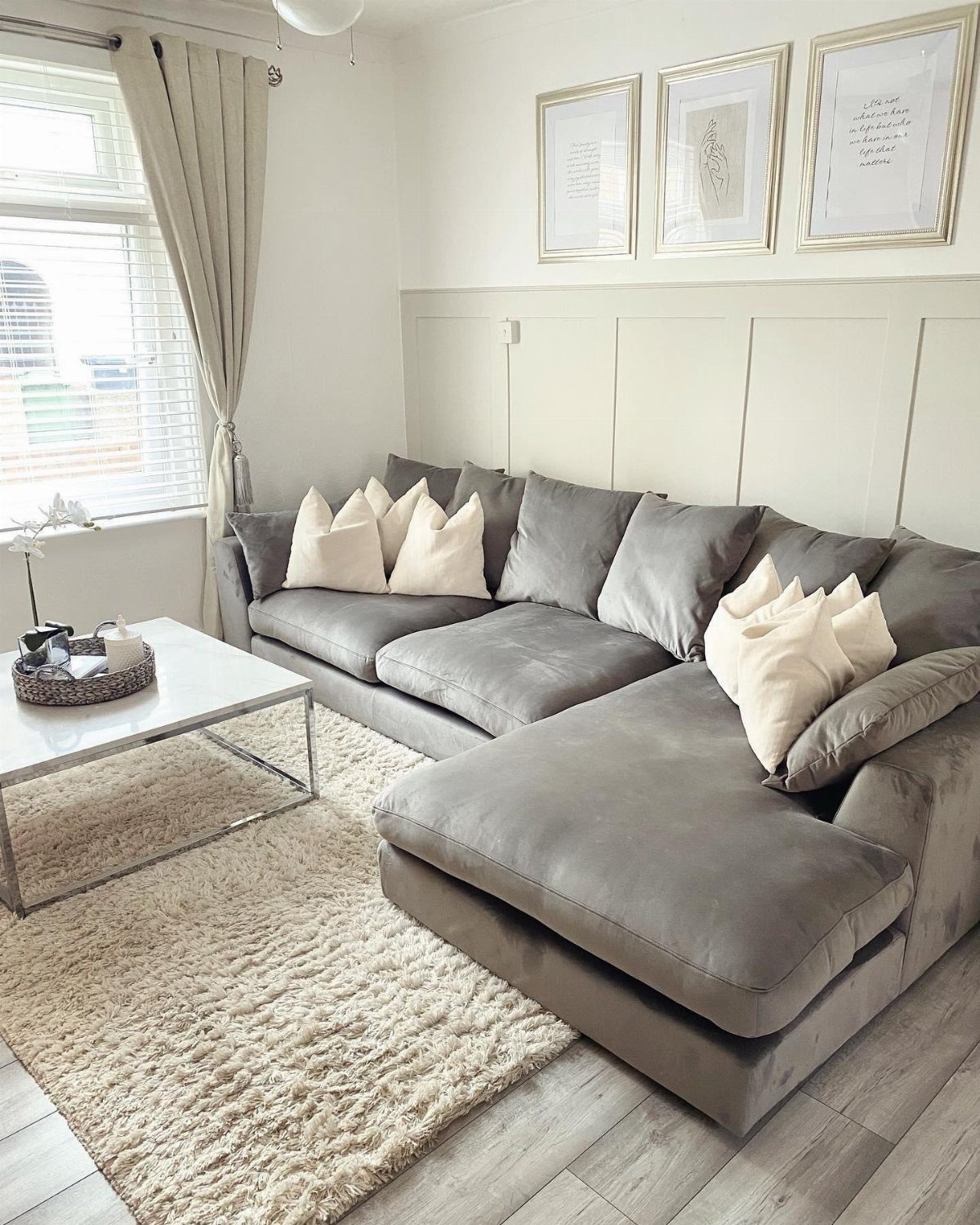
Beige walls warm up a grey velvet sofa and keep the room from feeling too cool or dark. Velvet adds texture and a bit of formality, and the beige backdrop softens that edge.
This combination works well in rooms with good natural light, where the velvet reads rich rather than heavy. If the sofa is a deep charcoal, the beige walls brighten the space and open it up.
Layer in cream or beige throw pillows to carry the wall color onto the sofa, and a shaggy rug in a neutral tone ties the floor into the palette.
4. Grey and Beige Layered Throw Pillows
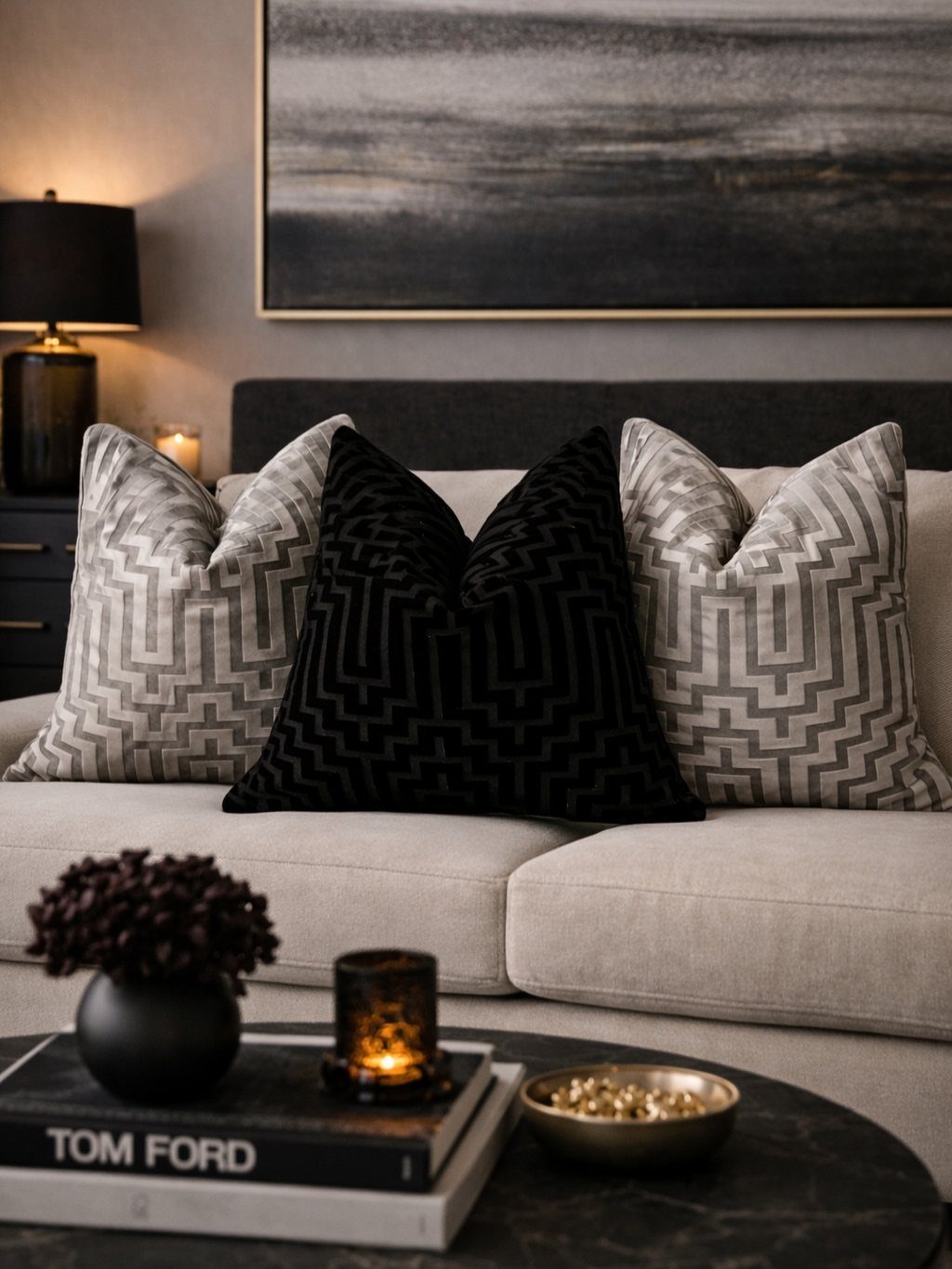
Layering throw pillows in grey and beige refreshes the sofa without replacing a single piece of furniture.
Start with a beige sofa and layer in pillows in varying shades of grey, from light dove to charcoal, with different textures like velvet, linen and geometric weaves.
This is the most budget-friendly update on the list. Pillows cost far less than reupholstering or buying new furniture, and swapping them out seasonally keeps the room from feeling stale.
Mix sizes and shapes to avoid the matched-pair look, and keep at least one solid pillow in the group so the arrangement doesn’t read too busy.
5. Marble and Gold Accent Table
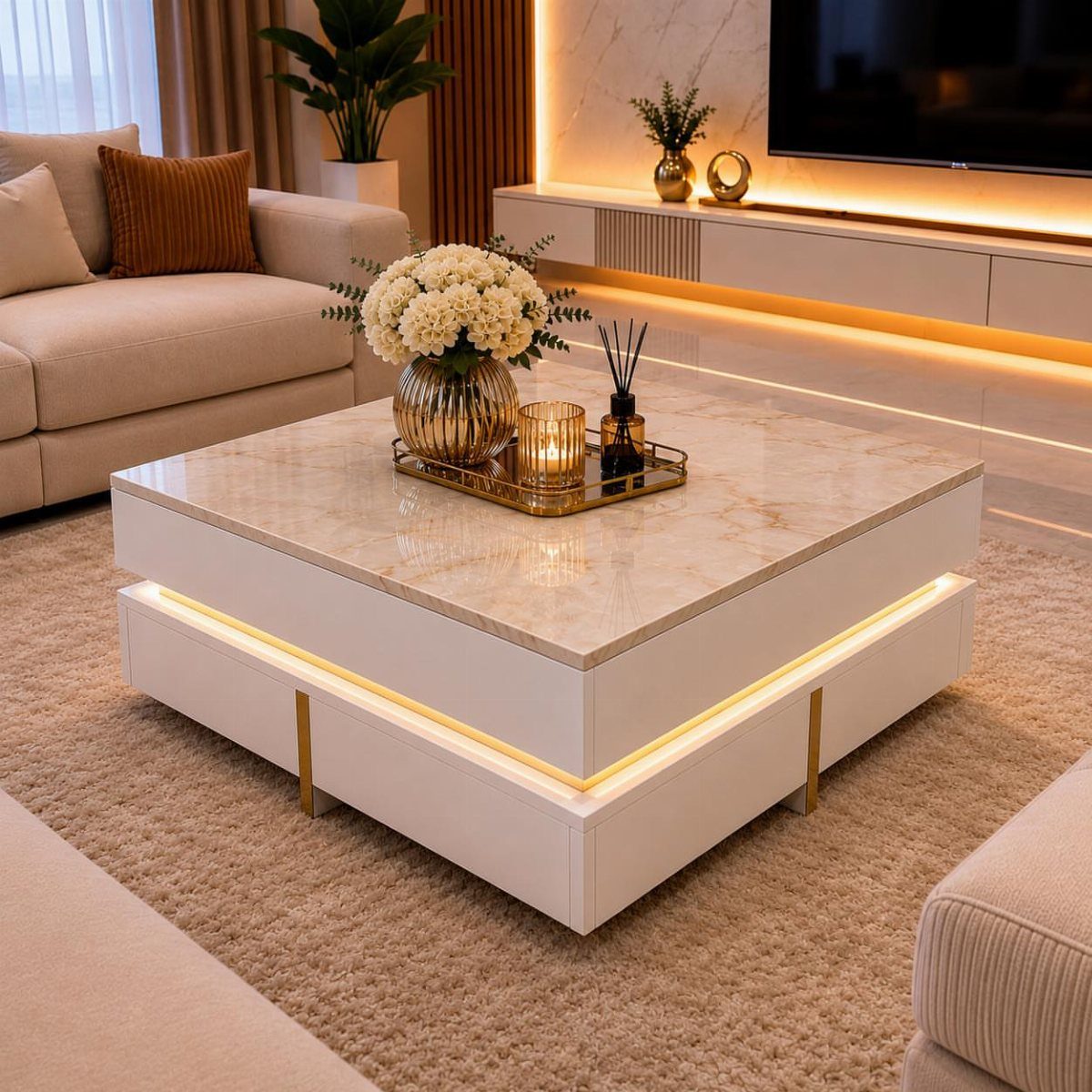
A marble and gold accent table brings a polished, finished look to a beige and grey living room without adding color.
The white marble top reads cool and clean, and the gold legs warm it up just enough to suit the beige side of the palette.
This table works next to the sofa or beside an accent chair, and the LED under-glow adds a modern detail that makes the piece stand out at night.
The square shape fits tighter spaces better than a round side table, and the marble surface wipes clean easily.
Gold finishes pair well with both beige and grey, so the table holds its place even if the throw pillows or rug change.
6. Wall Mirror
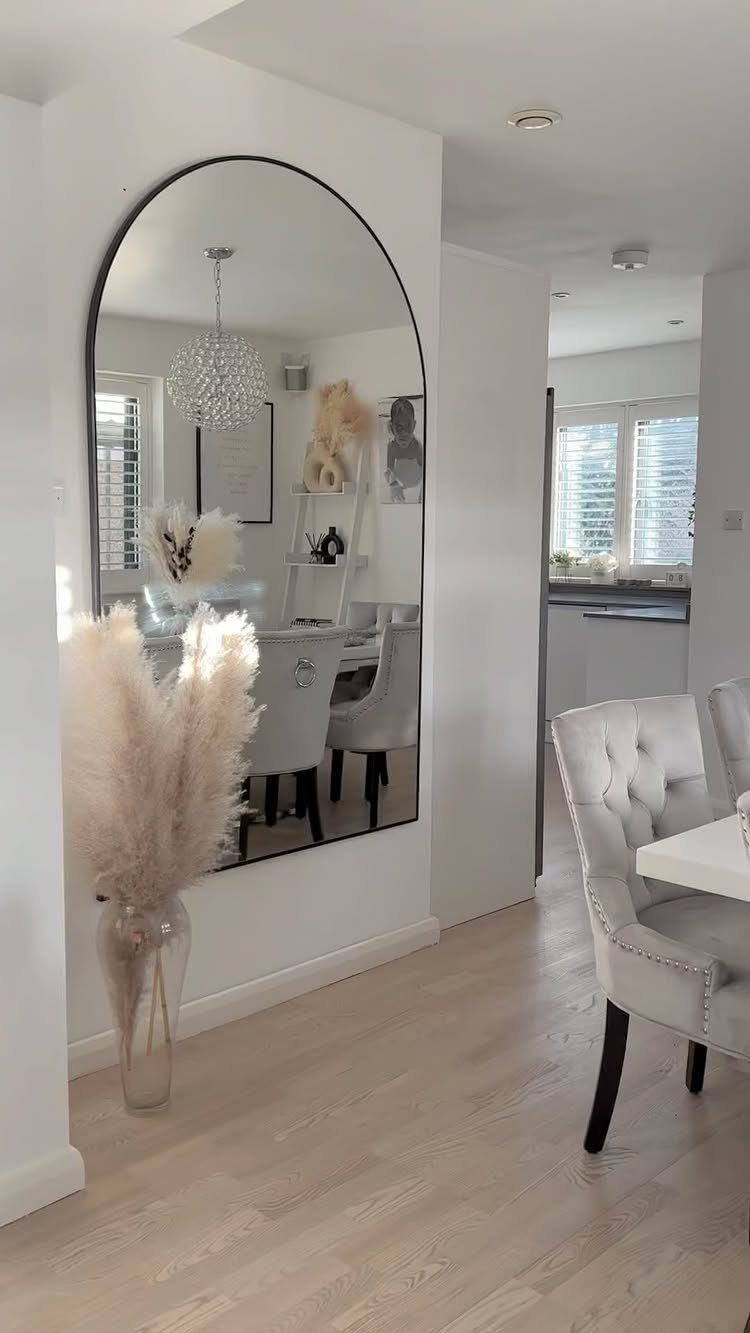
An arched mirror pulls light into the space and opens it up without adding furniture or color.
Hang it opposite a window to catch natural light, or place it on a wall that reflects a well-lit area like the dining zone.
The arched shape reads softer than a rectangular mirror and suits the rounded edges often found in modern beige and grey rooms.
A full-length or oversized mirror works best, since a small one won’t have the same impact on the perceived size of the space.
Mirrors with simple frames in white, gold or natural wood blend into the palette without competing for attention.
7. Layer Textures
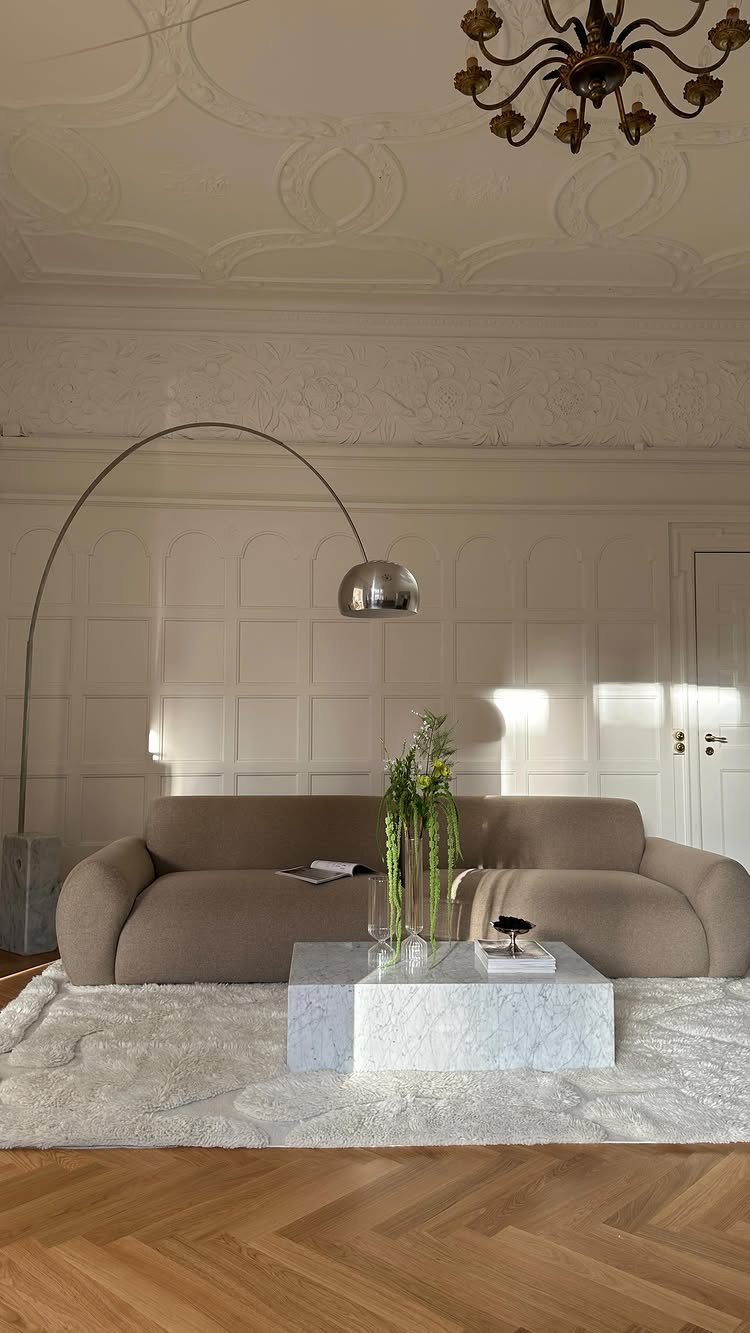
A white shag rug, smooth marble table and linen upholstery all read neutral, but the textures stop it from looking flat. The contrast between soft and hard surfaces adds depth that color alone can’t.
Stack a knit throw over linen pillows, or place a chunky ceramic vase on a polished marble surface. The mix works best when the finishes stay matte or natural rather than glossy.
Textured pieces also hide wear better than smooth fabrics in the same color.
8. Grey and Beige Geometric Patterns
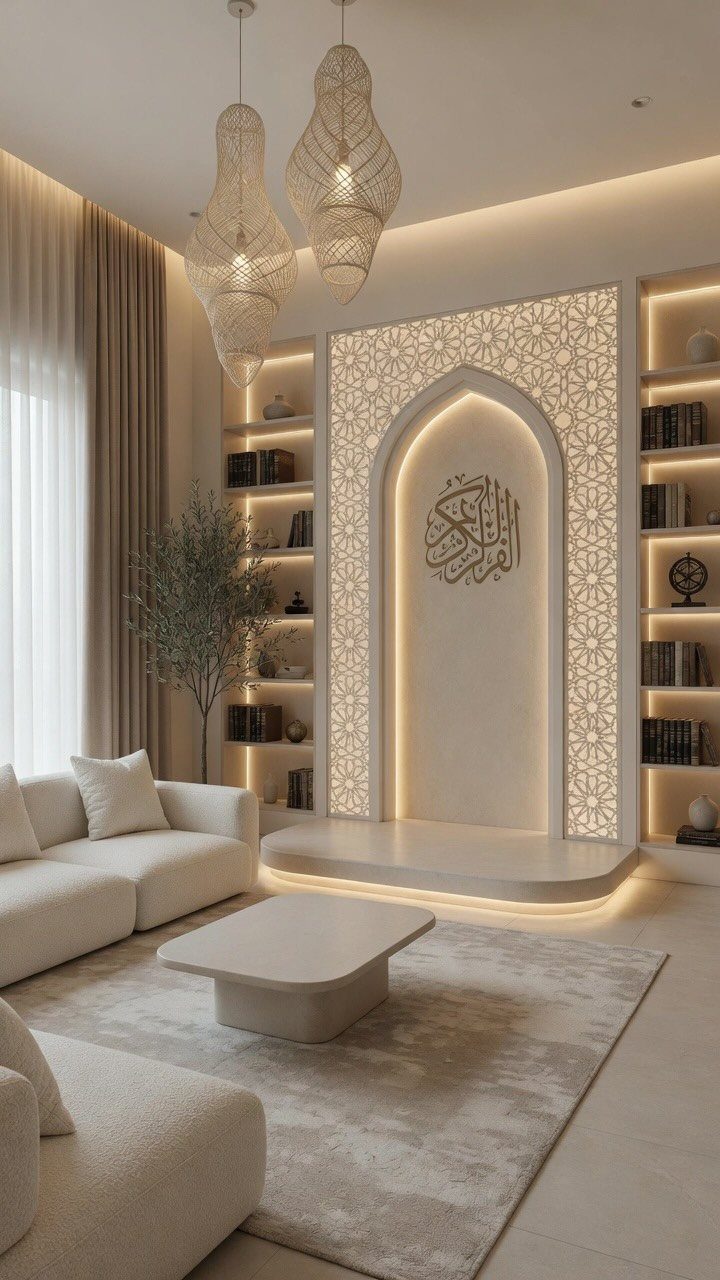
Geometric patterns in grey and beige break up solid walls without introducing bold color. A lattice panel, patterned rug or framed print with repeating shapes adds structure to the space and gives the eye something to follow.
The patterns work best when they stay graphic and clean rather than busy. A large-scale design holds up better from across the room than a small, tight repeat.
If the walls already carry pattern, keep the upholstery and pillows solid so the room doesn’t read cluttered.
9. Beige Linen Sofa with Grey Accents
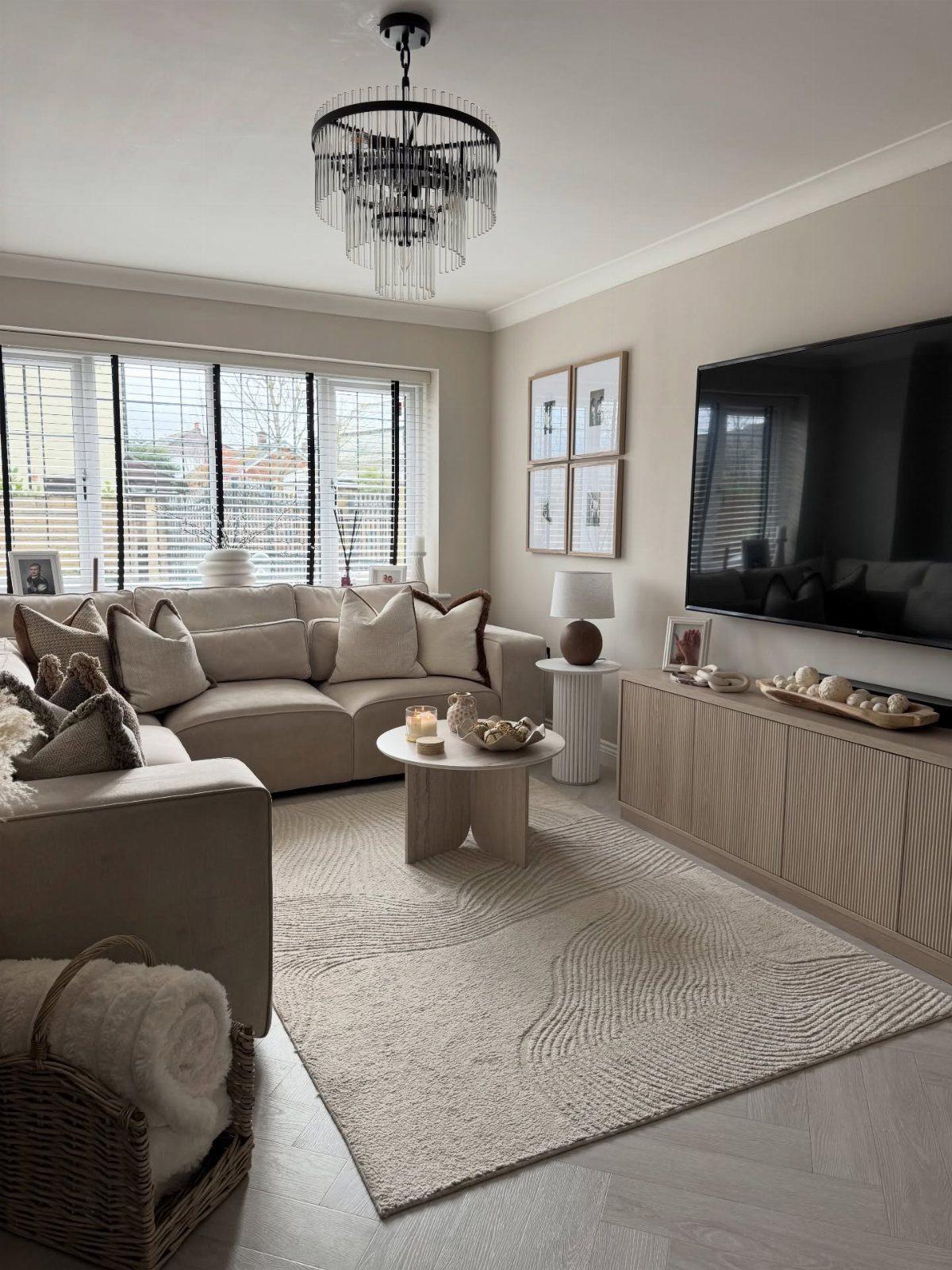
Linen softens a beige sofa and gives it texture that plain cotton or microfiber can’t match. Grey pillows in varying shades, from dove to charcoal, tie the piece into the rest of the palette without washing it out.
Linen wrinkles naturally, which reads relaxed rather than sloppy in a neutral room. It also wears well and gets softer over time.
A textured rug under the sectional adds one more layer and keeps the floor from disappearing into the furniture.
10. Beige Sectional and Large Grey Artwork
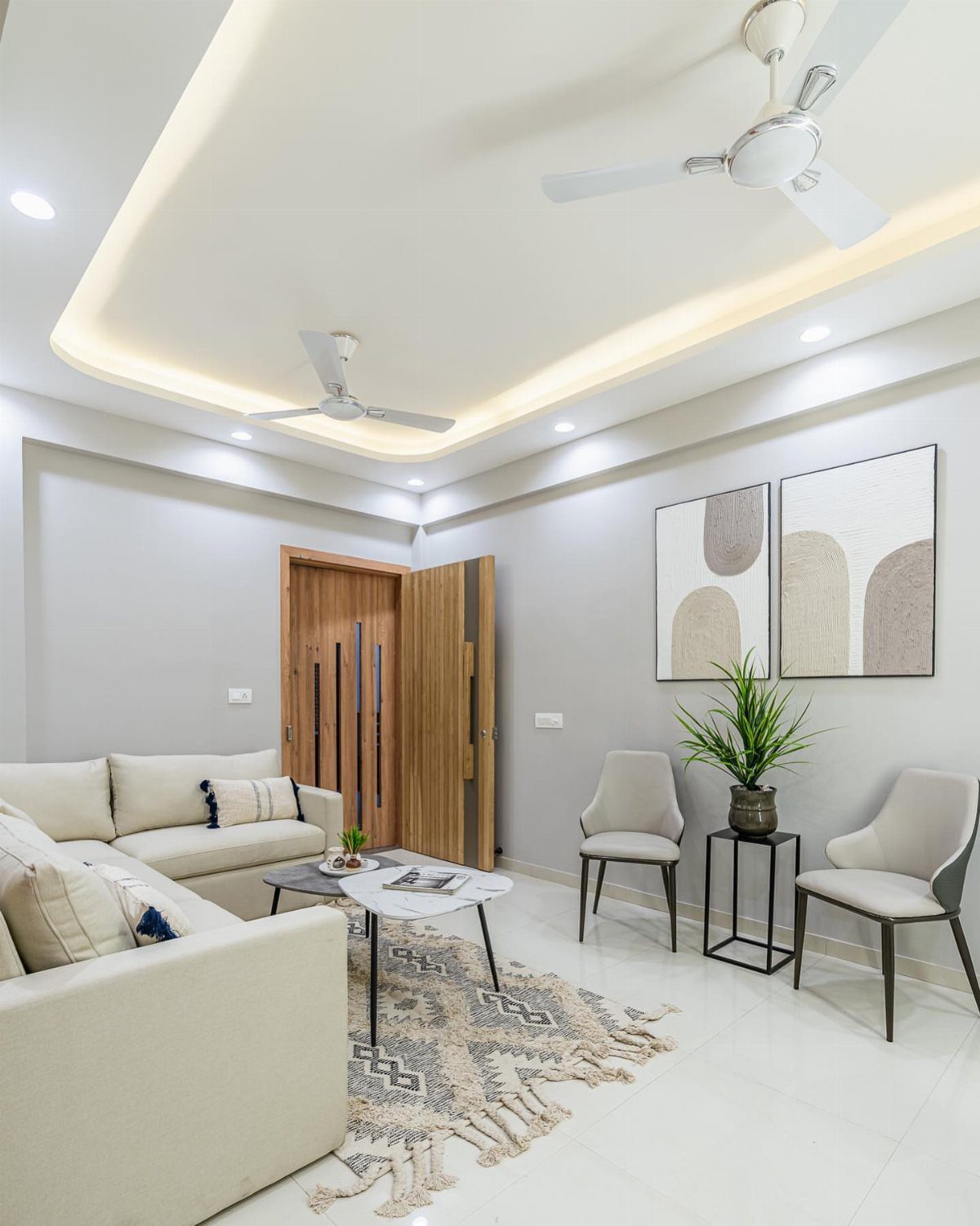
Large grey artwork fills the wall and gives the beige sectional a strong backdrop.
The scale matters here: a small print won’t balance a long sectional, and the artwork needs to span at least two-thirds of the sofa’s width to hold the wall.
Abstract pieces in grey tones work well because they don’t compete with the furniture or pull the eye away from the seating arrangement. Two framed prints side by side read more finished than one centered piece.
Grey chairs opposite the sectional echo the artwork and close the palette.
11. Charcoal Grey Sofa with Beige Accents
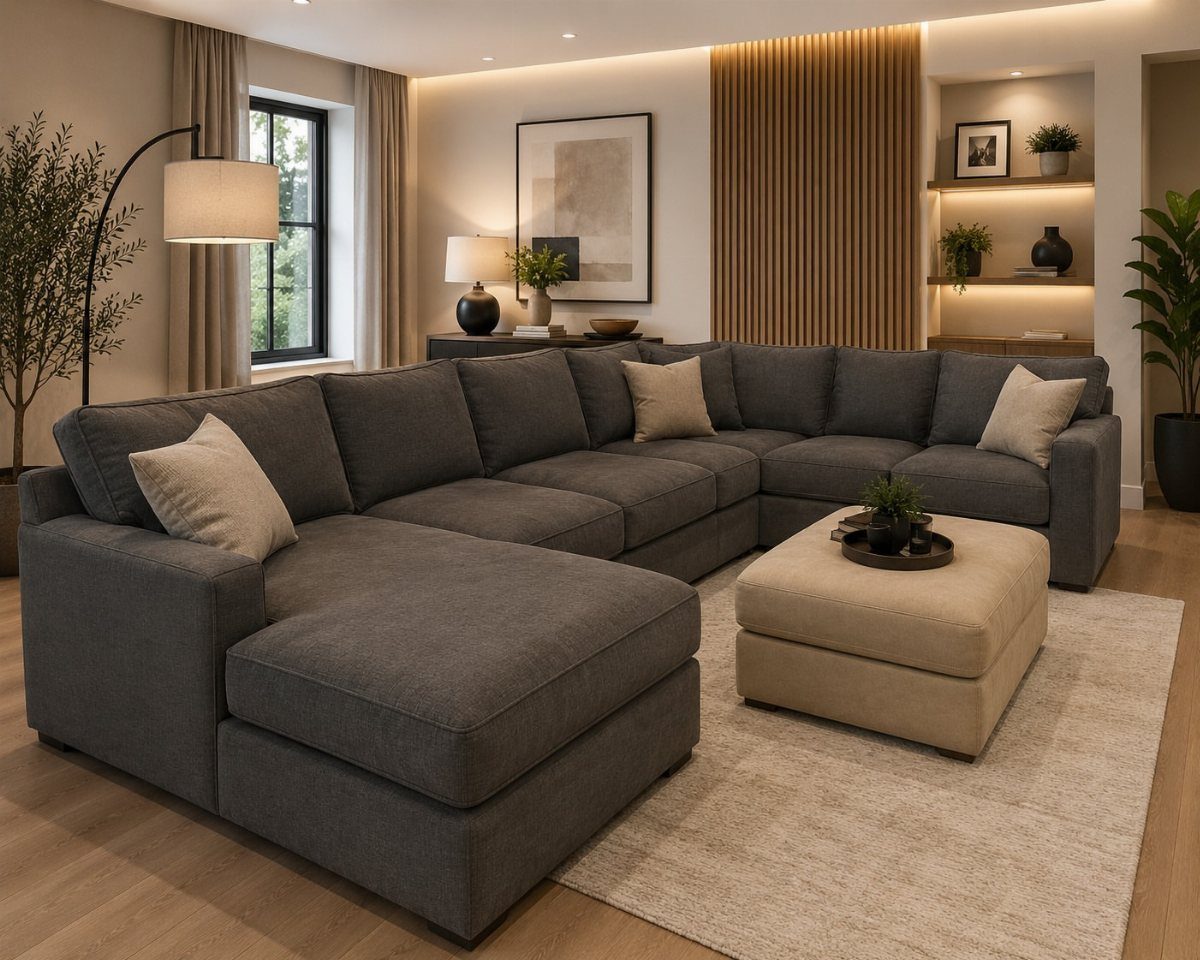
Beige pillows and an ottoman warm the look without softening its edge. The contrast keeps the grey from feeling too cool or heavy.
The beige ottoman doubles as extra seating or a footrest, and it ties the floor into the seating zone.
Wooden slat walls or natural wood accents bridge the gap between the 2 colors and add warmth without introducing a third shade.
12. Beige Curtains with Grey Walls
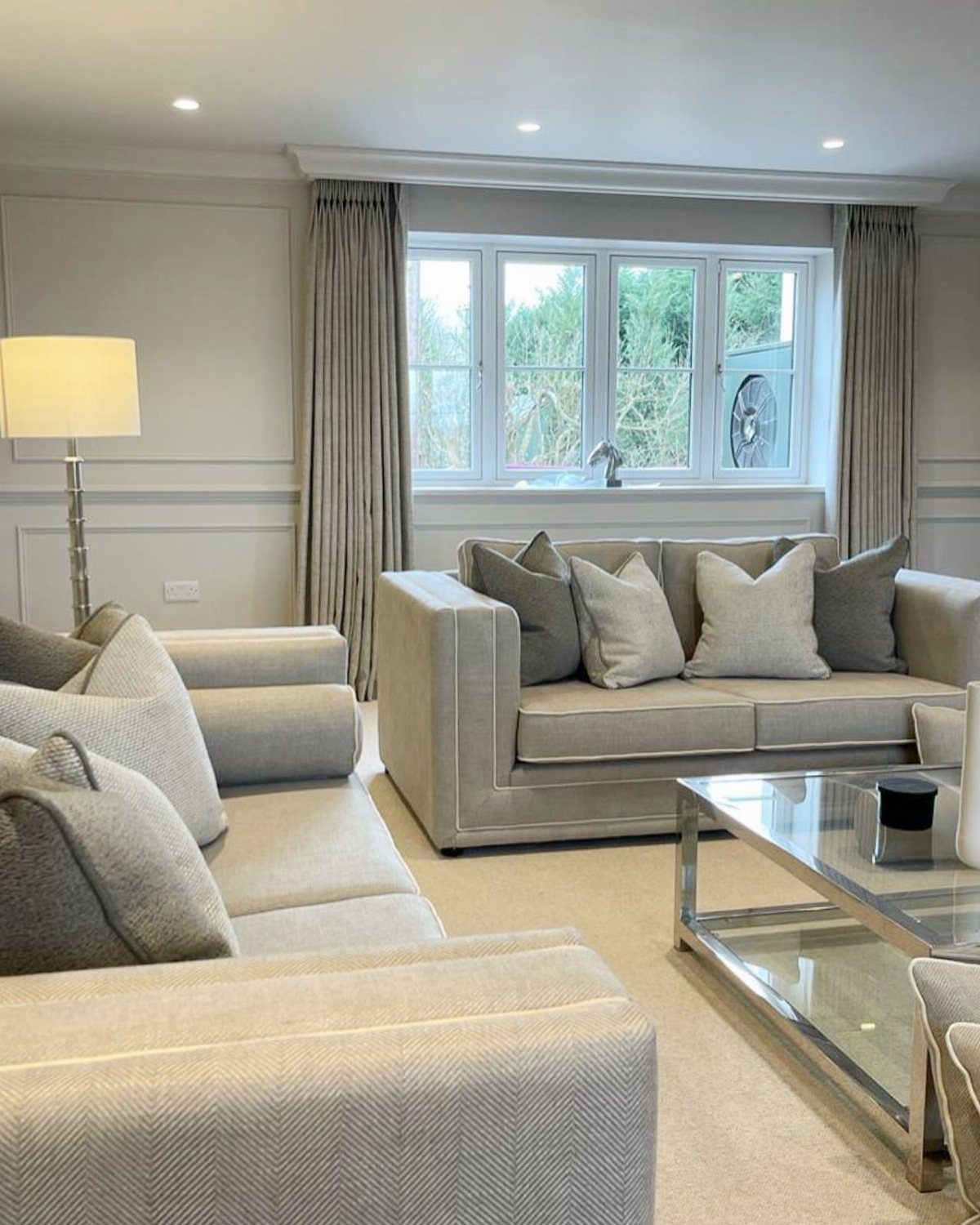
Floor-to-ceiling beige curtains soften grey walls and pull the eye up, which makes the room feel taller.
The length matters: curtains that stop short of the ceiling or hover above the floor cut the wall into sections and shrink the space.
Hang the rod as close to the ceiling as possible, and let the fabric just skim the floor or pool slightly. Beige linen or cotton drapes read warm and filter light without blocking it entirely.
Grey pillows on the sofa tie the wall color into the seating and keep the curtains from standing alone.
13. Wavy Patterned Grey and Beige Rug
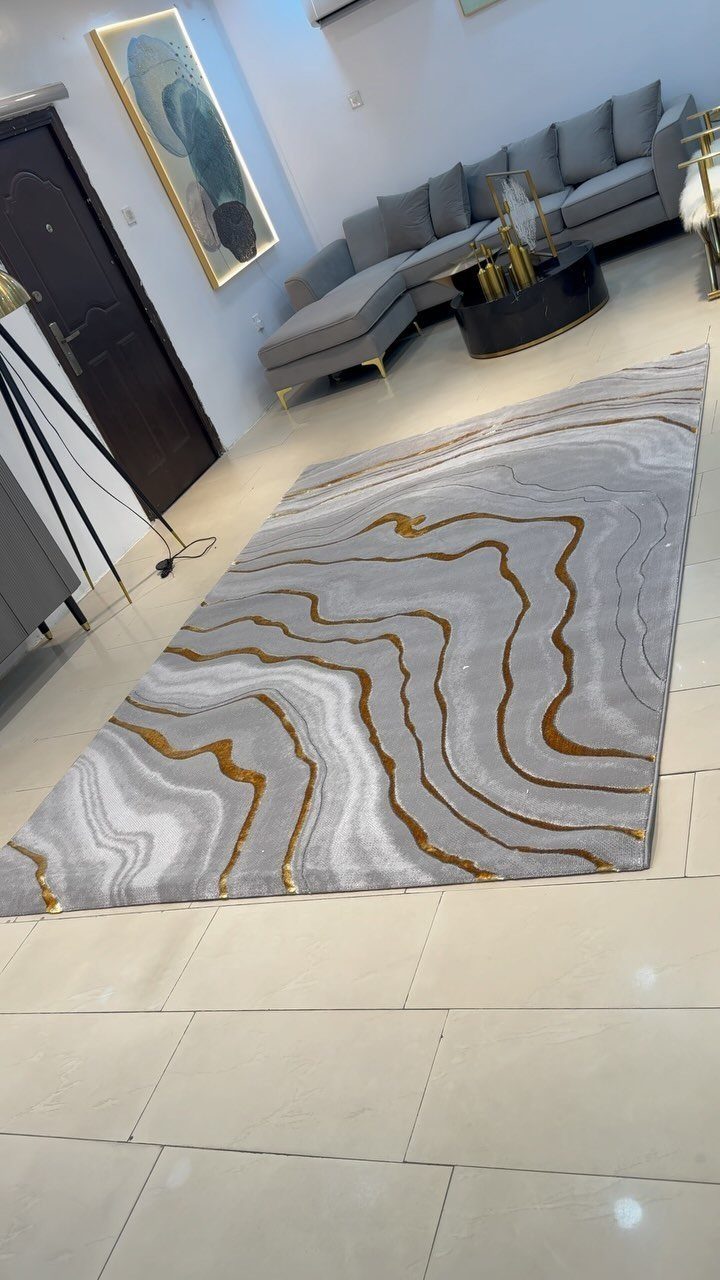
The wavy pattern adds movement to the floor without introducing a third color. The gold lines catch light and lift the grey, while the beige keeps the pattern from reading too bold.
This rug works well in open spaces where the floor needs definition but the palette needs to stay calm.
The pattern hides dirt and wear better than a solid rug, and the waves guide the eye across the room rather than stopping at the edges.
Pair it with a solid grey sofa so the rug gets room to stand out.
14. Beige Sofa with Grey Area Rug
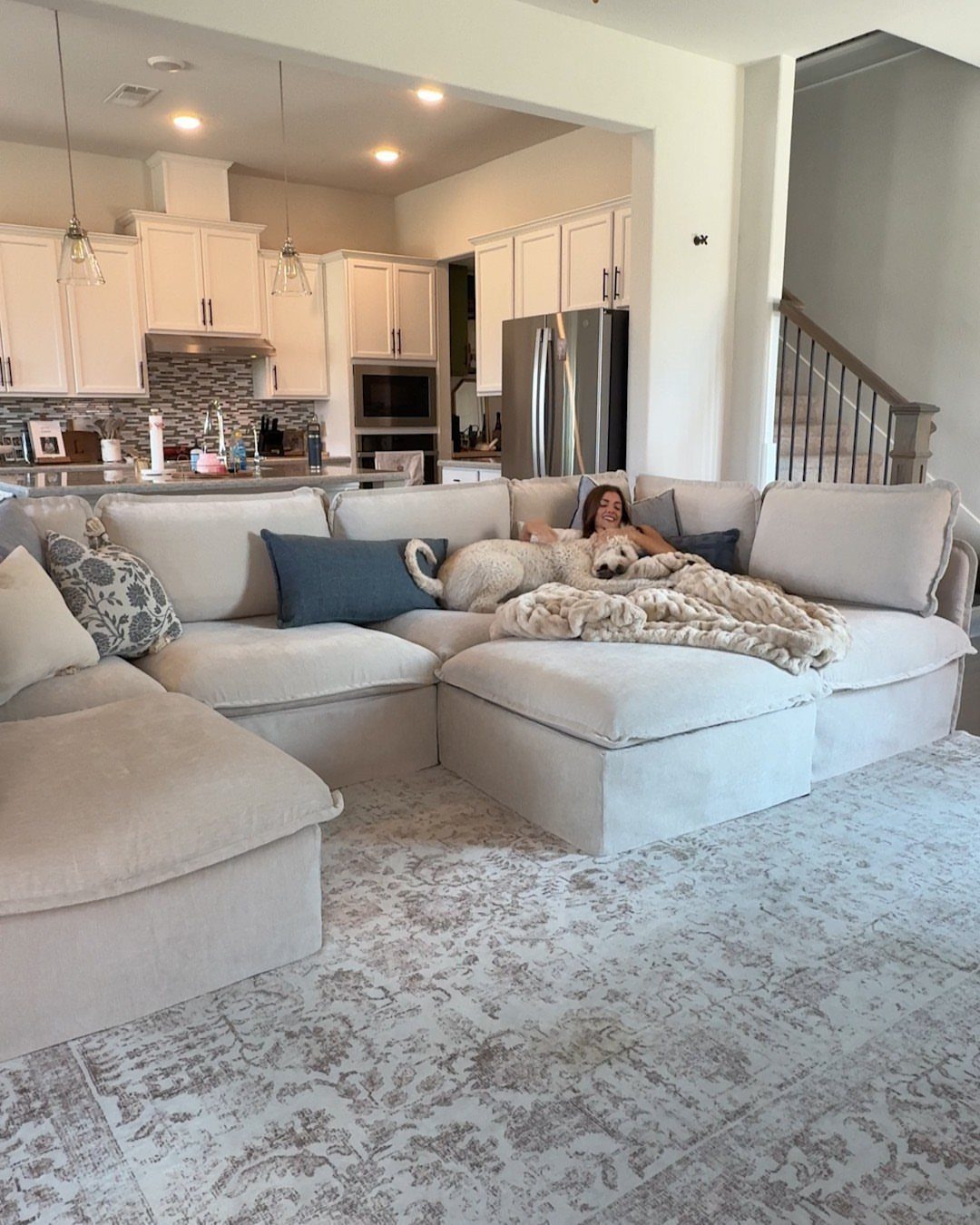
Anchoring a beige sectional with a grey patterned rug keeps the large piece from washing into the floor. The rug defines the seating zone and adds contrast that the beige sofa can’t deliver on its own.
The pattern helps define the living room when walls and flooring continue into the next room. The pattern ties the 2 colors together and gives the floor visual weight.
Keep pillows and throws solid so the rug carries the pattern for the whole space.
15. Grey Walls with Curved Beige Sofa
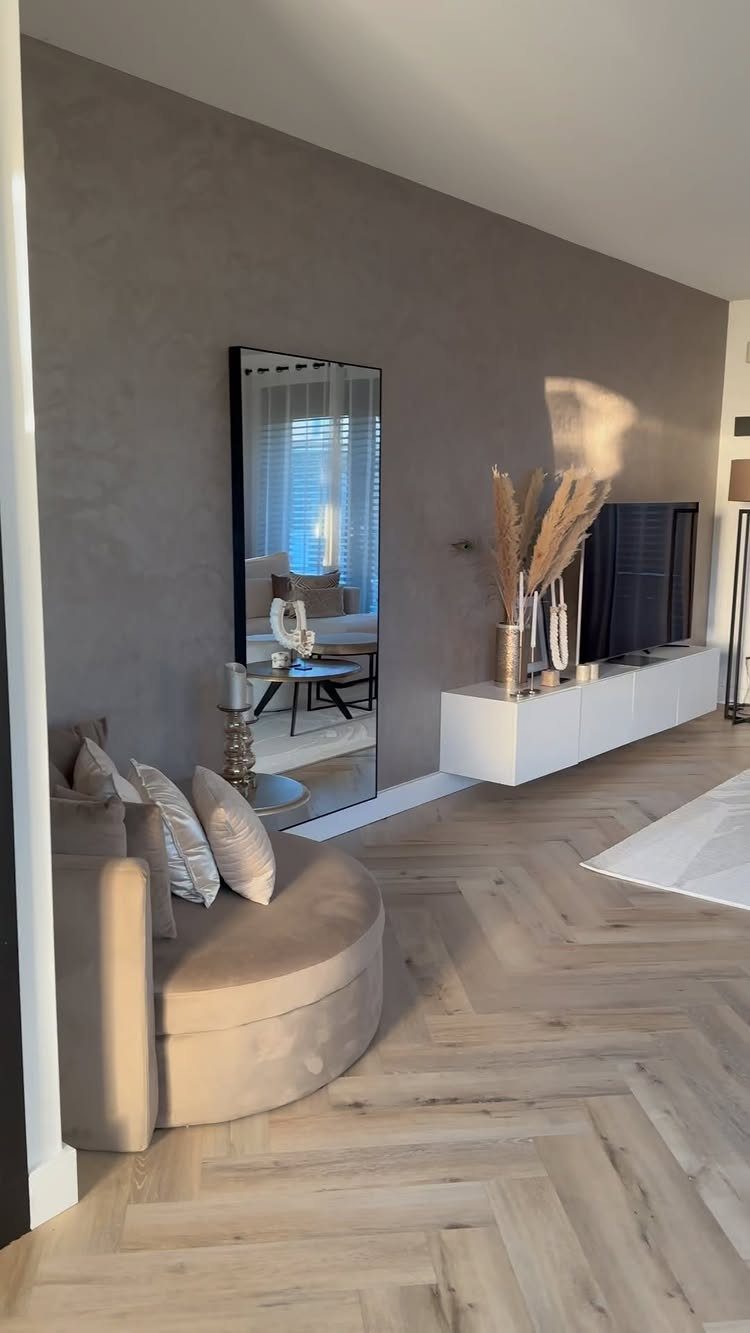
A curved sofa softens the room and reads modern without leaning minimalist. The shape breaks the straight lines of the grey walls and herringbone floor, and the beige upholstery warms the cooler grey backdrop.
Curved sofas fit well in rooms with open floor plans where the seating doesn’t sit flush against a wall. The shape encourages conversation and keeps the arrangement from feeling boxy.
A tall mirror on the wall adds height and reflects light into the seating zone without cluttering the floor.
16. Grey Sectional with Beige Walls
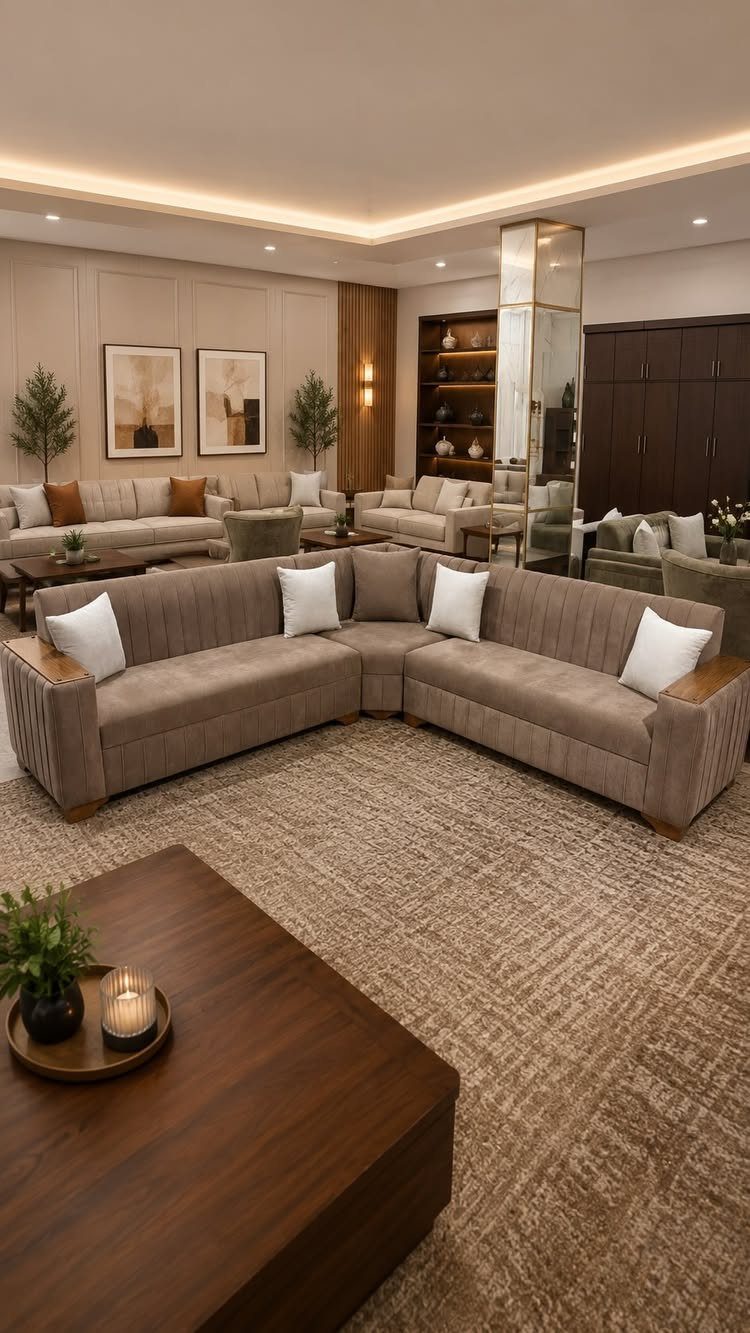
A grey sectional pops against beige walls and reads modern without going too stark. The contrast keeps the grey from feeling heavy, and the beige walls brighten the space enough to suit rooms with limited natural light.
This pairing works well in larger living rooms where the sectional needs to anchor one side without overwhelming the space. Textured beige underfoot connects the pale walls to the sofa and makes the room feel softer.
A wood coffee table in walnut or oak bridges the 2 colors and adds warmth.
Together, though, a gray and beige color combination can create a warm, sophisticated look that works equally well in social rooms as well as more restful ones.
17. Beige Sectional with Grey Walls
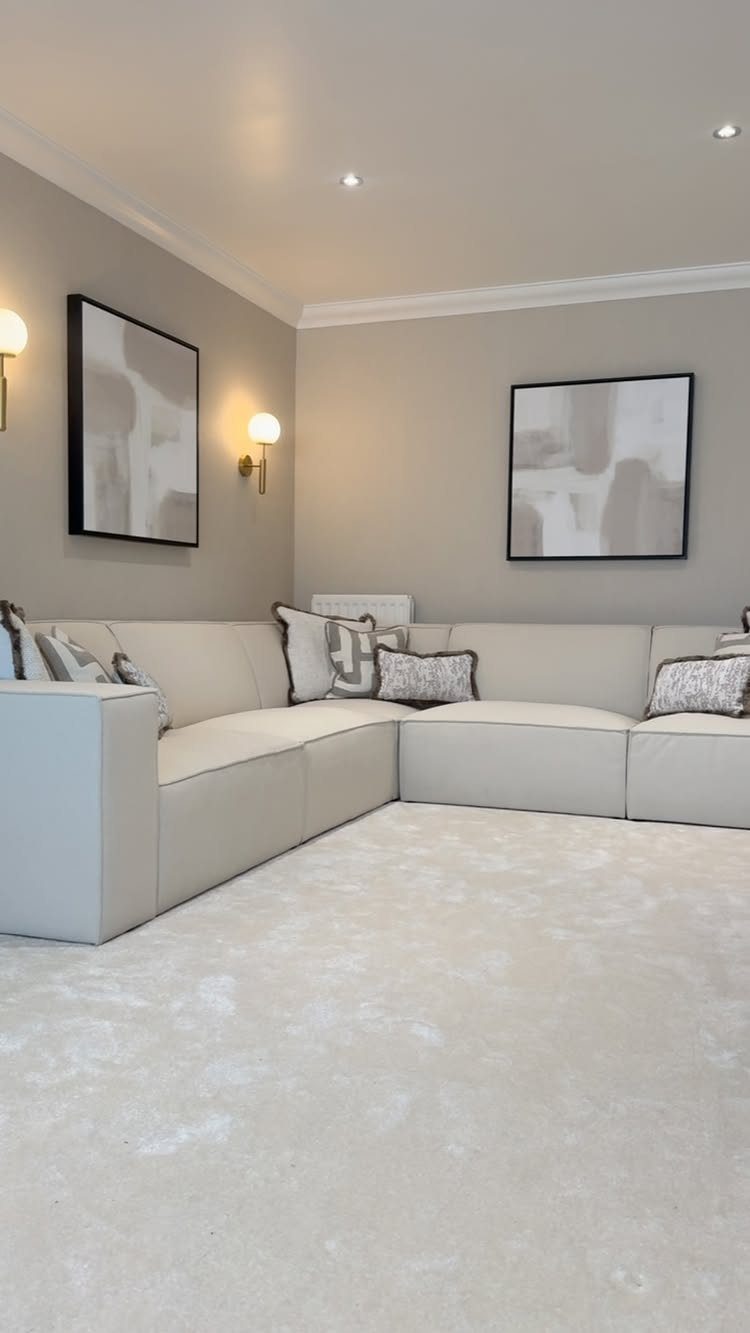
A beige sectional against grey walls reads clean and modern without feeling cold. The L-shape fills the corner and defines the seating zone, and the grey walls add depth that beige-on-beige can’t.
Black-framed art on the grey wall adds contrast and keeps the palette from reading too soft.
The frames tie into any black accents on the furniture or lighting, and the artwork gives the eye a focal point that isn’t the sofa.
Wall sconces on either side of the art add task lighting without taking up floor space.
18. Grey Tufted Sofa and Gold Accents
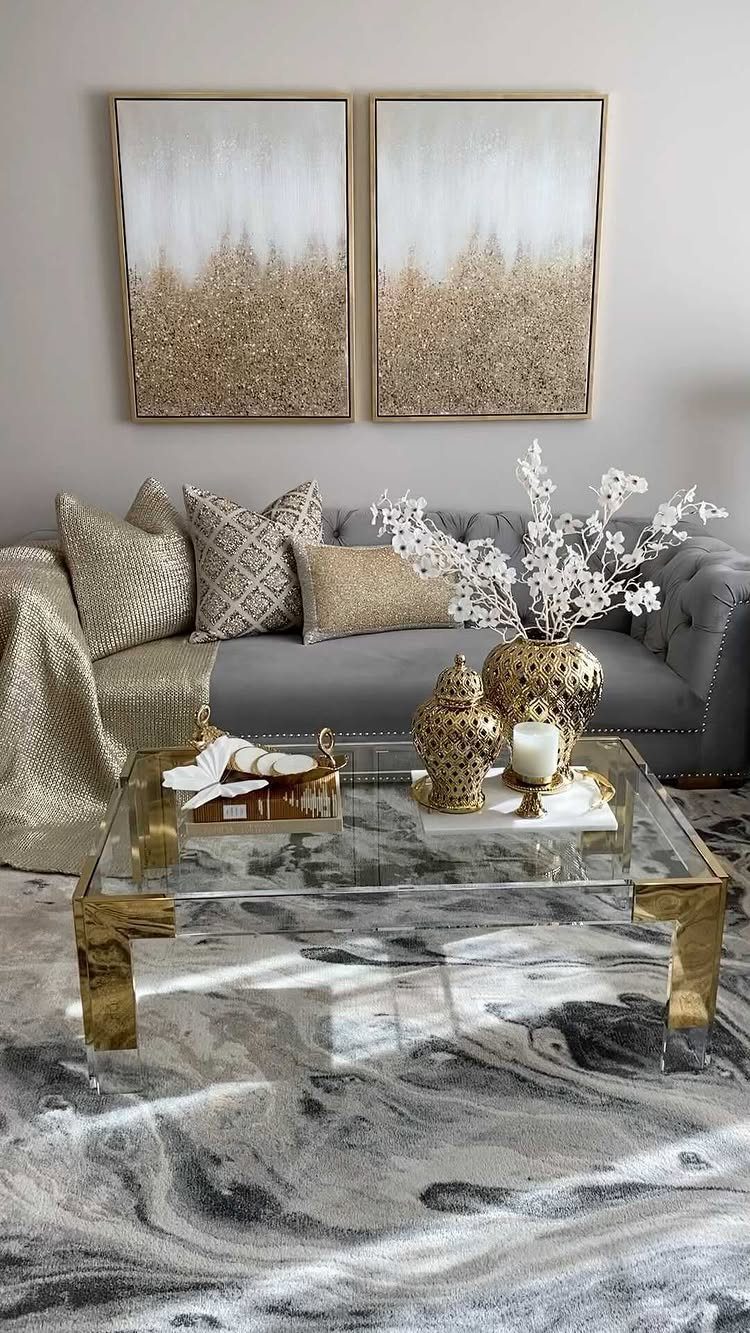
Gold sits between the 2 neutrals on the temperature scale and brings in warmth that stays quiet.
The tufted sofa adds texture, and the gold pillows tie into the frames on the wall and any metallic finishes on the coffee table.
Gold reads warmer than silver or chrome and suits beige walls better. Keep the gold pieces small so they accent rather than dominate, and mix matte and shiny finishes to avoid a too-formal look.
A glass coffee table keeps the floor visible and makes the room feel more open.
19. Beige Sofa with Grey Curtains
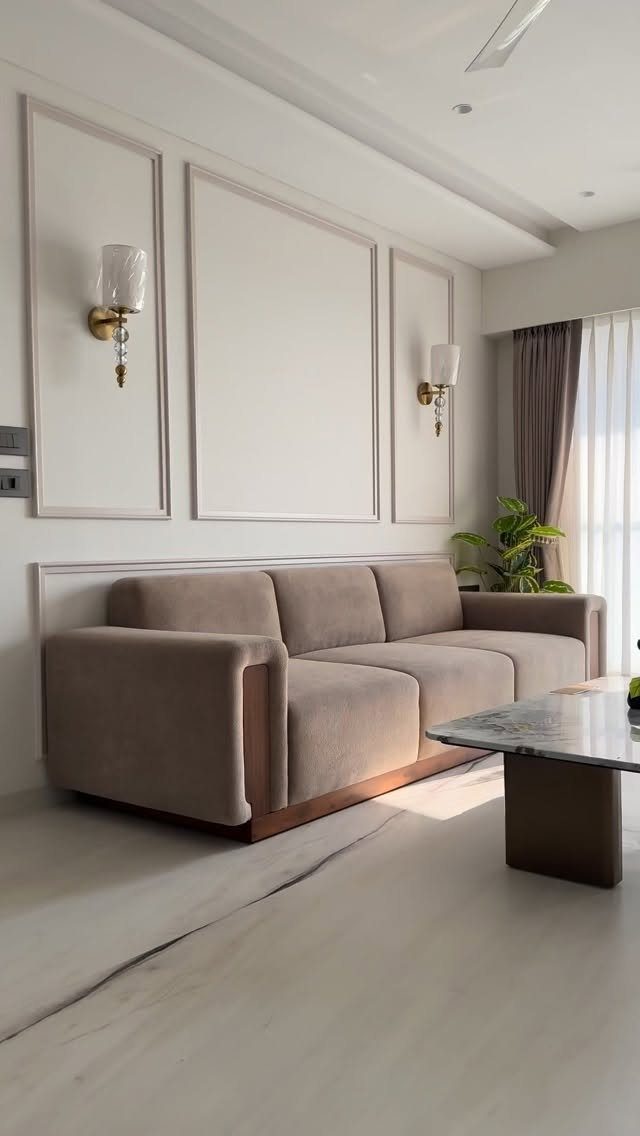
Grey curtains frame the beige sofa and pull the palette together without adding furniture or color. The floor-length panels soften the wall and add vertical lines that draw the eye up.
The grey reads cooler than the beige upholstery and keeps the room from leaning too warm.
A marble coffee table ties the grey curtains to the floor and keeps the setup grounded.
20. Beige Sectional with Grey Coffee Table
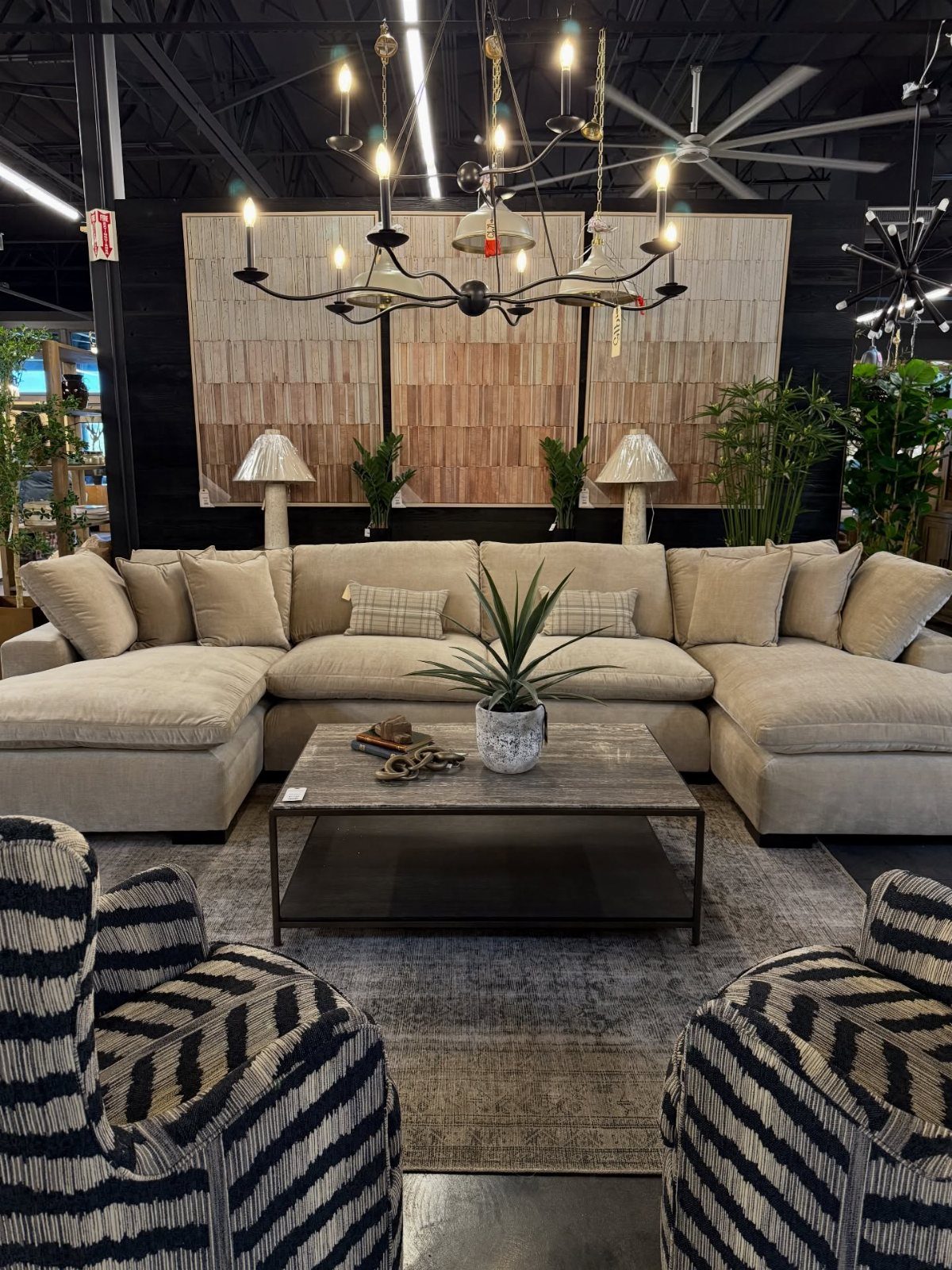
A grey coffee table anchors the beige sectional and adds contrast at floor level.
The sleek surface reads modern and keeps the large sectional from dominating the space, while the patterned armchairs break up the solid beige and give the room a second seating zone.
The grey table works well in open floor plans where the sectional needs to define one area without blocking sightlines. The low profile keeps the space open, and the dark finish hides wear better than glass or lighter wood.
Combining Neutrals
Grey brings modern architectural lines, beige adds warmth, and pairing them gets you both without sacrificing either. The balance reads sophisticated without tipping too cool or too cozy.
Light changes how each color reads in the room. Beige tends warmer if it has yellow or pink beneath the surface, while grey reads cooler with blue or green under it.
If the room needs to feel warm, pick shades that share similar undertones so they settle into one cohesive temperature. For more contrast, anchor the space with a warm base color and layer in cooler accents.
The interaction matters more than the individual colors.
Choosing the Right Shades
Matching undertones keeps the palette cohesive and warm.
Pick a beige with yellow or pink beneath the surface and pair it with a grey that leans taupe rather than blue, and the colors sit together without one feeling out of place.
Pairing a warm base with cooler accents gives you contrast that holds together.
Light in the room changes how each shade reads, so test paint samples on the wall at different times of day before committing.






