
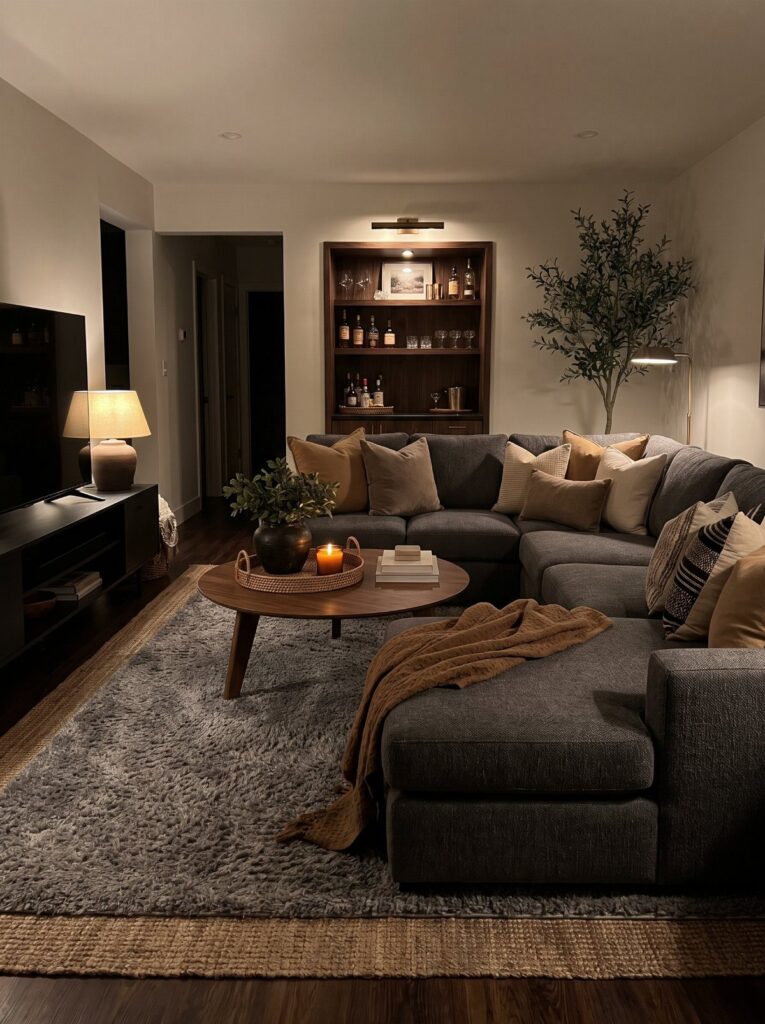
Storage in a living room sits low in furniture like coffee tables and ottomans, climbs the wall with shelves and cabinets, or does both.
A lift-top coffee table brings the surface up to desk height so you can work from the couch. A console behind a floating sofa fills the gap with a surface for lamps and books.
Built-in bookshelves that run floor to ceiling use vertical space that would otherwise sit empty, and a storage ottoman with a barn-door front keeps throw blankets and remotes out of sight in the same footprint as a footrest.
1. Lift-Top Coffee Tables
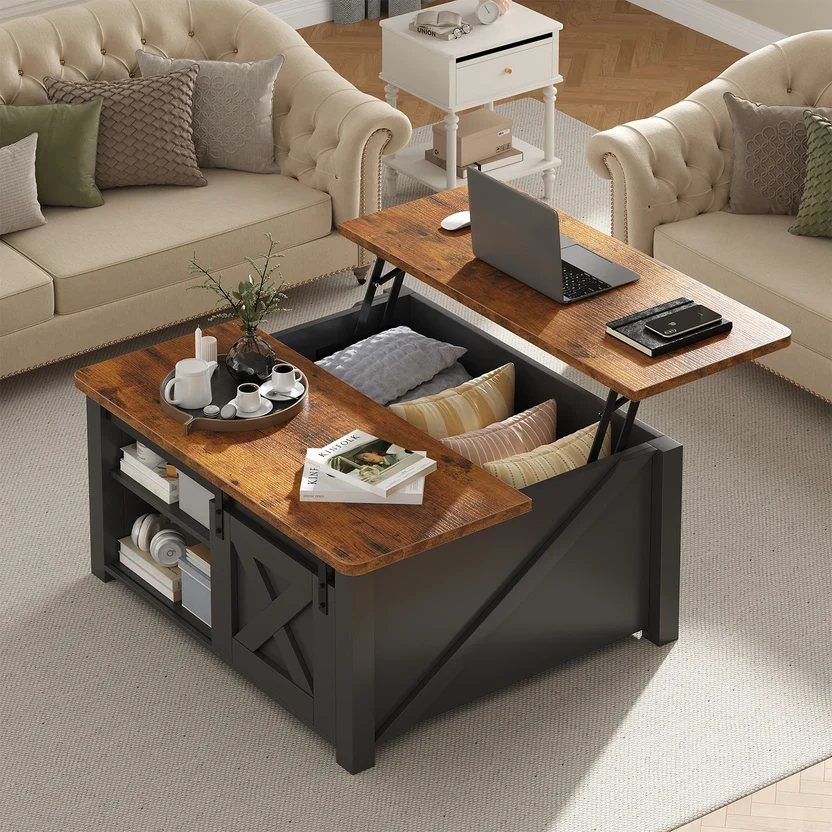
The top lifts toward you and locks in place at desk height, turning the surface into a work spot without leaving the couch.
That height puts a laptop screen closer to eye level and gives your wrists a flat surface instead of balancing everything on your knees.
The space under the top holds remotes, chargers, magazines, anything you want within reach but out of sight. Most designs split the interior into 2 sections so smaller items don’t slide around when you open it.
2. Floating Shelves
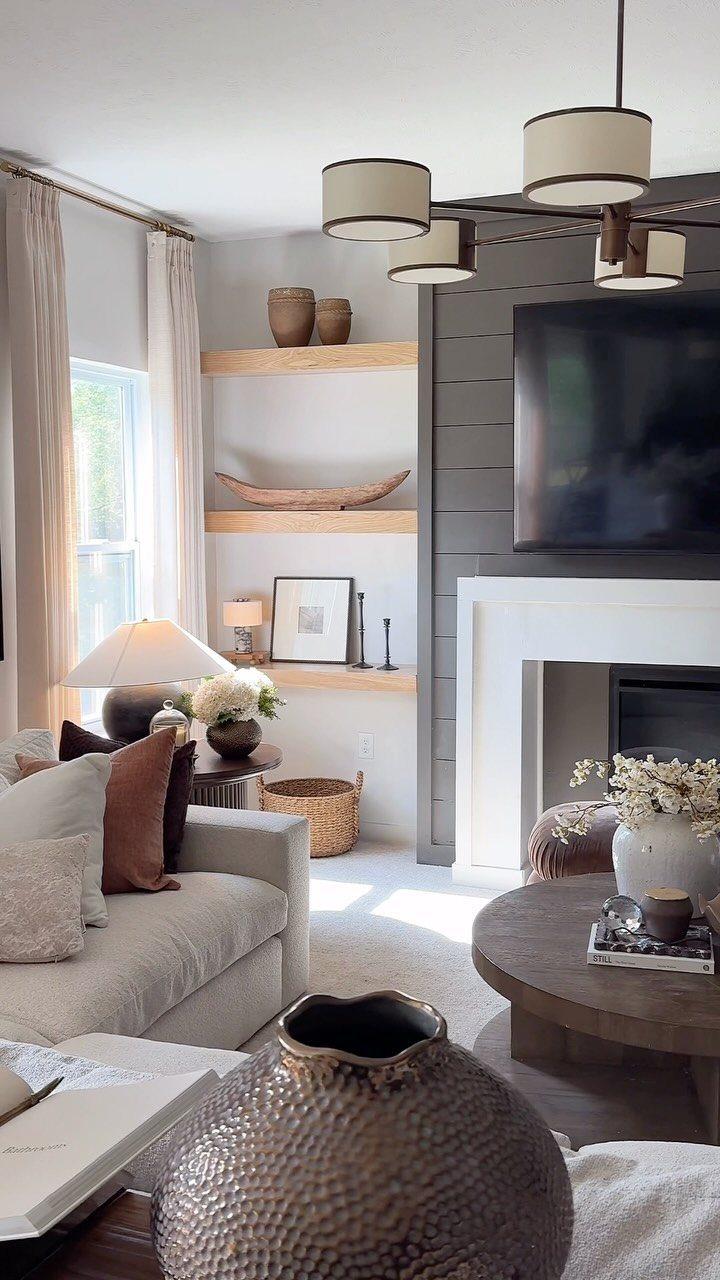
Shelves that sit flat against the wall with no visible bracket below keep the floor open and the sight line clean. They hold books, plants, small baskets, anything light enough not to sag the span.
Installation takes a drill, a level, and wall anchors if you’re not hitting studs.
Check the bracket weight rating before you load it and keep heavier items off floating shelves.
3. Baskets and Bins
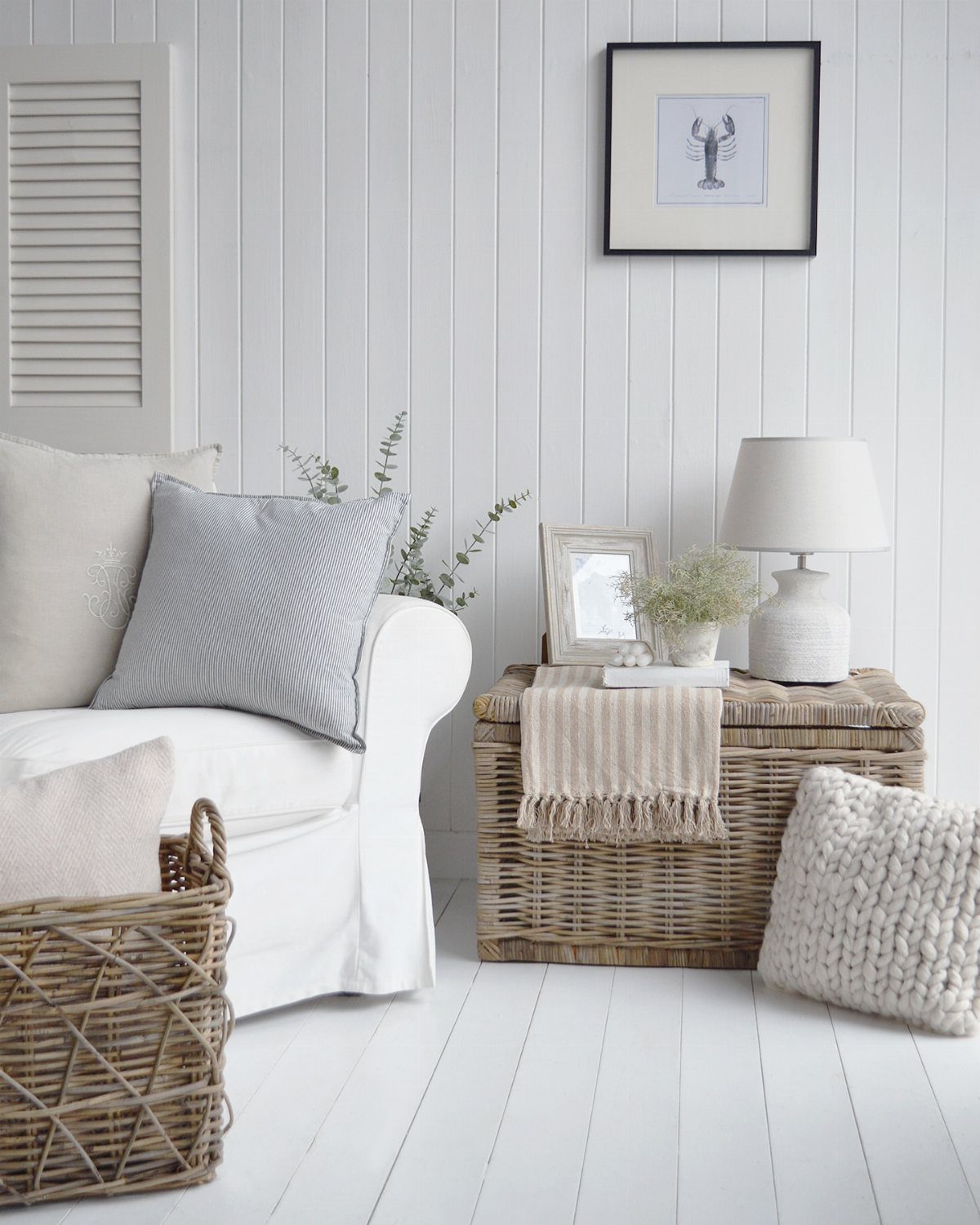
Wicker, rattan, canvas and rope bins all hide clutter while adding texture to the room.
The chest holds throw pillows, extra blankets, board games, anything bulky that doesn’t have a permanent spot. The floor basket works for toys, rolled blankets, firewood, magazines.
Lidded bins keep dust out and stack more neatly on open shelves. Open baskets let you grab what’s inside without lifting a lid, but everything stays visible so they work best for items you don’t mind seeing.
Match the material to what’s already in the room or mix 2 finishes if your space can handle it.
4. Storage Coffee Tables
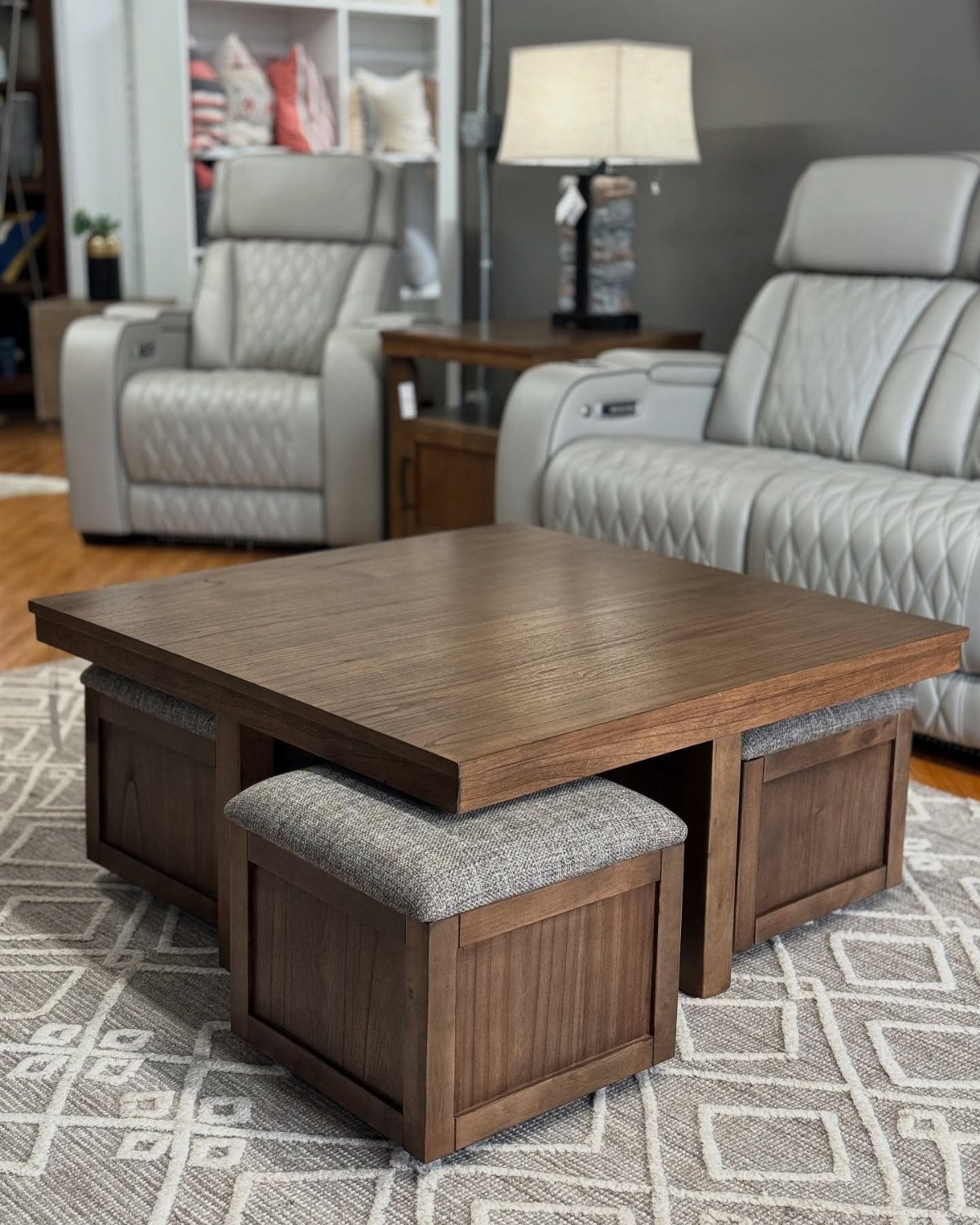
The ottomans tuck underneath when you’re not using them and pull out for extra seating or a footrest. Each one has a lid that lifts off so you can store remotes, coasters, kids’ toys, anything small enough to fit inside.
The table itself stays open on top for drinks, books, a tray. That setup gives you multiple storage compartments without adding anything to the floor plan when everything’s pushed in.
Look for ottomans with a flat top when you want them to double as a footrest or side table between uses.
5. Decorative Ladder
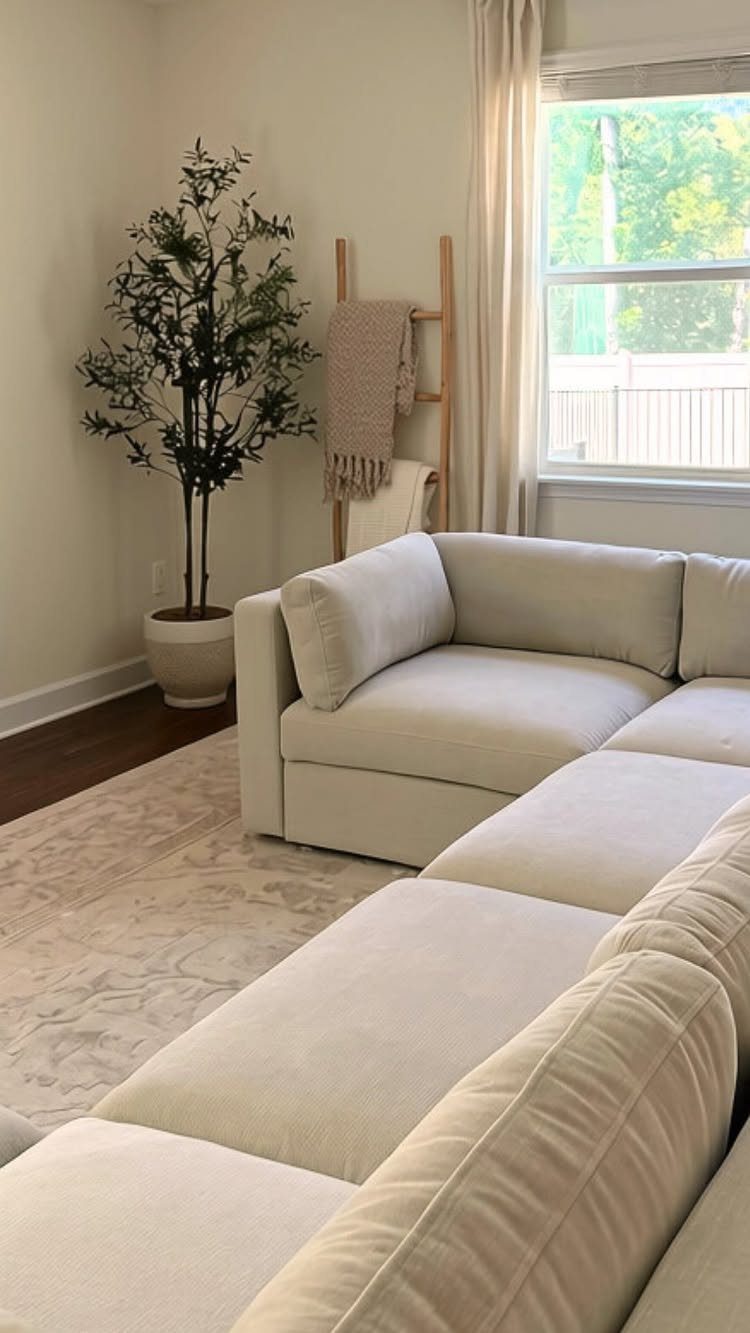
A wooden ladder leans against the wall at an angle and holds folded blankets across each rung.
The setup takes up about 2 square feet of floor space and keeps throws within reach without draping them over the back of the couch.
Most decorative ladders stand tall enough to lean against the wall with rungs spaced wide enough for a folded blanket to hang without bunching.
You can leave the wood natural, stain it to match other furniture, or paint it if the room needs a contrasting accent.
Placement matters: next to a window, beside the sofa, or in a corner where it won’t tip when someone walks past.
6. Media Consoles
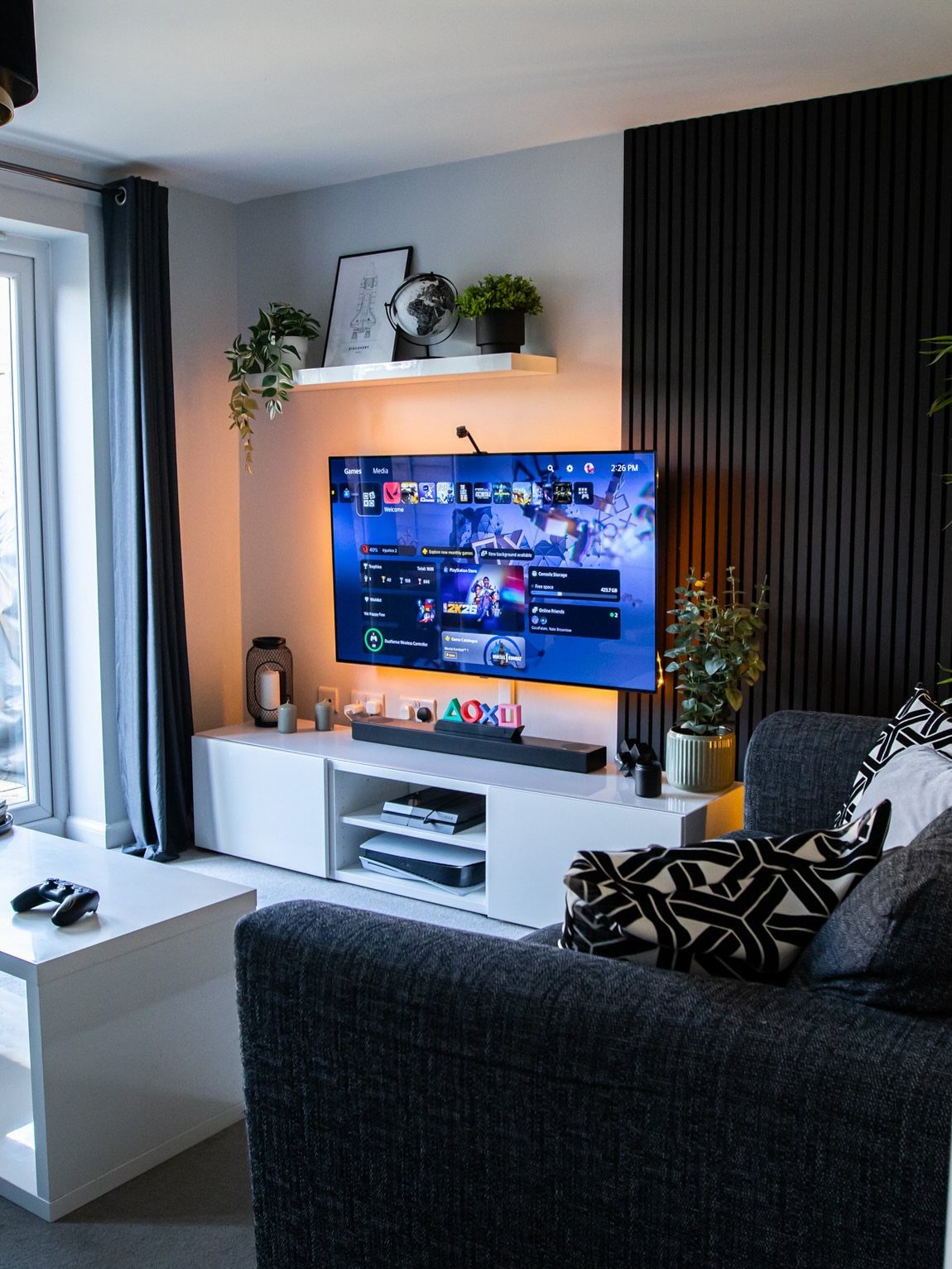
Open shelving below the TV surface holds cable boxes, gaming consoles, sound bars, and stacks of remotes without doors in the way. Drawers on the sides or below keep cords, instruction manuals, extra batteries, anything you don’t want sitting out.
The console grounds the TV wall and gives it definition, especially in a space where the television would otherwise float on a blank surface.
Measure your TV width first and make sure the console extends past it on both sides so it balances the screen instead of looking too small underneath.
White keeps the piece from dominating the wall. Darker wood or black works if the rest of the room has enough contrast to keep it from blending in.
7. A Table Behind the Couch
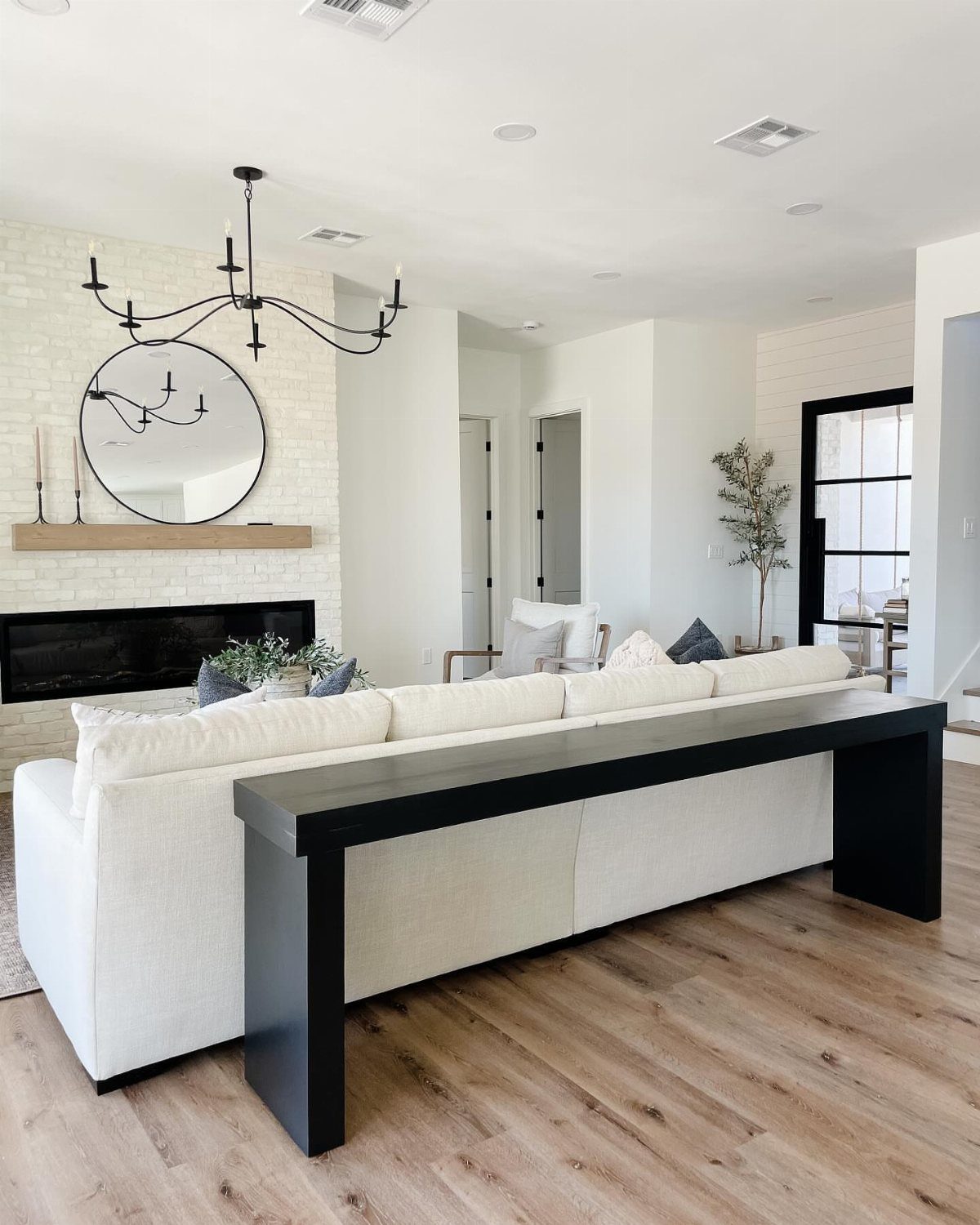
A console table behind the couch turns wasted space into a surface for lamps, books, a tray of coasters, anything you want within arm’s reach from the seat.
It also defines the back of the sofa when the piece floats in the center of the room instead of sitting against a wall.
Height matters: the table should sit level with the back of the couch or an inch or two below so it doesn’t block the view when you’re standing behind it.
Narrow depth keeps the walkway open. Most console tables run deep enough to leave clearance behind the sofa without turning sideways.
8. Sideboards
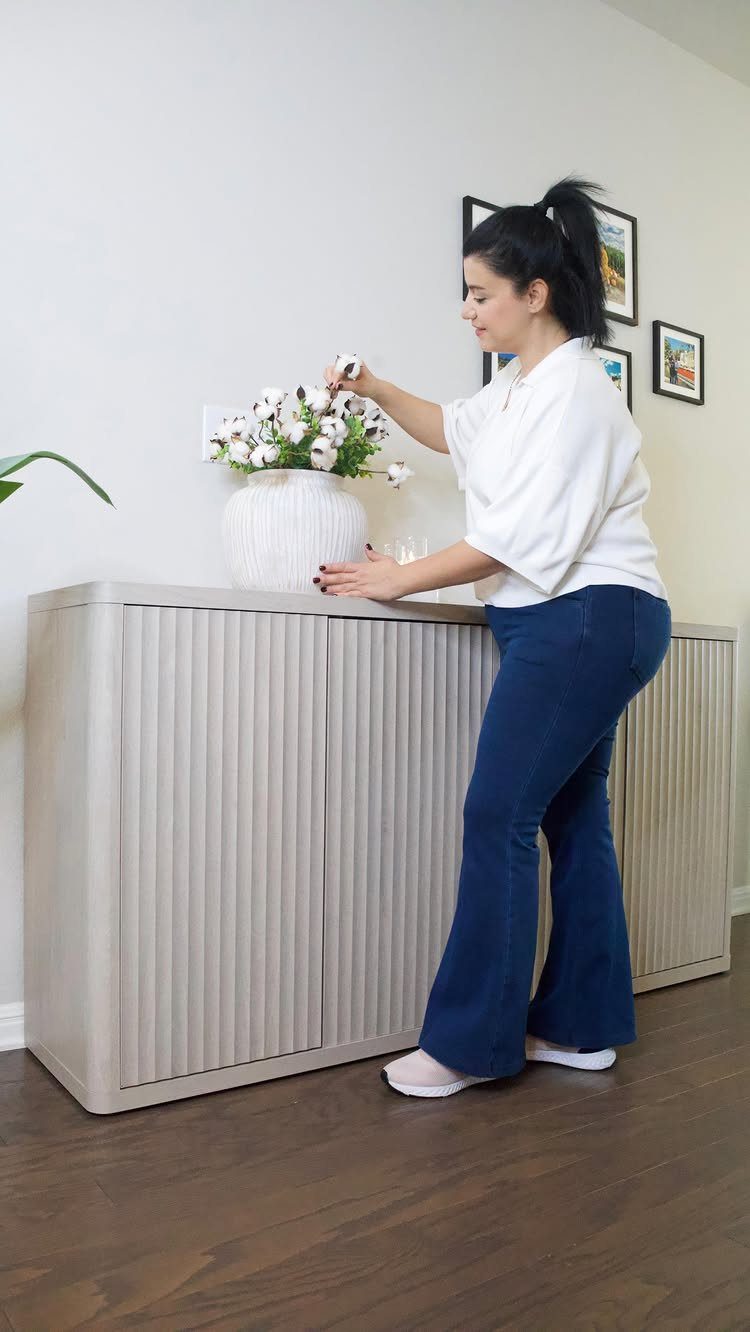
Doors hide stacks of board games, extra throw blankets, serving pieces, anything you don’t want sitting on open shelves. The flat top holds lamps, framed photos, a vase, small trays.
Sideboards sit low enough to tuck under a window without blocking light and wide enough to fill a blank wall.
The fluted front adds texture without pattern, so it works in a room that already has other details competing for attention.
Most sideboards sit at a height that keeps the top surface reachable without bending and the profile low enough not to cut the wall in half visually.
9. Wall-Mounted Cabinets
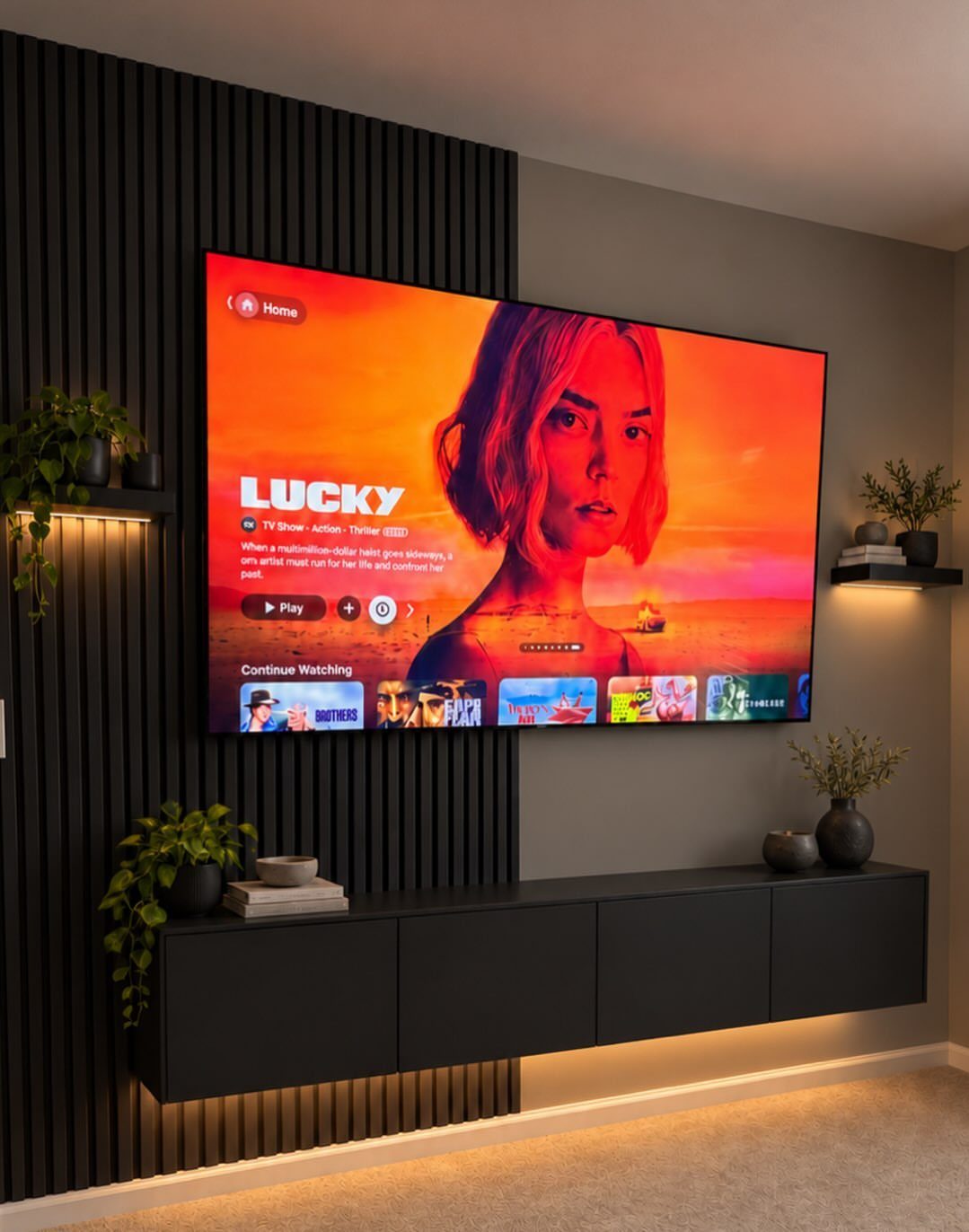
Cabinets mounted to the wall keep the floor clear and hold media components, books, or anything you’d rather not see sitting out. The setup works best under a television or in a stretch of wall that would otherwise stay empty.
Closed doors keep the storage hidden. Open compartments let you reach items faster but require keeping the contents tidy since everything stays visible.
Mounting hardware needs to hit studs or use wall anchors rated for the weight of the cabinet plus what you plan to store inside. Most cabinets come with brackets; if yours doesn’t, match the anchor type to your wall material.
10. Built-In Bookshelves
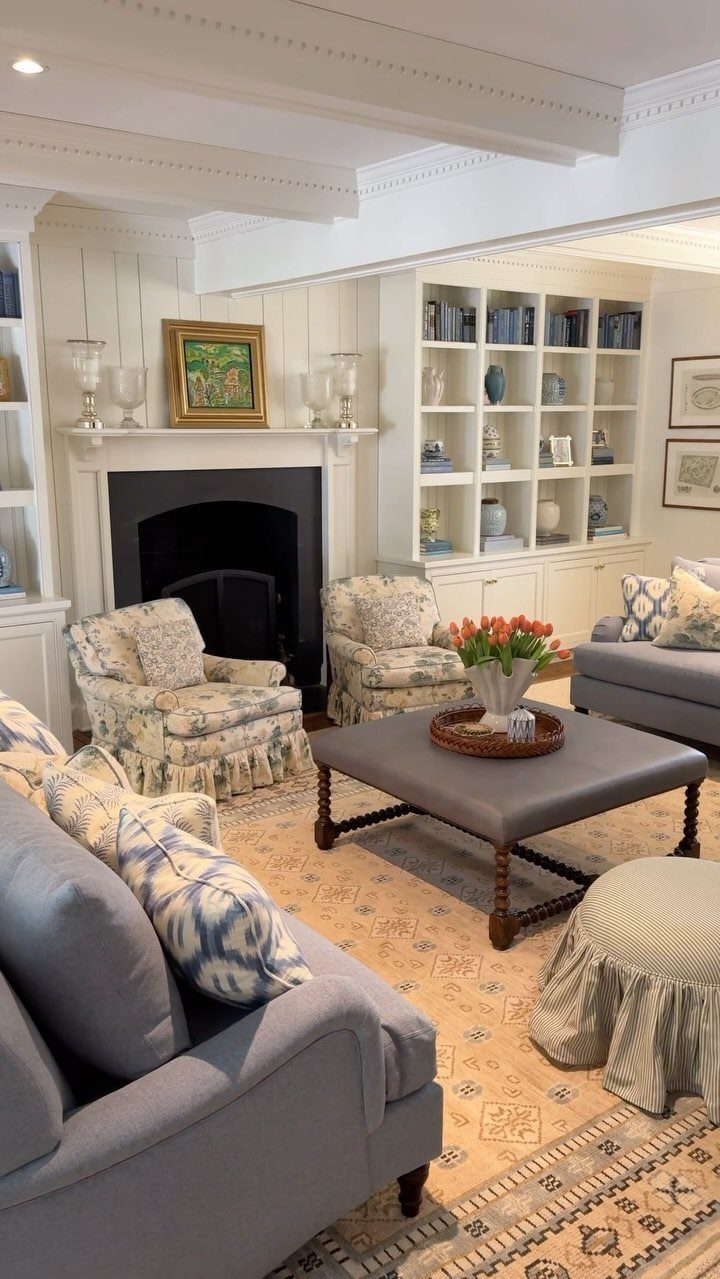
Shelves that run floor to ceiling on either side of a fireplace or window hold books, decorative objects, framed photos, small baskets, anything you want displayed and within reach.
The built-in look gives the room a finished edge and uses vertical space that would otherwise sit empty.
Adjustable shelves let you change the height between each level as your storage needs shift. Fixed shelves work fine if you know what you’re storing and don’t plan to rearrange often.
Painted white, the shelves blend into the wall and let the items on them stand out. Stained wood or a darker color makes the shelving itself a feature.
11. Storage Ottoman
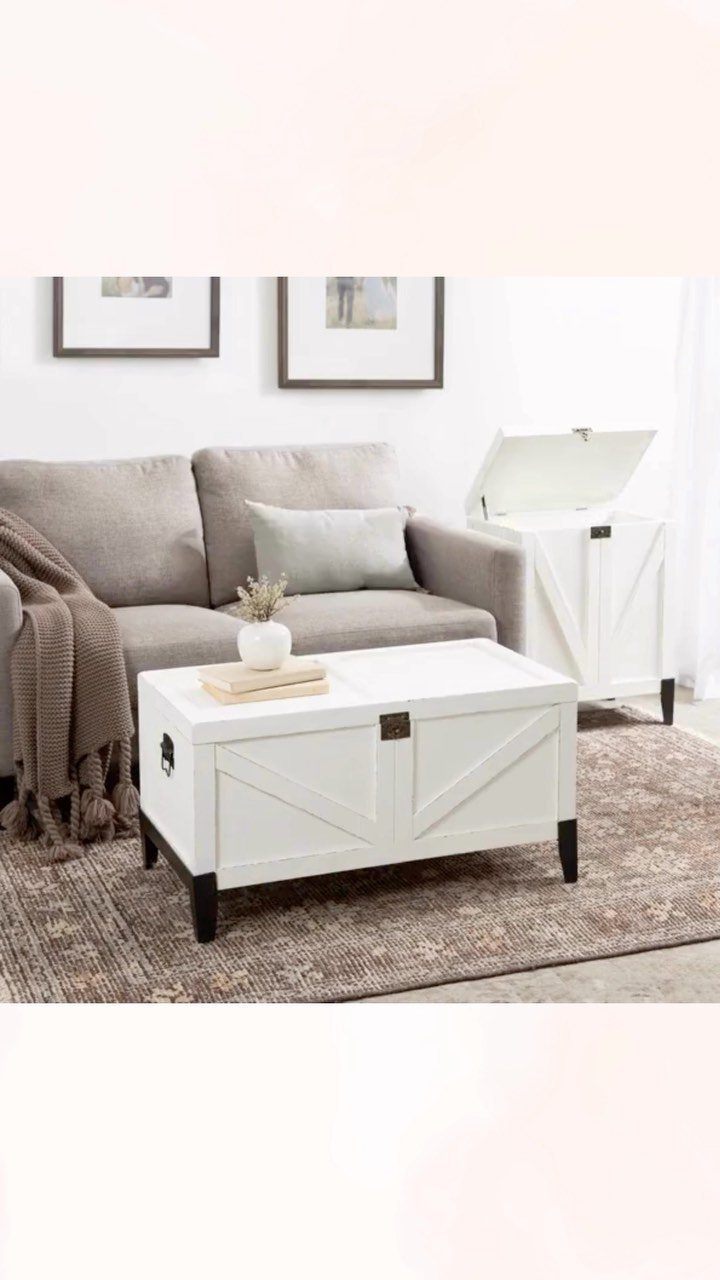
The lid lifts to reveal storage for throw blankets, pillows, remotes, magazines, anything you want out of sight but close by.
The barn-door front adds detail in the same footprint, and the flat top works as a footrest or a place to set a tray.
Most storage ottomans hold enough weight on top for a stack of books or a serving tray.
The white finish keeps it light in a neutral room. Stained wood or a darker paint works if the space needs more contrast.
Decluttering Tips
Go through the room once every few months and pull out anything you haven’t touched since the last pass.
The remotes you replaced, the magazines from last winter, the charger for a phone you don’t own anymore, all of it leaves the room or goes in a donation box.
Label every bin and basket you can’t see into.
A fabric cube on a shelf looks the same as the 3 next to it, and you’ll spend more time lifting lids than you save by having the storage in the first place.
Tape works, adhesive labels work, even a marker on the side of a cardboard liner works if the bin sits where you can see the edge.
Purge before you buy new storage. A basket that holds things you don’t use is just a container for clutter.
Design Considerations
A room with tapered legs and warm wood tones won’t hold a high-gloss white storage unit without one of them looking wrong.
That same white piece might sit comfortably in a minimal space with other clean-lined furniture, but it carries design language the same way a sofa or a rug does, and it needs to speak the same one everything else is already using.
Warm wood finishes in oak or walnut work across more styles than painted or glossy options. They look like furniture, not built-ins, so you can drop them in without redoing everything else.
The question is whether it fits what you have now or what you hope to have later.
Vertical Space Utilization
A low sideboard with blank wall above it gives up height that could make the ceiling read higher.
Lower cabinets are for what you grab regularly and want out of sight. Upper sections are for display: books, plants, ceramics, framed prints, anything worth looking at.
Closed below and open above lets you separate function from display without shutting it all away. The mix keeps the room organized and gives it a finished look that a single low piece won’t.
Frequently Asked Questions
How to create more storage in a living room?
Add furniture that holds things inside: coffee tables with hidden compartments, storage ottomans, sideboards with doors, or a console table behind the sofa. Wall-mounted shelves and cabinets keep the floor clear while adding vertical storage.
What are some ideas for organizing my room?
Label every bin and basket you can’t see into so you don’t waste time lifting lids.
Every few months, I pull anything I haven’t used and either donate it or move it to storage. Matching fabric bins look clean on a shelf, and a small label on each one saves you from opening them all.
What are usually stored in the living room?
Throw blankets, pillows, remotes, magazines, chargers, board games, extra batteries, and kids’ toys. Because you need them close but not visible, closed storage like ottomans and lift-top coffee tables beats open shelving for this kind of daily mess.
How to keep your space organized with living room storage furniture?
Use a media console with drawers to hold cords and remotes, a lift-top coffee table for items you grab from the couch, and storage ottomans for blankets or toys.
Wall-mounted cabinets and sideboards with doors hide what you don’t want sitting out while keeping it accessible.






