
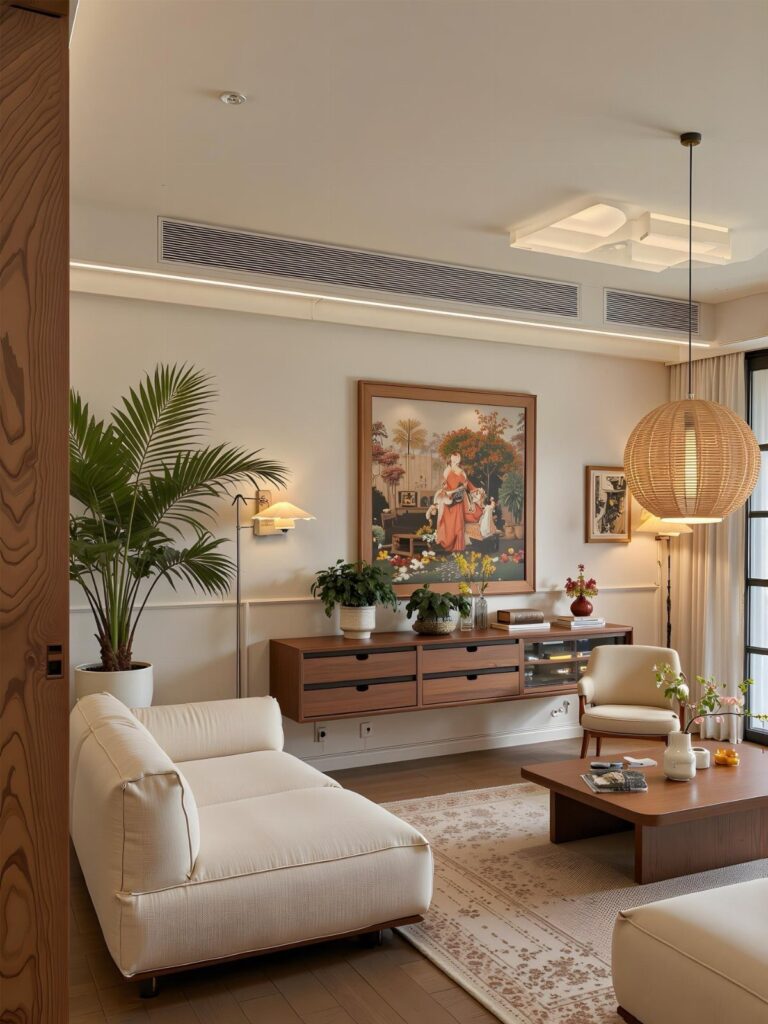
The 10 ideas here range from minimalist rooms that keep 2 neutrals and open floor space to eclectic mixes of bold color and mismatched vintage finds.
Pick based on how much pattern and contrast you want to live with: a Scandinavian layout with pale wood and white walls opens up small square footage, while a traditional room with carved wood and jewel-tone upholstery suits collectors willing to layer, and rustic or industrial styles split the difference with natural textures or exposed metal.
For industrial style, peel-and-stick brick panels give you the raw look if your walls are drywall, and a cohesive color palette pulled from 2 or 3 repeating hues ties together any mix of furniture you already own.
1. Minimalistic Style Living Room
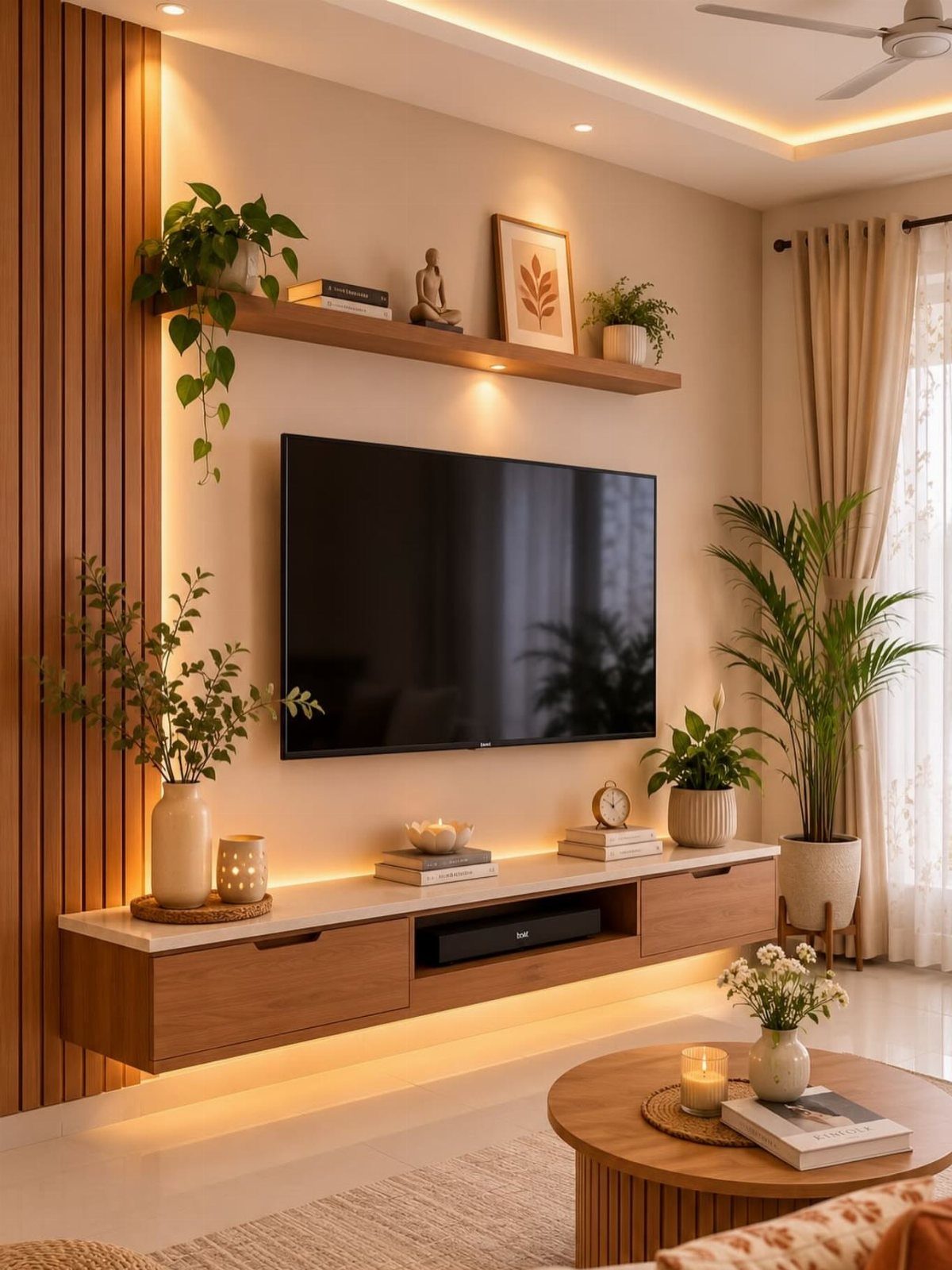
A minimalist living room keeps only what you use and lets open space do the rest. Floating furniture makes the floor feel larger, and a single row of shelves holds what you need without stacking clutter.
Pick a palette of 2 neutrals, or add a third if you want more range. White walls pair well with light wood, and warm cove lighting softens the clean lines without adding hardware.
A round coffee table takes up less visual space than a rectangle, and a few plants bring in texture without breaking the simplicity. The result feels open and easy to keep clean.
2. Industrial Style Living Room
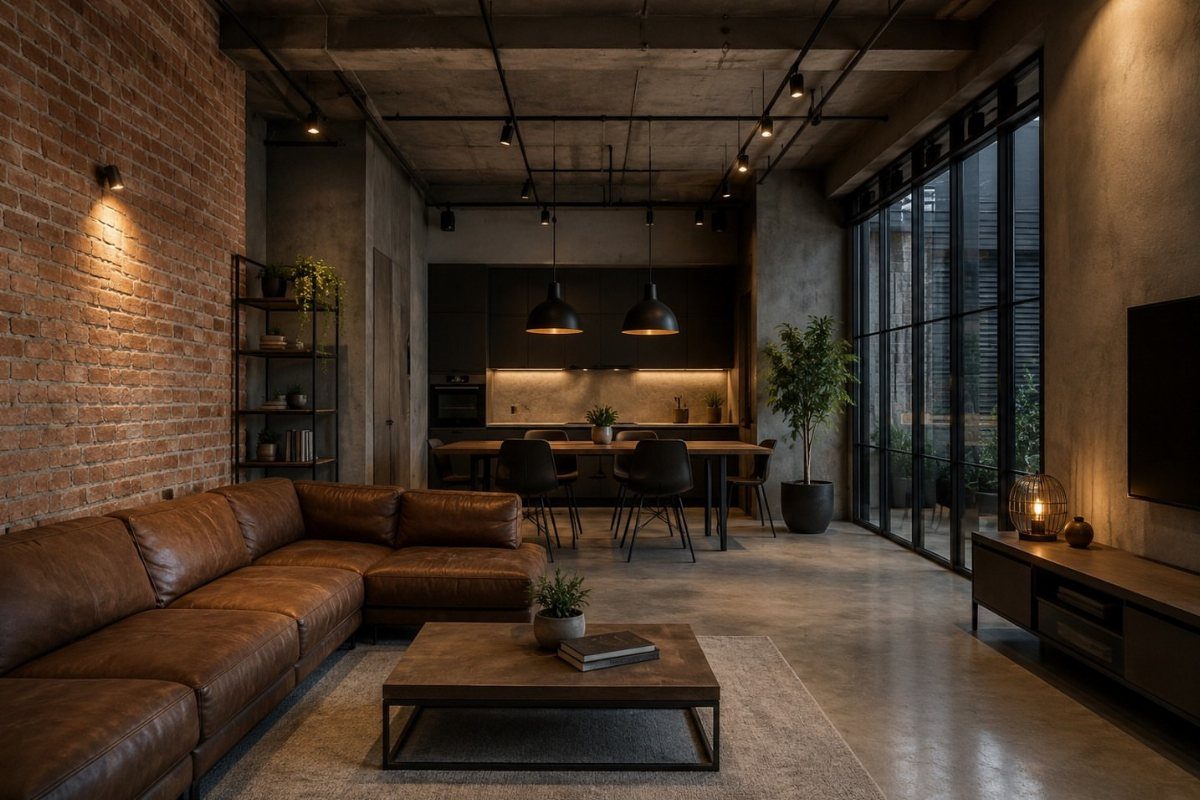
An industrial living room shows the bones of the building. Exposed brick, concrete ceilings, and visible ductwork give the raw, unfinished look that makes the style recognizable.
Brown leather furniture ages well here and holds up to the harder surfaces around it. A wooden coffee table and metal pendant lights over the dining area balance the concrete and brick without softening the room too much.
Open-concept layouts work especially well because the industrial materials carry across the space. If your walls are already drywall, consider peel-and-stick brick panels or painting one wall in a charcoal gray to get the effect.
3. Scandinavian Style Living Room
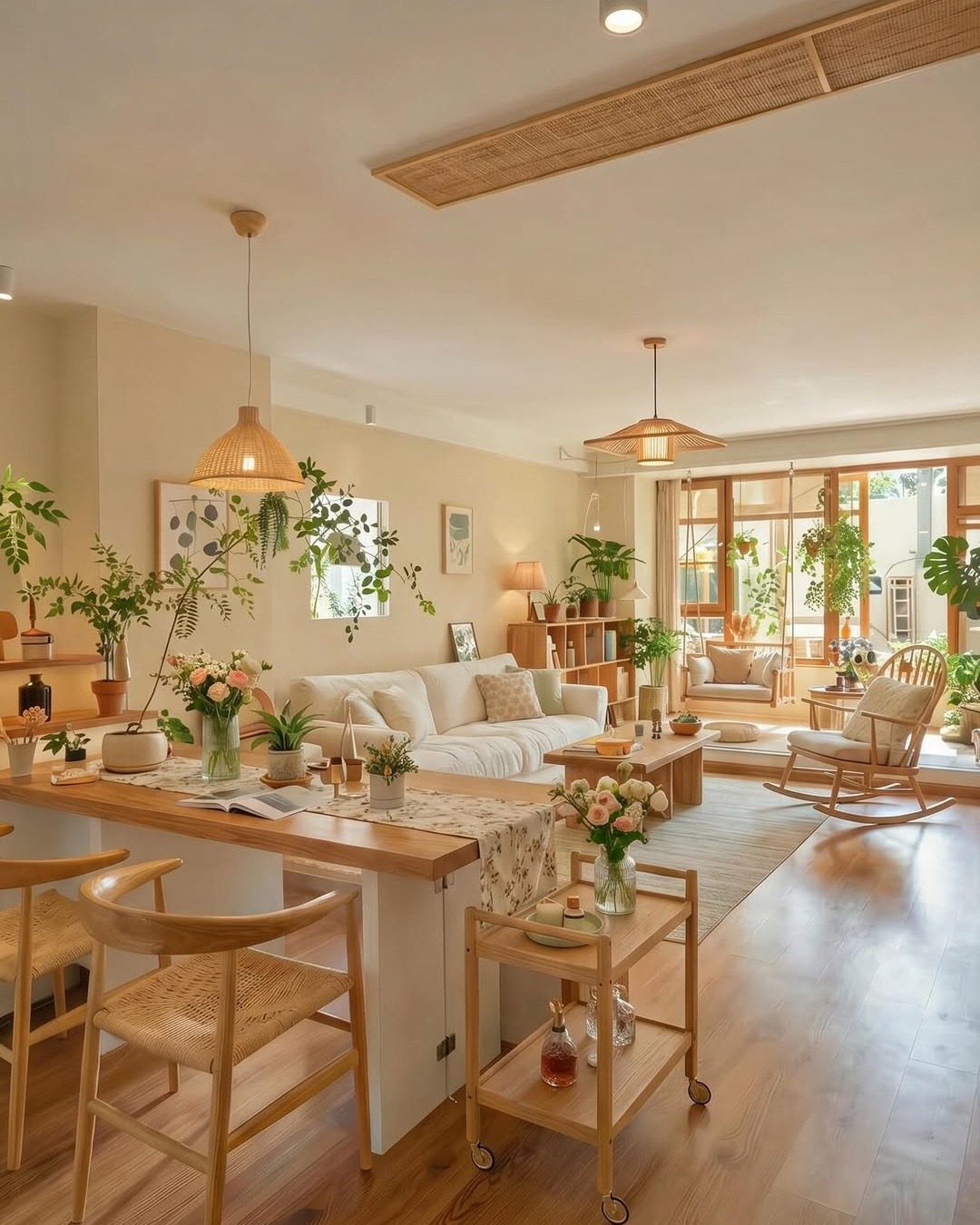
Scandinavian design puts function first and decorates with light. Pale wood floors, white walls, and minimal furniture open up the square footage, while a collection of plants adds life without eating into floor space.
A white sofa reflects more light than darker upholstery, so it makes the same square footage read larger.
Keep the coffee table and side tables in light wood to match the floor, and skip the area rug if you want the wood grain to show.
The style works best in rooms with good natural light. If your windows are small, add a floor lamp with a white or linen shade to fill the corners.
4. Traditional Style Living Room
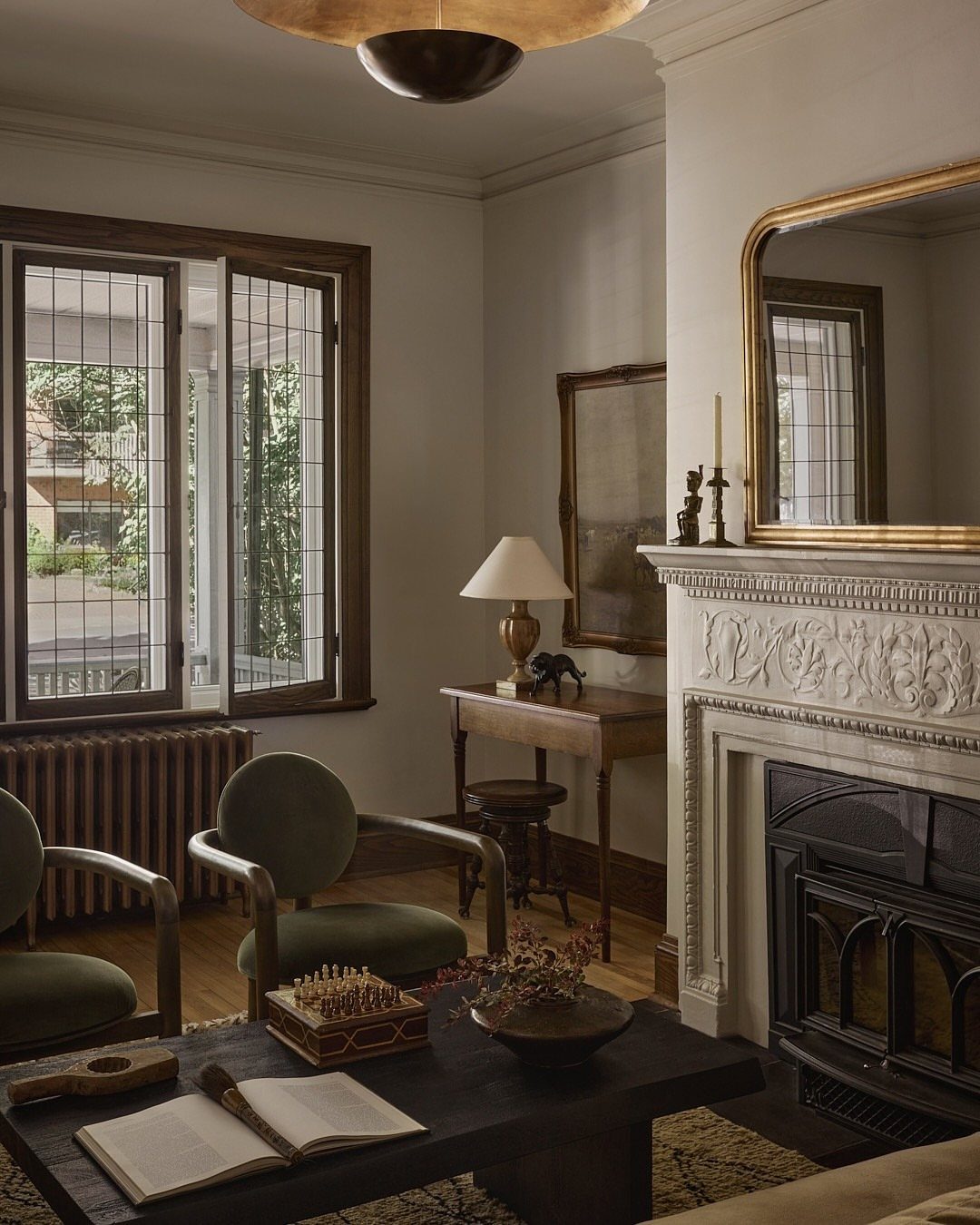
Traditional style layers rich fabrics and carved wood.
A dark wood coffee table anchors the arrangement, and symmetry helps the pieces feel intentional rather than matched by accident.
If you’re working with a small budget, start with 1 or 2 upholstered pieces in a jewel tone and fill in with thrifted wood furniture. The carved details matter more than matching finishes.
5. Rustic Style Living Room
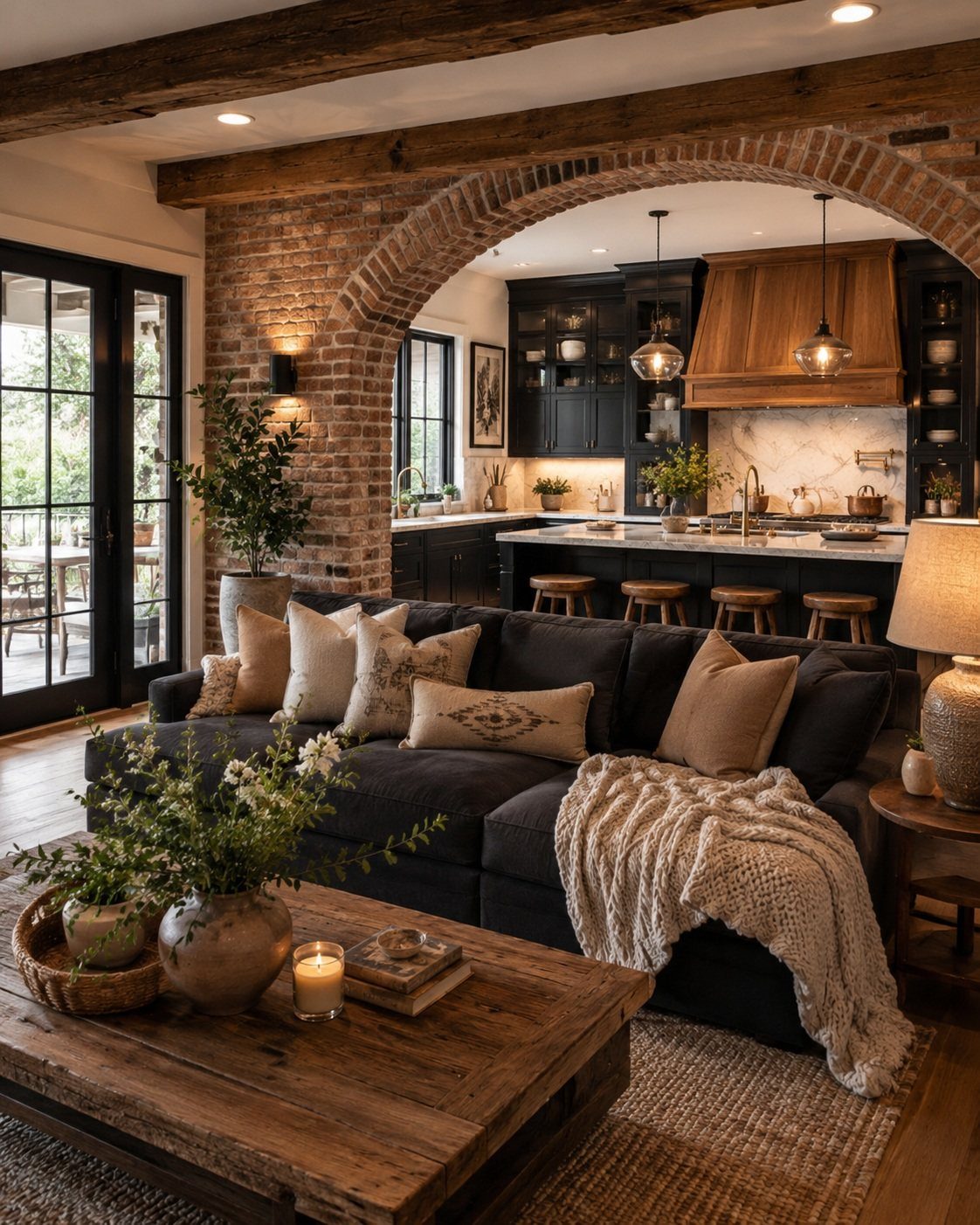
Rustic style brings in natural materials and leaves them unpolished. Exposed wooden beams, a brick archway, and a solid wood coffee table give the room its texture, and the rough edges make it feel lived-in from the start.
Keep throw pillows in neutral tones or muted plaids, and add a wool or jute rug if the floor feels too smooth.
The style suits older homes with architectural details already in place, but you can add reclaimed wood shelves or a salvaged beam mantel to newer construction.
6. Eclectic Style Living Room
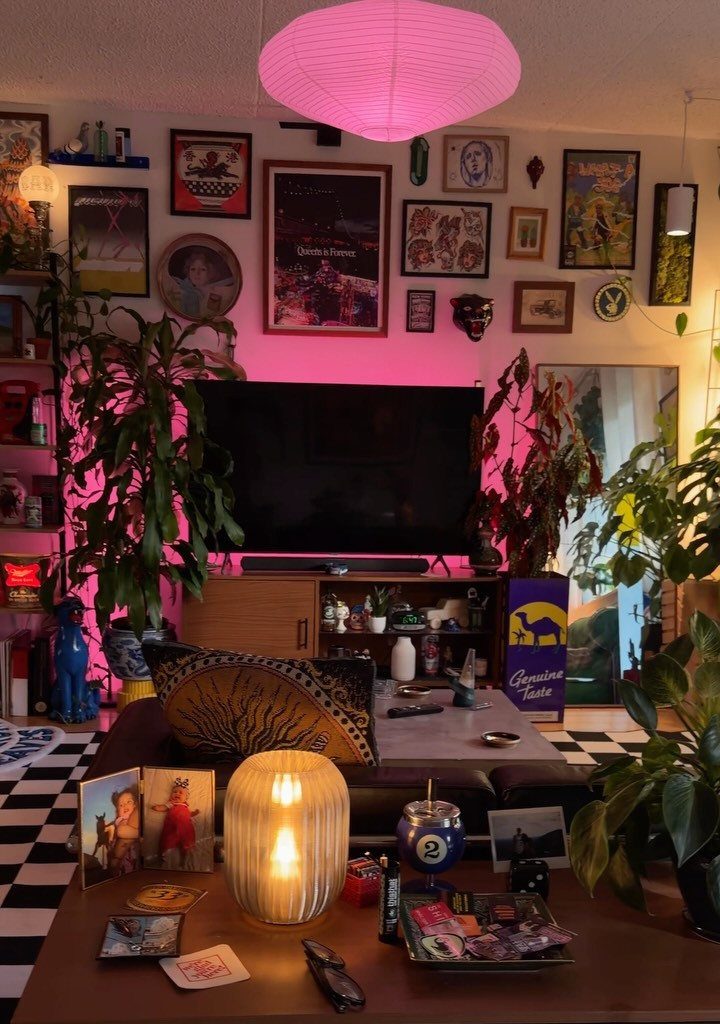
Eclectic style mixes colors, patterns, and furniture from different periods without following one rule. A checkered floor, a pink pendant light, and a wall full of mismatched frames look collected over time rather than bought in one trip.
Start with a few bold pieces and layer in smaller finds.
A vintage lamp, a patterned rug, or a collection of art prints in different frame styles all work. The risk is clutter, so edit as you go and keep at least one surface clear.
Plants help tie together a busy palette. If it feels too loud, swap a few colorful items for neutral ones until the mix balances.
7. Cohesive Color Palette
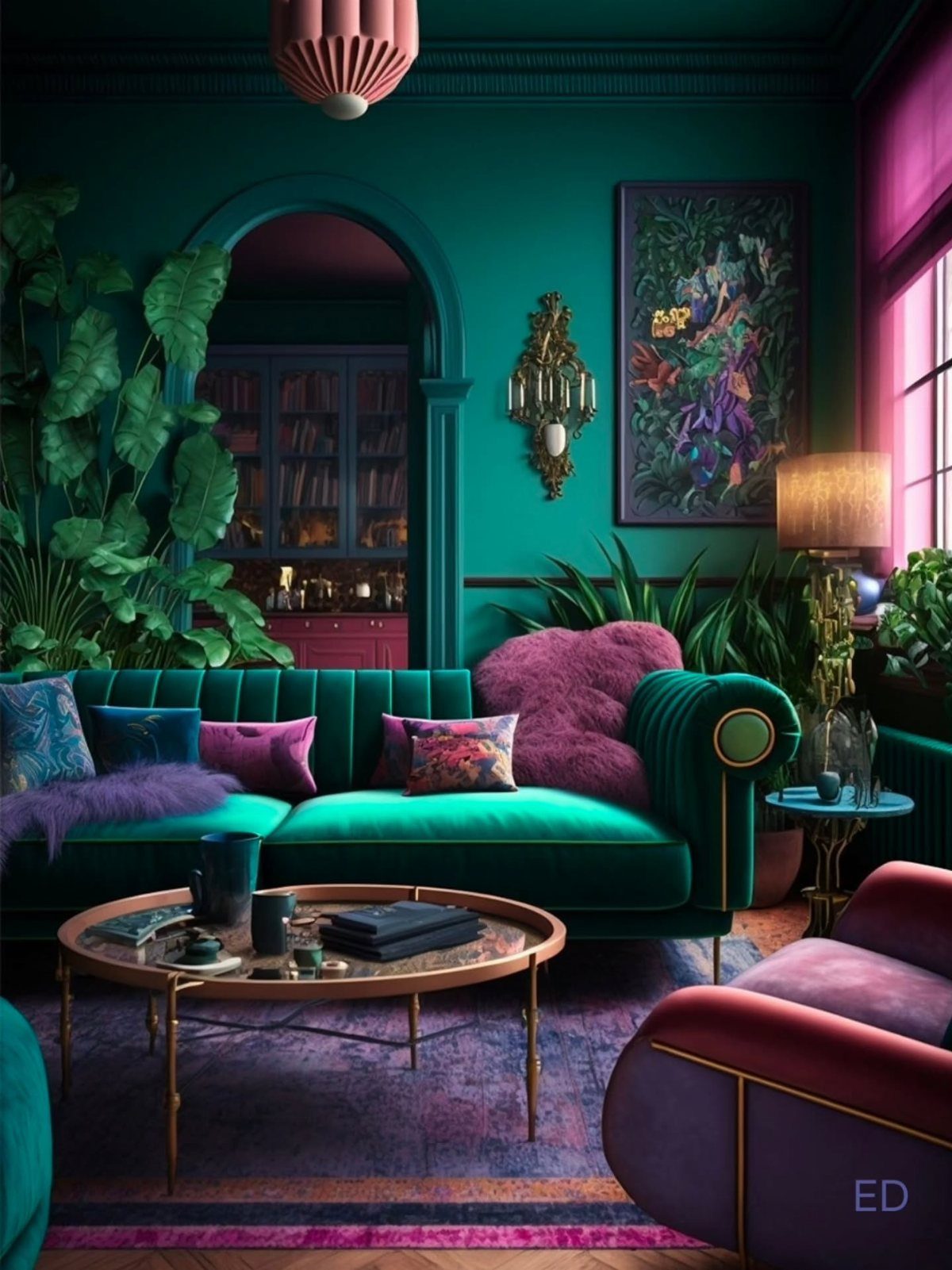
A cohesive color palette works when every piece pulls from the same family. Pick 2 or 3 colors and repeat them across the sofa, walls, pillows, and accessories so the eye moves through the space without stopping.
Jewel tones like teal, emerald, and magenta work well together because they share the same depth. If you’re starting with a bold sofa, pull 1 accent color from it and use that on the walls or in smaller pieces.
The approach works best when you commit. A single off-color item will stand out more in a tightly coordinated room than it would in a neutral one.
8. Statement Wallpaper
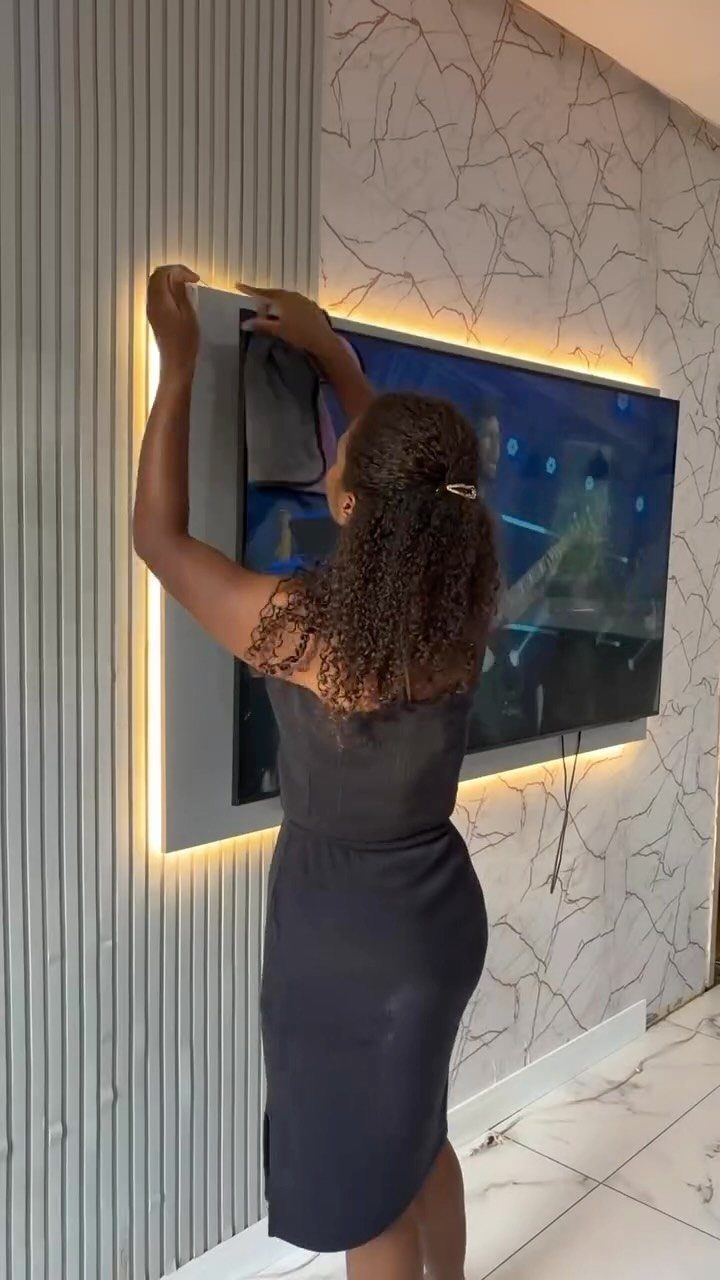
Statement wallpaper gives you pattern or texture on a large surface without committing to paint. Marble, geometric prints, and textured designs all work, and peel-and-stick options come off without damage if you’re renting.
Apply it to the wall behind the TV or sofa to anchor the room. The pattern should be bold enough to read from across the space but not so busy that it competes with the furniture.
Pair it with simple surroundings. If the wallpaper has a lot going on, keep the rest of the room in solids.
9. Bank on Bookshelves
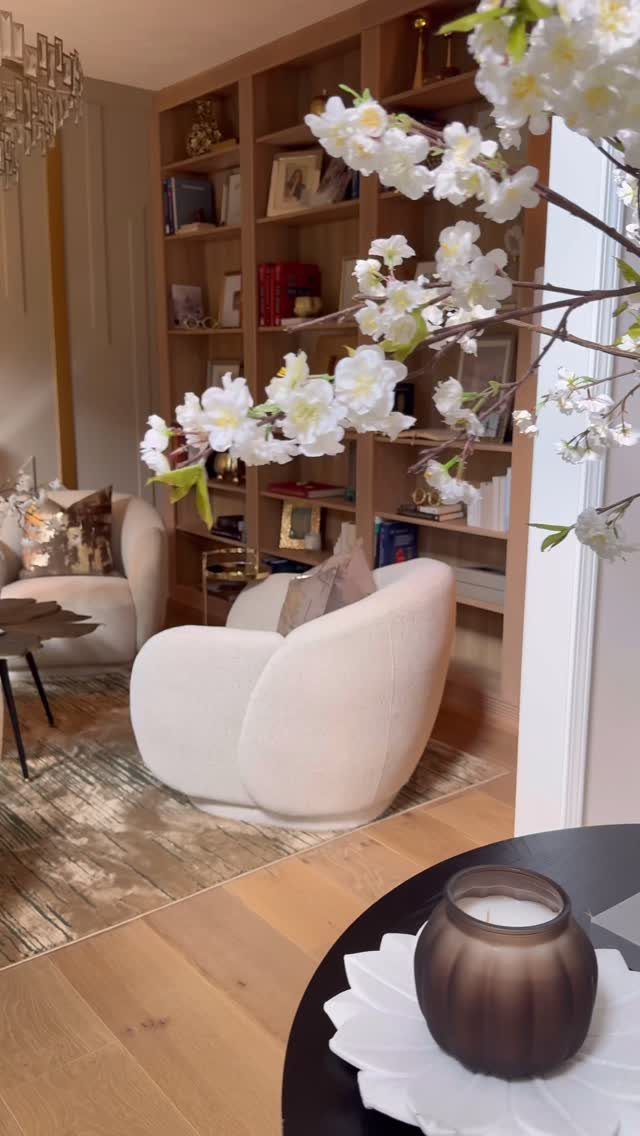
Built-in bookshelves fill vertical space and give you room to display books, plants, and collected objects without crowding the floor. Floor-to-ceiling shelves make the room feel taller, and arranging books by color or size keeps the wall from looking cluttered.
Leave some shelves partially empty so the eye has a place to rest. A few stacks laid horizontally break up the rows and give you flat surfaces for small decor.
If you don’t have built-ins, a wall of freestanding bookcases works the same way. Match the finish and line them up edge to edge for a unified look.
10. Small, Themed Groupings of Decor
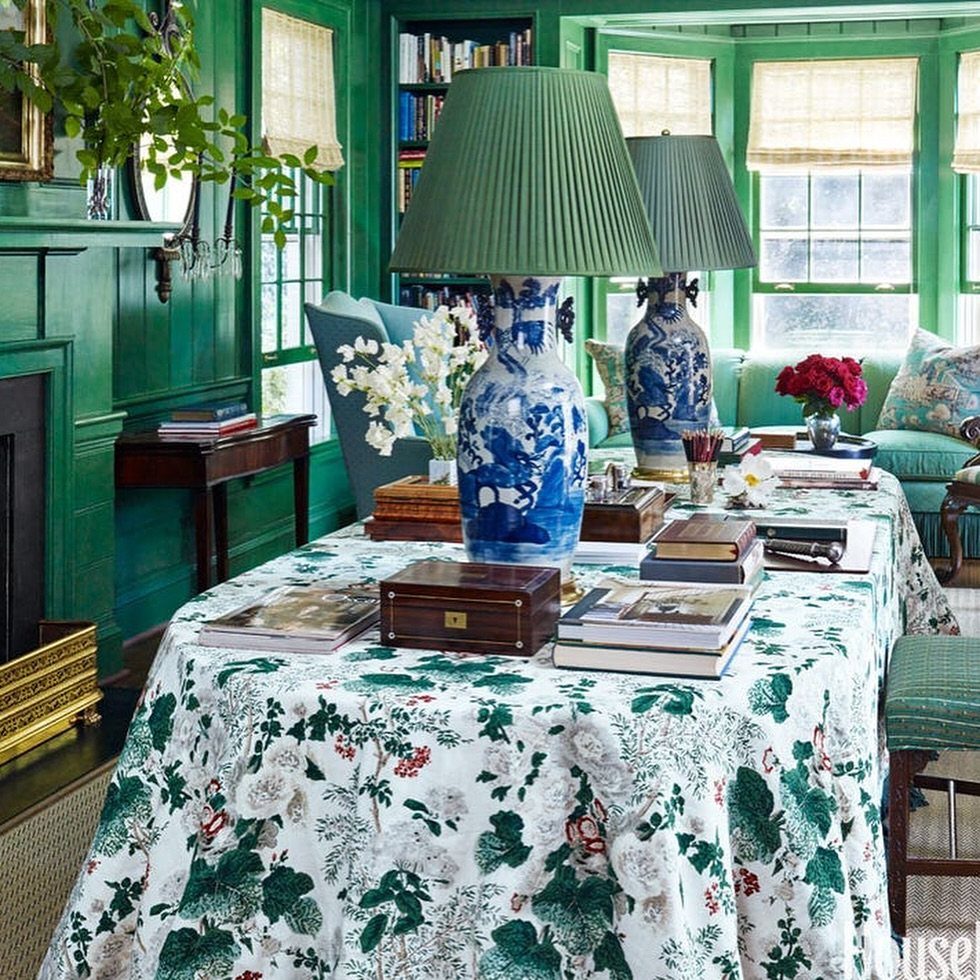
Small, themed groupings pull together objects that share a color, material, or subject and display them as a collection.
A tabletop with matching lamps, a few books, and decorative boxes feels intentional, while the same items scattered around the room read as clutter.
Keep each grouping small and give it a base like a tray, a cloth, or a side table. The grouping should fit the surface without covering all of it.
Rotate items seasonally if you collect more than fits at once. The rest can go in storage until you’re ready to swap them in.
Living Room Layout Tips
Arrange seating in a way that lets people talk without shouting across the room. A sofa and 2 chairs in a U shape work better for conversation than a line of furniture against the wall.
Leave enough room between the coffee table and the sofa so you can walk through without turning sideways. If the room is narrow, skip the coffee table and use a side table instead.
Anchor the seating area with a rug large enough that the front legs of each piece sit on it. That pulls the furniture together visually and defines the space without adding walls.
In a small room, a single large sofa can feel more open than several smaller pieces because it reads as one shape instead of several competing ones.
Color Combinations
Complementary colors sit opposite each other on the color wheel and make each other look more saturated. Blue and orange, or purple and yellow, create contrast without clashing if you keep the tones similar in brightness.
A monochromatic scheme uses different shades of the same color. Pale pink walls, a rose sofa, and deep red pillows create depth without introducing a second hue, and the room feels cohesive because everything shares the same base.
If you want a bold look in a small space, one strong color across most surfaces makes the room feel larger than several competing colors would. The uniform color reduces visual interruptions.
Maximizing Small Spaces
Multi-functional furniture gives you 2 uses in the same footprint. An ottoman with storage inside holds blankets or books, and a sofa bed turns the living room into a guest room without dedicating space to a bed frame.
A low-profile sofa with rounded edges takes up less perceived space than a tall, boxy one. The lower back and arms let you see more of the wall behind it, so the room feels less crowded.
“Scale and proportion are essential to living well in small spaces. Every piece of furniture should serve a purpose, if not several,” says Ellie Christopher of Ellie Christopher Interior Design.
Frequently Asked Questions
How can I make a room feel bigger?
Use light colors like white walls and pale wood floors to reflect more light and open up the square footage.
A sofa that sits close to the floor and curves at the arms pushes the eye toward the wall behind it instead of blocking your view.
An ottoman that opens for storage or a coffee table with drawers underneath doubles your function without taking up more square footage.
What are the different types of living room design styles?
Styles include minimalist, industrial, Scandinavian, traditional, rustic, and eclectic. Minimalist living rooms hold only the pieces you actually sit on or use, and industrial spaces show the structure of the room instead of covering it.
Scandinavian design relies on light wood and simplicity, traditional style builds up layers of fabric and detail, rustic finishes stay rough and unrefined, and eclectic pulls from whatever period or palette you like.
What colors work well together in a living room?
Pair colors from opposite sides of the wheel, like teal and rust or plum and mustard, and they balance instead of fighting as long as one isn’t much brighter than the other.
Stay inside one color family and shift only the lightness or darkness of each piece for a room that feels cohesive without needing a second hue.
Limit yourself to 2 or 3 colors and carry them from one surface to the next so nothing sits alone in the corner.






