
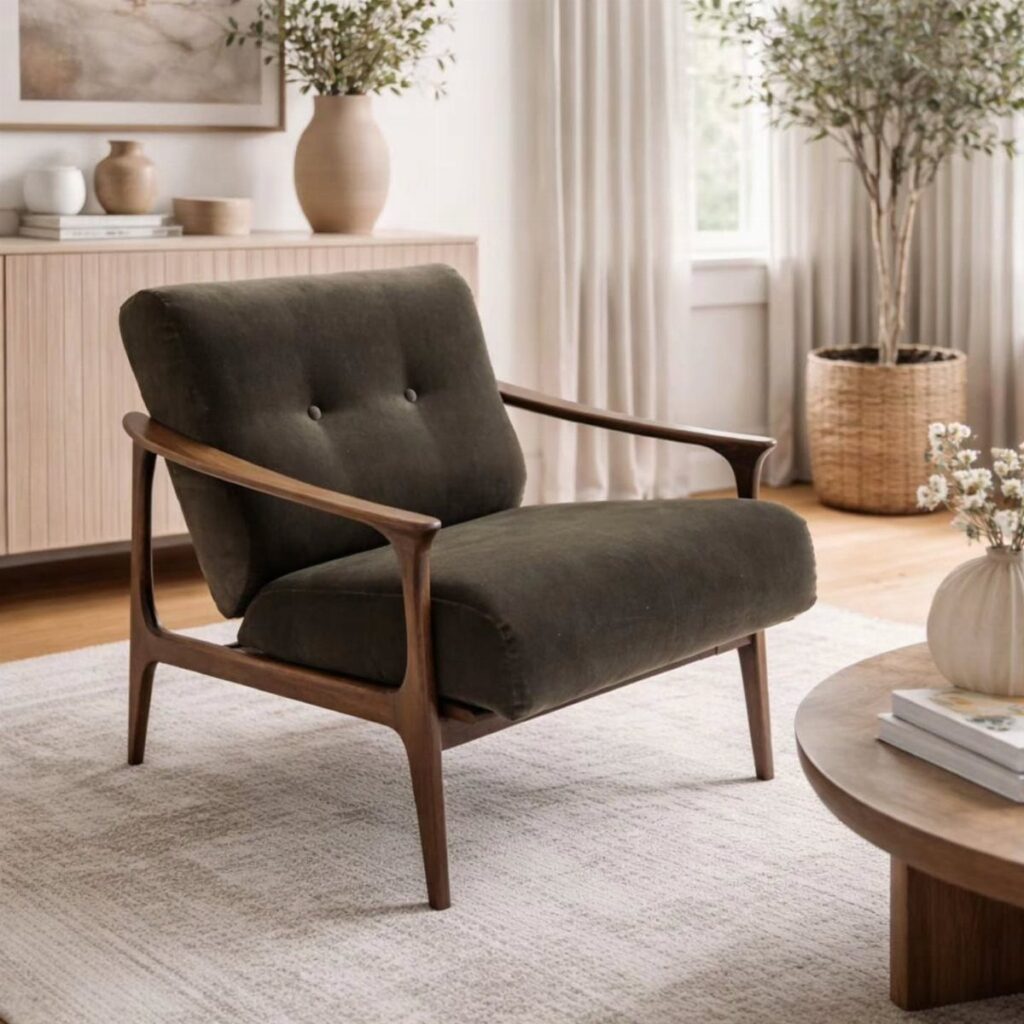
An accent chair adds seating and color in one move, whether you’re filling a corner with a single piece, flanking a sofa with a pair, or facing 2 chairs across a coffee table.
The choice comes down to how much space you have and what your sofa already does: a bold green or rust-colored chair works when the couch is neutral, while matching the sofa’s texture keeps a full sectional layout from feeling crowded.
1. Instant Style Statement
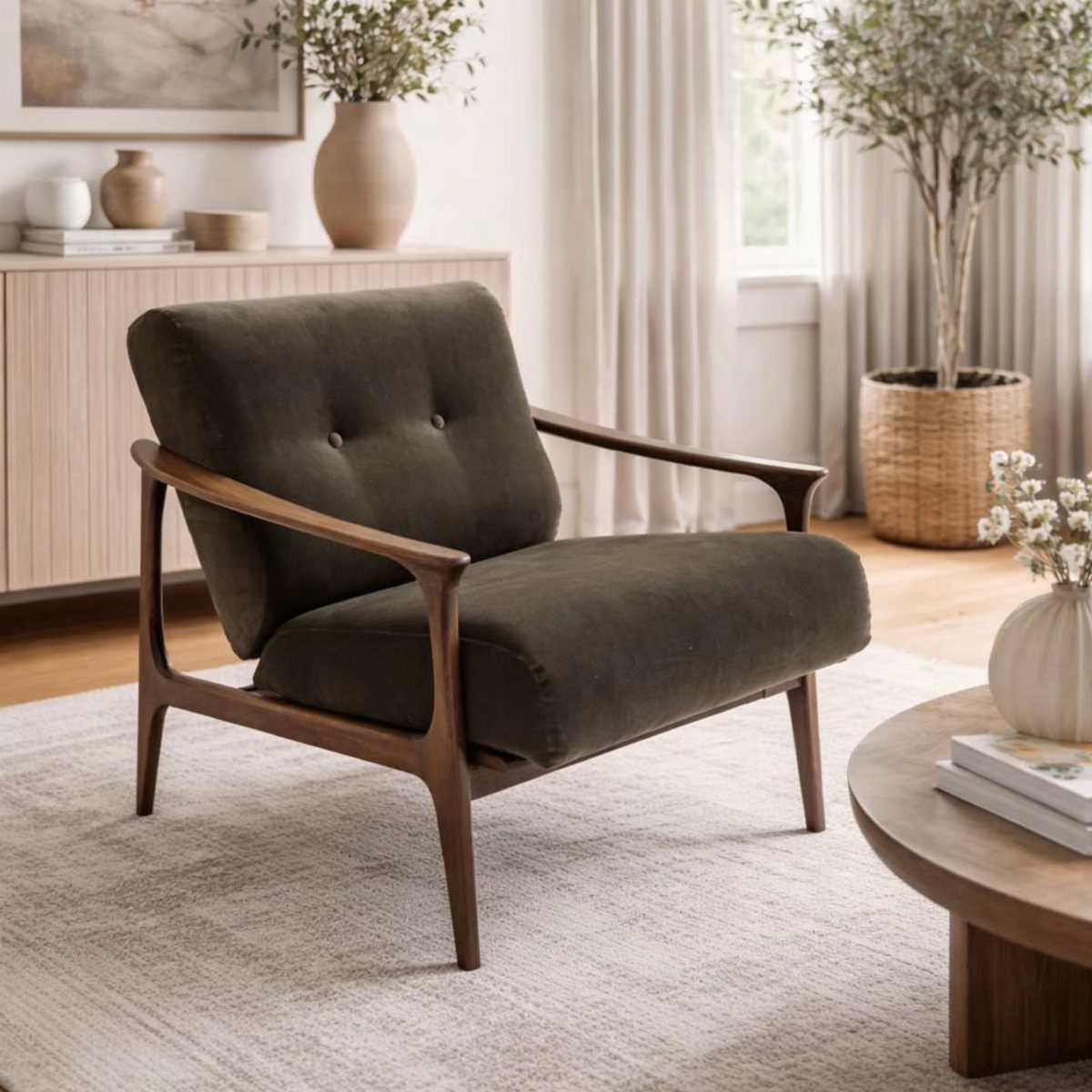
A single accent chair changes how a room feels the moment you walk in. The one thing it does better than any other piece is give a corner or an empty spot next to a window a reason to exist.
Choose a color or shape that stands out from your sofa. If your couch is neutral, a chair in olive green or charcoal grey pulls the eye without fighting what’s already there.
Mid-century frames with wood arms work in tight spaces because the exposed legs keep the floor visible and the room feeling open.
Place it where you would actually sit: angled toward the sofa for conversation or next to a small table with good light.
2. Two Accent Chairs Flank a Sofa
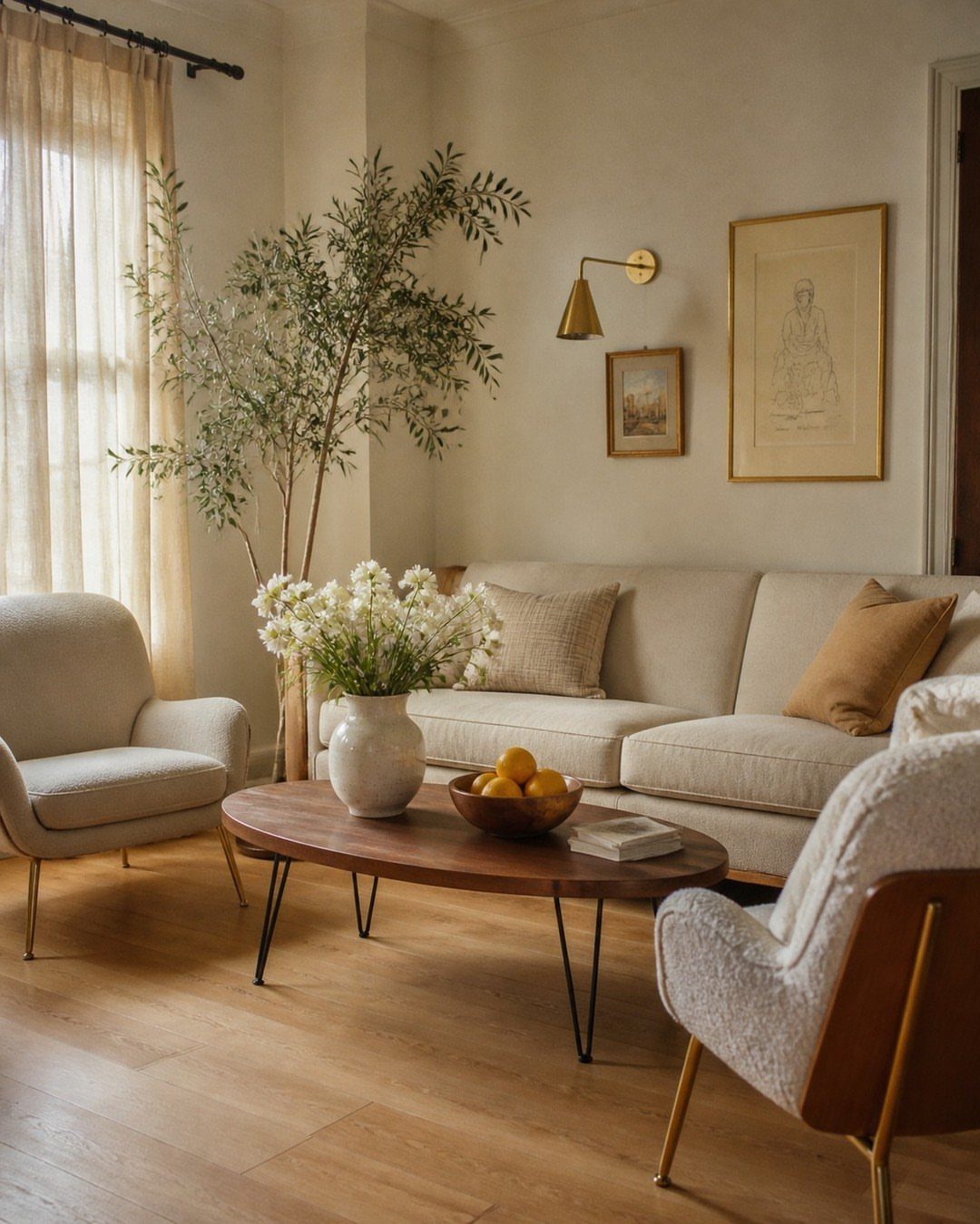
Flanking a sofa with 2 accent chairs balances the room and gives you enough seats for company. The setup works best when the chairs mirror each other in style but leave the sofa as the anchor.
Cream or beige chairs in linen or cotton keep the look calm and let the coffee table or rug carry pattern if you want it.
Space each chair far enough from the sofa arm that people can move between them comfortably.
This layout fills a long wall or centers a seating area in an open floor plan. If your room is narrow, push the chairs slightly forward so the row doesn’t flatten against the wall.
3. Accent Chairs Facing Each Other
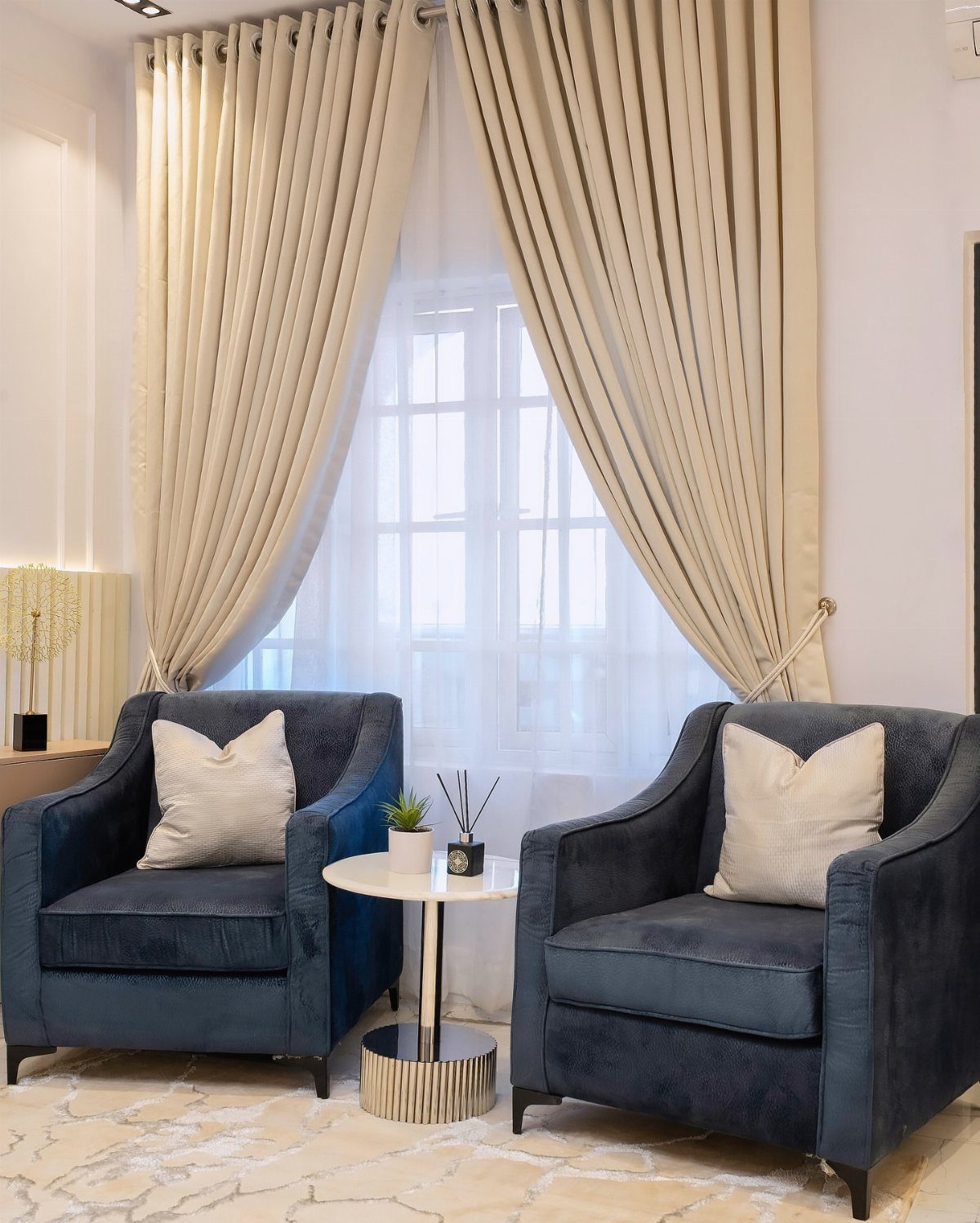
Placing 2 chairs face to face turns an underused section of the living room into a conversation spot that feels separate from the sofa.
The arrangement works in front of a window, between 2 doorways, or at the far end of a long room.
Navy velvet brings enough color to define the zone without paint or a rug.
A small round table or pedestal between the chairs holds drinks and leaves the sight line open. Chairs with arms make the setup comfortable for longer visits; armless versions take up less visual space if the room is narrow.
Leave enough room between the seats so 2 people can talk without their knees touching.
4. Chairs in Bold Colors
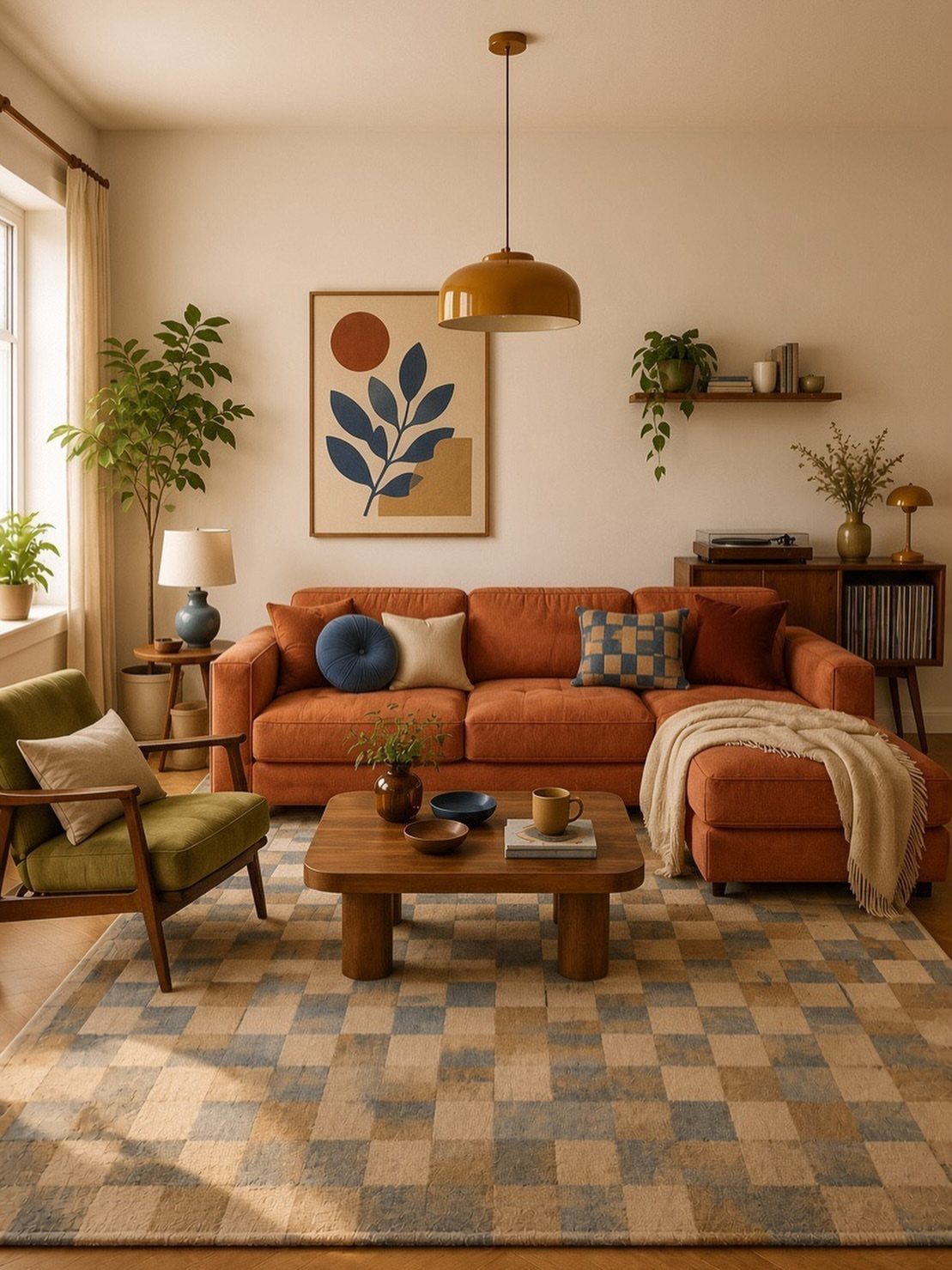
A bold accent chair is the fastest way to add color when everything else is playing it safe.
If your sofa is neutral, the chair can be saturated: a green wingback or a rust-colored armchair gives the space something to look at without repainting or replacing the big pieces.
Pair the chair with a patterned rug that pulls in the same color family.
An orange sofa with a green chair works when the rug or throw pillows tie them together, but skip adding a third bright color or the room starts to feel like a showroom.
Put the chair where light hits it. Next to a window or under a pendant, the color reads richer and the layout feels intentional.
5. The Accent Armchair
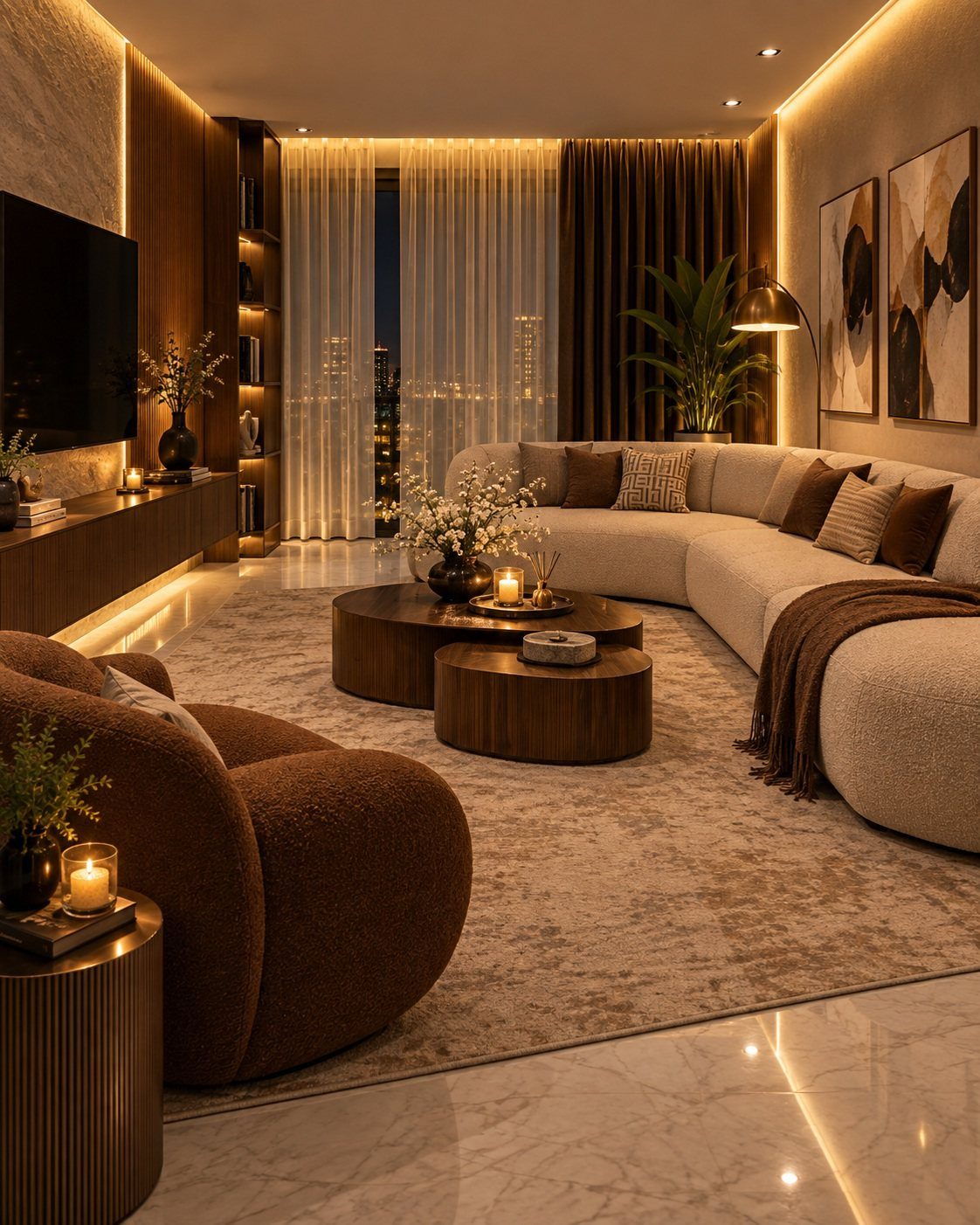
Armchairs with padded arms and a solid frame are the default accent chair for good reason: they fit next to a sofa without looking like overflow dining seats, and people actually use them.
The brown textured version in boucle or chenille adds warmth to a room with a light sofa and smooth surfaces.
Place the armchair at a slight angle to the couch or facing it across a coffee table.
Angling it opens up the floor and makes the room feel less like a waiting area. If your sectional already fills most of the space, keep the armchair compact with low arms so it doesn’t block the view.
6. Cozy Reading Nook Accent Chair
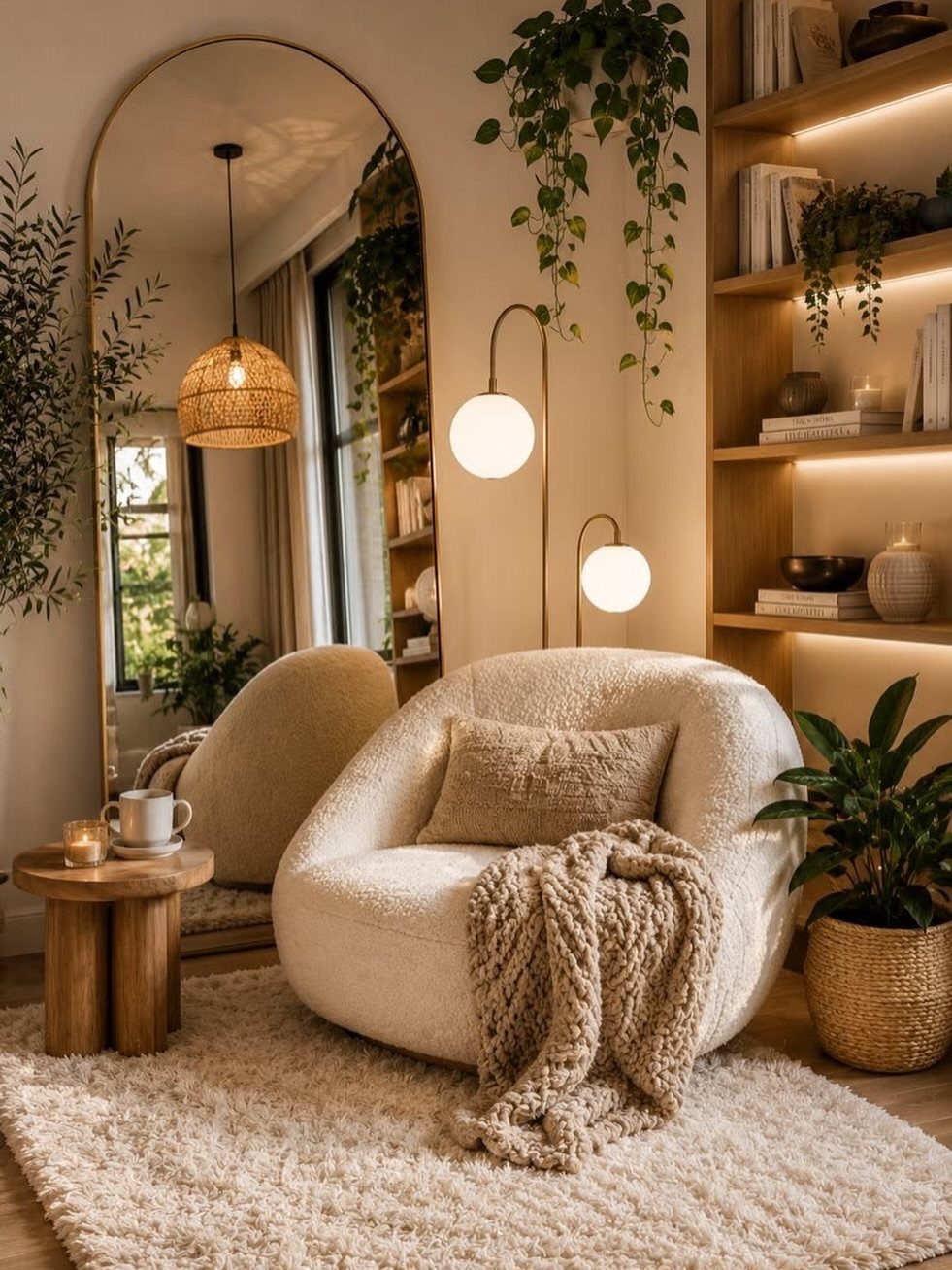
A reading nook needs 3 things: a chair you can curl up in, a light source that reaches over your shoulder, and a small table within arm’s reach.
Boucle chairs with rounded backs and no sharp edges do this better than anything with a formal frame.
Add a floor lamp with an adjustable arm or a tall arc lamp so the light falls on the page, not behind you.
A throw blanket and a pillow make the chair feel like it belongs to one person, and a bookshelf or stack of books next to it gives the corner a purpose that holds even when no one is sitting there.
This setup fits in a corner or next to a window without taking over the room.
7. Pair with a Sectional Sofa
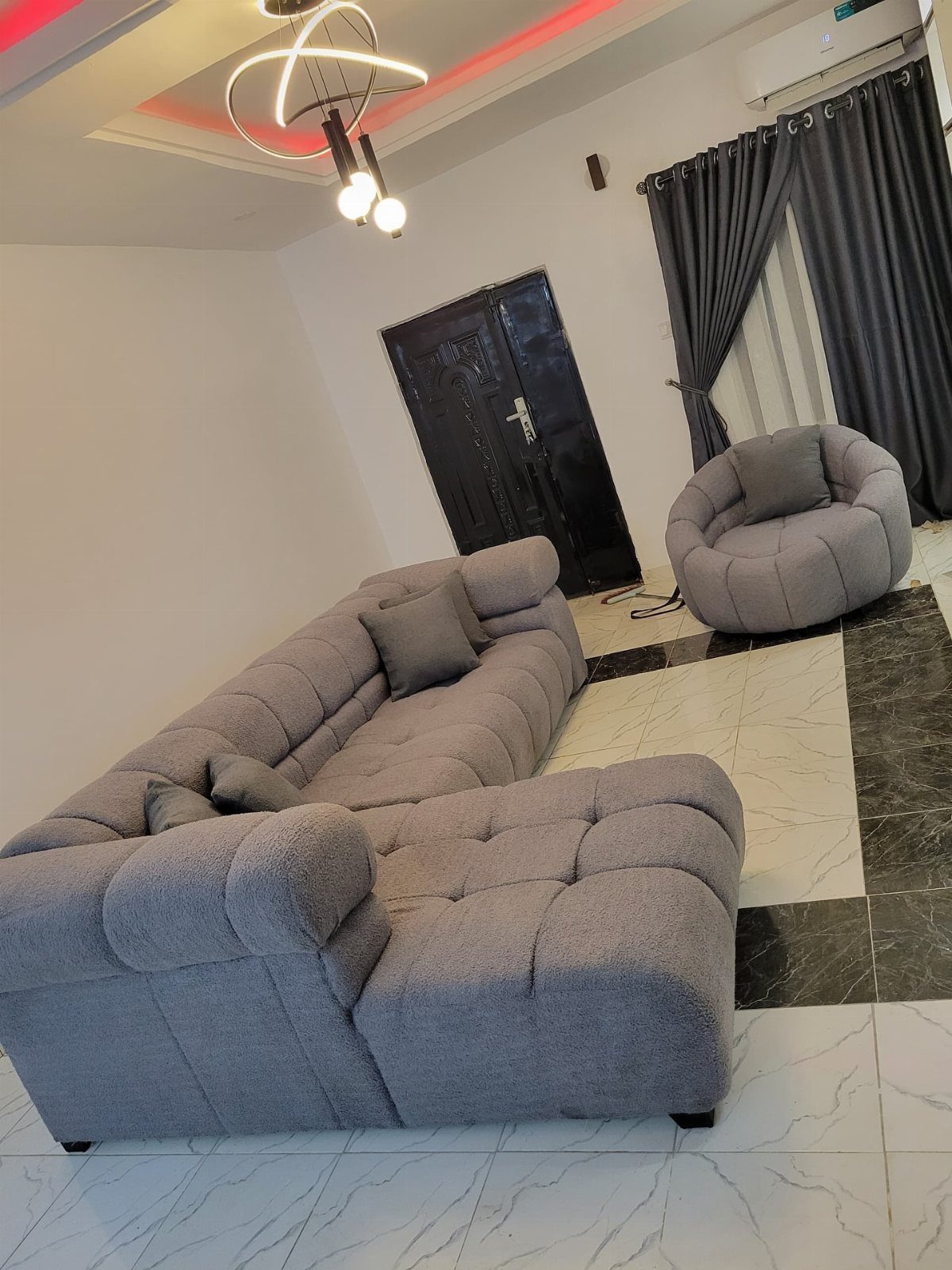
A sectional already seats most of the room, so adding an accent chair works best when the chair echoes the sofa’s color or texture instead of competing with it.
Place the chair at the open end of the sectional or across from it to complete the seating circle. Round chairs with low backs fit better than tall wingbacks because they don’t block sight lines in an already full layout.
8. Wood Frame Boucle Chair
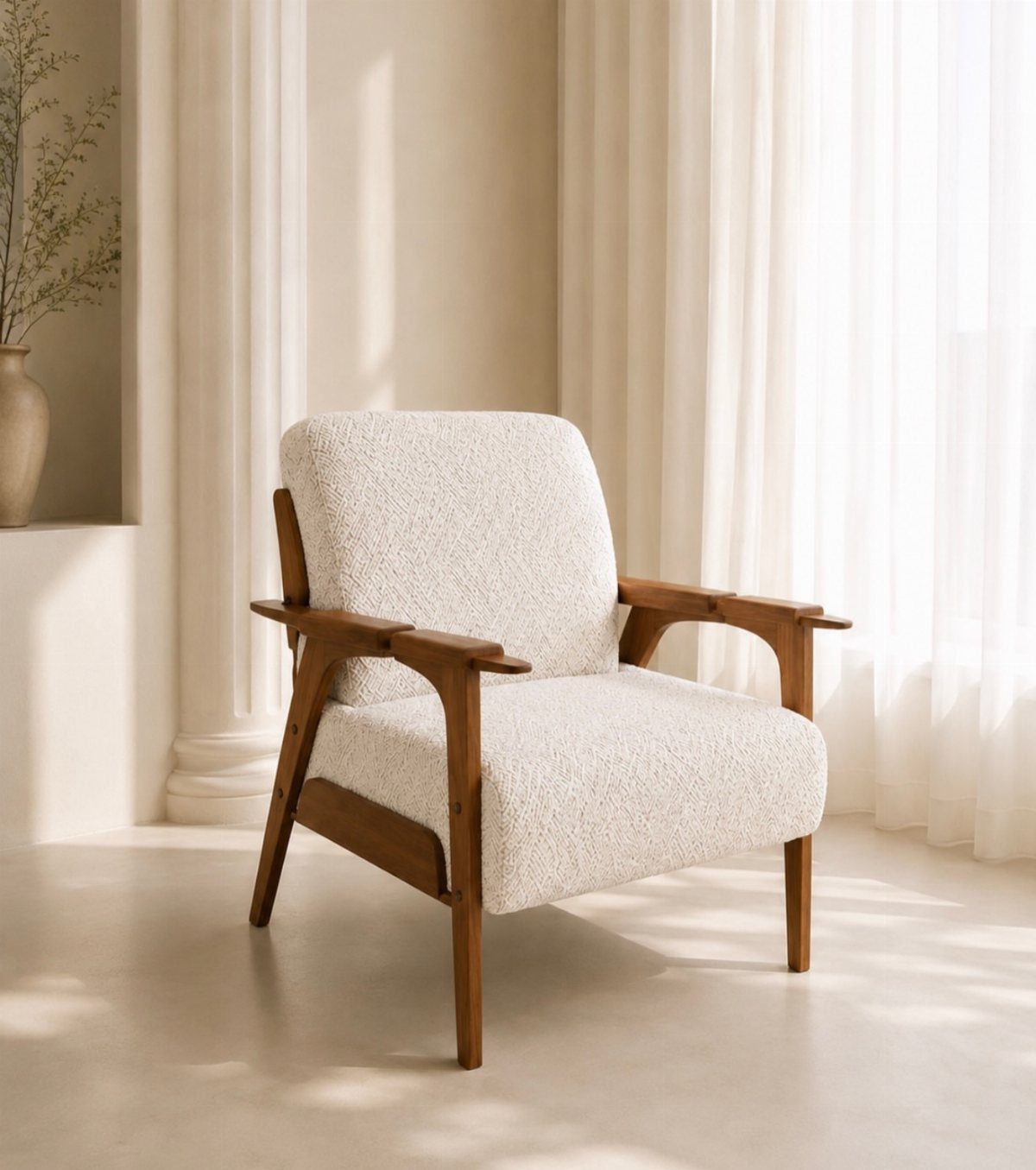
Exposed wood arms on a boucle chair give you texture without adding color, which keeps a neutral room from going flat. Cream or ivory boucle works in bright spaces where linen would look too casual and velvet would feel heavy.
The wood frame shows more chair and less upholstery, so the piece reads lighter than a fully padded armchair.
Walnut or oak arms bring warmth next to a white or grey sofa, and the frame stays visible even when you throw a blanket over the seat.
9. Multi-Chair Conversation Seating
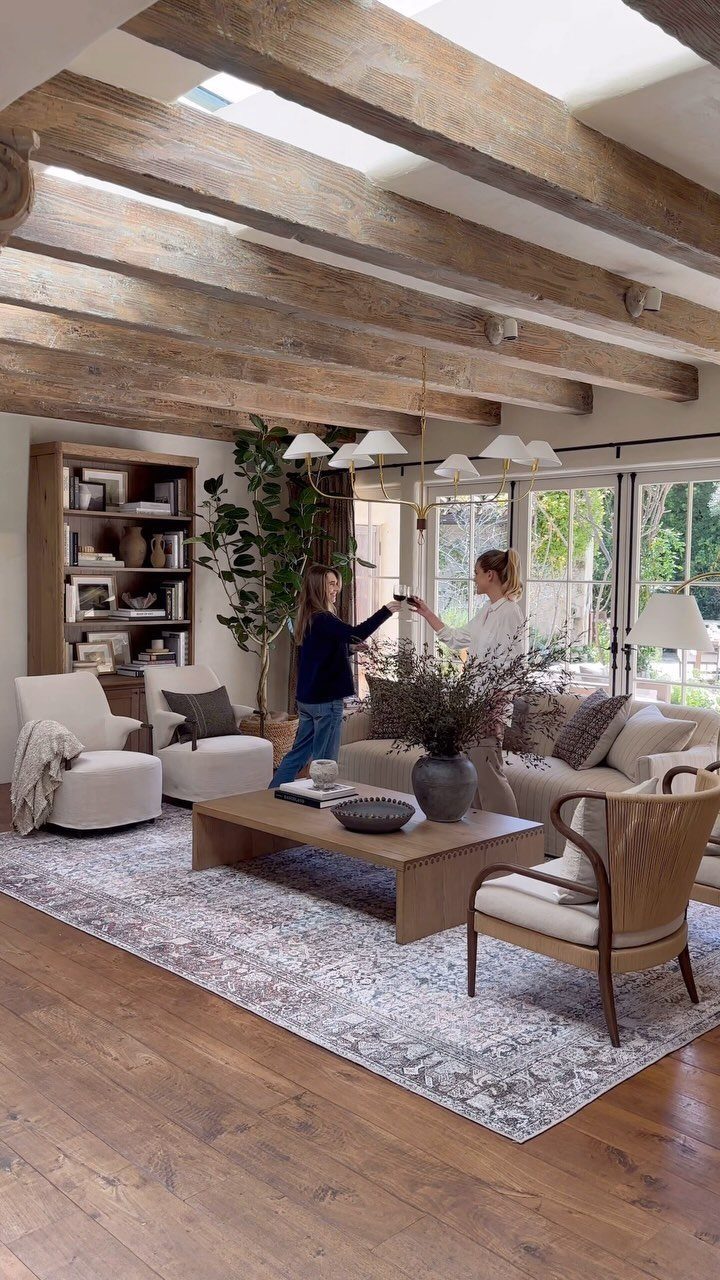
When you need seating for a larger group, spreading accent chairs around the coffee table instead of lining them against the wall makes the room feel like a place to gather, not a waiting area.
Mix 2 or 3 chairs with your sofa and center them around one table so everyone can reach it.
Keep the chairs in the same color family but vary the style slightly so the set doesn’t look like a matched suite.
This layout takes up the middle of the room, so it works best in open plans where the sofa doesn’t sit against a wall.
10. Brown Textured Accent Chairs
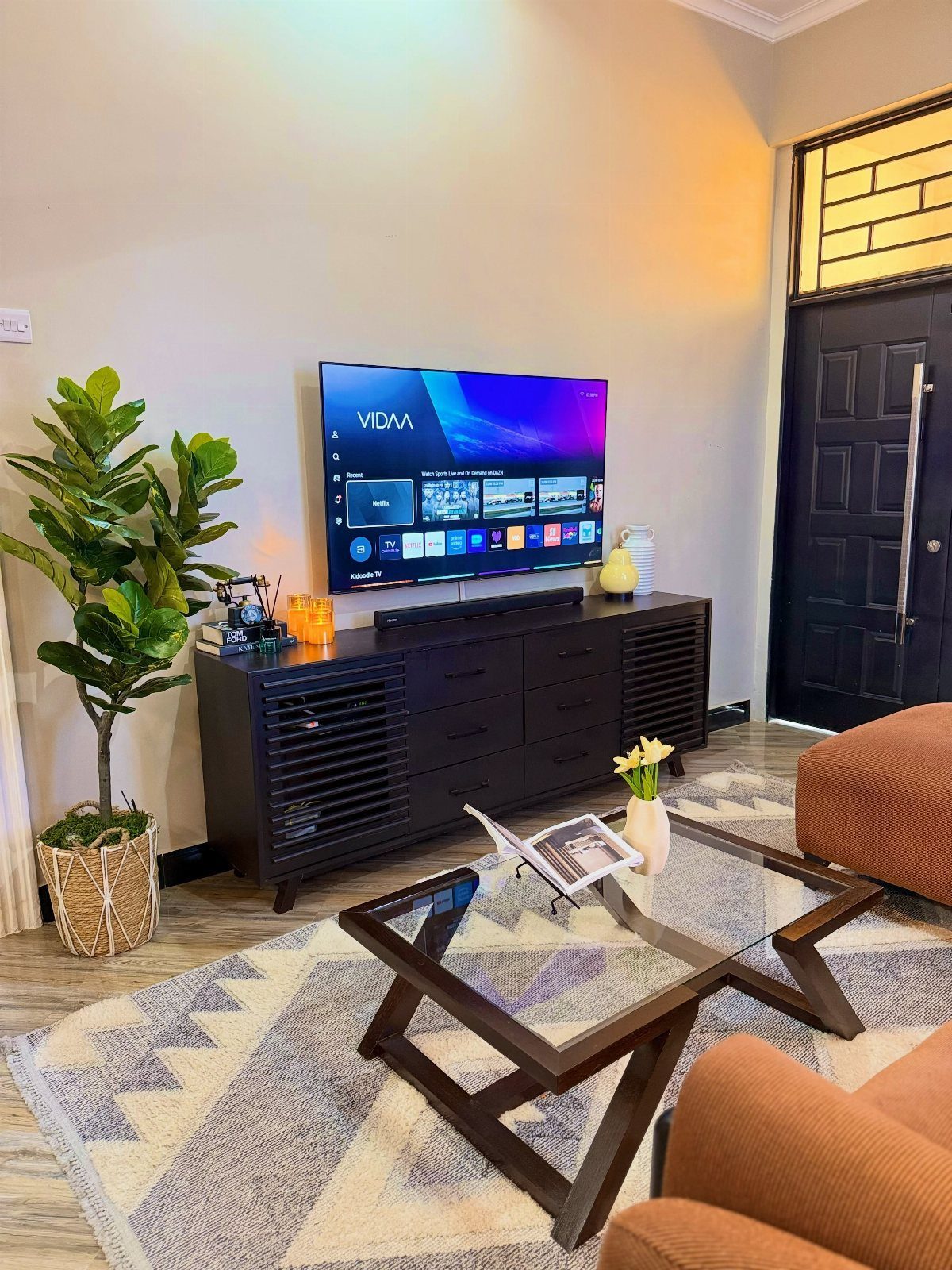
The texture catches light differently than smooth fabric, so the chairs feel layered even when the color is simple.
Position 2 chairs across from each other or side by side in front of a media console to ground the TV area.
A glass coffee table between them keeps the setup from feeling too heavy, and a patterned rug underneath ties the brown into the rest of the room.
11. Accessorize with Throws
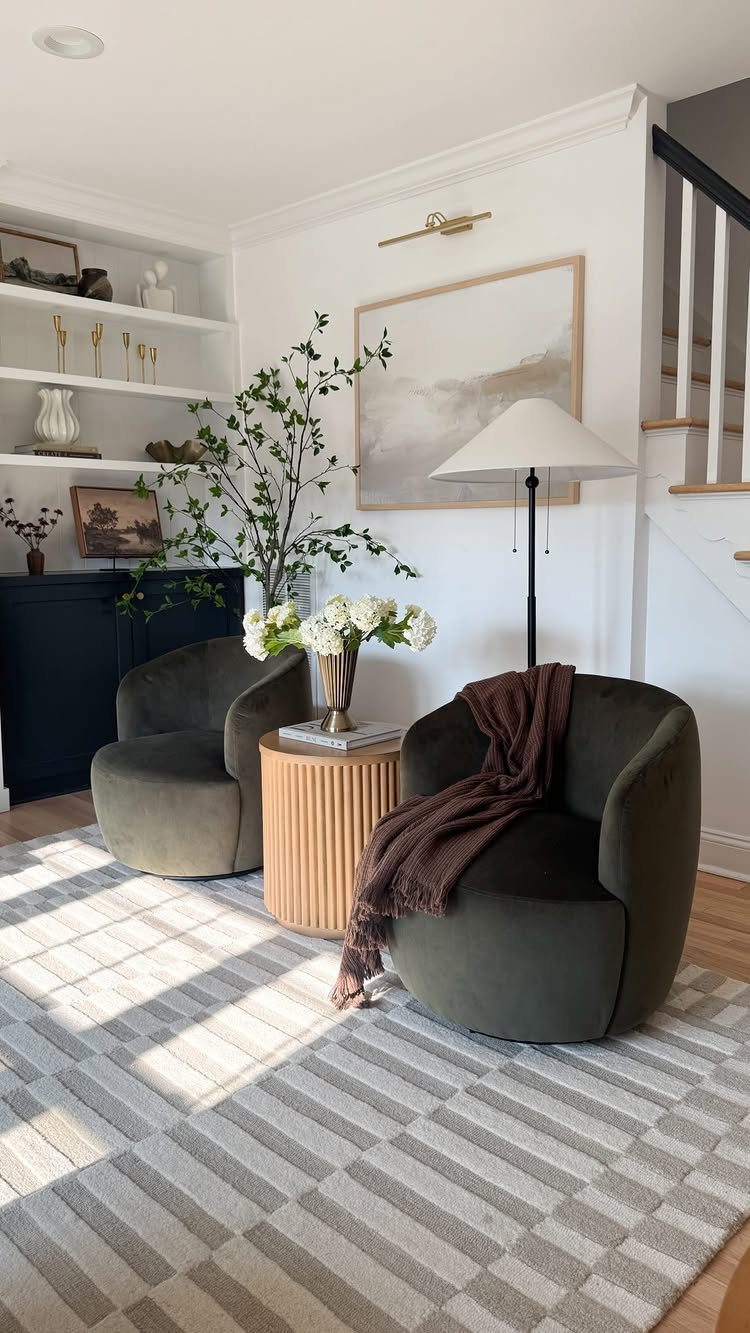
A throw blanket draped over one arm softens the line of the chair and makes it look used, not staged.
Fold it loosely or let it hang so it feels like something you grabbed last time you sat down, not something you arranged for a photo.
Choose a throw color that contrasts with the chair: brown or rust over olive green, cream over charcoal.
The throw also fills the seat visually when the chair sits empty, which matters more than you’d think in a room where people walk past it all day.
Choosing the Right Size
The chair should be tall enough to sit comfortably next to your sofa but not so tall that it breaks the sight line across the room.
A good rule is keeping the chair’s back height at or below the sofa back so the room reads as one level.
Visual weight matters as much as actual size. In a small room, that perceived lightness keeps the floor visible and the space from feeling crowded.
Measure the spot where the chair will sit, then subtract a few inches on each side for clearance. The chair should fit the corner or wall section without forcing you to angle past it every time you walk through.
Do Accent Chairs Need to Match?
When 2 chairs flank a table or sit in the same corner, I match them so the pair reads as intentional. Across the room from each other, they can be different without the space feeling off balance.
A velvet chair and a linen one can sit in the same room if they’re both low-backed or both in shades of grey.
Symmetry makes a room feel calm and intentional, so if that appeals to you, go ahead and buy a pair.
But 2 different chairs in the right spots can add more personality than a matched set, and no one will notice they don’t coordinate if they each belong where you put them.
Placement Tips
The chair should sit where someone can use it without rerouting foot traffic. Next to a fireplace, angled toward the sofa, or near a window with a view are all spots that invite sitting without blocking the path between rooms.
Orient the chair so it faces into the room or toward another seat, not the wall.
Even a reading chair benefits from being turned slightly toward the center so the person sitting there feels part of the space, not exiled to a corner.
Leave enough clearance around the chair for someone to walk behind it or pull it out slightly without moving other furniture. A few inches on each side is enough to keep the layout from feeling wedged in.






