
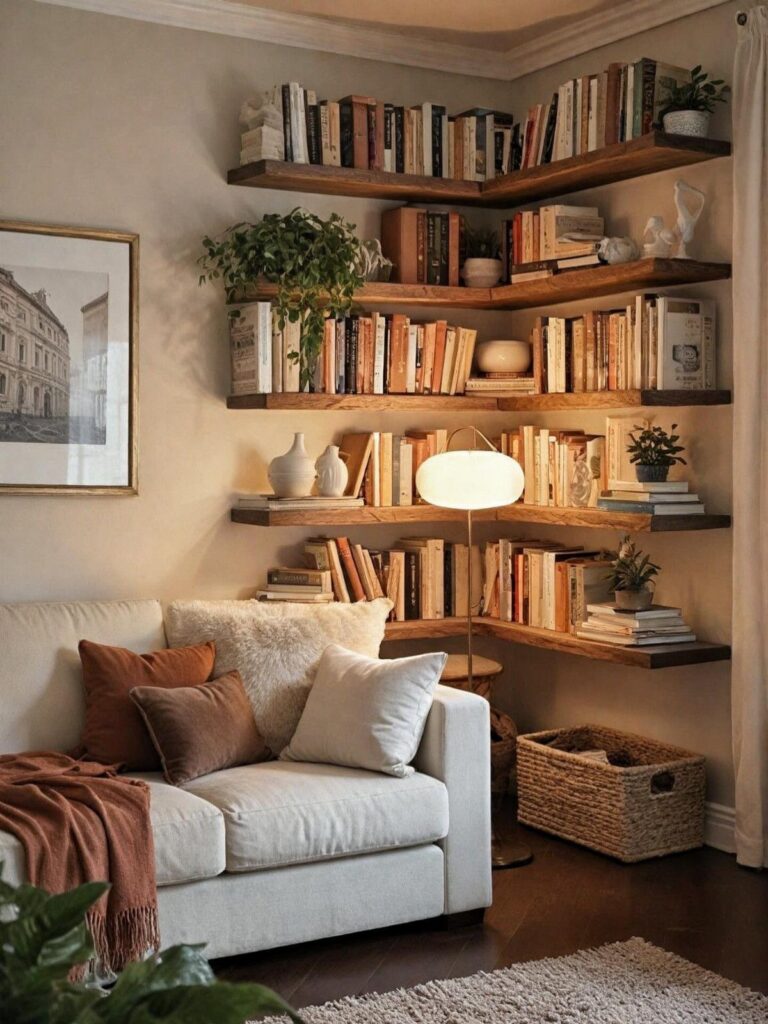
A bookshelf can fill an alcove, divide a room, or mount flat on the wall. Built-ins give you floor-to-ceiling coverage; room dividers stay open-backed so light passes through; wall-mounted units lift storage off the baseboards entirely.
The setup that fits depends on how much wall you have and whether the shelves need to define a zone or just hold what you own.
1. Built-in Bookshelves
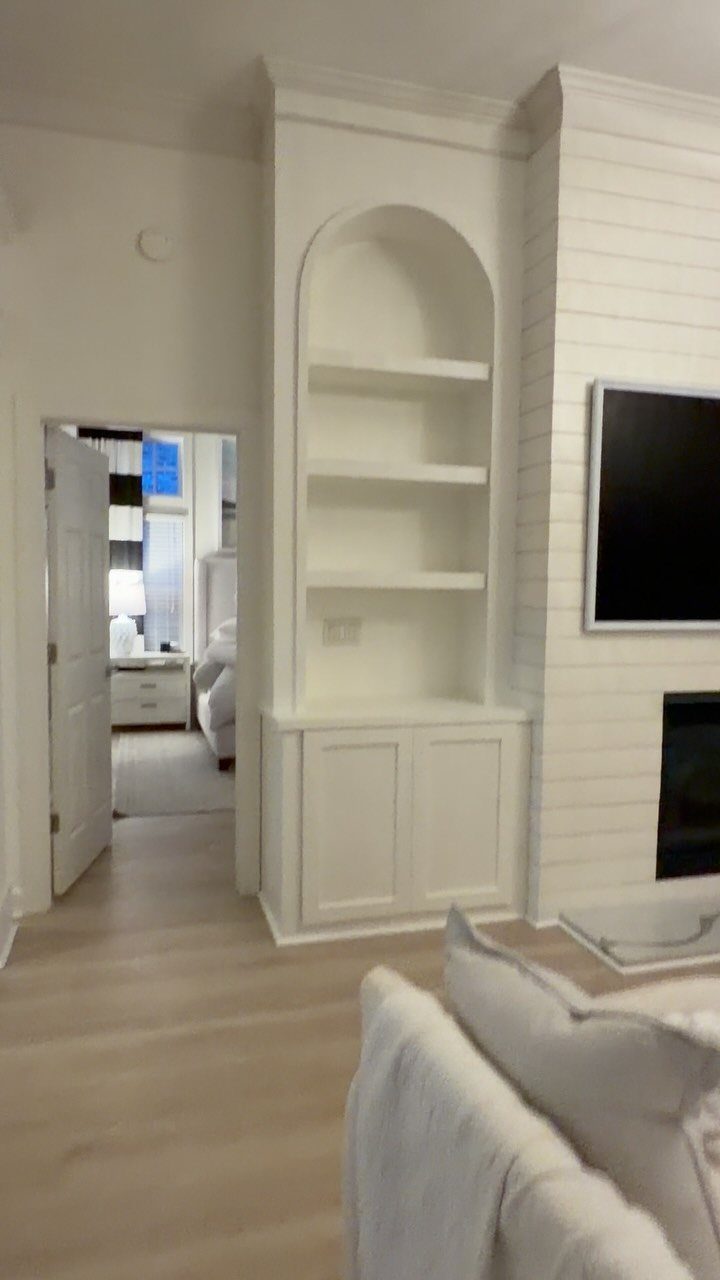
Built-in bookshelves become part of the wall itself, fitted into alcoves or spanning an entire surface from floor to ceiling.
The arched openings here soften the usual straight-edged grid and give the shelves a custom, finished look that feels intentional rather than added on.
Centering them around a focal point, like a fireplace, balances the whole wall.
A wall lined with books transforms any room into a stunning and studious retreat. Whether it’s simple rows of shelves or beautiful built-ins, bookcases offer stylish storage for books, artwork, and other treasured collections.
2. Room Divider Bookshelves
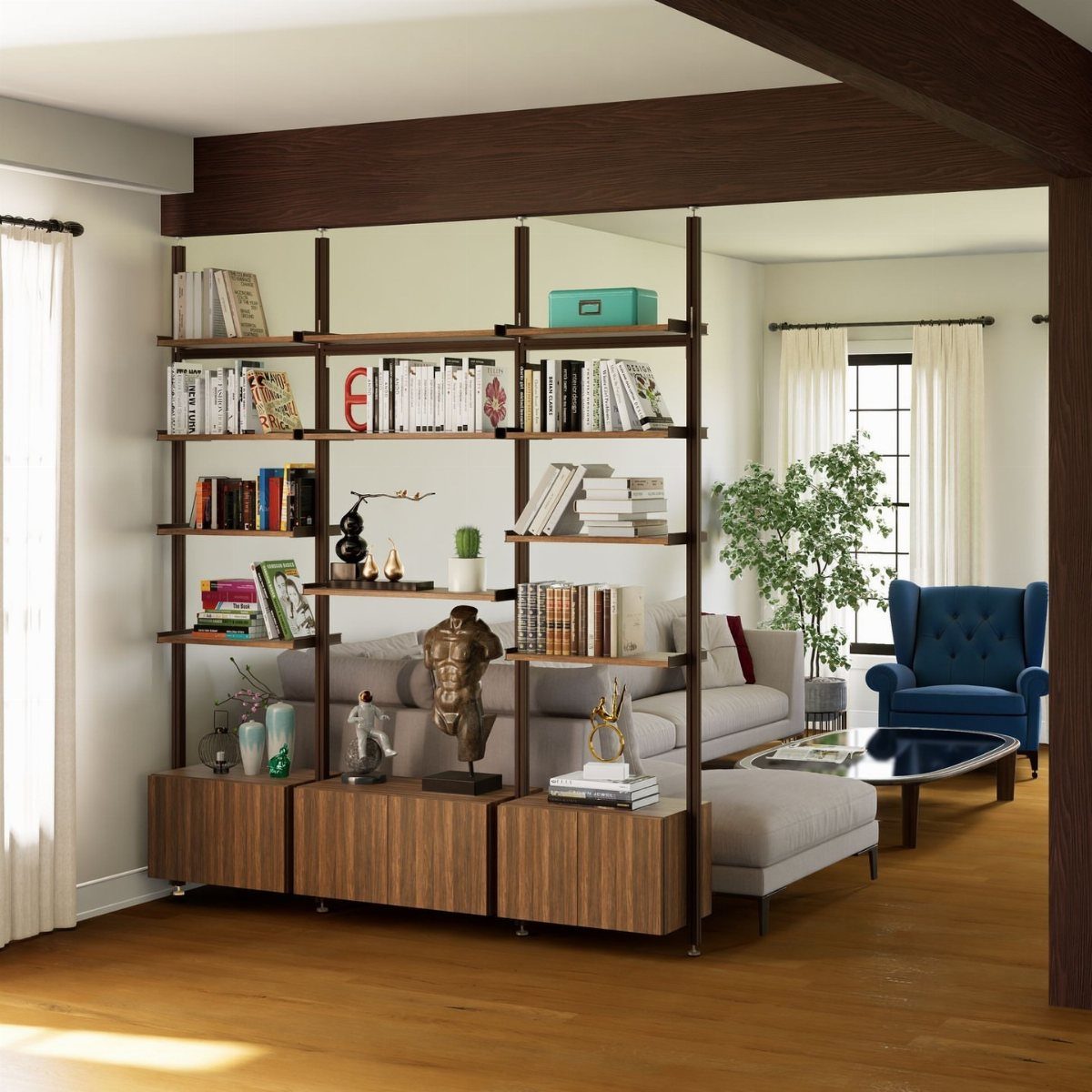
A bookshelf can mark the edge between 2 spaces without closing them off completely. Open-backed units let light through and keep sightlines intact, so the room still reads as one larger area even as the shelf defines separate zones.
This works well in open-plan layouts where you want a living area to feel distinct from a dining space or home office. The shelves themselves stay accessible from both sides, doubling the storage without taking up more square footage.
3. Wall-mounted Bookcase
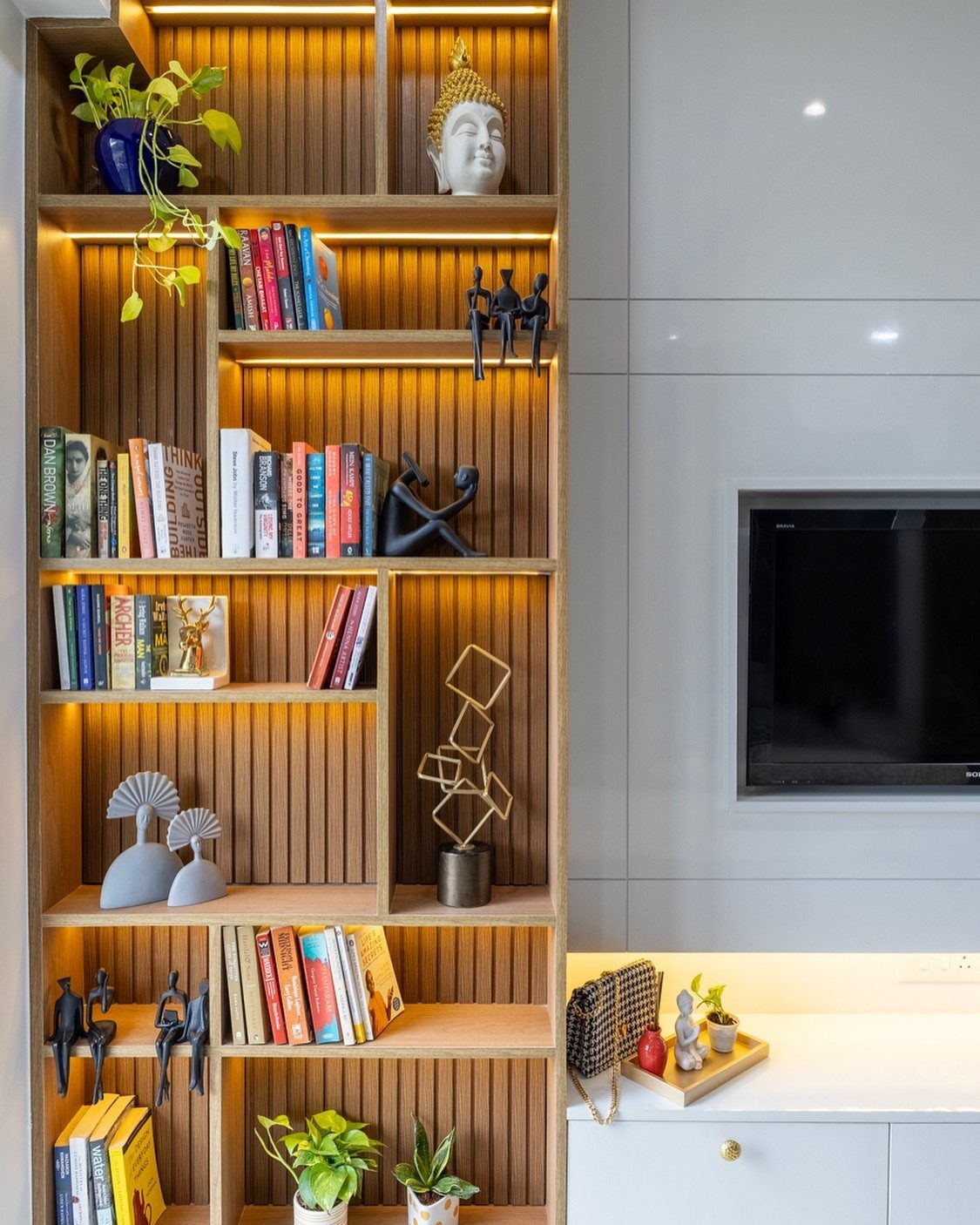
Wall-mounted cases lift storage off the floor entirely, leaving the baseboards clear and making a small room feel less crowded.
The integrated lighting strips here add visibility without needing table lamps, and they highlight the spines and objects on each shelf.
Mounting hardware has to hit studs or use heavy-duty anchors rated for the loaded weight. Once secured, the unit reads as permanent and architectural rather than furniture you could move.
4. Bookshelves with a Comfortable Chair
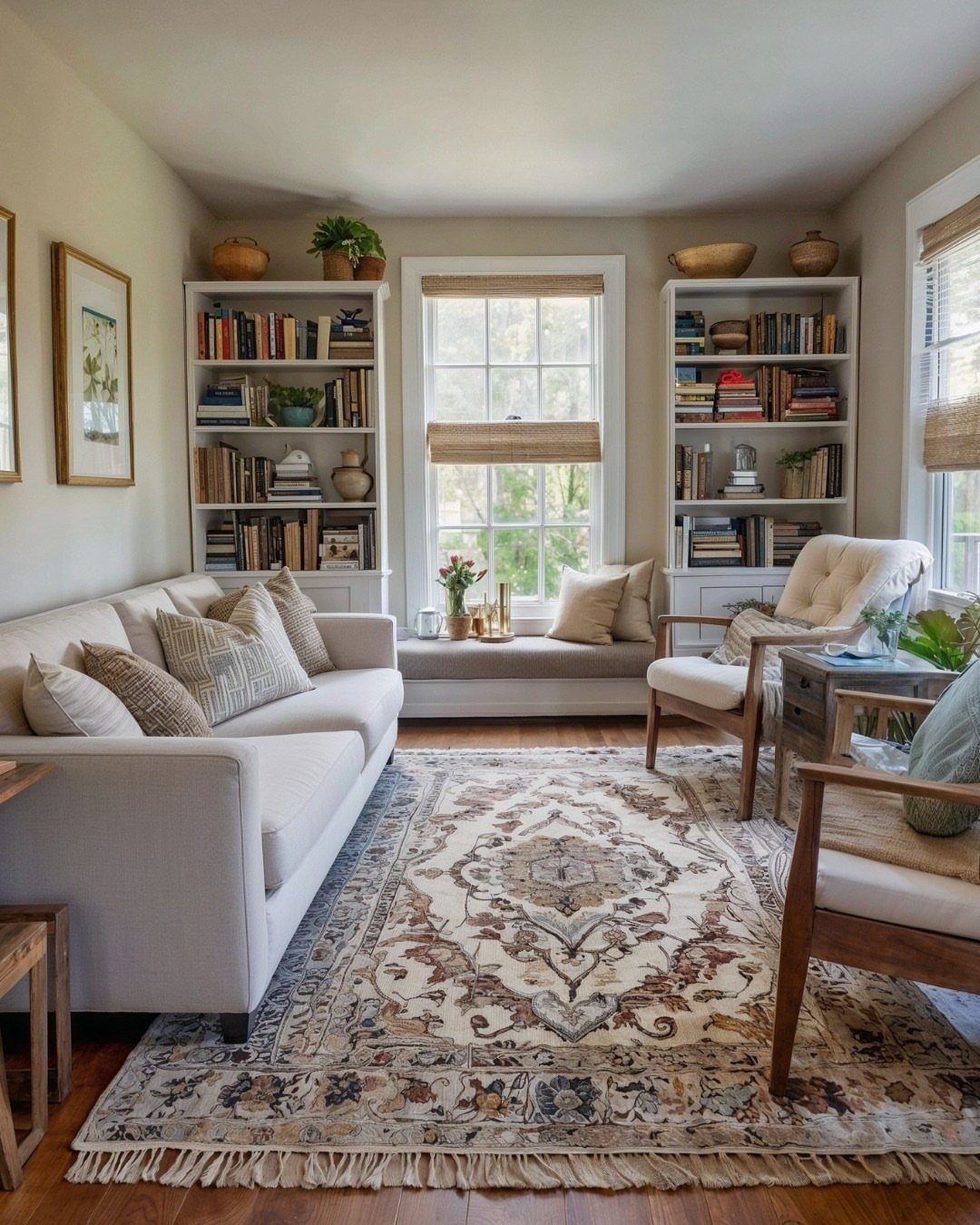
Flanking a window with bookshelves turns an underused wall into a reading corner. The symmetry anchors the seating and makes the setup feel deliberate, even in a room that already has a sofa elsewhere.
Choose a chair with arms if you plan to sit for more than a few minutes. Upholstered pieces are softer, but wood or leather clean faster and hold up better near windows where sun and humidity shift daily.
5. Bookshelves with a Rolling Ladder
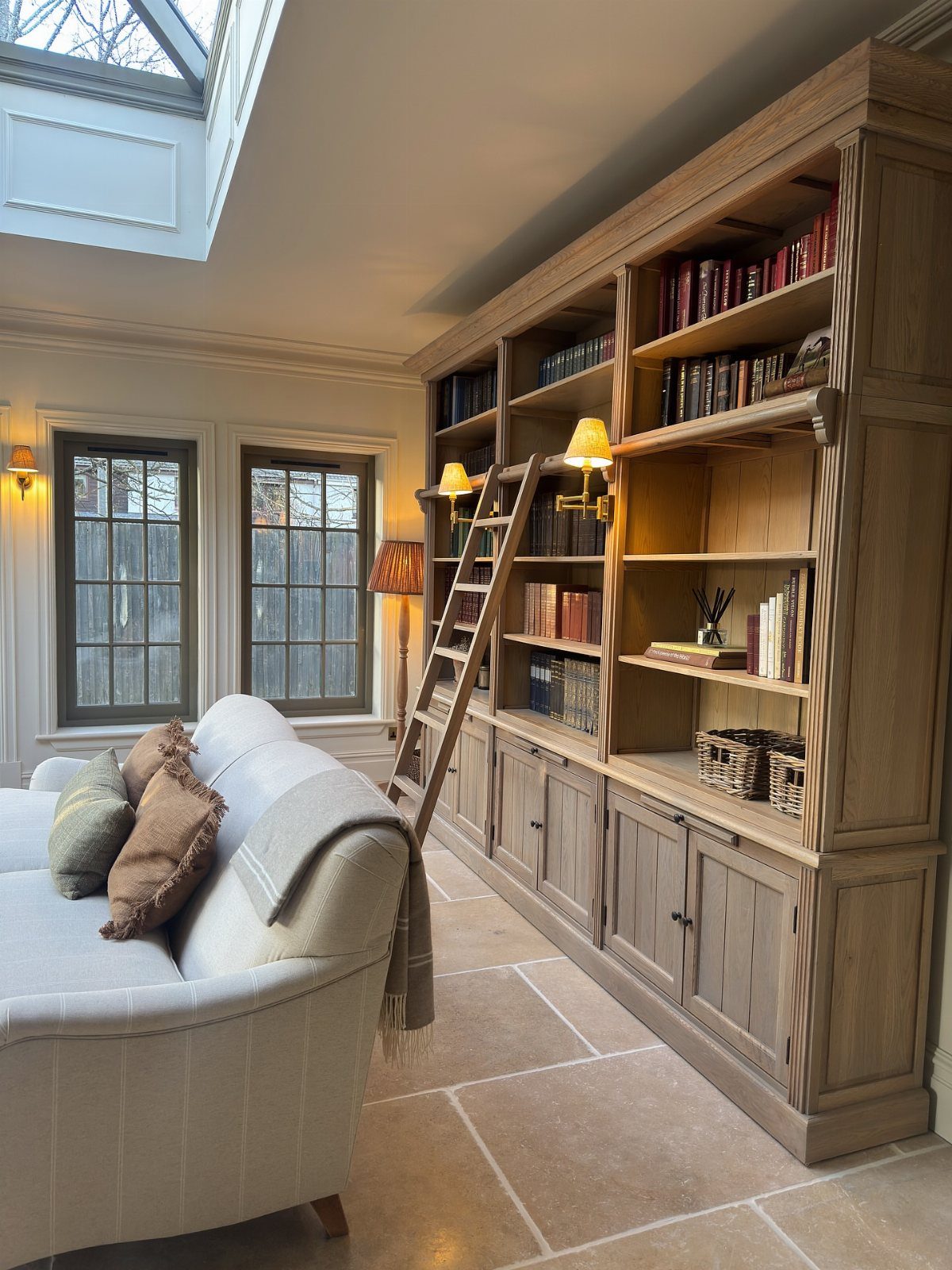
When shelves reach past arm’s length, a rolling ladder makes the top rows usable instead of decorative.
The track mounts to the face of the shelving unit or directly to the wall, and the ladder hooks onto it with wheels that slide smoothly along the rail.
Library ladders carry a weight limit that varies by model, so check the rating before you buy. Make sure the track is level and the brackets are spaced closely enough that the rail doesn’t flex under load.
6. Plants on Bookshelves
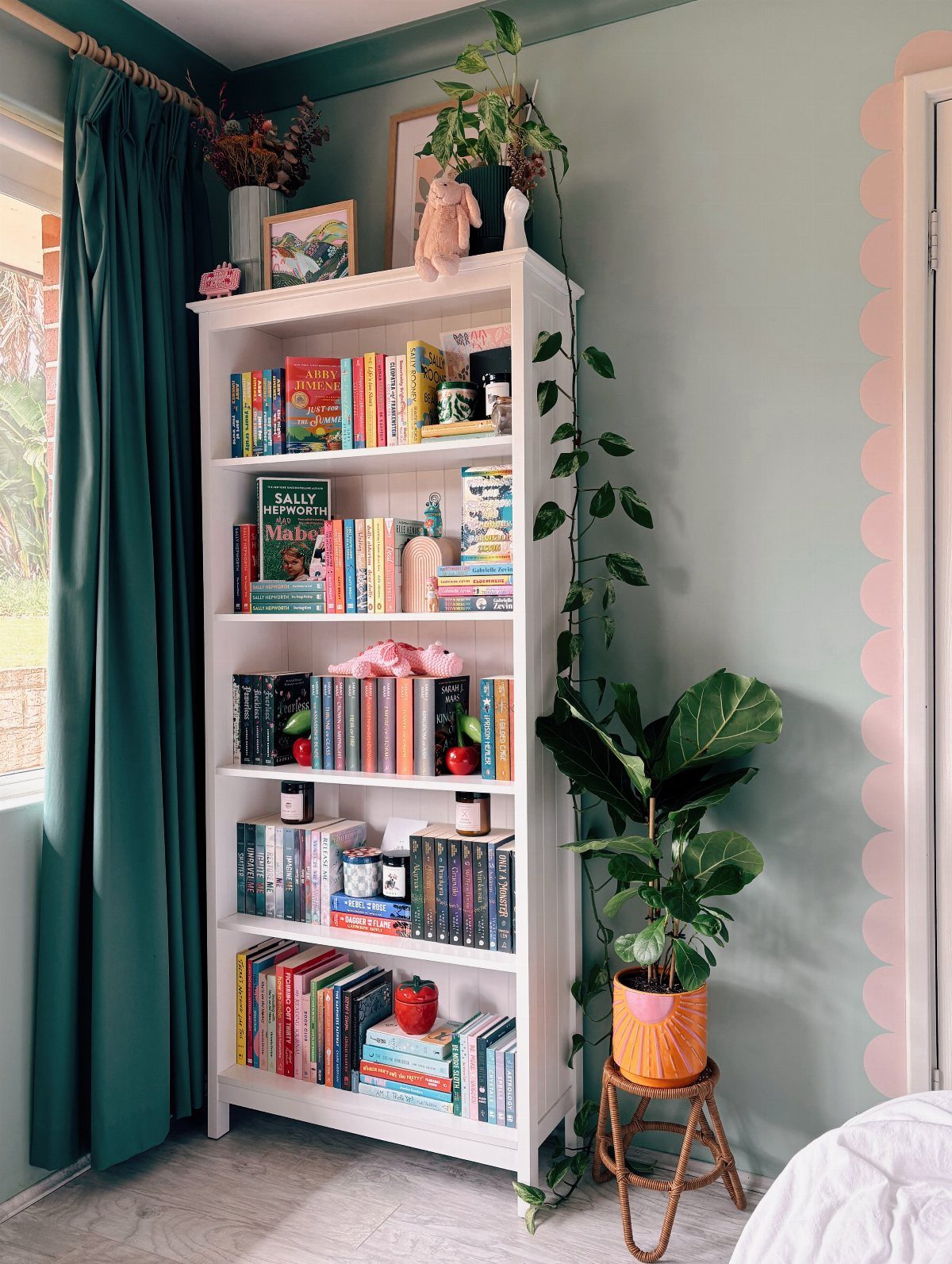
Plants break up rows of book spines and add a living layer that changes as they grow.
Trailing varieties like pothos or string of pearls drape over shelf edges, while upright plants like fiddle leaf figs fill vertical gaps without crowding the books beside them.
Match the plant to the light the shelf gets. Low-light corners suit snake plants or ZZ plants; shelves near windows can handle fiddle leaf figs or rubber plants that need brighter conditions.
7. Cluttered Shelves
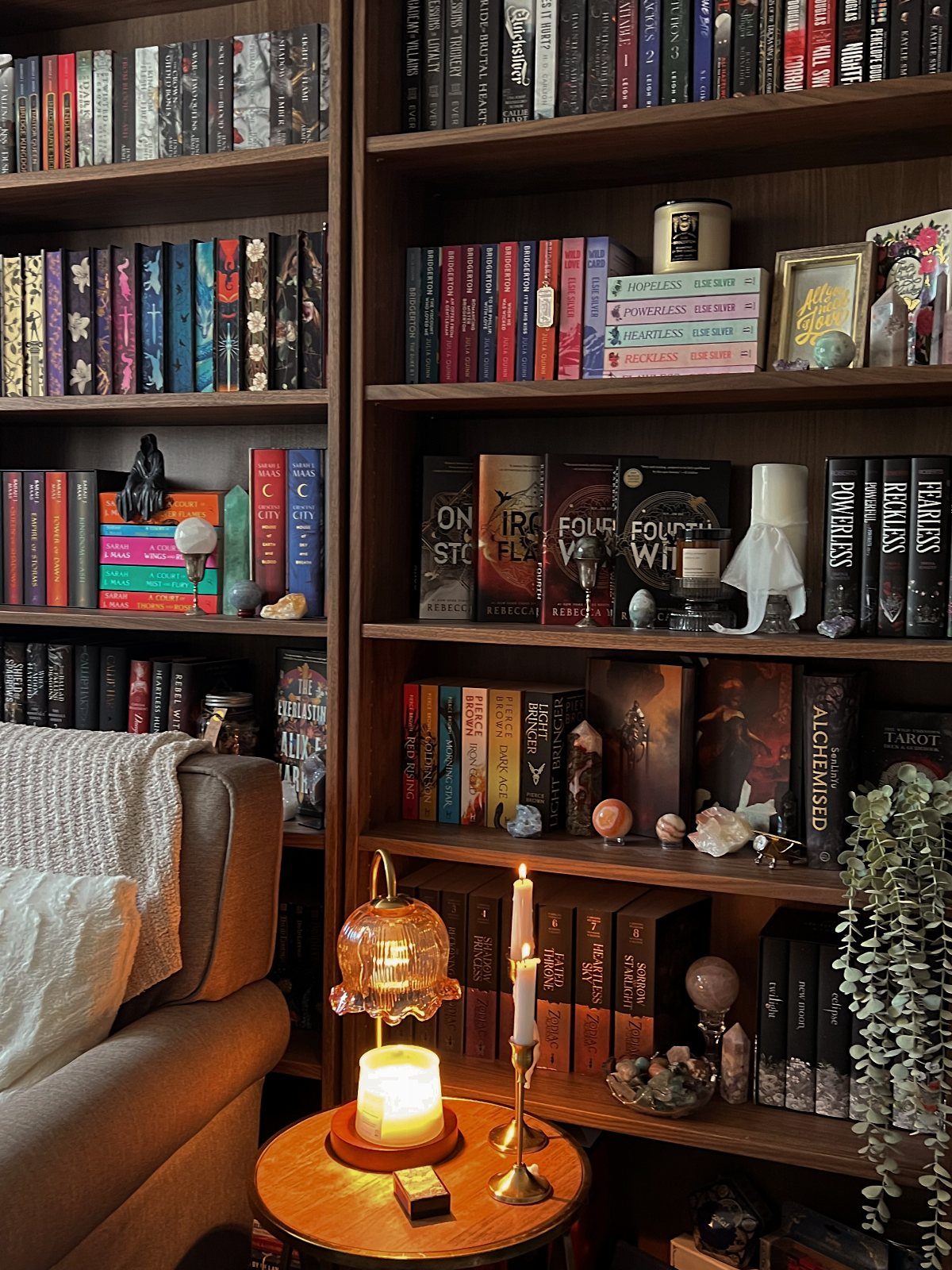
Mixing books with objects you collect turns the shelf into something more personal than pure storage.
Crystals, candles, small frames and stacked books lean against each other without following a grid, and the variety keeps your eye moving instead of settling into one rhythm.
Group items in odd numbers and vary their height.
Taller pieces anchor the corners or middle of a shelf, while smaller objects fill gaps without crowding the spines. The room still feels collected rather than staged when the objects are things you actually use or care about.
8. Reclaimed Wood Bookshelves
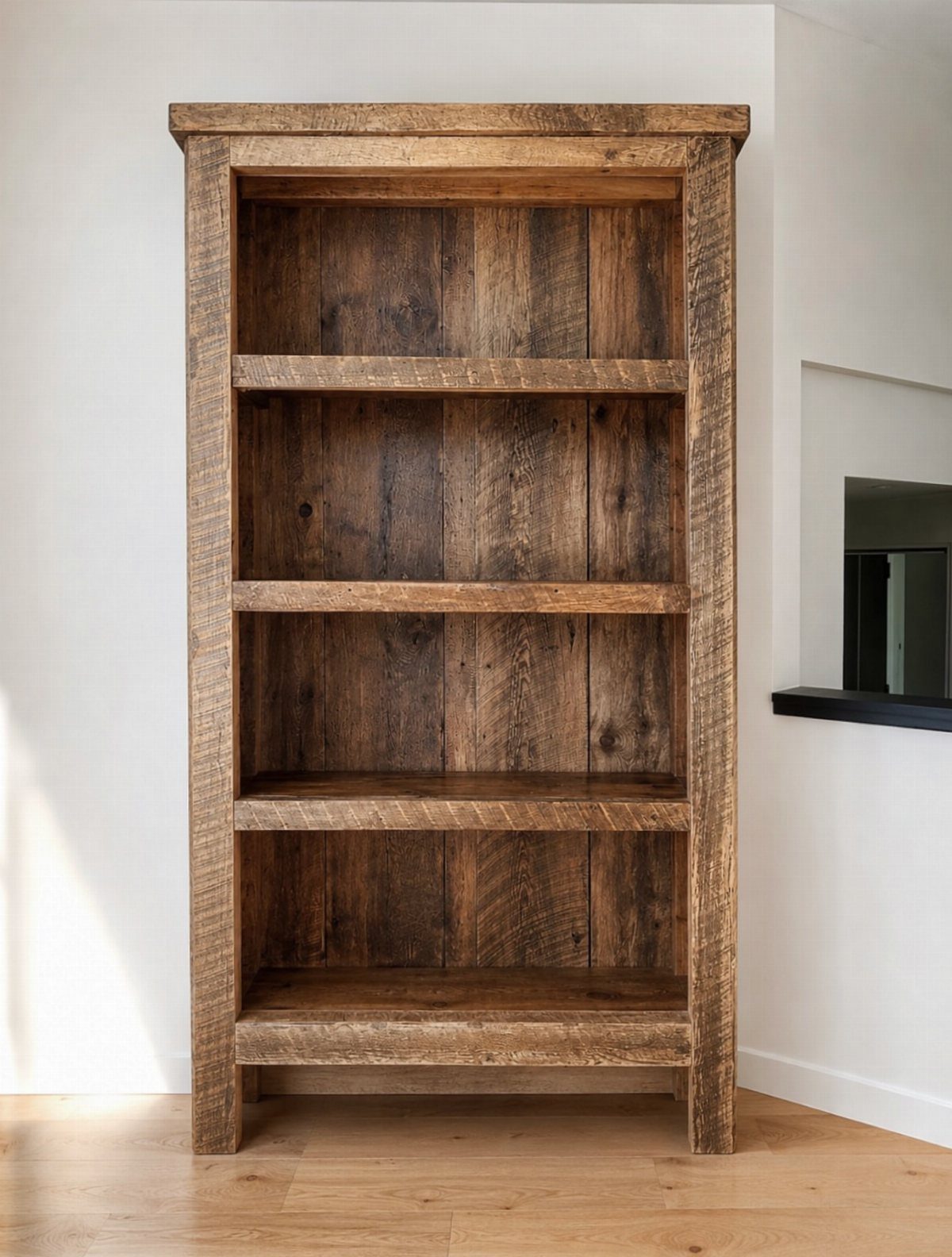
Reclaimed wood carries visible wear: nail holes, saw marks, color shifts from one board to the next.
That texture gives the piece a history that new lumber doesn’t have, and it works especially well in rooms where everything else reads clean and finished.
The uneven surface means books don’t always sit flush, and dust settles into the grain faster than it would on sealed wood.
If you want the look without the upkeep, stain new pine with a dark finish and skip the distressing.
9. Creating a Multi-use Room
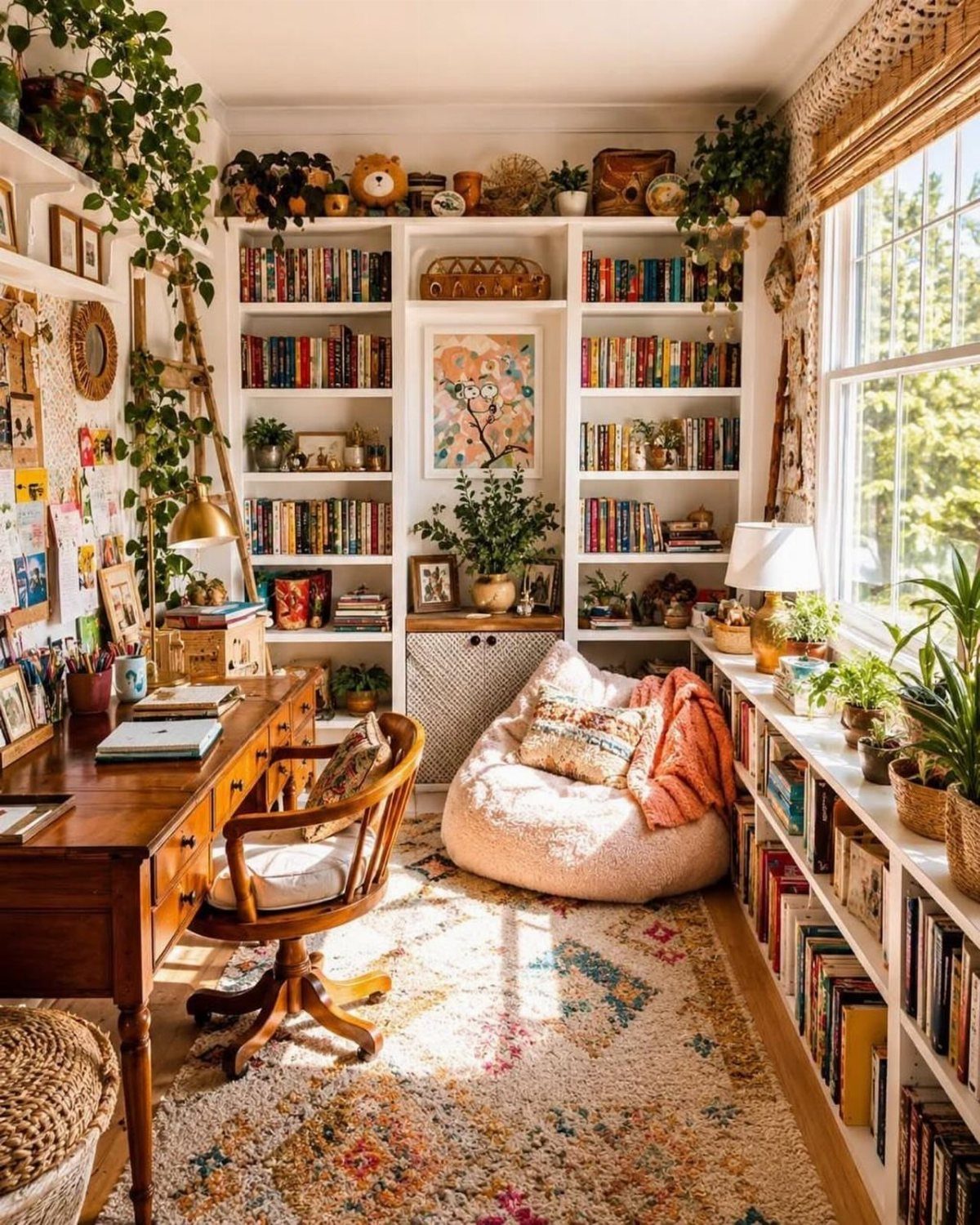
Bookshelves let one room hold a desk, seating and storage without any piece competing for attention.
The shelves run floor to ceiling here, so they take over the vertical space while the desk and chair stay low and out of the way.
This setup works when you need a home office but don’t have a separate room for it.
The books and the rug mark the space as somewhere to settle in, not just a workstation, so the room still feels finished when the laptop closes.
Tips for Styling Bookshelves
Start with books arranged both vertically and horizontally. Stacking a few spines flat gives you a platform to lift smaller objects to eye level, and the mix breaks up long rows that otherwise read as one unbroken line.
Group decorative pieces in sets of 3 or 5 rather than spacing them out evenly. Odd numbers feel more natural and give your eye a place to land instead of bouncing between matched pairs.
Layer frames or plates behind objects on the same shelf so something sits in front and something taller sits behind.
The depth makes the arrangement feel intentional, and it uses the full width of the shelf instead of lining everything along the front edge.
Leave some shelves partly empty. Open space keeps the whole unit from looking crowded and lets the pieces you do display stand out instead of competing for attention.
Choosing Colors and Materials
Pick a wood finish that matches or complements the largest piece of furniture already in the room.
If your sofa table or coffee table is dark walnut, a bookshelf in the same range ties the two together without requiring them to match exactly.
Nail holes, weathering and color variation across planks give a room a collected feel, and the surface works especially well when the rest of the space leans modern or minimal.
The contrast keeps the wood from reading as farmhouse by default.
Metal frames in black or bronze suit shelves that hold heavier loads or need a more industrial look.
The structure shows, so the design reads as open rather than boxy, and the finish holds up better in humid rooms than painted wood.
Maximizing Small Spaces
Mount them above a desk or a narrow console so the vertical space does the work instead of adding another piece that takes up square footage.
Floating shelves in a corner turn dead space into usable storage without blocking light or sightlines.
Adjustable brackets let you change shelf height as your needs shift. Start with taller gaps for oversized art books or bins, then move the shelves closer together if you add more novels later.
Frequently Asked Questions
What are built-in bookshelves?
They’re recessed into the wall or built across it from floor to ceiling, so they feel like part of the room rather than furniture.
They become part of the room’s architecture rather than freestanding furniture, giving a custom, permanent look that reads as intentional.
What are some effective ways to organize my bookshelves?
Arrange books both vertically and horizontally so stacked spines create platforms for smaller objects.
Odd-numbered clusters read more natural than a row of evenly spaced objects, and layering a framed piece behind a vase or stack gives the shelf actual depth.






