
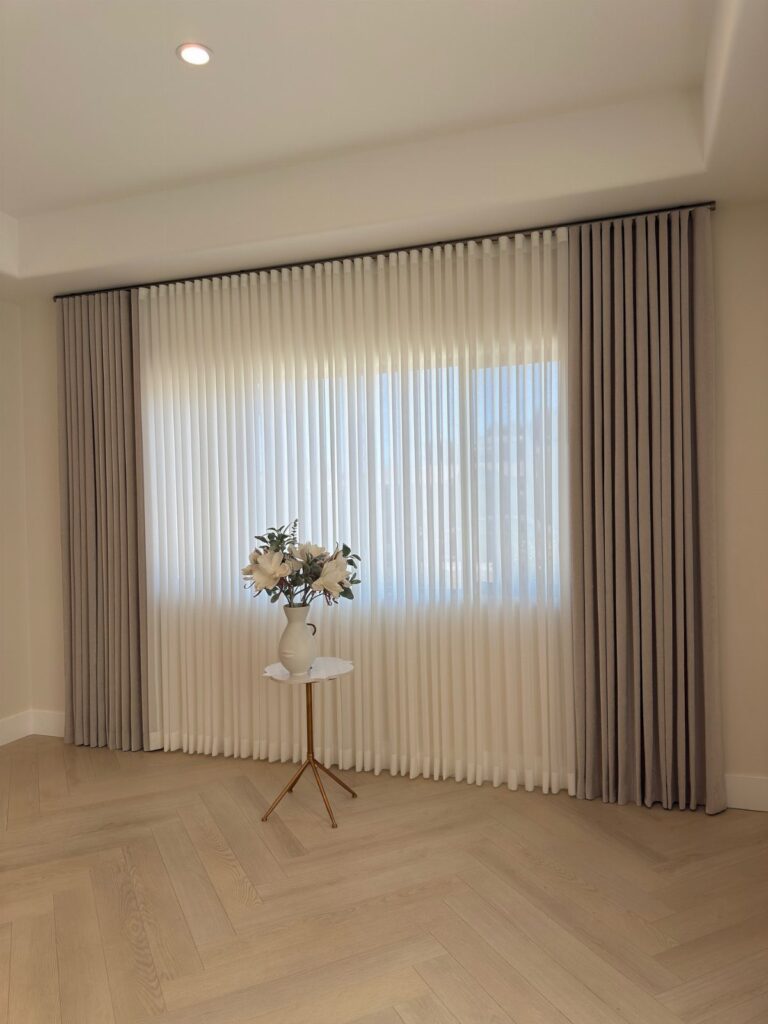
The ideas that follow span patterned panels, layered sheers, pleated drapes, linen that filters light, and setups that pair curtains with blinds. Light control, the fabric you pick, and how you hang them all shape which style works.
1. Patterned Curtains
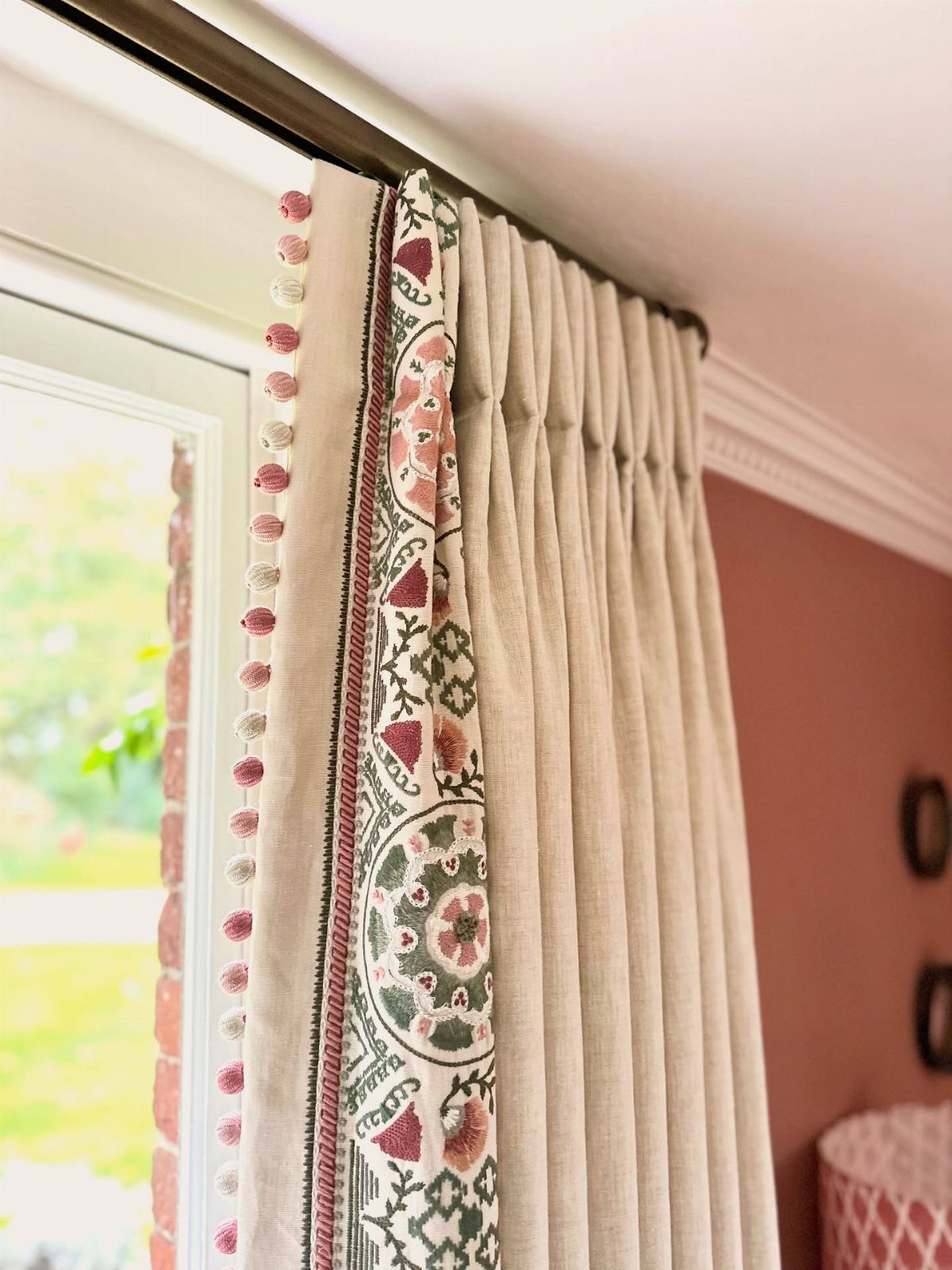
Patterned curtains add personality without committing to bold wall color or furniture. A floral border along the bottom edge with pom-pom trim keeps the pattern from taking over the whole panel.
I’d stick with a single pattern per room unless you’re layering prints you already know work together. When your living room leans neutral, patterned curtains let you bring in something with more personality.
The trim matters. Pom-poms, tassels or contrast piping finish the edge and make even inexpensive fabric look intentional.
When it comes to living room window treatments, don’t be afraid to mix and match patterns, styles, and materials.
2. Layered Sheers Under Drapery
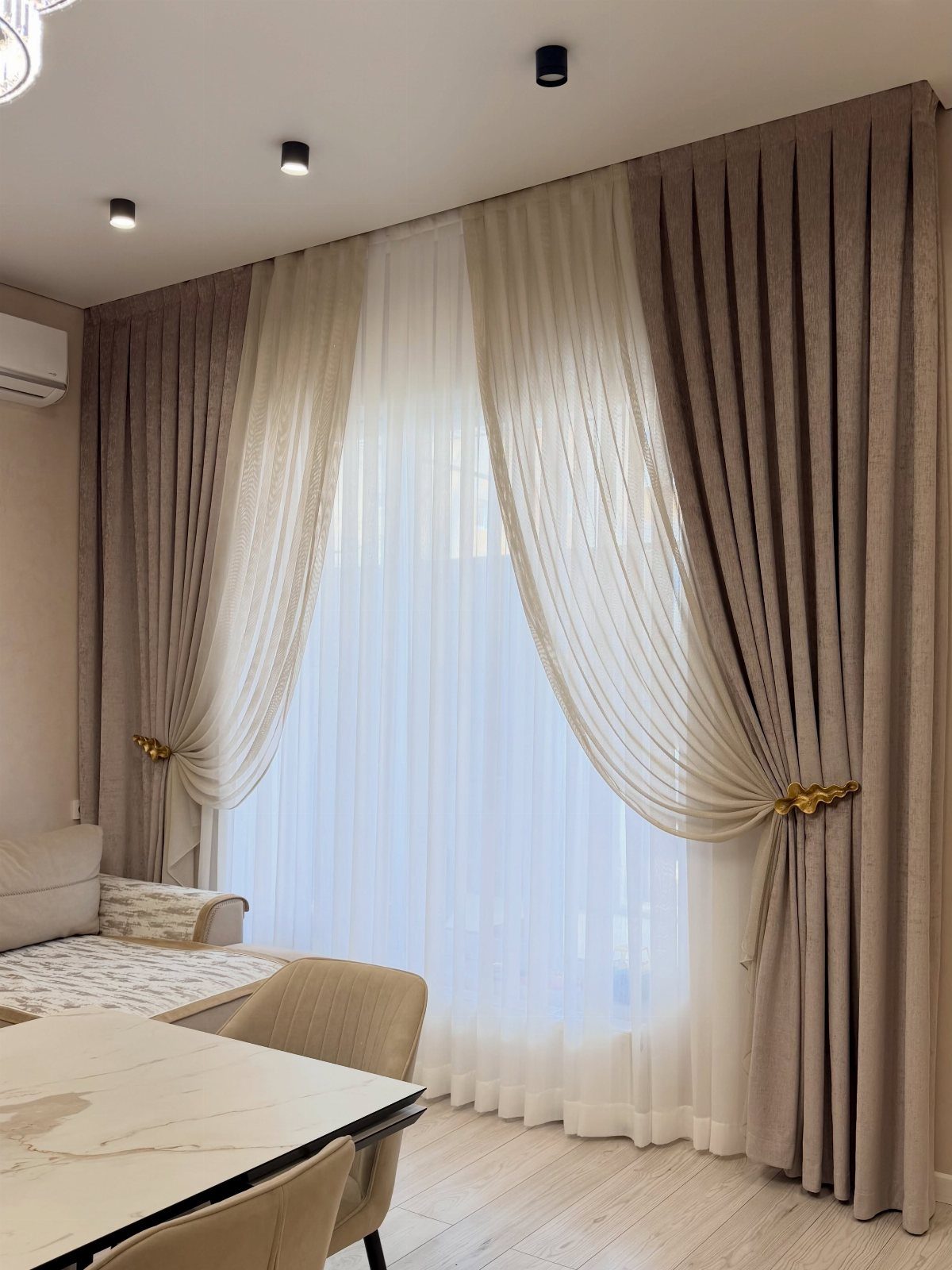
Layering sheers under drapery gives you control over light without sacrificing privacy. The sheers filter daylight when the heavier panels are tied back, and you can close both layers after dark.
This setup works best when the sheer stays white or very light and the drapery picks up a color already in the room. Gold tie-backs pull the layers together visually and hold the outer panels open.
Hang both on a double rod, or mount the sheer on a track just behind the drapery hardware.
3. Floor-to-Ceiling Drapery Panels
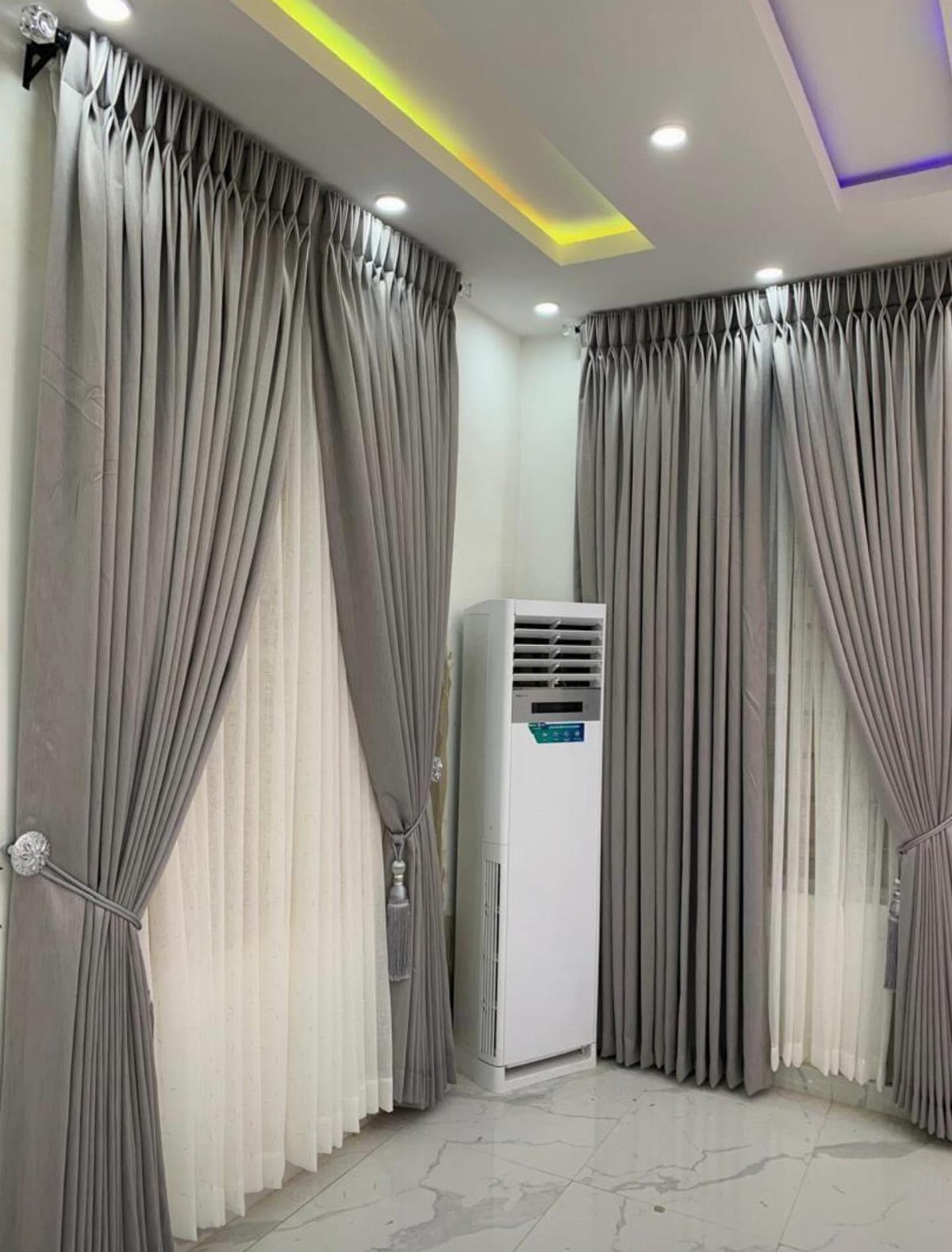
Floor-to-ceiling panels make a room feel taller because they draw the eye up and eliminate the gap between the top of the window and the ceiling.
Mount the rod as close to the ceiling as you can, and let the fabric skim or puddle on the floor.
Grey and white layering keeps the look soft without losing the height effect. If your ceilings are low, this is the most reliable way to add vertical lift.
Measure from the ceiling to the floor, then add a little extra so the fabric doesn’t hang short when it settles.
4. Custom Drapes
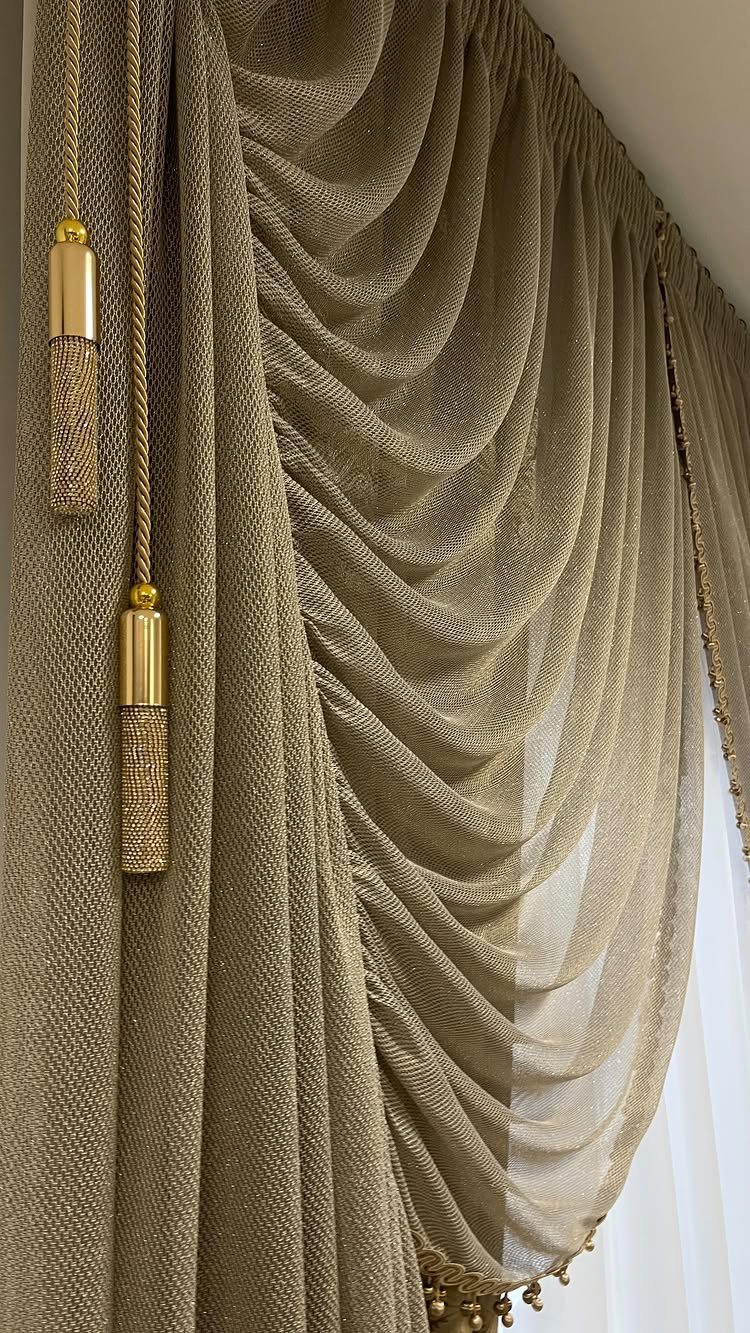
Custom drapes fit the exact width and length of your window, which means no awkward bunching and no hemming standard panels.
If your windows are unusually wide, tall or shaped, custom is often the only way to get full coverage and a finished look. Prices vary widely depending on fabric and workmanship, but expect to spend more than ready-made.
The result is a treatment that looks built for the room.
5. Roman Blinds
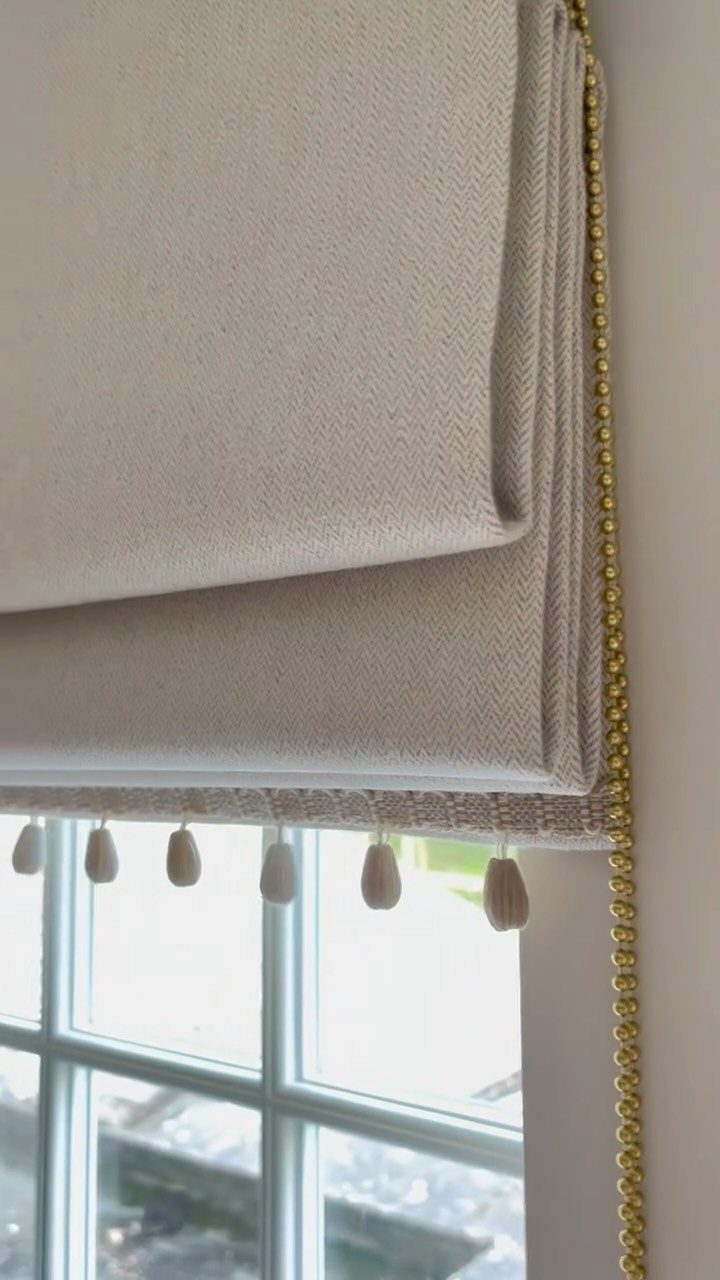
Roman blinds fold up in clean horizontal pleats when raised and lie flat when lowered, so they don’t take up space on either side of the window.
This style works well in smaller living rooms or anywhere you want coverage without the visual weight of full drapery panels.
Fabric romans soften the look compared to hard shades, and you can layer them under curtains for both privacy and style.
Mount inside the window frame for a streamlined fit, or outside if you need to cover the frame completely.
6. Textured Neutral Curtains
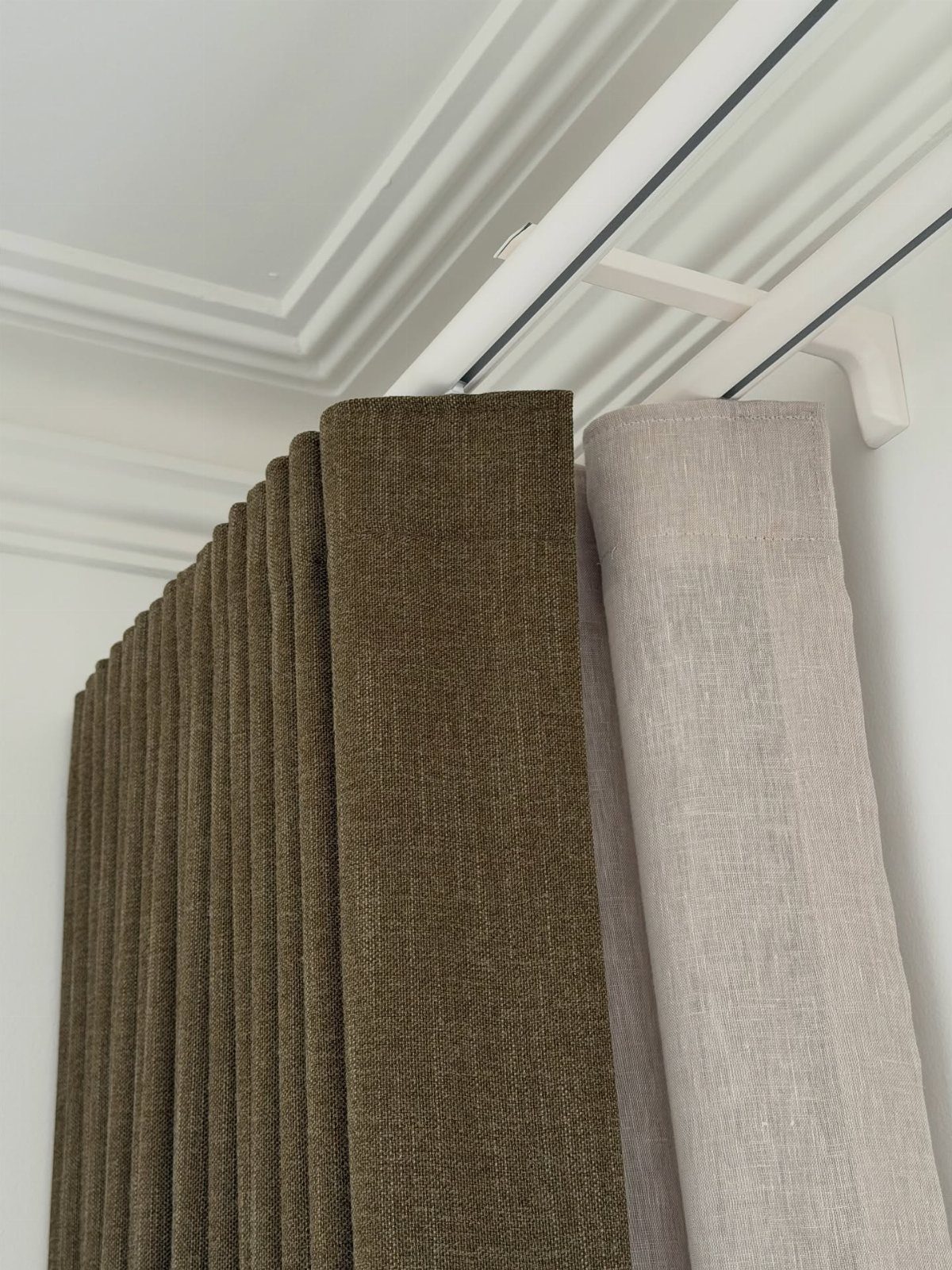
Textured neutral curtains rely on the weave, not the color, to add interest. Olive brown and beige panels read as subtle from a distance but have enough surface variation to avoid looking flat.
This is the option I reach for when the room already has pattern or strong color and the curtains just need to frame the window without adding more.
Linen, slub cotton and basketweave all give that textured look without feeling heavy.
Hang them from a ceiling track for a built-in appearance, or use a rod for a more traditional look.
7. Pleated Curtains
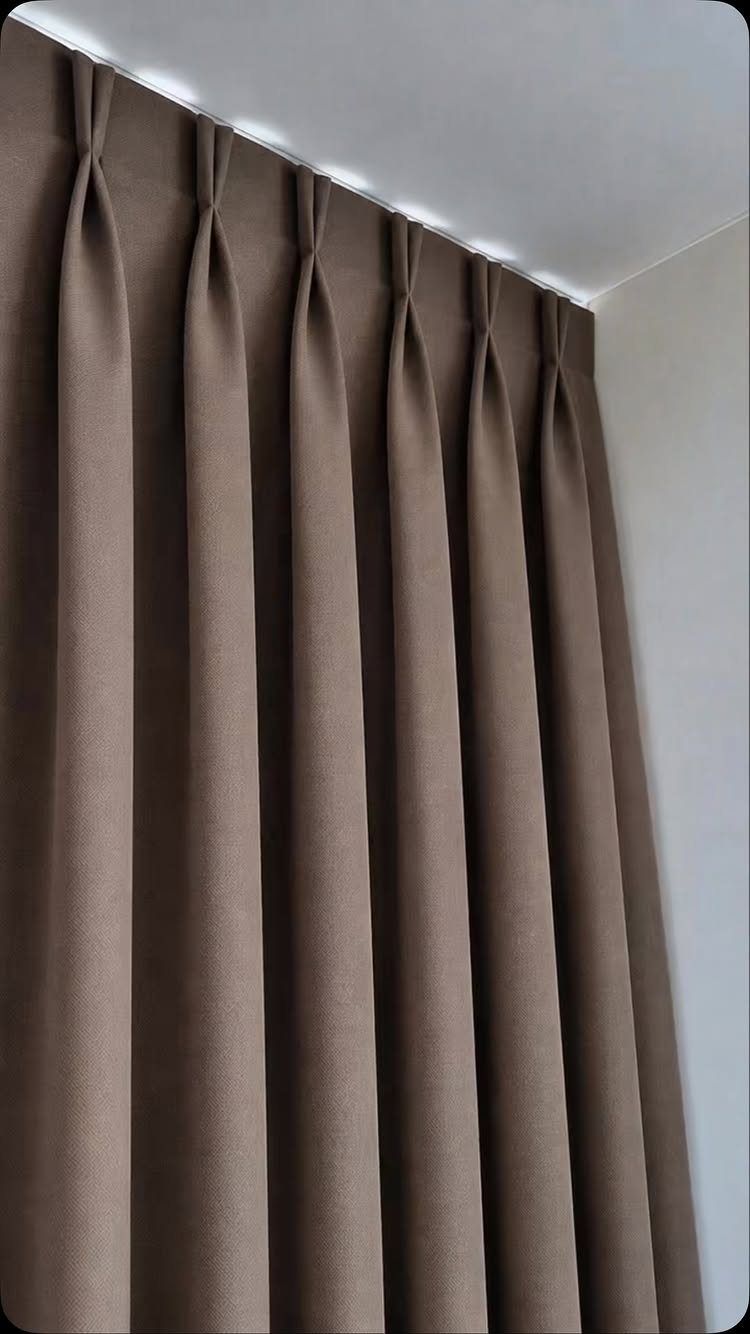
Pleated curtains fold into structured vertical creases that hold their shape better than flat panels. The pleats add dimension and a polished look without needing pattern or color to carry the style.
Brown panels like these suit a ceiling track because the pleats run uninterrupted from top to bottom. If you’re working with a traditional rod, pinch pleats or goblet pleats hook onto rings and still give you that tailored finish.
The fabric weight matters. Heavier material holds pleats in place, while lighter weaves soften the look but need more frequent steaming.
8. Sheer Linen Curtains
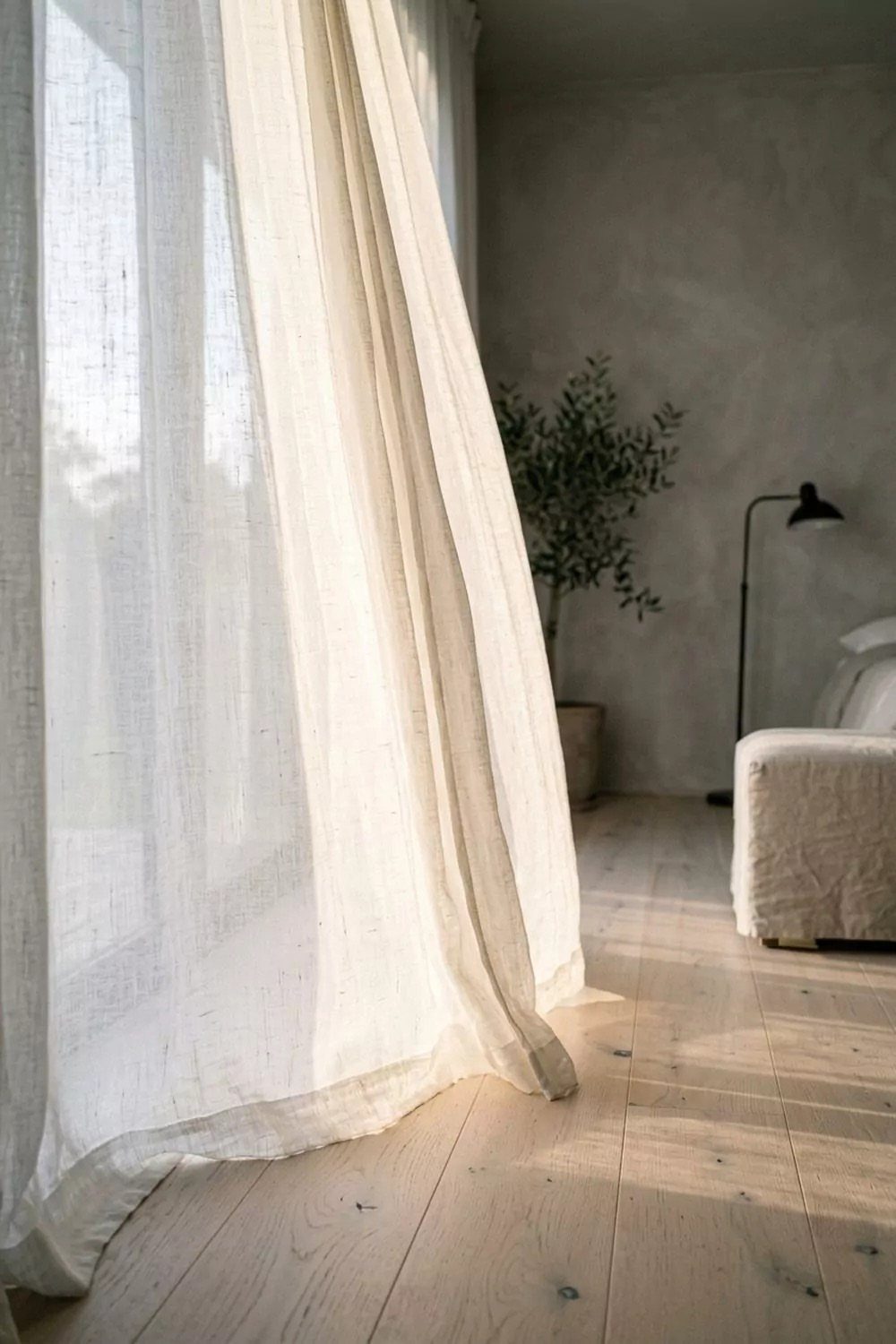
Sheer linen curtains filter daylight without blocking it completely, so the room stays bright while you keep some privacy. White or off-white linen works in most living rooms because it doesn’t compete with other colors.
The weave is loose enough to let light through but dense enough that you’re not fully exposed in daylight. At night, you’ll see shadows through them, so pair with a blind if that bothers you.
Linen wrinkles easily, and I don’t mind that texture, but if you prefer a smoother look, hang them slightly damp and let them dry in place.
9. Curtains with Tiebacks
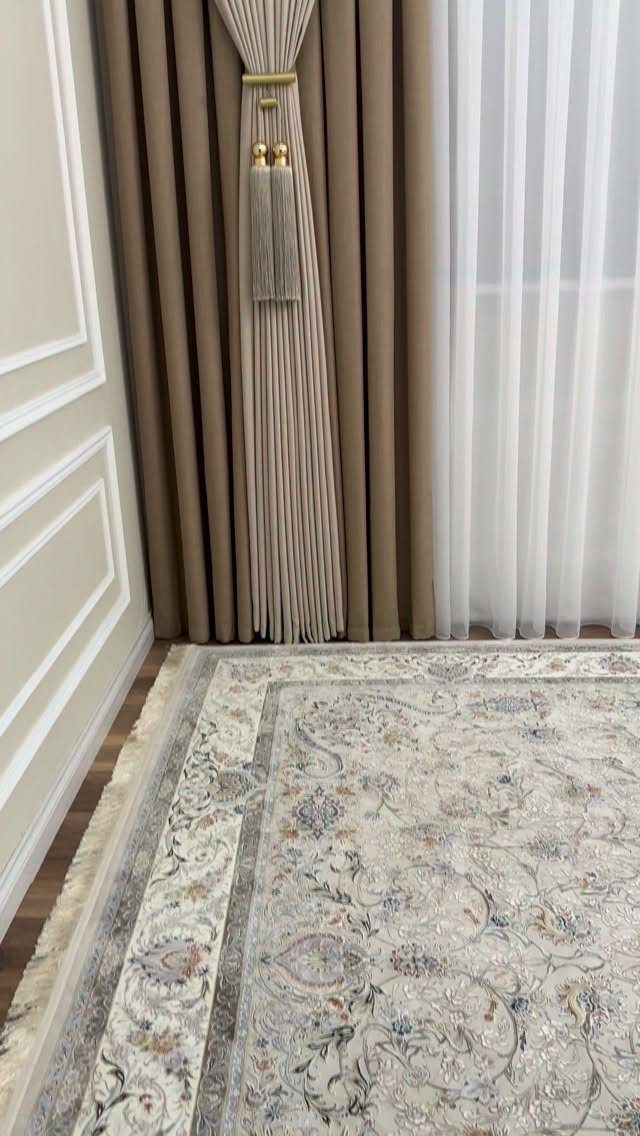
Tiebacks hold curtains open and create a gathered shape that frames the window on both sides. Gold hardware with tassels stands out against brown fabric and adds a finished detail.
Mount the tieback hook about two-thirds of the way down the panel so the fabric drapes in a soft curve. Too high and the curtain looks stiff; too low and you lose the shape.
If your curtains are lined, the tieback gathers more volume, which reads as fuller. Unlined panels sit flatter when pulled back.
10. Curtains Over Roller Blinds
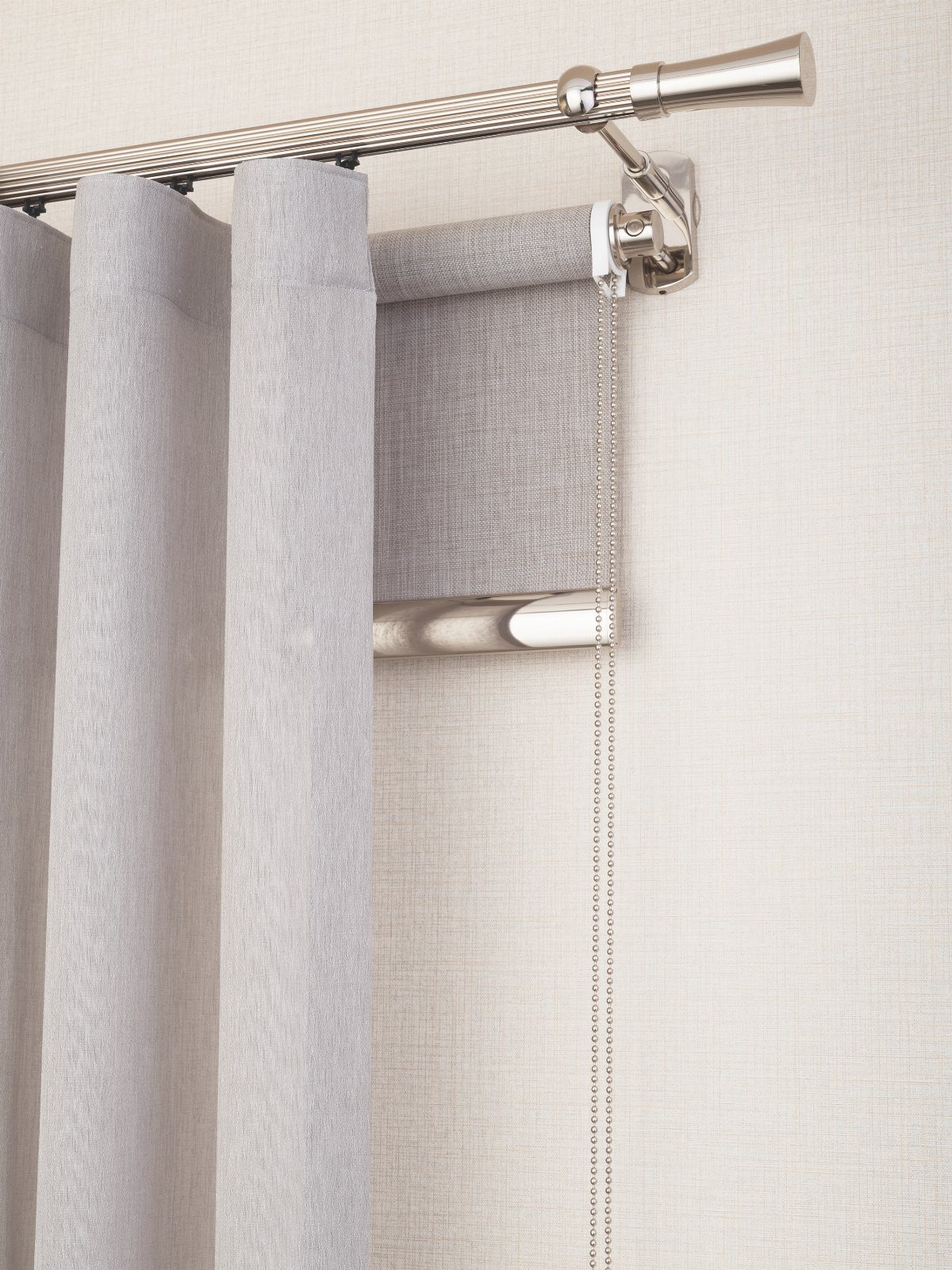
Pairing curtains with a roller blind gives you layered light control. Pull the blind down for full privacy and close the curtains over it at night, or leave the curtains open in daylight and adjust the blind as needed.
Grey on grey keeps the look cohesive, especially when the blind matches the curtain color. If your window gets strong afternoon sun, the blind blocks it and the curtains soften the edges.
Mount the blind inside the frame and the curtain rod just above it so the layers don’t compete for space.
11. Curtains Paired with Bamboo Blinds
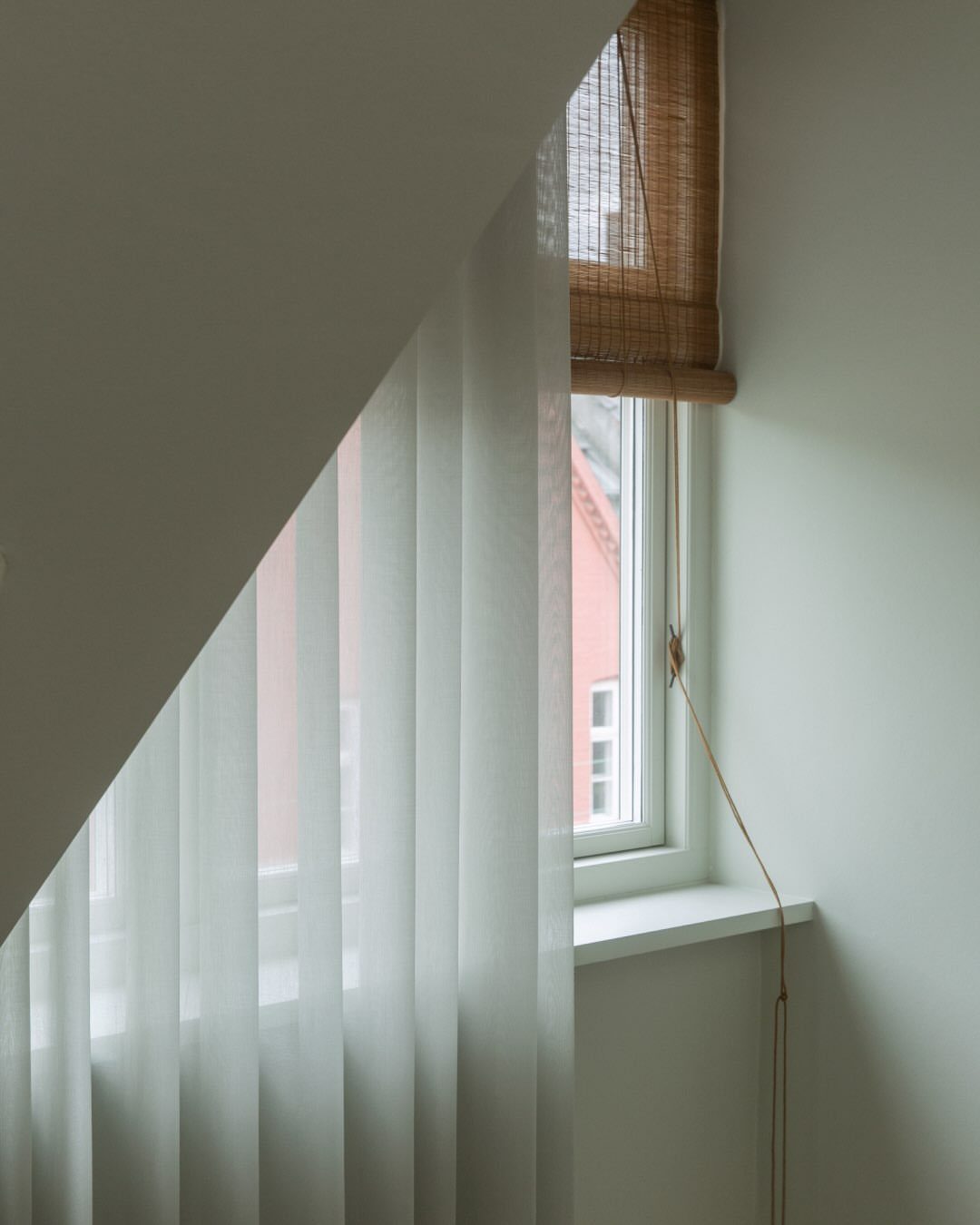
Bamboo blinds add texture and warmth, and pairing them with sheer white curtains softens the look while keeping the natural material visible. The blinds block light when lowered, and the sheers diffuse it when the blinds are up.
This combination works well if your living room has wood furniture or natural finishes already, because the bamboo ties into that palette. The sheers keep the window from feeling heavy when the blind is raised.
Roll-up bamboo blinds mount inside or outside the frame depending on how much coverage you need.
Choosing the Right Fabric
Fabric weight controls how much light gets through and how much insulation you get.
Heavier materials block drafts and add warmth in winter, while cotton and linen breathe better in warm, dry climates and keep the room from feeling closed in.
Light-blocking ability sits on a spectrum.
Medium-blocking fabric cuts glare without making the room dark during the day, which suits most living rooms. If you need flexibility, double-layer setups let you adjust: a sheer inner layer for daylight, a heavier outer panel for full coverage.
Cleaning matters more than it sounds.
Machine-washable fabrics save you trips to the cleaner, but some natural weaves need gentler handling. Check the care label before you buy, because replacing curtains you can’t maintain gets expensive fast.
Curtain Installation Tips
Mounting curtain rods close to the ceiling pulls the eye up and makes the wall read as one tall surface.
Hem length decides whether the look reads finished or mistimed. Anything shorter reads like a mistake, and fabric you cut off is gone for good.
Curtain Maintenance
Pick machine-washable materials if you want to handle cleaning yourself. Cotton and synthetic blends usually hold up fine in a regular cycle, which keeps maintenance simple and saves the cost of professional cleaning over time.
Some natural fabrics need dry cleaning, and that’s worth factoring into your decision up front. If the care label says dry clean only, you’re committing to that expense every time dust builds up or something spills.
Durability and ease of cleaning go together. Fabrics that can take repeated washing without fading or fraying reduce long-term upkeep and make it easier to keep your living room looking finished.
Frequently Asked Questions
How do you hang curtains with rings?
Attach curtain rings with clips or hooks to the fabric, then slide the rings onto the rod.
Rings let heavy curtains glide smoothly when you open and close them, which matters more with floor-to-ceiling panels. Match the ring finish to your rod so the hardware reads as one piece.
What is the rule of thumb for curtains?
I fix the rod 4 to 6 inches down from the ceiling, never right above the trim, and the whole wall pulls taller.
The fabric should reach the floor or go an inch past it; a gap at the bottom looks unfinished no matter how carefully you measure.
What are the styles of curtains?
Curtain styles include pleated panels, sheers, floor-to-ceiling drapery, Roman blinds, and layered treatments that pair a sheer with a heavier outer panel.
Pleated curtains hold a structured vertical crease, sheers filter light without blocking it, and Romans fold up in horizontal pleats when raised.
Each style controls light and privacy differently, so pick based on how much coverage and visual weight you want.






